

Soccer Goal Rebounder: Training Benefits & Buying Guide
Training tools that enable independent skill development have become essential for athletes looking to maximize practice time outside team sessions. A soccer goal rebounder stands out as one of the most versatile pieces of equipment for players at every level, from youth athletes building foundational skills to advanced competitors refining technique. These training aids simulate game-realistic passing exchanges, allowing players to work on first touch, accuracy, and reaction time without requiring a partner. For coaches, schools, and sports organizations seeking cost-effective solutions that deliver measurable skill improvements, understanding the benefits and specifications of rebound training equipment helps inform smarter purchasing decisions.
How Soccer Rebounders Enhance Technical Development
The fundamental advantage of a soccer goal rebounder lies in its ability to return the ball immediately after each strike, creating a continuous training loop that would otherwise require a training partner or wall. This design accelerates repetition volume, a critical factor in motor skill acquisition and muscle memory development.
Building First Touch Consistency
Every returned ball arrives at a slightly different height, speed, and angle based on how the player strikes it. This variability forces athletes to constantly adjust their body position and foot placement, mimicking the unpredictable nature of match situations. Research examining short-term soccer training interventions and skill outcomes demonstrates that controlled passing practice with returned balls significantly improves reception technique in youth players.
Key benefits for first touch training:
- Develops soft touch control across multiple receiving surfaces (instep, outside foot, thigh, chest)
- Builds adaptability to varying ball speeds and trajectories
- Enhances spatial awareness and body positioning
- Creates immediate feedback on control quality
The instant feedback mechanism proves particularly valuable. When a player's first touch is poor, the ball bounces away rather than setting up the next strike, creating a natural consequence that reinforces proper technique.
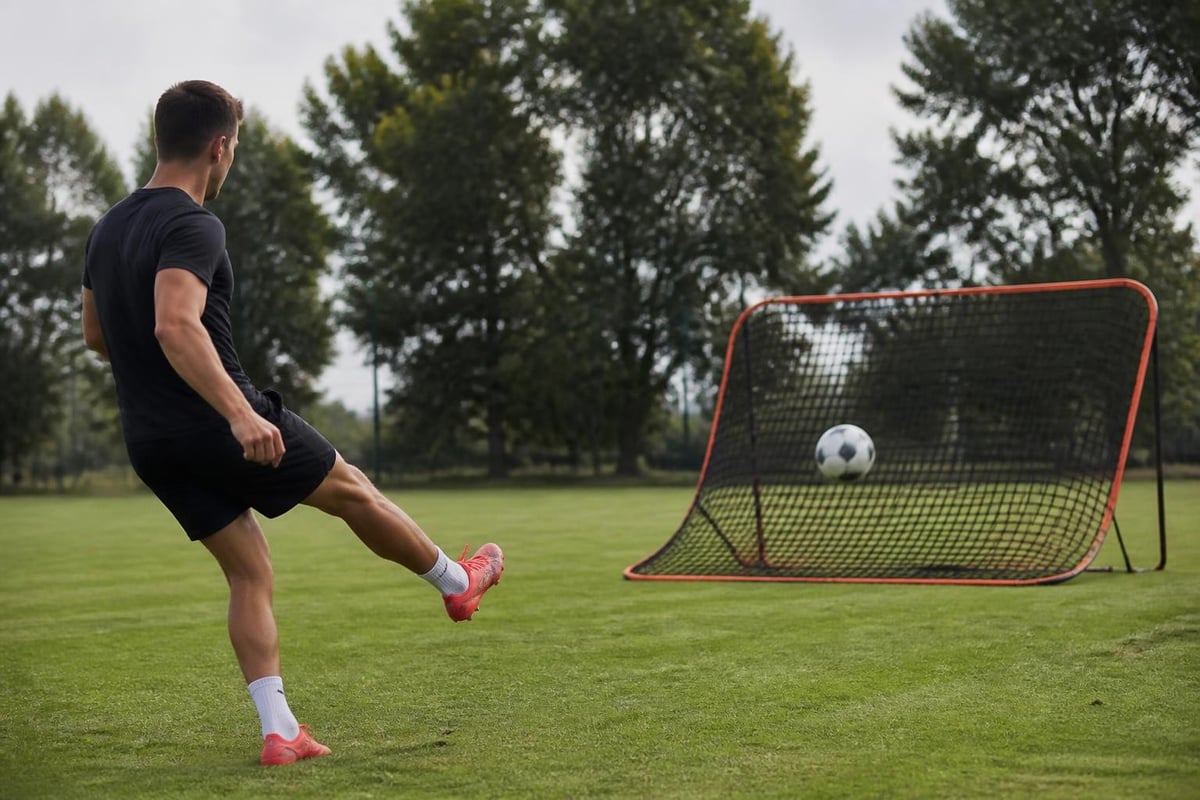
Passing Accuracy and Power Control
Structured passing work, where rebounders are often used versus game formats, allows players to isolate and perfect specific technical elements. Target zones marked on many rebounders enable athletes to work on placement precision, while the tension settings on quality models allow adjustment of return speed.
| Training Focus | Rebounder Setting | Repetition Range | Skill Outcome |
|---|---|---|---|
| Soft passing | Low tension | 50-100 reps | Touch finesse, weight control |
| Driven passes | Medium tension | 30-60 reps | Power generation, accuracy |
| One-touch returns | High tension | 40-80 reps | Reaction time, quick decision-making |
| Weak foot development | Variable | 60-120 reps | Bilateral skill balance |
The standardized nature of rebounder training makes it an excellent tool for tracking progress. Athletes can measure improvement by counting successful consecutive touches, accuracy to specific target zones, or speed of execution over timed intervals.
Selecting the Right Rebounder for Your Training Environment
Not all soccer rebounders deliver the same training value. Size, construction quality, angle adjustability, and portability significantly impact both performance and longevity. Understanding these variables helps teams and individual players make informed investments.
Frame Construction and Durability
Professional-grade rebounders feature powder-coated steel frames with reinforced corners and welded joints. These construction elements determine whether equipment survives years of high-impact use or requires replacement after a single season.
Material comparison:
- Heavy-duty steel tubing (1.5-2 inches diameter): Withstands competitive team use, suitable for schools and clubs
- Lightweight aluminum alloys: Ideal for individual athletes prioritizing portability over institutional durability
- Galvanized steel with weather-resistant coating: Best choice for permanent outdoor installations
The rebound surface itself typically consists of high-tension netting or elasticized material stretched across the frame. Premium models use UV-resistant, all-weather materials that maintain consistent tension across temperature fluctuations and moisture exposure.
Angle Adjustment Systems
Fixed-angle rebounders limit training variety, while multi-position models enable progressive skill development. The ability to adjust rebound angle transforms a single piece of equipment into multiple training tools.
Common angle configurations:
- Flat position (90 degrees): Returns balls at chest/head height, developing aerial control and volleying
- 45-degree angle: Simulates ground passes and develops low-drive accuracy
- Steep angle (30 degrees or less): Creates high, arcing returns for practicing headers and high-ball control
- Inverse angle: Some advanced models fold to create downward returns, training trap-and-turn movements
Teams running varied practice sessions benefit most from quick-adjust mechanisms that allow angle changes in under 30 seconds. Coaches can transition smoothly between drill formats without losing valuable practice time to equipment reconfiguration.
Integrating Rebounders into Structured Training Programs
Simply purchasing equipment delivers no value without thoughtful integration into training protocols. Sport science research provides frameworks for maximizing rebounder effectiveness within broader skill development curricula.
Evidence-Based Drill Progressions
The Loughborough Soccer Passing Test demonstrates how rebound targets are used in research settings to assess passing accuracy under time pressure. This protocol offers a template for designing progressive training sequences.
Beginner progression (weeks 1-4):
- Stationary passing (10 yards): Focus on contact point and follow-through
- Receive and return (two-touch): Emphasize body shape and quick preparation
- Target zones: Introduce accuracy goals with marked rebounder sections
- Weak foot emphasis: Dedicate 60% of repetitions to non-dominant foot
Intermediate progression (weeks 5-8):
- One-touch returns: Reduce control time, increase decision speed
- Movement patterns: Add lateral shuffles or backward pedaling between strikes
- Variable distances: Alternate between 8-15 yards to adjust power and accuracy
- Timed sets: Complete maximum quality repetitions in 90-second intervals
Advanced progression (weeks 9-12):
- Combination sequences: Execute specific pass-control-turn patterns
- Competitive scenarios: Partner challenges or personal-record attempts
- Fatigue management: Maintain technique quality during high-intensity intervals
- Game simulation: Integrate rebounder work into small-sided game warm-ups
This systematic approach aligns with findings in systematic reviews of factors affecting short-passing ability, which emphasize progressive overload and context-specific practice.
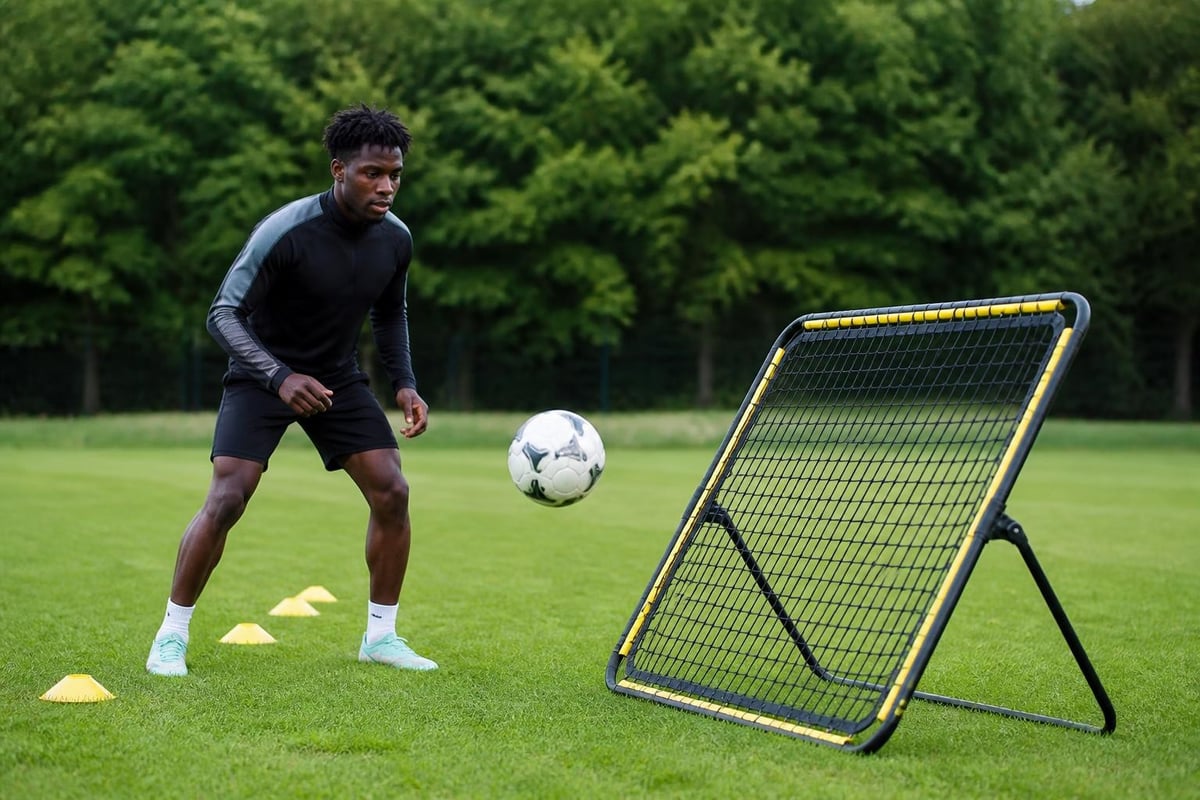
Pairing Technology with Traditional Equipment
Modern training increasingly combines traditional tools with digital measurement systems. Real-time monitoring and training methods in football demonstrate how sensor technology paired with equipment like rebounders provides quantifiable performance data.
Coaches can track:
- Repetitions completed per session
- Accuracy percentages to designated target zones
- Average ball speed on both feet
- Work-to-rest ratios during high-intensity intervals
- Progress over weekly and monthly training blocks
This data-driven approach transforms subjective skill assessment into objective measurement, helping athletes identify specific areas requiring additional focus.
Space Requirements and Portability Considerations
Training environments vary dramatically from professional facilities with dedicated spaces to community programs sharing multi-use fields. Understanding spatial needs prevents purchasing equipment that cannot be effectively deployed.
Minimum Operating Dimensions
A functional training area for a soccer goal rebounder requires space for both the equipment and safe player movement. Standard recommendations based on equipment size:
| Rebounder Size | Minimum Depth | Minimum Width | Ideal Total Space |
|---|---|---|---|
| Youth (4'x3') | 20 feet | 12 feet | 240 sq ft |
| Standard (6'x4') | 25 feet | 15 feet | 375 sq ft |
| Professional (8'x6') | 30 feet | 18 feet | 540 sq ft |
| Multi-panel (12'x6') | 35 feet | 20 feet | 700 sq ft |
These measurements account for player approach distance, equipment setup, and safety buffer zones. Indoor facilities with ceiling heights below 15 feet should avoid steep-angle configurations that send balls into overhead obstacles.
Storage and Transport Solutions
Schools and clubs operating from shared facilities need portable solutions. Folding designs with integrated wheels allow single-person setup and breakdown, critical for programs without dedicated equipment managers.
Portability features to prioritize:
- Quick-release pins for tool-free assembly/disassembly
- Folded dimensions under 6 feet for standard vehicle transport
- Weight under 40 pounds for individual carrying
- Protective carry bags to prevent frame damage during storage
- Stackable designs for organizations maintaining multiple units
Organizations managing fitness sports equipment across multiple sites particularly benefit from modular rebounder systems that balance durability with mobility.
Cost Considerations and Long-Term Value
Budget constraints shape every equipment decision for schools, clubs, and individual athletes. Understanding the relationship between initial investment and operational lifespan helps maximize value.
Price-Point Analysis
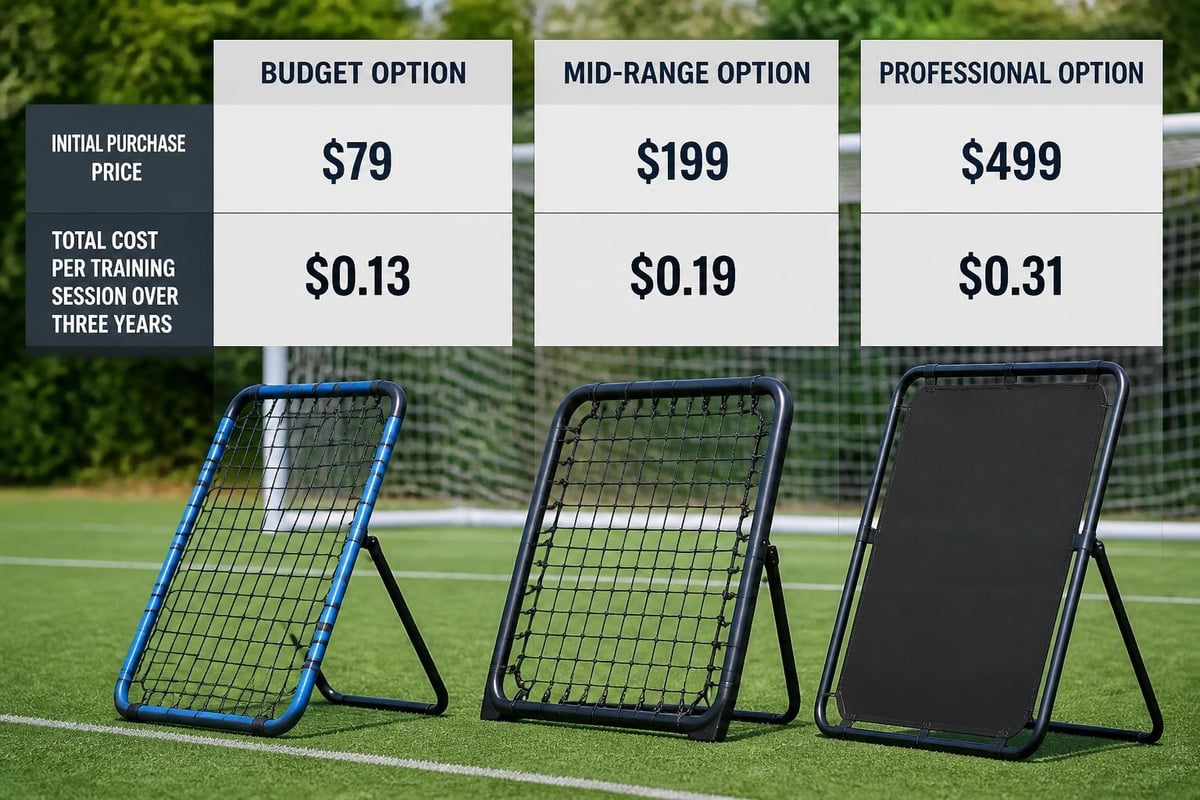
Entry-level rebounders start around $50-$80, while professional models exceed $300. The performance gap correlates directly with construction quality and feature sophistication.
Budget tier (under $100):
- Basic fixed-angle frames
- Standard netting with 1-2 year lifespan
- Limited warranty coverage
- Suitable for individual recreational use
Mid-range tier ($100-$200):
- Angle-adjustable frames
- Weather-resistant materials
- 2-3 year warranties
- Appropriate for small team programs
Professional tier ($200+):
- Heavy-duty construction with 5+ year lifespan
- Multi-angle quick-adjust systems
- Comprehensive warranties and replacement part availability
- Designed for institutional daily use
Teams should calculate cost-per-training-hour rather than focusing solely on purchase price. A $300 rebounder used five times weekly for three years costs approximately $0.38 per session, while a $75 model requiring replacement after one year costs $0.58 per session with lower performance quality.
Similar value calculations apply when evaluating other essential equipment like goal nets or soccer goals.
Complementary Training Equipment for Complete Skill Development
While rebounders excel at passing and control work, comprehensive player development requires diverse training tools. Strategic equipment combinations create versatile practice environments.
Building Progressive Training Stations
Circuit-style setups maximize space efficiency and keep players engaged through varied activities. A complete technical development station might include:
- Soccer goal rebounder for passing accuracy and first touch
- Agility ladder for footwork and coordination between rebounder sets
- Cone markers creating dribbling patterns that feed into rebounder work
- Target goals (similar to setups discussed in soccer posts) for finishing practice after rebounder sequences
This station approach, supported by research on rebound boards as standardized passing targets, allows coaches to run multiple groups simultaneously while maintaining high repetition rates.
Cross-Sport Training Applications
The benefits of rebound training extend beyond soccer. Programs serving multiple sports can leverage rebounders for:
- Field hockey: Developing push passes and reception skills, complementing dedicated field hockey training equipment
- Lacrosse: Building stick skills and quick-stick passing for players using youth lacrosse cleats
- Basketball: Enhancing chest pass and bounce pass accuracy
- Baseball/softball: Simulating infield grounders and reaction training similar to work with baseball training machines
This versatility makes rebounders particularly valuable for multi-sport athletic programs and community centers maximizing limited budgets across diverse offerings.
Maintenance and Longevity Best Practices
Proper care extends equipment life and maintains training effectiveness. Simple maintenance protocols prevent the performance degradation that compromises skill development.
Regular Inspection Schedules
Monthly equipment checks identify issues before they escalate into costly replacements:
Frame integrity:
- Examine welds and joints for stress cracks
- Check bolts and connection points for loosening
- Inspect protective coatings for rust or corrosion
- Verify stability of support legs and anchoring points
Rebound surface:
- Test tension consistency across entire surface
- Look for tears, fraying, or UV damage in netting
- Confirm elastic cords maintain proper stretch
- Replace individual panels showing wear before full surface fails
Adjustment mechanisms:
- Lubricate pivot points and locking pins
- Test angle changes for smooth operation
- Ensure safety locks engage fully at each position
- Clean debris from adjustment tracks and channels
Weather Protection Strategies
Outdoor installations face accelerated wear from environmental exposure. Protective measures significantly extend service life:
- UV-resistant covers: When not in use, particularly during summer months
- Elevated storage: Keeping frames off wet ground prevents rust at contact points
- Seasonal teardown: Complete disassembly during off-season months for indoor storage
- Silicone spray application: Monthly treatment of metal joints and moving parts
Indoor equipment requires less intensive maintenance but benefits from regular cleaning to remove dirt and moisture that degrade materials over time.
Safety Considerations and Injury Prevention
While rebounders are generally low-risk training tools, proper setup and usage guidelines prevent accidents and ensure productive sessions.
Anchoring and Stability Requirements
Unsecured rebounders can tip during high-impact strikes, creating collision hazards. Stability solutions vary by installation type:
Permanent outdoor installations:
- Ground anchors or concrete footings
- Buried support posts extending 18-24 inches below surface
- Guy-wire systems for tall models in windy areas
Portable/temporary setups:
- Sandbag or weight-plate stabilizers (minimum 50 pounds per side)
- Stake anchors for grass surfaces
- Anti-slip pads for gym floors
- Clear zone markings preventing player approach from unstable sides
Safe training practices:
- Maintain 6-foot clearance behind rebounder to prevent player collisions
- Establish maximum player-to-equipment ratios (generally 1:3 for supervised sessions)
- Set clear boundaries for retrieval of wayward balls
- Implement rotation schedules preventing fatigue-related accidents
These protocols align with broader equipment safety standards applied across athletic programs managing diverse gear from youth football pads to specialized training tools.
Evaluating Rebounder Performance Specifications
Technical specifications determine training effectiveness but are often presented without context. Understanding performance metrics helps match equipment to specific training objectives.
Rebound Velocity and Control
The percentage of ball speed returned directly impacts drill difficulty and skill emphasis. High-quality rebounders specify rebound efficiency:
- 60-70% return velocity: Emphasis on control and placement, ideal for technical development
- 70-85% return velocity: Balanced training developing both control and reaction speed
- 85-95% return velocity: Advanced reaction training, demanding quick decision-making
Tension-adjustable models allow coaches to modify difficulty as player skill progresses, creating one piece of equipment that serves developmental stages from beginner through advanced.
Target Zone Accuracy
Premium rebounders include marked target sections that provide visual feedback on passing accuracy. Effective target systems feature:
Design characteristics:
- Contrasting colors for clear visibility from 15+ yards
- Minimum four distinct zones (corners and center)
- Durable markings that withstand weather and impact
- Optional scoring systems for competitive drill formats
These features transform basic repetition into goal-oriented practice, increasing engagement particularly among younger athletes who respond well to gamified training.
A soccer goal rebounder represents one of the most cost-effective investments in technical skill development, delivering thousands of quality touches that build the foundation for match performance. Whether equipping a youth program, school team, or supporting individual athlete development, understanding construction quality, training applications, and integration strategies ensures maximum return on your equipment investment. Sideline Sport Supply provides the reliable, game-ready training equipment coaches and athletes need to focus less on sourcing gear and more on developing skills that matter on match day.