

Baseball Machine Guide for Coaches & Training Programs
A baseball machine has become an essential training tool for coaches, teams, and athletic programs seeking to maximize batting practice efficiency and player development. These devices deliver consistent, repeatable pitches that allow hitters to focus on mechanics, timing, and pitch recognition without requiring a live pitcher. Whether outfitting a high school program, managing a travel team, or running a training facility, understanding the capabilities and limitations of these machines helps coaches make informed equipment decisions and design effective practice sessions that translate to game performance.
Understanding Baseball Machine Technology
Modern pitching machines have evolved significantly since their invention in the 1950s. The grandson of pitching machine inventor Paul Giovagnoli threw a ceremonial first pitch at Busch Stadium, highlighting how this technology has become integral to baseball training at every level. Today's machines incorporate precision engineering, adjustable mechanisms, and digital controls that allow coaches to simulate game conditions with remarkable accuracy.
Core Mechanical Systems
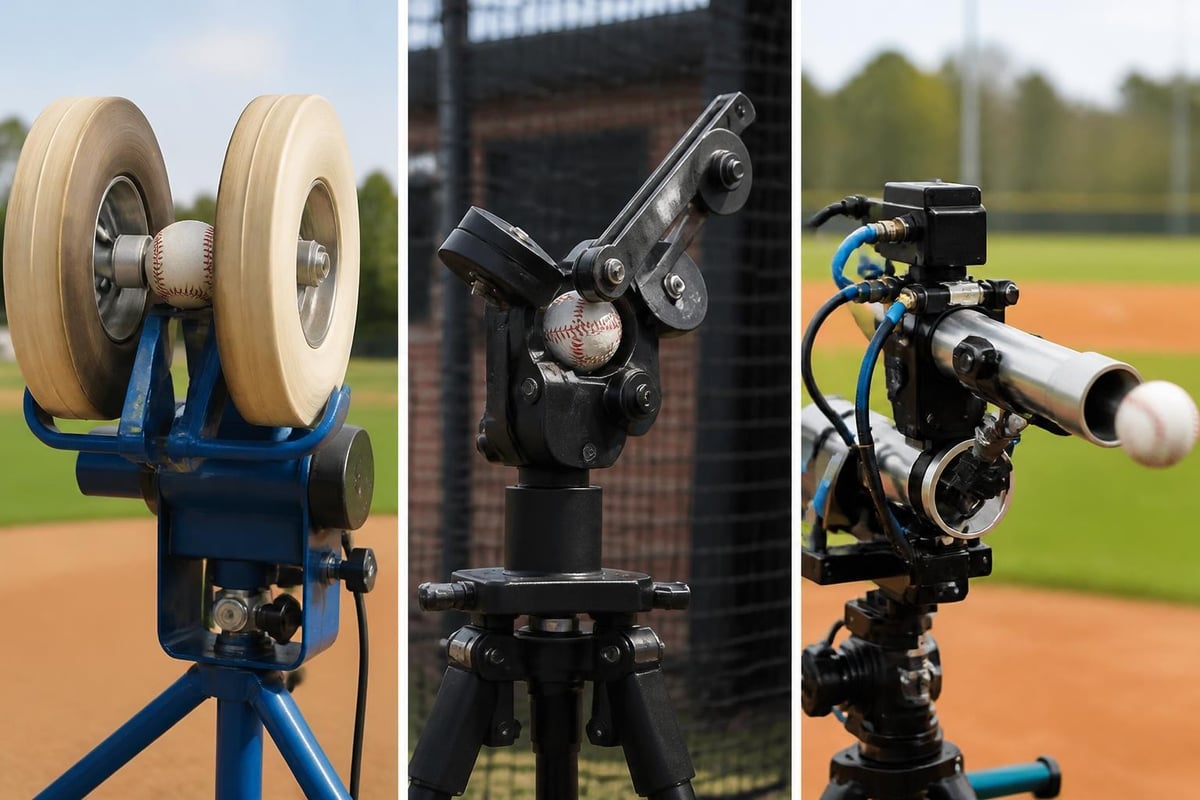
Baseball machines operate using three primary delivery mechanisms, each with distinct advantages for different training scenarios.
Wheel-based systems use two or three spinning wheels to grip and propel the baseball. These machines offer excellent control over pitch speed and movement, making them ideal for advanced training. Twin-wheel designs can generate realistic curveballs, sliders, and other breaking pitches by adjusting the differential speed between wheels.
Arm-style machines mimic the motion of a human pitcher, using a mechanical arm that swings through an arc to release the ball. This design provides a more natural visual cue for batters, helping with timing development. The arm mechanism creates a release point similar to live pitching, which benefits players transitioning practice reps to game situations.
Compressed air systems use pneumatic pressure to launch baseballs at high velocities. These machines excel at consistent speed delivery and can reach professional-level velocities. Air-powered units typically require less maintenance than wheel-based systems but may have limitations in pitch variety.
Engineering Precision and Performance
Research on roller-type pitching machine mechanics demonstrates how finite-element analysis optimizes wheel design, surface materials, and motor control systems to achieve consistent throw accuracy. This engineering precision translates directly into training value. When a baseball machine maintains velocity consistency within 1-2 mph across hundreds of pitches, batters can isolate specific mechanical adjustments without compensating for delivery variation.
The materials used in wheel construction affect ball grip, spin rate, and durability. Polyurethane wheels provide excellent grip and longevity, while rubber compounds may offer different friction characteristics. Motor quality determines how quickly the machine recovers between pitches and maintains speed under continuous use.
| Machine Type | Speed Range | Pitch Variety | Setup Time | Best For |
|---|---|---|---|---|
| Two-Wheel | 30-100 mph | High (movement) | 5-10 min | Advanced training |
| Three-Wheel | 30-95 mph | Very High | 10-15 min | Breaking pitches |
| Arm-Style | 25-85 mph | Limited | 3-5 min | Youth, timing work |
| Pneumatic | 40-105 mph | Low (fastballs) | 15-20 min | Velocity training |
Selecting the Right Machine for Your Program
Choosing an appropriate baseball machine requires evaluating several factors specific to your athletes, budget, and training objectives. Coaches at Sideline Sport Supply frequently guide teams through this decision process, focusing on practical considerations that maximize training value per dollar invested.
Age and Skill Level Considerations
Youth programs need machines that accommodate developing swing mechanics and slower processing speeds. Machines with velocity ranges starting at 25-30 mph allow young players to build confidence and proper contact patterns. Adjustability becomes crucial as players progress, so investing in a machine that grows with your program prevents premature replacement.
High school and competitive travel teams benefit from machines capable of 70-90 mph with movement capabilities. At this level, players need exposure to pitch types they'll face in games, including changeups, curveballs, and sliders. Three-wheel machines excel in this application, though they typically carry higher price points.
College and professional programs require maximum versatility and durability. These environments demand machines that can deliver 1,000+ pitches per week while maintaining calibration accuracy. Advanced features like programmable pitch sequences and remote controls justify higher investments for serious training operations.
Portability and Power Requirements
Fixed installation machines mount permanently in batting cages or indoor facilities. These units often have larger motors, greater stability, and advanced feature sets. They require dedicated electrical circuits and professional installation but provide the most consistent performance for high-volume environments.
Portable machines on wheeled frames allow coaches to move equipment between fields, cages, and storage areas. Weight becomes a critical factor-machines under 75 pounds enable single-person transport, while heavier units may require two people or vehicle assistance. Battery-powered options eliminate extension cord limitations but add charging management to your preparation routine.
Power consumption varies significantly across machine types. Standard household 110V outlets suffice for most recreational and youth machines, while high-performance models may require 220V commercial power. Understanding your facility's electrical infrastructure prevents compatibility issues after purchase.
Safety Protocols and Risk Management
Operating a baseball machine safely requires structured protocols, proper equipment, and ongoing supervision. Studies on timing error and hitting with pitching machines reveal important biomechanical differences between machine and live pitching that impact both performance and safety considerations. Coaches must account for these factors when designing drills and monitoring player responses.
Protective Equipment Requirements
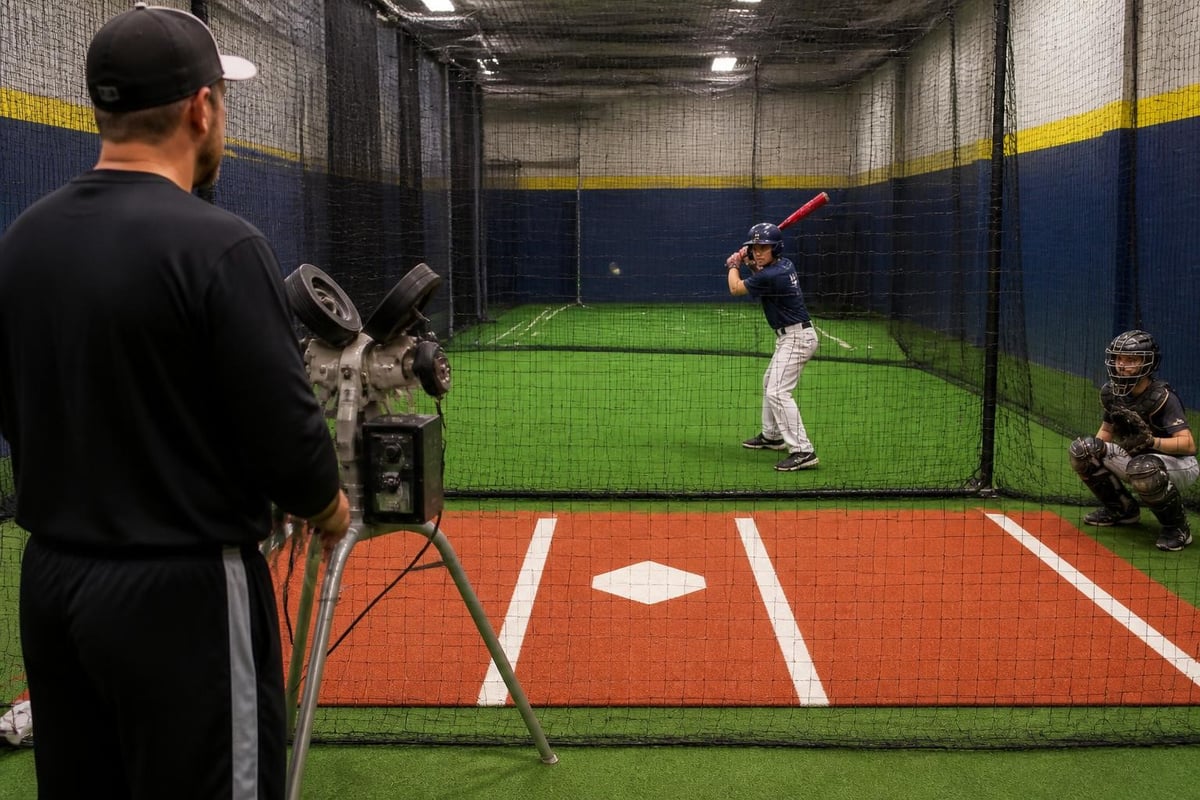
All batters facing a baseball machine should wear approved helmets meeting NOCSAE standards for impact protection. The consistent delivery speed from machines can create complacency, making helmet use non-negotiable even during soft-toss drills. Catchers and fielders positioned near the machine also need appropriate protection.
Recommended protective gear includes:
- NOCSAE-certified batting helmets with face guards for youth players
- Protective screens for coaches feeding baseballs into machines
- Chest protectors for players working on bunting drills
- Athletic cups for all male players regardless of age
- Padded batting gloves to reduce vibration and prevent hand injuries
Net systems and backstops must be properly secured and inspected regularly. A ball exiting the cage at 80 mph poses serious injury risks to bystanders. Facilities should establish clear safety zones and post warning signage in areas where machines operate.
Operational Safety Standards
The U.S. Consumer Product Safety Commission tracks voluntary standards for sports equipment, providing context for how safety regulations evolve. While specific federal mandates for pitching machines remain limited, following manufacturer guidelines and industry best practices protects programs from liability.
Critical operational protocols include:
- Pre-session inspection of all moving parts, electrical connections, and structural components
- Speed verification using a radar gun before players enter the cage
- Clear communication about pitch type, speed, and count before each round
- Emergency shutdown procedures established and rehearsed with all operators
- Maintenance logs documenting wheel wear, motor performance, and any abnormalities
Never leave a baseball machine unattended while powered on. Curiosity-driven accidents occur when unsupervised individuals adjust settings or approach active equipment. Assign specific team members as authorized operators and maintain a checkout system for machine access.
Maximizing Training Effectiveness
A baseball machine delivers maximum value when integrated thoughtfully into comprehensive practice plans. Simply replacing live pitching with machine work doesn't automatically improve player performance. Coaches must structure sessions that leverage machine advantages while addressing their limitations.
Drill Design and Progression
Effective machine-based training follows systematic progressions that build skills incrementally. Start sessions with lower velocities to establish timing and rhythm, then increase speed as players demonstrate consistent contact quality. This approach reduces strikeout frustration and maintains positive reinforcement throughout the session.
Sample progression framework:
- Phase 1 (5-10 pitches): Half-speed contact work focusing on swing path and balance
- Phase 2 (10-15 pitches): Game-speed fastballs to specific zones (inside, outside, high, low)
- Phase 3 (10-15 pitches): Breaking pitches or changeups to work pitch recognition
- Phase 4 (5-10 pitches): Random pitch sequences simulating at-bat scenarios
- Phase 5 (5 pitches): Full-count pressure situations with specific objectives
Location variety prevents players from developing grooved swings that only work against predictable pitches. Modern machines with remote controls allow coaches to change pitch location between deliveries, creating more realistic at-bat simulations. Players should never know exactly where the next pitch will cross the plate.
Addressing Machine Training Limitations
Research shows that biomechanical timing patterns differ when batters face consistent machine deliveries versus variable human pitching. Machines eliminate the deception, arm-slot variations, and release-point differences present in live competition. Coaches must supplement machine work with live batting practice to develop complete pitch recognition skills.
The absence of a visible pitcher also removes important visual cues batters use to predict pitch type and location. In games, hitters read arm speed, hand position, and release point to anticipate what's coming. Baseball training machines excel at mechanical refinement and volume work but cannot fully replace game-representative pitching.
Strategies to minimize training transfer issues:
- Limit machine sessions to 40-50% of total batting practice volume
- Intersperse live pitching rounds between machine segments
- Use video analysis to compare swing mechanics across different pitch sources
- Implement cognitive training tools that require visual decision-making
- Schedule regular live at-bats against unfamiliar pitchers
Analytics-focused programs can leverage technology like PitcherNet systems to extract detailed pitch kinematics from video, enabling precise comparison between machine output and live pitcher performance. This data helps coaches validate that machine settings accurately replicate game conditions.
Maintenance and Longevity Optimization
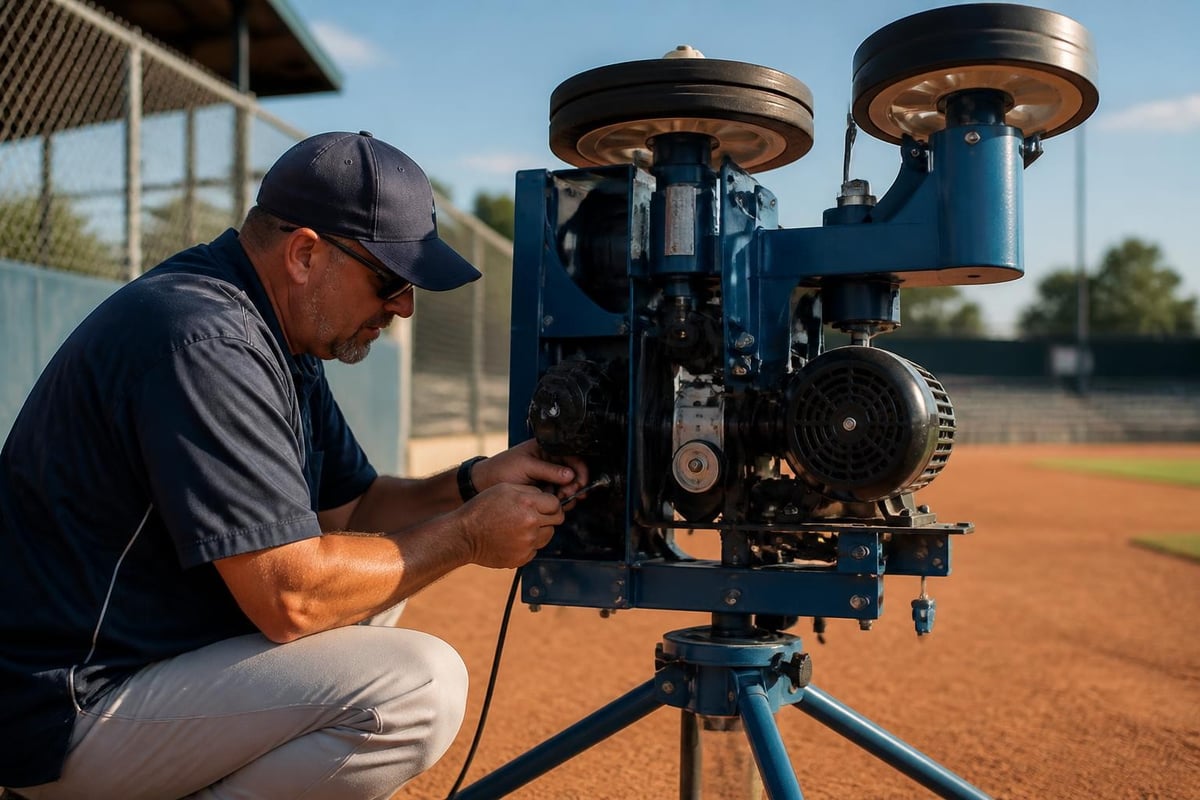
Proper maintenance extends baseball machine lifespan and ensures consistent performance across seasons. Equipment failures during practice waste valuable time and disrupt training schedules. Establishing routine maintenance protocols prevents most common issues and identifies developing problems before they cause operational failures.
Routine Maintenance Checklist
Daily pre-use inspection takes five minutes but prevents significant problems. Before each session, operators should verify wheel condition, check power connections, and test speed consistency with several warm-up pitches. This brief assessment catches loose components, worn wheels, or electrical issues before players begin hitting.
| Maintenance Task | Frequency | Time Required | Impact if Neglected |
|---|---|---|---|
| Clean wheels/rollers | After each use | 5 minutes | Reduced accuracy, ball marks |
| Inspect power cords | Before each use | 2 minutes | Electrical hazards |
| Lubricate moving parts | Weekly | 10 minutes | Increased wear, noise |
| Calibrate speed settings | Monthly | 15 minutes | Inaccurate velocities |
| Replace worn wheels | As needed | 20 minutes | Inconsistent delivery |
| Professional service | Annually | Varies | System failures |
Weekly maintenance procedures include thorough cleaning of all ball-contact surfaces, lubrication of arm pivots or wheel bearings per manufacturer specifications, and inspection of net attachments and safety equipment. Teams using machines heavily may need to accelerate this schedule to twice-weekly servicing.
Wheel Replacement and Calibration
Wheel wear represents the most common baseball machine maintenance issue. As polyurethane surfaces degrade, they lose grip efficiency and create inconsistent spin rates. Visual inspection reveals surface gouges, flat spots, or hardening that indicate replacement needs. Most manufacturers recommend wheel replacement after 15,000-20,000 pitches, though actual lifespan varies with ball quality and usage intensity.
Calibration ensures advertised speeds match actual delivery velocities. Use a quality radar gun to verify speed accuracy across the full operational range. If readings consistently fall below machine settings, wheel replacement or motor servicing may be necessary. Digital displays showing wheel RPM help diagnose whether mechanical slippage or motor performance causes the discrepancy.
Storage environment significantly impacts longevity. Machines kept in climate-controlled spaces experience less component degradation than those exposed to temperature extremes and humidity. Cover machines during off-seasons and disconnect power to prevent dust accumulation and electrical issues.
Integration with Comprehensive Training Programs
A baseball machine functions most effectively as one component within a broader player development system. Forward-thinking programs combine machine work with live pitching, video analysis, strength training, and mental skills development. This integrated approach produces well-rounded players prepared for competitive baseball's varied demands.
Complementary Training Tools
Coaches should view machine sessions as opportunities to isolate specific mechanical elements while other training methods address different skill dimensions. Video analysis following machine rounds helps players visualize swing adjustments and track progress over time. Modern smartphone technology makes this accessible to programs at every budget level.
Strength and conditioning work complements machine batting practice by developing the physical tools needed to execute mechanical concepts. Rotational power, hip mobility, and hand speed determine how effectively players can apply swing adjustments practiced against machine pitches. Exploring resources about fitness sports equipment helps coaches build complete training environments.
Mental approach training addresses pitch recognition, situational hitting, and confidence development that machines cannot fully provide. Simulated at-bat scenarios with game consequences create pressure situations that test players' ability to execute mechanics under stress. Combining machine volume work with high-leverage live situations produces complete hitters.
Multi-Sport Athletes and Cross-Training
Many baseball players participate in multiple sports, requiring efficient practice sessions that maximize skill development per time invested. Baseball machines enable concentrated hitting work that fits around other athletic commitments. A focused 30-minute machine session can deliver 100+ quality swings, providing repetition volume difficult to achieve through traditional batting practice.
Programs serving multi-sport athletes should consider versatile training spaces that accommodate various equipment needs. Understanding how to outfit facilities for different sports-from pickleball equipment to cricket gear-helps athletic directors maximize facility utilization and budget efficiency.
Youth Baseball and Age-Appropriate Implementation
Introducing baseball machines to youth programs requires special consideration regarding physical development, attention spans, and safety awareness. USA Baseball provides guidelines for age-appropriate training methods and equipment use in youth leagues, emphasizing progressive skill development and injury prevention.
Developmental Considerations
Young players benefit most from machines when used to build confidence and establish fundamental mechanics. Starting velocities should feel comfortable rather than challenging, typically 25-35 mph for players under 10 years old. Success breeds engagement, and early positive experiences with hitting create foundation for long-term baseball participation.
Session duration matters more than pitch count for youth athletes. Attention spans limit effective practice length, making 15-20 minute focused sessions more productive than extended 45-minute marathons. Quality repetitions with mental engagement outperform mindless volume work where players simply swing at deliveries.
Age-specific recommendations:
- Ages 7-9: 25-35 mph, stationary tee work combined with slow machine pitches, emphasis on contact over power
- Ages 10-12: 35-50 mph, introduction to basic pitch location variety, developing strike zone awareness
- Ages 13-15: 45-65 mph, breaking pitch exposure, beginning situational hitting concepts
- Ages 16-18: 55-85 mph, full pitch repertoire, advanced mechanical refinement
Advanced Applications and Performance Analytics
Elite programs leverage baseball machines alongside sophisticated measurement tools to quantify improvement and identify optimal training parameters for individual players. Launch angle monitors, bat speed sensors, and video analysis software transform machine sessions from simple repetition work into data-driven development opportunities.
Measuring Progress and Adjusting Protocols
Establishing baseline metrics allows coaches to track whether training protocols produce desired outcomes. Exit velocity measurements before and after focused machine sessions reveal whether mechanical adjustments improve power output. Consistency metrics showing percentage of quality contact provide objective feedback on swing reliability.
Modern sensor technology attaches to bats or players, capturing detailed biomechanical data during machine rounds. These systems measure bat speed, attack angle, time to contact, and swing plane efficiency. Comparing metrics across different pitch velocities and locations helps identify specific weaknesses requiring targeted work.
Key performance indicators for machine training:
- Average exit velocity across 20-pitch samples
- Hard contact percentage (exit velocity above 90 mph for high school players)
- Line drive rate versus ground balls and fly balls
- Swing-and-miss rate at game speeds
- Consistency score (standard deviation of contact quality)
- Time to adjustment (pitches required to solve new pitch type/location)
Data collection without actionable application wastes resources. Coaches should establish clear improvement targets and adjust training intensity based on measurable progress. If exit velocity stagnates despite increased session frequency, mechanical issues or strength deficits may require attention before additional volume yields results.
Competitive Advantage Through Technology Integration
Programs willing to invest in integrated training systems gain competitive advantages through more efficient player development. Combining a quality baseball machine with video analysis and performance tracking creates feedback loops that accelerate improvement. Players see immediate results from adjustments, reinforcing correct patterns and building intrinsic motivation.
Sharing performance data with players increases engagement and ownership of development processes. When athletes understand specific metrics correlating with game success, they approach machine sessions with clearer objectives. Transparent communication about strengths, weaknesses, and improvement strategies builds trust between coaches and players.
Investing in a quality baseball machine represents a significant commitment that pays dividends through improved practice efficiency, increased batting repetitions, and accelerated player development when implemented thoughtfully. Whether outfitting a youth program, high school team, or competitive training facility, understanding the technology, safety requirements, and integration strategies covered in this guide helps maximize return on your equipment investment. Sideline Sport Supply provides reliable, affordable baseball machines and training essentials designed to support practices and player development at every level, with straightforward pricing and fast fulfillment so your team can focus on improving performance rather than sourcing equipment.