

Soccer Posts: Complete Guide to Goal Selection & Safety
Soccer posts stand as the defining feature of the world's most popular sport, serving as the focal point where games are won and lost. Whether you're outfitting a youth recreation program, upgrading high school facilities, or maintaining a competitive club complex, understanding the specifications, safety requirements, and practical considerations for soccer posts is essential. From portable training goals to permanent stadium installations, selecting the right equipment impacts player development, facility safety, and long-term operational costs.
Understanding Standard Soccer Post Dimensions
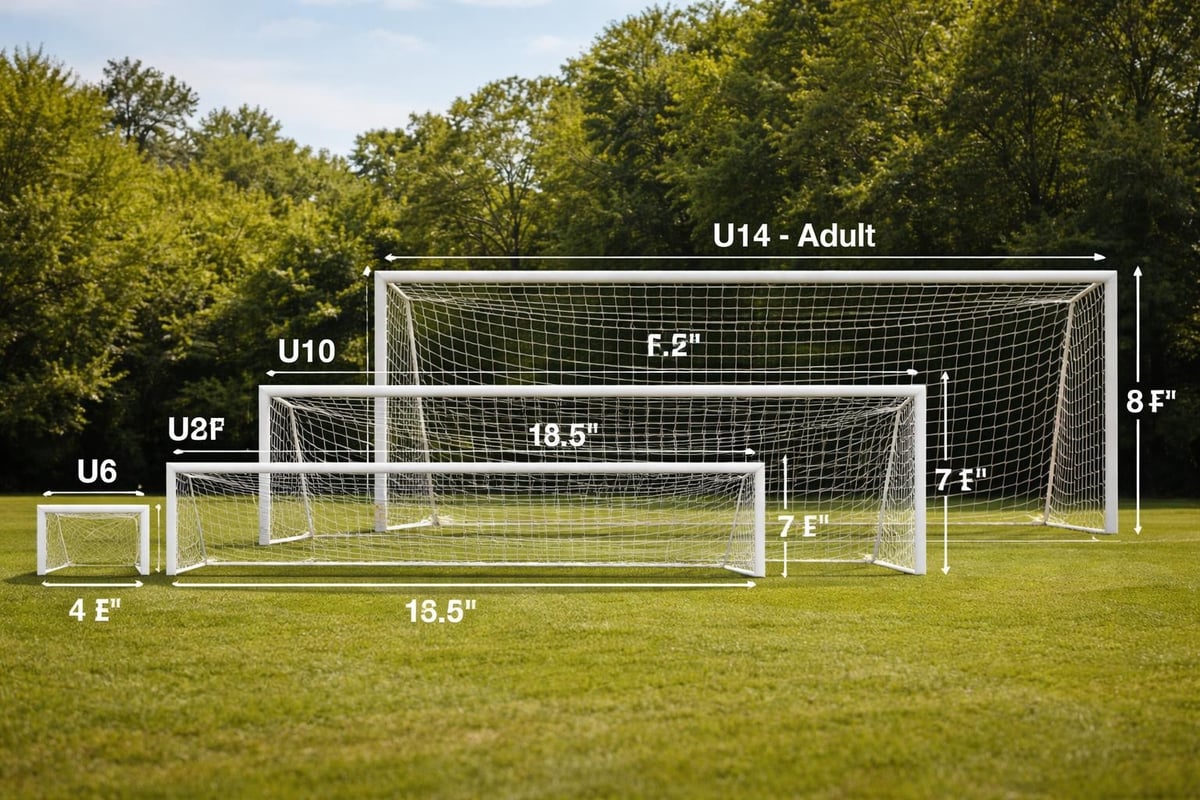
Professional and competitive soccer posts must adhere to strict dimensional requirements established by the International Football Association Board. The Bundesliga's official FAQ details the standard dimensions and materials for soccer goals, which specify that regulation posts measure 8 yards (24 feet) wide and 8 feet high from the ground to the crossbar.
These dimensions apply to adult competitions, but youth leagues require scaled-down versions appropriate for player age and development. Understanding which size fits your program prevents purchasing errors and ensures compliance with league regulations.
Youth Soccer Post Size Requirements
Different age groups require specific goal dimensions to match player capabilities and field proportions:
- U6-U8: 4 feet high x 6 feet wide
- U9-U10: 6.5 feet high x 12 feet wide
- U11-U12: 7 feet high x 21 feet wide
- U13-U19: 8 feet high x 24 feet wide (full size)
These graduated sizes support skill development by maintaining proportional challenge levels as players grow. Teams serving multiple age groups often need various post sizes, making storage and versatility key purchasing considerations.
Materials and Construction Quality
Modern soccer posts utilize several material options, each offering distinct advantages for different applications and budgets.
| Material | Durability | Weight | Portability | Best Use Case |
|---|---|---|---|---|
| Aluminum | High | Light | Excellent | Training fields, multi-use facilities |
| Steel | Very High | Heavy | Limited | Permanent installations, competition venues |
| PVC | Moderate | Very Light | Superior | Youth programs, casual play |
| Combination | High | Moderate | Good | Versatile programs needing durability and mobility |
Aluminum posts deliver professional-grade performance while remaining light enough for repositioning between practice sessions. The corrosion-resistant properties make them ideal for facilities in humid climates or coastal regions where steel would deteriorate rapidly.
Steel construction provides maximum structural integrity for permanent installations. Powder-coated finishes protect against rust, though periodic maintenance ensures longevity. These posts handle aggressive play and severe weather conditions better than lighter alternatives.
PVC soccer posts serve recreational programs where budget constraints limit investment in metal equipment. While less durable than metal options, quality PVC posts with reinforced joints perform adequately for youth training and casual matches.
Frame Profile and Net Attachment
Square and round profiles each present unique characteristics affecting performance and maintenance. Square profiles typically offer more stable net attachment points and resist rotation better than round posts. However, round profiles distribute impact forces more evenly, potentially reducing injury severity during collisions.
Net attachment systems range from simple hooks to sophisticated channels that secure netting without external hardware. Channel systems create cleaner aesthetics and eliminate snag points that damage nets over time.
Critical Safety Standards and Compliance
Soccer post safety represents a serious concern for athletic facilities, schools, and sports organizations. The Illinois Department of Public Health outlines safety measures to prevent injuries related to movable soccer goals, emphasizing that unsecured goals have caused fatalities when they tip over.
Every movable soccer post system requires proper anchoring whenever in use. Permanent ground anchors, weighted bases, or auger-style stakes prevent tip-over accidents that occur when players climb on goals or when wind forces act on the structure and netting.
Anchoring Methods and Requirements
Multiple anchoring approaches meet safety standards depending on field surface and goal mobility needs:
- Ground anchors with pins: Semi-permanent solution for grass fields requiring seasonal repositioning
- Weighted bases: Portable option using sand or water-filled containers
- Auger stakes: Quick-install solution for temporary field setups
- In-ground sleeves: Permanent installation allowing goal removal when fields serve multiple sports
Goals4Sports® offers comprehensive soccer goal safety guidelines, including specific weight requirements for various post sizes. Full-size goals typically require minimum 400 pounds of anchoring force to resist tip-over under normal conditions.
Never leave soccer posts unattended without proper anchoring. Even when not in active use, unsecured goals present hazards to children who may climb on crossbars or swing from netting.
Portable Versus Permanent Installation Options
Field usage patterns and facility constraints determine whether portable or permanent soccer posts better serve your program needs. Similar to how organizations must evaluate equipment placement for different sports-as discussed in our guide to batting cages-soccer facilities require thoughtful planning around goal positioning and storage.
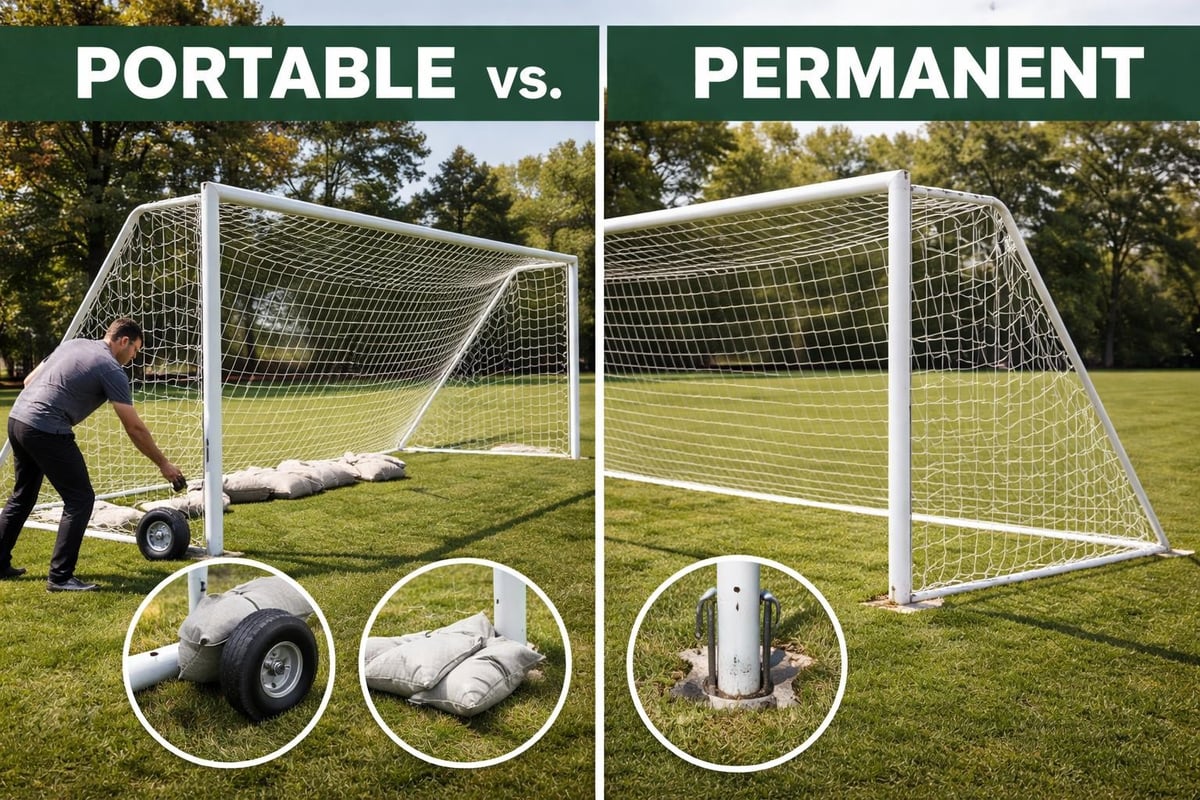
Portable soccer posts excel in multi-sport facilities where fields convert between activities. Wheeled systems with counterweight bases allow quick repositioning without tools or heavy equipment. This versatility supports soccer programs that share space with football, lacrosse, or field hockey teams.
Benefits of portable systems include:
- Field reconfiguration for different age groups
- Protected storage during off-season
- Reduced vandalism exposure when secured indoors
- Accommodation of multi-sport field scheduling
Permanent installations suit dedicated soccer complexes and competition venues where goals remain in fixed positions year-round. In-ground sleeves combined with removable posts offer semi-permanent solutions that protect goal structures while allowing field maintenance access.
Storage and Seasonal Management
Proper storage extends soccer post lifespan significantly. Indoor storage protects aluminum and steel from weathering, prevents net deterioration from UV exposure, and reduces theft or vandalism risks. Facilities lacking indoor space should use weatherproof covers and periodic inspections to identify corrosion or structural damage early.
When storing soccer posts for extended periods, remove netting to prevent permanent stretching and inspect frame joints for stress cracks. Apply protective lubricant to moving parts and repaint any areas where powder coating has chipped.
Net Specifications and Replacement Considerations
Soccer post performance depends equally on proper netting selection and maintenance. Net depth, mesh size, and material composition affect ball retention, visibility, and replacement frequency.
| Net Feature | Specification | Impact |
|---|---|---|
| Depth (top) | 3-6 feet | Ball containment during high shots |
| Depth (bottom) | 3-4 feet | Ground-level shot retention |
| Mesh size | 4-5 inches | Balance between visibility and containment |
| Material | Polyethylene, nylon, polyester | Durability and weather resistance |
Polyethylene netting provides excellent weather resistance and maintains tension better than nylon alternatives. UV-treated varieties resist sun damage in outdoor installations, extending replacement intervals.
Twisted vs. braided construction affects durability significantly. Braided nets resist abrasion better than twisted varieties but typically cost more initially. For high-use facilities, the extended lifespan of braided nets justifies higher upfront investment.
Net Attachment Best Practices
Proper net attachment prevents gaps that allow balls to escape while avoiding excessive tension that damages both nets and frame structures. Use plastic-coated hooks or net clips rather than bare metal hardware that cuts through netting fibers.
Check net attachment points monthly during active seasons, retightening connections that have loosened through use. Replace worn attachment hardware immediately to prevent net failure during critical moments.
Compliance with ASTM Standards
This ASTM guide presents directions for the installation, use, and storage of movable soccer goals, establishing industry-recognized safety protocols. ASTM F1938-98 specifically addresses movable goal safety, providing detailed requirements for anchoring, labeling, and maintenance procedures.
Organizations purchasing soccer posts should verify ASTM compliance through manufacturer documentation. Compliant products include permanent warning labels about tip-over hazards and provide detailed anchoring instructions with each unit.
Safety labels must remain visible and legible throughout the goal's service life. Replace faded or damaged warning labels immediately to maintain compliance and ensure users understand proper anchoring requirements.
Inspection and Maintenance Schedules
Regular inspections identify structural problems before they compromise safety or performance. Implement quarterly inspection protocols that examine:
- Frame joints for cracks or separation
- Anchor points for secure attachment
- Net condition and attachment integrity
- Ground sleeves or base stability
- Warning label visibility
Document inspection findings and maintain service records demonstrating compliance with safety standards. This documentation protects organizations from liability while ensuring equipment remains match-ready.
Selecting Soccer Posts for Specific Applications
Different programs require goal features tailored to their unique operational needs. Training facilities prioritize portability and durability under heavy use, while competition venues emphasize regulation compliance and professional appearance.
Training and Practice Facilities
Practice environments need goals that withstand repetitive use from multiple teams while offering flexibility for various drill configurations. Consider these features for training applications:
- Quick-release net systems for rapid field changes
- Reinforced corner joints resisting repeated ball impacts
- Wheeled bases facilitating one-person repositioning
- Modular designs accommodating different training setups
Many training programs benefit from smaller practice goals supplementing regulation-size posts. These compact units allow shooting drills, small-sided games, and skill development exercises in confined spaces.
Competition and Tournament Venues
Match-day requirements demand soccer posts meeting strict regulatory standards while projecting professional quality. Tournament facilities should invest in:
- Powder-coated steel construction for maximum durability
- Regulation-compliant dimensions with certification documentation
- Professional-grade netting with appropriate depth specifications
- Permanent anchoring systems preventing any movement during play
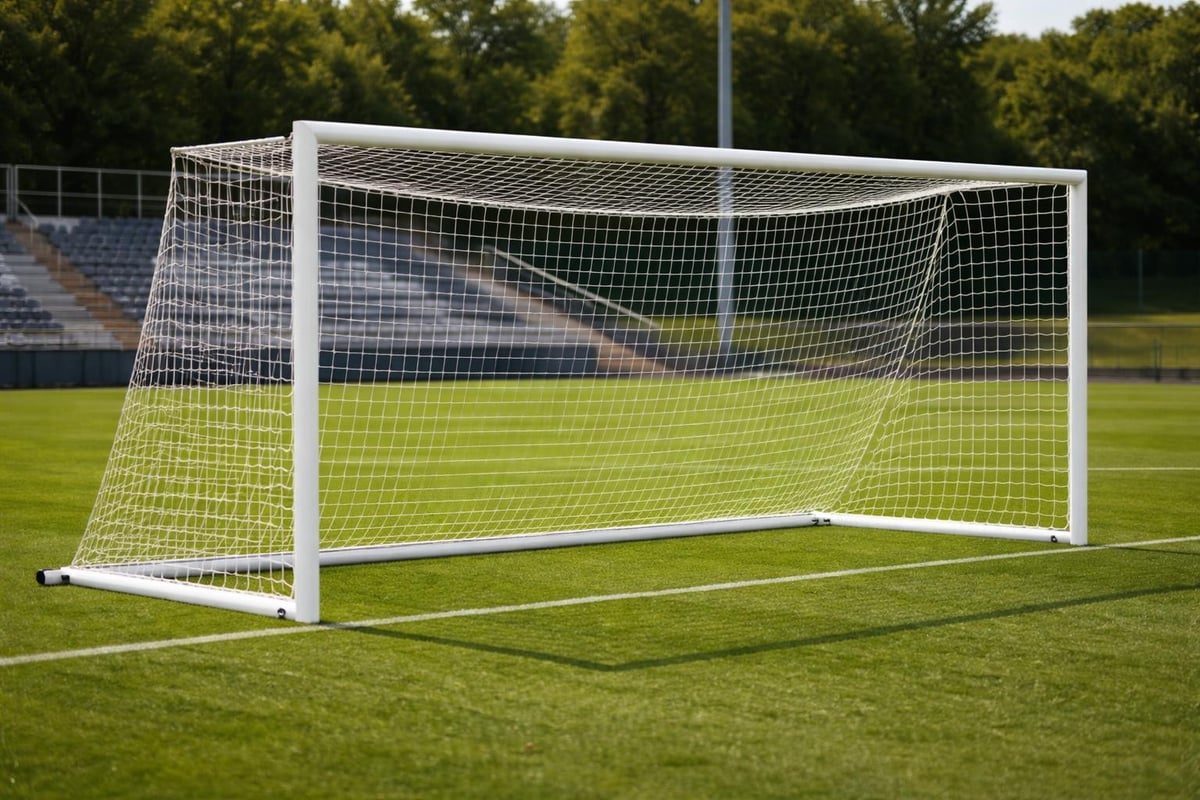
Visual presentation matters in competitive environments. Select posts with clean lines, consistent finish quality, and minimal visible hardware for broadcast-quality appearance.
Budget Considerations and Long-Term Value
Soccer post investment decisions should balance initial costs against expected lifespan and operational requirements. While budget constraints affect every equipment purchase, safety and compliance cannot be compromised for cost savings.
Entry-level options starting around $200-$400 per goal suit recreational programs with limited budgets and lower usage intensity. These typically feature PVC or light aluminum construction with basic netting.
Mid-range selections priced $600-$1,200 deliver aluminum construction, better anchoring systems, and improved durability for school and club programs with moderate competitive ambitions.
Premium installations exceeding $2,000 per goal provide tournament-grade steel construction, advanced anchoring, and professional aesthetics suitable for college and elite club facilities.
Calculate total cost of ownership including:
- Initial purchase price
- Shipping and installation expenses
- Anchoring hardware and accessories
- Expected replacement interval for nets
- Maintenance and repair costs over equipment lifespan
Budget-conscious organizations sometimes achieve better long-term value through quality mid-range equipment versus frequent replacement of cheaper alternatives. Just as Sideline Sport Supply emphasizes reliable equipment that delivers consistent performance, soccer posts should provide years of dependable service without constant intervention.
Installation Requirements and Field Preparation
Proper installation ensures soccer posts function safely and maintain position under game conditions. Whether installing permanent ground sleeves or setting up portable units, following manufacturer specifications prevents premature failure and safety hazards.
Ground Sleeve Installation for Permanent Posts
In-ground installation requires careful measurement and concrete work to create stable mounting points:
- Mark exact goal positions based on field dimensions
- Excavate holes to manufacturer-specified depth (typically 36-48 inches)
- Set sleeves ensuring vertical alignment and proper spacing
- Pour concrete maintaining sleeve position during curing
- Allow minimum 72-hour cure time before inserting posts
- Verify final post position matches regulation measurements
Professional installation ensures proper alignment and prevents costly corrections after concrete cures. Many organizations hire experienced contractors for initial installation, then handle routine post removal and replacement internally.
Portable System Setup Procedures
Even portable soccer posts require careful setup to meet safety requirements:
- Position goals at regulation distances from touchlines and end lines
- Verify net attachment is complete before anchoring
- Apply appropriate anchoring method for field surface conditions
- Test stability by applying pressure to crossbar
- Inspect anchor security before allowing player access
Never assume portable goals will remain stable without proper anchoring. Wind loading on nets creates substantial forces that can topple even heavy posts when inadequately secured.
Common Problems and Troubleshooting Solutions
Soccer posts encounter predictable issues that responsive maintenance addresses before they impact play or compromise safety. Recognizing common problems allows quick intervention and minimizes downtime.
| Problem | Cause | Solution |
|---|---|---|
| Net sagging | Stretched material, loose attachment | Retighten connections, replace worn netting |
| Frame wobbling | Loose joints, inadequate anchoring | Tighten bolts, improve anchor security |
| Corrosion spots | Coating damage, moisture exposure | Clean, sand, and repaint affected areas |
| Difficult mobility | Wheel damage, bearing failure | Lubricate or replace wheel assemblies |
Preventive maintenance prevents most common issues through regular attention. Quarterly inspections combined with seasonal deep maintenance keep goals performing reliably year after year.
Address minor problems immediately before they escalate. Small coating chips become major corrosion when left untreated, while slightly loose joints eventually fail completely under game stress.
Environmental and Weather Considerations
Climate conditions significantly affect soccer post performance and longevity. Facilities in different regions face unique challenges requiring specific equipment features and maintenance approaches.
Coastal environments demand enhanced corrosion protection through marine-grade coatings or stainless steel hardware. Salt air accelerates aluminum and steel degradation, making regular cleaning and protective treatments essential.
High-wind areas require robust anchoring exceeding minimum standards. Consider permanent installations with deeper ground sleeves or significantly weighted portable bases in regions experiencing frequent strong winds.
Cold climate facilities should select posts with weather-resistant coatings that won't crack in freezing temperatures. Store portable units indoors during winter months to prevent cold-related material degradation.
UV-intense regions need posts with fade-resistant finishes and nets manufactured from UV-stabilized materials. Regular inspection catches sun damage before it compromises structural integrity.
Multi-Field Facility Management Strategies
Organizations operating multiple soccer fields face unique equipment management challenges requiring systematic approaches to goal deployment, storage, and maintenance.
Implement these strategies for efficient multi-field operations:
- Standardize equipment specifications across all fields to simplify replacement parts inventory
- Establish rotation schedules distributing wear evenly across goal inventory
- Create centralized storage protecting equipment while maintaining organized deployment readiness
- Assign field-specific equipment preventing loss and ensuring accountability
Color-coding systems help staff quickly identify which goals belong on specific fields, particularly important when serving different age groups with varying post sizes. Simple painted marks or equipment tags prevent confusion during setup.
Equipment Sharing and Scheduling
Facilities serving multiple organizations often share soccer posts between user groups. Clear policies establish responsibility for setup, takedown, and damage reporting. Written agreements defining each group's obligations prevent disputes and ensure proper equipment care.
Consider investing in additional portable goals for high-demand time periods rather than requiring users to constantly move equipment between fields. The time saved and reduced wear justify the additional investment.
Selecting and maintaining appropriate soccer posts requires balancing regulatory compliance, safety requirements, durability expectations, and budget realities. Whether outfitting youth programs with age-appropriate training goals or installing tournament-grade posts for competitive venues, informed decision-making ensures equipment serves players safely for years. Sideline Sport Supply provides reliable athletic equipment and training essentials backed by straightforward pricing and fast fulfillment, so your teams can focus on developing skills and competing at their highest level rather than managing equipment challenges.