

Soccer Goal and Rebounder: Complete Training Guide 2026
Training soccer players effectively requires the right equipment combination, and nothing accelerates skill development quite like a soccer goal and rebounder setup. These complementary training tools have become essential for coaches, schools, and individual athletes who want to maximize practice efficiency without requiring multiple teammates or extensive field space. Whether you're building a training program for a youth league or establishing a personal development routine, understanding how to select and utilize these tools strategically can transform ordinary practice sessions into focused skill-building opportunities.
Understanding Soccer Goals and Rebounders as Training Systems
A soccer goal and rebounder combination creates a complete training ecosystem that addresses multiple skill dimensions simultaneously. Goals provide the target for shooting accuracy and finishing technique, while rebounders return the ball for continuous repetition and first-touch practice.
Different Goal Types for Training Purposes
Soccer goals come in various configurations designed for specific training contexts. Portable goals ranging from 4x6 feet to regulation 8x24 feet offer flexibility for practice fields, backyards, and training facilities. Pop-up goals provide lightweight solutions for quick setup and transport, making them ideal for coaches who run sessions at multiple locations. Weighted or anchored goals deliver stability for high-velocity shooting practice and competitive drills.
The frame material significantly impacts durability and performance. Steel frames provide maximum stability for intensive training programs, while aluminum and fiberglass options reduce weight without sacrificing structural integrity. Net quality matters equally, with polyethylene and nylon options offering different balances between weather resistance and ball retention.
| Goal Type | Best Use Case | Typical Dimensions | Portability |
|---|---|---|---|
| Pop-up | Individual training, youth practice | 4x3 to 6x4 feet | High |
| Portable steel frame | Team practice, school programs | 6x4 to 8x24 feet | Medium |
| Weighted anchored | Competitive training, permanent setups | 8x24 feet (regulation) | Low |
Rebounder Design and Training Applications
Rebounders utilize tensioned nets or angled panels that return the ball at controlled trajectories. Single-panel rebounders offer straightforward ball return for passing and receiving practice, while multi-angle systems allow players to adjust the return angle for varied training scenarios.
Size considerations affect training versatility. Compact rebounders measuring 3x3 feet work well for close-range control drills and individual ball mastery. Larger 6x4 or 8x5 foot rebounders accommodate power passing, long-range shooting returns, and goalkeeper distribution practice.
Strategic Setup for Maximum Training Efficiency
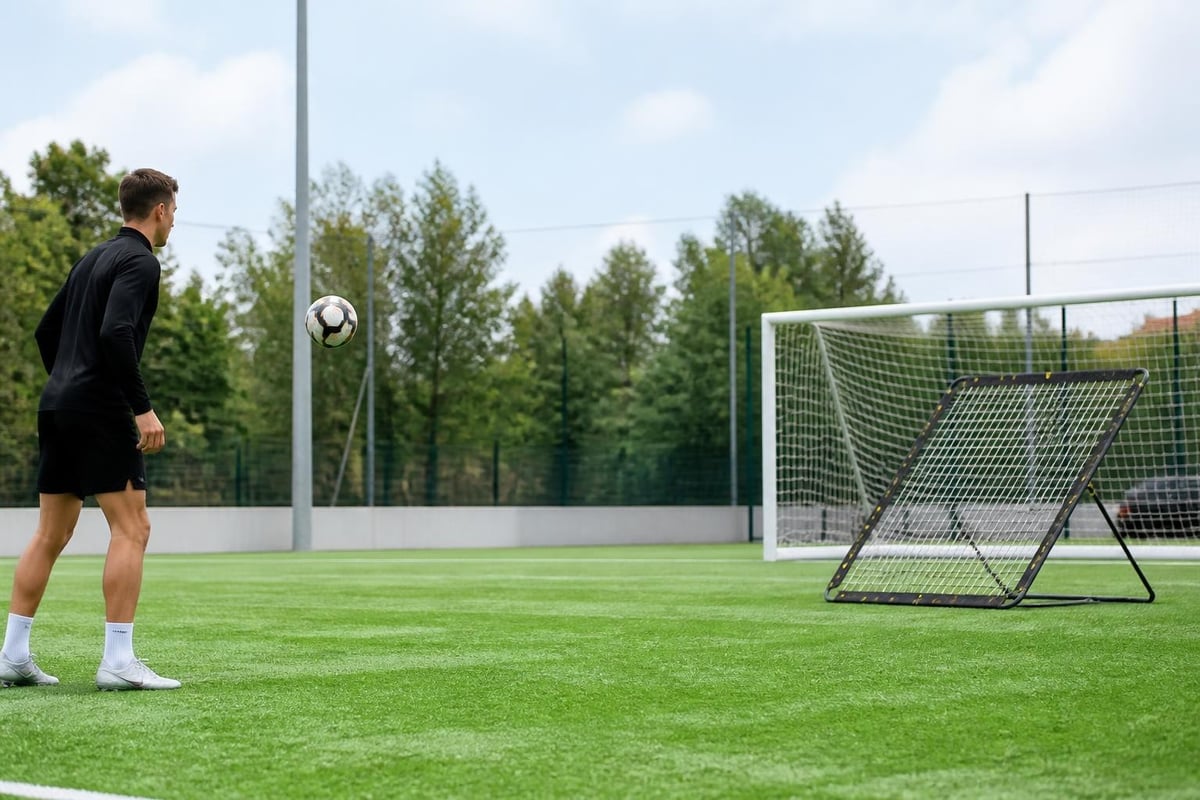
Positioning your soccer goal and rebounder strategically maximizes practice efficiency and skill development opportunities. The spatial relationship between these tools determines which skills you can effectively target during sessions.
Optimal Spacing Configurations
Direct alignment places the rebounder 10-15 feet in front of the goal, creating a passing-to-shooting sequence. Athletes strike the rebounder, control the return, and immediately shoot on goal, simulating game-like transitions from possession to finishing. This configuration develops quick decision-making and composure under pressure.
Angled positioning sets the rebounder 20-30 degrees offset from the goal at 15-20 feet distance. This arrangement emphasizes first-touch direction and creates realistic scenarios where players receive passes from wide positions before shooting. The angled return forces athletes to adjust body positioning and approach angles, mirroring competitive match situations.
For advanced training, position multiple rebounders at various angles around a central goal. This setup allows coaches to design complex passing sequences that culminate in finishing attempts, replicating team play patterns within individual or small-group sessions.
Surface and Safety Considerations
Training surface affects both equipment stability and athlete safety. Grass provides natural cushioning but may require additional anchoring for goals and rebounders. Artificial turf delivers consistent ball roll and allows for precise equipment placement with ground stakes.
Always secure goals properly regardless of surface type. Unanchored goals present serious safety hazards, especially during high-intensity shooting practice. Ground stakes, sandbags, or weighted bases prevent tipping and ensure stable target presentation throughout training sessions.
Skill Development Protocols Using Combined Equipment
A soccer goal and rebounder system enables progressive skill development across all technical competencies. Structured protocols help athletes advance systematically from foundational techniques to game-speed execution.
First Touch and Ball Control Sequences
Begin with basic rebounder strikes focusing on contact point consistency. Athletes pass into the rebounder from 10 feet, control the return with their dominant foot, then switch to their weaker foot. Progressive difficulty increases by reducing control time before the next strike or alternating between inside-foot, outside-foot, and sole control techniques.
Add directional control by requiring athletes to take their first touch toward either goal post. This introduces decision-making elements and mirrors game situations where players must redirect possession immediately upon receiving passes. Set quantifiable targets such as 20 consecutive controlled touches without errors to build competency benchmarks.
Volume matters for skill acquisition. Research shows that technical mastery requires thousands of quality repetitions, and a soccer goal and rebounder combination facilitates this volume without requiring training partners or extensive field space.
Shooting Accuracy and Power Development
Shooting drills progress from stationary placement to dynamic finishing under fatigue. Start with controlled shooting from 12-18 feet, focusing on technique fundamentals: plant foot positioning, body lean, follow-through, and target selection. The goal provides immediate feedback on accuracy while the rebounder eliminates ball retrieval time.
Progressive shooting sequences integrate the rebounder directly:
- Strike rebounder with passing pace
- Control the return with one touch
- Shoot on goal with the second touch
- Repeat for 10 repetitions per foot
Advance this protocol by adding movement requirements. Athletes sprint to the rebounder position, strike while moving, control the return, and finish while still in motion. This builds cardiovascular capacity alongside technical skill and replicates competitive match intensity.
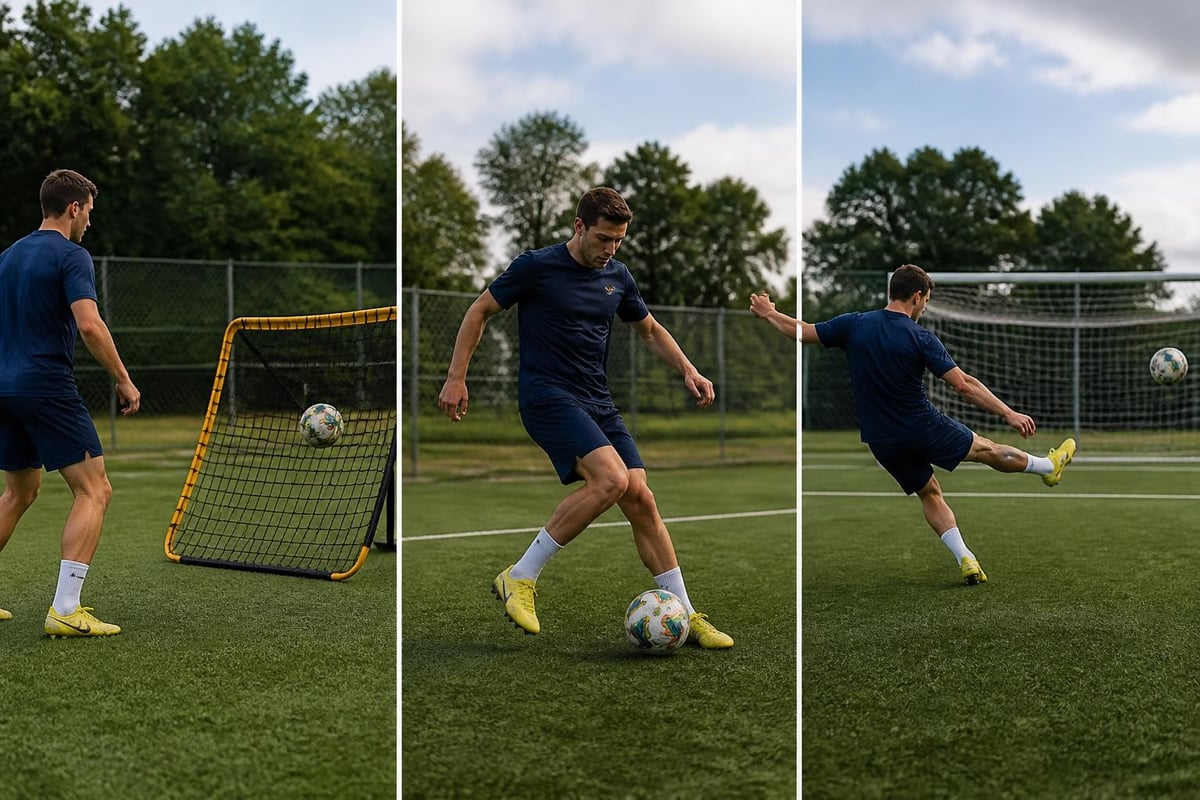
Track shooting accuracy with grid targets or marked zones within the goal. Dividing the goal into nine zones and requiring athletes to hit specific targets adds precision challenges and maintains engagement during repetitive practice.
Age-Appropriate Training Applications
Different age groups and skill levels require modified approaches when using a soccer goal and rebounder for training. Equipment selection and drill complexity should align with developmental stage and athletic maturity.
Youth Player Development (Ages 6-12)
Young players benefit most from appropriately sized equipment. Smaller goals (4x6 or 6x4 feet) provide achievable targets that build confidence while still challenging accuracy. Compact rebounders reduce intimidation and allow for closer working distances that match developing coordination and strength levels.
Focus on engagement and variety rather than pure repetition volume. Youth athletes maintain concentration better with 3-5 minute drill rotations that emphasize fun alongside skill building. Games like "rebounder challenge" where players earn points for consecutive successful returns keep sessions playful while developing technical competencies.
Safety remains paramount with youth training. Ensure all equipment is properly secured, and supervise sessions to prevent improper use that could lead to injuries. Teach proper striking technique from the beginning to establish good habits and prevent stress injuries from repetitive poor mechanics.
Competitive Teen and Adult Training (Ages 13+)
Advanced players leverage a soccer goal and rebounder system for high-intensity interval training that combines technical work with cardiovascular conditioning. Protocols might include 30-second maximum-effort rebounder-to-goal sequences followed by 30-second active recovery, repeated for 10-15 rounds.
Goalkeeper-specific applications become relevant at competitive levels. Goalkeepers use rebounders to practice distribution accuracy, striking the rebounder and immediately moving to save the return shot. This develops quick transitions between attacking and defending responsibilities while building handling stamina.
Position-specific training utilizes the equipment differently based on playing role. Strikers emphasize finishing variety and shooting under pressure, midfielders focus on long-range accuracy and passing combination sequences, while defenders work on controlled clearances and precise distribution to start attacks.
Equipment Selection Criteria for Different Budgets
Investing in a soccer goal and rebounder requires balancing quality, features, and budget constraints. Understanding which specifications provide genuine training value versus cosmetic differences helps maximize equipment investments.
Budget-Conscious Options ($100-$300)
Entry-level combinations typically include pop-up goals paired with basic tension rebounders. These systems provide legitimate training value despite lower price points, particularly for individual athletes or families supporting youth player development. Look for reinforced stitching on nets and rust-resistant frame coatings that extend equipment lifespan.
Limitations include reduced stability during windy conditions and faster wear from intensive use. Budget equipment works best for supplementary home practice rather than primary team training facilities where daily use demands commercial-grade durability.
Mid-Range Investment ($300-$800)
This price range delivers significant quality improvements. Powder-coated steel frames resist corrosion better than basic paint, while premium netting materials withstand UV exposure and heavy ball impact. Rebounders at this level often feature angle adjustability and interchangeable tension settings that expand training applications.
Mid-range equipment suits serious athletes, small training facilities, and competitive youth programs where quality impacts daily training effectiveness. The durability improvements justify higher initial costs through extended replacement cycles and consistent performance.
| Feature | Budget ($100-$300) | Mid-Range ($300-$800) | Premium ($800+) |
|---|---|---|---|
| Frame material | Basic steel/aluminum | Powder-coated steel | Commercial-grade steel |
| Net durability | 1-2 seasons | 3-4 seasons | 5+ seasons |
| Weather resistance | Limited | Good | Excellent |
| Adjustment options | Fixed | Some adjustability | Fully customizable |
| Warranty coverage | 30-90 days | 1 year | 2+ years |
Premium Systems ($800+)
Professional-grade equipment delivers features that matter for institutional buyers and elite training programs. Commercial warranties protect investments, while heavy-duty construction withstands constant use across multiple teams and training sessions daily. Premium rebounders offer precision angle adjustment, interchangeable net tensions, and modular designs that accommodate different drill requirements.
Schools and sports organizations benefit most from premium investments due to usage volume and the need for reliable equipment that performs consistently across varied weather conditions and intensive training schedules. These systems also maintain value better for eventual replacement or resale.
Maintenance and Longevity Best Practices
Proper maintenance extends equipment life and ensures consistent training quality. Regular inspection and preventive care prevent unexpected failures that disrupt practice schedules.
Routine Inspection Protocols
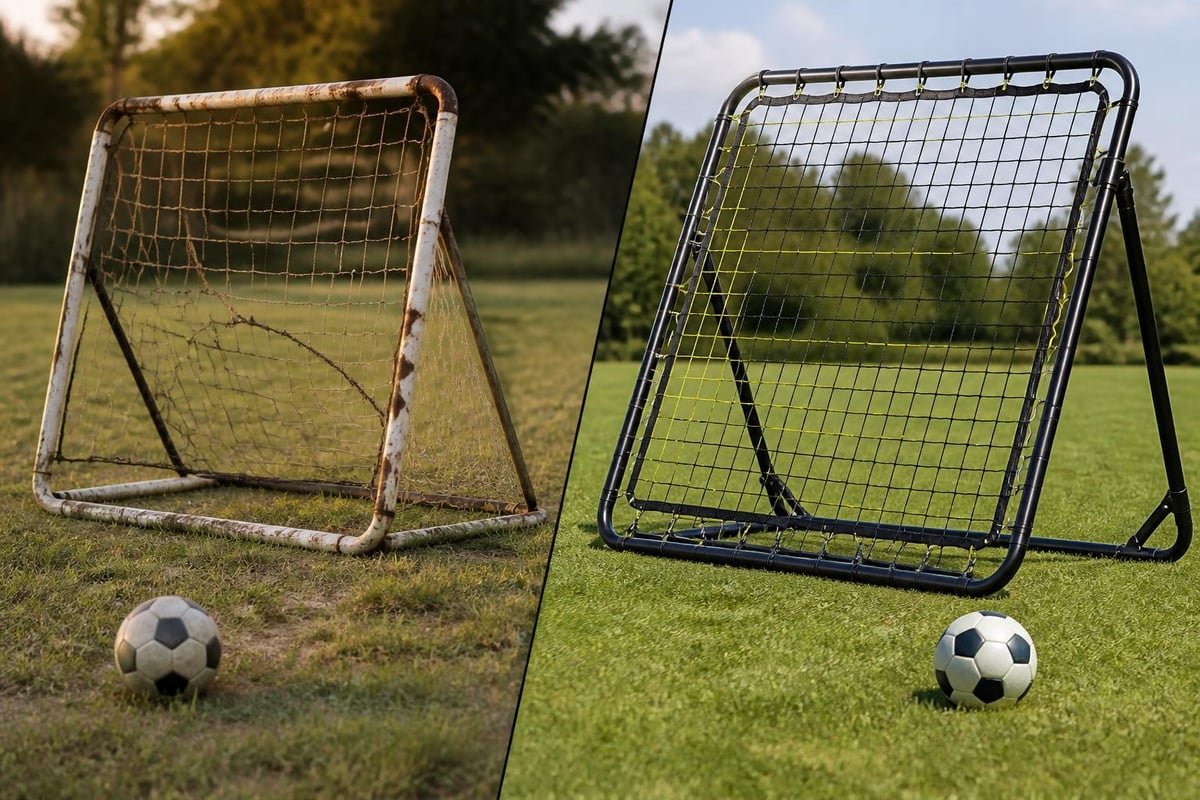
Weekly inspections should check net integrity, frame connections, and anchoring systems. Look for frayed net sections that could expand into larger tears, loose bolts or joints that reduce stability, and anchor point wear that compromises safety. Addressing minor issues immediately prevents progressive damage that requires complete equipment replacement.
Seasonal deep maintenance includes thorough cleaning, lubrication of moving parts on adjustable rebounders, and protective treatments for frames and nets. Remove dirt and debris that accelerate wear, apply rust inhibitors to metal components, and treat nets with UV protectant sprays when used in outdoor settings.
Storage Recommendations
Portable equipment should be stored indoors during extended non-use periods. Temperature extremes and moisture exposure degrade materials faster than normal training wear. If indoor storage isn't available, use weather-resistant covers designed specifically for soccer equipment protection.
Disassemble pop-up goals and folding rebounders according to manufacturer guidelines. Forcing components or incorrect folding sequences can damage frames and create permanent deformation that affects setup and performance. Store equipment in dry locations with adequate ventilation to prevent mold growth on nets and padding.
Integration with Comprehensive Training Programs
A soccer goal and rebounder functions most effectively as part of a broader training ecosystem rather than as standalone solutions. Complementary equipment and structured programming multiply training benefits.
Complementary Training Equipment
Combine goal and rebounder work with agility ladders and cone courses that develop footwork speed and coordination. Athletes perform quick-feet sequences through agility equipment, then immediately transition to rebounder control drills and finishing attempts. This integration builds the multi-skill competency required in competitive matches.
Training vests, resistance bands, and speed parachutes add intensity variation without requiring additional space. Athletes can perform resistance-loaded approaches to shooting drills, building power output alongside technical refinement. The goal provides the target while resistance equipment challenges the movement quality.
For teams and schools looking to build comprehensive training facilities, organizations like Sideline Sport Supply offer coordinated equipment packages that ensure compatibility and streamline procurement. Purchasing goals, rebounders, and supporting training gear from consistent sources simplifies warranty management and maintains quality standards across all equipment categories.
Structured Progression Models
Effective training programs build systematically from technical foundations through game-speed application. Monthly progression cycles might emphasize different competencies while maintaining core skill work:
- Month 1: First-touch mastery and basic passing accuracy
- Month 2: Directional control and receiving under pressure
- Month 3: Finishing technique from varied angles and distances
- Month 4: High-intensity combination sequences integrating all skills
Track quantifiable metrics throughout progression cycles. Count successful first-touch controls per session, measure shooting accuracy percentages across different zones, and time drill completion speeds. Data-driven feedback motivates athletes and identifies specific weaknesses requiring focused attention.
Institutional Purchasing Considerations
Schools, clubs, and sports organizations face unique considerations when acquiring a soccer goal and rebounder inventory. Volume requirements, budget constraints, and multi-team usage patterns influence purchasing strategies.
Quantity Planning for Programs
Calculate equipment needs based on maximum concurrent training groups and desired athlete-to-equipment ratios. A school program serving 60 players across multiple teams might require 4-6 training goals and 6-8 rebounders to facilitate small-group stations during practice sessions. This prevents idle time and maintains training intensity across all athletes simultaneously.
Standardization benefits include simplified replacement parts inventory and consistent training experiences across different coaching staff and age groups. When all teams use compatible equipment, athletes transition smoothly between developmental levels without adjusting to new gear characteristics.
For organizations seeking competitive pricing on bulk orders, resources like our team sales programs provide volume discounts and streamlined ordering processes. Institutions can also explore price match guarantees that ensure budget efficiency without compromising quality standards.
Warranty and Support Requirements
Institutional buyers should prioritize suppliers offering comprehensive warranty coverage and responsive customer support. Equipment failures during competitive seasons create immediate training disruptions, and quick replacement or repair options minimize impact on player development schedules.
Review warranty terms carefully, distinguishing between coverage for manufacturing defects versus normal wear from intensive use. Commercial warranties typically provide more extensive protection appropriate for high-volume training environments compared to consumer-grade coverage designed for occasional recreational use.
Establish relationships with suppliers who understand institutional procurement cycles and can accommodate purchase order systems, multi-delivery schedules, and budget constraints common in educational and athletic organization purchasing departments.
Space Optimization for Limited Training Areas
Not all programs have access to full-size fields or dedicated training facilities. Maximizing a soccer goal and rebounder effectiveness in constrained spaces requires strategic planning and creative drill design.
Small-Space Training Configurations
A 20x30 foot area can accommodate meaningful training when equipment is positioned thoughtfully. Place a 6x4 foot goal at one end and a compact rebounder 12 feet away, creating a focused technical training zone. Athletes work in 5-minute rotations, maintaining intensity through time limits rather than space.
Vertical space utilization becomes important in indoor facilities with height restrictions. Select lower-profile goals and adjust rebounder angles to emphasize ground passes and low-trajectory returns rather than aerial work requiring significant clearance overhead.
Multi-purpose space usage helps programs share facilities with other sports or activities. Portable equipment that sets up and breaks down quickly allows soccer training to coexist with other programs using the same space during different time blocks. Quick-connect goals and lightweight rebounders facilitate rapid transitions between different facility uses.
Safety in Confined Areas
Reduced space increases collision risks and requires enhanced safety protocols. Establish clear boundaries marking active training zones, and limit simultaneous participants to numbers appropriate for available space. One athlete per goal-rebounder setup prevents accidental contact during high-intensity work.
Protective padding on goal posts and rebounder frames reduces injury severity from incidental contact. While this adds cost, the safety improvements justify investments, particularly for youth programs where collision awareness and control haven't fully developed.
Developing skilled, confident soccer players requires consistent quality repetitions that a soccer goal and rebounder combination makes achievable regardless of team size or practice constraints. These versatile training tools transform individual practice sessions and team drills by maximizing touches, eliminating downtime, and creating engaging skill development opportunities that keep athletes motivated throughout training programs. Whether you're equipping a school athletic department, building a club training facility, or supporting an individual athlete's development, Sideline Sport Supply provides the reliable, game-ready equipment and straightforward pricing that lets you focus on player development rather than equipment sourcing.