

Ultimate Guide to Youth Lacrosse Cleats for 2026
Youth lacrosse is exploding in popularity, and the right footwear is more important than ever for young players. Choosing the right youth lacrosse cleats can mean the difference between confident performance and unnecessary injury. This guide will help parents, coaches, and athletes navigate the latest options for 2026.
You will learn how to identify the key features that matter, find the perfect fit, compare top models, and care for your cleats. Discover expert buying tips and the newest innovations. Get ready to give your young athlete the best possible start on the field.
Why the Right Lacrosse Cleats Matter for Youth Players
Choosing the right youth lacrosse cleats is a critical step in supporting your child's athletic journey. The right pair can make a significant difference in safety, confidence, and overall performance on the field.
Properly designed youth lacrosse cleats directly impact how young athletes move, cut, and accelerate. A secure grip on grass or turf helps prevent slips and falls, leading to fewer injuries during intense play.
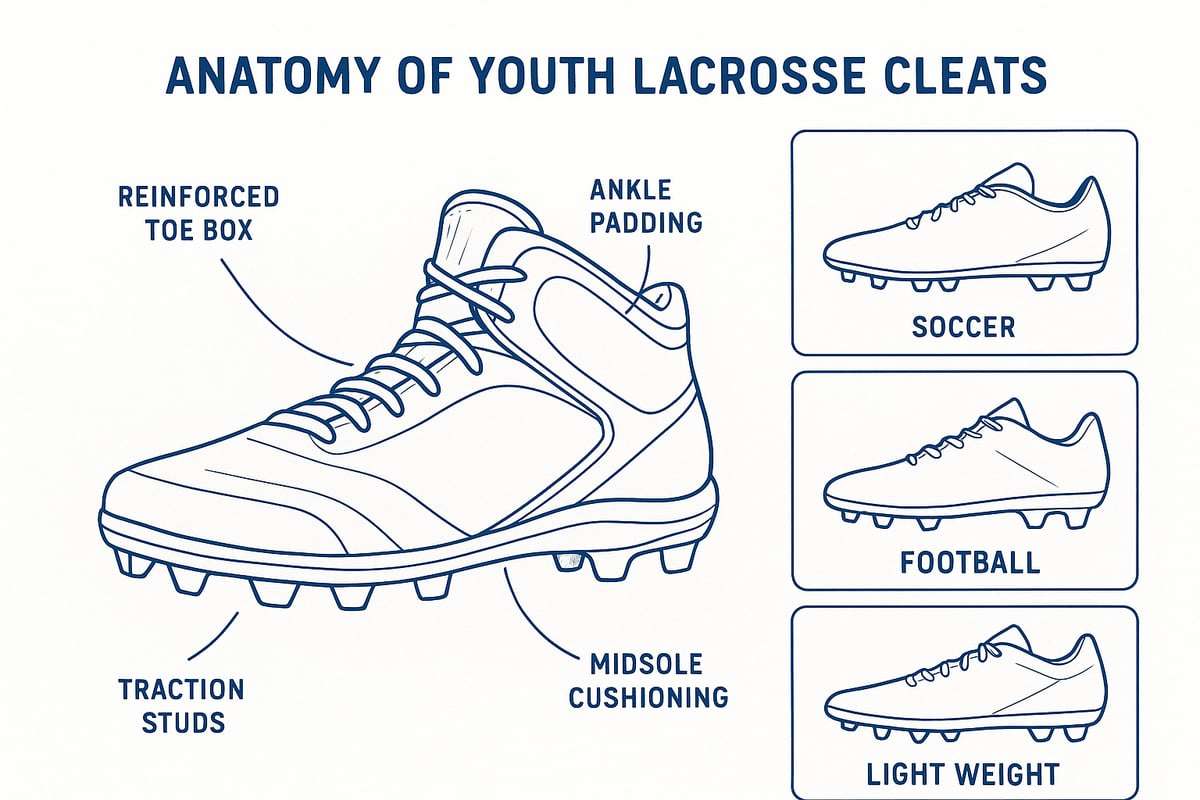
Recent studies show that nearly 30% of youth sports injuries are linked to improper footwear. By selecting cleats made specifically for lacrosse, parents and coaches can reduce the risk of ankle sprains, blisters, and even more serious injuries. Sport-specific features like reinforced toe boxes, ankle padding, and tailored traction patterns are engineered to meet the unique demands of lacrosse.
Let's compare lacrosse cleats to other common sports footwear:
| Feature | Youth Lacrosse Cleats | Soccer Cleats | Football Cleats |
|---|---|---|---|
| Stud Configuration | Designed for lateral movement and quick cuts | Optimized for straight-line speed | Heavier, more rigid for protection |
| Ankle Support | Often mid/high-cut for stability | Usually low-cut | High-cut options for protection |
| Weight | Lightweight yet protective | Very lightweight | Heavier, bulkier |
| Toe Protection | Reinforced for stick checks | Minimal | Reinforced for impact |
Using youth lacrosse cleats gives players an edge in agility, especially when dodging defenders or making fast directional changes. Players who switch from generic athletic shoes to sport-specific cleats often report better traction, improved balance, and a noticeable boost in confidence.
Official safety guidelines, such as those found in the USA Lacrosse Equipment Guide, highlight the necessity of wearing properly fitted youth lacrosse cleats to meet league standards and protect young feet.
A few common misconceptions persist among parents and new players:
- Any athletic shoe is good enough for lacrosse.
- Cleats are only about grip, not safety.
- Soccer or football cleats work just as well for lacrosse.
- Youth players do not need specialized footwear.
These myths can lead to discomfort, decreased performance, and a higher risk of injury. The truth is, youth lacrosse cleats are engineered for the specific movements and playing surfaces of the game.
When young athletes wear the right youth lacrosse cleats, they gain comfort and confidence. A well-fitted cleat can help a player focus on skill development instead of worrying about slipping or sore feet. For many, this sense of security leads to better participation and enjoyment of the sport.
Ultimately, investing in the right youth lacrosse cleats is an investment in your child's safety, performance, and love for the game. Understanding their importance is the first step toward helping young players reach their full potential.
Key Features to Look for in Youth Lacrosse Cleats
Selecting the right youth lacrosse cleats is crucial for young athletes aiming to excel on the field. Understanding the core features that set top-performing cleats apart helps ensure both safety and optimal performance. Below, we break down the essential elements every parent and coach should evaluate when choosing youth lacrosse cleats for 2026.
Traction and Outsole Design
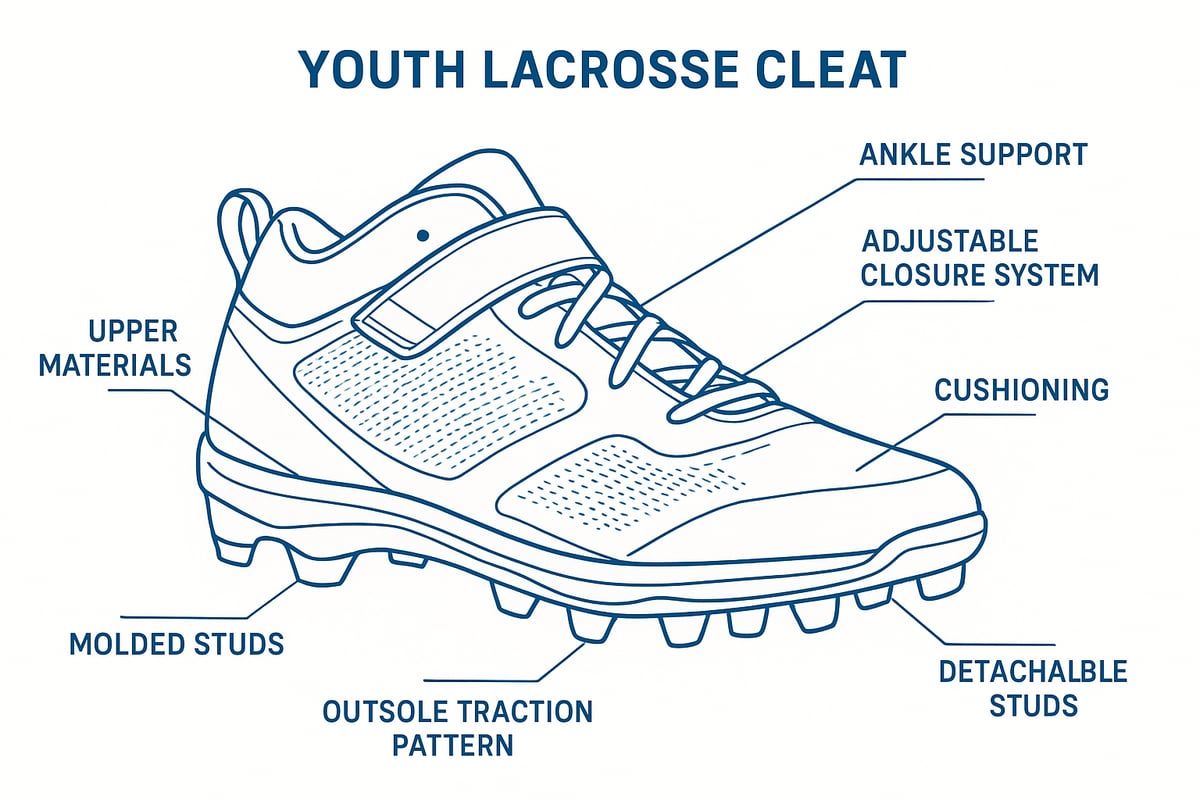
Traction is a defining factor in the performance of youth lacrosse cleats. The outsole configuration directly impacts grip, stability, and the ability to make sharp cuts or quick stops. For 2026, brands are introducing hybrid sole designs that blend molded and detachable studs, giving young players reliable traction on both grass and turf.
Molded cleats are ideal for youth, offering consistent grip and reduced maintenance. Detachable options allow for customization, but are less common for younger age groups due to complexity and safety. Leading brands now feature advanced traction patterns inspired by pro-level feedback, with multi-directional studs that help young athletes accelerate, pivot, and stop with confidence.
A comparison of outsole types:
| Outsole Type | Surface | Pros | Cons |
|---|---|---|---|
| Molded | Grass, Turf | Durable, easy to use, safe | Less customizable |
| Detachable | Grass | Adjustable for conditions | Requires maintenance |
| Hybrid | Multi-surface | Versatile, innovative grip patterns | Often higher price |
With youth lacrosse cleats, the right traction helps prevent slips and supports safe, agile play. Always match the outsole to your child’s primary playing surface.
Support, Cushioning, and Ankle Protection
Support and cushioning are non-negotiable features in youth lacrosse cleats, especially as young players are still developing physically. The midsole should offer ample shock absorption to reduce fatigue and protect growing joints. EVA foam and gel inserts are common in 2026 models, enhancing comfort during long practices and games.
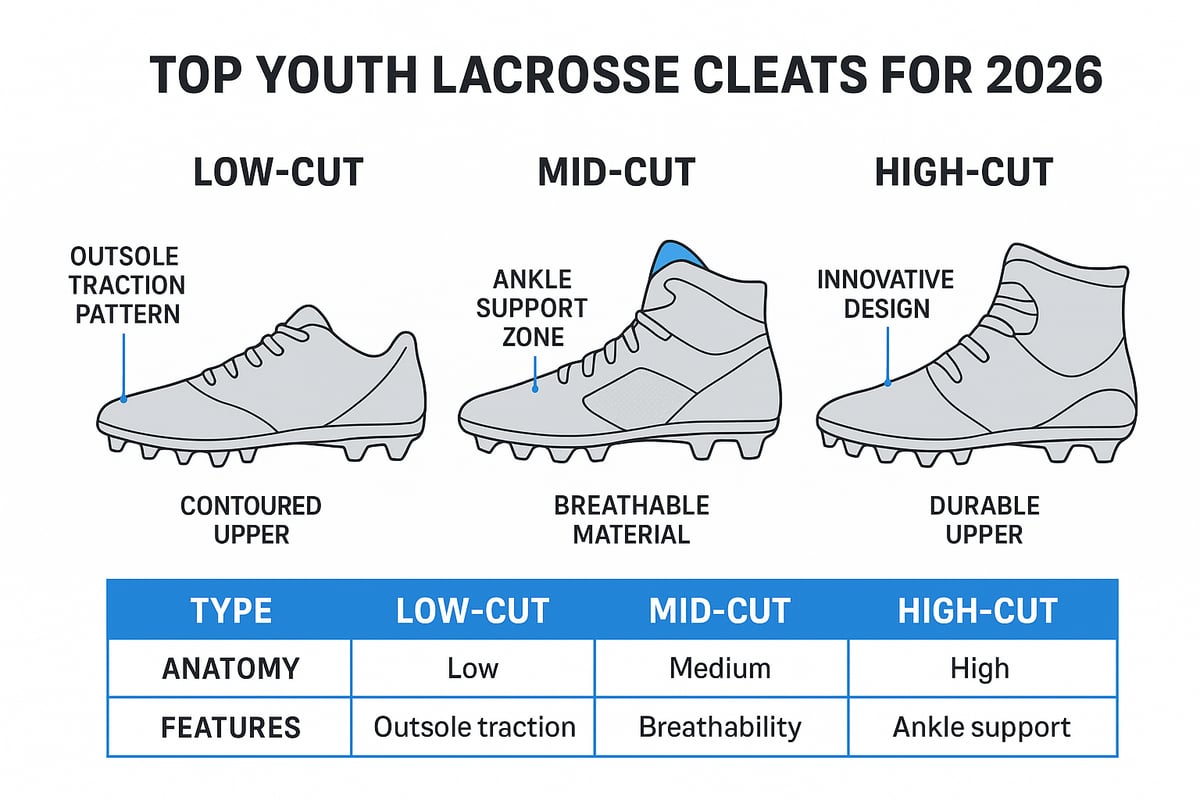
Cleat cut matters, too. Low-cut designs offer flexibility and speed, mid-cut provides a balance of mobility and support, and high-cut cleats deliver maximum ankle protection. Studies show that ankle injuries are a leading concern in youth lacrosse, making proper support a top priority.
Recommended support features in youth lacrosse cleats:
- Reinforced heel counters for stability
- Cushioned insoles to absorb impact
- Padded collars and tongues for a secure fit
Brands like New Balance and Under Armour are recognized for superior ankle protection technologies. Choosing the right level of support gives young athletes confidence and reduces the risk of sprains and strains.
Durability and Materials
Durability is a key consideration when investing in youth lacrosse cleats, as many players participate in multiple seasons per year. The upper material largely determines both the lifespan and breathability of the cleat. Synthetic leather is prized for its toughness and easy maintenance, while mesh panels and knit fabrics promote airflow and reduce weight.
Innovations for 2026 include lightweight composite uppers that balance durability with flexibility. Some brands also use reinforced toe caps and abrasion-resistant overlays to extend product life, even with heavy use.
Common upper materials in youth lacrosse cleats:
- Synthetic leather: durable, water-resistant
- Mesh: breathable, lightweight
- Knit: flexible, modern fit
When selecting youth lacrosse cleats, consider your child’s playing frequency and the typical field conditions. A well-constructed cleat not only lasts longer but maintains performance and comfort over time.
Fit, Sizing, and Adjustability
A proper fit is essential for youth lacrosse cleats, as ill-fitting shoes can lead to discomfort, blisters, or even injury. Sizing can be tricky for growing feet, with many parents unsure whether to size up for room or stick to a snug fit. Adjustable lacing systems, Velcro straps, and options for wide or narrow feet help accommodate different shapes and growth patterns.
To ensure the best fit, measure your child’s feet at the end of the day when they’re largest. Have them try on cleats with game socks and walk or jog to test comfort. According to the LaCrosse Footwear Youth Sizing Guide, following brand-specific charts and measuring techniques can greatly improve satisfaction with youth lacrosse cleats.
Tips for sizing and adjustability:
- Leave a thumb’s width at the toe for growth
- Check for secure heel fit to avoid slipping
- Choose models with customizable closures for best results
A well-fitted pair of youth lacrosse cleats enables young athletes to move freely and focus on their performance, not their footwear.
Top Youth Lacrosse Cleats for 2026: Reviews & Comparisons
Choosing the right youth lacrosse cleats can make all the difference for young athletes in 2026. With advancements in design, materials, and fit, today's top cleats are engineered for performance, comfort, and safety. In this section, we review the best models across categories, helping parents, coaches, and players make informed decisions for the upcoming season.
Best Overall Youth Lacrosse Cleats
For 2026, the standout in youth lacrosse cleats is the Warrior Burn Next 4.0. Engineered for all-around performance, this model offers balanced traction, lightweight construction, and dependable ankle support. Its hybrid outsole adapts to both turf and grass, while the reinforced upper withstands intense play throughout the season.
Key Features:
- Multi-directional cleat pattern for quick cuts
- Breathable mesh and synthetic leather upper
- Cushioned midsole for shock absorption
Pros:
- Excellent grip on varied surfaces
- Durable for multi-season use
- Comfortable fit for most foot shapes
Cons:
- Slightly higher price point
- Limited colorway options
Price Range: $65 - $85
Young athletes and parents consistently praise the Warrior Burn Next 4.0 for its reliable performance and long-lasting comfort. For most players, these youth lacrosse cleats strike the ideal balance between protection, mobility, and support.
| Model | Traction | Support | Durability | Price |
|---|---|---|---|---|
| Warrior Burn Next 4.0 | 5/5 | 4.5/5 | 4.5/5 | $$ |
| Nike Huarache 9 Elite | 4.5/5 | 5/5 | 4/5 | $$$ |
| Under Armour Highlight | 4/5 | 5/5 | 4/5 | $$ |
Best for Speed and Agility
The Nike Vapor Ultrafly 5 emerges as the top choice for players seeking speed and agility in youth lacrosse cleats. Weighing in at just 8 ounces, its lightweight construction and flexible outsole facilitate rapid acceleration and sharp direction changes.
Players frequently note the responsive traction and glove-like fit. A mesh upper enhances breathability, keeping feet cool during intense games. Reviewers highlight the Vapor Ultrafly 5's ability to support quick footwork while maintaining stability, making it a go-to for attack players and midfielders.
Best for Ankle Support
When it comes to ankle protection, the Under Armour Highlight RM Jr. leads the way among youth lacrosse cleats. Its mid-cut design with extended collar provides outstanding support, reducing the risk of sprains and rolls.
The cleat features an anatomical 3D-molded tongue and reinforced heel counter. These elements work together to stabilize the ankle without sacrificing mobility. Feedback from parents and coaches confirms fewer ankle complaints among players using the Highlight RM Jr., particularly in defensive roles.
Best Value for Budget-Conscious Families
For those seeking quality youth lacrosse cleats at an accessible price, the New Balance Rush V2 Jr. delivers outstanding value. Priced under $50, it combines durable synthetic uppers with a cushioned insole and reliable molded outsole.
Why Families Choose Rush V2 Jr.:
- Impressive wear resistance for its price class
- Consistent comfort over long practices
- Easy to clean and maintain
Customer satisfaction surveys show high marks for longevity, especially among multi-sport athletes. The Rush V2 Jr. proves that affordable youth lacrosse cleats can still offer comfort and dependable performance.
Best for Wide/Narrow Feet
Finding youth lacrosse cleats that accommodate unique foot shapes is simpler with the Adidas Freak X Carbon Mid. Available in multiple widths, this model features adaptive lacing and a flexible upper to ensure a secure, personalized fit.
Parents of children with wider or narrower feet report fewer complaints of pinching or slipping. For extra guidance, consider essentials like measuring at the end of the day and trying cleats with game socks. For more expert tips on fitting and selecting youth lacrosse cleats, check out the 6 Tips to Fit Your Child for New Lacrosse Gear.
Notable New Releases for 2026
The 2026 season introduces exciting innovations in youth lacrosse cleats. The STX Cell Pro Next Gen debuts with a knit upper for ultra-lightweight comfort and enhanced breathability. Its hybrid sole adapts automatically to changing field conditions, offering optimal traction on both turf and grass.
Another standout, the Nike Alpha Hype 2026, incorporates eco-friendly materials and a customizable color panel, appealing to style-conscious players. Early reviews highlight improved flexibility and responsive cushioning without sacrificing durability.
Manufacturers claim these new models are the most advanced youth lacrosse cleats yet, blending performance, sustainability, and design. As more feedback emerges, these releases are expected to set new benchmarks for comfort and innovation.
How to Choose the Perfect Lacrosse Cleats: Step-by-Step Guide
Choosing the right youth lacrosse cleats can feel overwhelming, but breaking the process into manageable steps makes it simple. Follow this step-by-step guide to ensure your young athlete gets cleats that boost performance, maximize comfort, and support healthy development.
Step 1: Assess Your Child’s Playing Surface and Position
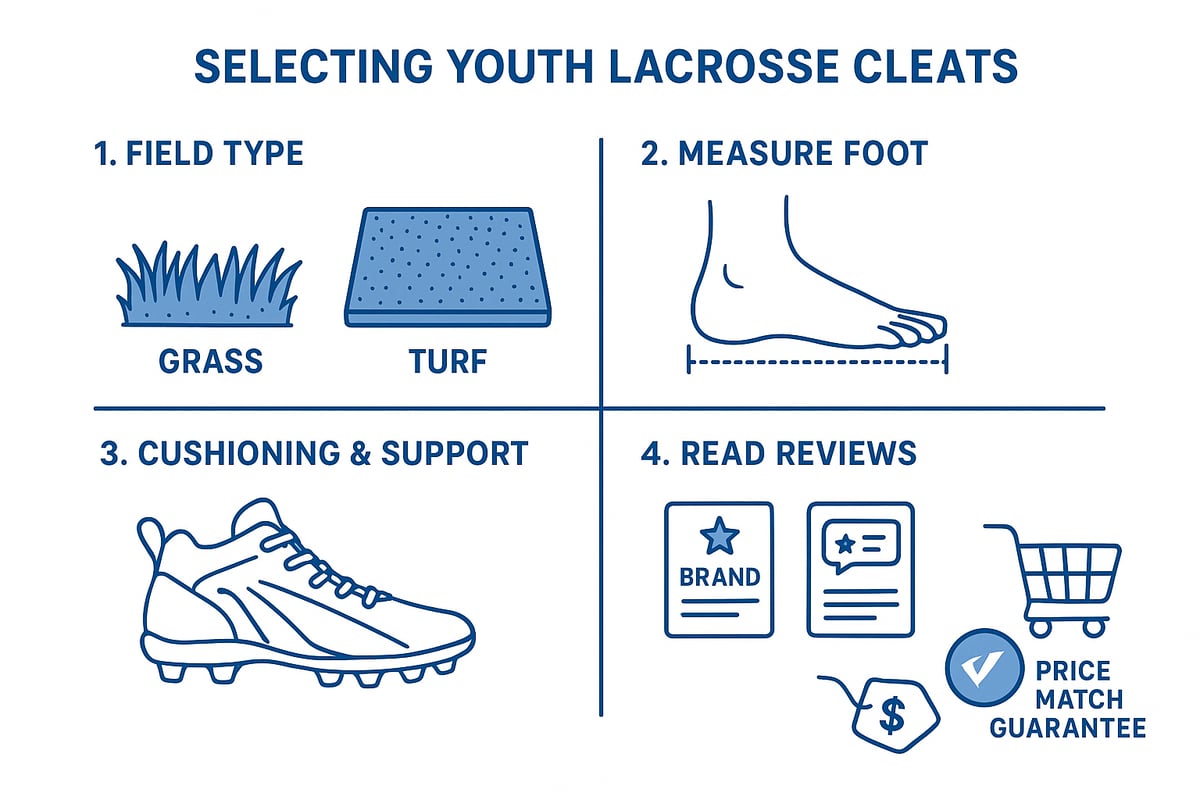
Start by considering where your child plays most often. Youth lacrosse cleats are designed for either natural grass, artificial turf, or multi-surface fields. Grass-specific cleats offer longer studs for better grip, while turf cleats have shorter, more numerous nubs for traction on synthetic surfaces.
Next, think about your child’s position. Attackers may prefer lightweight cleats for quick cuts, defenders often need extra stability, and goalies benefit from enhanced lateral support. Matching the cleat type to both surface and position ensures optimal performance and reduces the risk of slipping or injury.
Step 2: Measure for Accurate Sizing
Proper fit is crucial for youth lacrosse cleats, especially as children’s feet grow rapidly. Measure both feet at home using a ruler or measuring tape, ideally at the end of the day when feet are largest. Leave a thumb’s width at the toe for growth, but avoid shoes that are too loose.
Check each brand’s sizing chart, as fit can vary. Always try cleats on with the socks your child will wear during games. If you notice pressure points or slipping at the heel, try a different size or width. A well-fitting cleat supports confidence and performance on the field.
Step 3: Prioritize Comfort and Support Features
Focus on comfort features that make a difference during long practices and games. Look for cushioned midsoles to absorb impact, breathable uppers to manage moisture, and supportive arches for proper foot alignment. Some youth lacrosse cleats have padded collars or extra ankle support to help prevent injuries.
Allow time for a break-in period, as materials may soften and mold to the foot. Encourage your child to walk and jog in the cleats before the first game. Comfortable cleats help young athletes stay focused, confident, and less prone to blisters or fatigue.
Step 4: Compare Models and Read Reviews
Research is key when selecting youth lacrosse cleats. Read expert reviews for insights into durability, traction, and fit. User feedback from parents and players often highlights real-world pros and cons. Check multiple sources to get a balanced view.
Pay attention to return policies and warranties, as these offer peace of mind if the cleats do not fit as expected. Use online resources to compare models and prices, and look for detailed sizing feedback. Informed decisions lead to better outcomes for your child’s comfort and safety.
Step 5: Shop Smart and Secure the Best Deal
Timing your purchase can lead to significant savings on youth lacrosse cleats. Shop during off-season sales, clearance events, or when new models are released. Compare prices across stores and use price match guarantees to ensure you pay the lowest amount possible.
For extra assurance, review the Price match guarantee details before finalizing your purchase. Always buy from reputable retailers to avoid counterfeit products and ensure support if issues arise. Smart shopping ensures you get the best value without compromising quality.
Care, Maintenance, and Replacement Tips for Youth Lacrosse Cleats
Proper care ensures that youth lacrosse cleats deliver consistent performance and last through the season. With a few simple maintenance habits, parents and players can maximize comfort, safety, and value.
Cleaning and Storage Best Practices
Keeping youth lacrosse cleats clean extends their lifespan and prevents odor or material breakdown. Start by removing excess dirt using a soft brush or cloth after each game. For tougher grime, use mild soap and warm water, avoiding harsh chemicals that can damage synthetic materials.
Allow cleats to air dry at room temperature. Avoid direct heat sources, which may warp the shape. Stuffing the shoes with newspaper or using a shoe tree helps maintain their form and absorb moisture. Store youth lacrosse cleats in a ventilated area away from sunlight. For more tips on overall sports gear care, see this sports shop equipment overview.
When to Replace Youth Lacrosse Cleats
Regularly inspect youth lacrosse cleats for signs of wear. Common indicators include sole separation, worn-down studs, or a noticeable loss of support. If the cleats feel uncomfortable or cause blisters, it may be time for a replacement.
On average, youth lacrosse cleats need replacing every season, especially for players with fast-growing feet. Monitor fit closely, as a snug but not tight fit is crucial for safety and performance. Early replacement prevents injury and ensures optimal field traction.
Customization and Accessories
Personalizing youth lacrosse cleats adds comfort and style. Popular accessories include performance insoles for extra cushioning, upgraded laces for better lockdown, and ankle braces for extra support. Many players enjoy adding team colors or decals to their cleats for a unique look.
When selecting accessories, make sure they do not interfere with the fit or function of the youth lacrosse cleats. Choose only those that enhance comfort, safety, or durability. Accessories can help tailor the fit to individual needs and boost confidence on the field.
Passing Down or Donating Used Cleats
Once youth lacrosse cleats are outgrown but still in good condition, consider passing them down or donating to local organizations. Before doing so, clean the cleats thoroughly and check for any significant wear or damage.
Many community programs and charities accept gently used sports gear, helping more young athletes participate in lacrosse. Proper recycling and donation of youth lacrosse cleats support sustainability and foster a sense of community involvement through sports.
Frequently Asked Questions About Youth Lacrosse Cleats
Choosing the right youth lacrosse cleats can be confusing for parents and players. Below, we answer the most common questions to clarify fit, function, and care so your athlete can perform with confidence.
How long does it take to break in youth lacrosse cleats?
Most youth lacrosse cleats require a short break-in period. Typically, two to three practice sessions are enough for the materials to soften and mold to the foot. Have your child wear the cleats with their game socks for best results. If discomfort persists, check for proper fit or consider insoles for added comfort.
Can my child use youth lacrosse cleats for other sports?
While some parents hope to use one pair of cleats for multiple sports, it is not recommended. Youth lacrosse cleats are specifically designed for the unique movement patterns and field conditions of lacrosse. Soccer or football cleats may lack the proper traction, support, or stud configuration, which can impact performance and increase injury risk.
What are the cleaning and care tips for youth lacrosse cleats?
Regular cleaning extends the life of youth lacrosse cleats. After each game, knock off excess dirt and hand wash with mild soap if needed. Avoid machine washing. Stuff cleats with newspaper to absorb moisture and help retain shape. Let them air dry away from direct heat. For persistent odors, use a sports-safe deodorizer.
Are there specific rules or league guidelines for youth lacrosse cleats?
Yes, most youth lacrosse leagues have clear rules about cleat safety and design. Metal spikes are typically prohibited. Always check your league's handbook before purchasing. If outfitting an entire team, consult resources like Team sales for youth sports to ensure compliance with league standards.
What is the difference between boys’ and girls’ youth lacrosse cleats?
The main differences involve fit, style, and sometimes league requirements. Girls’ cleats may have a narrower fit and different colorways. For comprehensive fitting advice, refer to the Girls' Lacrosse Equipment Fitting Guide, which details key footwear considerations for girls’ lacrosse.
How should I handle blisters or discomfort from youth lacrosse cleats?
Blisters often result from improper fit, lack of break-in, or moisture. To prevent them, ensure the cleats fit snugly but not tightly, and use moisture-wicking socks. For existing blisters, treat with bandages and allow time for healing. Consider orthotic-compatible models if your child needs extra support or has unique foot needs.
Trends and Innovations in Youth Lacrosse Cleats for 2026
The landscape of youth lacrosse cleats is rapidly evolving as brands respond to the needs of modern athletes. Parents, coaches, and players can expect exciting changes in 2026, from greener materials to custom-fit technology. Let us explore the top trends shaping the future of youth lacrosse cleats.
Eco-Friendly and Sustainable Materials
Sustainability is a leading trend in youth lacrosse cleats for 2026. Brands are now integrating recycled plastics, bio-based foams, and even biodegradable uppers into their cleat lines. These innovations meet the growing demand for environmentally conscious sports gear among families.
For example, some top models use mesh made from recycled ocean plastics, reducing environmental impact without sacrificing durability. Others feature plant-based leathers that are both tough and breathable. These eco-friendly options ensure that youth lacrosse cleats provide performance and peace of mind.
Parents are also considering the safety and fit of materials, a concern often shared across youth sports gear. For more insights into protective gear fit and material safety, review the Youth football pads guide.
Smart Technology and Performance Tracking
In 2026, smart technology is making its mark on youth lacrosse cleats. Several brands are launching cleats with embedded sensors that track speed, foot pressure, and movement patterns. This data syncs with mobile apps, offering young athletes and coaches a new level of performance feedback.
The benefits are substantial. Real-time tracking helps players adjust their form, optimize drills, and even catch early signs of fatigue or injury risk. Parents appreciate the added layer of safety and the ability to monitor progress. As these smart features become more affordable, they are set to become standard in youth lacrosse cleats.
Design and Style Trends
Design is just as important as function for today’s youth athletes. In 2026, youth lacrosse cleats are available in a wide array of bold colorways, gradient fades, and even limited-edition collaborations with professional players. Customization options are expanding, allowing players to select their laces, add team logos, or choose unique sole colors.
Social media and pro athlete influence are driving these trends, with many young players wanting cleats that reflect their personality or favorite teams. Both unisex and gender-specific styles are widely available, ensuring every player finds youth lacrosse cleats that suit their taste and needs.
The Future of Youth Lacrosse Footwear
Looking ahead, the future of youth lacrosse cleats is shaped by innovation in both materials and manufacturing. Experts predict the rise of 3D-printed custom-fit cleats, offering a personalized fit based on digital scans of the athlete’s foot. This level of customization promises fewer blisters and a more secure feel during play.
Lightweight yet durable composites, advanced foam cushioning, and seamless knit uppers are on the horizon. These advancements aim to improve performance, comfort, and longevity. The next generation of youth lacrosse cleats will blend cutting-edge tech with eco-conscious design, setting new standards for young athletes everywhere.