

Football Machine: The Technology Changing Team Training
The term "football machine" has evolved dramatically over the past decade, shifting from simple ball-feeding devices to sophisticated systems that combine artificial intelligence, predictive analytics, and advanced training equipment. Today's football machine encompasses everything from automated passing simulators and shooting trainers to complex algorithmic systems that analyze thousands of data points per match. For coaches, athletic directors, and sports organizations, understanding these technologies has become essential for competitive training programs and strategic decision-making at every level of play.
Understanding Modern Football Machine Technology
A football machine in 2026 represents far more than mechanical equipment that launches balls at players. The concept now spans three distinct categories: physical training devices, analytical software platforms, and hybrid systems that merge both approaches into comprehensive development tools.
Physical football machines include automated ball delivery systems, rebounders, and specialized training apparatus designed to replicate game scenarios. These devices help teams maximize practice efficiency by providing consistent repetitions without requiring additional personnel. Meanwhile, analytical football machines process vast quantities of match data, player statistics, and performance metrics to generate actionable insights that inform coaching decisions and tactical adjustments.
The Physical Training Equipment Category
Traditional football machine equipment focuses on skill repetition and conditioning. Ball launchers can deliver crosses, through balls, and shots with adjustable speed, trajectory, and spin. Rebounders return passes at varying angles to improve first-touch control and reaction time. Modern versions integrate programmable sequences that mirror specific opponent tendencies or tactical scenarios.
These physical systems have become increasingly sophisticated:
- Programmable delivery patterns that simulate corner kicks, free kicks, and crossing situations
- Variable speed settings ranging from youth-appropriate pace to professional-level velocity
- Angle adjustment mechanisms for realistic game positioning
- Remote control operation allowing coaches to manage training flow without interruption
- Portable designs suitable for both indoor facilities and outdoor pitches
Quality youth football pads and protective gear remain essential complements to any training machine, ensuring player safety during intensive repetition work.
Analytics and Prediction Systems
The analytical dimension of football machine technology has grown exponentially with advances in machine learning and data collection methods. Professional clubs now employ sophisticated algorithms that function as prediction machines, forecasting match outcomes, player performance trajectories, and optimal tactical adjustments based on historical patterns and real-time data feeds.
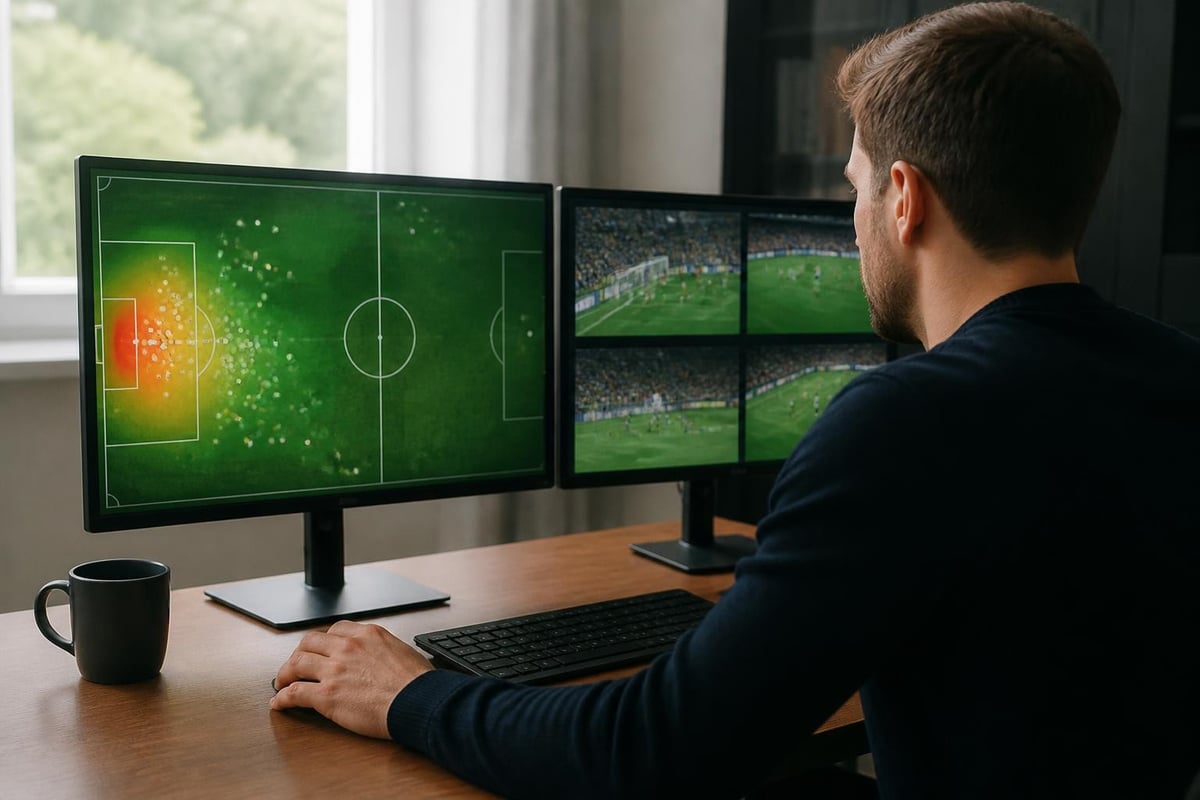
Expected Goals models represent one of the most influential football machine applications in modern analytics. These systems evaluate shooting chances by analyzing shot location, defensive pressure, goalkeeper position, and dozens of contextual variables. The Analyst provides detailed explanations of how xG has become the foundation for chance quality assessment across professional football.
How Prediction Algorithms Work
Football machine algorithms process enormous datasets to identify patterns invisible to human observation. A typical system might analyze:
| Data Category | Examples | Application |
|---|---|---|
| Player Movement | Heat maps, sprint distances, positional clusters | Formation optimization, fatigue prediction |
| Event Data | Passes, shots, tackles, interceptions | Tactical tendency identification |
| Physical Metrics | Heart rate, acceleration, deceleration | Injury risk assessment, conditioning planning |
| Contextual Factors | Score state, opponent quality, weather | Scenario-specific strategy development |
StatsBomb offers technical resources that demonstrate how event-level data feeds these analytical frameworks. The sophistication of modern football machine analytics allows teams to quantify previously subjective elements like defensive pressure, space creation, and passing difficulty.
Research continues advancing these capabilities. Academic studies have shown that improved xG modeling provides significant predictive value for match outcomes and team performance evaluation. More recent work explores interpretable modeling approaches that help coaches understand not just what the machine predicts, but why specific recommendations emerge from the data.
Training Applications for Teams and Coaches
Implementing football machine technology effectively requires understanding how different systems complement existing training methodologies. The most successful programs integrate mechanical training devices with analytical insights to create feedback loops that accelerate player development.
Building Effective Training Protocols
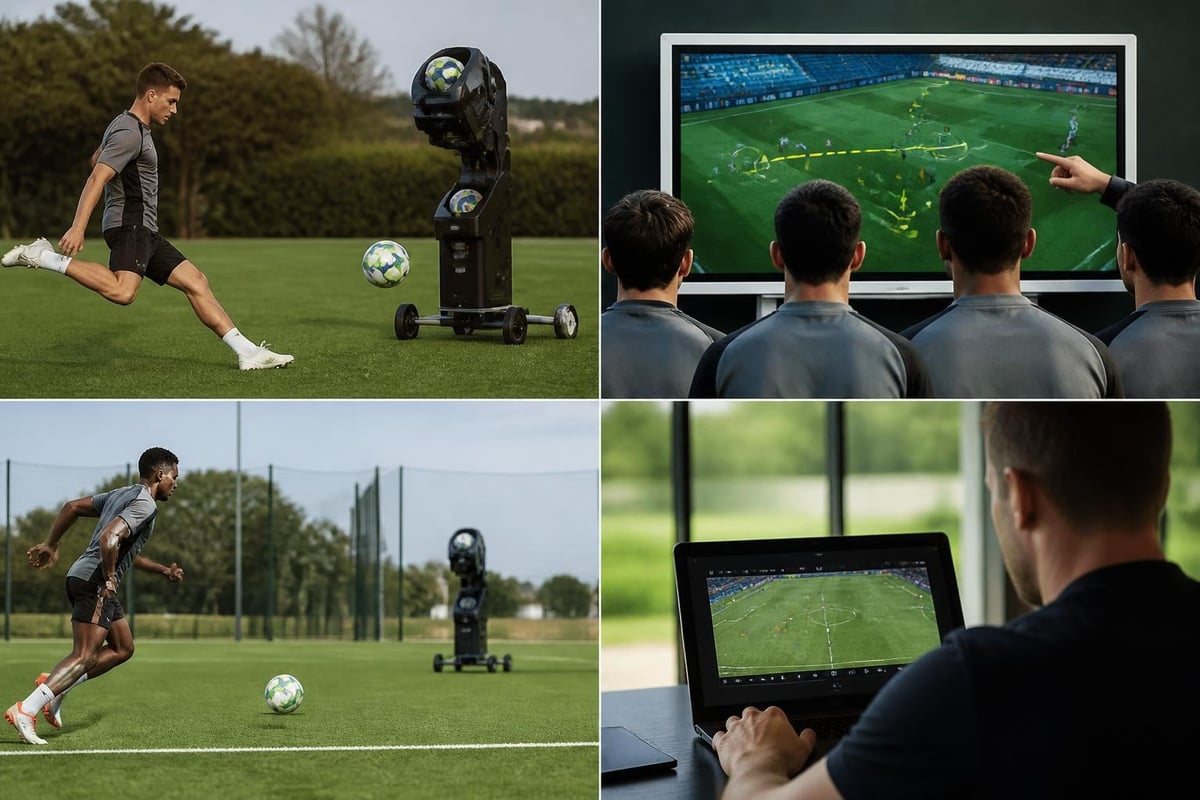
Coaches can structure sessions around football machine capabilities by designing progressive skill sequences. A typical attacking session might begin with simple ball-delivery exercises, advance to decision-making scenarios with variable service, and conclude with game-speed situations that replicate match conditions.
Progressive Session Structure:
- Warm-up phase – Controlled machine delivery for technical touch and movement patterns
- Skill development – Increased complexity with varied trajectories and speeds
- Decision-making – Multiple service angles requiring quick assessment
- Game simulation – High-intensity scenarios with defensive pressure
- Recovery work – Lower-intensity machine-assisted possession exercises
Teams at all levels benefit from this structured approach. Sports organizations can implement these protocols with equipment scaled appropriately to their competitive tier and budget constraints.
Data-Driven Player Development
The analytical football machine transforms player development from intuition-based coaching to evidence-supported progression tracking. Individual performance profiles now include granular metrics that reveal specific areas requiring attention, allowing coaches to prescribe targeted interventions rather than generic training volumes.
Youth development programs particularly benefit from objective measurement. When coaches can quantify improvements in first-touch success rate, passing accuracy under pressure, or shot placement consistency, they create clear development pathways that motivate young players and justify training time allocation.
Measuring Training Effectiveness
Modern football machine systems generate measurable outputs that document training impact:
- Repetition counts across different skill categories
- Success rates for various technical actions
- Progressive overload tracking showing difficulty increases over time
- Comparison metrics against age-appropriate benchmarks
- Injury prevention indicators from movement pattern analysis
This quantification helps athletic directors demonstrate program value to stakeholders while giving coaches concrete evidence to adjust training emphasis. The same analytical approach that professional clubs use to evaluate transfer targets can scale down to youth academies tracking player progression through development stages.
Simulation Environments and Machine Learning
Cutting-edge football machine research has produced sophisticated simulation environments where artificial intelligence agents learn tactical concepts through millions of virtual matches. Google Research introduced a reinforcement learning environment specifically designed for football, providing researchers a platform to develop and test decision-making algorithms.
These simulated environments serve multiple purposes beyond academic research. Coaching education programs can use them to explore tactical variations without field time constraints. Analysts can test strategic hypotheses against virtual opponents before implementing changes with actual teams. The open-source nature of these tools makes advanced football machine technology accessible to organizations that previously lacked resources for sophisticated analytical systems.
Practical Applications of Simulation Technology
While professional clubs employ full-time data scientists to extract insights from simulation environments, practical applications exist for teams at every level. Basic simulation outputs can inform:
Tactical Planning:
- Set-piece routine optimization through virtual testing
- Formation vulnerability identification
- Pressing trigger effectiveness across different scenarios
- Transition speed requirements for specific tactical approaches
Opponent Preparation:
- Expected tactical setup based on historical patterns
- Key player tendency identification
- Vulnerable moments in opponent defensive structure
- Optimal attacking corridors against specific formations
Recent research demonstrates these applications' growing sophistication. Studies on in-game outcome prediction using offline reinforcement learning show how machine learning models can forecast match trajectories based on current game states. Other work explores machine learning approaches to match result prediction, providing comprehensive overviews of techniques available to analytical teams.
Equipment Investment Considerations
For sports organizations evaluating football machine purchases, several factors determine appropriate investment levels and expected returns. Equipment selection should align with program objectives, player age ranges, facility constraints, and available supervision resources.
Evaluating Machine Options
| Feature | Youth Programs | High School/Club | College/Semi-Pro |
|---|---|---|---|
| Ball Speed Range | 20-40 mph | 30-60 mph | 40-80+ mph |
| Programming Complexity | Simple patterns | Multi-sequence | Full customization |
| Portability | Essential | Preferred | Optional |
| Durability Rating | Moderate use | Heavy use | Commercial grade |
| Data Integration | Basic counters | Performance logs | Full analytics |
Budget-conscious programs should prioritize versatility and durability over advanced features that may exceed current coaching expertise. A reliable mid-range football machine that operates consistently for five years provides better value than a sophisticated system that sits unused because staff lack training in its operation.
Quality soccer goal equipment and goal nets represent complementary investments that maximize training machine effectiveness. Players need proper targets for machine-delivered services, and matching equipment quality across training tools produces better developmental outcomes.
Integration with Broader Training Programs
The football machine achieves maximum impact when integrated thoughtfully into comprehensive training philosophies rather than treated as standalone technology. Successful programs use machines to handle repetitive technical work, freeing coaches to focus on tactical understanding, decision-making development, and game management skills that require human judgment and experience.
Creating Balanced Weekly Schedules
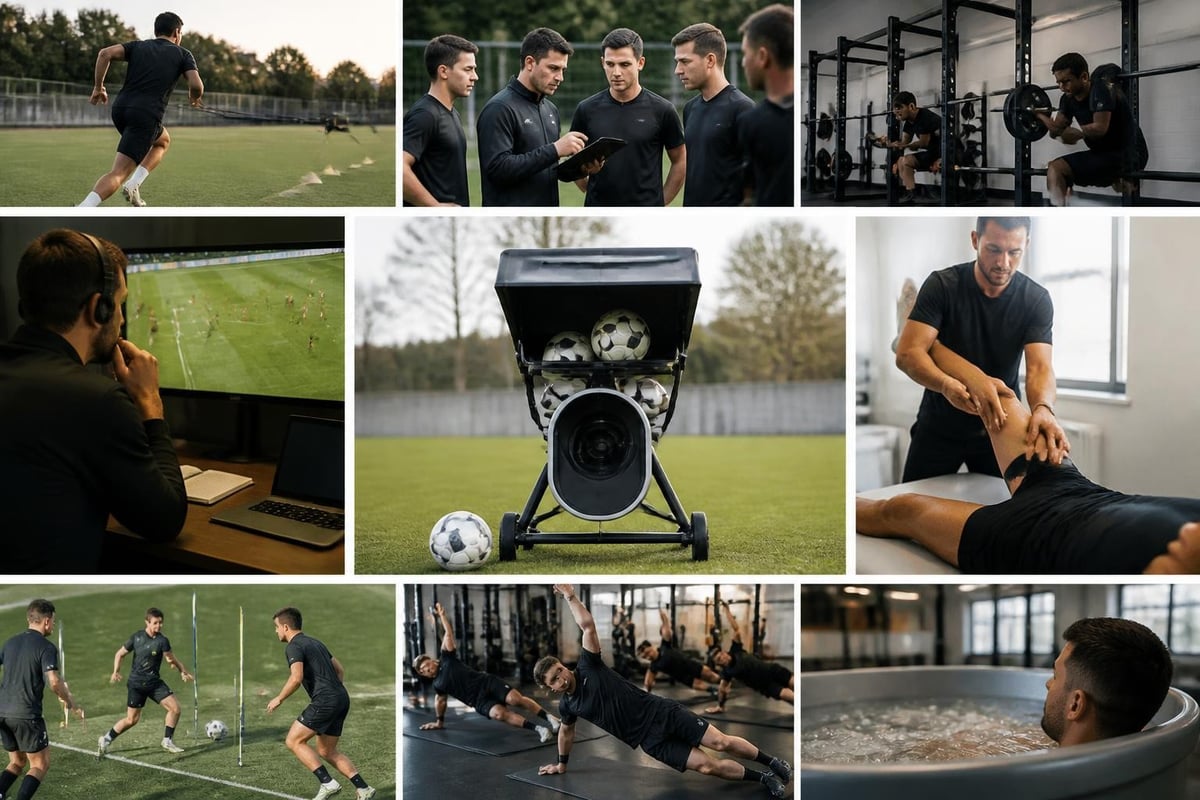
A well-designed weekly training plan incorporates football machine sessions alongside traditional coaching methods. This balance might include:
Monday: Recovery and tactical review (minimal machine use)
Tuesday: Technical focus with intensive machine repetitions
Wednesday: Tactical training with game-speed machine scenarios
Thursday: Position-specific work using targeted machine delivery
Friday: Pre-match preparation with familiar machine patterns
Saturday: Match day
Sunday: Active recovery or optional skill maintenance
This structure prevents over-reliance on automated training while ensuring players receive adequate technical repetitions. The football machine handles volume work that would otherwise consume practice time or require extensive assistant coach involvement.
Organizations can explore additional training equipment like baseball training machines or field hockey training equipment to understand how automated training devices function across different sports contexts, often revealing transferable principles for football applications.
Advanced Tactical Applications
Elite programs push football machine capabilities beyond basic technical training into complex tactical preparation. By programming machines to deliver passes that replicate specific opponent tendencies, teams can rehearse defensive responses and attacking movements against accurate simulations of upcoming opponents.
Opponent-Specific Preparation
Analytical football machines can identify patterns in opponent play, which physical training machines then replicate:
- Crossing tendencies from specific field zones
- Through-ball timing based on defensive line positioning
- Switch-of-play frequency and typical target areas
- Set-piece delivery characteristics including speed and trajectory
- Pressing triggers that initiate opponent counter-pressing
This level of preparation was previously available only to elite professional clubs with extensive scouting departments. Modern football machine technology democratizes access to these insights, allowing well-organized programs at lower competitive tiers to implement elements of professional preparation methods.
The intersection of physical machines and analytical systems creates powerful preparation tools. When coaches understand goals in soccer from both tactical and technical perspectives, they can program training sequences that address both dimensions simultaneously.
Future Developments in Football Machine Technology
The football machine landscape continues evolving rapidly as hardware improves and algorithms become more sophisticated. Emerging trends suggest several developments will reshape training and analysis over the next few years.
Anticipated Advances:
- Augmented reality integration overlaying tactical instructions during machine-based training
- Biometric feedback systems adjusting machine delivery based on player fatigue indicators
- Swarm intelligence applications coordinating multiple machines for complex pattern work
- Natural language coaching allowing verbal commands to adjust machine parameters
- Automated video correlation linking machine training sessions to subsequent match performance
Research into augmenting pass prediction via imitation learning demonstrates how artificial intelligence can learn human decision-making patterns, potentially enabling machines to deliver services that match individual player preferences and tendencies rather than following rigid programmed sequences.
These technological advances will likely reduce costs over time as manufacturing scales increase and competition among equipment providers intensifies. Organizations that establish effective integration protocols now will be positioned to adopt enhanced capabilities as they become available.
Maintenance and Operational Considerations
Investing in football machine equipment requires planning for ongoing maintenance, storage, and operational training. Programs should budget approximately fifteen to twenty percent of initial equipment costs annually for maintenance, replacement parts, and facility modifications that optimize machine utilization.
Essential Operational Practices
Proper care extends equipment lifespan and ensures consistent performance:
- Daily cleaning of ball-contact surfaces and sensors
- Weekly inspection of mechanical components and electrical connections
- Monthly calibration to maintain accuracy specifications
- Seasonal servicing by qualified technicians
- Environmental protection using appropriate covers and indoor storage
Staff training represents another critical operational element. Designating specific coaches or equipment managers as football machine specialists ensures someone maintains expertise in programming, troubleshooting, and maximizing training value. This specialization prevents the common problem of expensive equipment sitting unused because no one feels confident operating it effectively.
Programs should also consider how football machine training complements other equipment investments. Fitness sports equipment and conditioning tools work alongside technical training devices to create comprehensive development environments. Understanding these relationships helps organizations make strategic purchasing decisions that build coherent training ecosystems rather than accumulating disconnected tools.
Accessibility Across Competitive Levels
While professional clubs command headlines with cutting-edge football machine implementations, scaled versions of these technologies serve teams across all competitive tiers. Youth clubs, high schools, and recreational organizations can access meaningful analytical insights and effective training equipment at price points matching their budgets and needs.
Entry-level football machines provide core functionality without advanced features that exceed typical youth program requirements. These systems deliver consistent ball service for technical repetitions, helping young players develop fundamental skills through appropriate volume and quality practice. As programs mature and budgets expand, equipment upgrades can introduce additional capabilities aligned with advancing player development needs.
Similarly, analytical football machine applications scale from simple performance tracking spreadsheets to sophisticated database systems. The fundamental principle remains constant: collect meaningful data, analyze patterns, and apply insights to improve training quality and match preparation. Teams operating at football boots shop budget levels can implement basic versions of the same analytical frameworks that guide professional club decisions.
Football machine technology has transformed from simple ball-delivery devices into comprehensive systems that combine physical training equipment with sophisticated analytical capabilities. Whether you're equipping a youth academy, high school program, or competitive club, understanding how these tools integrate into effective training methodologies helps maximize development outcomes and competitive performance. Sideline Sport Supply provides the reliable training equipment, goal systems, and practice essentials teams need to implement modern training approaches without breaking budgets. Our straightforward pricing and practical gear selection means you can focus resources on player development rather than equipment sourcing.