

Track and Field Sports Equipment: Complete Guide 2026
Track and field athletics encompasses a diverse range of events, each requiring specialized equipment that meets strict regulations while supporting athlete development and safety. Whether you're outfitting a high school program, establishing a collegiate training facility, or building inventory for a community sports organization, understanding the specifications, quality standards, and practical requirements of track and field sports equipment ensures your athletes compete safely and effectively. The right equipment investment balances regulatory compliance, durability, and athlete performance across sprints, distance running, jumps, throws, and multi-event competitions.
Running Events Equipment and Essentials
Sprint and distance events require minimal equipment compared to field events, but the items used play crucial roles in performance and fair competition. Starting blocks form the foundation of sprint races, providing adjustable foot plates that athletes use to generate explosive power at race start. Quality starting blocks feature sturdy aluminum or steel construction, adjustable spacing for different stride lengths, and secure anchoring systems that prevent movement during starts.
Modern track and field sports equipment for running includes electronic timing systems that have revolutionized accuracy in competition. Photo-finish technology and sophisticated timing equipment now capture results to thousandths of a second, eliminating human error in close finishes. For schools and training facilities, basic timing options include stopwatches, split timers, and laser timing gates that provide reliable data for practice sessions.
Sprint Spikes and Footwear Technology
Sprint spikes represent one of the most personal pieces of track and field sports equipment, with designs varying significantly based on event distance and surface type. Sprint spikes typically feature aggressive pin configurations (6-8 spikes) positioned under the forefoot, while distance spikes offer more cushioning and fewer pins for comfort during longer races. Research on track footwear effects demonstrates how spike plate stiffness and pin placement directly impact running economy and performance outcomes.
Athletes require multiple spike options throughout a season:
- Sprint spikes (100m-400m): Stiff plates, minimal cushioning, maximum traction
- Distance spikes (800m and beyond): Flexible construction, additional heel cushioning
- Cross country spikes: Longer pins, weatherproof materials, enhanced durability
- Jump spikes: Reinforced heel counters for landing stability
The investment in quality footwear pays dividends in injury prevention and performance consistency across training and competition cycles.
Throwing Event Implements and Safety Equipment
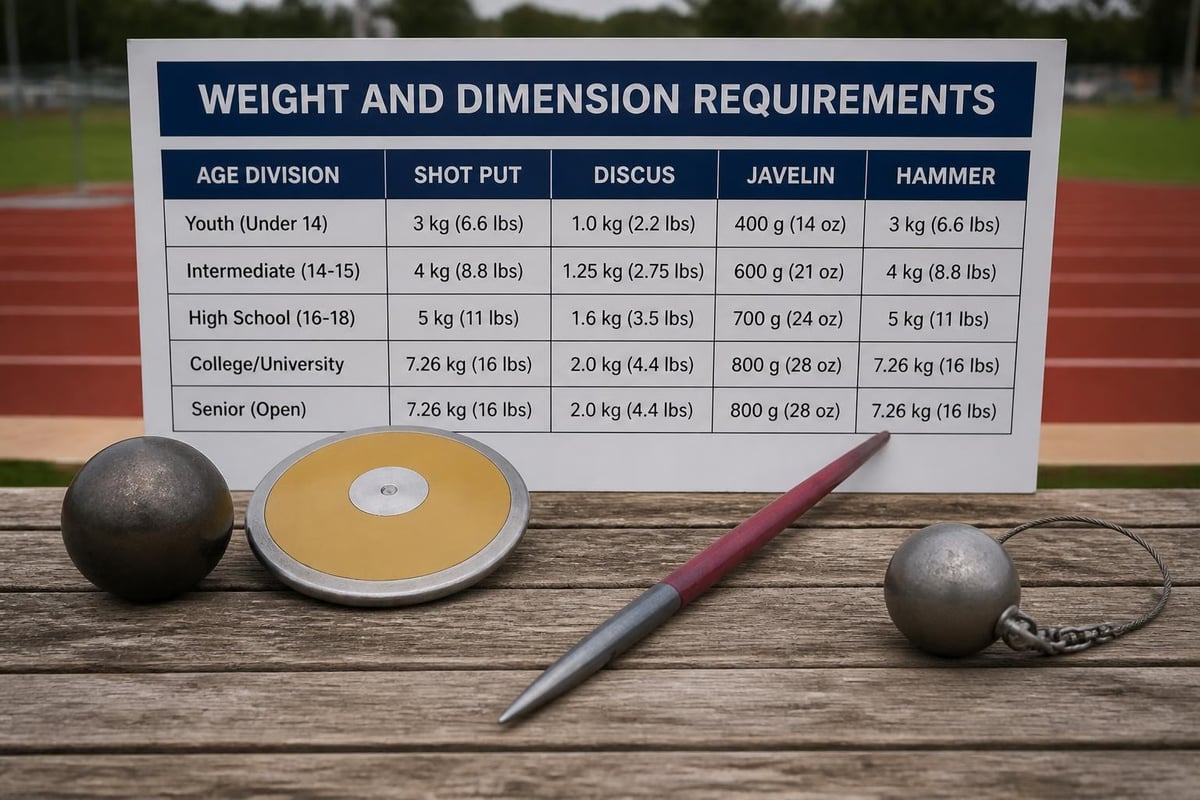
Throwing events demand precision-manufactured implements that conform to strict weight and dimension specifications established by governing bodies. Track and field sports equipment for throws includes shot puts, discuses, javelins, and hammers, each regulated according to age group, gender, and competition level. The official implement specifications outlined by USA Track & Field provide detailed requirements for weight tolerances, material composition, and balance characteristics that ensure fair competition.
Shot Put and Discus Equipment
Shot puts range from 6 pounds for youth competitions to 16 pounds for elite men's divisions, manufactured from solid iron or brass. Quality shots feature perfectly spherical construction and smooth surfaces that provide consistent release characteristics. Discus equipment varies similarly by division, with wooden or plastic body construction surrounded by a metal rim. Competition-grade discuses maintain precise weight distribution to ensure predictable flight patterns.
Throwing circles require specialized surfaces and protective equipment:
| Equipment Type | Specification | Purpose |
|---|---|---|
| Throwing Circle | 2.135m diameter (shot), 2.5m (discus) | Standardized throwing area |
| Toe Board | 10cm height, curved surface | Foul line enforcement |
| Safety Cage | 6m minimum height | Athlete and spectator protection |
| Landing Sector | 34.92-degree angle | Impact area definition |
Safety equipment including protective cages and netting systems represents non-negotiable track and field sports equipment investments for any facility hosting throwing events. These barriers protect athletes, officials, and spectators from errant implements while allowing unobstructed competition views.
Javelin and Hammer Specifications
Javelin equipment varies dramatically across divisions, with implement length ranging from 600g for women to 800g for men, and lengths between 2.2 and 2.7 meters. Modern javelins feature hollow aluminum or steel construction with cord-wrapped grips positioned at the center of gravity. The hammer consists of a metal ball connected to a handle via a steel wire, with total length regulated to specific measurements based on competition level.
Coaches and athletic directors should maintain complete implement sets across weight classes to support practice sessions and multi-division meets. Proper storage racks and transport carriers protect these investments while ensuring implements remain readily accessible for training.
Jumping Event Equipment and Landing Systems
High jump, pole vault, long jump, and triple jump events each require substantial equipment investments that prioritize athlete safety alongside performance standards. Track and field sports equipment for jumping events centers on landing systems, approach surfaces, and measurement tools that support progressive skill development.
High jump equipment includes adjustable uprights, crossbars, and landing pits that cushion athlete impacts. Modern landing systems feature multi-layer foam construction with impact-absorbing bases and weather-resistant covers. Competition-grade pits measure at least 5 meters wide by 3 meters deep, though practice facilities often use larger configurations to accommodate learning athletes who may land off-center.
Pole Vault Systems and Safety Considerations
Pole vault equipment represents the most significant investment in track and field sports equipment for jumping events. Quality vaulting poles are manufactured from fiberglass or carbon fiber composites, with each pole rated for specific athlete weights and skill levels. Programs require multiple poles spanning weight ratings to accommodate different athletes and progression stages.
Essential pole vault equipment includes:
- Competition standards (uprights) with precise height adjustment mechanisms
- Landing pits measuring minimum 5m x 5m with graduated foam layers
- Planting boxes constructed to regulation depth and angle
- Pole storage racks protecting equipment from warping and damage
The pole vault poles available from specialized suppliers provide the performance characteristics and safety features necessary for scholastic and competitive programs. Investment in proper pole vault systems directly impacts athlete confidence and skill development rates.
Long Jump and Triple Jump Facilities
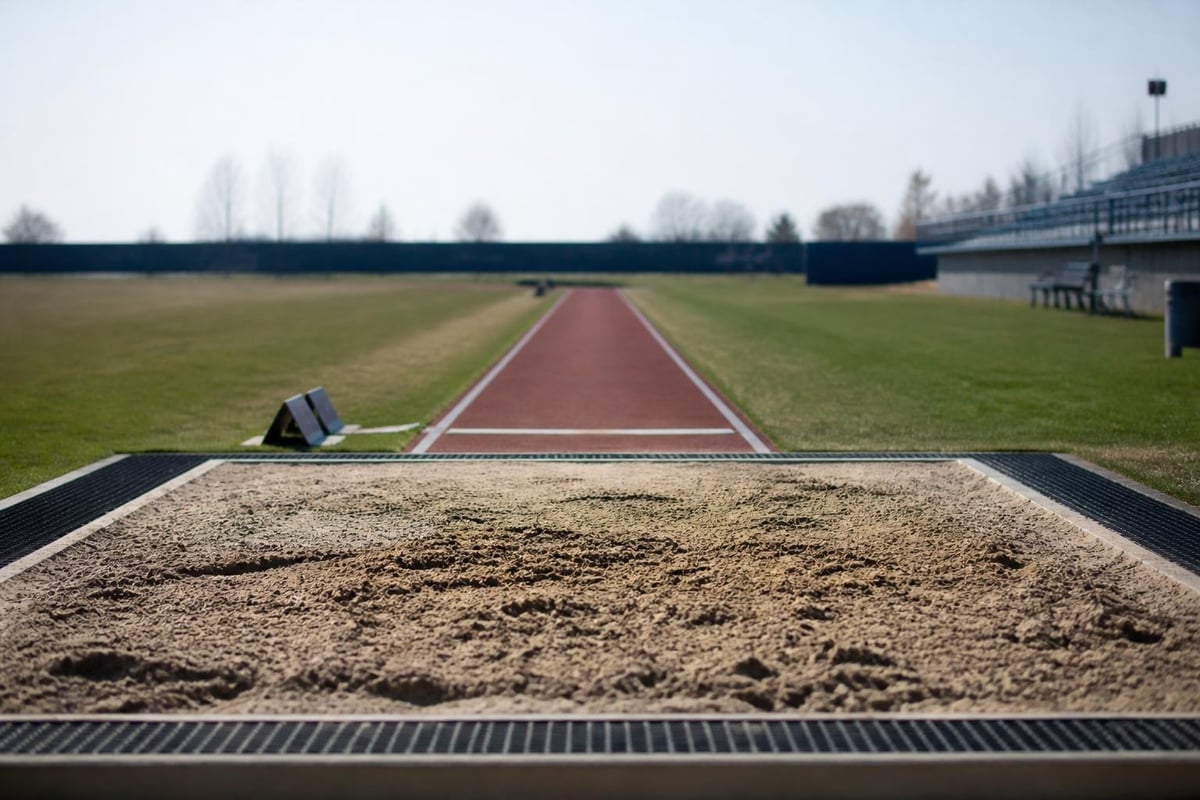
Long jump and triple jump require precisely measured approach runways, takeoff boards, and landing pits filled with sand. Takeoff boards feature indicator boards or plasticine that reveal foul jumps, while sand pits require regular maintenance to maintain proper depth and consistency. Quality track and field sports equipment for horizontal jumps includes measuring tapes or optical measurement systems, rakes for pit preparation, and moisture management tools.
Hurdles and Steeplechase Barriers
Hurdle equipment must balance stability during impacts with safety features that prevent injury during athlete contact. Modern hurdles feature counterweighted bases that resist tipping while allowing hurdles to fall forward if struck with sufficient force. Track and field sports equipment standards specify exact hurdle heights for different events and age divisions, ranging from 30 inches for youth competitions to 42 inches for elite men's 110-meter hurdles.
Schools and athletic programs require complete hurdle sets that accommodate multiple events:
- Sprint hurdles: 10 hurdles per lane, adjustable height mechanisms
- Intermediate hurdles: 400-meter event configuration with lower heights
- Steeplechase barriers: Fixed barriers with water jump apparatus
- Training hurdles: Practice-specific designs allowing rapid height adjustment
Quality hurdles feature aluminum or composite construction that withstands repeated impacts while remaining lightweight enough for efficient course setup. Weighted bases provide stability without creating dangerous obstacles if athletes fall.
Timing and Measurement Technology
Accurate timing and measurement equipment separates recreational athletics from sanctioned competition. Electronic timing systems used in track and field sports equipment range from basic stopwatch arrays to fully automated systems incorporating start detection, split timing, and photo-finish capabilities. NCAA playing rules for track and field specify timing equipment requirements for championship competitions, establishing standards that many high school and club programs adopt.
Photo-Finish and Wind Measurement Systems
Photo-finish cameras capture race finishes at 1,000 frames per second or higher, creating composite images that show exact crossing order when athletes finish within hundredths of a second. These systems integrate with starting systems and display boards to provide real-time results. Wind gauges measure conditions for sprint and horizontal jump events, ensuring performances meet legal wind assistance limits (2.0 m/s maximum for record purposes).
| Technology Component | Function | Competition Level |
|---|---|---|
| Photo-finish camera | Thousandth-second accuracy | Championship, invitational |
| Electronic timing | Hundredth-second accuracy | Standard competition |
| Manual backup timing | Tenth-second accuracy | All levels (backup) |
| Wind gauge | Anemometer reading | Record-eligible events |
| Display boards | Real-time results | Spectator engagement |
Investment in timing technology for track competitions enhances meet management efficiency while providing athletes with accurate performance data that supports training adjustments.
Field Event Measurement Tools
Field events require precise measurement equipment including steel tapes, optical measurement systems, and distance markers. Steel measuring tapes (50-meter and 100-meter lengths) remain standard for throwing events, while optical or laser systems increasingly provide faster measurements with reduced official requirements. Marker cones, flags, and measurement stands complete the track and field sports equipment package for field event management.
Training Equipment and Practice Implements
Practice and skill development require specialized training implements that complement competition equipment. Training track and field sports equipment includes weighted implements that exceed competition specifications, resistance training tools, and technique-development aids designed for repetitive practice without excessive wear.
Weighted training implements help athletes develop strength and power specific to their events. Shot putters use implements ranging from 50% to 150% of competition weight to build different strength qualities. Similarly, javelin throwers train with lighter implements to develop speed and heavier versions to build power. These practice implements should feature similar balance characteristics to competition equipment despite weight differences.

Resistance training equipment specific to track and field includes:
- Weighted sleds for sprint resistance training
- Parachute systems for overspeed development
- Agility ladders and cone systems for footwork drills
- Medicine balls for explosive power development
- Resistance bands for event-specific strength work
Many programs also invest in general fitness sports equipment including plyometric boxes, hurdle trainer systems, and strength training apparatus that support comprehensive athletic development beyond event-specific practice.
Storage and Transportation Solutions
Proper storage and transport equipment protects track and field sports equipment investments while streamlining meet preparation and breakdown. Storage systems should separate implements by type and weight class, maintain climate-controlled environments for items sensitive to temperature fluctuation, and provide secure access limiting equipment to authorized personnel.
Transportation carts and equipment trucks facilitate efficient meet setup. Hurdle carts accommodate complete hurdle sets with adjustable racks preventing contact damage. Implement carriers protect javelins during transport while organizing equipment by division. Shot put and discus carts feature padded compartments that prevent implement contact and potential damage.
Organization Systems for Multi-Event Programs
Comprehensive track and field programs serving multiple age groups and skill levels require sophisticated organization systems that track equipment assignment, maintenance schedules, and replacement timelines. Inventory management becomes particularly important for programs sharing facilities or hosting regular competitions requiring rapid equipment configuration changes.
Effective organization strategies include:
- Color-coded implement labeling by weight and division
- Dedicated storage zones for event categories (throws, jumps, runs)
- Maintenance logs tracking usage hours and inspection results
- Checkout systems ensuring equipment accountability
- Replacement schedules based on manufacturer recommendations and usage patterns
Schools and athletic organizations benefit from centralizing equipment management responsibilities with trained staff who understand implement specifications, safety requirements, and proper maintenance procedures.
Maintenance and Inspection Requirements
Regular maintenance extends track and field sports equipment life while ensuring athlete safety and competition compliance. Implements require periodic inspection for specification compliance, surface condition, and structural integrity. Throwing implements develop surface irregularities through repeated impacts, potentially creating unsafe conditions or altering flight characteristics. Landing systems compress over time, requiring foam layer replacement or supplementation to maintain proper impact absorption.
USA Track & Field implement inspection procedures provide detailed guidance for evaluating equipment condition and determining when replacement becomes necessary. These standards address critical safety factors including landing system density measurements, hurdle base stability tests, and implement balance verification.
Seasonal Maintenance Schedules
Developing structured maintenance schedules prevents equipment failure during critical competition periods while optimizing budget allocation for repairs and replacements. Pre-season inspections identify equipment requiring service before training begins, while mid-season checks catch developing issues before they affect competition readiness.
Annual maintenance activities should include landing system foam density testing, hurdle mechanism lubrication and adjustment, implement weighing and balance verification, and measurement equipment calibration. Programs located in regions with significant temperature variation require additional attention to equipment stored outdoors or in uncontrolled environments.
Facility Integration and Planning
Complete track and field sports equipment packages must integrate with facility design to support efficient training and competition management. Runway orientations affect wind patterns during horizontal jumps and javelin throws, while throwing sector placements determine safety buffer requirements. Equipment storage locations influence setup efficiency, particularly for programs hosting frequent competitions requiring rapid configuration changes.
Facility planning should account for growth trajectories, ensuring sufficient space and infrastructure for equipment additions as programs expand. Schools transitioning from basic track programs to comprehensive offerings including pole vault or steeplechase face significant facility modification requirements beyond simple equipment purchases.
Planning considerations include electrical infrastructure for timing systems, water access for steeplechase barriers, and vehicle access for equipment delivery and storage. Consultation with experienced facility designers prevents costly modifications after initial construction while ensuring compliance with governing body standards for competition hosting.
Selecting and maintaining appropriate track and field sports equipment requires balancing regulatory compliance, athlete safety, and budget constraints while supporting comprehensive athletic development across multiple events and skill levels. Whether you're outfitting a complete program or replacing specific implements, Sideline Sport Supply provides reliable, affordable track and field equipment designed for schools, coaches, and sports organizations committed to athlete development. Our straightforward pricing and fast fulfillment help your program spend less time sourcing equipment and more time developing champions.