

Field Hockey Sport: Equipment, Rules, and Training Guide
The field hockey sport has evolved into one of the world's most dynamic team games, combining speed, skill, and strategic play across a grass or turf surface. With over 100 countries participating internationally and growing participation at youth, collegiate, and club levels, field hockey demands specialized equipment, disciplined training, and thorough understanding of the rules. Whether you're a coach building a new program, an athletic director sourcing equipment for your school, or a sports organization planning for the upcoming season, knowing the fundamentals of this fast-paced sport ensures teams are prepared for competitive play and safe practices.
Essential Equipment Standards for Field Hockey
Field hockey requires specific gear that meets international safety and performance standards. The stick remains the most crucial piece of equipment, with strict specifications governing its construction, weight, and dimensions. According to the official Rules of Hockey, sticks must be smooth on the left side and may not exceed 105cm in length. The ball must weigh between 156 and 163 grams, with a circumference of 224 to 235mm.
Player Protection and Safety Gear
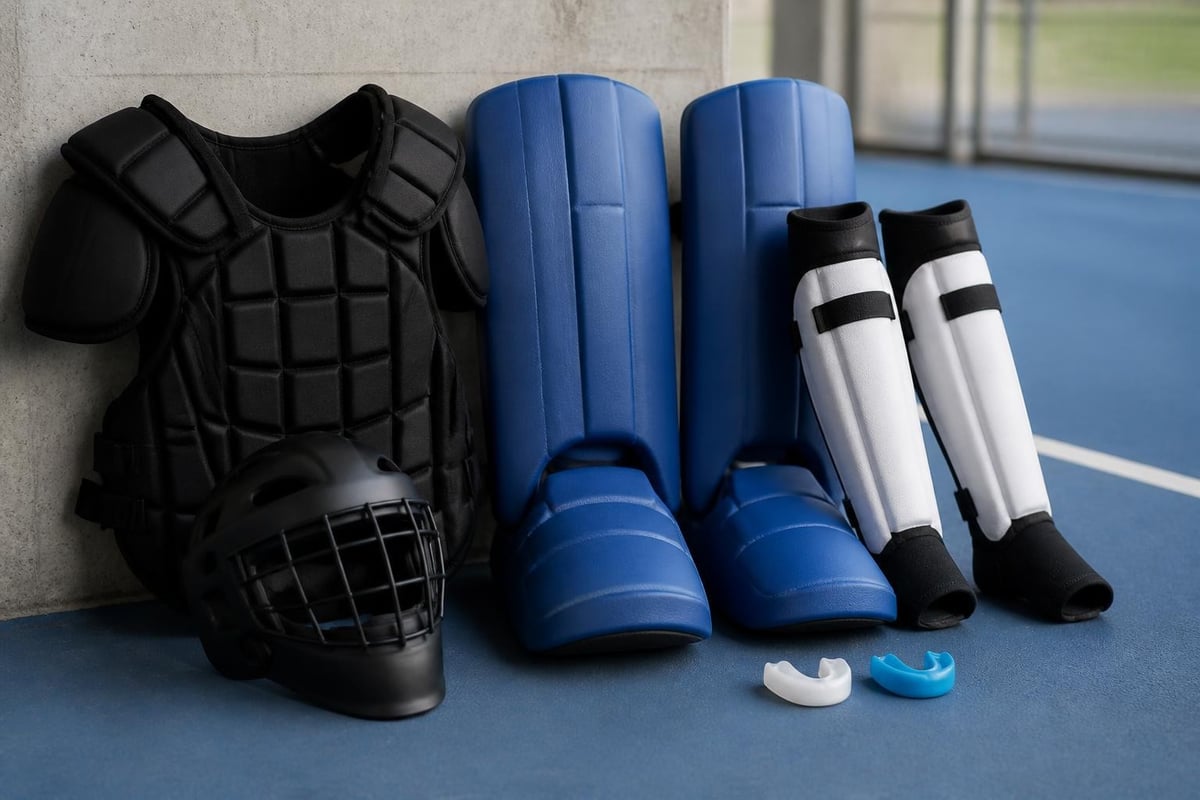
Personal protective equipment varies significantly by position and playing level. Goalkeepers require comprehensive protection including helmets with full-face cages, chest protectors, padded shorts, leg guards, kickers, and hand protectors. The FIH personal protective equipment guidance provides detailed specifications ensuring all goalkeeper equipment meets safety benchmarks.
Field players have different requirements focused on mobility and targeted protection:
- Mouthguards (mandatory at most competitive levels)
- Shin guards designed for field hockey's unique impact patterns
- Gloves for hand protection during defensive plays
- Eye protection (increasingly recommended, especially for youth players)
Organizations must balance protection with performance, selecting gear that doesn't restrict movement while providing adequate safety coverage. Field hockey training equipment selections should prioritize both protection standards and player comfort for optimal performance during practices and competitions.
Playing Surface and Field Specifications
The field hockey sport utilizes a rectangular field measuring 91.4 meters long and 55 meters wide. The playing surface significantly impacts game speed and equipment choices. Modern competitive play primarily occurs on water-based synthetic turf or sand-dressed artificial surfaces, which provide consistent ball roll and faster gameplay compared to natural grass.
Field Markings and Zones
Understanding field zones helps teams organize practices and develop tactical strategies:
| Zone | Distance from Goal | Tactical Purpose |
|---|---|---|
| Shooting Circle | 14.63m radius | Only area where goals can be scored |
| 23-meter area | 23m from backline | Free hit restart zone, tactical positioning |
| Center line | 45.7m from each goal | Divides defending and attacking halves |
| Penalty spot | 6.4m from goal center | Location for penalty stroke attempts |
The shooting circle's unique semicircular shape (D-shape) creates specific offensive and defensive challenges. Attackers must enter this zone to score, while defenders work to clear the ball beyond the 23-meter line to relieve pressure. Quality goal nets designed specifically for field hockey withstand the force of shots traveling over 100 km/h while maintaining proper tension throughout the season.
Rules and Gameplay Fundamentals
The field hockey sport features eleven players per side, including one goalkeeper and ten field players. Games consist of four 15-minute quarters at the international level, though variations exist for youth and recreational play. The NCAA field hockey playing rules outline specific modifications for collegiate competition, including provisions for video review and timing adjustments.
Key Rule Concepts
Players may only use the flat side of their stick to play the ball, creating the sport's distinctive dribbling and passing techniques. Physical contact rules are strict compared to other team sports. Players cannot use their bodies to shield the ball, and stick checking must avoid contact with opponents' bodies or sticks above the shoulder.
The obstruction rule prevents players from positioning their body between an opponent and the ball when not actively playing it. This encourages continuous movement and technical skill rather than physical dominance. Fouls within the shooting circle result in penalty corners, while deliberate fouls preventing probable goals lead to penalty strokes taken from 6.4 meters out.
Penalty corners represent one of field hockey's most strategic set pieces:
- Ball placed on the backline 10 meters from the goal post
- Attacking team positions five players outside the circle
- Defending team positions four field players behind the backline plus goalkeeper
- Play begins when the ball is pushed or hit from the backline
- Attackers must stop the ball outside the circle before shooting (unless using a direct deflection)
Training Methods and Skill Development
Effective field hockey sport training balances technical skills, tactical awareness, physical conditioning, and mental preparation. The NFHCA New Coach Toolkit provides comprehensive resources for coaches developing practice plans that address all these dimensions.
Technical Skills Progression
Stick skills form the foundation of player development. Begin with basic grip mechanics, ensuring the left hand (for right-handed players) grips the top of the stick while the right hand sits approximately halfway down. Practice drills should progress from stationary ball control to dribbling at speed, then incorporating changes of direction and defensive pressure.
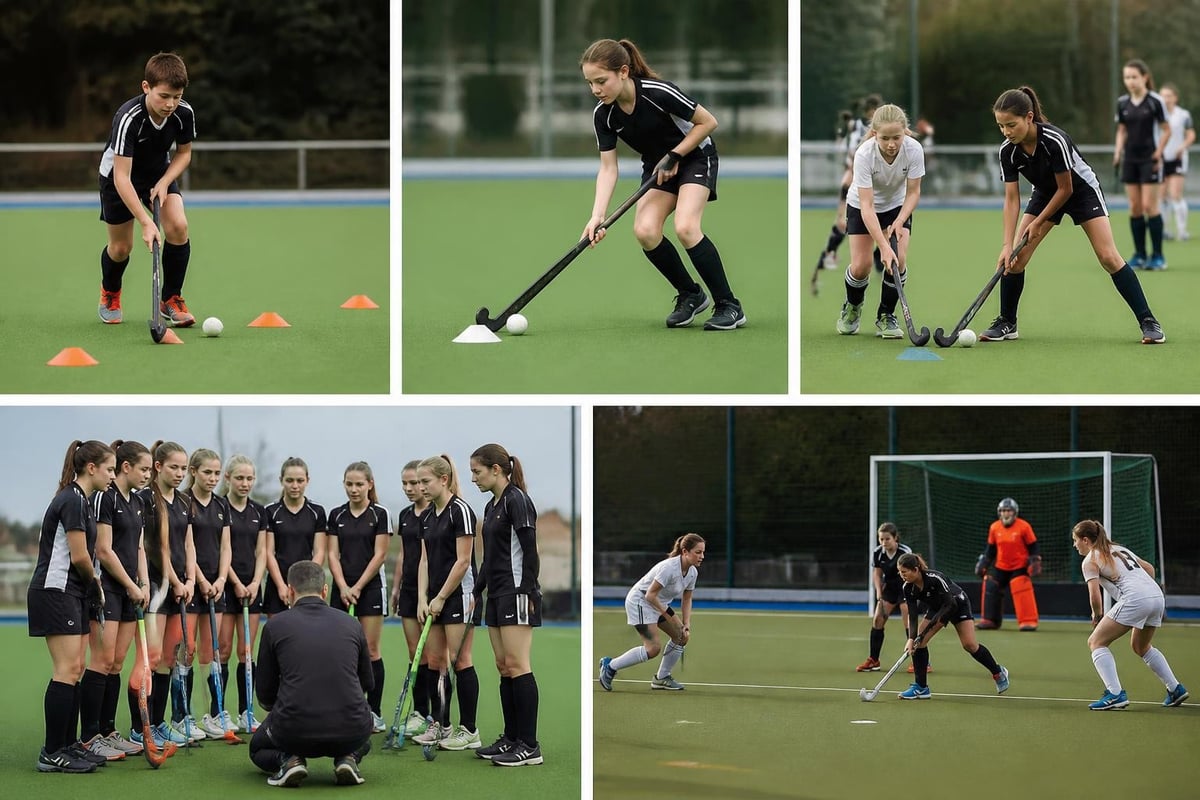
Passing accuracy separates developing players from competitive ones. Push passes provide control for short distances, while hit passes generate power for long balls across the field. Receiving skills must accommodate balls arriving from multiple angles and speeds, requiring soft hands and immediate body positioning for the next play.
Position-Specific Training Considerations
Different positions demand specialized training approaches:
Forwards and Attacking Midfielders:
- Quick stick work in tight spaces
- Shooting accuracy from various angles within the circle
- Movement off the ball to create passing lanes
- One-touch passing combinations
Defensive Players:
- Jab tackle timing and execution
- Clearing passes under pressure
- Positioning to force attackers toward sidelines
- Communication organizing defensive structure
Goalkeepers:
- Reaction drills for close-range saves
- Positioning relative to ball location
- Clear communication directing defenders
- Distribution accuracy starting counterattacks
Training equipment should support position-specific needs while maintaining versatility for small-sided games and full-field scrimmages. Quality fitness sports equipment enhances conditioning programs that develop the aerobic capacity and explosive speed field hockey demands.
Injury Prevention and Player Safety
Research indicates field hockey players face specific injury patterns related to the sport's unique characteristics. A systematic review of field hockey injuries found that lower extremity injuries, particularly to the ankle and knee, represent the most common acute injuries, while overuse injuries frequently affect the lower back and wrist from repetitive stick work.
Implementing Effective Safety Protocols
Comprehensive warmup routines reduce injury risk while improving performance. Dynamic stretching addressing hip flexors, hamstrings, and shoulders prepares players for the multidirectional movement and stick handling the field hockey sport requires. Progressive intensity during warmups allows cardiovascular systems to adapt before high-intensity competition.
| Safety Element | Implementation Strategy | Expected Outcome |
|---|---|---|
| Proper equipment fit | Regular sizing checks, especially for youth players | Reduced equipment-related injuries |
| Surface maintenance | Weekly turf inspection, debris removal | Consistent playing conditions, fewer falls |
| Hydration protocols | Scheduled water breaks, especially in heat | Prevention of heat-related illness |
| Concussion awareness | Baseline testing, immediate removal protocols | Early identification and proper recovery |
| Strength training | Off-season and in-season programs focusing on core and lower body | Improved stability, reduced overuse injuries |
The NFHS Field Hockey Preseason Guide emphasizes gradual conditioning increases during preseason to prevent overtraining injuries common when players return from extended breaks.
Competitive Levels and Pathways
The field hockey sport offers participation opportunities from youth recreation through Olympic competition. Understanding these levels helps coaches and administrators select appropriate equipment, training intensity, and competition formats for their athletes.
Youth and Scholastic Programs
Youth field hockey typically begins with modified rules emphasizing skill development over competitive outcomes. Smaller field dimensions, reduced player counts (often 7v7 or 9v9), and shorter game durations maintain engagement while teaching fundamentals. High school programs follow state athletic association guidelines, with most states adopting USA Field Hockey's rules as their foundation with minor local modifications.
Scholastic programs require budget-conscious equipment solutions that don't compromise safety or performance. Purchasing decisions should consider:
- Durability for daily practice use
- Sizing options accommodating growing athletes
- Replacement timelines for high-wear items like sticks and balls
- Storage solutions protecting equipment investment
Collegiate and Club Competition
Collegiate field hockey represents the highest level of competition in the United States, with NCAA Division I, II, and III championships plus NAIA programs. College teams demand equipment meeting strict specifications while withstanding the rigorous training schedules and extended seasons characteristic of collegiate athletics.
Club programs serve post-collegiate athletes and provide competitive opportunities outside traditional school structures. These organizations often operate with limited budgets, making reliable suppliers offering straightforward pricing essential for sustainability.
International Competition and Olympic History
Field hockey's international presence spans continents, with particularly strong traditions in India, Pakistan, the Netherlands, Australia, and Argentina. The sport appeared in the 1908 Olympic Games and became a permanent fixture for men in 1928, with women's competition added in 1980.
The International Hockey Federation (FIH) governs global competition, establishing equipment standards, rule interpretations, and tournament formats that influence play at all levels. Major international tournaments include the Olympic Games, World Cup, Champions Trophy, and continental championships across five confederations.
Modern Analytics and Performance Tracking
Advanced analytics are transforming how coaches approach the field hockey sport. Research on spatio-temporal graph analytics for field sports demonstrates how tracking player and ball movement creates insights into tactical effectiveness, player workload, and opponent tendencies.
Performance tracking technologies now accessible to scholastic and club programs include:
- GPS units monitoring player distance, speed zones, and acceleration patterns
- Video analysis software breaking down technical execution and tactical decisions
- Heart rate monitoring ensuring training intensity matches objectives
- Statistical tracking of passes, tackles, shots, and turnovers
This data-driven approach helps coaches make informed decisions about lineup selections, substitution patterns, and practice focus areas. Teams can identify specific skill deficiencies requiring additional training or tactical adjustments exploiting opponent weaknesses.
Seasonal Planning and Equipment Management
Successful field hockey programs require comprehensive seasonal planning addressing practice schedules, competition calendars, equipment inventory, and facility access. Preseason preparation typically begins 4-6 weeks before the first competition, allowing adequate conditioning development while teaching or reviewing fundamental skills.
Equipment Inventory and Replacement Cycles
Athletic directors and coaches must track equipment condition and plan replacement schedules preventing mid-season shortages. Typical replacement timelines include:
- Sticks: 1-2 seasons depending on player position and usage intensity
- Balls: Monthly replacement for primary practice balls, as needed for game balls
- Goalkeeper equipment: Annual inspection with replacement as protection deteriorates
- Training aids: Cones, markers, rebounders inspected quarterly
Bulk purchasing at season's end often provides cost advantages, while maintaining backup equipment prevents practice disruptions when items break unexpectedly. Similar to how teams manage hockey referee equipment or youth football pads, field hockey programs benefit from centralized equipment management systems tracking inventory, usage, and replacement needs.
Building a Sustainable Field Hockey Program
Long-term program success requires more than just wins and losses. Sustainable field hockey sport programs focus on player development, community engagement, and financial stability. Schools and organizations should establish clear program goals addressing participation numbers, competitive success, and athlete progression to higher levels.
Recruiting and retaining players starts with positive experiences emphasizing skill development and team culture over immediate results. Youth programs feeding into high school teams create pipeline consistency, while alumni engagement can provide mentoring and financial support.
Budget management remains critical, particularly for programs without guaranteed institutional funding. Revenue sources may include:
- Registration fees structured affordably while covering operational costs
- Fundraising events engaging the broader community
- Sponsorships from local businesses supporting youth athletics
- Equipment grants from national governing bodies or foundations
- Camp and clinic fees generating off-season income
Financial transparency builds trust with parents and administrators, demonstrating efficient resource use and supporting budget increase requests when expanding program offerings.
Coaching Resources and Continuing Education
The field hockey sport continues evolving through rule modifications, tactical innovations, and equipment advances. Coaches must commit to ongoing education maintaining current knowledge and teaching methods. National governing bodies and coaching associations offer certification programs, webinars, and in-person clinics addressing technical skills, tactical systems, and program management.
Networking with other coaches through conferences and online communities provides valuable perspective on handling common challenges. Sharing practice plans, drill ideas, and administrative solutions accelerates professional growth while building relationships supporting long-term career development.
Video libraries from international competitions expose coaches and players to elite-level tactics and techniques adaptable to their programs. Analyzing how top teams execute penalty corners, press defenses, or build attacks from the back provides models for practice design and game preparation.
The field hockey sport demands specialized knowledge spanning equipment standards, rules, training methodologies, and program management to build successful teams at any competitive level. From selecting proper protective gear and understanding FIH specifications to implementing injury prevention protocols and developing sustainable program models, coaches and administrators must address multiple dimensions simultaneously. Whether you're launching a new program, upgrading existing equipment, or preparing for the upcoming season, Sideline Sport Supply provides the reliable, affordable field hockey equipment and training essentials your athletes need to compete safely and effectively. Our straightforward pricing and fast fulfillment mean your team spends less time managing logistics and more time developing the skills that win games.