

Goals in Soccer: Techniques, Training & Essential Gear
Scoring goals in soccer represents the fundamental objective that drives every match, training session, and tactical decision. Whether you're coaching a youth team, managing school athletics programs, or equipping sports organizations, understanding the mechanics, types, and training methods for goals transforms how athletes approach the game. The ability to consistently put the ball in the back of the net separates competitive teams from recreational ones, making goal-scoring proficiency a critical component of player development at every level.
Understanding What Constitutes Goals in Soccer
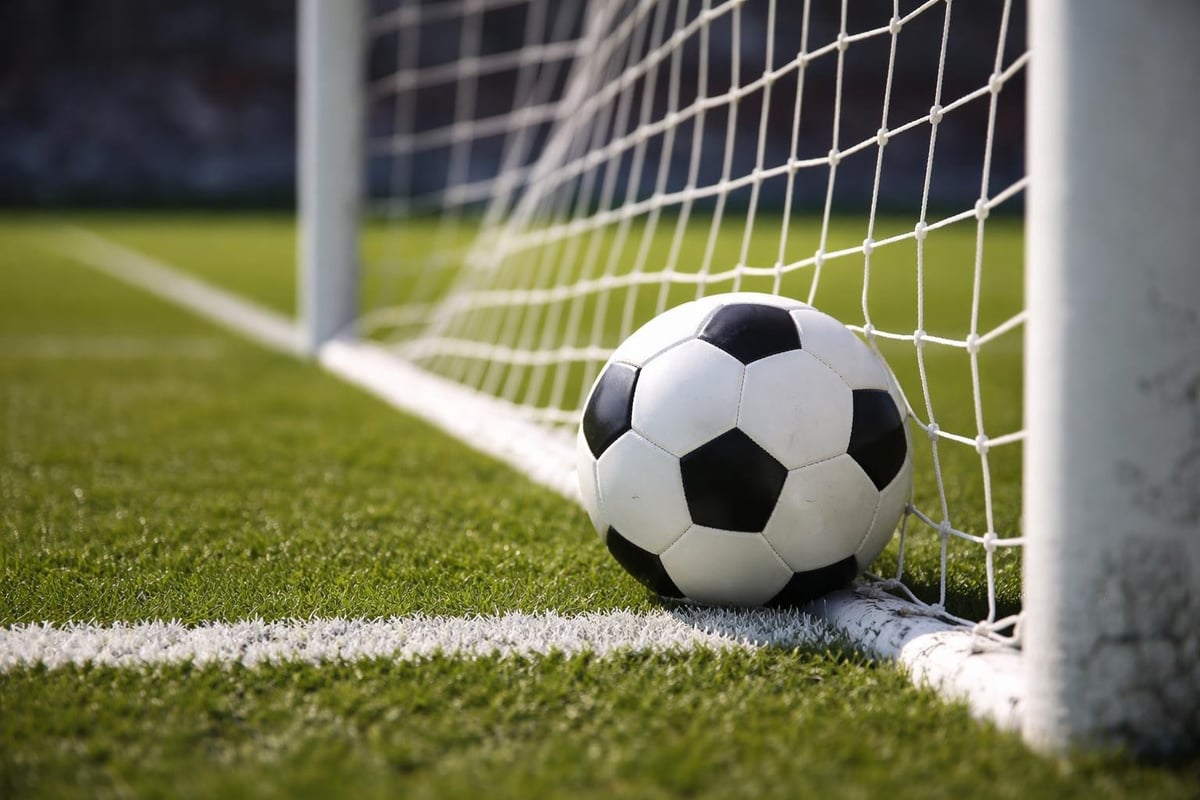
The official definition of a goal in soccer requires the entire ball to completely cross the goal line between the posts and beneath the crossbar. According to comprehensive soccer scoring rules, this seemingly simple requirement involves precise measurements and split-second judgments that can determine match outcomes. The goal line technology introduced in professional play has eliminated much controversy, but understanding the fundamental rules remains essential for coaches and athletes.
Goals in soccer must be scored according to specific conditions. The ball cannot enter the net directly from a throw-in, and players cannot use their hands or arms unless they're the goalkeeper within their penalty area. These regulations ensure fair play while creating strategic complexity that makes the sport engaging.
Key elements that validate a goal:
- Complete ball penetration across the goal line
- No rule violations during the scoring play
- Proper positioning relative to offside regulations
- Legitimate contact methods (feet, head, torso)
The importance of goals extends beyond simple scorekeeping. Research on soccer statistics and goal analysis demonstrates that actual goals scored remain the most reliable predictor of match success, even more than advanced metrics like expected goals. This reality emphasizes why coaches must dedicate substantial training time to finishing techniques and goal-scoring scenarios.
Different Types of Goals in Soccer and Required Skills
Goals in soccer come in numerous varieties, each demanding distinct technical abilities and tactical awareness. Understanding these categories helps coaches design targeted training programs that develop well-rounded offensive players capable of capitalizing on multiple scoring opportunities.
Open Play Goals
Regular goals from open play represent the most common scoring method. These goals emerge from fluid gameplay involving passing sequences, dribbling runs, and positional awareness. Players must read defensive formations, identify spaces, and execute precise finishing techniques under pressure.
Developing open play scoring requires comprehensive training that addresses ball control, spatial awareness, and decision-making speed. Athletes benefit from drills that simulate game conditions where they must receive passes, create separation from defenders, and finish accurately within tight windows.
Set Piece Opportunities
Free kicks, corner kicks, and penalty kicks each present unique goal-scoring scenarios with specific technical requirements. Free kick specialists develop the ability to bend shots around defensive walls, while penalty takers must manage psychological pressure during one-on-one situations with goalkeepers.
| Goal Type | Key Skills Required | Success Factors |
|---|---|---|
| Free Kicks | Ball striking, curve generation, wall reading | Placement accuracy, power control |
| Penalties | Mental composure, keeper analysis | Confidence, technique consistency |
| Corner Kicks | Timing, heading accuracy, positioning | Spatial awareness, physical presence |
| Open Play | Ball control, shooting variety | Quick decision-making, finishing touch |
Aerial Goals and Headers
Heading goals demand timing, courage, and proper technique to generate power and accuracy. Players must judge flight paths, position their bodies correctly, and make contact with the optimal part of their forehead. Youth programs especially need proper progressions to develop heading skills safely and effectively.
Specialty Goals
Volleys, bicycle kicks, and long-range efforts showcase advanced technical ability but also serve practical purposes when standard finishing options aren't available. Training these techniques improves overall ball mastery and creates unpredictable offensive threats that defensive units struggle to counter.
Training Methods for Improving Goal Scoring
Developing consistent goal scorers requires systematic training approaches that address technical skills, tactical understanding, and mental preparation. Coaches working with athletes at any level can implement structured programs that progressively build finishing abilities through deliberate practice methods.
Technical Skill Development
Shot accuracy begins with proper body mechanics and ball contact points. Players must learn different striking techniques including inside-foot placement shots, laces-driven power shots, and outside-foot curves. Repetition under varied conditions builds the muscle memory necessary for instinctive finishing during matches.
Essential technical drills include:
- Stationary shooting from multiple angles
- Moving ball finishing sequences
- First-touch shooting exercises
- Weak foot development routines
- One-on-one scenarios against goalkeepers
The goal-setting strategies for soccer athletes emphasize creating specific, measurable objectives that guide training focus. Rather than vague aspirations about "scoring more," effective programs establish concrete targets like "convert 75% of breakaway opportunities" or "score five headers this season."
Tactical Awareness Training
Understanding when and where to position for goals separates productive strikers from those who simply possess good technique. Players must recognize defensive gaps, time runs to stay onside, and anticipate where rebounds or deflections might occur. Small-sided games develop this tactical intelligence through repeated decision-making in compressed spaces.
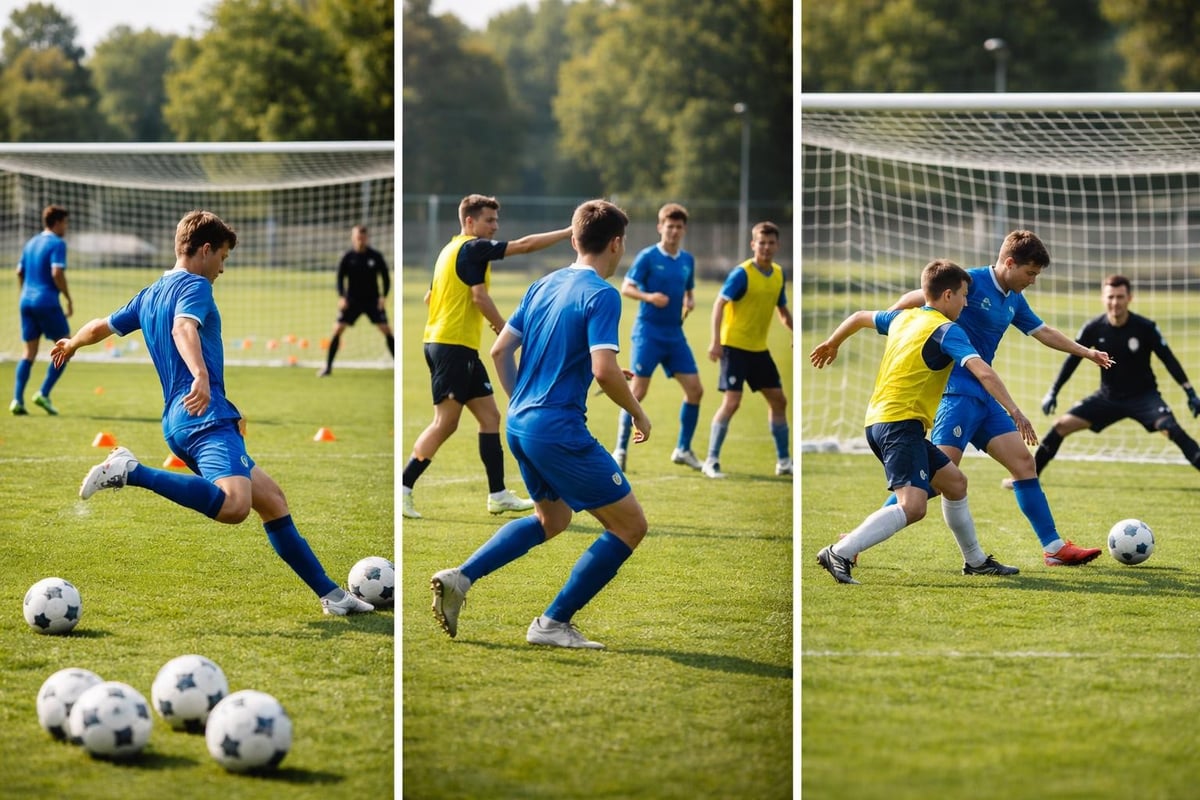
Coaches should incorporate game-realistic scenarios that mirror actual match conditions. Defenders applying pressure, goalkeepers positioned correctly, and time constraints all contribute to training transfer that improves actual game performance. At Sideline Sport Supply, we understand how quality training equipment supports these developmental progressions.
Mental Preparation and Confidence Building
Goals in soccer often depend as much on psychological readiness as physical ability. Players who visualize successful finishing, maintain composure under pressure, and bounce back quickly from missed opportunities demonstrate the mental resilience necessary for consistent scoring.
Progressive challenge sequences build confidence systematically. Starting with unopposed finishing and gradually adding defensive pressure, goalkeeper presence, and competitive elements creates positive reinforcement while developing pressure management skills.
Essential Equipment for Goal Training
The right training equipment transforms generic practice into focused, productive sessions that accelerate skill development. Schools, clubs, and sports organizations need reliable gear that withstands repeated use while providing game-realistic experiences for athletes.
Training Goals and Portable Options
Full-size regulation goals work well for match simulation, but training demands often require more versatile solutions. Portable training goals offer flexibility for positioning multiple targets across practice fields, creating station-based training circuits, and adapting to available space constraints.
Pop-up goals, weighted portable goals, and adjustable training targets each serve specific purposes in comprehensive training programs. Smaller goals encourage accuracy over power, while full-size nets prepare players for actual match scenarios.
Considerations when selecting training goals:
- Portability requirements for field setup
- Durability standards for daily use
- Size variations for different age groups
- Weather resistance for outdoor storage
- Safety features including proper anchoring systems
Supporting Training Tools
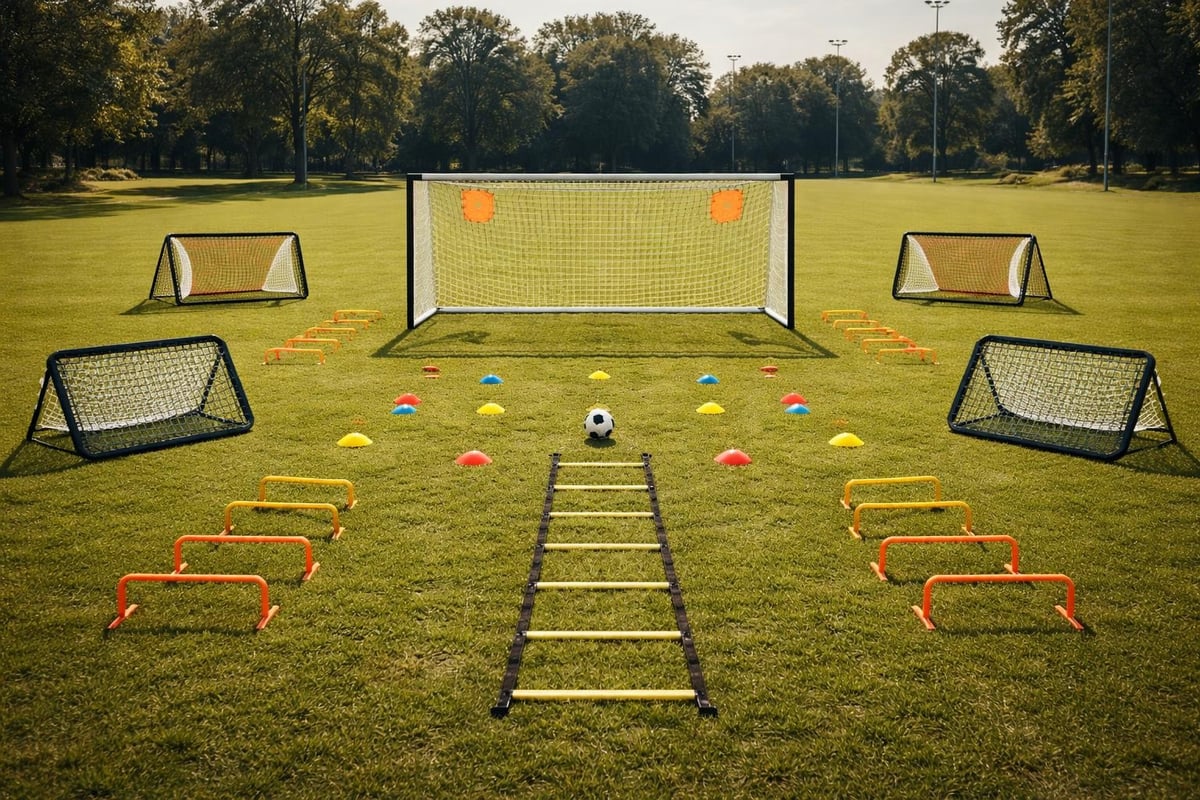
Beyond goals themselves, effective training programs incorporate rebounders, agility equipment, and marking tools. Rebounders develop first-touch finishing and reaction speed, while cones and markers create structured drill patterns that simulate game movements.
| Equipment Type | Training Purpose | Recommended Quantity |
|---|---|---|
| Portable Goals | Finishing practice, small-sided games | 4-6 per field |
| Rebounders | Ball control, quick shooting | 2-3 per station |
| Agility Ladders | Footwork, approach angles | 3-4 for rotation |
| Training Cones | Positioning markers, dribbling courses | 30-40 total |
| Scrimmage Vests | Team organization, position identification | 20+ in multiple colors |
The essential soccer training equipment that teams need extends beyond just goals to create comprehensive development environments. Quality training balls, properly maintained nets, and safety equipment all contribute to productive sessions that build scoring proficiency.
Building Progressive Goal-Scoring Programs
Effective coaching develops goal scorers through long-term progression rather than isolated drills. Youth players need foundational movement patterns and basic striking techniques before advancing to complex finishing sequences. High school and club athletes benefit from position-specific training that addresses the unique demands of forwards, midfielders, and even defenders joining attacks.
Age-Appropriate Training Progressions
Young players beginning soccer should focus on basic ball familiarity and enjoying the scoring experience. Simple games that create numerous shooting opportunities build positive associations while developing fundamental skills. As players mature, training complexity increases to match their growing tactical understanding and physical capabilities.
Middle school athletes can handle more structured technical instruction combined with tactical concepts like timing runs and recognizing scoring chances. High school programs often incorporate strength and conditioning elements that enhance shooting power and explosive movements toward goal.
Position-Specific Development
Different positions require varying approaches to goal scoring. Forwards need clinical finishing from all angles and distances, midfielders benefit from training that emphasizes arriving late into the box and shooting from distance, while defenders should practice set piece situations where they join attacks.
Customizing training based on positional demands ensures efficient use of practice time and creates specialists who understand their scoring roles within team tactics. This approach also helps coaches identify natural goal scorers whose instincts and abilities align with finishing responsibilities.
Analyzing Goals in Soccer for Continuous Improvement
Modern coaching leverages video analysis and performance data to refine goal-scoring approaches. Recording training sessions and matches allows coaches and players to identify technical flaws, recognize missed opportunities, and celebrate successful executions that should be replicated.
Performance Metrics Worth Tracking
Beyond simple goal totals, meaningful metrics include shooting accuracy percentages, conversion rates from different field zones, and success rates with various techniques. These statistics reveal patterns that inform training focus areas and help players understand their development trajectories.
Valuable tracking metrics:
- Shots on target percentage
- Conversion rate by field position
- Goal types (headers, volleys, placement shots)
- Success rates in one-on-one situations
- Scoring frequency from set pieces versus open play
Teams can maintain simple spreadsheets or utilize specialized apps to record this information. Regular reviews create accountability while highlighting progress that motivates continued improvement efforts.
Video Review Best Practices
Effective video analysis focuses on specific learning objectives rather than general observation. Coaches should prepare clips that demonstrate both successful executions and mistakes, encouraging players to identify what worked and what needs adjustment. This analytical approach develops soccer intelligence alongside technical skills.
Comparing player performances to professional examples provides aspirational benchmarks while illustrating proper technique. However, coaches must ensure comparisons remain age-appropriate and emphasize fundamentals over flashy moves that exceed current skill levels.
Integrating Goals Into Complete Team Development
While scoring goals in soccer represents the offensive objective, comprehensive team development balances attacking training with defensive responsibilities, possession skills, and tactical flexibility. The most successful programs create well-rounded athletes who understand all game phases while excelling in their specific roles.
Balancing Training Priorities
Coaches must allocate practice time across multiple development areas including technical skills, tactical understanding, physical conditioning, and psychological preparation. Goal-scoring training fits within broader offensive instruction that also addresses ball movement, spacing, and creating opportunities for teammates.
Typical week schedules might dedicate one session to finishing techniques, another to build-up play that creates scoring chances, and additional time to defensive organization and transition moments. This balanced approach prevents over-specialization while ensuring adequate attention to the ultimate objective of putting balls in nets.
Creating Competitive Training Environments
Competition during practice raises intensity levels and simulates match pressure that players will face during games. Small-sided competitions with goal-scoring objectives, finishing contests that reward accuracy and technique, and tracking individual statistics all contribute to engagement and effort maximization.
Recognition systems that celebrate improvement alongside absolute performance encourage athletes at all skill levels. Awards for most improved shooting accuracy or successfully attempting new techniques create inclusive environments where everyone finds motivation to develop their goal-scoring abilities.
Equipment Maintenance and Safety Considerations
Properly maintained training equipment ensures safety while maximizing investment longevity. Regular inspections of goals, nets, and anchoring systems prevent accidents and equipment failures that interrupt training schedules. Organizations should establish maintenance protocols that assign responsibility and create accountability for equipment condition.
Goal Safety Standards
Soccer goals, particularly full-size models, present safety risks when improperly secured. Anchoring systems must prevent tipping, especially when players climb on frames or hang from crossbars. Many tragic accidents have resulted from unsecured goals, making proper installation and storage non-negotiable priorities.
Essential safety practices include:
- Always anchoring portable goals with stakes or weights
- Inspecting net attachment points before each use
- Storing goals properly when not in use
- Educating athletes about climbing dangers
- Regular structural integrity assessments
- Following manufacturer specifications for setup
Organizations should reference safety guidelines from governing bodies and insurance providers to ensure compliance with best practices. Documentation of maintenance activities also protects against liability while demonstrating due diligence in equipment management.
Extending Equipment Lifespan
Quality training equipment represents significant investments that deserve proper care. Weather protection through storage or covers prevents UV damage and corrosion. Regular cleaning removes dirt and debris that can degrade materials over time. Prompt repairs to nets, frames, and joints prevent minor issues from becoming major failures.
Budget-conscious programs benefit from establishing relationships with reliable suppliers who offer quality products at fair prices. Our team sales program helps schools and organizations access the equipment they need while managing costs effectively through volume arrangements and straightforward pricing structures.
Adapting Training for Different Skill Levels
Goals in soccer training should match athlete capabilities while providing appropriate challenges that stimulate improvement. Beginners need success experiences that build confidence and enjoyment, while advanced players require complex scenarios that push their limits and expose areas needing refinement.
Youth and Beginner Considerations
Young players develop goal-scoring abilities through play-based learning that emphasizes exploration and experimentation. Smaller goals, shorter playing distances, and modified rules create appropriate challenges that keep activities engaging without overwhelming developing skills.
Positive reinforcement and effort-based feedback matter more than outcome-focused criticism at early stages. Coaches should celebrate attempts, improvement, and creative solutions rather than only rewarding successful goals. This approach builds intrinsic motivation and resilience when facing challenges.
Advanced Player Development
Experienced athletes benefit from training that mirrors competitive match conditions including defensive pressure, tactical complexity, and physical demands. Variable practice conditions that change shooting angles, distances, and scenarios develop adaptability that translates to game situations.
Advanced training also incorporates decision-making complexity where players must recognize optimal choices among multiple options. Should they shoot, pass to a better-positioned teammate, or dribble closer? These judgment calls separate good finishers from great ones who maximize scoring efficiency.
Building a Comprehensive Equipment Inventory
Schools, clubs, and sports organizations need diverse equipment inventories that support varied training objectives and accommodate athletes across multiple age groups. Strategic purchasing decisions balance immediate needs with long-term development plans while respecting budget constraints.
Priority Equipment Categories
Starting or expanding programs should prioritize versatile equipment that supports multiple training objectives. Portable goals that work for finishing practice and small-sided games deliver better value than single-purpose items. Quality training balls appropriate for different age groups ensure proper skill development without causing frustration or injury.
| Priority Level | Equipment Type | Quantity Guidelines | Budget Allocation |
|---|---|---|---|
| Essential | Training Goals (various sizes) | 1 per 6-8 players | 35-40% |
| Essential | Quality Balls (size appropriate) | 1 per 2 players | 20-25% |
| Important | Cones and Markers | 30-50 total | 10-15% |
| Important | Scrimmage Vests | 20+ in sets | 8-10% |
| Supplementary | Rebounders and Targets | 2-4 units | 10-12% |
| Supplementary | Agility Equipment | Multiple sets | 8-10% |
Organizations can explore comprehensive sports equipment options that address multiple needs through single suppliers, simplifying procurement while often accessing better pricing through consolidated orders. Establishing vendor relationships also facilitates replacement parts, warranty service, and expert guidance on equipment selection.
Long-Term Planning Strategies
Equipment inventories should grow systematically based on program development and participant numbers. Annual assessments identify worn items needing replacement, gaps in current offerings, and emerging needs as training sophistication increases. Multi-year purchasing plans spread costs while ensuring continuous capability improvement.
Grant opportunities, fundraising initiatives, and community partnerships can supplement budget allocations for equipment acquisition. Many organizations successfully leverage these resources to access higher-quality gear than operating budgets alone would permit, creating better development environments for athletes.
Mastering goals in soccer requires comprehensive approaches that address technical skills, tactical awareness, proper equipment, and systematic training progressions. Whether coaching youth athletes taking their first shots or developing competitive teams pursuing championships, the principles of effective goal-scoring development remain consistent across all levels. From understanding what constitutes valid goals through implementing progressive training programs with quality equipment, success comes from attention to fundamentals and commitment to continuous improvement. Sideline Sport Supply provides the reliable training equipment, portable goals, and essential gear that coaches and organizations need to build effective development programs without breaking budgets, allowing teams to focus resources on what matters most-helping athletes reach their full potential on the field.