

Football Equipment Guide: Essential Gear for Players
Football remains one of America's most popular sports, with participation spanning youth leagues, high school programs, college teams, and professional organizations. Equipping players with proper gear requires careful consideration of safety standards, performance needs, and budget constraints. Whether you're outfitting an entire team or supporting individual athletes, understanding the essential components of quality football equipment helps ensure players can compete safely while maximizing their potential on the field. From protective helmets to specialized training tools, the right gear makes a measurable difference in both player confidence and injury prevention.
Understanding Core Protective Gear Requirements
The foundation of any football program begins with protective equipment that meets current safety standards. Helmets represent the most critical investment, as they protect players from head injuries and concussions. Modern helmets must comply with NOCSAE certification standards, which establish rigorous testing protocols for impact resistance and structural integrity. These standards evolve regularly as research advances our understanding of brain injury prevention.
Helmet Selection and Fitting
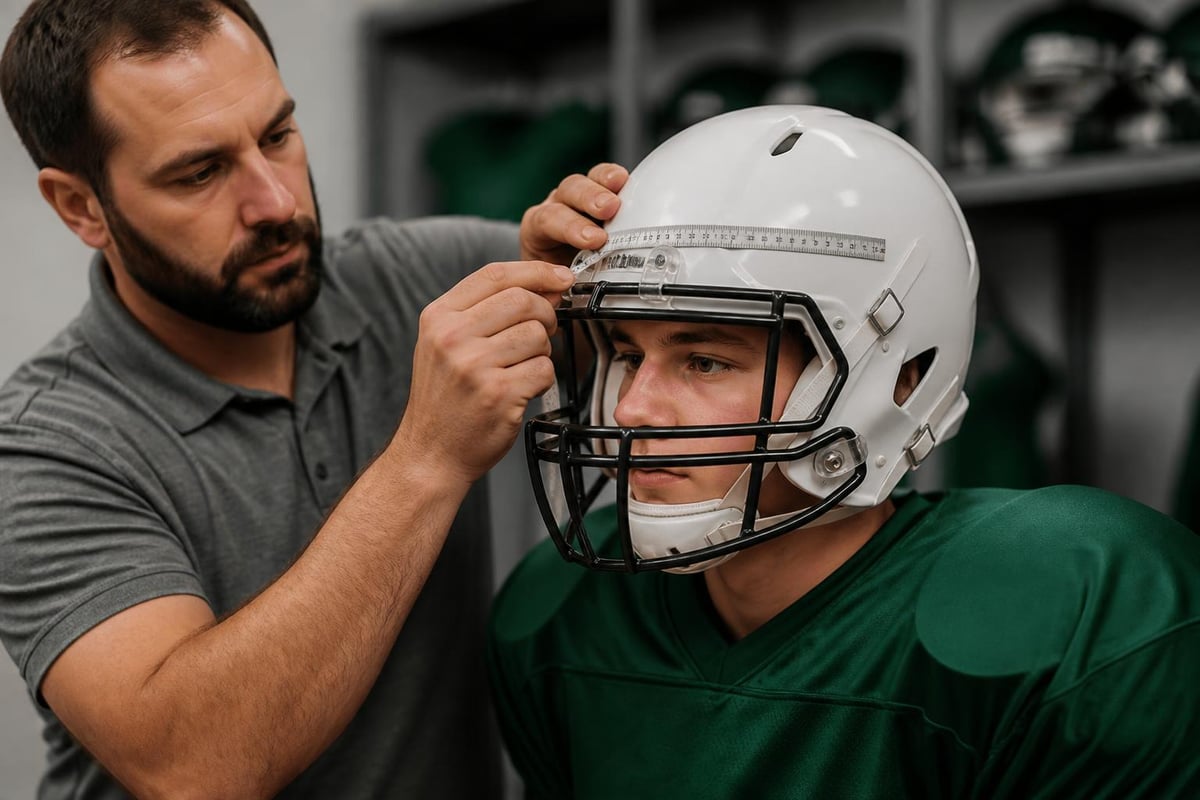
Proper helmet fit determines effectiveness more than brand or price point. A helmet should sit level on the head, approximately one inch above the eyebrows, with minimal forward or backward movement when secured. The face mask should provide adequate visibility while protecting facial features according to position requirements. Youth players require special attention, as the National Athletic Equipment Standards Committee has established specific benchmarks for youth helmets to address their unique developmental needs.
Key helmet fitting checkpoints include:
- Crown padding should contact the entire top of the head
- Jaw pads should fit snugly against the face
- Chin strap should allow one finger width between strap and chin
- No pressure points or gaps when fully secured
- Proper cage or visor attachment according to league rules
Shoulder Pads and Upper Body Protection
Shoulder pad selection depends heavily on player position and league requirements. Linemen typically require bulkier pads with extended coverage, while skill position players benefit from lighter, more mobile designs. Quality shoulder pads distribute impact across the collarbone, shoulders, and upper chest while allowing full range of motion for throwing, catching, and tackling movements.
The National Federation of State High School Associations provides specific guidelines regarding equipment standards that help coaches and equipment managers ensure compliance. These regulations address not only what equipment players must wear but also how it should be properly secured during play.
| Equipment Type | Primary Protection | Position Consideration | Average Lifespan |
|---|---|---|---|
| Quarterback/Receiver Pads | Shoulders, chest | Maximum mobility | 3-4 seasons |
| Lineman Pads | Shoulders, sternum, spine | Maximum coverage | 2-3 seasons |
| Linebacker Pads | Shoulders, ribs | Balance of coverage/mobility | 3 seasons |
| All-purpose Pads | Universal coverage | Versatile design | 3 seasons |
Lower Body and Extremity Protection
While helmets and shoulder pads receive primary attention, lower body protection proves equally essential for player safety. Hip pads, thigh pads, knee pads, and tailbone protectors guard against common contact injuries during tackles and falls. Many modern pants integrate these pads into built-in pockets, streamlining the equipment process and ensuring proper placement.
Girdles and Integrated Padding Systems
Compression girdles with integrated padding have revolutionized lower body protection in recent years. These garments combine moisture-wicking fabric with strategically placed protective inserts, offering superior coverage compared to traditional loose pad systems. Players appreciate the streamlined fit that eliminates shifting during play while maintaining full mobility for running and cutting movements.
Athletic cups and pelvic protectors remain mandatory for many youth and high school programs. These items require individual ownership for hygiene reasons and should be replaced when showing signs of wear or impact damage. Similar to specialized protective equipment used in other sports, proper fit ensures maximum effectiveness without restricting movement.
Essential lower body protection includes:
- Hip pad inserts or integrated hip protection
- Thigh pads positioned to cover quadriceps muscles
- Knee pads secured above the kneecap
- Tailbone protector centered over the coccyx
- Athletic supporter with protective cup
Footwear and Cleat Selection
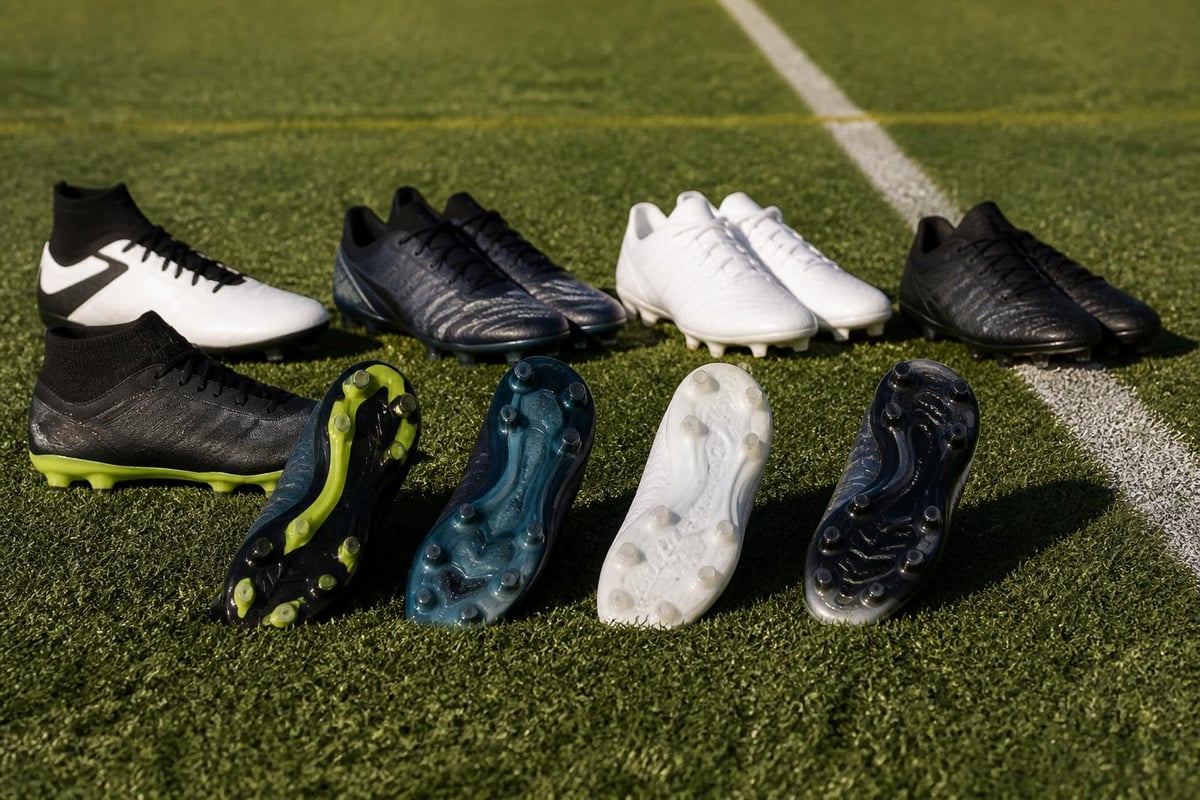
Football cleats provide the traction necessary for quick acceleration, sudden direction changes, and stable footing during contact. Different cleat configurations suit various field conditions and player positions. Molded cleats offer versatility across multiple surface types, while detachable cleats allow customization based on weather and field conditions.
Matching Cleats to Playing Surface
The NFL's recent mandate for standardized playing surfaces reflects growing awareness of how field conditions impact player safety. Teams should maintain multiple cleat options to adapt to natural grass, artificial turf, and varying weather conditions. Longer studs benefit natural grass fields, especially in wet conditions, while shorter, more numerous cleats distribute pressure across artificial surfaces.
Position-specific considerations influence cleat selection. Linemen benefit from high-top designs that provide ankle support during blocking and pushing movements. Skill position players typically prefer low-cut or mid-cut designs that maximize speed and cutting ability. Some programs standardize cleat types for team uniformity, while others allow individual selection based on player preference and position requirements.
Practice and Training Equipment Essentials
Beyond game-day protective gear, comprehensive football programs require various training tools and practice equipment. Tackling dummies, blocking sleds, agility ladders, and conditioning equipment develop fundamental skills while minimizing injury risk during practice sessions. Quality training equipment withstands repeated use across multiple seasons, making durability a key purchasing consideration.
Building a Complete Practice Setup
Effective practice facilities combine individual skill development tools with team-oriented equipment. Tackle wheels and standing dummies allow players to practice proper tackling form without live contact. Blocking sleds develop drive-blocking techniques while building leg strength and explosion. Agility equipment including cones, hurdles, and speed ladders improve footwork and change-of-direction abilities crucial for all positions.
Teams managing multiple sports programs can benefit from versatile equipment that serves various activities. Just as sporting goods shops offer diverse inventory for different athletic needs, smart equipment planning identifies overlapping requirements across programs to maximize budget efficiency.
Core practice equipment inventory:
- Tackling dummies (standing and hanging varieties)
- Blocking sleds (single and multi-man configurations)
- Agility ladders and speed hurdles
- Training cones and markers
- Ball carriers and passing machines
- Kicking nets and holder systems
Compliance with Safety Standards and Regulations
Football equipment standards continue evolving as research reveals new insights about injury prevention and performance optimization. Organizations must stay current with certification requirements, reconditioning schedules, and replacement timelines to maintain compliance and protect players. The Football Association's equipment regulations provide international perspective on mandatory equipment and prohibited items, though American football follows distinct governing bodies.
Equipment Reconditioning and Replacement Cycles
Helmets require annual reconditioning by certified facilities to maintain safety certification. This process includes thorough inspection, replacement of worn padding, and structural integrity testing. Schools and organizations should maintain detailed records of reconditioning dates and inspection results for liability protection and compliance verification.
Shoulder pads, while not requiring professional reconditioning, need regular inspection for cracks, separated padding, or compromised straps. Most quality shoulder pads serve effectively for three to four seasons with proper care, though heavy use by linemen may necessitate earlier replacement. Establishing clear replacement protocols based on usage hours rather than simple season counts ensures consistent protection levels.
| Equipment Category | Reconditioning Frequency | Replacement Timeline | Inspection Schedule |
|---|---|---|---|
| Helmets | Annually (certified facility) | 10 years from manufacture | Before each season |
| Shoulder Pads | As needed (visual inspection) | 3-4 seasons | Monthly during season |
| Pants/Girdles | N/A | 2-3 seasons | Weekly during season |
| Cleats | N/A | Annually or as worn | Before each game |
Equipment Management for Teams and Organizations
Athletic directors, equipment managers, and coaches face the challenge of maintaining adequate inventory while controlling costs. Successful programs establish clear equipment checkout procedures, cleaning protocols, and storage systems that extend equipment life and ensure availability. Digital inventory tracking systems help larger programs monitor equipment distribution and identify replacement needs before shortages occur.
Sizing and Fitting for Team Orders
Bulk equipment purchases require careful attention to size distribution based on roster composition. Youth programs typically need broader size ranges than high school or college teams due to greater physical variation among players. Conducting pre-season fitting sessions with detailed measurements ensures accurate ordering while identifying players who may need specialized sizing.
Working with suppliers who understand team needs streamlines the procurement process significantly. Team sales programs designed for coaches and athletic directors often provide volume pricing, flexible payment terms, and expert guidance on size distribution based on age group and competition level. These partnerships prove especially valuable for programs managing multiple sports throughout the academic year.
Budget Considerations and Cost Management
Football equipment represents a significant investment for most programs, particularly at youth and high school levels where funding often comes from fundraising and parent contributions. Understanding the difference between essential safety items and optional performance enhancements helps programs allocate limited budgets effectively. The American Academy of Pediatrics recommends specific equipment priorities for youth programs emphasizing safety over style.
Maximizing Value Without Compromising Safety
While budget constraints are real, safety equipment should never be compromised to save costs. Helmets and protective pads must meet current certification standards regardless of program budget levels. However, opportunities exist to reduce costs in non-safety-critical areas such as practice jerseys, training equipment, and optional accessories.
Reconditioning programs extend helmet life significantly compared to replacement purchases. A quality helmet properly maintained can serve ten years, making the initial investment more manageable when calculated across its functional lifespan. Similarly, youth football pads built for durability may cost more initially but prove more economical than frequent replacement of budget alternatives.
Budget optimization strategies include:
- Prioritize safety certification over brand preferences
- Invest in quality core items with longer replacement cycles
- Use reconditioned helmets from certified facilities
- Purchase practice equipment built for institutional use
- Establish equipment care protocols to extend useful life
Specialized Equipment for Position-Specific Needs
Different positions require specialized equipment beyond standard protective gear. Quarterbacks often use gloves designed for grip in various weather conditions. Receivers benefit from lightweight gloves that enhance catching ability without adding bulk. Linemen may require specialized neck rolls for additional protection during blocking and tackling. Kickers and punters use different cleat configurations optimized for plant foot stability.
Customization Within Team Standards
Most programs establish baseline equipment requirements while allowing individual customization for position-specific needs. This approach balances team uniformity with performance optimization. Understanding which equipment variations provide genuine functional benefits versus purely aesthetic differences helps coaches guide player choices effectively.
Goalies in other sports often use highly specialized protective equipment, and football positions require similar specialization. Linemen engaging in constant contact need maximum protection, while defensive backs prioritizing speed and coverage skills benefit from lighter, more mobile configurations. The NFL's equipment checklist provides comprehensive guidance applicable across competition levels.
Storage, Maintenance, and Long-term Care
Proper equipment care extends functional life and maintains safety effectiveness. Helmets should be stored in climate-controlled environments away from extreme temperatures that degrade padding and shell integrity. Shoulder pads and other fabric-based items require regular cleaning to prevent bacterial growth and odor accumulation. Establishing clear protocols for post-practice care ensures equipment remains game-ready throughout the season.
Creating Effective Equipment Rooms
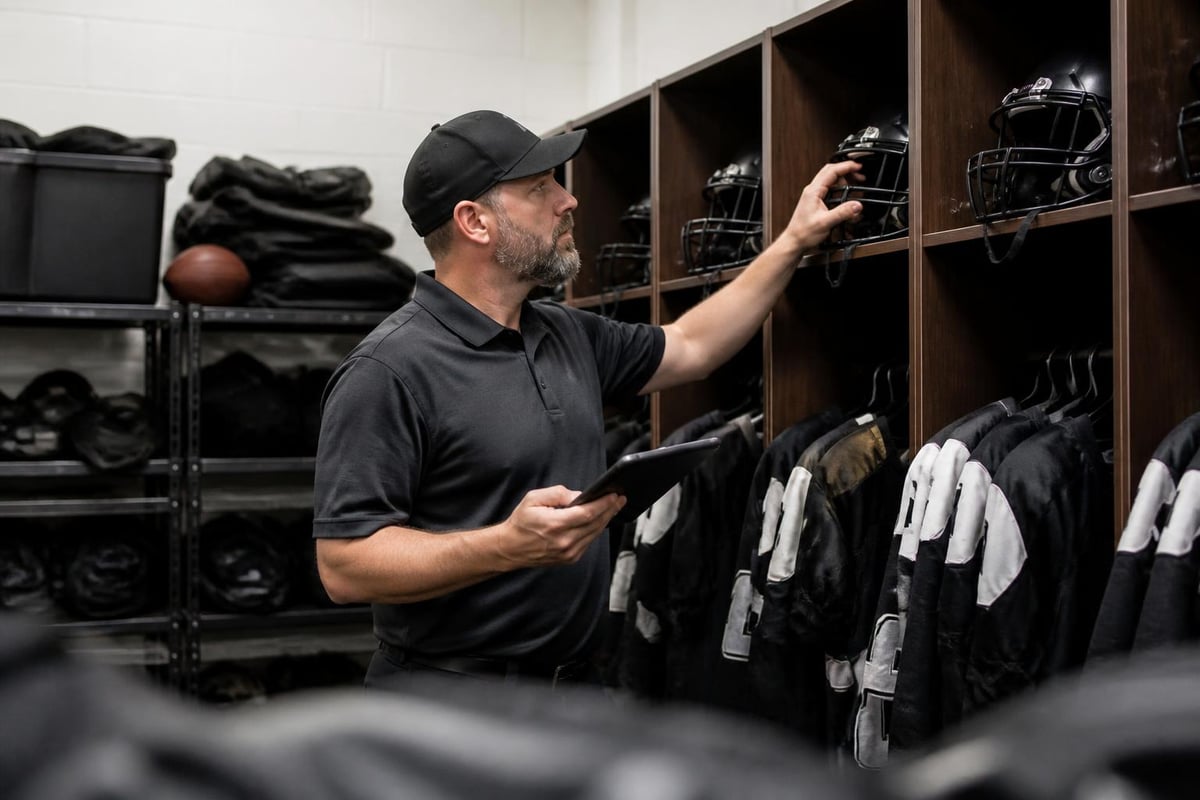
Dedicated equipment storage spaces should include adequate ventilation to prevent moisture accumulation and mold growth. Individual player storage cubbies or lockers keep equipment organized and accountable. Hanging systems for shoulder pads and helmets promote air circulation and prevent compression damage. Teams managing equipment across multiple sports benefit from systems similar to those used by comprehensive sports goods shops where organization and accessibility drive efficiency.
Regular equipment inspections should occur throughout the season, not just during pre-season preparation. Weekly spot checks identify damaged or compromised equipment before it fails during competition. Creating simple inspection checklists for coaches or equipment managers ensures consistent standards and documents compliance with safety protocols.
Emerging Technologies and Future Developments
Football equipment continues advancing through new materials, design innovations, and safety research. Smart helmets incorporating impact sensors provide real-time data about collision forces, helping medical staff identify potential concussion events. Advanced padding materials absorb impact energy more effectively while weighing less than traditional foam systems. These innovations gradually filter from professional levels to youth and amateur programs as costs decrease and availability improves.
Staying Current with Equipment Advances
Programs should monitor equipment developments without rushing to adopt every new technology. Proven safety improvements warrant prioritization, while performance claims require scrutiny and verification. Consulting with equipment suppliers, athletic trainers, and coaching associations helps identify genuinely beneficial innovations versus marketing hype.
The integration of technology extends beyond protective equipment to training tools as well. Digital platforms now track player development, monitor practice participation, and analyze performance metrics. Organizations managing martial arts programs alongside football might utilize comprehensive systems like MatSync to streamline administrative tasks, allowing more focus on coaching and player development across different sports disciplines.
Quality football equipment forms the foundation of safe, effective athletic programs at every competition level. From proper helmet selection and protective padding to position-specific gear and training tools, each component contributes to player safety and performance development. Organizations investing in certified equipment, establishing maintenance protocols, and partnering with knowledgeable suppliers create environments where athletes can focus on skill development and competition. Whether you're launching a new youth program or upgrading existing inventory for an established team, Sideline Sport Supply provides the reliable, game-ready equipment and straightforward support that keeps your focus where it belongs-on the field.