

Badminton Net Guide: Choosing the Right Net for Your Court
Whether you're setting up a school gymnasium, community recreation center, or backyard court, the badminton net serves as the centerpiece of proper gameplay. This essential piece of equipment must meet specific dimensional standards while withstanding the rigors of regular training sessions and competitive matches. Understanding net specifications, material options, installation methods, and maintenance requirements ensures your facility provides athletes with the consistent playing conditions they need to develop skills and compete effectively.
Understanding Official Badminton Net Specifications
The official dimensions of a badminton net follow strict regulations established by governing bodies to ensure fair play across all levels of competition. A regulation badminton net measures 20 feet in width and 2.5 feet in depth, stretching across the full width of the court with precise height requirements at specific points.
Height Requirements and Measurements
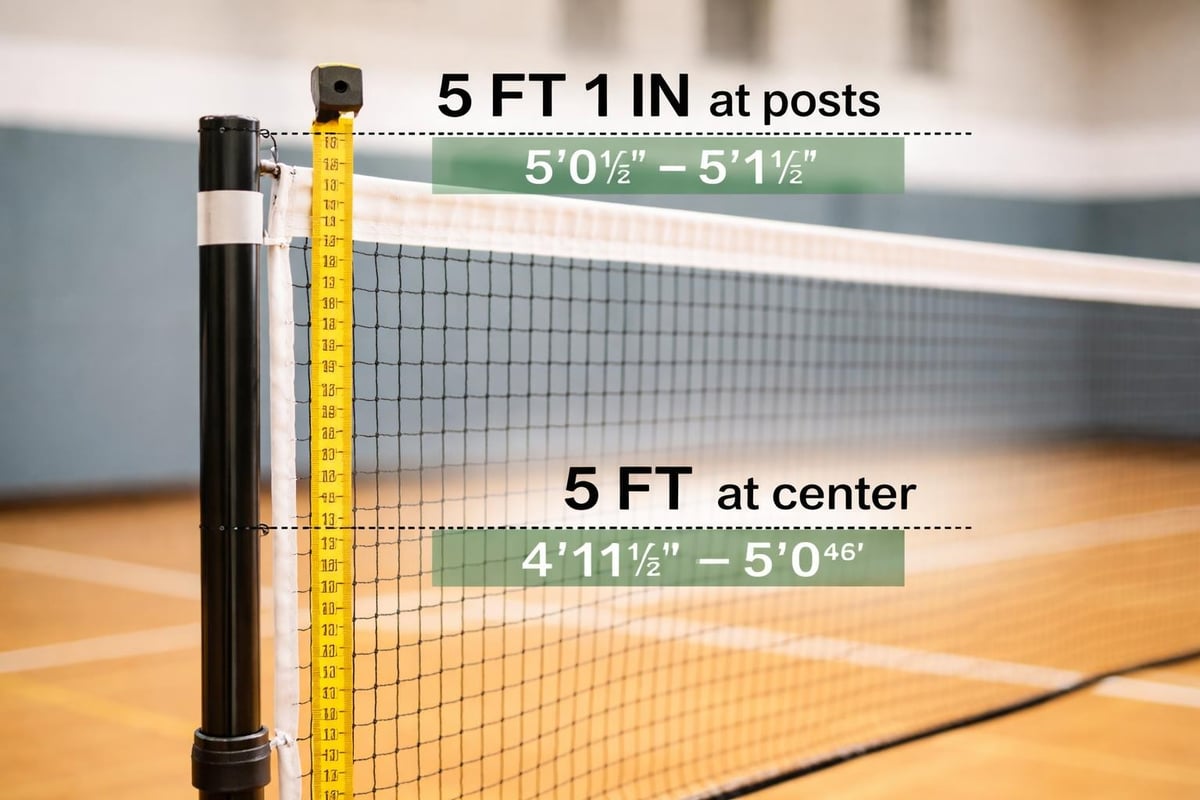
Net height varies slightly from the posts to the center, creating the characteristic dip that defines badminton play. The net must measure exactly 5 feet 1 inch at the posts, dropping to 5 feet at the center of the court. This five-inch difference is intentional and critical for proper gameplay.
Key height specifications include:
- Post height: 5 feet 1 inch (1.55 meters)
- Center height: 5 feet (1.524 meters)
- Acceptable tolerance: ±0.25 inches at center
The detailed measurements and diagrams provide visual references that help installers achieve precise setup. Coaches and facilities managers should verify these measurements regularly, as even minor deviations affect shuttle trajectory and competitive fairness.
Material Construction and Mesh Specifications
The mesh construction of a badminton net directly impacts durability and playing characteristics. Professional-grade nets typically feature knotted or knotless nylon construction with mesh openings between 0.6 and 0.8 inches. These specifications prevent shuttlecocks from passing through while maintaining visibility for players and officials.
| Material Type | Durability Rating | Best Use Case | Average Lifespan |
|---|---|---|---|
| Nylon (knotted) | High | Outdoor courts, heavy use | 2-3 years |
| Polyethylene | Very High | Indoor facilities, schools | 3-5 years |
| Cotton blend | Medium | Recreational settings | 1-2 years |
| Vinyl-coated | Excellent | Weather-exposed courts | 4-6 years |
Premium nets incorporate reinforced top tape, typically white vinyl measuring 3 inches in width, which provides structure and prevents stretching. The construction and manufacturing processes involve specialized techniques that balance flexibility with tensile strength, ensuring the net maintains proper shape under tension.
Selecting the Right Badminton Net for Your Facility
Choosing an appropriate badminton net depends on multiple factors including usage frequency, environmental conditions, budget constraints, and competition level. Schools and training facilities require different specifications than recreational backyard setups or tournament venues.
Indoor vs. Outdoor Net Considerations
Indoor facilities benefit from standard nylon or polyethylene nets that prioritize longevity and consistent performance in climate-controlled environments. These nets resist humidity fluctuations and maintain tension effectively throughout extended seasons. The wear-resistant and high-tensile options designed for indoor use often feature UV protection despite minimal sun exposure, providing additional material stability.
Outdoor installations demand enhanced weather resistance. Nets exposed to sunlight, rain, and temperature variations require UV-stabilized materials and rust-resistant hardware. Water-resistant coatings prevent moisture absorption that leads to sagging and material degradation.
Outdoor net features to prioritize:
- UV-stabilized nylon or polyethylene construction
- Stainless steel or powder-coated hardware
- Reinforced edges with double-stitched binding
- Mildew-resistant treatments
- Enhanced tensioning systems
At Sideline Sport Supply, we help facilities match net specifications to their specific environmental demands, ensuring equipment performs reliably regardless of setting.
Portable vs. Permanent Installation Options
Permanent installations suit dedicated badminton courts in schools, clubs, and recreation centers where courts remain configured year-round. These systems feature floor sleeves or ceiling-mounted posts that provide maximum stability and precise height adjustment. Permanent nets typically include professional-grade tensioning mechanisms that allow fine-tuning for tournament compliance.
The complete guide to portable badminton nets reveals versatile alternatives for multi-purpose facilities. Portable systems feature freestanding posts with weighted bases or ground anchors, enabling quick setup and removal. These configurations work exceptionally well for:
- Schools sharing gymnasium space between sports
- Community centers rotating activity schedules
- Recreational facilities offering seasonal programming
- Training programs requiring flexible court configurations
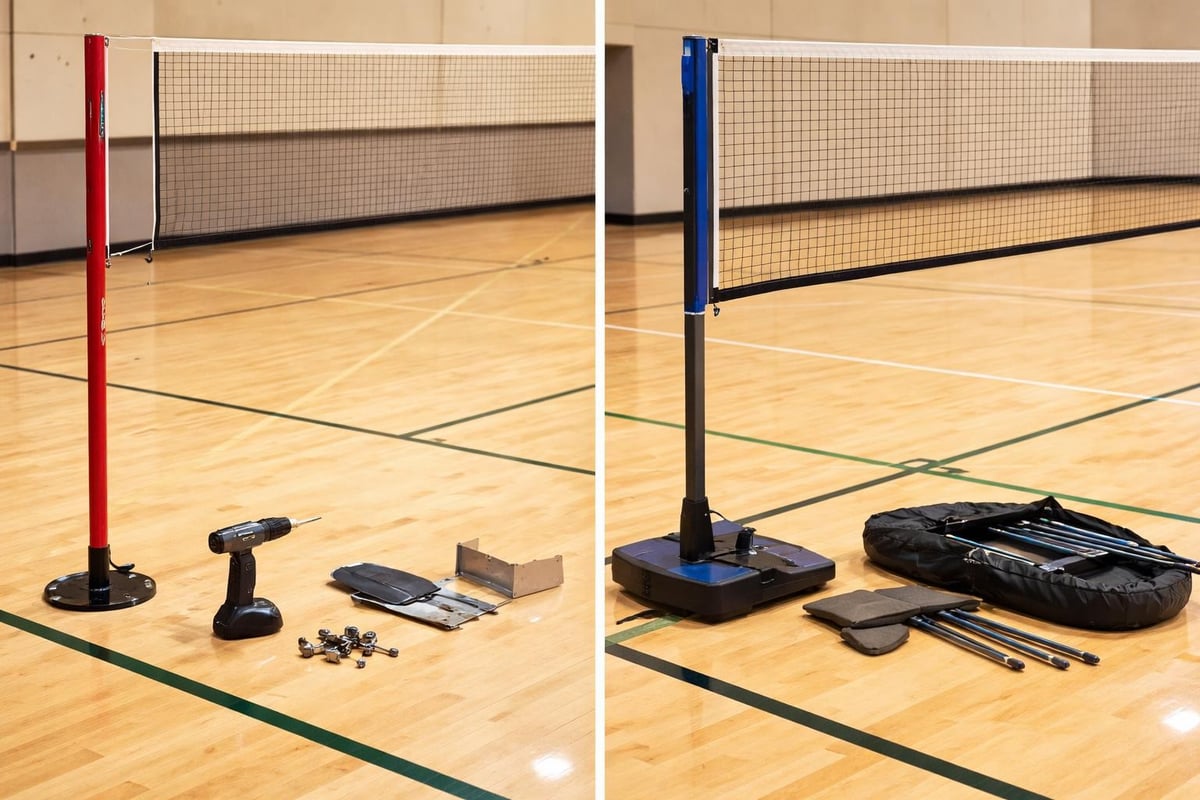
Quality portable systems incorporate telescoping posts, quick-release tension mechanisms, and transport wheels. While convenient, these systems require careful attention to stability and proper tensioning to maintain regulation height standards during play.
Installation Methods and Setup Procedures
Proper installation determines whether a badminton net performs to specifications throughout its service life. Both permanent and portable systems demand methodical setup processes that ensure safety, regulation compliance, and optimal playing conditions.
Step-by-Step Installation for Permanent Systems
Permanent installations begin with accurate court measurement and post placement. Posts must align exactly 20 feet apart, positioned on the sideline boundaries with equal distance from the centerline. Floor sleeves should be installed during facility construction or retrofitted with proper anchoring systems.
- Mark court boundaries using official dimensions with posts positioned at exact sideline intersections
- Install floor sleeves at regulation depth (typically 18-24 inches) with proper concrete anchoring
- Insert posts ensuring vertical alignment using levels and plumb measurements
- Attach net starting from one post and working across to maintain even distribution
- Apply tension gradually using turnbuckles or ratchet systems while monitoring center height
- Verify measurements at posts and center using calibrated measuring devices
- Test stability by applying moderate pressure to confirm secure installation
Professional installers often reference DIY backyard setup guides which translate to larger facility installations. The principles remain consistent across scales, though permanent systems incorporate more robust hardware and precision adjustment mechanisms.
Portable Net Setup and Stabilization
Portable systems prioritize speed without sacrificing stability. Modern designs allow single-person setup in under 15 minutes, making them ideal for programs like team sales where equipment rotates between locations.
Quick setup checklist:
- Extend posts to regulation height before net attachment
- Secure base weights (minimum 40 pounds per post for indoor, 60+ for outdoor)
- Attach net hooks starting from top corners, working downward
- Apply consistent tension across entire width
- Verify height at both posts and center point
- Test lateral stability by gently pushing posts
Ground stakes provide additional security for outdoor portable setups, particularly on grass or soft surfaces. Insert stakes at 45-degree angles, positioning them to counteract tension forces that pull posts inward.
Maintaining Proper Net Tension and Preventing Sagging
Net tension directly affects gameplay quality and equipment longevity. Understanding why badminton nets sag in the middle and implementing preventive measures keeps courts competition-ready while extending net service life.
Common Causes of Net Sagging
Sagging occurs through multiple mechanisms, many preventable through proper installation and maintenance protocols. Material stretch represents the most common cause, as nets gradually elongate under constant tension. Nylon and polyethylene fibers naturally relax over time, particularly when exposed to temperature fluctuations.
| Sagging Cause | Prevention Method | Correction Approach |
|---|---|---|
| Material stretch | Pre-tension new nets | Re-tension using adjustment hardware |
| Improper installation | Follow manufacturer specifications | Reinstall with proper technique |
| Weather exposure | Use UV-resistant materials | Replace damaged sections |
| Inadequate hardware | Install professional-grade components | Upgrade tensioning systems |
| Post misalignment | Regular position verification | Realign and secure posts |
Humidity significantly impacts natural fiber nets, causing expansion when wet and contraction when dry. This cycling accelerates material fatigue and permanent stretching. Synthetic materials resist moisture effects better, making them preferable for facilities with variable environmental conditions.
Tension Adjustment Techniques
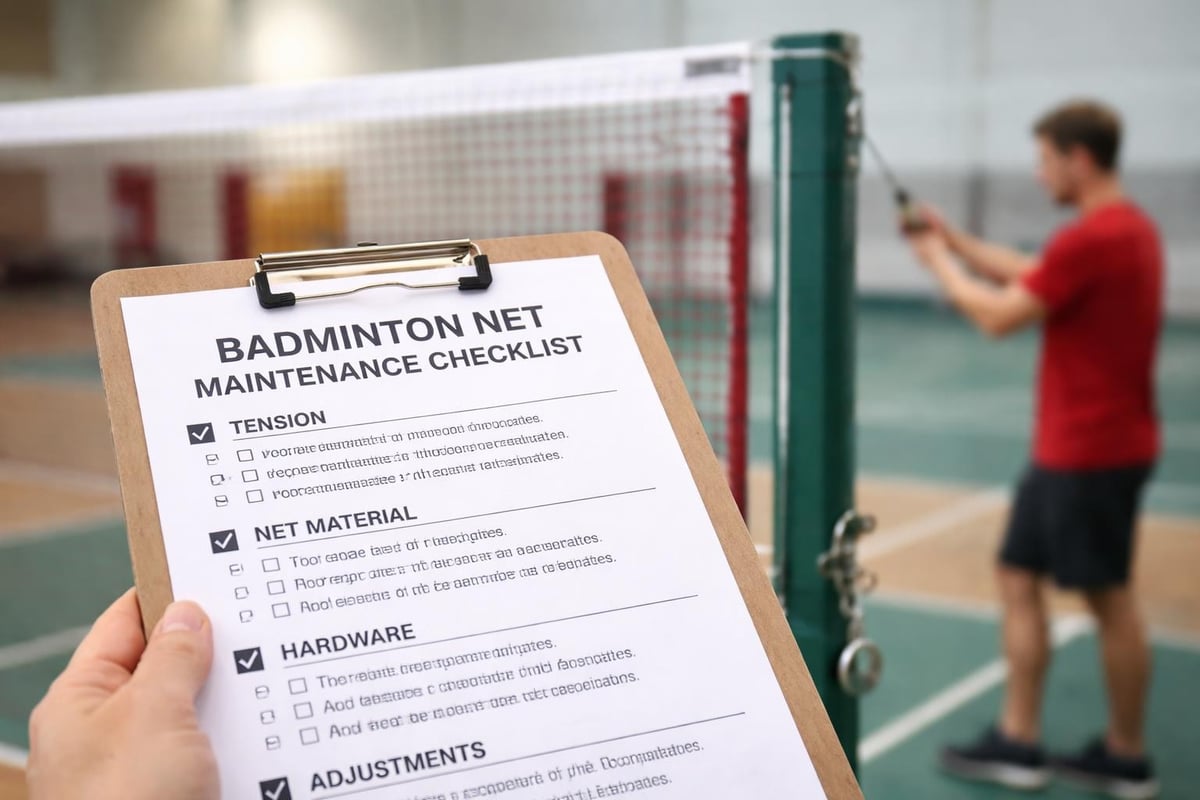
Regular tension checks should occur weekly for heavily-used courts and monthly for recreational facilities. Professional-grade nets include multiple adjustment points, typically at post connections and along the top tape. Turnbuckles provide precise control, allowing incremental adjustments that restore proper center height.
Adjustment procedure:
- Measure current center height using calibrated gauge
- Calculate deviation from 5-foot regulation standard
- Apply equal tension adjustments at both posts
- Remeasure center height after each quarter-turn
- Continue until achieving regulation specifications
- Document adjustment date and amount for maintenance records
Over-tensioning causes premature material failure and post stress. Apply only enough tension to achieve regulation height, avoiding the temptation to create an excessively taut net. Similar to volleyball nets and other court dividers, badminton nets perform best with appropriate tension rather than maximum tightness.
Material Durability and Weather Resistance
Understanding material properties helps facilities select nets that withstand specific usage patterns and environmental stresses. The technical details and material grades available in modern badminton nets provide options for every application and budget level.
Comparing Net Materials
Nylon dominates the badminton net market due to its excellent strength-to-weight ratio and UV resistance. High-tenacity nylon withstands repeated shuttle impacts without developing permanent deformation or mesh distortion. This material resists abrasion from shuttlecocks traveling at speeds exceeding 200 mph in competitive play.
Polyethylene offers superior weather resistance for outdoor installations. This synthetic polymer resists moisture absorption, preventing the expansion and contraction cycles that plague natural materials. Polyethylene maintains consistent tension across seasonal temperature swings, reducing adjustment frequency.
Cotton blend nets, while traditional, serve limited applications in modern facilities. These nets provide authentic feel for historical demonstrations or casual recreational play but lack the durability required for regular training schedules. Cotton absorbs moisture readily, promoting mildew growth and accelerating deterioration.
Material comparison for purchasing decisions:
- Budget facilities: Standard nylon with basic UV treatment ($75-150)
- Multi-sport gyms: Medium-grade polyethylene with reinforced edges ($150-250)
- Dedicated badminton clubs: Premium knotless nylon with professional hardware ($250-400)
- Outdoor recreation areas: Heavy-duty vinyl-coated polyethylene ($300-500)
UV Protection and Weatherproofing
Ultraviolet radiation degrades synthetic materials through photochemical reactions that break molecular bonds. UV-stabilized nets incorporate additives that absorb harmful wavelengths, preventing this degradation process. Outdoor nets without UV protection show visible deterioration within 6-12 months, developing brittleness and discoloration.
Quality weatherproofing extends beyond UV resistance. Water-repellent coatings prevent moisture penetration that leads to material weight gain and sagging. These treatments also inhibit biological growth, keeping nets clean and maintaining proper mesh dimensions throughout their service life.
Cost Considerations and Budget Planning
Badminton net pricing varies significantly based on construction quality, intended use, and included hardware. Facilities should evaluate total cost of ownership rather than initial purchase price alone, considering replacement frequency and maintenance requirements.
Price Ranges by Quality Tier
Entry-level recreational nets start around $50-75 for basic portable systems with lightweight posts and standard mesh construction. These options suit occasional backyard use or introductory programs with limited budgets. Schools and community centers typically require mid-range equipment priced between $150-300, offering enhanced durability and regulation compliance.
Tournament-grade professional nets command premium pricing from $300-600, justified by superior materials, precision manufacturing, and competition-certified specifications. These investments make sense for facilities hosting sanctioned events or supporting elite athlete development.
Our price match guarantee ensures schools and sports organizations access quality equipment without overspending. Similar to budgeting for goal nets or other facility essentials, proper badminton net selection balances immediate costs against long-term value.
Bulk Purchasing for Multi-Court Facilities
Facilities operating multiple courts benefit from volume purchasing that reduces per-unit costs while ensuring equipment consistency. Ordering 4-6 identical nets allows rotation during maintenance periods, preventing gameplay interruption when individual nets require service or replacement.
Multi-court purchasing benefits:
- 15-25% volume discounts on identical orders
- Consistent playing conditions across all courts
- Simplified inventory and replacement parts management
- Backup equipment availability during peak usage periods
- Standardized maintenance procedures and schedules
Accessory Equipment and Complete Setup
A functional badminton court requires more than just the net itself. Complete systems include posts, tensioning hardware, boundary lines, and protective equipment that work together creating professional playing environments.
Essential Post Systems and Hardware
Posts provide the structural foundation for net installation. Professional systems feature aluminum or steel construction with powder-coated finishes preventing corrosion. Height adjustment mechanisms allow precise regulation compliance, typically using spring-loaded pins or threaded collars that lock at specific increments.
Counter-tensioning systems apply opposing force preventing posts from leaning inward under net tension. These mechanisms include ground plates, weighted bases, or ceiling cables depending on installation type. Proper counter-tensioning eliminates the gradual post migration that causes net height violations over time.
Boundary Lines and Court Marking
Complete court setup requires accurate boundary marking using either permanent paint, removable tape, or embedded floor strips. Regulation courts measure 44 feet long by 20 feet wide for doubles play, narrowing to 17 feet for singles competition. Lines should contrast clearly with floor surfaces, typically using white or yellow colors.
Removable court systems benefit multi-sport facilities, allowing badminton configuration when needed while accommodating basketball, volleyball, or other activities. These systems use pressure-sensitive tape or interlocking floor tiles that install quickly without permanent facility modification.
Safety Considerations and Inspection Protocols
Regular safety inspections prevent equipment failures that could injure players or disrupt programming. Systematic evaluation identifies wear patterns, hardware deterioration, and installation issues before they compromise functionality or safety.
Pre-Season Inspection Checklist
Comprehensive inspections should occur before each season begins, with abbreviated checks conducted monthly during active periods. Documentation creates maintenance records helpful for warranty claims and replacement planning.
Complete inspection items:
- Visual mesh examination for tears, holes, or severe fraying
- Top tape condition checking for separation or binding damage
- Post stability testing including base security and vertical alignment
- Hardware assessment covering bolts, pins, and adjustment mechanisms
- Tensioning system functionality verifying smooth operation
- Measurement verification at regulation height points
- Support cable or guy wire condition for permanent installations
Replace nets showing significant material degradation, mesh distortion, or structural damage. Attempting repairs often proves false economy, as compromised nets fail unpredictably during use. Budget-conscious facilities should plan replacement cycles based on usage intensity rather than waiting for complete failure.
Player Safety Zones
Adequate clearance around court boundaries prevents collision injuries with posts, walls, or adjacent courts. Official regulations require minimum 6-foot clearance on sidelines and 8 feet beyond baselines, though competitive venues often provide 10-12 feet for player safety and official positioning.
Post padding reduces injury severity should players contact support structures during aggressive play. Foam sleeves or wrap padding covers metal posts from floor level to 6 feet height, protecting players during diving saves or overrun situations. These safety additions cost $30-60 per post but prevent injuries that could result in liability claims and player downtime.
Equipment Storage and Longevity
Proper storage between uses significantly extends badminton net service life, particularly for portable systems that undergo regular setup and takedown cycles. Protection from environmental damage, careful handling, and organized storage prevent premature deterioration.
Storage Best Practices
Remove nets from permanent installations during extended off-seasons, particularly in facilities lacking climate control. Folding nets loosely prevents permanent creases that weaken fibers at stress points. Store in cool, dry locations away from direct sunlight, chemicals, or sharp objects that could cause damage.
Portable systems should be cleaned before storage, removing dirt and moisture that promote material degradation. Allow nets to dry completely before folding, as trapped moisture encourages mildew growth even in synthetic materials. Include all hardware in storage containers, preventing loss of specialized components between uses.
Long-term storage guidelines:
- Clean nets with mild soap and water, rinse thoroughly
- Dry completely in shaded, well-ventilated area
- Fold loosely or roll onto tubes preventing sharp creases
- Store in breathable bags or containers (avoid sealed plastic)
- Maintain 50-70°F temperature range with low humidity
- Inspect quarterly even during storage periods
- Rotate stock if maintaining multiple backup nets
The same storage principles that protect volleyball nets and similar equipment apply to badminton installations, emphasizing cleanliness and climate-appropriate conditions.
Selecting and maintaining the right badminton net ensures your facility provides athletes with professional playing conditions that support skill development and competitive success. From understanding regulation specifications to implementing proper installation and maintenance protocols, attention to these details protects your equipment investment while creating safe, functional courts. Sideline Sport Supply stocks reliable, tournament-grade badminton nets along with complete installation systems designed for schools, clubs, and training facilities. Browse our selection today and equip your courts with game-ready gear built to perform season after season.