

Volleyball Net Guide: Choosing the Perfect Fit in 2026
Choosing the right volleyball net in 2026 is crucial for both performance and safety, no matter where you play. Many players and coaches face challenges with durability, tension, and compliance—issues that can disrupt the game and lead to frustration.
This guide is designed to help you make an informed decision when selecting a volleyball net for indoor, outdoor, recreational, or competitive play. You will discover the latest trends in net technology, essential features to consider, official sizing standards, and expert tips for installation and maintenance.
Whether you are upgrading your facility or setting up a backyard court, explore how the perfect volleyball net can elevate your game and ensure every match runs smoothly.
Understanding Volleyball Net Types
Selecting the right volleyball net is essential for both game quality and safety. With a broad range of options available in 2026, understanding the differences between net types helps ensure you make the best choice for your environment and level of play. Whether you need a net for an indoor facility, a beach tournament, or backyard fun, each type brings unique features and benefits. For a comprehensive look at available options, you can explore different volleyball nets and accessories suited to every setting.
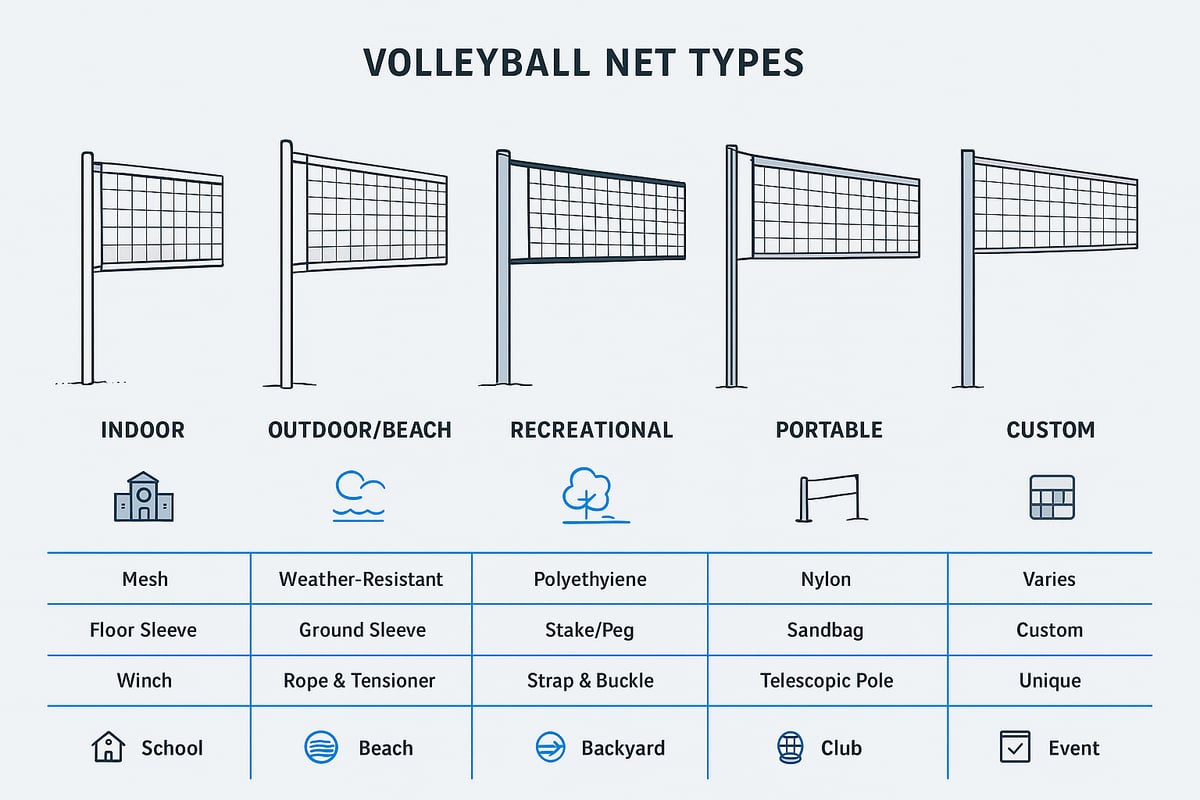
Indoor Volleyball Nets
Indoor volleyball net systems are engineered for high performance and durability. Constructed from heavier-duty materials like premium nylon or polyester, these nets feature reinforced tension systems that keep the net taut throughout intense play. They are the standard in schools, clubs, and professional leagues, where consistency and longevity are vital.
Examples like the Senoh HM50 stand out for their compliance with NCAA and NFHS requirements. Accessories such as antennas and custom tapes further enhance visibility and gameplay. The volleyball net's robust design ensures it withstands frequent use, while maintaining reliable tension and safety for players.
Outdoor and Beach Volleyball Nets
Designed to endure harsh elements, outdoor and beach volleyball net options use weather-resistant materials such as nylon or polyethylene. These nets resist UV damage, moisture, and sand abrasion, making them ideal for both recreational and competition use.
Beach systems often include sand anchors and portable frames for quick setup on various terrains. Compliance with FIVB and USA Volleyball standards ensures proper height and tension for official matches. Whether for a backyard barbecue or a championship event, an outdoor volleyball net must be tough, portable, and easy to secure.
Recreational vs. Competition Nets
The difference between recreational and competition volleyball net products comes down to construction quality, adjustability, and price. Recreational nets are often lighter and more affordable, designed for easy setup in backyards, parks, or school gyms. Many offer adjustable sizing to fit different spaces.
Competition nets, however, meet strict regulation sizes and material standards. Brands like Park & Sun and Jaypro produce both types, but their tournament-grade nets feature enhanced durability, tension systems, and compliance markings. Choosing the right volleyball net for your needs means balancing longevity, ease of use, and budget.
Portable and Training Nets
Portable and training volleyball net systems are all about flexibility and convenience. Lightweight frames and simple assembly make these nets ideal for camps, clinics, and multi-sport facilities. Many models include adjustable height settings so you can accommodate youth, co-ed, or adult play.
Training aids, such as top net tapes in bright colors or with numbered targets, support skill development during drills. The versatility of a portable volleyball net makes it a go-to for coaches and organizers who need quick setup and breakdown without sacrificing quality.
Specialized and Custom Nets
Specialized and custom volleyball net solutions cater to unique requirements, such as branding, specific court dimensions, or multi-sport compatibility. Clubs and facilities often request custom colors, logos, or tape designs to match their branding or event themes.
Some nets are built for non-standard courts or can transition between volleyball and badminton. These customizations ensure every volleyball net meets the facility's exact needs, whether for a branded tournament, a unique training space, or a multi-use recreation center.
Key Features to Consider When Choosing a Volleyball Net
Selecting the right volleyball net is essential for both performance and safety. With many options available, understanding key features will help you make an informed decision. Explore materials, standards, hardware, installation, safety, and brand factors to find the ideal fit.
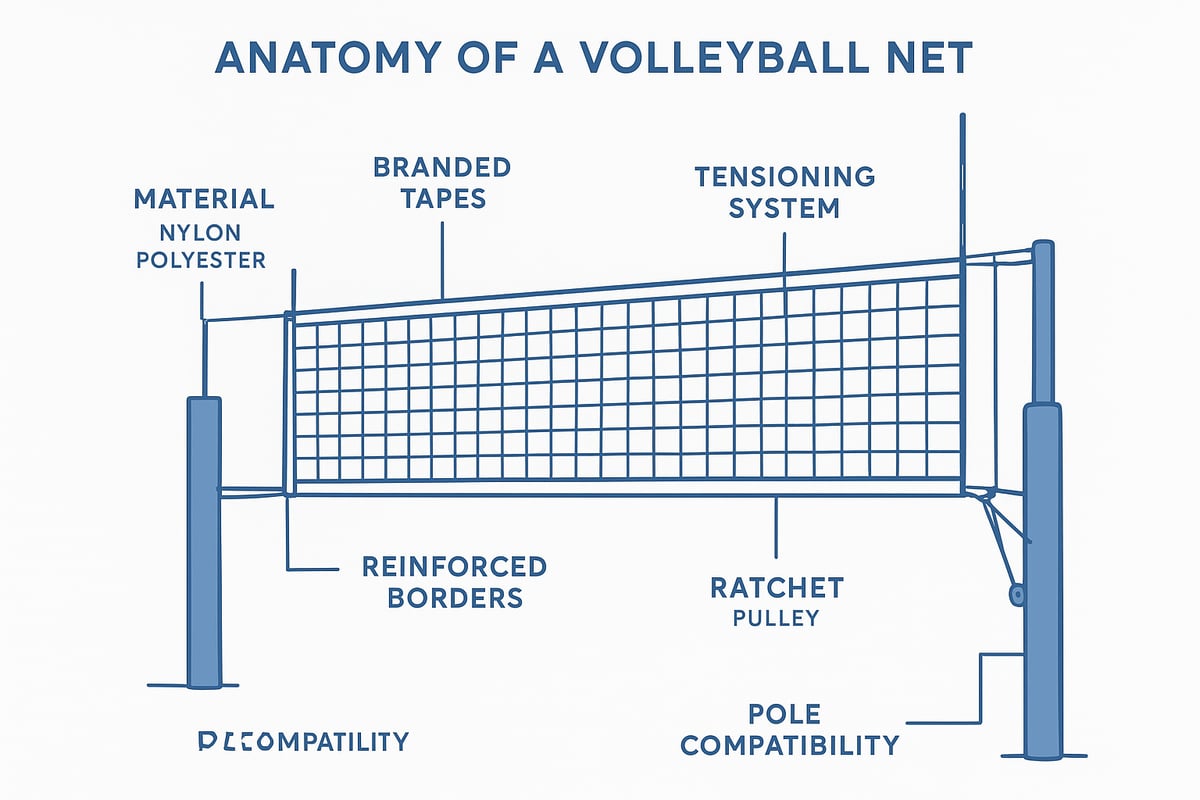
Material Quality and Durability
Material quality is a foundational aspect of any volleyball net. Nets are commonly made from nylon, polyester, or advanced fibers like Technora. For outdoor use, UV and weather resistance is vital. Reinforced borders and double-stitched seams ensure the net remains intact during heavy use and exposure to the elements.
A durable volleyball net will withstand repeated tensioning and gameplay. In high-traffic environments, investing in premium materials means fewer replacements and better value over time. Always check for robust construction to maximize longevity and performance.
Net Size and Regulation Standards
The dimensions of a volleyball net directly impact play. Official indoor nets measure 32 feet by 39 inches, while beach volleyball nets are typically 28 feet by 39 inches. Mesh size, cable thickness, and border width must also align with standards set by organizations like NCAA, NFHS, USAV, and FIVB.
Here is a quick comparison table:
| Net Type | Length | Height | Mesh Size | Border Width |
|---|---|---|---|---|
| Indoor | 32 ft | 39 in | 4 in | 2 in |
| Beach | 28 ft | 39 in | 4 in | 2 in |
Choosing a regulation-size volleyball net is crucial for league and tournament eligibility.
Tensioning Systems and Hardware
A volleyball net needs a reliable tensioning system for consistent performance. Common options include ratchet, pulley, and winch mechanisms. The right hardware allows you to achieve and maintain proper net tension, which is key for fair play and net longevity.
Compatibility with steel, aluminum, or carbon poles also matters. A secure tensioning system prevents sagging and reduces wear on the volleyball net. Consider ease of adjustment and maintenance when comparing different systems.
Pole Compatibility and Court Setup
Pole compatibility affects installation and play. Volleyball net poles can be fixed or portable, depending on your facility and needs. For indoor courts, floorplates and sleeves are often required, while outdoor setups may use ground anchors.
Adjustable height adapters are valuable for accommodating different play levels. Proper installation ensures the volleyball net is secure and optimally positioned. This not only enhances performance but also supports player safety and comfort.
Safety Features and Accessories
Safety should never be overlooked when choosing a volleyball net. Essential accessories include pole padding, referee stands, and net antennas. Custom net tapes, often used for visibility or branding, can enhance both safety and aesthetics.
Storage solutions and replacement parts are also important. For example, tapered pole pads and custom-printed tapes provide added protection and visibility. Carefully selected accessories help prevent injuries and prolong the life of your volleyball net.
Price, Warranty, and Brand Reputation
Price varies widely between recreational and competition volleyball net options. Consider the initial investment alongside warranty coverage and customer support. Leading brands such as Senoh, Sports Imports, Park & Sun, Jaypro, and Blazer offer reliable products with proven track records.
Evaluate value versus cost for long-term satisfaction. For a comprehensive look at available systems, browse the Volleyball Net Systems Collection, where you can compare features, prices, and warranties to make an informed choice.
Volleyball Net Sizing, Dimensions, and Regulations for 2026
Selecting the correct volleyball net size and ensuring compliance with updated regulations is crucial for safe, fair, and competitive play. With changes arriving for 2026, understanding official measurements, court layouts, and certification requirements will help you avoid costly mistakes and maximize your game experience.
Official Net Heights and Measurements
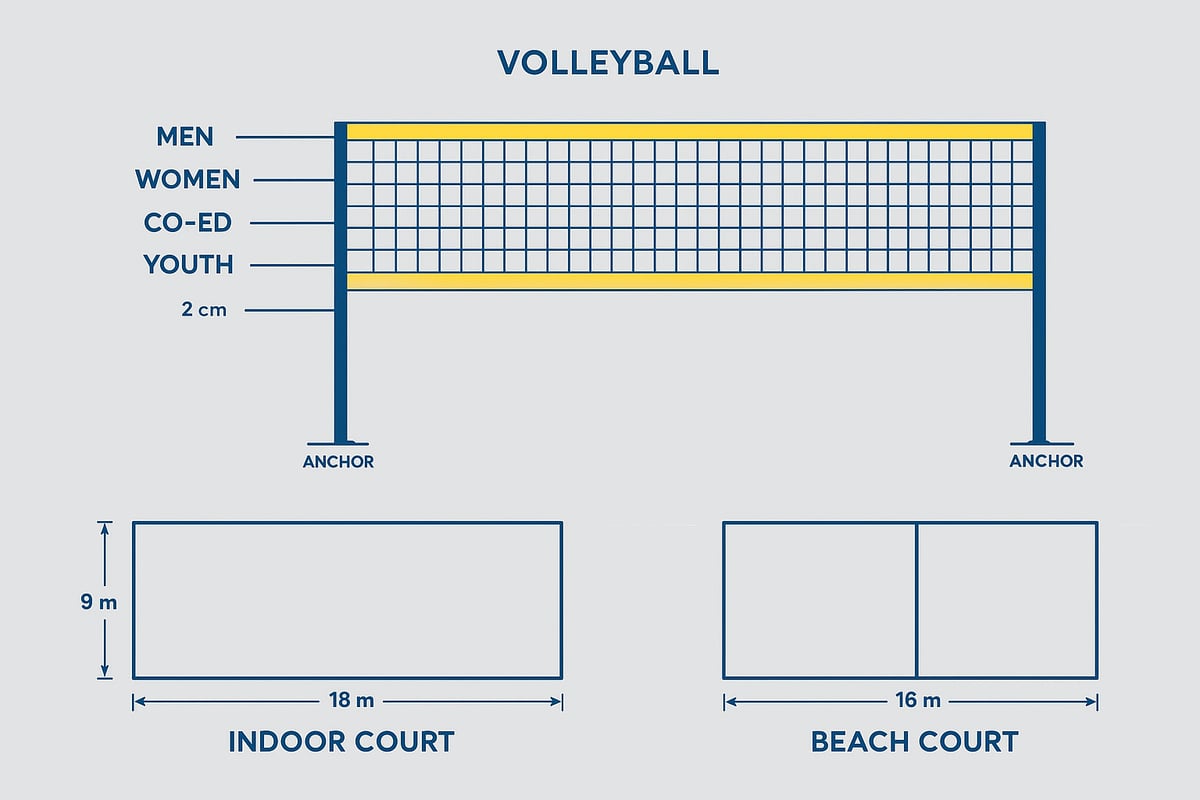
The official volleyball net height varies by gender, age, and game format. For men's indoor play, the standard is 2.43 meters (7 feet 11 5/8 inches). Women's nets are set at 2.24 meters (7 feet 4 1/8 inches). Co-ed and youth divisions have adjusted heights based on age and league rules.
Beach volleyball net heights typically match indoor standards, but always verify for your specific league. Standard net length is 9.5 to 10 meters (about 32 feet), with a mesh size of 10 cm (3.9 inches) and border tape width of 5-7 cm. For the most current specifications and diagrams, consult the FIVB Official Volleyball Rules 2025-2028.
Court Dimensions and Net Placement
Court size and volleyball net placement are foundational for both safety and gameplay. Indoor courts measure 18 x 9 meters (59 x 29.5 feet), while outdoor and beach courts are slightly smaller at 16 x 8 meters (52.5 x 26.2 feet).
Proper net placement means centering the volleyball net precisely over the court, ensuring equal clearance on each side. Anchor systems should be secure, especially outdoors. Allow at least 3 meters of unobstructed space around the court to prevent injuries. Always follow NCAA, USAV, or high school guidelines for official layouts.
Net Adjustability for Different Levels
Modern volleyball net systems often include adjustable height features, making them suitable for various ages and skill levels. Youth and middle school play may require lower net settings, while high school, college, and pro games use regulation heights.
Height adapters or quick-adjust poles allow one system to serve multiple groups. This flexibility is ideal for clubs or community centers hosting co-ed or multi-age play. Ensure your volleyball net system can easily switch between heights without compromising net tension or safety.
Compliance and Certification
Using a certified volleyball net is essential for tournament play and insurance coverage. Only nets that meet FIVB, USAV, NFHS, or NCAA standards are approved for official matches. Certification ensures correct dimensions, mesh size, and tensioning hardware.
Always check for compliance labels or documentation when purchasing a volleyball net. Non-compliant nets can lead to disqualification from tournaments or voided facility insurance. Verification is especially important as regulations update for 2026.
Frequently Overlooked Sizing Issues
Mistakes in volleyball net sizing are more common than you might expect. Undersized or oversized nets can distort gameplay and create safety hazards. Improper net tension leads to sagging, inconsistent rebounds, and increased wear.
To avoid these issues, measure your court and volleyball net carefully before installation. Double-check anchor placement and use a tension gauge if possible. Consult rulebooks and manufacturer instructions to ensure every setup meets 2026 standards.
Step-by-Step Guide: How to Choose the Right Volleyball Net in 2026
Selecting the ideal volleyball net for your needs in 2026 involves careful consideration of your environment, play level, and future requirements. This step-by-step guide simplifies the process, helping you make an informed and confident choice.
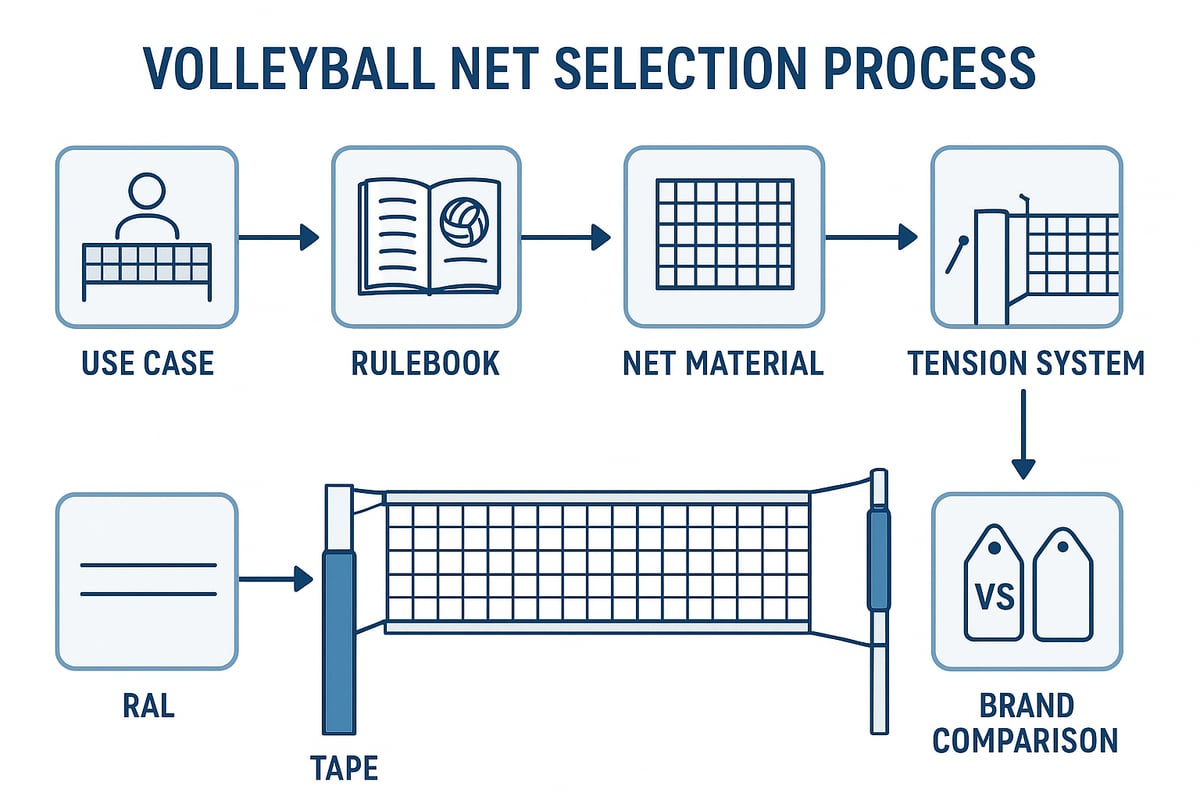
Step 1: Define Your Primary Use Case
Start by identifying where and how you will use your volleyball net. Is it for indoor gymnasiums, outdoor courts, beach play, or multipurpose recreational areas? Consider who will be playing: youth, adults, or mixed ages.
Think about frequency of use. Will the volleyball net be set up permanently, or do you need a system that is easy to assemble and transport? For example, a school gym may require a robust, regulation net, while a backyard might benefit from a portable, adjustable option.
Making this distinction early ensures you focus on nets designed for your specific environment and level of play.
Step 2: Determine Regulation Requirements
Next, check if your volleyball net must meet certain standards for league or tournament play. Each organization, such as NCAA, NFHS, USAV, or FIVB, has specific requirements for net dimensions, cable thickness, and materials.
If you plan to host official games, consult the latest rulebooks for 2026. For high school competitions, review recent updates in the NFHS Volleyball Rules Changes 2025-26 to ensure compliance.
For casual or recreational use, you may have more flexibility. However, sticking to regulation sizes improves practice quality and player safety.
Step 3: Select Appropriate Net Type and Material
Once you know your requirements, match the volleyball net type to your play environment. Indoor nets often use heavier-duty materials like nylon or Technora for durability and tension consistency. Outdoor or beach nets should feature weather-resistant fabrics, such as polyethylene, to withstand sun and moisture.
Compare options based on:
- Material quality and UV resistance
- Border reinforcement and double-stitched seams
- Longevity in high-use or harsh conditions
Choosing the right material ensures your volleyball net remains reliable and safe over time.
Step 4: Evaluate Tensioning and Setup Features
A high-quality volleyball net requires a robust tensioning system to maintain proper height and tautness. Decide if you need a fixed installation or a portable setup with easy assembly.
Review available hardware:
- Ratchet, pulley, or winch tensioning systems
- Compatibility with steel, aluminum, or carbon poles
- Adjustable height adapters for different play levels
Quick and secure setup is crucial, especially for multi-use spaces or frequent events. Proper tension also extends your volleyball net's lifespan.
Step 5: Consider Accessories and Safety
Enhance your volleyball net system with the right accessories. Essential add-ons include antennas for official play, pole padding for safety, and custom net tapes for visibility or branding.
Think about storage and transport solutions to protect your investment. Reliable pole pads, referee stands, and replacement parts contribute to a safer playing environment for everyone.
Prioritize features that safeguard players, referees, and spectators, while making your volleyball net easier to manage.
Step 6: Compare Brands, Warranties, and Pricing
Finally, evaluate brands known for quality and customer support. Look for volleyball net products with robust warranties, clear installation instructions, and positive reviews from schools or clubs.
Balance initial cost with long-term value:
- Trusted brands: Senoh, Sports Imports, Park & Sun, Jaypro, Blazer
- Warranty periods and replacement part availability
- Customer service reputation
By researching thoroughly, you ensure your volleyball net delivers satisfaction, durability, and performance over time.
Installation, Maintenance, and Net Longevity Tips
Caring for your volleyball net is essential for both performance and safety. With proper installation, routine maintenance, and smart storage, you can maximize the lifespan and effectiveness of your net, no matter the environment.
Proper Installation Techniques
A secure and correctly installed volleyball net is the foundation of safe gameplay. Always begin by reading the manufacturer's instructions for your specific net system. For indoor setups, ensure that floorplates and sleeves are properly aligned and that the poles are anchored tightly.
Outdoor installations require stable ground anchors or sand stakes, especially in windy conditions. Use a level to check net height and ensure even tension along the top cable. Avoid overtightening, as this can strain both the net and supporting hardware. A well-installed volleyball net reduces sagging and maintains consistent play.
Routine Maintenance and Inspections
Regular maintenance of your volleyball net will prevent early wear and ensure reliable performance. After each use, inspect the net for fraying, loose cables, or broken stitching. Check that all tensioning systems and hardware are secure.
Clean your volleyball net with mild soap and water, avoiding harsh chemicals that can degrade materials. For outdoor nets, rinse off sand and dirt, and allow the net to dry completely before storage. Schedule seasonal deep inspections, focusing on high-stress areas and connection points.
Repair and Replacement Guidelines
Even with diligent care, your volleyball net may eventually require repairs or replacement. Small tears or loose threads can often be fixed with heavy-duty nylon thread. Replace damaged cables or hardware immediately to avoid safety hazards.
If the net has extensive fraying, broken borders, or irreparable sections, it is safer to replace it entirely. Always use manufacturer-approved replacement parts to maintain regulation standards. Timely repair or replacement ensures your volleyball net stays competition-ready.
Storage Solutions for Nets and Accessories
Proper storage is vital for preserving your volleyball net during off-seasons or between uses. Store nets in a dry, cool area away from direct sunlight and moisture to prevent mold and UV damage. Use breathable storage bags or mesh sacks to allow airflow.
For facilities managing multiple nets, invest in dedicated carts or racks. Explore Carts and Net Storage Solutions for secure, organized options that prevent tangling and prolong net life. Always store accessories, such as antennas and tapes, in labeled containers for quick access.
Maximizing Net Lifespan
To extend the lifespan of your volleyball net, manage tension carefully and avoid dragging the net on rough surfaces. Rotate nets in high-use settings to distribute wear evenly. Consider investing in higher-quality materials if your court experiences frequent use or harsh weather.
Routine cleaning, prompt repairs, and proper storage all contribute to long-term durability. By following these best practices, you can ensure your volleyball net remains safe, functional, and ready for play season after season.
Top Volleyball Net Recommendations and Trends for 2026
Selecting the right volleyball net in 2026 means understanding the latest products, innovations, and must-have accessories. Let’s explore the top choices and industry trends to help you make the most informed decision for your court or facility.
Best Indoor Volleyball Nets
For indoor play, durability and tension consistency are crucial. Top-rated volleyball net options include the Senoh HM50™, Sports Imports SI-1, and Jaypro VN-600. These nets feature heavy-duty nylon or Technora construction, reinforced headbands, and advanced tensioning systems for consistent net height and performance.
Key features to look for:
- Regulation size and mesh
- Professional-grade tension hardware
- Compliance with NCAA and NFHS standards
For a wider selection of top-rated indoor volleyball net systems and accessories, visit the Indoor Volleyball Equipment resource to compare leading brands and installation options.
Best Outdoor and Beach Volleyball Nets
Outdoor and beach environments demand nets built for weather resistance and flexibility. Leading brands like Park & Sun, Gared, and Blazer offer volleyball net systems made from UV-treated polyethylene or nylon with steel cables and sand anchors for stability. Competition-grade sets meet FIVB and USA Volleyball standards, while recreational nets are easier to set up and transport.
- Weather-resistant materials
- Sand anchor kits for beach courts
- Adjustable heights for different play levels
If you need the latest specifications for beach volleyball net dimensions or compliance, consult the AAU Beach Volleyball Rules 2025-2026 for up-to-date guidance.
Best Value and Budget-Friendly Nets
Schools, camps, and families often seek a volleyball net that balances affordability and quality. Options from Park & Sun, Jaypro, and Baden deliver reliable performance at a lower price point. These nets typically feature polyester or basic nylon, simple tension systems, and easy setup for multi-use spaces.
- Cost-effective without sacrificing safety
- Adjustable sizing for youth and adult play
- Lightweight and portable for storage
These volleyball net choices ensure you do not have to compromise on durability or ease of use, even on a budget.
Innovative and Custom Volleyball Nets
Customization is a growing trend in volleyball net design. Brands now offer custom-branded nets, colored headbands, and even smart nets with integrated sensors for performance tracking. Facilities and clubs can order volleyball net solutions tailored to unique court dimensions, multi-sport compatibility, or special events.
- Custom colors and logos for branding
- Multi-sport conversion kits
- Smart net technology for advanced training
This level of innovation helps organizations stand out and enhances the training experience for athletes.
Accessories and Must-Have Add-Ons
The right accessories are essential for maximizing your volleyball net investment. Must-have items include antennas for official play, pole pads for safety, custom net tapes for visibility, and storage carts or bags for transport. Training aids such as numbered or colored tapes and target nets also help teams improve precision and technique.
- Net antennas for regulation matches
- Tapered pole padding
- Durable storage and transport solutions
Investing in quality accessories extends the lifespan and usability of your volleyball net system.
Emerging Trends and Future Considerations
The future of volleyball net technology is focused on sustainability, smart features, and enhanced durability. Manufacturers are introducing eco-friendly materials, improved UV coatings, and more modular systems for rapid setup. Expect volleyball net products in 2026 to offer better performance analytics, longer warranties, and increased customization options for both recreational and competitive play.
- Eco-friendly materials and production methods
- Modular and quick-setup designs
- Integration of sensors for real-time feedback
Staying informed on these trends ensures your volleyball net selection remains relevant and future-proof.