

Sports Gear Football: Essential Equipment Guide 2026
Football remains one of America's most popular sports, engaging millions of athletes from youth leagues through high school, college, and professional levels. Whether outfitting a complete team or equipping individual players, understanding the essential sports gear football requires is fundamental to player safety, performance, and compliance with league regulations. Quality equipment protects athletes from injury while enabling them to develop skills and compete confidently on the field.
Understanding Football Equipment Categories
Sports gear football encompasses several distinct categories, each serving specific protective and performance functions. The foundation of any player's equipment starts with protective gear, followed by performance-enhancing apparel and training accessories.
Protective Equipment Fundamentals
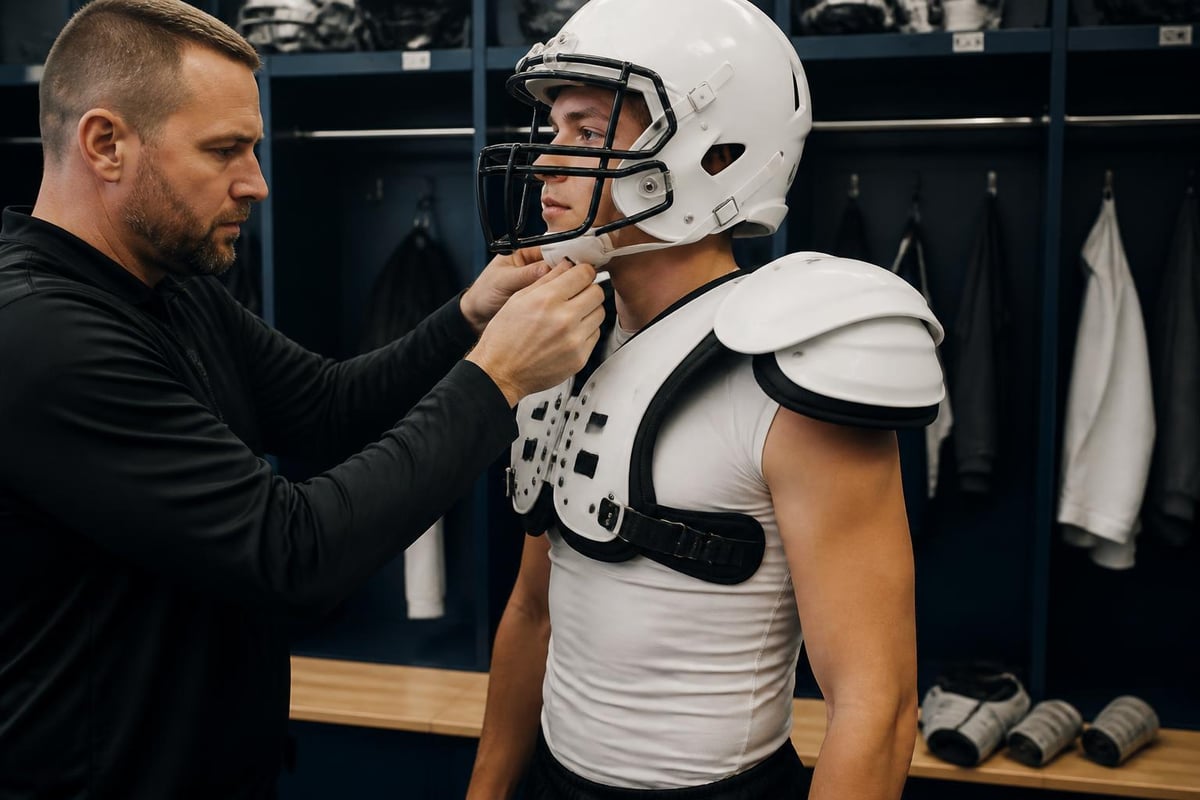
Helmets represent the most critical piece of protective equipment in football. Modern helmets incorporate advanced impact-absorption technology, face masks designed for position-specific needs, and chin straps engineered to keep the helmet securely in place during play. The NFL's equipment checklist emphasizes that properly fitted helmets are non-negotiable for player safety.
Shoulder pads provide essential upper body protection, shielding the shoulders, chest, and back from impacts. These pads vary significantly by position:
- Quarterbacks and skill positions: Lighter, more mobile designs
- Linemen: Heavier, maximum-coverage options
- Linebackers: Balanced protection and mobility
Beyond helmets and shoulder pads, additional protective gear includes hip pads, tailbone pads, thigh guards, and knee pads. Many leagues mandate specific protective elements, making compliance checking an important part of equipment management.
Position-Specific Gear Requirements
Different positions demand specialized sports gear football equipment beyond standard protective items. Linemen often require additional rib protectors and larger shoulder pad configurations. Quarterbacks may use specialized gloves for better grip in various weather conditions. Receivers benefit from lightweight gear that maximizes speed and agility.
| Position Group | Specialized Equipment | Priority Features |
|---|---|---|
| Quarterbacks | Lightweight shoulder pads, grip gloves | Mobility, ball control |
| Linemen | Heavy-duty pads, knee braces | Maximum protection, durability |
| Running Backs | Rib protectors, specialized cleats | Impact absorption, traction |
| Receivers | Minimal padding, receiver gloves | Speed, catching ability |
| Defensive Backs | Lightweight helmets, performance cleats | Agility, vision |
Understanding these position-specific needs helps coaches and equipment managers make informed purchasing decisions that balance safety with performance requirements.
Selecting the Right Helmet and Head Protection
The helmet selection process requires careful attention to safety certifications, fit, and maintenance protocols. All helmets used in organized football must meet standards established by the National Operating Committee on Standards for Athletic Equipment (NOCSAE).
Helmet Fitting and Safety Standards
Proper helmet fitting is non-negotiable for effective protection. According to Nationwide Children's Hospital guidelines, a correctly fitted helmet should sit level on the head, approximately one inch above the eyebrows, with the chin strap creating a snug but comfortable fit.
Key fitting checkpoints include:
- Crown fit: No excessive movement when the head turns
- Face mask position: Adequate visibility without obstruction
- Jaw pad contact: Firm contact with cheeks
- Chin strap tension: Two-finger space when fastened
- Overall stability: Helmet doesn't shift during movement tests
The American Academy of Pediatrics stresses that helmets should be inspected regularly for cracks, loose padding, or damaged face masks. Any helmet showing structural damage should be immediately removed from service.
Reconditioning and Replacement Cycles
Football helmets require professional reconditioning every two years and should be replaced according to manufacturer guidelines, typically every 10 years from the manufacture date. This timeline ensures that protective materials maintain their impact-absorption capabilities and that the helmet meets current safety standards.
Teams and organizations should maintain detailed records of helmet purchase dates, reconditioning schedules, and inspection findings. This documentation proves essential for liability protection and demonstrates commitment to player safety.
Shoulder Pads and Upper Body Protection
Shoulder pads serve as the second most important protective element in sports gear football equipment. These pads have evolved significantly, incorporating better materials and designs that balance protection with the mobility modern football demands.
Sizing and Fit Principles
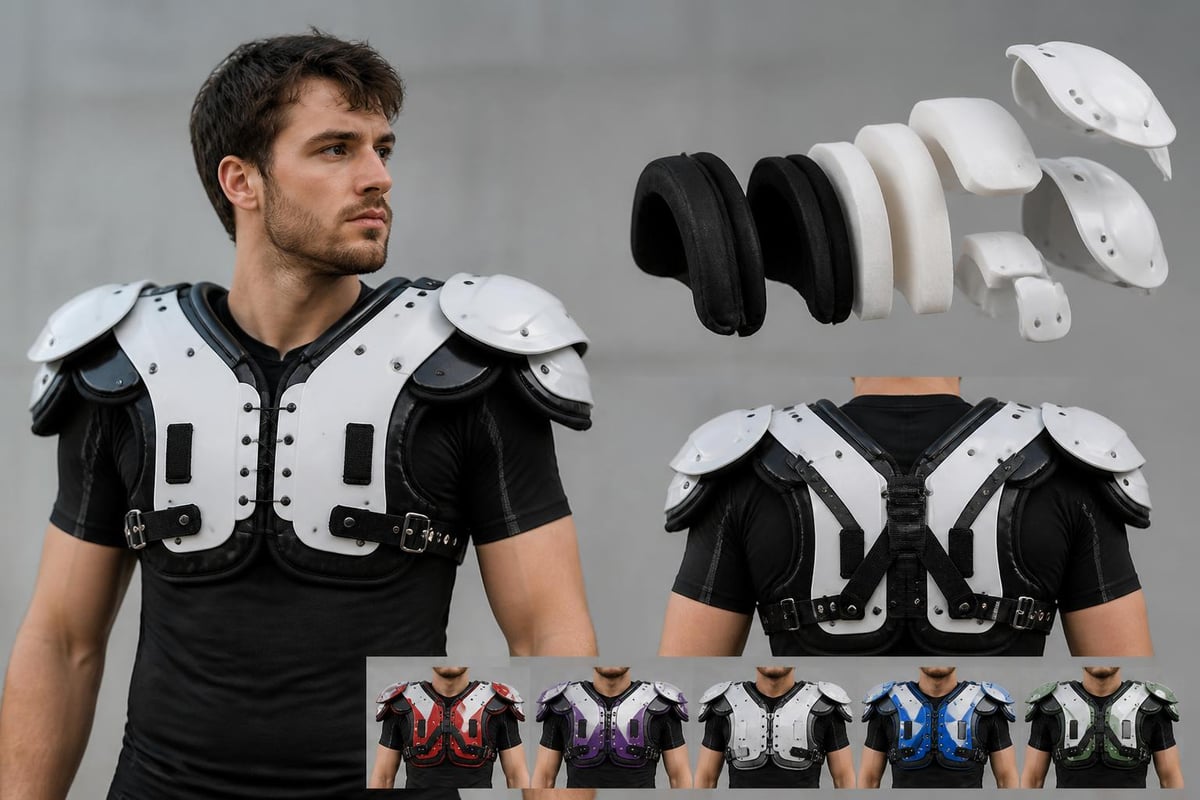
Shoulder pads must allow full range of motion while providing adequate coverage. The Korey Stringer Institute provides comprehensive guidelines emphasizing that shoulder pads should cover the shoulder joint and collarbone without restricting breathing or arm movement.
Three primary shoulder pad styles exist: cantilevered (lightweight, maximum mobility), flat (traditional protection), and hybrid (balanced approach). Selection depends on position requirements and player preference within league regulations.
The proper fitting process involves:
- Measuring shoulder width from joint to joint
- Ensuring the neck opening doesn't choke or allow excessive movement
- Checking that cups cover the shoulder caps completely
- Verifying that epaulets protect the AC joint
- Testing arm mobility through full throwing or blocking motions
Quality shoulder pads feature adjustable straps, replaceable padding, and durable outer shells that withstand repeated impacts throughout multiple seasons.
Cleats, Apparel, and Performance Gear
While protective equipment prioritizes safety, performance gear enables athletes to execute skills effectively. Cleats, compression wear, and weather-appropriate apparel all contribute to player comfort and capability.
Cleat Selection by Position and Field Type
Football cleats vary by stud configuration, cut height, and materials. The three primary cleat types include:
Molded cleats feature permanently attached studs in various patterns. These work well for most field conditions and offer excellent durability. Detachable cleats allow stud customization based on field conditions, providing maximum versatility for varying weather and surface types. Turf shoes use numerous small rubber nubs instead of traditional cleats, designed specifically for artificial surfaces.
| Cleat Type | Best Conditions | Position Recommendations | Durability |
|---|---|---|---|
| Molded | Dry to moderate conditions | All positions | Excellent |
| Detachable | Variable, wet conditions | Linemen, linebackers | Good |
| Turf Shoes | Artificial surfaces only | All positions on turf | Very Good |
Cut height also matters, with low-cut cleats favoring speed positions, mid-cut providing balanced support, and high-top designs offering maximum ankle stability for linemen.
Compression and Base Layer Apparel
Modern sports gear football includes advanced compression garments that support muscles, regulate temperature, and wick moisture. These base layers have become standard equipment rather than optional accessories.
Compression shirts and pants reduce muscle vibration during impact, potentially decreasing fatigue and soreness. Moisture-wicking fabrics keep players dry and comfortable, which becomes particularly important during hot weather practices when heat-related illness poses serious risks.
For cold weather games, thermal base layers provide insulation while maintaining breathability. Many teams invest in multiple apparel sets to address different weather conditions throughout the season.
Training Equipment and Practice Essentials
Beyond game-day protective gear, comprehensive sports gear football programs require various training equipment that develops skills, improves conditioning, and simulates game situations safely.
Blocking Sleds and Contact Training Equipment
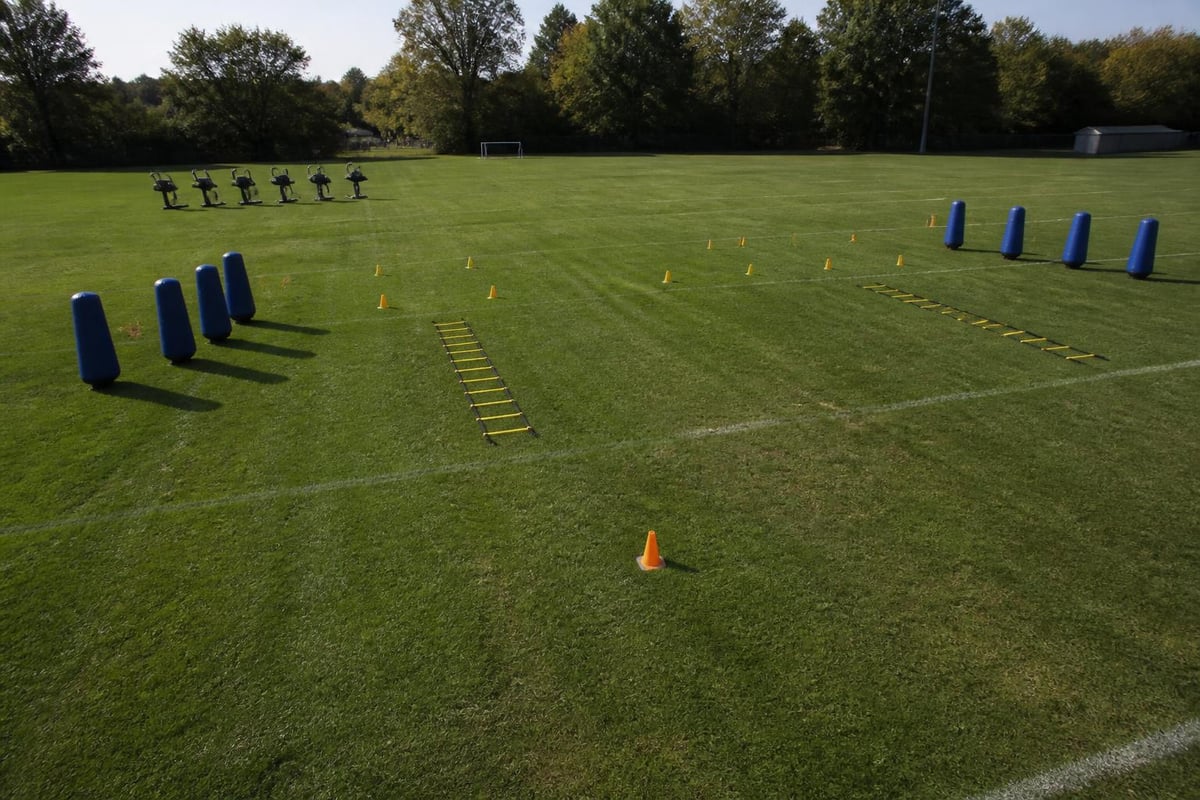
Blocking sleds remain fundamental to lineman development. Modern sleds feature adjustable resistance, multiple pad heights, and wheeled designs for varied training scenarios. These tools teach proper blocking technique while minimizing injury risk compared to live contact drills.
Tackling dummies in various shapes and weights allow defensive players to practice proper form without the injury risks associated with full-contact tackling. Safety guidelines from Rady Children's Health emphasize that controlled practice with appropriate equipment reduces game-day injury rates.
Additional contact training equipment includes:
- Chute trainers for low-pad-level drills
- Pop-up dummies for agility and reaction training
- Hand shields for hand placement and punch technique
- Rib protectors for quarterbacks during team periods
Organizations seeking comprehensive training solutions can explore various fitness sports equipment options that complement football-specific gear.
Speed and Agility Training Tools
Non-contact training equipment develops the athletic qualities football demands. Agility ladders, cone sets, resistance parachutes, and speed harnesses all contribute to player development without impact-related injury risks.
Ladder drills improve foot speed and coordination, essential for all positions. Cone drills develop change-of-direction ability critical for skill positions. Resistance training with parachutes or sleds builds explosive power that translates to faster starts and stronger finishes.
Many programs supplement football-specific training with general athletic development tools. For example, baseball training machines can improve hand-eye coordination for quarterbacks and receivers during off-season training.
Flag Football Equipment Considerations
Flag football has experienced tremendous growth as a safer alternative and gateway to tackle football. The sports gear football requirements for flag leagues differ significantly from tackle variants, though quality remains equally important.
Essential Flag Football Gear
Flag football eliminates most protective equipment, focusing instead on flags, belts, and appropriate footwear. Quality flag belts feature quick-release mechanisms that detach cleanly when pulled, preventing injuries that can occur with poorly designed systems.
The NFL's flag football equipment checklist recommends:
- Properly fitted flag belt with two or three flags
- Mouthguard for dental protection
- Appropriate athletic shoes (no metal cleats)
- Moisture-wicking athletic apparel
- Optional: soft-shell helmet for additional protection
While protective padding isn't required, many youth flag leagues encourage mouthguards as an added safety measure. Some programs also permit soft-shell helmets that protect against incidental head contact without the weight of traditional helmets.
Transitioning Between Flag and Tackle Equipment
Organizations running both flag and tackle programs can leverage shared equipment where appropriate. Footballs, training cones, agility equipment, and timing devices serve both variants effectively. This equipment overlap allows programs to maximize budget efficiency while supporting both participation pathways.
However, it's critical to maintain separate inventories for position-specific protective gear and ensure that tackle equipment meets current safety certifications. Mixing equipment types or using outdated protective gear creates liability concerns and compromises player safety.
Equipment Maintenance and Inventory Management
Proper maintenance extends equipment lifespan, ensures safety standards, and protects program investments. Sports gear football requires systematic care protocols that address cleaning, inspection, repair, and replacement.
Cleaning and Sanitization Protocols
Football equipment accumulates sweat, dirt, and bacteria that can cause odors, skin infections, and material degradation. Establishing regular cleaning schedules prevents these issues while extending equipment life.
Helmets require special attention, with shell exteriors cleaned using mild soap and water, while interior padding should be treated with antimicrobial spray after each use. Many programs remove and wash padding separately on a weekly basis during the season.
Shoulder pads, hip pads, and other protective gear should be wiped down with disinfectant after each practice. Machine-washable components should be cleaned weekly. Proper drying is essential-equipment should never be stored while damp, as this promotes bacterial growth and material breakdown.
Inspection and Replacement Schedules
The National Federation of State High School Associations establishes equipment standards that require regular inspection. Programs should conduct formal equipment checks:
- Pre-season: Complete inventory and safety inspection
- Weekly: Quick visual checks for obvious damage
- Mid-season: Detailed inspection of high-wear items
- Post-season: Reconditioning assessment and replacement planning
Any equipment showing cracks, tears, missing components, or structural damage should be removed from service immediately. Attempting to use damaged protective gear creates serious liability issues and endangers athletes.
Maintaining detailed equipment records supports warranty claims, demonstrates due diligence, and helps with budget planning. Many athletic programs now use inventory management software to track equipment assignments, reconditioning schedules, and replacement needs.
Budget Planning for Football Equipment Programs
Outfitting a football program represents a significant investment, but strategic planning makes quality sports gear football accessible even for budget-conscious organizations. Understanding cost factors, prioritization strategies, and purchasing approaches helps maximize value.
Initial Investment vs. Ongoing Costs
New programs face substantial startup costs, as complete equipment sets for each player can range from $300 to $800 depending on quality level and position requirements. However, properly maintained equipment serves multiple seasons, spreading this investment over several years.
Ongoing costs typically include:
- Annual helmet reconditioning (every other year)
- Replacement of worn pads and apparel
- Additions for new players
- Upgraded training equipment
- Reconditioning services for shoulder pads
Organizations benefit from establishing relationships with reliable suppliers who offer straightforward pricing and understand institutional budget constraints. Bulk purchasing for team orders typically provides significant per-unit savings compared to individual purchases.
Prioritizing Safety While Managing Costs
Budget limitations never justify compromising player safety. Helmets and shoulder pads must meet current safety standards regardless of cost pressures. However, savings opportunities exist in other equipment categories without sacrificing quality.
For example, practice jerseys don't require the same durability as game uniforms. Training equipment can often be purchased gradually as budgets allow. Some protective gear like rib pads or additional padding may be optional depending on league requirements and individual player needs.
Many successful programs implement tiered purchasing strategies:
- Priority 1: Safety-critical protective equipment (helmets, shoulder pads)
- Priority 2: Required game equipment (uniforms, cleats, balls)
- Priority 3: Essential training equipment (blocking sleds, dummies)
- Priority 4: Performance enhancement tools (agility equipment, resistance training)
This approach ensures critical needs receive funding first while building comprehensive equipment inventories over multiple budget cycles.
Selecting Equipment Suppliers and Vendors
Choosing the right equipment supplier impacts product quality, pricing, service, and long-term program success. Organizations should evaluate potential vendors across multiple criteria beyond initial purchase price.
Evaluating Supplier Capabilities
Reliable suppliers demonstrate expertise in sports equipment, offer comprehensive product selections, and provide knowledgeable customer service. Key evaluation factors include:
- Product quality and brand selection
- Pricing transparency and competitiveness
- Inventory availability and fulfillment speed
- Customization capabilities for uniforms and team gear
- Return policies and warranty support
- Experience serving similar organizations
Suppliers specializing in institutional sales understand the unique needs of schools, leagues, and sports organizations. They typically offer team sales programs with volume pricing, flexible payment terms, and dedicated account management.
Organizations should also verify that suppliers carry equipment meeting current safety certifications and league regulations. The New Hampshire Youth Football & Spirit Conference equipment requirements illustrate the detailed specifications many leagues enforce.
Building Long-Term Supplier Relationships
Establishing ongoing relationships with quality suppliers provides advantages beyond individual transactions. Trusted vendors become partners who understand your program's specific needs, budget constraints, and ordering patterns.
Long-term relationships often yield benefits such as:
- Preferred pricing on repeat orders
- Priority allocation during supply shortages
- Extended payment terms for large purchases
- Early access to new products and technologies
- Personalized service from dedicated representatives
Many athletic directors and equipment managers work with the same core suppliers for years, building institutional knowledge that streamlines ordering and ensures consistency in equipment quality. Organizations seeking this type of partnership should explore established sporting goods shops with proven track records in team equipment supply.
Compliance With League and Safety Regulations
Football equipment regulations vary by league, age level, and geographic location. Understanding and maintaining compliance protects player safety, prevents competitive disadvantages, and shields organizations from liability.
Understanding Regulatory Frameworks
Multiple organizations establish equipment standards that govern various levels of football. The Football Association's equipment laws demonstrate how detailed these regulations can be, specifying everything from acceptable colors to prohibited items.
In the United States, different governing bodies oversee different competition levels:
- Youth leagues: Often follow USA Football or local association guidelines
- High school: Governed by state athletic associations following NFHS rules
- College: NCAA establishes equipment regulations
- Professional: NFL maintains detailed equipment policies
Equipment managers must stay current with rule changes, as safety standards evolve continuously. What met compliance requirements in previous seasons may not satisfy current regulations.
Pre-Season Equipment Certification
Many leagues require formal equipment inspections before season participation. These certifications verify that all protective gear meets safety standards and that no prohibited modifications have been made.
Inspection processes typically evaluate:
- Helmet certification status and reconditioning dates
- Shoulder pad condition and appropriate sizing
- Presence of required padding elements
- Cleat legality (no metal spikes in most youth leagues)
- Mouthguard availability
- Overall equipment condition
Organizations should schedule these inspections well before the first practice, allowing time to address any deficiencies. Failing pre-season certification can delay practice starts and create program disruptions.
Maintaining detailed equipment records simplifies certification processes. Documentation should include purchase dates, reconditioning certificates, manufacturer information, and safety standard compliance for all protective equipment.
Successfully equipping a football program requires balancing safety, performance, budget, and regulatory compliance across dozens of equipment categories. From helmets and shoulder pads to training equipment and practice gear, each element contributes to player development and program success. Whether you're outfitting a youth flag football league or a high school varsity team, Sideline Sport Supply provides the reliable, game-ready equipment your athletes need with straightforward pricing and fast fulfillment, so your team spends less time managing gear and more time on the field.