

Essential Guide to Sports Football Equipment for Teams
Selecting the right sports football equipment represents one of the most critical decisions coaches, athletic directors, and parents make each season. Whether outfitting an entire team or equipping individual players, understanding equipment standards, proper fitting techniques, and maintenance requirements ensures athlete safety while maximizing performance on the field. The landscape of football gear has evolved significantly, with advanced materials, stricter safety protocols, and position-specific designs now defining modern equipment choices. This comprehensive guide explores everything teams need to know about acquiring and managing sports football equipment effectively.
Understanding Core Equipment Categories
Sports football equipment falls into distinct categories, each serving specific protective and performance functions. The primary divisions include helmets and headgear, shoulder pads and chest protection, lower body padding, footwear, and practice-specific gear. Recognizing these categories helps organizations budget appropriately and ensures no critical elements get overlooked during equipment procurement.
Helmets and Head Protection
Football helmets represent the single most important piece of protective equipment. Modern helmets incorporate advanced impact-absorbing technologies, featuring multi-layer foam systems, outer shell designs that distribute force, and sophisticated retention systems. The National Operating Committee on Standards for Athletic Equipment (NOCSAE) establishes certification standards that all helmets must meet, with new youth helmet standards taking effect in September 2027.
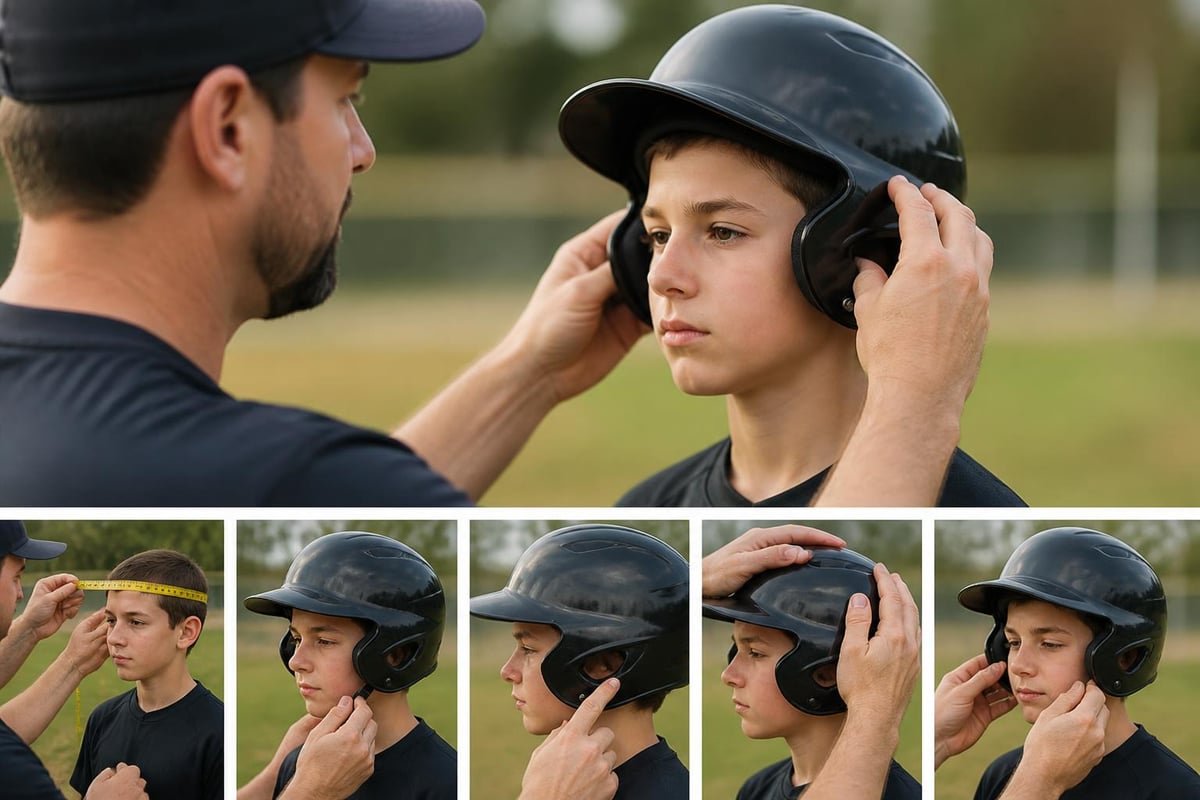
Proper helmet fitting requires careful attention to multiple measurement points:
- Circumference measurement at the widest point of the head
- Front-to-back distance from eyebrow to occipital bone
- Side-to-side width across temporal areas
- Chin strap positioning for proper jaw alignment
When evaluating sports football equipment options, helmets should fit snugly without pressure points, remain stable during movement tests, and position the crown one inch above the eyebrows. Nationwide Children's Hospital provides detailed fitting guidelines that coaches should reference during equipment distribution.
Shoulder Pads and Upper Body Protection
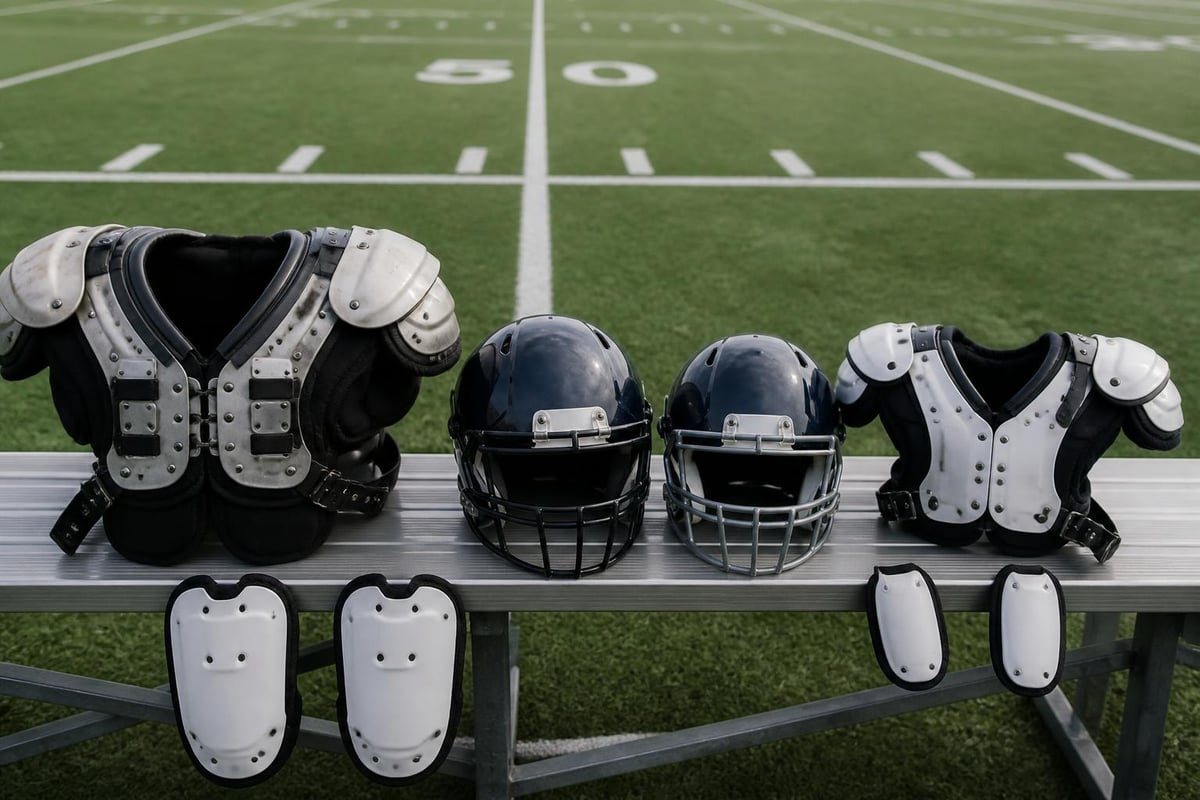
Shoulder pad selection depends heavily on player position and playing style. Linemen require maximum protection with restricted mobility trade-offs, while skill position players need lighter pads that facilitate unrestricted arm movement. The three primary shoulder pad styles include:
Cantilever pads provide maximum protection through independent moving parts that absorb impacts from multiple angles. These work best for linemen and linebackers who experience frequent contact.
Flat pads offer streamlined profiles with lightweight construction, making them ideal for quarterbacks, running backs, and defensive backs who prioritize mobility.
Hybrid designs balance protection and movement, serving as versatile options for tight ends and outside linebackers who perform varied roles.
Quality shoulder pads should cover the shoulder joint completely, extend to the sternum without restricting breathing, and allow full range of motion during throwing and blocking movements. The AC joint (where clavicle meets shoulder blade) requires complete coverage, as this area experiences frequent impacts during tackles and blocks.
Lower Body Protection and Footwear
Lower body sports football equipment protects vulnerable areas while maintaining the mobility essential for running, cutting, and changing direction. This category encompasses hip pads, thigh pads, knee pads, and specialized footwear designed for various field conditions.
Protective Padding Systems
Hip and tailbone pads shield against falls and low tackles. Modern integrated girdle systems combine multiple protective elements into single garments, simplifying the equipment process for players. These compression-style systems hold pads securely in place while providing moisture-wicking properties that improve comfort during extended practices.
Thigh and knee protection varies significantly between positions. Standard thigh pads measure 6-9 inches in length, while knee pads typically span 5-7 inches. Linemen often choose maximum coverage options, while receivers select minimal protection that doesn't interfere with speed and agility.
| Pad Type | Standard Size | Position Focus | Key Features |
|---|---|---|---|
| Hip Pads | 7-9 inches | All positions | Impact absorption, girdle integration |
| Thigh Pads | 6-9 inches | Linemen, linebackers | Extended coverage, flexible edges |
| Knee Pads | 5-7 inches | All positions | Low-profile design, secure attachment |
| Tailbone Pads | 5-6 inches | Skill positions | Contoured fit, lightweight materials |
Football Cleats and Footwear Selection
Cleats represent the foundation of player performance, directly affecting acceleration, cutting ability, and injury prevention. The Football Association outlines equipment regulations that govern acceptable footwear specifications for competitive play.
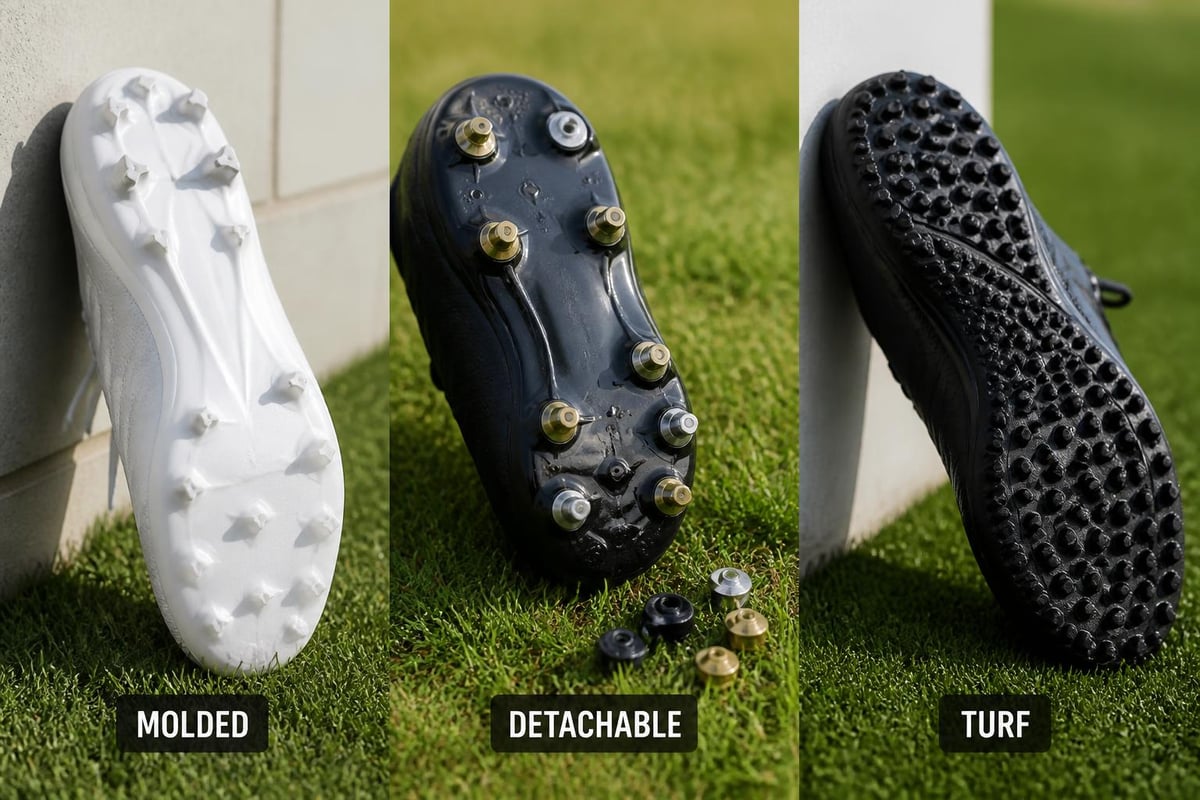
Three primary cleat configurations serve different field conditions:
- Molded cleats feature fixed plastic studs ideal for firm natural grass and most artificial surfaces
- Detachable cleats allow stud replacement for varying field conditions and wear patterns
- Turf shoes provide numerous small rubber studs designed specifically for artificial playing surfaces
Teams should maintain multiple footwear options to accommodate weather changes and field variations throughout the season. Organizations looking to outfit complete rosters can explore comprehensive equipment solutions at Sideline Sport Supply, which specializes in practical, game-day-ready gear.
Practice Equipment and Training Gear
Beyond game-day protective equipment, effective football programs require specialized practice gear that facilitates skill development while managing costs. Practice equipment serves dual purposes: protecting players during training while extending the lifespan of more expensive game gear.
Essential Practice Tools
Blocking sleds, tackle dummies, and agility ladders form the foundation of productive practice sessions. Modern blocking sleds feature adjustable resistance systems that accommodate players at various strength levels, while tackle dummies now incorporate impact sensors that provide feedback on technique quality.
Agility equipment develops footwork, acceleration, and change-of-direction abilities essential for all positions:
- Speed ladders for foot speed and coordination
- Cone sets for route running and defensive drills
- Resistance parachutes for sprint training
- Hurdles for explosiveness development
Teams often invest in practice jerseys that differ from game uniforms, typically using reversible mesh designs in contrasting colors. This approach simplifies scrimmage organization while preserving expensive game jerseys for competitions. Similar practical approaches to fitness sports equipment can help teams maximize training budgets.
Ball Management and Accessories
Football inventory management requires careful attention to ball condition, quantity, and age-appropriate sizing. Youth programs typically stock youth-sized balls (11 inches long), while high school and adult teams use full-sized balls (11.5 inches). Maintaining proper inflation pressure (12.5-13.5 PSI) ensures consistent performance and reduces injury risk from over-inflated balls.
Quality ball pumps with pressure gauges, ball bags for organized transport, and kicking tees for various practice scenarios complete the accessory package. Teams should budget for replacing approximately 30% of practice balls annually due to normal wear from field contact and weather exposure.
Equipment Safety Standards and Compliance
Sports football equipment must meet rigorous safety standards established by multiple governing bodies. Understanding these requirements helps teams make informed purchasing decisions while ensuring player protection meets current best practices.
Certification Requirements
NOCSAE provides the primary certification standards for football helmets, shoulder pads, and other protective equipment. All helmets manufactured after 1973 must display NOCSAE certification seals, indicating compliance with impact testing protocols. However, certification represents a minimum standard rather than a quality ranking system.
The American Academy of Pediatrics recommends that parents and coaches verify equipment certifications before each season and understand that certification alone doesn't guarantee perfect protection. Proper fitting, regular maintenance, and appropriate technique instruction work together with certified equipment to minimize injury risks.
Recent developments in safety standards include enhanced testing protocols for youth helmets, addressing the unique needs of developing athletes. Organizations should stay informed about upcoming standard changes to plan equipment replacement cycles appropriately.
Reconditioning and Replacement Schedules
Football helmets require professional reconditioning every two years according to manufacturer guidelines. This process includes thorough cleaning, padding replacement, shell inspection for cracks or damage, and recertification testing. Shoulder pads typically last 3-5 years with proper maintenance, while lower body padding requires annual inspection and replacement as needed.
Establishing clear replacement protocols prevents using damaged or outdated sports football equipment:
- Conduct pre-season equipment inspections with detailed checklists
- Document equipment age and reconditioning history
- Remove damaged items immediately from rotation
- Budget for gradual replacement rather than emergency purchases
- Train coaching staff to recognize equipment wear patterns
Teams can reference resources from sports goods shops that specialize in equipment lifecycle management to develop sustainable replacement schedules.
Position-Specific Equipment Considerations
Different football positions require specialized sports football equipment configurations that balance protection against mobility needs. Understanding these position-specific requirements helps teams allocate budgets effectively and ensures each player receives appropriate gear.
Offensive Line Equipment Needs
Linemen require maximum protection due to contact on virtually every play. Their equipment priorities include:
Heavy-duty helmets with reinforced frontal areas to withstand repeated impacts during blocking assignments. Face masks feature additional bars protecting the entire facial area while maintaining sight lines for technique execution.
Maximum coverage shoulder pads extending well beyond the shoulder joint, often featuring additional sternum and back plates. These pads sacrifice some mobility for comprehensive protection against the constant contact inherent to line play.
Extended thigh and knee protection prevents injuries during low blocks and pile-ups. Many linemen add supplementary rib protectors and forearm pads beyond standard equipment requirements.
Skill Position Equipment Specifications
Quarterbacks, running backs, and receivers prioritize mobility and visibility, requiring different equipment approaches:
- Lightweight helmets with minimal face mask bars for expanded vision
- Streamlined shoulder pads allowing unrestricted throwing and catching motions
- Low-profile padding that doesn't interfere with ball handling
- Specialized gloves enhancing grip in various weather conditions
The NFL's equipment guidelines for youth players provide comprehensive checklists that help organizations ensure position-appropriate equipment distribution.
Defensive Player Equipment Options
Defensive positions span a protection spectrum from defensive linemen (similar to offensive line needs) to defensive backs (similar to receivers). Linebackers represent the middle ground, requiring balanced equipment that supports both coverage responsibilities and gap-filling duties.
Many defensive players choose facemask styles with top bars that don't obstruct upward vision when locating passes. Safety equipment for defensive backs often matches receiver specifications, prioritizing acceleration and agility over maximum protection.
Equipment Fitting and Distribution Protocols
Proper equipment fitting transforms quality sports football equipment into effective protection. Organizations should establish systematic fitting processes that ensure every player receives appropriately sized gear adjusted to their specific body dimensions.
Systematic Fitting Procedures
Successful equipment distribution follows structured protocols:
- Pre-fitting measurements: Collect height, weight, chest circumference, waist size, and head circumference data
- Position identification: Determine protection level requirements based on playing assignments
- Initial sizing: Select equipment based on measurement data and manufacturer sizing charts
- Adjustment phase: Fine-tune all straps, padding, and positioning elements
- Movement testing: Verify equipment remains properly positioned during athletic movements
- Documentation: Record all equipment assignments and sizes for future reference
Teams should schedule dedicated fitting sessions allowing adequate time for proper adjustments. Rushing the fitting process leads to improperly secured equipment that fails to provide intended protection.
Parent and Player Education
Educating players and parents about equipment care extends gear lifespan and maintains protective qualities. Key educational topics include:
Daily inspection routines where players check for loose screws, damaged padding, cracked shells, and worn straps before each practice or game.
Cleaning protocols that prevent bacterial growth and material degradation. Helmets require regular interior cleaning with approved sanitizing solutions, while pads benefit from air-drying between uses.
Storage practices that protect equipment from extreme temperatures, moisture, and crushing forces during off-season months.
Organizations can develop equipment handbooks distributed during preseason meetings, ensuring consistent understanding of care requirements across all families. Resources from established sporting good shops often include maintenance guides that teams can adapt for their specific needs.
Budget Planning and Procurement Strategies
Acquiring comprehensive sports football equipment requires strategic budget planning that balances immediate needs against long-term sustainability. Teams must consider initial purchase costs, ongoing maintenance expenses, and replacement cycles when developing equipment budgets.
Cost Categories and Planning
Football equipment budgets should address multiple cost centers:
| Cost Category | Percentage of Budget | Replacement Frequency | Notes |
|---|---|---|---|
| Helmets | 30-35% | 10 years (with reconditioning) | Highest per-unit cost |
| Shoulder Pads | 20-25% | 3-5 years | Position-specific variations |
| Practice Gear | 15-20% | 1-2 years | Higher replacement frequency |
| Game Uniforms | 10-15% | 3-4 years | Aesthetic considerations |
| Accessories | 10-15% | Annual | Balls, gloves, maintenance supplies |
Teams should establish equipment replacement funds that accumulate resources gradually rather than facing large unexpected expenses. Setting aside 15-20% of annual equipment budgets for replacement reserves prevents financial strain when major items reach end-of-life.
Group Purchasing and Vendor Relationships
Building relationships with reliable equipment suppliers provides multiple advantages beyond simple transactions. Established vendors offer expertise about emerging technologies, sizing assistance, and often provide volume discounts for team orders.
When evaluating suppliers, consider:
- Product selection breadth accommodating multiple positions and sizes
- Return and exchange policies for sizing adjustments
- Delivery timeframes that align with preseason schedules
- Technical expertise for fitting questions and equipment selection
- Warranty coverage and defect replacement procedures
Teams can leverage relationships with comprehensive suppliers who understand the complete equipment ecosystem, similar to how baseball training machines require specialized knowledge for proper selection and implementation.
Emerging Technologies and Innovation
The sports football equipment industry continues evolving with new materials, sensor integration, and design innovations that enhance both protection and performance. Staying informed about emerging technologies helps teams make strategic investment decisions.
Smart Equipment Integration
Sensor-equipped helmets now provide real-time impact data, allowing coaching staffs to monitor cumulative contact loads throughout practices and games. These systems track impact location, force magnitude, and frequency, generating alerts when players experience contact patterns associated with elevated injury risks.
While smart helmet systems represent significant investments, they provide data supporting evidence-based decisions about practice intensity, player rotation, and potential injury concerns requiring medical evaluation. Research into detecting risky tackles using advanced video analysis demonstrates the growing role of technology in player safety.
Material Science Advances
Modern sports football equipment incorporates advanced materials that outperform traditional options:
- Impact-absorbing polymers that harden upon contact, distributing forces across larger surface areas
- Moisture-wicking fabrics in padding and compression garments that reduce heat stress
- Lightweight composite shells providing equivalent protection at reduced weights
- Antimicrobial treatments preventing odor and bacterial growth in padding materials
These innovations often debut in professional and collegiate equipment before filtering down to youth and high school markets. Teams should monitor technology trends but avoid chasing every innovation, instead focusing on proven advancements that address specific needs.
Maintenance Programs and Equipment Longevity
Systematic maintenance programs significantly extend sports football equipment lifespan while ensuring gear continues providing intended protection. Organizations should establish clear maintenance protocols executed consistently throughout each season.
Daily and Weekly Maintenance Tasks
Player responsibility for daily equipment care forms the foundation of effective maintenance programs. After each practice or game, players should:
- Air-dry all padding and interior helmet components
- Inspect all hardware for loose screws or damaged buckles
- Wipe down exterior surfaces removing dirt and moisture
- Store equipment in ventilated areas preventing mold growth
Weekly maintenance by equipment managers includes deeper cleaning of helmets using approved sanitizing solutions, inspection of all face mask attachments, and systematic checks of shoulder pad rivets and strap integrity.
Off-Season Storage and Reconditioning
Proper off-season storage protects equipment investments during inactive months. Helmets should be stored at room temperature away from direct sunlight, which degrades shell materials over time. Shoulder pads benefit from hanging storage that maintains shape and allows air circulation.
Teams should schedule professional helmet reconditioning during off-season months, avoiding the rush that occurs immediately before season start. This timing ensures adequate turnaround for any additional repairs discovered during reconditioning inspections.
Creating detailed equipment inventories during off-season storage identifies items requiring replacement before preseason urgency drives hasty purchasing decisions. Athletic directors can reference proven timing devices like the Seiko dual timer to manage reconditioning schedules and equipment rotation systems.
Regulatory Compliance and League Requirements
Football organizations must navigate various regulatory requirements governing sports football equipment specifications. These requirements vary by league level, geographic location, and competition type, requiring careful attention to specific applicable standards.
Youth and High School Regulations
State high school athletic associations establish equipment requirements that may exceed minimum safety standards. Common regulations include:
- Mandatory helmet reconditioning certifications within specified timeframes
- Prohibited equipment modifications that void manufacturer warranties
- Required warning labels and documentation maintained in equipment records
- Specifications for allowable face mask styles and padding configurations
The upcoming changes to youth helmet standards effective in 2027 will require organizations to verify their current inventory meets new certification requirements or plan replacement purchases accordingly.
Inspection Protocols and Documentation
Many leagues require pre-season equipment inspections by certified personnel who verify that all gear meets applicable standards. These inspections document:
- Helmet certification seals and reconditioning dates
- Shoulder pad condition and appropriate sizing
- Required padding present and properly secured
- Compliance with league-specific equipment rules
Maintaining thorough documentation protects organizations from liability while demonstrating commitment to player safety. Digital record-keeping systems simplify tracking equipment assignments, maintenance history, and replacement schedules across multiple seasons.
Selecting and maintaining quality sports football equipment requires balancing safety standards, budget constraints, and performance needs while staying current with evolving technologies and regulations. Organizations that implement systematic fitting procedures, establish clear maintenance protocols, and plan strategically for equipment replacement cycles provide athletes with reliable protection and optimal performance tools. Whether you're outfitting a youth league or managing equipment for an established program, Sideline Sport Supply offers the reliable, affordable sports equipment and straightforward expertise teams need to focus less on sourcing gear and more on developing athletes and winning games.