

Tennis Sports Gear: Complete Equipment Guide 2026
Selecting the right tennis sports gear transforms how athletes train, compete, and develop their skills on the court. Whether you're equipping a high school team, outfitting a community tennis program, or helping individual players upgrade their equipment, understanding the full spectrum of available gear ensures you make informed decisions that balance performance, durability, and budget. From essential items like racquets and balls to specialized accessories that protect players and extend equipment life, this comprehensive guide covers everything coaches, program directors, and purchasing managers need to know when sourcing tennis equipment for their organizations.
Essential Tennis Racquet Selection
The tennis racquet stands as the most critical piece of equipment any player uses. When purchasing racquets for teams or programs, several factors determine which models deliver the best value and performance for your athletes.
Head size directly impacts the racquet's sweet spot and power generation. Oversized heads (105-135 square inches) provide more forgiveness for beginners and intermediate players, while midsize and midplus heads (85-104 square inches) offer greater control for advanced competitors. For school programs serving mixed skill levels, stocking a range of head sizes accommodates diverse player needs.
Weight distribution affects maneuverability and power transfer. The comprehensive equipment guide from Tennis.com emphasizes that lighter racquets (8-9.5 ounces) suit younger players and those developing technique, while heavier models (10-12 ounces) provide stability for aggressive hitters.
Racquet Construction and Materials
Modern tennis sports gear incorporates advanced materials that enhance durability without sacrificing performance. Graphite composite racquets dominate the market, offering an excellent strength-to-weight ratio that serves players across skill levels.
- Graphite models: Lightweight, responsive, ideal for intermediate to advanced players
- Aluminum frames: Budget-friendly, durable, perfect for recreational programs and beginners
- Composite blends: Balance affordability with performance characteristics
- Pre-strung options: Reduce initial setup costs for bulk equipment purchases
String pattern density influences ball control and spin generation. Open patterns (fewer strings, larger gaps) generate more spin and power, while dense patterns provide better control and durability. Programs should consider maintenance costs when selecting racquets, as open patterns typically require more frequent restringing.
Tennis Ball Specifications for Different Surfaces
Quality tennis balls ensure consistent play while managing equipment budgets effectively. Not all balls perform equally across different court surfaces, making surface-specific selection essential for programs with varied facilities.
| Ball Type | Surface | Durability | Best For |
|---|---|---|---|
| Regular Duty | Clay, Indoor | Medium | Softer surfaces, practice sessions |
| Extra Duty | Hard Courts | High | Outdoor play, tournaments |
| High Altitude | Elevation | Medium | Facilities above 4,000 feet |
| Pressureless | Any | Very High | Training drills, ball machines |
Pressurized balls deliver optimal performance for competitive play but lose bounce after several sessions. These balls suit tournament settings and varsity-level practices where consistent performance matters most. The USTA equipment recommendations highlight how fresh pressurized balls enhance player development through predictable bounce characteristics.
Pressureless balls maintain their bounce indefinitely, making them cost-effective for high-volume training programs. While they feel harder initially and play differently than pressurized options, their longevity reduces per-session costs significantly for practice-focused programs.
Bulk Purchasing Strategies
Organizations purchasing tennis sports gear in volume should implement rotation systems that maximize ball lifespan. Designating specific balls for drills, match play, and ball machine use extends overall equipment value. Many athletic programs find success ordering pressurized balls quarterly for competitive play while maintaining a pressureless inventory for daily practice needs.
Court Footwear and Player Safety
Tennis-specific footwear protects athletes from common injuries while enhancing court movement. The right shoes provide lateral support, cushioning, and traction patterns designed for tennis-specific motion patterns. Research on tennis equipment and injury prevention demonstrates that proper footwear significantly reduces overuse injuries in developing players.
Court surface determines optimal outsole design:
- Hard court shoes feature durable rubber outsoles with modified herringbone patterns for multi-directional traction
- Clay court models use full herringbone treads that release clay particles and prevent surface damage
- Grass court shoes incorporate small nubs or pimples for grip without tearing delicate turf
- All-court designs balance durability with versatile traction for multi-surface facilities
Sizing and Fit Considerations
When outfitting teams, proper sizing prevents blisters, toe injuries, and discomfort that hampers performance. Tennis shoes should provide a snug heel fit with approximately one thumb's width between the longest toe and shoe end. Programs should measure athletes' feet annually, as growth patterns vary significantly during developmental years.
Many organizations find value in establishing relationships with suppliers offering team pricing and exchange policies. At Sideline Sport Supply, straightforward pricing and fast fulfillment help programs manage footwear needs efficiently, ensuring athletes have appropriate gear when they need it.
Bags and Storage Solutions
Tennis sports gear requires proper storage and transport to maintain condition and organization. Equipment bags serve functional and logistical purposes for programs managing multiple players and significant gear inventories.
Backpack-style bags accommodate one to two racquets plus accessories, suiting individual players and small group lessons. These compact options work well for younger athletes who transport their own equipment. Padded shoulder straps and dedicated pockets for valuables, water bottles, and smaller accessories enhance usability.
Tournament bags hold three to six racquets in thermal-insulated compartments that protect strings from temperature extremes. Ventilated shoe compartments prevent odor transfer, while multiple accessory pockets organize grips, dampeners, and personal items. Schools running competitive programs benefit from these mid-capacity options.
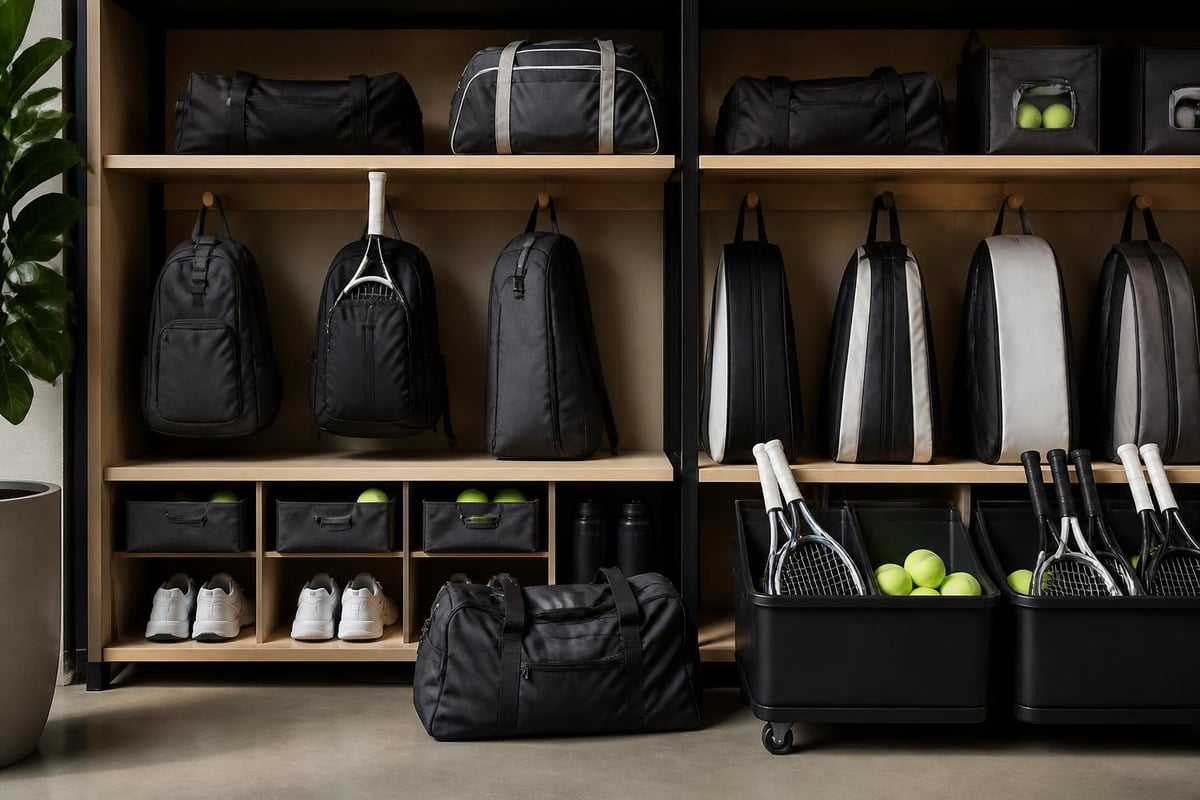
Wheeled bags suit traveling teams and elite programs, offering maximum capacity with reduced carrying strain. These premium options protect up to twelve racquets while providing ample space for clothing, towels, and training equipment. The investment makes sense for programs with frequent tournament travel.
Team Equipment Management
Programs managing tennis sports gear for multiple athletes should implement checkout systems tracking racquet assignments, bag distribution, and accessory inventory. Color-coding bags by skill level or team designation simplifies equipment distribution during practices and events. Dedicated storage areas with proper ventilation extend gear lifespan while preventing loss.
Strings and Maintenance Supplies
String selection profoundly impacts racquet performance, yet many programs overlook this critical component when budgeting for tennis sports gear. Understanding string materials and tension requirements helps organizations balance performance needs with maintenance costs.
String Material Options
- Synthetic gut: Affordable, durable, excellent for recreational players and high-volume restringing programs
- Polyester: Control-oriented, ideal for advanced players generating heavy spin
- Natural gut: Premium performance and feel, suited for competitive play despite higher costs
- Multifilament: Arm-friendly with good power, balances performance with comfort
- Hybrid setups: Combine materials for customized performance characteristics
Tension specifications affect playability dramatically. Lower tensions (45-55 pounds) generate more power and provide a larger sweet spot, benefiting developing players. Higher tensions (55-65 pounds) deliver enhanced control for advanced athletes with developed technique. The LTA equipment guide provides detailed insights into matching string types with player characteristics.
Programs should budget for restringing based on play frequency. Competitive players require fresh strings monthly or after approximately 40 hours of play. Recreational athletes may maintain performance with quarterly restringing. Establishing relationships with local stringers or investing in stringing equipment for high-volume programs reduces long-term maintenance costs.
Training Aids and Practice Equipment
Beyond basic tennis sports gear, specialized training equipment accelerates skill development and adds variety to practice sessions. Ball machines, target systems, and portable nets expand coaching options while maximizing facility utilization.
Ball machines deliver consistent feeds that allow players to groove strokes without requiring practice partners. Models range from basic oscillating units to programmable systems simulating match situations. For programs with limited coaching staff or large rosters, ball machines increase productive practice time significantly.
Rebound nets create practice opportunities in limited spaces, allowing players to work on volleys, ground strokes, and reaction drills independently. These portable systems suit programs sharing facilities with other sports or operating in space-constrained environments.
| Training Equipment | Primary Use | Skill Level | Space Required |
|---|---|---|---|
| Ball Machine | Stroke development | All levels | Full court |
| Rebound Net | Volley practice | Beginner-Intermediate | 10x10 feet |
| Target Cones | Accuracy drills | All levels | Minimal |
| Agility Ladders | Footwork training | All levels | 15 feet |
| Portable Net System | Multi-purpose courts | All levels | Court dimensions |
Court Accessories and Markings
Temporary court lines enable programs to create mini-courts for skill-appropriate play or convert multi-purpose spaces into tennis facilities. Removable line tape and portable net systems provide flexibility for schools and community centers sharing gymnasium space with other activities, similar to how organizations manage sports goal equipment across different programs.
Apparel and Protective Gear
While tennis traditionally requires less protective equipment than contact sports, proper apparel and accessories enhance comfort and performance. Programs outfitting teams should consider moisture-wicking fabrics that regulate body temperature during extended play.
Performance shirts and shorts constructed from polyester blends dry quickly and allow unrestricted movement. Many organizations establish team identity through coordinated apparel while ensuring athletes have appropriate clothing for various weather conditions. Lightweight, breathable materials suit warm-weather play, while layering options accommodate cooler seasons.
Hats and visors protect players from sun exposure during outdoor sessions. Wide-brimmed designs shield faces and necks, reducing fatigue and preventing sun-related performance decline. Programs operating in sunny climates should make sun protection standard equipment.
Wrist and Joint Support
Wristbands serve both functional and traditional purposes, absorbing perspiration while providing minor support during play. Elbow braces and compression sleeves help players managing tendinitis or other overuse conditions continue participating safely. Stocking basic support gear allows programs to address minor discomfort before it develops into serious injury.
Grip Maintenance and Customization
Racquet grips significantly influence comfort and control, making grip maintenance an essential aspect of tennis sports gear management. Two grip types serve different purposes within equipment programs.
Replacement grips completely cover the original handle, allowing players to customize thickness and feel. These durable options suit players preferring specific textures or those replacing worn original grips. Installing replacement grips requires basic tools and techniques that equipment managers can learn quickly.
Overgrips apply over existing grips, providing fresh tackiness and moisture absorption without altering handle size significantly. These thin wraps represent the most cost-effective maintenance option, with players typically replacing overgrips every few sessions based on play frequency and perspiration levels.
Programs should maintain grip inventory matching their racquet count, enabling quick replacements that keep equipment game-ready. Bulk purchasing reduces per-unit costs while ensuring consistent supply. Teaching athletes proper grip installation develops ownership and equipment care skills.
Establishing Equipment Budgets and Vendor Relationships
Strategic planning maximizes tennis sports gear investments across fiscal years. Organizations should categorize purchases by priority and replacement cycle, allocating resources to essential items while planning for periodic upgrades.
Annual Budget Framework
- Racquets: Replace 20-30% of inventory annually based on condition and technology updates
- Balls: Budget monthly allocations based on player count and session frequency
- Footwear: Plan for annual replacement in youth programs, biennial for adults
- Strings and maintenance: Set aside 15-20% of racquet budget for ongoing upkeep
- Accessories and training aids: Allocate 10% for miscellaneous needs and new equipment trials
Working with suppliers who understand athletic program needs streamlines procurement and ensures reliable equipment availability. Features like price matching guarantees and team-focused pricing structures help programs maximize budgets while maintaining quality standards.
Quality Indicators and Equipment Standards
Identifying quality tennis sports gear requires understanding certification standards and manufacturer reputations. Not all equipment meets competitive play requirements, making informed selection essential for serious programs.
The International Tennis Federation (ITF) certifies balls and racquets for sanctioned competition. Equipment bearing ITF approval ensures compliance with regulation specifications, preventing disqualification issues during tournament play. Programs competing at high school, collegiate, or club levels should verify ITF certification when making purchasing decisions.
Racquet specifications to verify include:
- Maximum frame length of 29 inches
- Maximum string area of 15.5 inches long by 11.5 inches wide
- Frame thickness variations within regulation limits
- Absence of prohibited energy sources or mechanical devices
Ball standards cover diameter (2.575-2.700 inches), weight (1.975-2.095 ounces), and rebound characteristics (53-58 inches when dropped from 100 inches onto concrete). Quality manufacturers display specification compliance prominently on packaging.
Multi-Sport Program Integration
Many organizations manage tennis alongside other athletic programs, creating opportunities for equipment efficiency and cross-training benefits. Understanding how tennis sports gear integrates with broader athletic offerings helps maximize facility utilization and budget allocation.
Shared storage facilities, coordinated purchasing schedules, and multi-sport athlete considerations influence equipment decisions. Programs also managing fitness sports equipment or other athletic gear benefit from consolidated vendor relationships and bulk ordering opportunities.
Climate-controlled storage protects tennis racquets and balls from temperature extremes that degrade performance. Organizing shared equipment rooms by sport, with designated areas for tennis gear, prevents mixing and simplifies distribution during multi-sport seasons.
Cross-Training Applications
Tennis equipment serves conditioning purposes for athletes in other sports. Agility drills using tennis footwork patterns benefit basketball and soccer players. Ball machine work develops hand-eye coordination transferable to baseball and softball. Programs recognizing these connections maximize tennis sports gear value across multiple teams.
Equipping tennis programs with appropriate gear requires balancing performance needs, budget constraints, and player development goals. Understanding racquet specifications, court surface requirements, and maintenance considerations ensures athletes have reliable equipment supporting their competitive and recreational pursuits. Whether you're outfitting a single team or managing equipment for comprehensive tennis programs, focusing on quality, durability, and proper fit delivers the best return on investment. Sideline Sport Supply provides the game-day-ready tennis sports gear your organization needs, with straightforward pricing and fast fulfillment that keeps your athletes equipped and ready to compete.