

Sports Goal: Types, Standards, and Selection Guide
Every athletic program, school, or sports organization understands that a sports goal represents more than just physical equipment. It serves as the focal point of training sessions, competitions, and player development across countless disciplines. Whether you're outfitting a youth soccer league, upgrading a high school basketball court, or establishing a multi-sport training facility, understanding the nuances of sports goals helps ensure safe play, regulatory compliance, and optimal performance outcomes. The right equipment choice impacts everything from athlete safety to game authenticity, making informed selection critical for coaches, athletic directors, and facility managers.
Understanding Sports Goal Standards and Specifications
The physical dimensions of any sports goal directly influence gameplay quality and regulatory compliance. Official governing bodies establish precise measurements that vary significantly across disciplines, and these standards matter whether you're purchasing portable soccer goals for practice fields or permanent installations for competition venues.
Soccer goals provide an excellent example of standardized requirements. According to official regulations governing goal size, a regulation soccer goal measures 24 feet wide by 8 feet high, with specific requirements for post diameter and crossbar thickness. These measurements remain consistent across professional leagues worldwide, ensuring athletes develop skills that translate directly to competitive environments.
Material Composition and Durability Requirements
Modern sports goals incorporate various materials engineered for specific performance characteristics:
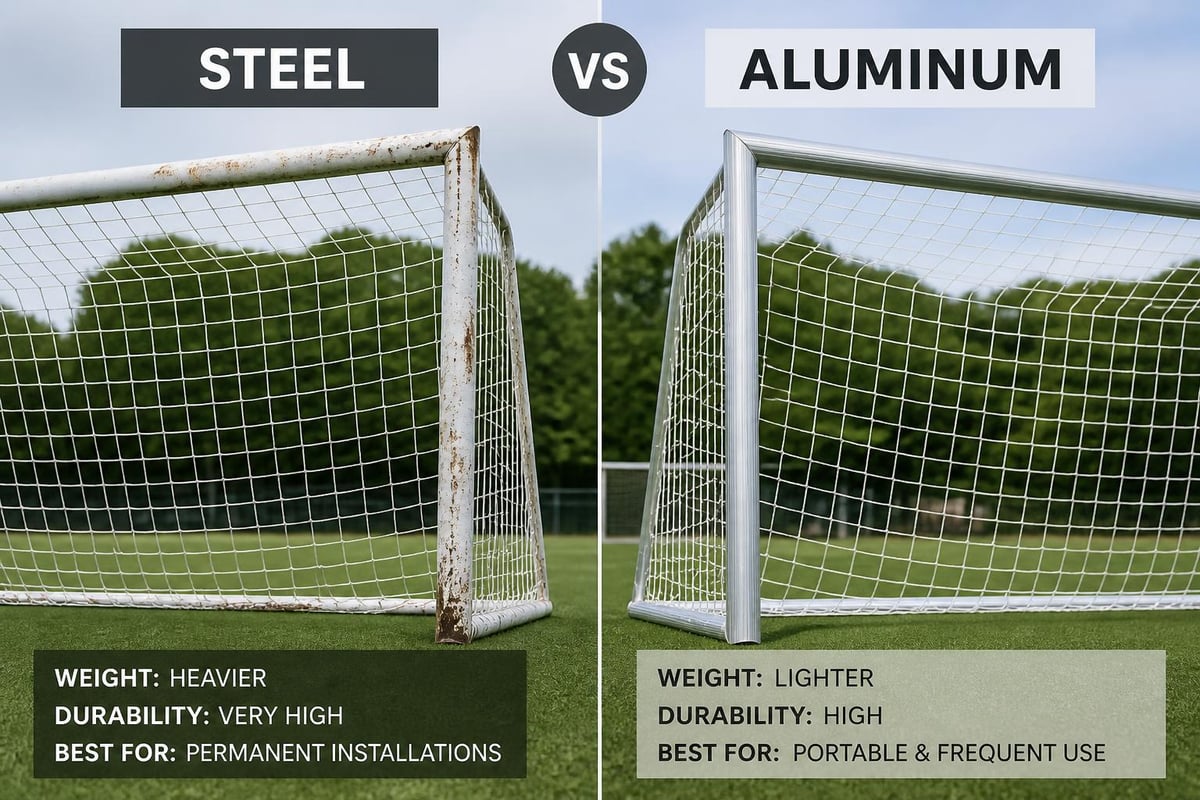
- Aluminum frames: Lightweight, corrosion-resistant, ideal for portable applications
- Steel construction: Maximum durability for permanent installations and high-impact sports
- Powder-coated finishes: Weather protection extending equipment lifespan
- UV-resistant netting: Maintains strength and appearance despite sun exposure
- Reinforced joints: Critical stress points engineered for repeated impact
Material selection directly correlates with intended use frequency and environmental conditions. Outdoor permanent installations require weather-resistant treatments that indoor equipment may not need, while portable systems prioritize weight reduction without compromising structural integrity.
Dimensional Variations Across Sport Disciplines
Different sports require vastly different goal configurations. Detailed dimensions of various sports goals reveal the engineering precision necessary for each discipline. Basketball hoops mount at precisely 10 feet with an 18-inch diameter rim, while field hockey goals measure 12 feet wide by 7 feet high with specific depth requirements.
| Sport | Width | Height | Depth | Key Features |
|---|---|---|---|---|
| Soccer | 24 ft | 8 ft | Variable | Net attachment points, ground anchoring |
| Basketball | 18 in (rim) | 10 ft | N/A | Breakaway rim, backboard mounting |
| Hockey | 6 ft | 4 ft | Variable | Net frame, goal line integration |
| Lacrosse | 6 ft | 6 ft | 7 ft | Square frame, pyramid netting |
Psychological and Performance Aspects of Goal Setting
Beyond physical structures, the concept of a sports goal extends into psychological territory where objective-setting frameworks drive athlete development. Understanding different types of goals reveals how coaches and athletes establish targets that enhance performance.
Performance goals focus on personal improvement metrics independent of competitive outcomes. An athlete might set a sports goal of improving free-throw percentage by 15% over a season, controlling the process and effort required. Outcome goals, conversely, emphasize competitive results like championship victories or league rankings.
Process goals break down complex skills into manageable components. For endurance athletes working with specialized programs like Your Next Race, establishing incremental training benchmarks creates sustainable progress toward major competitive events. These frameworks apply equally to team sports where skill acquisition and tactical understanding develop through structured progression.
SMART Framework Application in Athletics
Coaches and athletic directors benefit from applying SMART criteria when establishing team objectives:
- Specific: Define precise performance targets rather than vague aspirations
- Measurable: Establish quantifiable metrics for tracking progress
- Achievable: Balance ambition with realistic capability assessment
- Relevant: Align individual goals with team priorities and season objectives
- Time-bound: Create clear deadlines that drive consistent effort
This systematic approach transforms abstract ambitions into actionable training plans. When teams purchase soccer equipment or other training essentials, they're investing in the physical tools that support these developmental frameworks.
Selecting the Right Sports Goal for Your Facility
Procurement decisions require balancing multiple factors including budget constraints, space limitations, regulatory requirements, and intended usage patterns. Schools, recreation departments, and private facilities each face unique considerations when evaluating equipment options.
Portable Versus Permanent Installation Systems
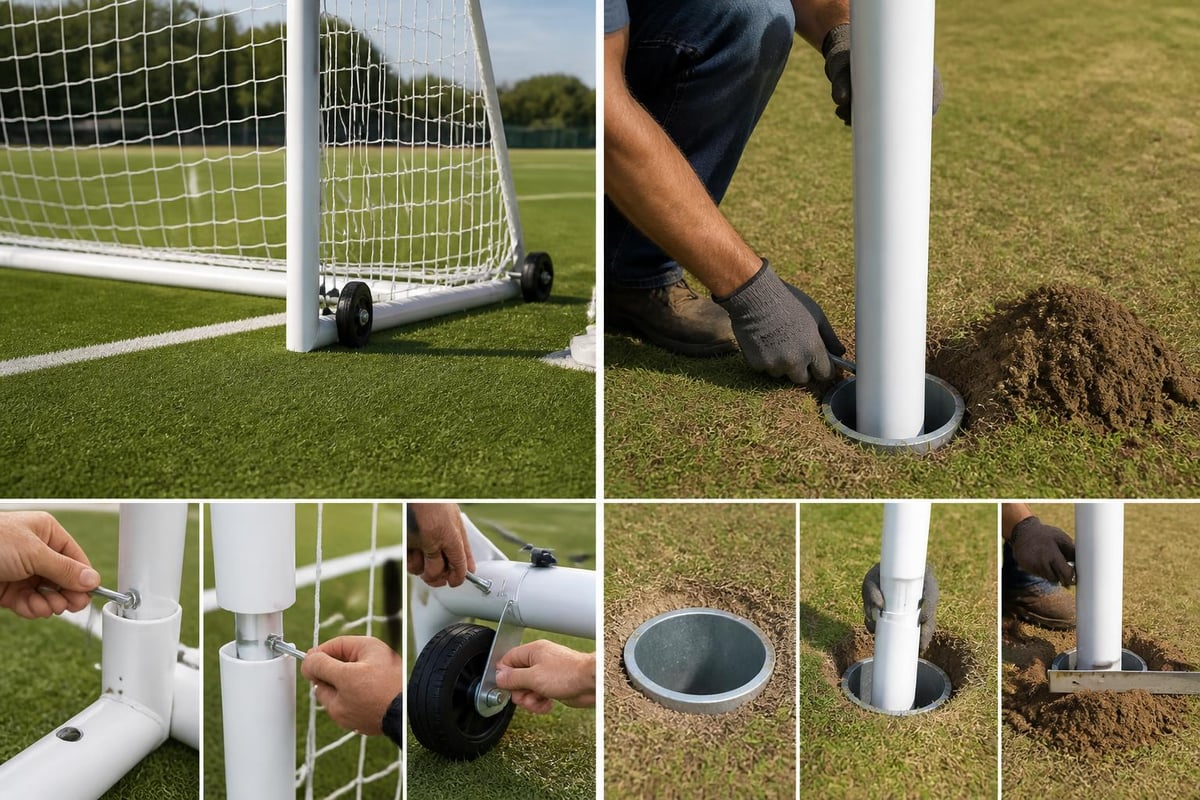
Portable goals offer flexibility for multi-use facilities where field configurations change based on seasonal sports. These systems typically feature:
- Quick assembly and disassembly mechanisms
- Wheeled bases or lightweight frames for repositioning
- Weather-resistant storage capabilities
- Lower initial investment compared to permanent installations
Permanent and semi-permanent soccer goals provide superior stability and longevity for dedicated fields. Ground sleeve installations allow seasonal removal while maintaining precise positioning, combining permanence benefits with off-season flexibility.
Safety Certification and Compliance Considerations
Safety standards govern sports goal manufacturing and installation, protecting athletes from tip-over hazards and structural failures. Equipment purchased from reputable suppliers includes:
- ASTM F2673 compliance for soccer goal stability requirements
- Load-testing documentation verifying structural integrity under stress
- Anchoring systems preventing accidental movement or tipping
- Padding options for posts and crossbars in high-traffic areas
- Net attachment hardware eliminating sharp edges or pinch points
Athletic directors must verify that all equipment meets current safety standards, particularly for youth programs where supervision levels and athlete awareness vary. Field and facility equipment suppliers provide documentation confirming regulatory compliance, essential for institutional liability management.
Maintenance and Longevity Optimization
Proper maintenance extends equipment lifespan while ensuring continued safety and performance. Establishing systematic inspection protocols protects your investment and prevents mid-season failures that disrupt programming.
Seasonal Inspection Protocols
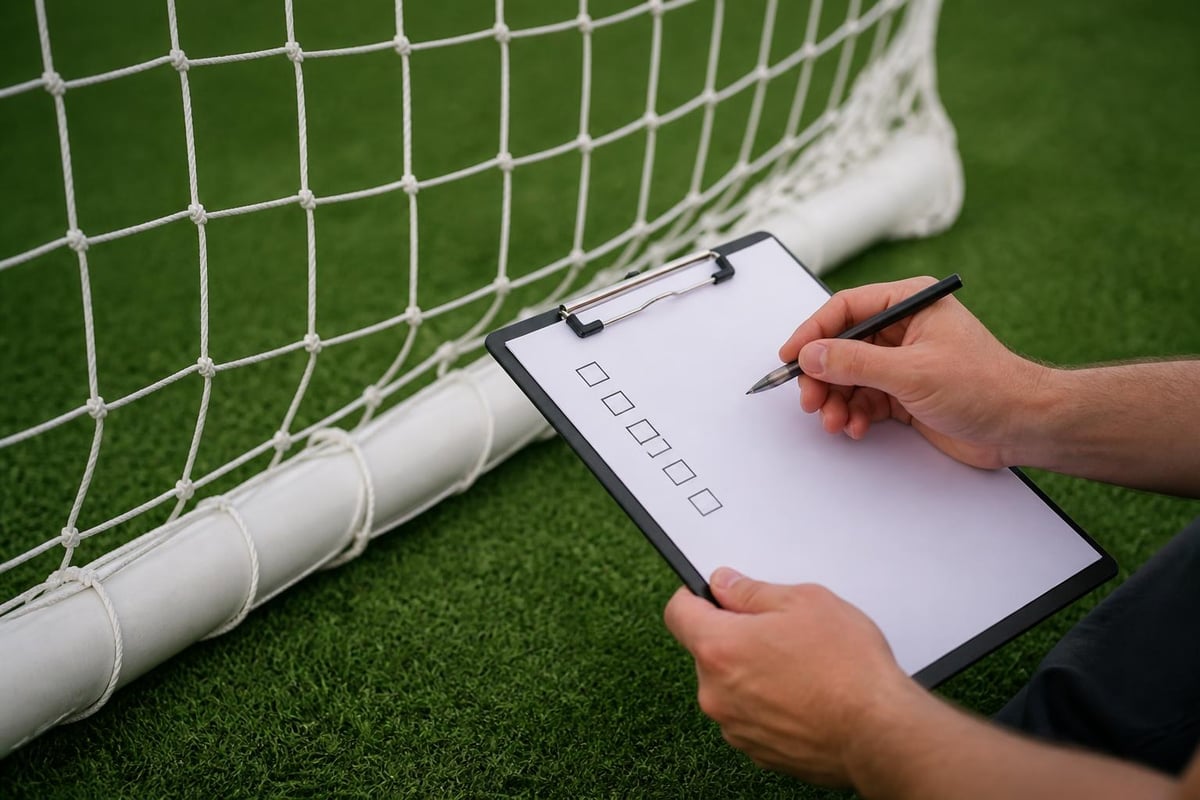
Implement quarterly inspections addressing these critical components:
- Frame integrity: Check for cracks, corrosion, or structural weakness
- Hardware tightness: Verify all bolts, brackets, and connections remain secure
- Net condition: Replace worn netting before complete failure occurs
- Ground anchoring: Test anchor stability and replace degraded components
- Finish condition: Touch up powder coating to prevent rust progression
Weather exposure accelerates deterioration, particularly for outdoor installations. Facilities in coastal environments face additional corrosion challenges requiring more frequent inspection cycles and preventive treatments.
Netting Selection and Replacement Strategies
Net specifications significantly impact sports goal functionality and safety. Various types of sports netting serve different purposes, from fine-mesh barrier netting to heavy-duty goal netting engineered for repeated ball impact. Selection criteria include:
| Netting Type | Mesh Size | Material | Best Application |
|---|---|---|---|
| Standard Goal | 4-5 inches | Polypropylene | Youth programs, practice fields |
| Competition Grade | 4 inches | Polyethylene | Regulation matches, tournament play |
| Heavy-Duty | 4 inches | Nylon blend | High-traffic facilities, multiple daily uses |
| Barrier/Safety | 1-2 inches | HDPE | Ball containment, spectator protection |
Budget planning should include annual netting replacement for heavily-used facilities. Schools running multiple programs across a single field configuration may need biannual replacement to maintain professional appearance and functionality.
Multi-Sport Facility Equipment Planning
Modern athletic facilities increasingly serve diverse programming needs, requiring versatile equipment solutions that accommodate various sports within shared spaces. Strategic planning maximizes facility utilization while controlling capital expenditures.
Space Optimization Strategies
Gymnasiums and multipurpose fields benefit from convertible systems allowing quick transitions between sports. Fold-away basketball systems, retractable bleachers, and modular goal storage create flexibility supporting:
- Morning basketball practice followed by afternoon volleyball training
- Weekend soccer tournaments on fields hosting weekday football programs
- Seasonal transitions minimizing downtime between sport cycles
Indoor equipment and outdoor equipment categories offer specialized solutions for different environmental demands. Climate-controlled facilities require different material specifications than outdoor venues facing temperature extremes and precipitation.
Budget Allocation Across Equipment Categories
Athletic directors balancing limited budgets across multiple programs benefit from tiered investment strategies. Priority equipment receives premium allocation while secondary items utilize cost-effective alternatives:
Tier 1 - Competition Equipment: Regulation goals for primary sports requiring exact specifications for competitive play
Tier 2 - Practice Equipment: Durable training goals emphasizing functionality over aesthetic perfection
Tier 3 - Development Equipment: Entry-level options for youth programs and skill introduction
This approach ensures teams compete on regulation equipment while maximizing training resources across all programs. When schools invest in quality basketball systems or other primary equipment, they're prioritizing the sports goal most critical to their competitive identity.
Emerging Technologies and Innovation Trends
The sports equipment industry continues evolving with technological integration enhancing training effectiveness and performance measurement. While physical sports goal structures remain fundamentally unchanged, ancillary systems provide coaches with unprecedented data and feedback mechanisms.
Smart goal systems now incorporate sensors tracking shot accuracy, velocity, and placement patterns. These technologies generate actionable insights for skill development, identifying weaknesses requiring additional practice focus. Basketball systems with shot-tracking capabilities document thousands of attempts, revealing performance trends over time.
Video analysis integration allows coaches to review goal-scoring attempts from multiple angles, providing athletes with visual feedback supplementing verbal instruction. Cloud-based platforms store this footage indefinitely, creating developmental records tracking improvement across seasons and years.
Training Equipment Supporting Goal Achievement
Specialized training machines help athletes develop the specific skills necessary for scoring success. Soccer machines, baseball machines, and volleyball machines deliver consistent repetitions allowing focused technique refinement without requiring partner participation.
These systems prove particularly valuable for:
- Individual skill development outside team practice hours
- Position-specific training addressing unique role requirements
- Goalie training providing controlled shot scenarios
- High-volume repetition building muscle memory and consistency
Programs investing in comprehensive training ecosystems achieve faster athlete development compared to those relying solely on traditional practice methods. The combination of quality goals and supporting equipment creates optimal learning environments.
Regulatory Compliance for Schools and Organizations
Educational institutions and youth sports organizations face additional compliance requirements beyond basic safety standards. Title IX provisions, accessibility mandates, and state-specific regulations influence equipment procurement and facility development decisions.
Accessibility Standards Implementation
The Americans with Disabilities Act (ADA) establishes requirements ensuring athletic facilities accommodate participants and spectators with disabilities. Sports goal installations must consider:
- Pathway accessibility for wheelchairs and mobility devices
- Spectator sightlines unobstructed by equipment placement
- Adaptive equipment availability for inclusive programming
- Surface transitions accommodating assistive devices
Schools developing new facilities or renovating existing spaces must incorporate these requirements from initial planning stages. Retrofit compliance often costs significantly more than proactive accessibility integration.
Documentation and Record-Keeping Requirements
Institutional risk management demands thorough documentation of equipment purchases, maintenance activities, and safety inspections. Comprehensive records should include:
- Purchase documentation with manufacturer specifications
- Installation certification confirming proper assembly
- Quarterly inspection reports noting condition assessments
- Maintenance logs tracking repairs and component replacements
- Safety incident reports documenting equipment-related injuries
This documentation protects organizations from liability claims while demonstrating due diligence in equipment management. When purchasing from established suppliers like Sideline Sport Supply, institutions receive proper certification and specification documents supporting these requirements.
Sport-Specific Considerations for Goal Selection
Each athletic discipline presents unique requirements influencing sports goal selection. Understanding these nuances ensures equipment purchases align with program needs and competitive standards.
Soccer Program Requirements
Youth programs often benefit from adjustable or scaled goals accommodating different age groups. U6 through U8 divisions typically use 4x6 foot goals, while U10 and U12 progress to 6.5x18.5 configurations. Full-size regulation equipment becomes standard at U14 and above, ensuring athletes develop on appropriately-sized playing surfaces.
Training scenarios may benefit from smaller targets that increase difficulty and improve shooting accuracy. Some coaches incorporate multiple goal sizes within single practice sessions, varying difficulty to maintain engagement and challenge different skill levels simultaneously.
Basketball System Variations
Basketball goal selection extends beyond basic hoop-and-backboard configurations. Facilities must decide between:
- Wall-mounted systems: Space-efficient for gymnasiums with limited floor area
- Portable units: Flexibility for multi-use facilities requiring regular reconfiguration
- Adjustable-height models: Youth programs needing variable rim heights across age groups
- Fixed installations: Permanent solutions for dedicated basketball venues
Adjustable basketball systems serve schools hosting elementary through high school programs within single facilities. Height adjustment mechanisms must remain secure during play while allowing authorized personnel to modify configurations between sessions.
Emerging Sports and Non-Traditional Goals
Growing sports like lacrosse, field hockey, and rugby require specialized goals less common than soccer or basketball equipment. Facilities adding these programs must source appropriate equipment meeting sport-specific regulations while maintaining budget discipline.
Understanding sports classifications helps athletic directors anticipate equipment needs as programs expand. Schools experiencing enrollment growth or community demand for diverse programming benefit from long-term facility planning accommodating future sport additions.
Selecting the right sports goal involves balancing regulatory requirements, safety standards, budgetary constraints, and program-specific needs across multiple athletic disciplines. Whether you're equipping a new facility or upgrading existing installations, informed decision-making ensures your investment delivers lasting value and optimal performance outcomes. Sideline Sport Supply provides the reliable equipment and expert guidance athletic programs need to focus on what matters most-developing skilled athletes and competitive teams ready for game day.