

Equipment Badminton: Essential Gear Guide for 2026
Badminton remains one of the fastest-growing racket sports worldwide, combining speed, agility, and precision in a demanding athletic competition. Whether you're outfitting a school team, managing a recreational program, or supplying competitive athletes, understanding the full spectrum of equipment badminton requires ensures players can perform at their best while staying safe and comfortable. The right gear makes the difference between frustration and improvement, particularly when athletes are developing fundamental skills or competing at higher levels.
Understanding Equipment Badminton Fundamentals
Equipment badminton encompasses far more than just a racket and shuttlecock. A complete equipment setup includes performance-critical items, safety essentials, and training aids that support skill development across all levels of play. Schools, coaches, and sports organizations must consider both immediate game-day needs and long-term durability when sourcing gear.
The foundation of any badminton program starts with quality rackets designed for the appropriate skill level. Modern racket technology has evolved significantly, with manufacturers now producing specialized equipment for different playing styles, power levels, and experience ranges. Understanding these distinctions helps programs maximize their budgets while ensuring athletes have appropriate tools for development.
Racket Selection and Specifications
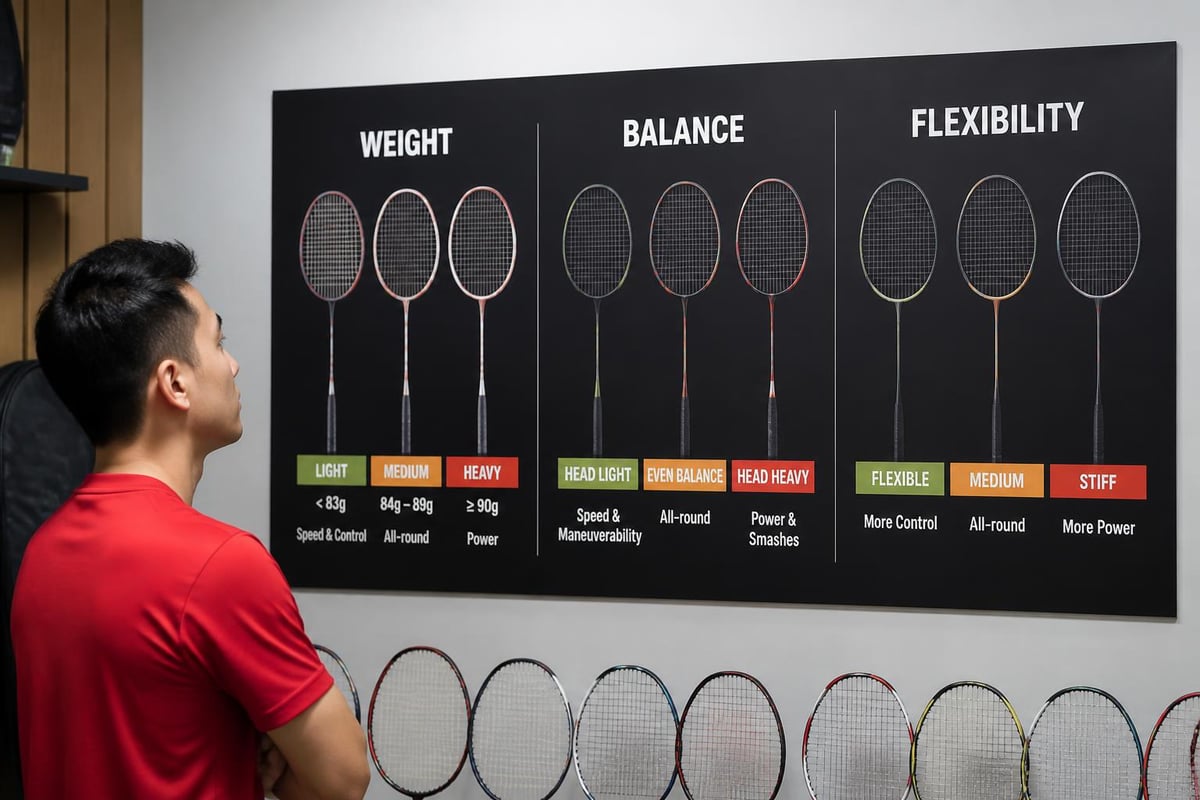
Badminton rackets vary considerably in weight, balance point, shaft flexibility, and string tension capabilities. Players need rackets matched to their physical development and technical proficiency.
Key racket specifications include:
- Weight categories: Ranging from 75-95 grams (2U-4U designations)
- Balance points: Head-heavy, even-balance, or head-light configurations
- Shaft flexibility: Stiff, medium, or flexible shafts affecting power transfer
- Grip size: G4, G5, or G6 measurements for proper hand fit
- String tension range: Typically 18-30 pounds depending on skill level
Research has shown that racket moment of inertia significantly affects performance, influencing racket head speed and shuttlecock velocity during smashes. Programs should stock multiple racket types to accommodate different player profiles, from beginners learning fundamental strokes to advanced competitors requiring precision equipment.
Court Equipment and Infrastructure
Proper court setup forms the backbone of any badminton facility. Beyond the playing surface itself, several equipment badminton components ensure safe, regulation-standard play.
Net Systems and Posts
Professional-grade net systems include adjustable posts, official-height nets (5 feet at the edges, 5 feet 1 inch at center), and stability mechanisms. Posts should feature:
- Quick-tensioning mechanisms for proper net tautness
- Stable base systems (weighted or floor-mounted)
- Height adjustment capabilities for different age groups
- Durable netting material resistant to shuttlecock impact
Many facilities benefit from multi-court systems where portable net assemblies allow flexible space usage. Schools particularly appreciate equipment that serves dual purposes or adapts to different program needs, similar to how versatile training equipment supports multiple sports.
Court Marking and Flooring Considerations
Clear boundary lines prevent disputes and teach players proper court awareness. Professional facilities use permanent painted lines, while multi-purpose gymnasiums often employ removable court tape systems. The playing surface itself impacts equipment badminton choices, particularly footwear selection based on floor type.
| Court Surface Type | Recommended Footwear | Maintenance Requirements |
|---|---|---|
| Hardwood | Non-marking rubber soles | Regular cleaning, refinishing |
| Synthetic | Gum rubber outsoles | Periodic deep cleaning |
| Concrete (recreational) | Cushioned athletic shoes | Sealing, crack repair |
Shuttlecock Selection: Feather vs. Synthetic
Shuttlecocks represent a recurring expense for badminton programs, making informed purchasing decisions essential. The two primary categories-feather and synthetic-offer distinct advantages depending on program priorities.
Feather shuttlecocks provide authentic flight characteristics preferred in competitive play. Made from goose or duck feathers, they deliver:
- Superior aerodynamic stability during rallies
- Consistent deceleration patterns players expect
- Better "feel" for stroke development
- Higher cost per unit (typically $15-30 per dozen)
- Shorter lifespan (2-3 games in competitive settings)
Synthetic shuttlecocks offer durability and cost-effectiveness for practice sessions and recreational programs:
- Extended playing life (10-15 times longer than feather)
- Weather resistance for outdoor use
- Lower per-unit cost ($8-15 per dozen)
- Slightly different flight patterns requiring adjustment
- Ideal for high-volume practice sessions
Strategic programs maintain both types, using synthetic shuttles for drills and practice while reserving feather shuttlecocks for match play and advanced training. This approach balances budget constraints with performance requirements.
Footwear and Court Shoes
Badminton shoes have evolved significantly, incorporating biomechanical research to prevent injuries and enhance performance. Proper footwear represents critical equipment badminton athletes need for safe, effective movement.
Essential Shoe Features
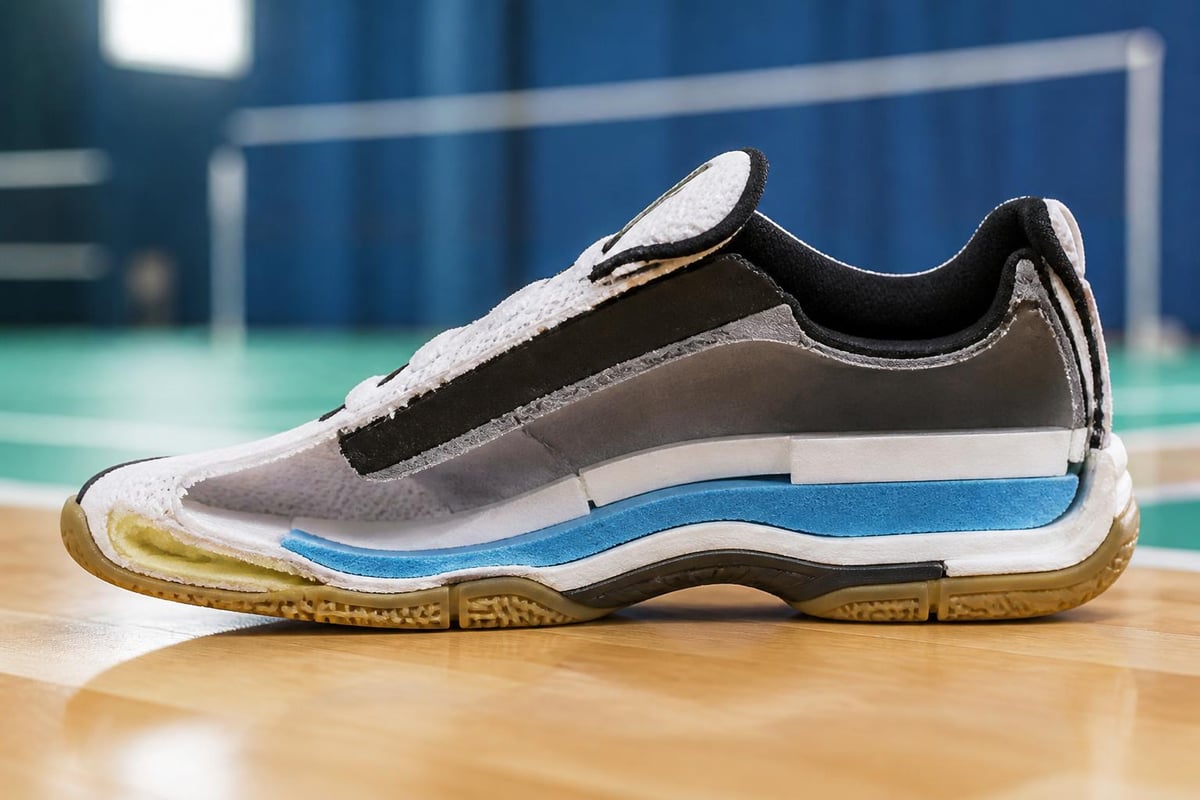
Court-specific badminton shoes differ substantially from general athletic footwear. Key design elements include:
- Non-marking gum rubber outsoles that grip without damaging floors
- Lateral support structures preventing ankle rolling during directional changes
- Toe reinforcement protecting against drag during lunges
- Cushioned midsoles absorbing impact from jumping and landing
- Breathable upper materials managing heat and moisture during play
Programs outfitting multiple athletes should stock various widths and sizes, recognizing that proper fit dramatically affects injury prevention and movement quality. Shoes too large cause instability, while undersized footwear restricts natural foot mechanics and creates pressure points.
Apparel and Protective Equipment
While less equipment-intensive than contact sports, badminton still requires appropriate clothing and accessories for optimal performance and comfort.
Performance Apparel
Moisture-wicking fabrics keep players dry during intense rallies. Quality badminton clothing includes:
- Lightweight, breathable shirts with mesh ventilation panels
- Shorts or skirts allowing unrestricted movement
- Compression underlayers supporting muscle groups during play
- Sweatbands managing perspiration during extended matches
Schools and organizations benefit from purchasing team sets that create unified appearance while meeting functional requirements. Bulk ordering typically reduces per-unit costs significantly.
Hand and Grip Accessories
Maintaining racket control requires attention to grip management. Essential accessories include:
Overgrips: Replaceable surface layers providing fresh tackiness (changed every 3-8 hours of play)
Towel grips: Absorbent materials for players with excessive hand perspiration
Grip powder: Rosin-based products enhancing friction between hand and racket
Wristbands: Preventing sweat migration onto grip surfaces
These small-ticket items represent ongoing expenses but dramatically affect player comfort and performance consistency.
Training Equipment and Practice Aids
Developing skilled badminton players requires more than game-play experience. Specialized training equipment badminton coaches use accelerates skill acquisition and addresses specific technical weaknesses.
Shuttle Feeding Systems
Multi-shuttle drills build stamina and stroke consistency. Professional feeding systems include:
- Ball hoppers adapted for shuttlecock storage (holding 50-100 shuttles)
- Portable baskets with easy access during rapid-fire drills
- Shuttlecock tubes organizing by speed and condition
- Collection nets capturing used shuttles for efficient cleanup
These organizational tools maximize practice time by minimizing setup and breakdown periods, similar to how efficient sports equipment management benefits all athletic programs.
Target Training Equipment
Accuracy development requires visual goals. Effective target systems include:
- Floor markers indicating landing zones for serves and clears
- Hanging targets at various heights practicing shot placement
- Court dividers creating smaller playing areas for focused drills
- Agility ladders and cones developing footwork patterns
- Resistance bands building stroke-specific strength
| Training Tool | Primary Benefit | Typical Cost Range |
|---|---|---|
| Target hoops | Shot accuracy | $25-60 per set |
| Agility ladder | Footwork speed | $15-35 each |
| Resistance bands | Power development | $10-30 per set |
| Shuttlecock feeders | Multi-ball drills | $40-150 each |
Technology Integration in Modern Badminton
Advanced programs increasingly incorporate technology for performance analysis and player development. While traditional equipment badminton remains fundamental, digital tools provide insights previously unavailable to coaches and athletes.
Wearable technology now enables detailed performance tracking, capturing metrics like swing speed, movement patterns, and stroke frequency. These systems help athletes understand their playing tendencies and identify improvement opportunities.
Additionally, comprehensive datasets for tactical analysis allow coaches to study opponent strategies and optimize their own team approaches. Technology supplements rather than replaces quality physical equipment, creating a comprehensive development environment.
Digital Tools Supporting Equipment Decisions
Modern equipment selection benefits from data-driven approaches. Online equipment finder tools help players identify rackets, strings, and shoes matching their playing style and physical characteristics. These resources reduce trial-and-error purchasing while ensuring athletes receive appropriate gear for their development stage.
Stringing Equipment and Maintenance Tools
Racket maintenance significantly extends equipment lifespan and ensures consistent performance. Programs with multiple athletes benefit from in-house stringing capabilities rather than outsourcing this essential service.
Stringing Machines and Supplies
Professional stringing equipment includes:
Electronic stringing machines: Providing precise tension control ($800-2,500)
Manual drop-weight machines: Offering accurate, budget-friendly alternatives ($200-600)
String reels: Bulk purchasing reduces per-stringing cost (200-meter reels typical)
Stringing tools: Awls, pliers, and cutters necessary for proper installation
Schools investing in stringing equipment recover costs quickly when serving teams with 15-20+ players requiring regular restringing. Athletes typically need fresh strings every 20-40 hours of play depending on style and string type.
String Types and Selection
String selection affects power, control, and durability characteristics:
- Thin strings (0.65-0.68mm): Maximum repulsion for power players
- Medium strings (0.69-0.72mm): Balanced performance and durability
- Thick strings (0.73mm+): Extended lifespan for recreational use
- Multifilament constructions: Enhanced feel and shock absorption
- Monofilament designs: Crisp response and durability
Understanding these distinctions allows programs to match string specifications with player needs and budget constraints, maximizing both performance and equipment value.
Bags and Storage Solutions
Proper equipment badminton storage protects investments and maintains gear in game-ready condition. Organizations need both individual player solutions and bulk storage systems.
Player Bags and Cases
Individual athletes require:
Racket bags: Padded compartments protecting 2-6 rackets with thermal lining preventing string tension changes
Shoe compartments: Ventilated sections isolating footwear from other equipment
Accessory pockets: Organizing grips, shuttlecocks, towels, and personal items
Backpack-style options: Distributing weight comfortably during transport
Quality bags extend equipment life by preventing damage during transport and storage. Teams often purchase matching bags creating professional appearance while ensuring adequate protection for all members.
Facility Storage Systems
Schools and clubs managing equipment badminton for multiple teams need organized storage:
- Racket racks securing equipment vertically preventing warping
- Shuttlecock cabinets maintaining organization by type and condition
- Net storage systems preventing tangling and damage
- Mobile equipment carts facilitating setup and breakdown
- Climate-controlled areas protecting string tension and grip tackiness
Proper storage reduces replacement costs and ensures equipment availability when needed, much like organized approaches to team sales and bulk equipment management.
Budget Planning for Complete Programs
Establishing or maintaining badminton programs requires strategic budget allocation across multiple equipment badminton categories. Understanding both initial investment and ongoing costs helps organizations plan effectively.
Initial Setup Costs
New programs face substantial upfront expenses:
| Equipment Category | Quantity (20-player team) | Estimated Cost |
|---|---|---|
| Rackets (various levels) | 25-30 units | $750-2,500 |
| Court nets/posts | 2-4 sets | $400-1,200 |
| Shuttlecocks (mix) | 40-60 dozen | $500-1,200 |
| Player shoes | 20 pairs | $1,200-2,400 |
| Training equipment | Complete set | $300-800 |
| Stringing supplies | Initial stock | $400-1,000 |
Total initial investment typically ranges $3,500-8,000 for quality equipment supporting a 20-player program. Budget-conscious programs can reduce costs by purchasing mid-range rather than premium equipment while maintaining adequate quality standards.
Ongoing Operational Expenses
Annual recurring costs include:
- Shuttlecock replacement: $800-2,000 depending on practice frequency
- String and gripping supplies: $300-600 for active programs
- Equipment repairs and replacement: $400-800 average
- Shoe replacement: Variable based on player responsibility
- Facility maintenance: Court cleaning, net replacement, line marking
Strategic purchasing and proper maintenance reduce these ongoing expenses significantly. Programs should establish equipment care protocols educating athletes on proper handling and storage.
Sourcing Quality Equipment for Organizations
Finding reliable suppliers offering quality equipment badminton at competitive prices remains essential for budget-conscious programs. Organizations benefit from establishing relationships with vendors understanding institutional needs.
When evaluating suppliers, consider these factors:
Product range: Comprehensive inventories eliminating multiple-vendor complexity
Pricing structure: Transparent pricing and price-matching policies protecting budgets
Fulfillment speed: Rapid delivery preventing program disruptions
Bulk discounts: Volume pricing for team and institutional purchases
Return policies: Flexible terms accommodating sizing and specification issues
Reputable athletic equipment suppliers understand that schools and sports organizations operate under budget constraints while maintaining quality standards. Working with vendors specializing in institutional sales often provides better service than consumer-focused retailers.
For a comprehensive equipment reference, organizations can review detailed gear lists helping ensure nothing gets overlooked during purchasing cycles.
Equipment Safety and Inspection Protocols
Regular equipment badminton inspection prevents injuries and extends gear lifespan. Organizations should implement formal checking procedures addressing common wear patterns and failure points.
Racket Safety Checks
Inspect rackets monthly for:
- Frame cracks particularly at throat and head junctions
- String integrity identifying broken or fraying strings
- Grip condition noting excessive wear or slippage
- Handle security ensuring proper attachment without movement
Damaged rackets should be immediately removed from circulation. Frame failures during play can cause injuries and typically occur without warning if inspection protocols aren't followed.
Facility Equipment Maintenance
Court equipment requires systematic attention:
Weekly tasks: Net tension verification, post stability checks, floor inspection
Monthly tasks: Line clarity assessment, shuttlecock inventory and sorting
Seasonal tasks: Net replacement, post servicing, comprehensive equipment audit
Documented inspection schedules create accountability while ensuring nothing gets overlooked. Organizations might assign these responsibilities to team managers, assistant coaches, or facility staff depending on program structure.
Adapting Equipment for Different Age Groups
Youth programs require equipment badminton modified for developmental appropriateness. Using adult-specification gear with young players creates frustration and potentially reinforces poor technique.
Junior Equipment Modifications
Effective youth programs incorporate:
Shorter rackets: 23-25 inch lengths for players under 10 years old
Lighter weights: 75-80 gram rackets preventing muscle strain
Lower net heights: 4-4.5 feet encouraging proper stroke development
Slower shuttlecocks: Modified flight speeds matching reaction capabilities
Smaller court dimensions: Scaled playing areas appropriate to movement range
These modifications parallel approaches used in other sports where youth-specific equipment supports proper development while maintaining engagement and safety.
As players mature and develop, programs transition them to adult specifications gradually, typically around ages 12-14 depending on individual physical development and skill progression.
Environmental Considerations and Sustainability
Modern equipment badminton purchasing increasingly considers environmental impact alongside performance and cost. Sustainable practices benefit both organizations and the broader community.
Eco-Friendly Equipment Options
Manufacturers now offer environmentally conscious alternatives:
- Recycled synthetic shuttlecocks reducing petroleum-based plastic consumption
- Sustainably sourced feather shuttles from managed waterfowl populations
- Natural fiber strings as alternatives to synthetic materials
- Recyclable racket packaging minimizing waste
While these options sometimes carry premium pricing, many organizations find value alignment with sustainability initiatives worth modest cost increases. Schools particularly benefit from demonstrating environmental responsibility to students and communities.
Equipment Lifecycle Management
Extending equipment life through proper care represents the most effective sustainability practice:
- Repair before replace: Fix broken strings, replace grips, service nets
- Donate retired equipment: Provide used gear to developing programs
- Recycle components: Properly dispose of irreparable equipment
- Educate users: Teach athletes equipment care extending usable life
These practices reduce organizational costs while demonstrating responsible resource stewardship.
Selecting the right equipment badminton for athletes, teams, and programs requires balancing performance needs, budget constraints, and long-term durability considerations. From rackets and shuttlecocks to court systems and training aids, each component contributes to player development and program success. Whether you're outfitting a school team, managing a recreational facility, or supplying competitive athletes, Sideline Sport Supply provides the reliable, affordable equipment and straightforward service that lets your program focus on development and competition rather than sourcing challenges.