

Lacrosse Equipment Guide: Essential Gear for Every Player
Athletes entering the sport of lacrosse face a significant learning curve, not just in mastering stick skills and field tactics, but in understanding the specialized gear required to play safely and effectively. Whether you're equipping a youth player for their first season, outfitting an entire high school team, or upgrading equipment for competitive play, knowing what lacrosse equipment is necessary-and what meets current safety standards-is essential for coaches, athletic directors, and parents alike. This comprehensive guide breaks down the critical gear categories, position-specific requirements, and regulatory considerations that ensure players are properly protected while maximizing their performance on the field.
Understanding Position-Specific Lacrosse Equipment Requirements
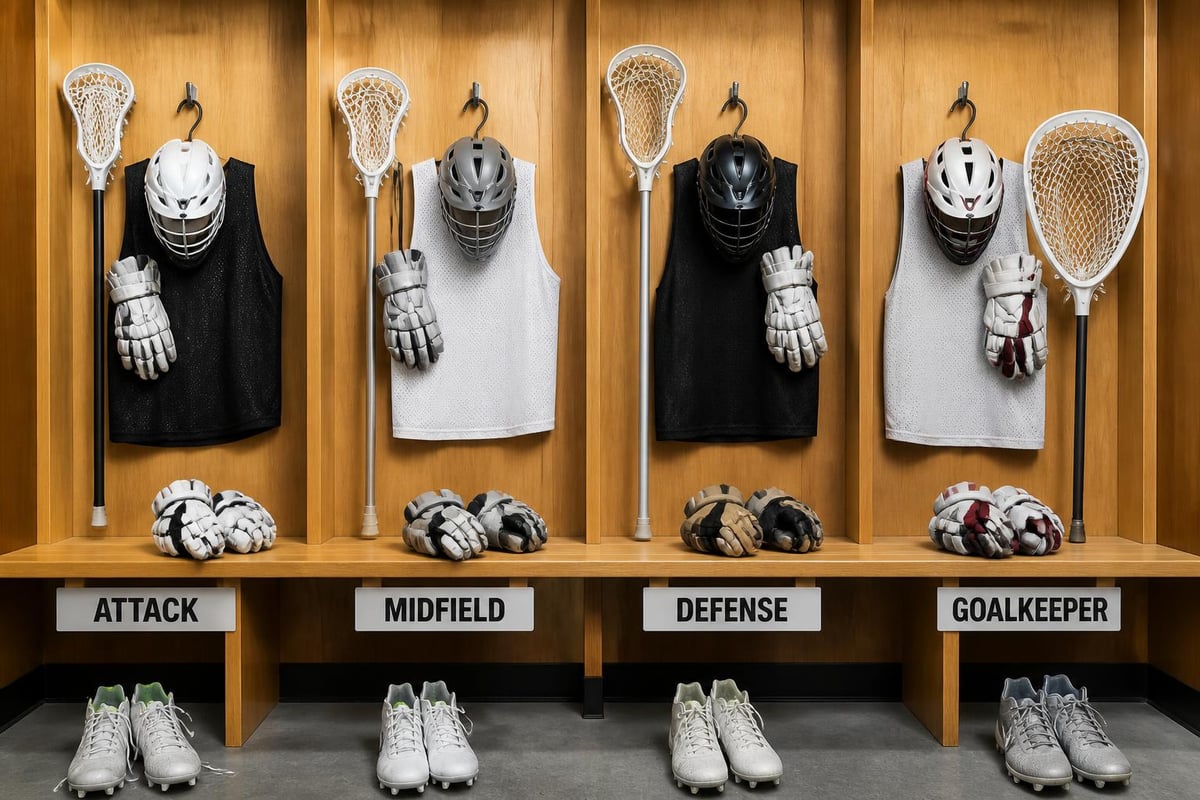
Lacrosse equipment needs vary significantly based on the position a player occupies on the field. Attack and midfield players prioritize mobility and stick handling, requiring lighter protective gear that doesn't restrict movement. These athletes typically use shorter sticks (40-42 inches for attack) and need gloves that balance protection with dexterity.
Defensive players and long-stick midfielders require extended shafts measuring 52-72 inches, giving them the reach advantage needed to disrupt opposing attacks. Their protective equipment often includes additional padding in shoulder and arm areas, as physical contact is more frequent in defensive situations.
Goalkeepers represent the most equipment-intensive position, requiring specialized gear including:
- Chest protectors designed specifically for lacrosse
- Throat protectors attached to helmets
- Larger gloves with enhanced padding
- Goalie-specific sticks with wider heads
- Athletic cups and protective cups for additional safety
The comprehensive lacrosse equipment guide from industry experts highlights these position distinctions, emphasizing that one-size-fits-all approaches compromise both safety and performance.
Essential Protective Gear Standards and Certification
Safety in lacrosse has evolved dramatically over the past decade, with governing bodies establishing rigorous testing protocols and certification requirements. In 2026, World Lacrosse's comprehensive athlete safety and equipment standards represent the gold standard for protective lacrosse equipment worldwide.
Helmet Certification Requirements
All helmets must meet NOCSAE (National Operating Committee on Standards for Athletic Equipment) standards specifically designed for lacrosse. These certifications ensure helmets can withstand impact forces common in gameplay, including stick checks, falls, and ball strikes. Helmets manufactured before 2018 may not meet current standards and should be replaced, regardless of their physical condition.
Modern helmets incorporate advanced materials and design features:
- Multi-density foam liners that manage rotational forces
- Improved face mask geometry reducing ball-through incidents
- Tool-free adjustment systems for proper fit
- Enhanced ventilation without compromising protection
Body Protection Certification
| Equipment Type | Certification Standard | Key Protection Areas |
|---|---|---|
| Shoulder Pads | NOCSAE ND200 | Collarbone, chest, shoulders, spine |
| Arm Guards | NOCSAE ND200 | Forearms, elbows, triceps |
| Gloves | NOCSAE ND200 | Hands, fingers, wrists, thumbs |
| Rib Pads | NOCSAE ND200 | Ribs, kidney area, lower back |
The equipment standards frequently asked questions provided by World Lacrosse clarifies compliance timelines and grandfathering provisions for existing equipment. Organizations purchasing lacrosse equipment in 2026 should verify all protective gear displays current NOCSAE certification marks.
Selecting the Right Lacrosse Stick Components
The lacrosse stick represents the most personal piece of equipment an athlete will use, directly impacting their ability to catch, throw, and control the ball. Understanding the three main components-head, pocket, and shaft-enables informed purchasing decisions that match player skill levels and positional needs.
Stick heads vary in width, sidewall design, and offset angle. Attack players benefit from narrower heads (legal minimum 10 inches) that enhance ball retention during dodges and quick-stick shots. Defensive heads feature wider profiles and reinforced sidewalls to withstand poke checks and takeaway attempts.
Pocket configuration affects ball control and release characteristics:
- High pockets position the ball near the scoop, enabling quick releases ideal for shooters
- Mid pockets offer versatility for players who both shoot and pass frequently
- Low pockets provide maximum hold, preferred by face-off specialists
Shaft selection involves balancing weight, durability, and flex characteristics. Aluminum shafts offer affordability and reliability for youth and recreational players, while composite materials (carbon fiber, scandium alloys) reduce weight and improve feel for competitive athletes. Similar to how football equipment requires position-specific considerations, lacrosse gear must align with playing style and competitive level.
Gender-Specific Lacrosse Equipment Differences
Men's and women's lacrosse evolved from different rule sets and contact philosophies, resulting in distinct equipment requirements that persist in 2026. Understanding these differences is critical for coaches and equipment managers supporting both programs.
Men's Lacrosse Equipment Requirements
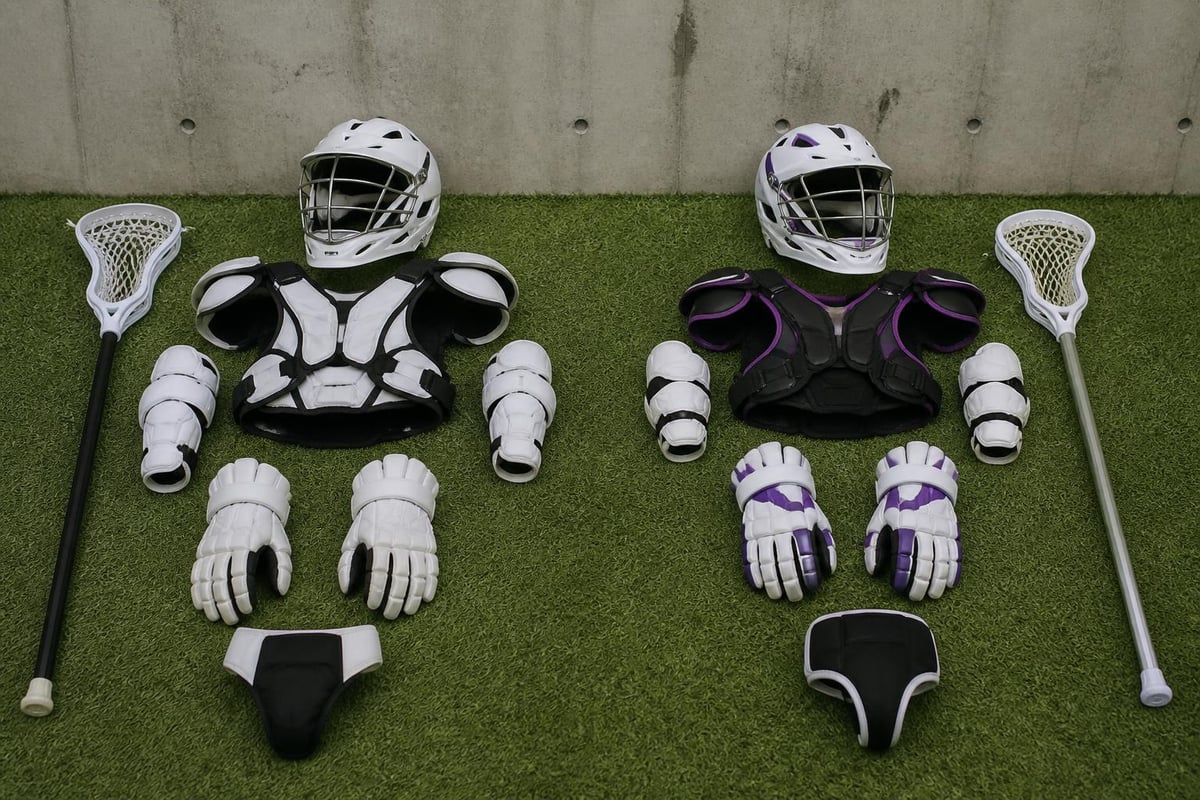
Men's lacrosse permits significant physical contact, necessitating comprehensive protective lacrosse equipment including helmets with full face masks, shoulder pads, arm guards, and gloves. USA Lacrosse equipment standards emphasize that all body protection must meet current NOCSAE certification to ensure player safety during legal checks and physical play.
Additional required items include:
- Athletic cups (mandatory at all levels)
- Rib pads (strongly recommended, required at some competitive levels)
- Mouth guards (must be a visible color, not white or clear)
Women's Lacrosse Equipment Requirements
Women's lacrosse emphasizes stick skills over physical contact, with rules prohibiting body checking. Consequently, required protective gear differs substantially. The complete equipment list for girls' lacrosse shows fewer mandatory protective items but equal emphasis on proper stick specifications and safety eyewear.
Women's players must wear:
- ASTM-certified protective eyewear or goggles
- Mouth guards (same color requirements as men's game)
- Goalkeepers require helmets, chest protectors, throat guards, gloves, and leg padding
Stick regulations differ between genders, with women's sticks featuring shallower pockets to prevent excessive ball retention and encourage active play. The pocket depth test-placing a ball in the stick and checking if the top edge sits below the bottom of the sidewall-ensures compliance with official equipment regulations.
Youth Lacrosse Equipment Considerations
Equipping young athletes requires balancing safety, proper fit, and budget constraints. Youth players grow rapidly, often outgrowing equipment within a single season, creating challenges for parents and youth organizations purchasing lacrosse equipment.
Sizing represents the most critical factor in youth equipment selection. Helmets that are too large shift during play, compromising protection and creating visibility issues. Gloves that don't fit properly reduce stick control and increase hand injury risk. The equipment fitting guides from established youth programs provide measurement charts and fitting instructions that ensure proper protection.
Youth Equipment Sizing Guidelines
| Equipment | Sizing Method | Replacement Indicators |
|---|---|---|
| Helmets | Measure head circumference at widest point | Gaps when properly secured, visible wear on padding |
| Gloves | Measure from fingertip to wrist crease | Fingers extending beyond glove tips, palm tearing |
| Shoulder Pads | Based on chest size and height | Straps at maximum extension, restricted arm movement |
| Arm Guards | Forearm length measurement | Guards don't cover elbow joint, excessive looseness |
Budget-conscious options for youth programs include:
- Starter packages combining essential gear at reduced prices
- Reconditioned equipment from reputable dealers with certification verification
- Equipment sharing programs within organizations for rapidly growing age groups
- Gradual upgrades prioritizing safety items (helmets, gloves) over performance equipment
Age-specific modifications exist in youth lacrosse, with equipment requirements varying by age group to ensure developmentally appropriate protection. Players under 12 may use modified sticks and smaller balls to develop proper technique before transitioning to regulation equipment.
Maintaining and Replacing Lacrosse Equipment
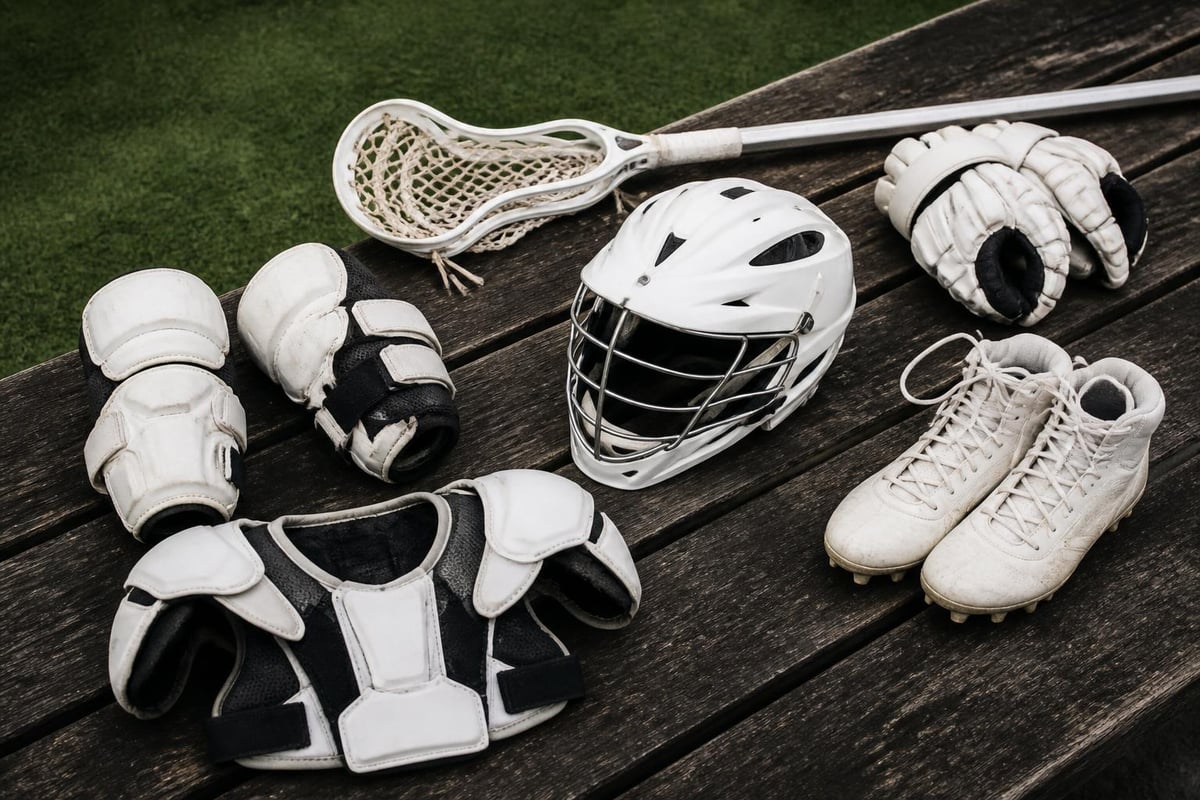
Proper maintenance extends equipment lifespan while ensuring continued safety compliance. Even the highest-quality lacrosse equipment degrades through regular use, requiring systematic inspection and timely replacement protocols.
Helmets demand particular attention, as internal foam compression and shell cracking compromise protective capabilities without obvious external indicators. NOCSAE recommends helmet recertification every two years through authorized reconditioning facilities. Many manufacturers include reconditioning programs in their warranty coverage, making this preventive maintenance cost-effective for teams managing multiple helmets.
Stick maintenance focuses on three areas:
- Head integrity: Check for cracks in sidewalls, particularly near screw holes and high-stress areas where the head connects to the shaft
- Pocket condition: Replace mesh when fraying occurs, restring traditional pockets annually for competitive players
- Shaft soundness: Inspect for dents, cracks, or corrosion that weaken structural integrity
Protective pads require regular cleaning to prevent bacterial growth and odor accumulation. Most shoulder pads, arm guards, and gloves can be surface-cleaned with antimicrobial solutions, while some newer models feature removable, machine-washable liner systems.
Equipment Replacement Timeline
Establishing replacement schedules prevents equipment failures during critical moments and maintains safety compliance:
- Helmets: 3-5 years with biennial reconditioning, immediate replacement after significant impacts
- Gloves: 1-2 years for competitive players, 2-3 years for recreational use
- Shoulder pads and arm guards: 2-4 years depending on contact frequency and care
- Sticks: Shafts 2-3 years, heads 1-2 seasons for attackmen, longer for defensive players
Weather exposure accelerates equipment degradation. Teams storing gear in hot vehicles or uncontrolled environments should expect shorter equipment lifespans than those with climate-controlled storage facilities.
Team Purchasing Strategies for Lacrosse Equipment
Athletic directors and coaches managing team equipment budgets benefit from strategic purchasing approaches that balance quality, safety compliance, and cost management. Bulk ordering lacrosse equipment offers significant savings while ensuring consistency across team rosters.
Vendor selection criteria should prioritize:
- Current NOCSAE certification on all protective items
- Clear warranty and return policies for defective equipment
- Fast fulfillment timelines that meet preseason deadlines
- Technical support for sizing and specification questions
- Volume pricing that scales with order quantities
Schools and clubs often combine purchases across multiple sports to maximize leverage with suppliers. The same vendor providing basketball equipment and training gear may offer cross-sport discounts that reduce overall athletic department spending.
Standardizing equipment models across teams simplifies inventory management and enables efficient part sharing. When all players use compatible helmet models, maintaining spare parts for emergency repairs becomes manageable. Similarly, standardized stick shafts and heads allow position players to swap components during practices without compatibility issues.
Building a Team Equipment Inventory
| Priority Level | Equipment Items | Quantity Guidelines |
|---|---|---|
| High (Safety Critical) | Helmets, gloves, protective eyewear | 110% of roster size plus spares |
| Medium (Position Specific) | Goalie equipment, defensive shafts | 2-3 sets per position |
| Low (Training/Practice) | Practice jerseys, training balls | 125% of roster for rotation |
| Replacement Stock | Helmet parts, stick mesh, chin straps | 10% of critical items |
Many successful programs implement player equipment fees that offset organizational costs while allowing athletes to retain gear after graduation. This approach ensures proper fit-since equipment isn't shared across seasons-while distributing costs over the player's career rather than hitting families with large upfront expenses.
Emerging Technologies in Lacrosse Equipment
Innovation in lacrosse equipment continues advancing player safety and performance in 2026. Smart helmet technology incorporating impact sensors tracks the frequency and severity of head contacts, providing coaches and trainers with data to make informed return-to-play decisions following collisions.
Stick technology has progressed with proprietary head designs utilizing computer-aided engineering to optimize stiffness-to-weight ratios. These advanced heads maintain legal pocket depths while improving ball retention during checks and ground ball competitions. Some manufacturers now offer customizable offset angles, allowing players to fine-tune their stick's release characteristics.
Material science improvements have produced protective padding that is simultaneously lighter and more protective than previous generations. D3O technology-a non-Newtonian material that flows freely during normal movement but instantly hardens upon impact-appears in premium gloves and shoulder pads, providing superior protection without bulk.
Sustainability considerations are influencing manufacturing practices, with several major equipment producers introducing recycling programs for end-of-life gear. These initiatives divert lacrosse equipment from landfills while recovering materials for use in future production, addressing environmental concerns within the athletic equipment industry.
The integration of wearable technology extends beyond helmets to comprehensive athlete monitoring systems. GPS-enabled shoulder pads track player movement patterns, distance covered, and sprint frequencies, providing coaches with performance metrics previously unavailable in lacrosse. This data-driven approach to training optimization mirrors trends across professional sports, now becoming accessible at high school and club levels.
Navigating Equipment Regulations Across Different Organizations
Lacrosse equipment compliance becomes complex when players participate in multiple leagues or travel teams operating under different governing bodies. Understanding the regulatory landscape prevents equipment-related eligibility issues and ensures athletes meet all safety requirements.
USA Lacrosse serves as the national governing body for the sport, establishing baseline equipment standards adopted by most youth and high school programs. However, state athletic associations may implement additional requirements beyond these minimums. Coaches should verify equipment regulations with their specific state organization before finalizing team purchases.
College lacrosse operates under NCAA rules, which periodically update equipment specifications to address safety concerns and competitive balance. The 2026 season includes modified stick specifications limiting shaft lengths for specific positions and refining pocket depth measurements. Athletes transitioning from high school to college programs may need stick modifications to meet these updated standards.
International competition introduces another regulatory layer, as World Lacrosse maintains distinct equipment standards for global events. Teams preparing for international tournaments should verify compliance well in advance, as certain equipment legal for domestic play may not meet international specifications.
Key regulatory differences to monitor:
- Helmet certification timelines (some organizations require newer certification dates)
- Stick length limits varying by age group and competition level
- Protective equipment mandates differing between men's and women's divisions
- Goalkeeper equipment specifications unique to specific leagues
Pre-season equipment checks by certified officials prevent game-day surprises. Many competitive programs schedule these inspections during early practices, allowing time to address any compliance issues before the season begins.
Cost Analysis and Budgeting for Lacrosse Equipment
Understanding the complete financial picture for lacrosse equipment helps families and organizations budget appropriately while avoiding unnecessary expenses. Entry-level player costs typically range from $200-$400 for boys and $150-$300 for girls, reflecting the different protective equipment requirements between genders.
Complete beginner setup costs (2026 estimates):
| Equipment Category | Men's Lacrosse | Women's Lacrosse |
|---|---|---|
| Stick (complete) | $60-$150 | $50-$140 |
| Helmet | $75-$250 | $40-$90 (goalies only) |
| Shoulder Pads | $50-$200 | N/A |
| Arm Guards | $40-$150 | N/A |
| Gloves | $40-$180 | $40-$120 |
| Protective Eyewear | N/A | $20-$80 |
| Mouth Guard | $5-$30 | $5-$30 |
| Cleats | $40-$120 | $40-$120 |
| Total Range | $310-$1,080 | $195-$580 |
Premium equipment at the high end of these ranges offers enhanced protection, reduced weight, and improved durability, but mid-range options provide adequate safety and performance for most players. Organizations purchasing team lacrosse equipment can negotiate volume pricing that significantly reduces per-player costs compared to individual retail purchases.
Hidden costs include stick maintenance supplies (mesh, shooting strings, stringing tools), replacement parts (helmet screws, chin straps, palm patches for gloves), and periodic reconditioning fees for helmets. Budgeting an additional 15-20% beyond initial equipment costs covers these ongoing expenses throughout a season.
Equipment-sharing programs and community gear exchanges help reduce barriers to entry for economically disadvantaged families. Many established programs collect outgrown equipment from graduating players and make it available to incoming athletes at minimal cost. These initiatives expand access to the sport while promoting environmental sustainability through equipment reuse.
Selecting appropriate lacrosse equipment requires balancing safety standards, positional requirements, budget constraints, and regulatory compliance across multiple dimensions. Whether you're a first-time parent navigating youth league requirements or an athletic director outfitting an entire varsity program, understanding these gear fundamentals ensures players take the field properly protected and ready to perform. Sideline Sport Supply provides reliable, game-ready equipment at straightforward prices, helping teams spend less time sourcing gear and more time developing skills on the field.