

Soccer Training Goals: Setting Objectives That Drive Results
Setting clear, purposeful soccer training goals transforms practice sessions from casual kickabouts into focused development opportunities. Whether you're coaching a youth recreation team, managing a competitive club squad, or training athletes at the school level, defining specific objectives before each session ensures players progress systematically and coaches measure improvement accurately. Well-structured training goals align equipment choices, drill design, and coaching feedback toward tangible outcomes that translate directly to match performance.
Why Defining Soccer Training Goals Matters for Team Development
Every effective practice session begins with a purpose. Soccer training goals provide the framework that guides what drills you select, how you organize your field space, and which coaching points you emphasize during practice. Without clear objectives, sessions drift toward unstructured scrimmages that entertain but rarely develop the specific competencies players need to advance.
Research on practice environments demonstrates that coaches who align session design with explicit learning objectives create better skill acquisition outcomes. According to evidence on how practice environments promote athlete learning, deliberate practice structured around clear goals yields faster technical development than unguided play alone.
Setting soccer training goals delivers several key benefits:
- Creates accountability for both coaches and players throughout the session
- Allows objective measurement of whether practice achieved its intended purpose
- Ensures equipment, space, and time resources support specific developmental needs
- Enables systematic progression from fundamental skills to complex tactical patterns
- Provides clarity when selecting appropriate drills from coaching libraries
Matching Equipment to Session Objectives
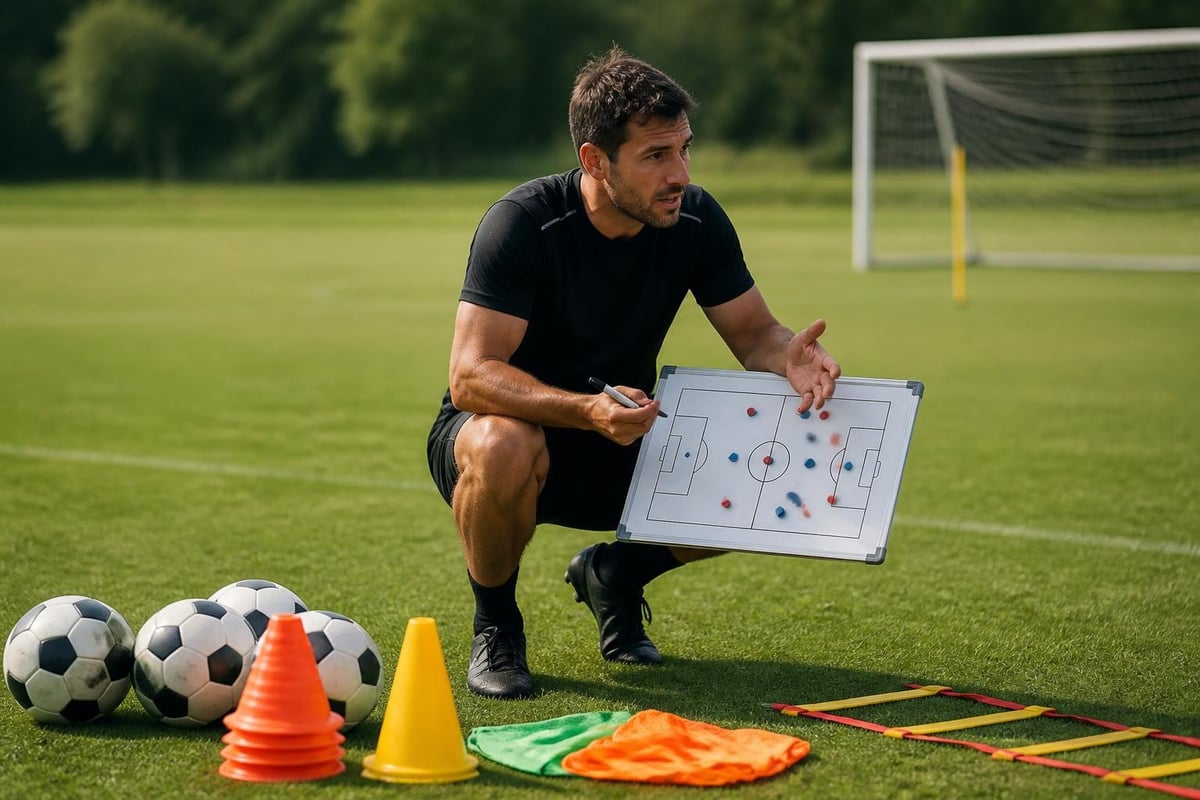
The right training equipment directly supports your defined objectives. If your goal centers on improving first-touch control under pressure, you'll need sufficient quality soccer balls, markers to create tight spaces, and possibly rebounders or training walls. When finishing accuracy represents the primary objective, appropriate goal nets and target zones become essential rather than optional.
Smart equipment choices eliminate the gap between what you plan and what you can execute. Schools and clubs working with constrained budgets benefit from prioritizing versatile training tools that serve multiple objective categories rather than specialized items with narrow applications.
Categories of Effective Soccer Training Goals
Soccer training goals typically fall into four primary categories: technical, tactical, physical, and psychological. Understanding these classifications helps coaches create balanced development programs that address all dimensions of player growth rather than overemphasizing isolated elements.
Technical Skill Objectives
Technical training goals focus on individual ball mastery and fundamental execution. These objectives address how cleanly players perform specific skills regardless of game context.
| Technical Category | Example Session Goal | Success Criteria |
|---|---|---|
| First Touch | Control bouncing balls with inside of foot | 8/10 successful cushioned receptions |
| Passing Accuracy | Complete 15-yard passes to partner's feet | 90% completion rate over 5 minutes |
| Shooting Technique | Strike low-driven shots with laces | Ball stays below crossbar height 7/10 attempts |
| Dribbling Moves | Execute step-over feint at speed | Successfully beat cone defender 6/8 repetitions |
Technical objectives work best when paired with clear success benchmarks. The U.S. Youth Soccer guide to writing training session plans provides practical templates showing how to define measurable criteria for technical skill goals across different age groups.
Tactical Understanding Goals
Tactical training goals address decision-making, positioning, and collective patterns. These objectives prepare players to recognize game situations and select appropriate actions.
Sessions focused on tactical development might target:
- Recognizing when to play forward versus when to maintain possession
- Understanding optimal body shape when receiving under pressure
- Coordinating defensive shifts as a unit when opponents switch play
- Timing runs to exploit space behind the defensive line
The FIFA Training Centre provides session examples that link tactical training goals to specific practice designs, demonstrating how to structure activities that develop game intelligence alongside technical execution.
Physical Conditioning Objectives
Physical training goals address the fitness qualities soccer demands: speed, agility, endurance, and strength. These objectives ensure players possess the athletic capacity to execute skills effectively throughout matches.
Common physical training goals include:
- Improving acceleration over the first five yards from a standing start
- Building aerobic capacity to maintain high-intensity running in final third of games
- Developing reactive agility to change direction efficiently when defending
- Increasing lower-body power for jumping in aerial duels
Research on typical weekly periodization in academy soccer reveals how elite programs distribute physical training goals across microcycles, balancing conditioning stimulus with technical work and recovery needs.
Psychological and Social Goals
Often overlooked, psychological training goals address mental skills, communication patterns, and team cohesion. These objectives recognize that soccer success depends on factors beyond physical and technical capabilities.
Sessions might target confidence building in 1v1 situations, developing positive communication habits during transitions, or building resilience when trailing on the scoreboard. Especially for youth players, social goals around sportsmanship and inclusive team culture often warrant deliberate practice time.
Structuring Progressive Soccer Training Goals Across Seasons
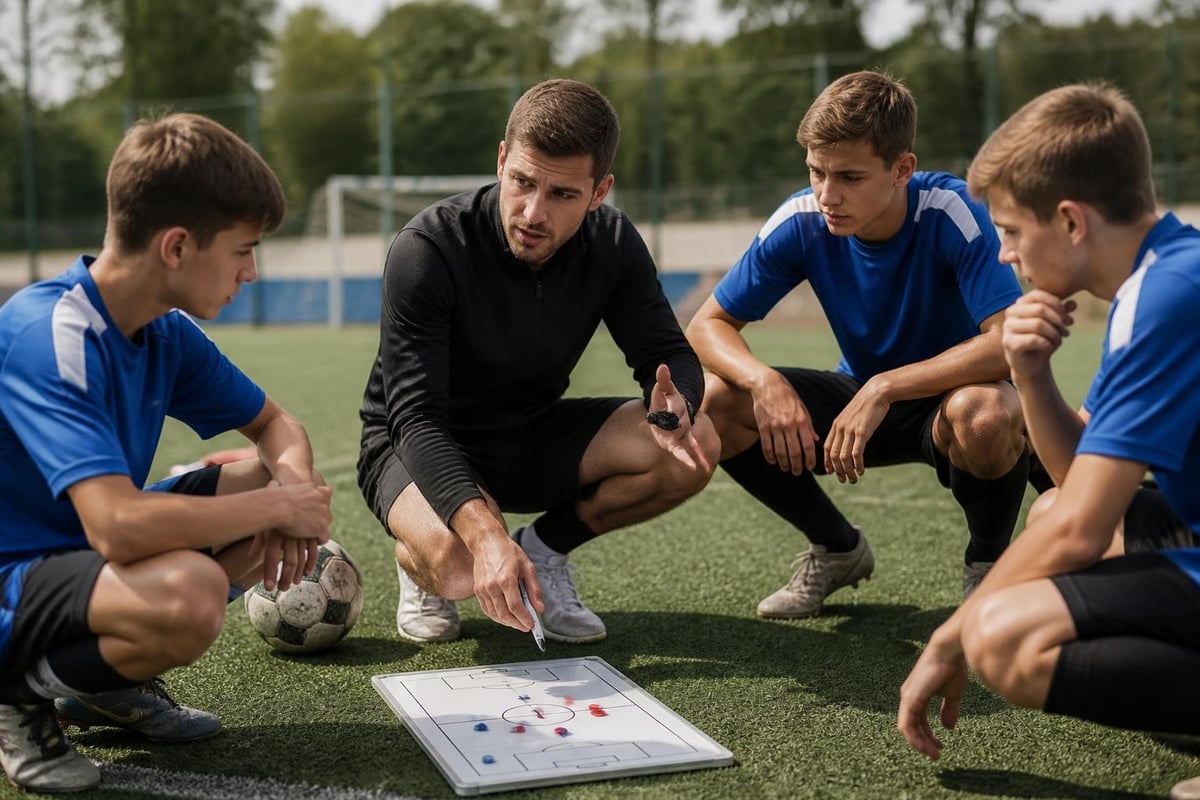
Effective long-term development requires linking individual session goals into coherent progressions. Random objectives selected week to week produce inconsistent development compared to carefully sequenced training goals that build systematically toward major competencies.
Periodization Frameworks for Skill Development
The PoST framework for skill training periodization offers coaches a structured approach to planning soccer training goals across different time scales. This methodology organizes objectives into macrocycles (season-long), mesocycles (multi-week blocks), and microcycles (weekly) that progress logically from foundation to refinement.
Sample progression for passing accuracy goals:
- Foundation phase (Weeks 1-3): Stationary passing to stationary targets at 10-15 yards
- Development phase (Weeks 4-6): Passing to moving teammates at same distances
- Application phase (Weeks 7-9): Combination passing under light defensive pressure
- Competition phase (Weeks 10-12): Executing passing patterns in small-sided games
Each phase builds on previous competencies while introducing appropriate new challenges. This systematic approach ensures players master fundamentals before progressing to complex applications.
Aligning Practice Goals With Competitive Schedule
Smart coaches align soccer training goals with upcoming match demands. If Saturday's opponent consistently presses high, Wednesday's practice objectives might emphasize playing out from the back under pressure. When facing a team that dominates possession, training goals might focus on compact defensive shape and counter-attacking transitions.
This context-specific approach makes training immediately relevant while maintaining focus on long-term development. Balance tactical preparation for upcoming matches with continued work on fundamental technical and physical objectives that support season-long growth.
Writing Specific, Measurable Training Session Objectives
Vague training goals produce vague outcomes. "Work on defending" lacks the clarity coaches need to design effective activities or assess whether practice succeeded. Contrast that with "Delay attackers for 4+ seconds in 1v1 situations to allow defensive support to arrive," which provides specific, observable success criteria.
The SMART Framework for Soccer Objectives
Applying SMART criteria (Specific, Measurable, Achievable, Relevant, Time-bound) transforms general intentions into actionable soccer training goals:
- Specific: Define exactly which skill or concept players will develop
- Measurable: Identify observable criteria indicating success or improvement
- Achievable: Ensure objectives match current player abilities with appropriate challenge
- Relevant: Connect goals to match performance or season development priorities
- Time-bound: Establish when players should demonstrate the targeted competency
An example SMART objective: "By the end of today's 60-minute session, defenders will successfully intercept or deflect 6 out of 10 through-ball attempts during the final small-sided game."
Communicating Goals to Players
Players perform better when they understand session objectives. Start each practice by clearly stating what you'll work on and why it matters for match performance. This transparency helps athletes stay focused during drills and recognize when they're executing correctly.
U.S. Soccer's coaching session plans demonstrate effective ways to communicate age-appropriate training goals using the Play-Practice-Play methodology, which frames objectives within game-realistic contexts that resonate with players.
Practical Applications for Different Coaching Contexts
Soccer training goals vary based on player age, competitive level, and program resources. Youth recreation coaches prioritize different objectives than high school varsity programs or competitive club teams preparing for regional tournaments.
Youth Development Training Goals
For players aged 6-12, soccer training goals emphasize fundamental technical skills, basic tactical concepts, and positive experiences that build long-term engagement. Sessions focus on individual ball mastery, simple decision-making in small spaces, and social skills like teamwork and sportsmanship.
The North Carolina Youth Soccer lesson plans library organizes age-appropriate session objectives around developmentally suitable themes such as "Create Chances" and "Finishing on Goal," providing grassroots coaches with ready-made training goals matched to youth capabilities.
Priority objectives for youth sessions:
- Comfortable dribbling with multiple surfaces of both feet
- Accurate short passing to teammates in various directions
- Understanding when to pass versus when to dribble
- Positive communication and encouraging teammates
- Basic positioning concepts for assigned roles
Equipment needs for youth training remain straightforward: age-appropriate soccer balls, markers for boundaries, and portable goals sized for player development. Many programs find success with versatile training gear from suppliers like Sideline Sport Supply that balance quality with budget constraints.
Competitive Team Training Objectives
Advanced programs serving competitive age groups and adult levels pursue more sophisticated soccer training goals that integrate multiple skill dimensions simultaneously. Sessions blend technical refinement with complex tactical patterns, position-specific development, and periodized physical conditioning.
| Level | Technical Focus | Tactical Focus | Physical Focus |
|---|---|---|---|
| U13-U15 | Receiving under pressure, combination play | Defensive shape, attacking thirds concepts | Speed development, aerobic base |
| U16-U18 | Position-specific techniques, set-piece execution | Team systems, transition speed | Power development, match conditioning |
| Adult/Senior | Maintaining skill under fatigue, specialized roles | System variations, opponent analysis | Injury prevention, recovery protocols |
High-level programs require more specialized equipment to support specific training goals: agility ladders for footwork objectives, resistance equipment for strength goals, GPS tracking for conditioning targets, and position-specific tools that match session focus areas.
Measuring Progress Toward Training Objectives
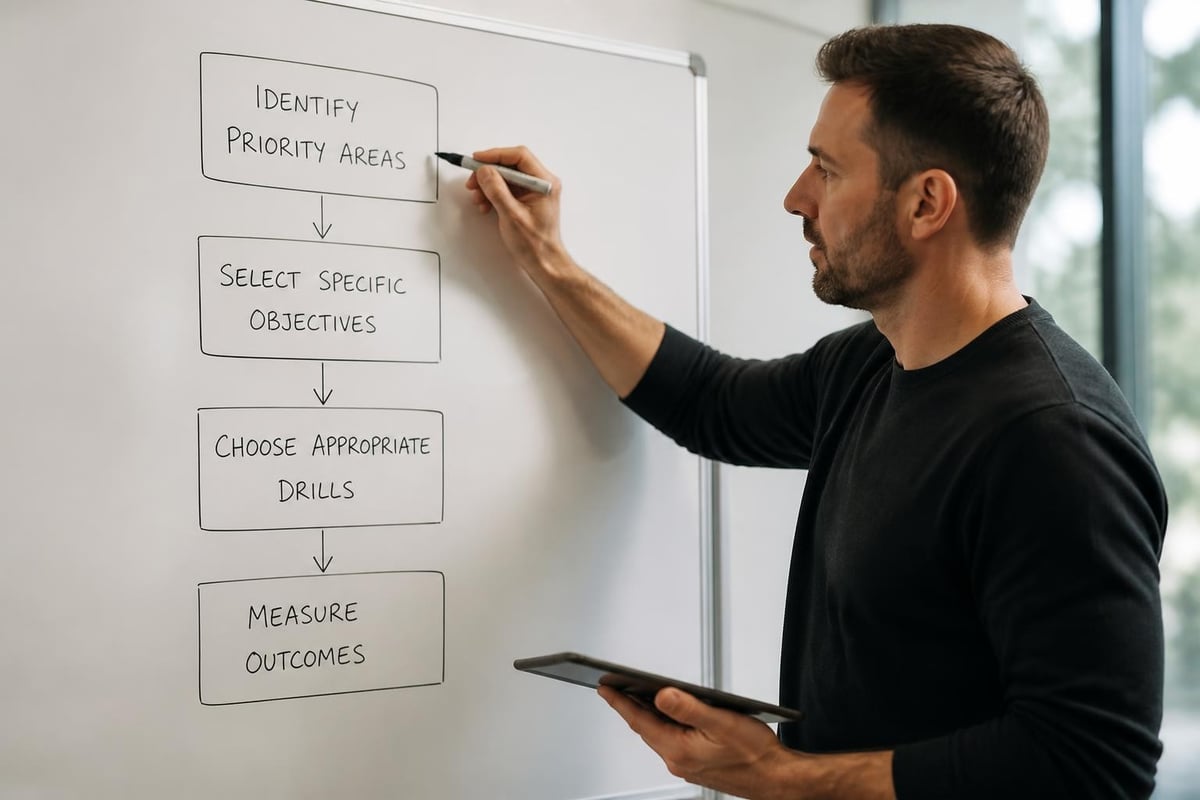
Establishing soccer training goals means nothing without systems to assess whether players achieve them. Measurement validates that practice time produces intended outcomes and reveals when adjustments are necessary.
Objective Assessment Methods
Different types of training goals require different measurement approaches:
Technical skill assessments use quantifiable performance tests. Track passing completion percentages during drills, count successful dribbling repetitions, or measure shooting accuracy against target zones. Video analysis allows frame-by-frame review of technique execution compared to proper form.
Tactical understanding assessments observe decision-making patterns during game-realistic scenarios. Small-sided games with specific constraints reveal whether players recognize situations and select appropriate actions. Post-session video review with players reinforces tactical concepts and measures comprehension.
Physical fitness assessments apply standardized tests matched to training goals. Sprint times measure speed development, yo-yo tests track endurance improvements, and agility protocols quantify change-of-direction capabilities. Regular testing at defined intervals documents progress.
Adjusting Goals Based on Results
Effective coaches use assessment data to refine future soccer training goals. When players consistently exceed objectives, increase difficulty or progress to the next developmental stage. When success rates fall below 60-70 percent, objectives may exceed current capabilities and require modification.
The UEFA Coaching Manual provides comprehensive guidance on stating session objectives, measuring outcomes, and adjusting coaching approaches based on player performance against established criteria.
Equipment Considerations for Training Goal Success
The right training equipment transforms abstract objectives into achievable practice activities. Coaches working with comprehensive resources can select specialized tools for specific goals, while those managing tighter budgets prioritize versatile equipment serving multiple objective categories.
Essential Multi-Purpose Training Gear
Core equipment supports the widest range of soccer training goals:
- Quality soccer balls (various sizes for different age groups) enable all technical skill objectives
- Disc markers and cones create boundaries, gates, and targets for countless drill variations
- Portable training goals allow finishing practice and small-sided games aligned with tactical objectives
- Pinnies/scrimmage vests facilitate team organization during tactical training and game scenarios
- Agility poles and hurdles support both technical footwork and physical conditioning goals
Programs serving multiple teams benefit from ordering in bulk from reliable suppliers. Many coaches appreciate working with straightforward athletic equipment providers that offer consistent quality without premium pricing that strains program budgets.
Specialized Equipment for Specific Objectives
Advanced training goals sometimes require specialized tools:
- Rebounders and training walls for first-touch repetitions without partners
- Resistance bands and parachutes for speed and power development goals
- Mannequins for set-piece organization and combination play patterns
- Portable speed gates for measuring and developing acceleration
- Weighted vests for strength endurance conditioning objectives
Before investing in specialized equipment, evaluate whether it addresses priority training goals for enough players to justify the cost. Many programs find better value dedicating resources to fundamental equipment that serves entire rosters rather than position-specific tools benefiting only a few athletes.
Integrating Training Goals With Game Performance Analysis
The ultimate measure of effective soccer training goals is match performance improvement. Connecting practice objectives to game outcomes completes the development cycle and validates that training time translates to competitive success.
Creating Feedback Loops
Systematic observation during matches reveals which training goals produce game-day transfer and which need adjustment. Track specific behaviors aligned with recent practice objectives: Are defenders successfully delaying attackers as trained? Do midfielders recognize when to play forward as practiced?
Maintain simple performance logs documenting key metrics:
- Passing completion rates in different field thirds
- Successful defensive actions per game (interceptions, tackles, blocks)
- Shots on target versus total shot attempts
- Successful dribbles in attacking third
- Set-piece conversion rates
Compare these metrics over time to identify trends correlating with training emphasis. Improving numbers validate that practice objectives align with competitive needs.
Player Self-Assessment and Goal Setting
Engage players in the goal-setting process by asking them to identify personal development priorities. Athletes often recognize their own areas needing improvement, and ownership of objectives increases motivation and focus during training sessions.
Create individual development plans linking personal goals to team training emphasis. A defender working on distribution might have supplementary objectives within sessions focused on playing out from the back. A forward targeting finishing might pursue extra repetitions during shooting practice.
Common Mistakes When Setting Soccer Training Goals
Even experienced coaches sometimes create objectives that undermine rather than support player development. Recognizing these pitfalls helps avoid wasted practice time.
Overly ambitious objectives that exceed player capabilities lead to frustration and reduced confidence. Training goals should stretch players appropriately without overwhelming them. If success rates consistently fall below 50 percent, objectives need adjustment.
Vague, unmeasurable goals like "get better at passing" provide no clear success criteria and prevent meaningful assessment. Every objective needs observable, quantifiable indicators.
Neglecting prerequisite skills creates artificial ceilings on progress. Players can't master tactical patterns requiring technical skills they haven't developed. Ensure training goal progressions respect developmental sequences.
Ignoring individual differences by applying identical objectives to players at different skill levels wastes potential. Differentiate expectations within sessions, allowing advanced players to pursue stretch goals while supporting developing athletes with appropriate challenges.
Training goals disconnected from game demands produce skills that don't transfer to matches. Constantly ask whether objectives address real competitive situations players will encounter.
Seasonal Planning: Mapping Training Goals to Development Phases
Annual training plans organize soccer training goals into logical sequences that build throughout the season. This macro-level perspective ensures balanced development across all competency areas while allowing appropriate emphasis at different times.
Pre-Season Foundation Building
Early season training goals emphasize fitness development, technical refreshers, and establishing team culture. Physical objectives focus on building aerobic base and movement quality before introducing high-intensity work. Technical goals return to fundamentals, ensuring proper mechanics before advancing to complex patterns.
Typical pre-season objective priorities:
- Develop aerobic capacity supporting match-level running demands
- Review and refine basic technical skills with both feet
- Establish communication patterns and team organization principles
- Build cohesion through small-sided games emphasizing cooperation
In-Season Refinement and Specialization
Once competition begins, training goals shift toward tactical preparation, maintaining fitness levels, and refining execution under pressure. Sessions balance recovery needs with continued development, carefully managing training load to keep players fresh for matches.
Position-specific objectives become more prominent as players master general skills and specialize in their roles. Defenders might focus on distribution and positioning, while attackers emphasize finishing and creating separation from markers.
Post-Season Recovery and Future Planning
After competitive seasons end, training goals address recovery, skill maintenance, and preparing for the next cycle. Lower-intensity objectives allow physical and mental recovery while keeping players engaged with the game.
This period offers opportunities to experiment with new positions, work on individual technical weaknesses without competitive pressure, or introduce tactical concepts that will feature prominently in upcoming seasons.
Building a Culture of Purposeful Practice
Beyond individual session objectives, successful programs cultivate an environment where purposeful training becomes the expectation. Players learn to approach every drill with specific intent, understanding that mindless repetition produces limited development compared to focused practice pursuing clear goals.
Coaches reinforce this culture by consistently communicating objectives, explaining how drills connect to match situations, and celebrating progress toward defined targets. Over time, athletes internalize the habit of purposeful practice and begin self-coaching, identifying their own technical weaknesses and tactical gaps requiring attention.
This mindset shift represents the ultimate return on investment for time spent developing thoughtful soccer training goals. Players who understand objective-driven training carry that approach into individual practice, accelerating development beyond structured team sessions.
Setting clear, measurable soccer training goals separates purposeful development from unstructured activity, ensuring every practice session advances player capabilities and team performance. Whether you're equipping a youth recreation program, a competitive club, or a school team, having the right training gear supports the specific objectives you've defined for skill development, tactical understanding, and physical conditioning. Sideline Sport Supply provides the reliable, affordable equipment coaches need to execute effective training sessions without budget constraints limiting player development. From fundamental practice tools to specialized training equipment, our straightforward approach to quality and pricing helps programs focus resources where they matter most: on the field, working toward goals that build better players and stronger teams.