

Shop for Football: Essential Gear for Teams and Athletes
When you shop for football, you're making decisions that directly impact player performance, safety, and team readiness. Whether you're outfitting an entire high school program, replacing worn practice equipment, or preparing for a new season, understanding what to purchase and when to buy it makes a significant difference in both budget and player preparedness. Athletic directors, coaches, and equipment managers face constant pressure to balance cost with quality while ensuring every piece of gear meets current safety standards and performance requirements.
Understanding Football Equipment Essentials
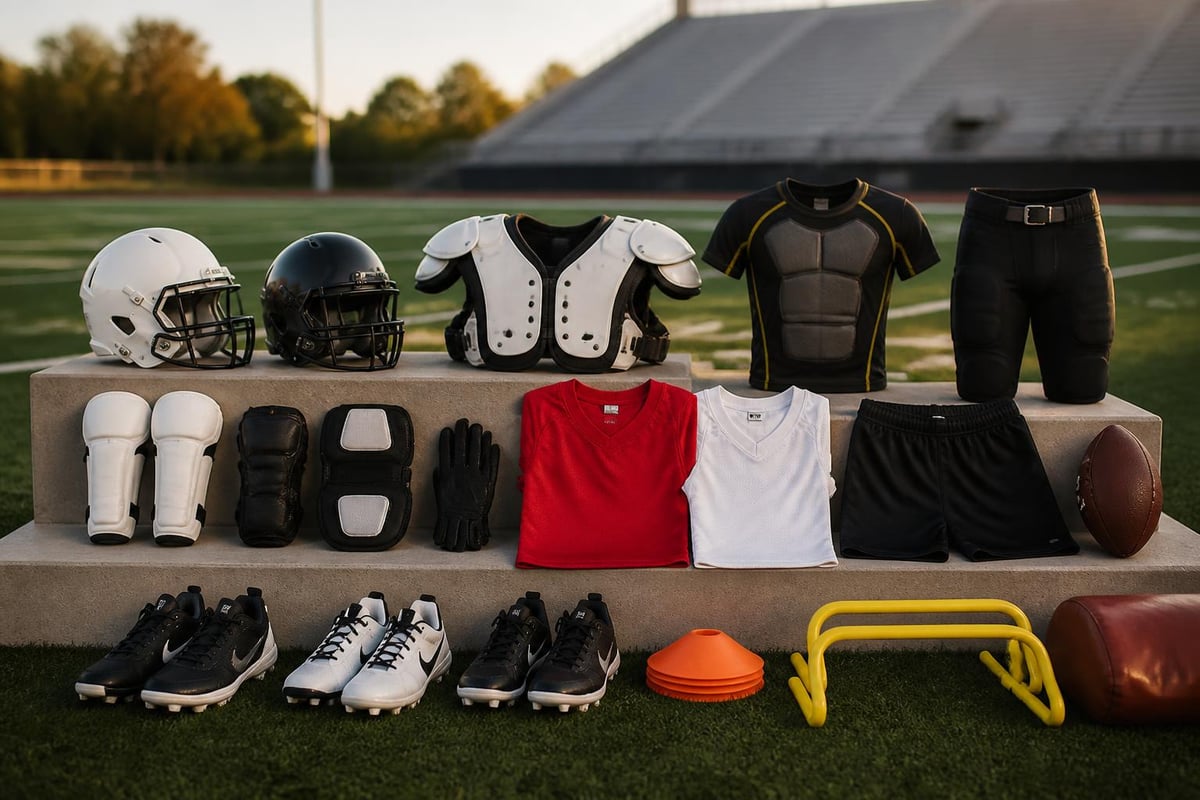
Every football program requires specific equipment categories to operate safely and effectively. The foundation includes helmets, shoulder pads, practice jerseys, game uniforms, cleats, and protective padding. Each category serves distinct purposes and carries different replacement cycles based on usage intensity and regulatory requirements.
Mandatory Player Equipment
According to official equipment regulations from The Football Association, players must wear specific items that meet established safety standards. When you shop for football equipment, prioritize these mandatory items first:
- Helmets with face masks (certified to current safety standards)
- Shoulder pads (properly fitted and in good condition)
- Mouthguards (required at all competitive levels)
- Athletic supporters and protective cups (mandatory for contact positions)
- Cleats (appropriate for playing surface)
Beyond mandatory equipment, programs need training tools that enhance skill development. Training dummies like the Varsity Pop-Up Dummy provide safe tackling practice while reducing player-to-player contact during drills, extending both equipment lifespan and reducing injury risk.
Building a Complete Equipment Inventory
Creating a comprehensive equipment inventory requires strategic planning across multiple categories. Start by assessing current inventory condition, identifying immediate replacement needs, and projecting future requirements based on roster size and program growth.
Position-Specific Requirements
Different positions demand specialized equipment considerations. Linemen require reinforced shoulder pads and additional padding, while skill position players prioritize lighter, more mobile protection. Quarterbacks often need additional rib protection, and kickers require specialized footwear.
| Position Group | Primary Equipment Focus | Secondary Considerations |
|---|---|---|
| Offensive Line | Heavy-duty shoulder pads, neck rolls | Hand protection, lineman gloves |
| Skill Positions | Lightweight pads, speed cleats | Receiver gloves, arm sleeves |
| Defensive Backs | Mobility-focused pads | Coverage gloves, compression gear |
| Specialists | Position-specific footwear | Holder gloves, compression sleeves |
When you shop for football gear across multiple positions, bulk purchasing from a single supplier often reduces costs while ensuring consistent quality standards. This approach also simplifies reordering and warranty management throughout the season.
Practice vs. Game Equipment
Distinguishing between practice and game equipment helps manage budgets effectively. Practice jerseys withstand daily wear and frequent washing, while game uniforms require premium materials and detailed customization. Similarly, practice helmets may use previous-generation models that still meet safety standards, while game helmets feature the latest protection technology.
The National Federation of State High School Associations emphasizes proper equipment maintenance, highlighting that well-maintained practice equipment performs better and lasts longer than neglected gear, regardless of initial quality.
Safety Standards and Compliance
Safety represents the non-negotiable foundation when you shop for football equipment. All protective gear must meet or exceed current certification standards established by organizations like NOCSAE (National Operating Committee on Standards for Athletic Equipment) and governing bodies specific to your competition level.
Helmet Certification and Recertification
Helmets require annual recertification to remain compliant with safety regulations. Track certification dates meticulously, and budget for recertification costs as part of annual equipment expenses. Most programs replace helmets on a rotating five-to-seven-year cycle, with recertification occurring annually between replacements.
Budget approximately 15-20% of your initial helmet investment for annual recertification services. Programs operating on tight budgets should prioritize helmet quality and certification over cosmetic features or team branding elements.
Shoulder Pad Inspection Requirements
Shoulder pads require regular inspection for cracks, compression damage, and strap deterioration. Replace pads showing structural damage immediately, regardless of age. During pre-season equipment distribution, inspect every shoulder pad set and document condition to establish replacement priorities.
Historical context on football equipment safety demonstrates how standards have evolved, emphasizing why purchasing certified equipment from reputable suppliers protects both players and programs from liability concerns.
Strategic Purchasing Timing
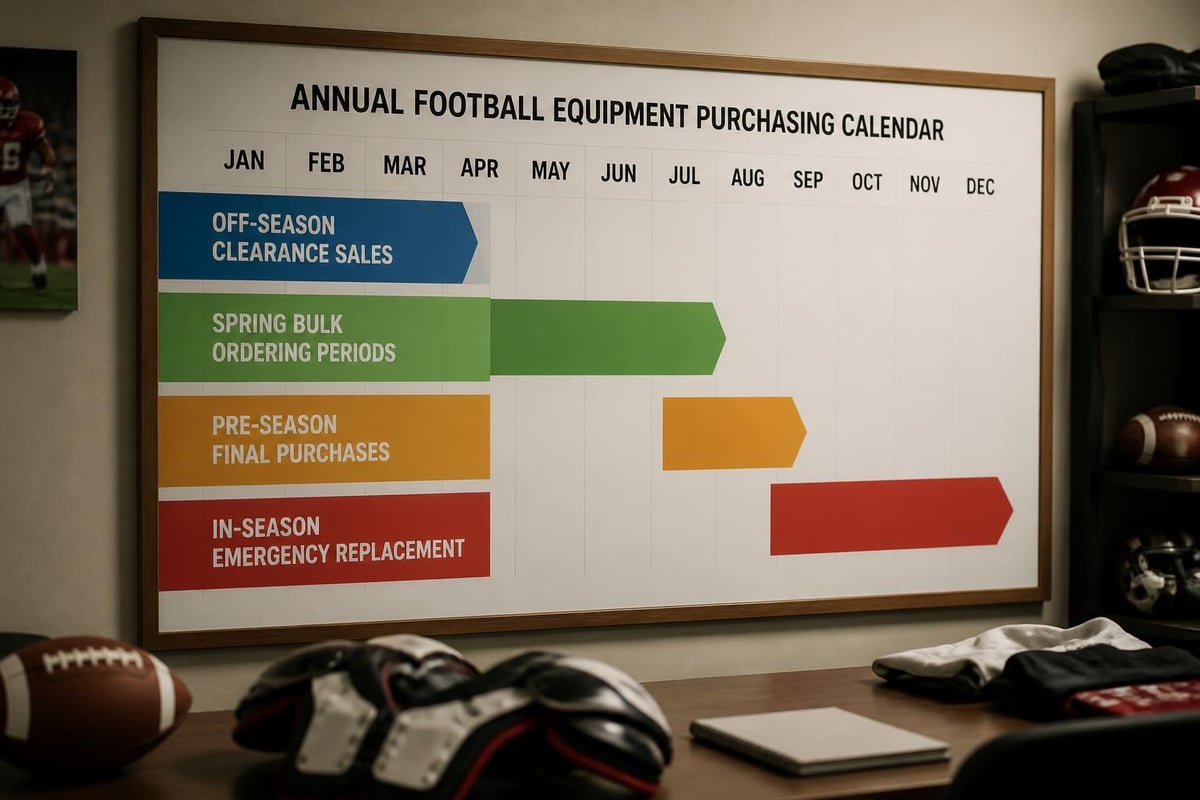
Timing purchases strategically reduces costs significantly. The football equipment market follows predictable pricing cycles, with substantial discounts available during specific periods throughout the year.
Off-Season Purchasing Advantages
January through April represents the optimal window to shop for football equipment at reduced prices. Manufacturers and suppliers clear inventory during these months, offering discounts ranging from 20% to 40% on previous-season models and bulk orders.
- Post-season clearance sales (January-February)
- Spring purchasing incentives (March-April)
- Early-order discounts (May-June)
- Back-to-school promotions (July-August)
Programs with storage capacity benefit most from off-season purchasing. However, ensure sufficient space to store equipment properly, as improper storage damages gear and negates cost savings from discounted purchases.
Budget Management Strategies
Athletic budgets rarely cover every desired equipment purchase, making strategic budget allocation essential. Prioritize spending on safety-critical items first, then allocate remaining funds toward performance enhancement and convenience items.
Cost Prioritization Framework
Establish a three-tier priority system when you shop for football equipment:
Tier 1: Safety-Critical Equipment
- Helmets and reconditioning
- Shoulder pads and protective padding
- Mouthguards and cups
Tier 2: Essential Performance Equipment
- Practice and game uniforms
- Appropriate footwear
- Position-specific protective gear
Tier 3: Enhancement Equipment
- Training aids and dummies
- Specialized position equipment
- Comfort and convenience items
This framework ensures fundamental safety and performance needs receive funding before discretionary purchases. Training equipment like the Pro Pop-Up Dummy falls into Tier 3 but provides significant value by reducing wear on primary protective equipment during contact drills.
Multi-Year Planning
Develop a three-to-five-year equipment replacement plan that distributes major purchases across multiple budget cycles. Replace one-third of helmets annually rather than the entire inventory every three years, smoothing budget impact while maintaining compliance with safety standards.
| Year | Helmet Replacement | Shoulder Pad Replacement | Uniform Refresh |
|---|---|---|---|
| 2026 | 33% of inventory | 25% of inventory | Practice jerseys |
| 2027 | 33% of inventory | 25% of inventory | Home uniforms |
| 2028 | 34% of inventory | 25% of inventory | Away uniforms |
| 2029 | Recertification cycle | 25% of inventory | Practice jerseys |
Vendor Selection and Relationships
Choosing the right equipment supplier impacts more than initial purchase prices. Consider delivery reliability, return policies, warranty support, and technical expertise when evaluating vendors.
Key Vendor Evaluation Criteria
When you shop for football equipment, assess potential suppliers across multiple dimensions:
- Product quality consistency across price points
- Delivery timelines and rush-order capabilities
- Return and exchange policies for sizing issues
- Warranty coverage and claim processes
- Technical support for fitting and maintenance questions
- Bulk pricing structures and volume discounts
Building relationships with reliable suppliers provides advantages beyond pricing. Established vendors often accommodate emergency orders, provide sizing expertise, and alert programs to upcoming sales or closeout opportunities.
Local vs. National Suppliers
Local suppliers offer immediate access and personalized service, while national suppliers typically provide broader selection and competitive pricing. Many successful programs maintain relationships with both, using local suppliers for emergency replacements and immediate needs while leveraging national suppliers for bulk orders and significant purchases.
Footwear Selection and Surface Considerations
Football cleats represent one of the most frequently replaced equipment items due to wear patterns and performance requirements. The Associated Press reports on playing surface standards that affect footwear selection, emphasizing how surface type influences cleat requirements.
Matching Cleats to Playing Surfaces
Different playing surfaces require specific cleat configurations. Natural grass accommodates traditional molded or detachable cleats, while synthetic turf demands specialized turf shoes with shorter, more numerous studs. When you shop for football cleats, consider:
Natural Grass Fields:
- Molded cleats for general conditions
- Detachable cleats for variable weather
- Longer studs for soft or wet conditions
Synthetic Turf Fields:
- Turf-specific shoes with rubber studs
- Shorter stud length to prevent excessive traction
- Higher stud count for stability
Multi-Surface Programs:
- Separate footwear inventories for each surface
- Player education on appropriate cleat selection
- Enforcement of surface-specific footwear rules
Programs alternating between surface types need adequate footwear inventory for each environment. Budget for dual footwear sets when facilities include both natural and synthetic surfaces.
Sizing and Fitting Protocols
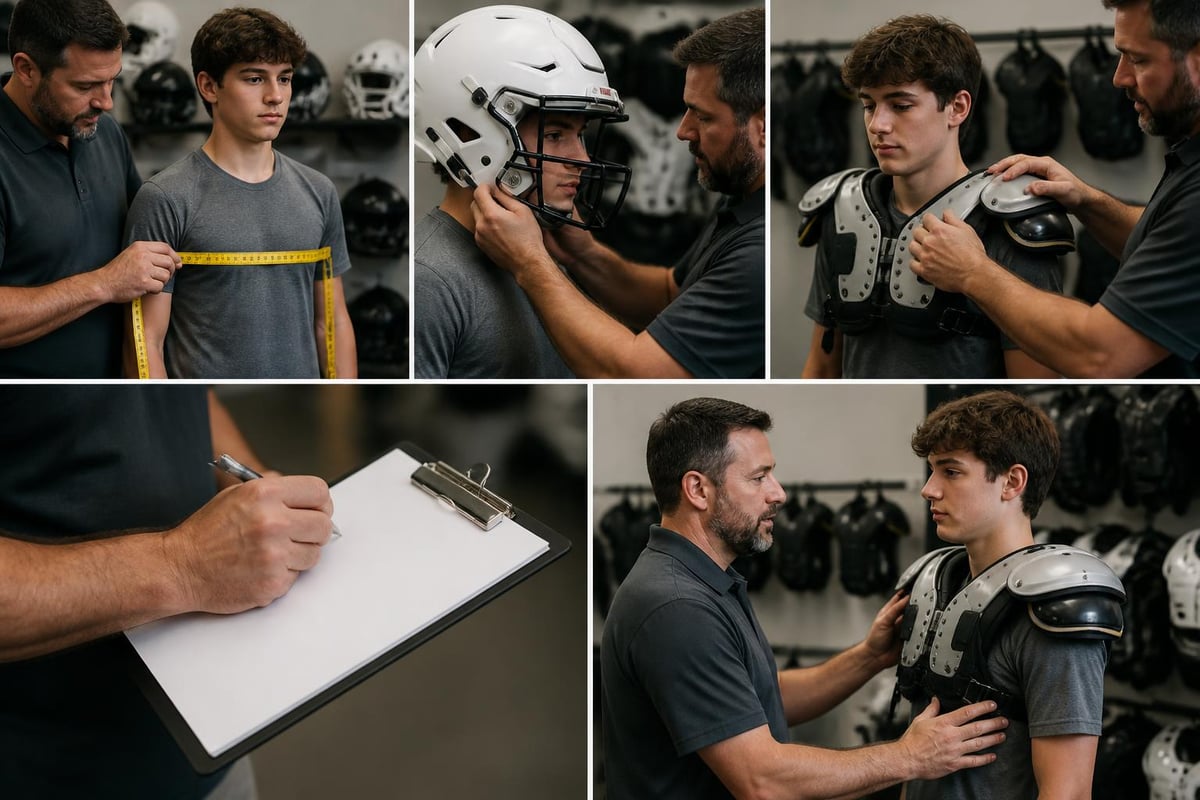
Proper equipment fitting affects both safety and performance. Ill-fitting equipment compromises protection, causes discomfort, and increases injury risk. Establish systematic fitting protocols during equipment distribution and maintain detailed sizing records for future purchases.
Helmet Fitting Guidelines
Helmets require the most precise fitting of any football equipment. Follow manufacturer specifications exactly, and never compromise fit to accommodate inventory limitations. A properly fitted helmet should:
- Sit level on the head with the front edge one inch above eyebrows
- Create snug contact around the entire circumference
- Prevent excessive forward, backward, or side-to-side movement
- Maintain firm contact with cheek pads
- Allow no gap between forehead and padding
Document each player's helmet size, manufacturer, and model to expedite replacement or recertification processes. This information proves invaluable when you shop for football equipment during mid-season or for incoming players.
Shoulder Pad Fitting Process
Shoulder pads protect the collarbone, shoulders, and upper back. Proper fit allows full range of motion while maintaining coverage during contact. Quality shoulder pads should:
- Extend approximately one inch beyond the edge of shoulders
- Cover the collarbone and shoulder blade completely
- Allow unrestricted arm movement in all directions
- Maintain position during athletic movements
- Provide adequate neck protection without restricting head mobility
Position-specific shoulder pads balance protection with mobility requirements. Skill position players prioritize movement freedom, while linemen emphasize maximum protection. Stock multiple styles to accommodate these varying needs when you shop for football equipment.
Maintenance and Longevity
Equipment maintenance extends useful life, improves performance, and reduces replacement frequency. Implement systematic cleaning, inspection, and repair protocols to maximize equipment investment returns.
Regular Cleaning Schedules
Establish daily, weekly, and seasonal cleaning routines for different equipment categories:
Daily Maintenance:
- Wipe down helmets and face masks
- Air out shoulder pads and padding
- Sanitize practice jerseys
Weekly Maintenance:
- Deep clean helmets and hardware
- Inspect padding for damage
- Check strap integrity and function
Seasonal Maintenance:
- Professional reconditioning for helmets
- Comprehensive equipment inventory audit
- Deep cleaning and storage preparation
Proper storage during off-season prevents degradation. Store equipment in climate-controlled environments away from direct sunlight, moisture, and extreme temperatures. Hang shoulder pads rather than stacking them to maintain shape and prevent compression damage.
Repair vs. Replace Decisions
Determine whether to repair or replace damaged equipment based on safety implications, repair costs, and remaining useful life. Always replace safety-critical equipment showing structural damage, regardless of repair feasibility or cost.
Minor repairs like strap replacement, chin strap updates, or face mask adjustments extend equipment life cost-effectively. However, cracked helmet shells, compressed padding, or fractured shoulder pad frames require immediate replacement without exception.
Uniform and Apparel Considerations
Uniforms represent team identity while serving functional purposes. When you shop for football uniforms, balance aesthetics with durability, comfort, and maintenance requirements.
Practice Jersey Durability
Practice jerseys endure significantly more wear than game uniforms. Invest in durable, reversible practice jerseys that withstand frequent washing and intensive use. Quality practice jerseys should:
- Feature reinforced stitching at stress points
- Use moisture-wicking fabrics for comfort
- Provide reversible designs for scrimmage organization
- Maintain color integrity through repeated washing
- Offer adequate sizing range for roster variations
Purchase practice jerseys in bulk quantities to ensure adequate rotation during intensive practice periods. Most programs maintain a 1.5:1 ratio of practice jerseys to active roster size, allowing for laundry cycles and emergency replacements.
Game Uniform Investment
Game uniforms command premium pricing but require fewer units than practice apparel. Most programs maintain two complete uniform sets (home and away) with limited backup inventory. When selecting game uniforms, prioritize:
- Fabric quality and construction durability
- Color fastness and appearance retention
- Customization quality (numbers, names, logos)
- Sizing consistency across seasons for reorders
- Manufacturer availability for future additions
Training Equipment and Facility Needs
Beyond player-worn equipment, successful programs require training aids that develop skills safely and efficiently. Resources on setting appropriate training goals help programs identify which training equipment provides maximum developmental value.
Essential Training Tools
When you shop for football training equipment, focus on versatile tools that serve multiple practice objectives:
- Blocking sleds for line technique development
- Tackling dummies for contact skill building
- Agility ladders and cones for footwork training
- Resistance training equipment for strength development
- Video analysis tools for technique refinement
Training equipment typically requires less frequent replacement than player-worn gear but demands similar quality standards. Poorly constructed training aids create safety hazards and provide limited developmental value.
Facility Surface Quality
Field surface quality affects both equipment performance and player safety. Whether natural grass or synthetic turf, maintain surfaces according to manufacturer specifications and safety guidelines. Poor surface conditions accelerate equipment wear, particularly footwear, while increasing injury risk regardless of protective equipment quality.
Team Orders and Bulk Purchasing
Bulk purchasing reduces per-unit costs substantially but requires careful planning around sizing, inventory management, and budget allocation. Coordinate team orders to maximize volume discounts while avoiding excessive inventory that strains storage or becomes obsolete.
Optimal Order Quantities
Calculate order quantities based on current roster size, anticipated growth, and typical replacement rates:
Helmets: Order 110-115% of current roster size to accommodate mid-season additions and emergency replacements.
Shoulder Pads: Order 105-110% of roster size, with excess inventory focused on common sizes.
Practice Jerseys: Order 150-175% of roster size to maintain adequate rotation during intensive practice periods.
Game Uniforms: Order 100-105% of roster size, with minimal excess inventory due to customization costs.
Communicate with suppliers about minimum order quantities for bulk pricing. Many suppliers offer significant discounts at specific quantity thresholds, making slightly larger orders more cost-effective than precise roster matches.
Group Purchasing Advantages
Multiple programs or schools purchasing together leverage collective volume for enhanced discounts. Regional athletics conferences or district-level purchasing cooperatives negotiate favorable pricing that individual programs cannot achieve independently. Explore cooperative purchasing opportunities within your athletic organization or geographic region.
Online vs. In-Person Purchasing
When you shop for football equipment, channel selection impacts both convenience and capability to evaluate products before purchase. Online shopping provides broader selection and convenient price comparison, while in-person shopping enables hands-on evaluation and immediate acquisition.
Online Shopping Benefits
Online channels excel for:
- Price comparison across multiple suppliers
- Product research through reviews and specifications
- Bulk ordering with direct delivery
- Off-season purchasing when local inventory is limited
- Specialized equipment unavailable locally
However, online purchasing requires precise sizing knowledge and carries return shipping costs for incorrect selections. Establish accurate sizing records before online ordering to minimize return frequency.
In-Person Shopping Advantages
Physical retailers provide:
- Immediate product evaluation and quality assessment
- Expert fitting assistance from knowledgeable staff
- Instant acquisition without shipping delays
- Easy returns or exchanges for sizing adjustments
- Relationship building with local suppliers
For initial equipment purchases or when introducing new equipment categories, in-person shopping reduces risk through direct evaluation and expert consultation. The Pro:Direct Soccer boot selection guide demonstrates how guided selection processes help match equipment to specific needs, value available through quality in-person retail experiences.
Emergency Replacement Planning
Despite careful planning, equipment emergencies occur. Helmets crack during practice, shoulder pads fail, and cleats tear at inopportune moments. Maintain emergency replacement inventory for critical equipment categories and establish rapid procurement relationships with local suppliers.
Emergency Inventory Recommendations
Stock emergency replacements for items most prone to unexpected failure:
| Equipment Category | Emergency Stock Level | Storage Requirements |
|---|---|---|
| Helmets | 2-3 units in common sizes | Climate-controlled, protected |
| Shoulder Pads | 2-3 sets in medium/large | Hanging storage preferred |
| Practice Jerseys | 10-15% of roster size | Clean, dry location |
| Cleats | 3-5 pairs in common sizes | Dry storage, organized by size |
| Mouthguards | 2 dozen minimum | Sealed, sanitary packaging |
Emergency inventory represents insurance against disruption. Calculate emergency stock costs as part of overall equipment budgets rather than treating unexpected purchases as budget overruns.
Rapid Procurement Protocols
Identify local suppliers capable of same-day or next-day fulfillment for emergency needs. Establish accounts and purchasing authority before emergencies occur to expedite acquisition when time is critical. Many programs maintain purchasing cards or pre-authorized orders for qualified equipment managers to access emergency inventory without administrative delays.
Successfully equipping a football program requires balancing safety standards, performance needs, and budget realities across multiple equipment categories and purchasing decisions. From helmets and protective padding to training aids and facility equipment, each purchase contributes to player development, team safety, and program success. Whether you're preparing for a new season, replacing worn equipment, or building inventory from scratch, Sideline Sport Supply provides reliable, game-ready football equipment backed by straightforward pricing and fast fulfillment, so your team can focus on what matters most: playing the game.