

Hockey Equipment Guide for Teams & Players in 2026
Selecting the right hockey equipment represents one of the most critical decisions for players, coaches, and athletic directors managing team budgets and safety requirements. Whether outfitting a youth league, high school program, or competitive club team, understanding the components, safety standards, and maintenance requirements of hockey gear ensures athletes can perform at their best while minimizing injury risks. From protective padding to specialized goalie equipment, each piece serves a specific purpose in creating a complete system that supports player development and competitive performance.
Understanding Essential Player Equipment Categories
Hockey equipment falls into distinct categories based on protection zones and player positions. The foundation starts with protective gear worn directly on the body, followed by outer equipment and accessories.
Core protective components include helmets with face protection, shoulder pads, elbow pads, gloves, pants (breezers), shin guards, and skates. Each item must meet certification standards established by organizations like the Hockey Equipment Certification Council, which develops testing protocols to reduce injury risks. The certification process evaluates impact resistance, durability, and protective coverage to ensure equipment performs under game conditions.
Protective Padding Systems
Modern hockey equipment features advanced padding technologies that balance protection with mobility. Shoulder pads use multi-density foam systems that absorb high-impact collisions while allowing full range of motion for shooting and skating. Elbow pads incorporate hard plastic caps over cushioned padding to protect joints during falls and checks.
Hockey pants combine rigid plastic inserts with foam padding across the kidneys, thighs, and tailbone. This design philosophy appears throughout player equipment: hard exterior shells deflect impact forces while interior padding absorbs and distributes energy across larger surface areas.
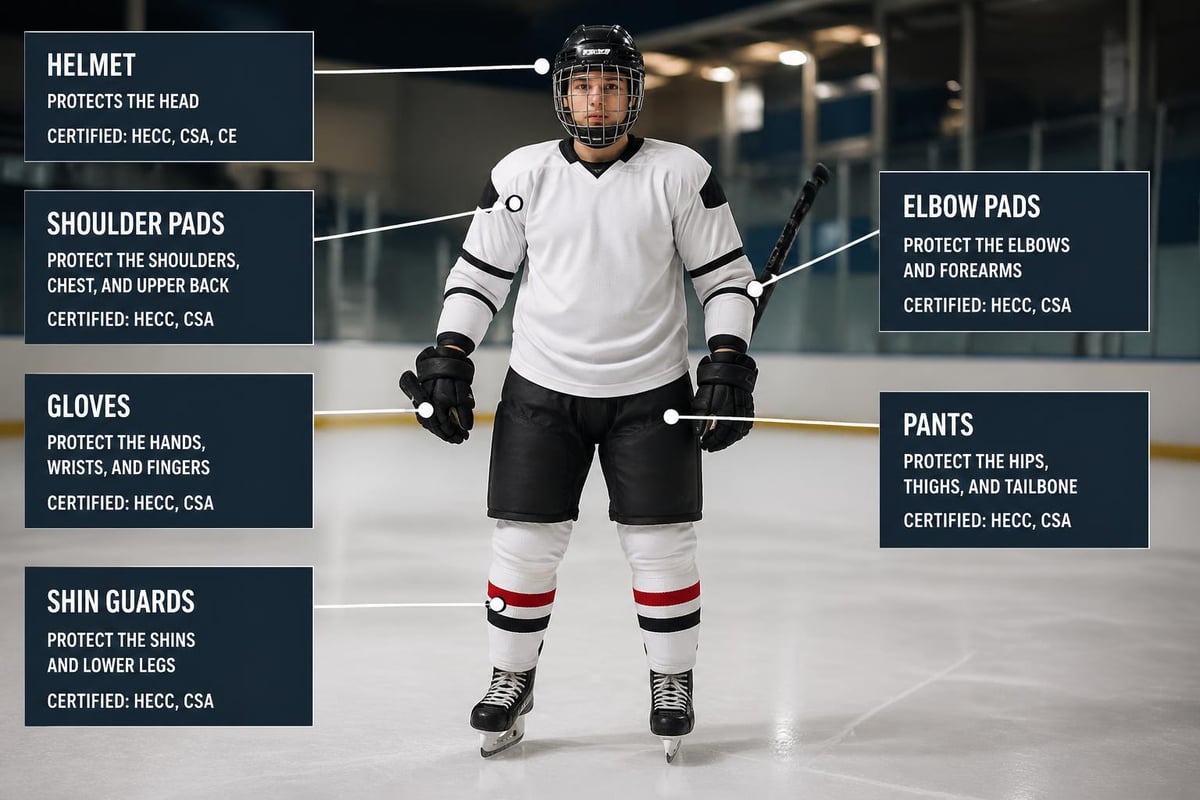
| Equipment Piece | Primary Protection Zone | Key Features | Certification Required |
|---|---|---|---|
| Helmet | Head, temples, skull | Multi-impact foam, tool-free adjustment | CSA, HECC, CE |
| Shoulder Pads | Chest, shoulders, spine | Segmented design, ventilation channels | Voluntary standards |
| Elbow Pads | Forearms, elbows | Articulated joints, slash protection | Voluntary standards |
| Gloves | Hands, wrists, fingers | Reinforced palms, mobility cuffs | Voluntary standards |
| Hockey Pants | Hips, thighs, kidneys, tailbone | Adjustable fit, ventilated panels | Voluntary standards |
| Shin Guards | Shins, knees, calves | Anatomical wraps, knee protection | Voluntary standards |
Helmet and Face Protection Requirements
Head protection represents the most critical component in any hockey equipment setup. USA Hockey safety standards mandate helmets meeting specific certification criteria, with expiration dates clearly marked on the interior label. Most helmets remain certified for five to ten years from manufacture date, though replacement should occur sooner if the helmet sustains significant impact.
Face protection varies by age group and league rules. Full cages provide maximum protection for youth and junior players, while half shields and full shields offer options for older age groups where permitted. The Vancouver Minor Hockey Association equipment guidelines specify that all players must wear CSA-approved helmets with full facial protection through specific age divisions.
Proper helmet fitting involves:
- Measuring head circumference at the widest point
- Adjusting internal padding for snug contact without pressure points
- Testing stability by shaking head side-to-side and forward-backward
- Ensuring two-finger clearance above eyebrows
- Verifying chin strap creates V-shape under ears when fastened
Athletes should never wear helmets past expiration dates or after sustaining major impacts, even if visible damage isn't apparent. Internal foam compression reduces protective capabilities over time and through repeated impacts.
Skate Selection and Fitting Fundamentals
Skates form the foundation of hockey performance, directly affecting speed, agility, and stability. Modern hockey equipment in this category features thermoformable boots that mold to individual foot shapes, providing customized support unavailable in previous generations.
Quality skates feature several key components: reinforced quarters for ankle support, moisture-wicking liners, steel or composite holders, and replaceable runner blades. Boot stiffness varies by skill level, with stiffer constructions supporting advanced players who generate greater forces during skating movements.
Sizing and Break-In Process
Unlike casual footwear, hockey skates should fit snugly with toes barely brushing the cap when standing. When players assume a skating stance with knees bent, toes should pull back slightly from the toe cap. This precise fit prevents blisters, supports quick directional changes, and maximizes power transfer through each stride.
The break-in period typically requires 5-10 skating sessions as boot materials conform to foot contours. Heat molding accelerates this process by warming thermoplastic materials before skating, creating custom fits in single sessions. For teams managing fitness and training equipment budgets, understanding proper skate care extends equipment lifespan and maintains performance characteristics.
Goalie Equipment Specifications
Goaltender equipment differs substantially from player gear, prioritizing maximum coverage over mobility. The Ontario Provincial Hockey League equipment guide details goalie-specific requirements including leg pads, chest protectors, blockers, catching gloves, and specialized masks.
Goalie leg pads measure from 33 to 38 inches for adult players, with sizing based on floor-to-knee measurements rather than height alone. Modern pads feature butterfly-optimized designs with reinforced knee blocks and thigh rises that seal the five-hole when goalies drop into butterfly position.
Chest and arm protection for goalies provides significantly more coverage than player shoulder pads. These systems include integrated belly protection, extended shoulder caps, and forearm shields designed to deflect pucks traveling at speeds exceeding 100 mph.
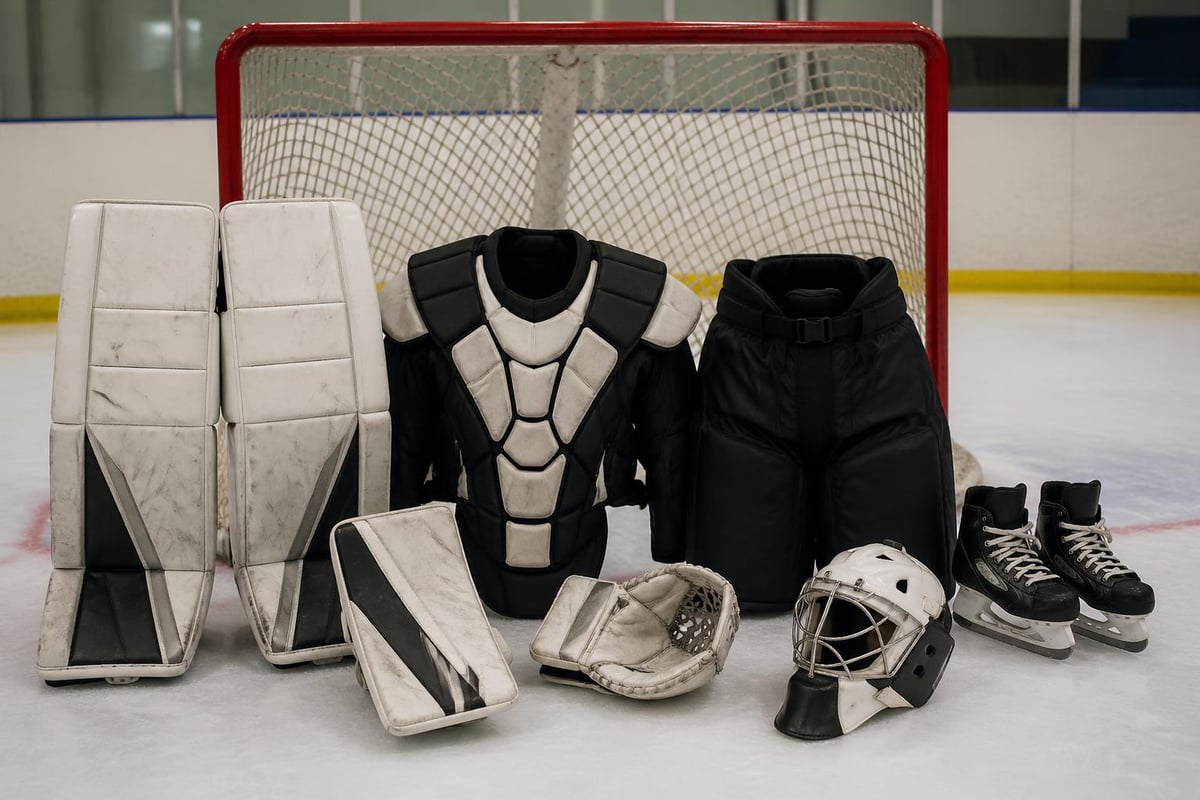
| Goalie Equipment | Size Range | Primary Function | Replacement Cycle |
|---|---|---|---|
| Leg Pads | 33"-38" | Shot blocking, butterfly coverage | 2-4 years |
| Chest Protector | S-XXL | Upper body protection | 3-5 years |
| Blocker | 8"-10" | Shot deflection, stick protection | 2-3 years |
| Catching Glove | 8"-10" | Shot catching, hand protection | 2-3 years |
| Goalie Mask | Custom fit | Head and face protection | 3-5 years or after impact |
| Goalie Pants | S-XXL | Hip and thigh protection | 3-5 years |
Sticks and Accessories for Complete Systems
Hockey sticks represent highly personalized equipment choices affecting shooting accuracy, passing precision, and puck handling. Modern composite sticks offer flex ratings from 40 (youth) to 110 (professional), with lower numbers indicating greater flexibility for increased shot power through stick loading.
Stick length should position the shaft end between the chin and nose when players stand in skates. Cutting sticks alters flex characteristics by making them stiffer, which coaches and sports goods shops should consider when advising players on customization.
Additional accessories complete hockey equipment setups:
- Hockey tape (clear and cloth varieties) for blade and shaft grip
- Skate guards for blade protection during off-ice movement
- Equipment bags sized for complete gear storage
- Water bottles and hydration systems for practice and games
- Jerseys, socks, and practice pinnies for team identification
Many programs coordinate with sporting goods shops to establish team purchasing arrangements, ensuring consistent equipment standards across rosters while managing costs through volume ordering.
Safety Standards and Certification Requirements
Understanding safety certifications ensures hockey equipment meets tested performance standards. The Hockey Equipment Certification Council establishes criteria for helmets and face masks, while other protective gear follows manufacturer standards based on impact testing and material durability.
Rady Children's Health safety guidelines emphasize that certification alone doesn't guarantee protection without proper fitting and maintenance. Equipment managers and parents must regularly inspect gear for wear indicators including cracked plastics, compressed padding, loose straps, and expired certification dates.
Inspection and Maintenance Protocols
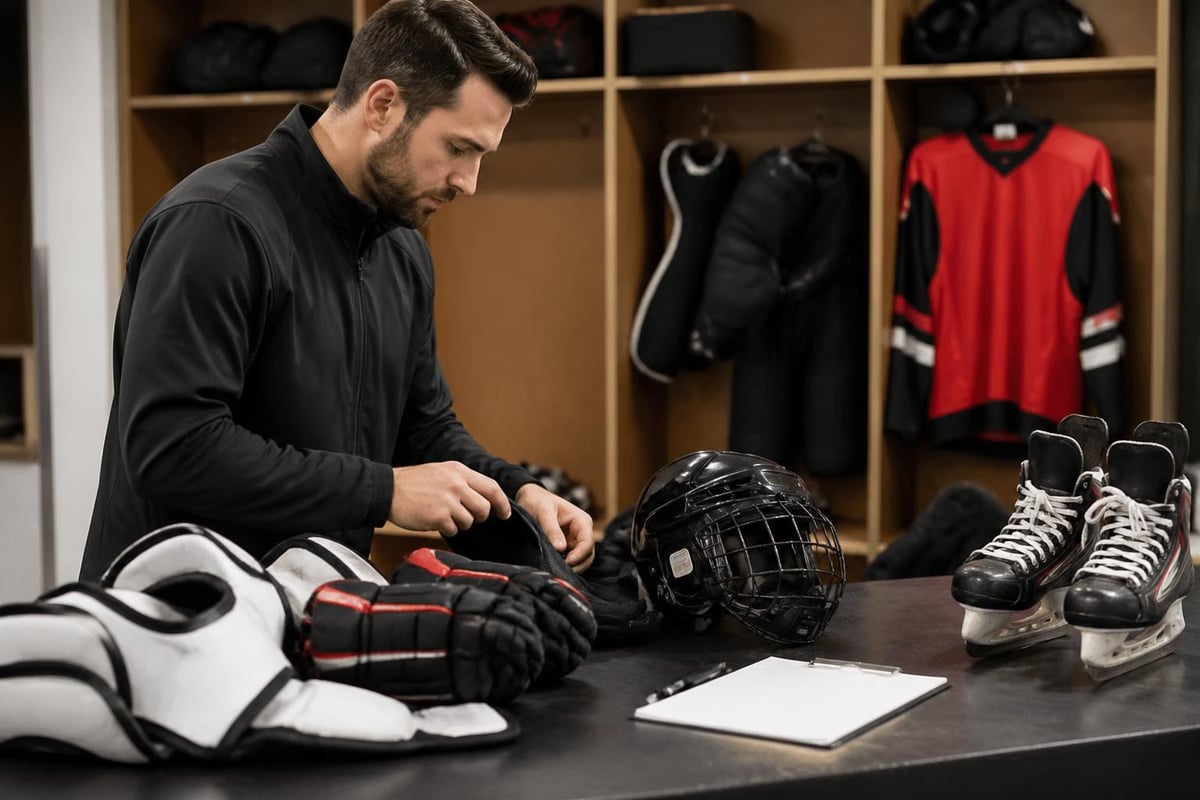
Teams should implement systematic equipment checks before each season and periodically throughout competitive play. Hockey injury prevention resources from the American Academy of Orthopaedic Surgeons highlight that well-maintained equipment significantly reduces injury severity and frequency.
Monthly inspection should include:
- Helmet shell integrity and chin strap function
- Padding compression in shoulders, elbows, and pants
- Skate blade sharpness and holder security
- Glove palm wear and thumb protection
- Shin guard strap condition and knee cap alignment
Equipment showing significant wear requires replacement rather than continued use, particularly items protecting high-risk areas like heads, necks, and joints.
Youth Player Development and Equipment Progression
Growing athletes present unique equipment challenges as sizing changes rapidly during development years. The NHL's Learn to Play equipment guide recommends focusing on proper fit over premium features for youth players, since equipment will require replacement as children grow.
Youth sizing considerations include purchasing adjustable helmets with dial-fit systems, skates with multiple sizing positions, and shin guards with extension straps accommodating growth. Many programs establish equipment exchange systems where families trade outgrown gear, reducing costs while ensuring proper fit remains prioritized.
For organizations operating team sales programs, establishing relationships with suppliers offering youth-to-adult sizing continuity helps families plan long-term equipment investments. Quality entry-level equipment serves developmental players better than premium gear sized incorrectly.
Budget Planning for Team Equipment Programs
Athletic directors and team managers face significant financial considerations when outfitting rosters. Complete hockey equipment sets for individual players range from $400 for basic youth setups to over $1,500 for high-performance adult gear, before considering goalie equipment premiums.
Cost management strategies include:
- Establishing multi-year purchasing cycles staggering replacement schedules
- Negotiating team discounts with suppliers offering volume pricing
- Creating equipment libraries for loaner gear during growth spurts
- Implementing try-before-buy programs for expensive items like skates
- Prioritizing certified protective gear over premium accessories
Schools and clubs should budget 15-20% annual replacement rates for player equipment and 25-30% for goalie gear experiencing higher wear rates. Athletic equipment shops offering price matching programs help programs maximize purchasing power while maintaining quality standards.
| Budget Category | Youth Program (per player) | High School (per player) | Competitive Club (per player) |
|---|---|---|---|
| Protective Gear | $200-300 | $350-500 | $600-900 |
| Skates | $100-150 | $200-350 | $400-700 |
| Stick(s) | $40-60 | $80-150 | $150-300 |
| Accessories | $60-90 | $70-100 | $100-150 |
| Total Range | $400-600 | $700-1,100 | $1,250-2,050 |
Specialized Equipment for Different Playing Styles
Position-specific equipment variations allow players to optimize gear for their roles. Defensive players often prefer maximum protection in shoulder pads and pants, accepting slight mobility reductions for enhanced safety during physical play. Offensive players frequently select lighter, more mobile equipment configurations emphasizing speed and agility.
Forward equipment preferences typically include:
- Lower-profile shoulder pads with enhanced mobility
- Tapered-fit hockey pants for unrestricted stride length
- Lighter shin guards reducing leg fatigue
- Mid-flex sticks (65-85 flex) for quick release shots
Defensive equipment characteristics often feature:
- Maximum coverage shoulder pads with sternum protection
- Traditional-fit pants with extensive kidney and hip padding
- Reinforced shin guards with extended knee protection
- Stiffer flex sticks (85-100+) for powerful clearing shots
Understanding these preferences helps equipment managers select appropriate inventory balancing protection requirements with performance optimization for roster compositions.
Storage and Care Best Practices
Proper equipment maintenance extends lifespan while maintaining protective characteristics and controlling odors. Educational safety standards recommend thorough drying after each use, preventing moisture accumulation that degrades foam padding and encourages bacterial growth.
Post-practice equipment care includes:
- Removing all gear from bags immediately after use
- Hanging items in well-ventilated areas for complete drying
- Wiping down hard surfaces with antibacterial solutions
- Machine washing jerseys, socks, and undergarments after each use
- Allowing 24-48 hours between uses for thorough moisture evaporation
Teams should provide adequate storage facilities with ventilation systems preventing equipment degradation. Portable drying racks, wall-mounted hangers, and open-shelf systems all support proper care protocols that standard closed lockers cannot match.
For the Lincoln Ice Hockey Association equipment recommendations, maintaining gear in certified, functional condition remains as important as initial selection, with regular cleaning and inspection protecting both equipment investment and player safety.
Equipping hockey programs with proper gear requires balancing safety standards, budget constraints, and performance requirements while ensuring every piece fits correctly and maintains certification. Whether outfitting youth development programs or competitive teams, prioritizing certified protective equipment and establishing maintenance protocols creates foundations for safe, successful seasons. Sideline Sport Supply provides athletic equipment solutions for teams, coaches, and organizations seeking reliable gear at straightforward pricing, helping programs focus resources on player development rather than equipment sourcing challenges.