

Gymnastics Bar Guide: Expert Tips for 2026 Training
Ready to elevate your gymnastics bar performance for 2026? This guide brings together expert advice, the latest equipment updates, and proven safety protocols for athletes, coaches, and parents.
Discover how to choose the right bar, master advanced training techniques, and stay ahead with innovative trends. Whether you train at home or in the gym, our step-by-step approach will help you unlock new skills and reach your goals with confidence.
Understanding Gymnastics Bars: Types and Purposes
Choosing the right gymnastics bar can transform an athlete's training journey. Understanding the differences between each bar type, their core features, and how they fit various ages and environments is essential for effective, safe progression. This section breaks down the essentials, empowering you to make informed choices.
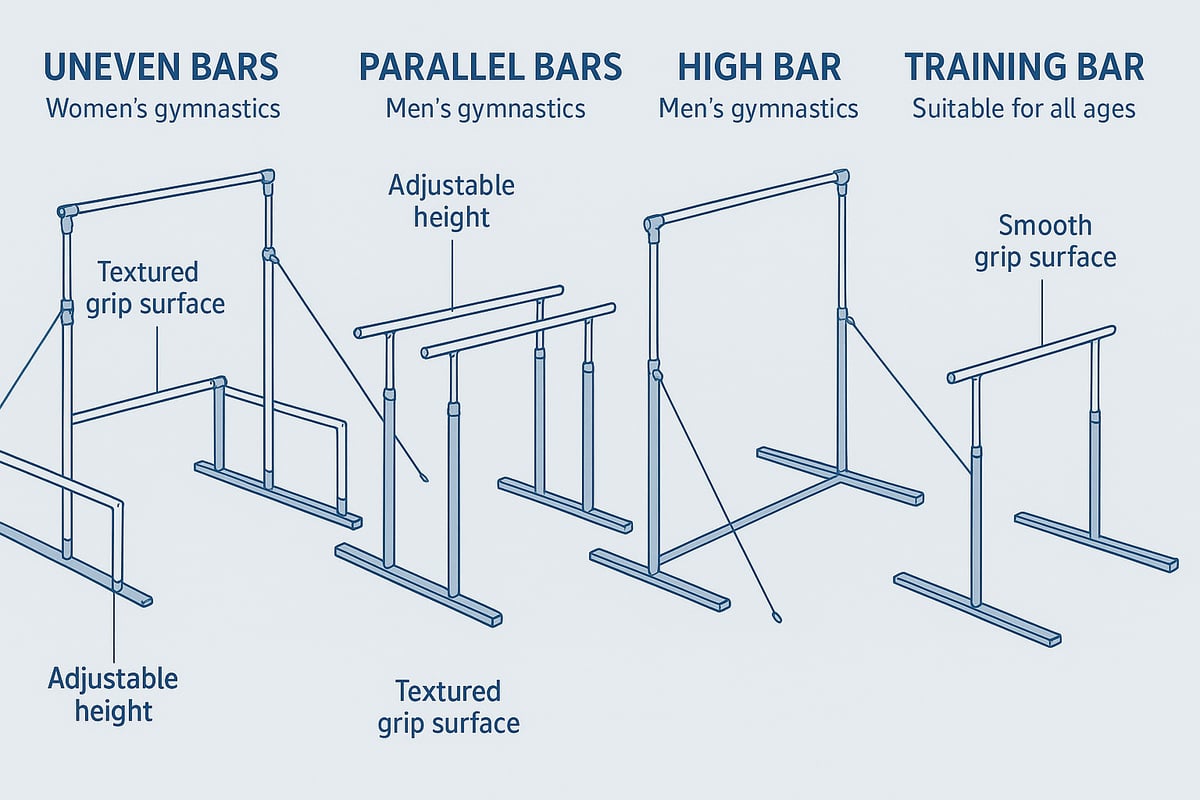
Overview of Gymnastics Bars
There are four primary gymnastics bar types: uneven bars, parallel bars, high bars, and training bars. Each serves a unique role in athlete development. Uneven bars are a staple in women's artistic gymnastics, allowing for intricate transitions and swinging skills. Parallel bars, commonly used in men's gymnastics, focus on strength and body control.
High bars are designed for advanced swinging movements and release skills, making them ideal for elite routines and competition. Training bars, often adjustable, cater to beginners and skill-specific practice at home or in the gym. Selecting the right gymnastics bar supports skill progression and safety, whether for home practice, clubs, or competition. Leading brands like Tumbl Trak and American Gymnast provide specialized options for every level. For a comprehensive overview of essential equipment, see the Must-have gymnastics gear guide.
Key Features and Materials
The construction of a gymnastics bar directly impacts safety, durability, and performance. Most bars use steel for strength and stability, while fiberglass cores wrapped in wood offer a natural grip and a slight flex for advanced routines. Wood surfaces are preferred for their superior grip and reduced hand fatigue, while steel ensures structural integrity.
Bar diameter usually ranges from 3.2 to 4 cm, influencing grip comfort and skill execution. Adjustability in height and width allows for customization, accommodating various training needs. Weight limits, typically 100 to 300 lbs, are crucial for safety. Top brands engineer bars with precise locking mechanisms and reinforced joints to prevent movement during use, ensuring consistent performance across all skill levels.
Age and Skill Level Considerations
Selecting a gymnastics bar involves matching the bar to the athlete's age and skill. Preschoolers benefit from low, stable training bars with padded bases, promoting safety and confidence. Youth gymnasts often transition to adjustable bars, supporting foundational skills and gradual progression.
Advanced athletes require competition-grade bars with robust construction and higher weight capacities. Adaptability is key, especially in multi-user environments like gyms and clubs. Data shows that younger athletes increasingly use home bars for supplemental practice, while older gymnasts rely on club equipment for advanced routines. Always align bar selection with current skill and training goals for optimal development.
Home vs. Gym Use: Pros and Cons
Training with a gymnastics bar at home offers unmatched convenience and flexibility. Home bars are typically more affordable and portable, making them accessible for daily practice. However, safety features and stability may not match gym-quality equipment, and space limitations can restrict skill work.
In contrast, gym-based bars provide professional-grade stability, ample matting, and expert supervision. The cost is higher, and scheduling may be less flexible, but the environment supports advanced skill development. Coaches and parents report increased training consistency with home equipment, especially since 2020, but emphasize the importance of regular safety checks and proper matting for injury prevention.
How to Choose the Right Gymnastics Bar in 2026
Selecting the ideal gymnastics bar for your needs in 2026 requires a strategic approach. By following these five essential steps, you can ensure your investment supports skill development, safety, and long-term athlete growth.
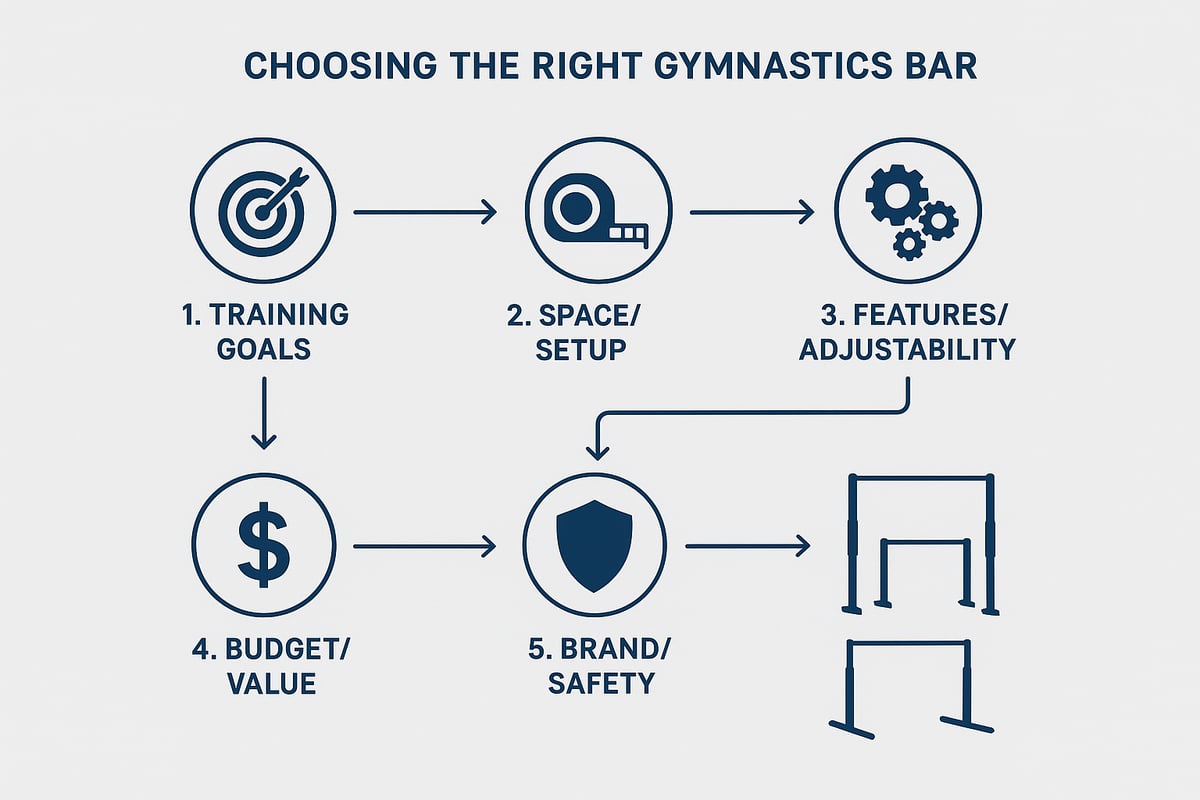
Step 1: Assess Your Training Goals
Begin by defining your specific training goals. Are you focusing on foundational skills, building strength, improving flexibility, or preparing for competitions? The type of gymnastics bar you select should directly support these objectives.
For beginners, a kip bar is popular for learning basic movements and drills. Advanced athletes may require a high bar for complex routines. Carefully matching your gymnastics bar to your intended outcomes ensures efficient progress and safety.
Consult with a coach or program director to personalize your selection. Their expertise can help align your bar choice with your long-term development plan.
Step 2: Evaluate Space and Setup Requirements
Measure your available training area before purchasing a gymnastics bar. Consider ceiling height, floor space, and required safety clearances. Adequate matting is essential to minimize injury risk.
Decide between freestanding models, which offer portability, and anchored systems, which provide maximum stability. Assess whether your space allows for easy assembly, disassembly, and storage. Real-world setups often combine compact bars for home use with larger, permanent bars for gym environments.
Prioritize safety by allowing at least 6 feet of clearance around the gymnastics bar. This approach helps create a secure and functional training zone.
Step 3: Compare Features and Adjustability
Examine the key features of each gymnastics bar, such as height, width, and stability adjustments. Adjustable bars are valuable for households or teams with athletes of different ages and skill levels.
Look for models with intuitive locking mechanisms to ensure quick and safe changes. Versatile bars grow with the athlete, supporting progression from beginner to advanced skills.
Brands like Tumbl Trak offer adjustable gymnastics bar models that serve as excellent case studies for multi-user environments. Compare specifications to find a bar that adapts to your evolving needs.
Step 4: Consider Budget and Value
Gymnastics bar prices typically range from $100 for entry-level models to $700 or more for competition-grade bars. Factor in the long-term value, including warranty coverage and resale potential.
Bundles and combo packs may offer cost savings by including accessories such as mats or grips. When reviewing options, balance upfront cost against durability and user reviews. Investing in a quality gymnastics bar can reduce replacement costs over time.
Compare value-added features, such as included accessories or extended warranties, to maximize your investment.
Step 5: Research Brand Reputation and Safety Certifications
Prioritize established brands known for reliability, such as Tumbl Trak, American Gymnast, and Spieth. Check for safety certifications like ASTM or FIG, which indicate compliance with current standards.
Review return policies and customer support ratings to ensure a positive purchase experience. For the most up-to-date information on bar settings and safety regulations, consult the Development Program Committee Minutes August 2025, which details recent updates for 2026 training.
Selecting a gymnastics bar from a reputable, certified manufacturer is a key step in ensuring athlete safety and performance.
Essential Training Techniques for Bar Progression
Unlocking your potential on the gymnastics bar requires a blend of technical drills, strength routines, and consistent goal tracking. Whether you are new to bar training or aiming for advanced routines, understanding the right techniques and progression strategies is vital for safe and effective development.
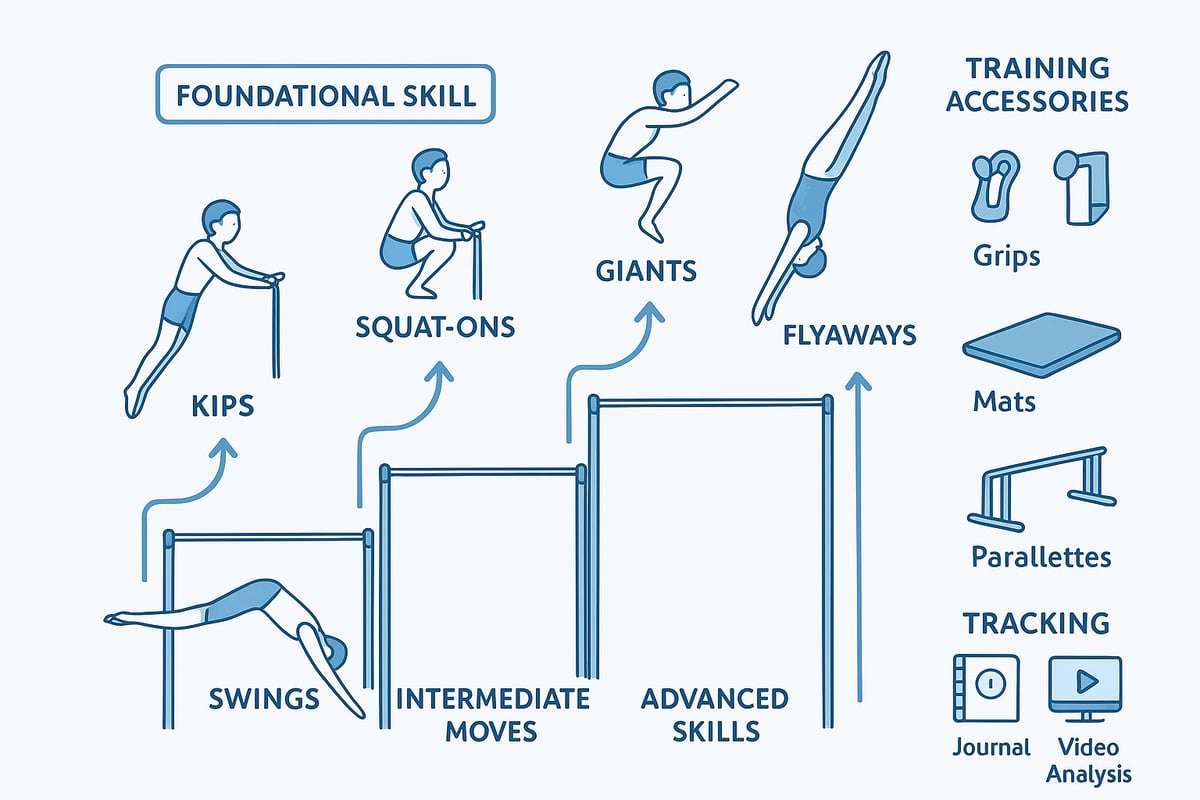
Foundational Drills for Beginners
Starting with the basics on a gymnastics bar lays the groundwork for all future skills. Key beginner drills include swings, casts, pullovers, and hip circles. Begin with the bar set at a safe, manageable height and focus on mastering body alignment and grip.
For example, practice swings to build momentum and grip strength. After achieving consistent swings, progress to pullovers by using a strong kick and arm pull. Repetition is key; aim for 8–10 reps per drill, ensuring proper rest between sets.
Coaches recommend using visual cues and mirrors to check body position. Building a strong foundation on the gymnastics bar helps prevent bad habits and supports smoother advancement to complex skills.
Intermediate Skill Development
Once comfortable with the basics, athletes progress to intermediate moves on the gymnastics bar such as kips, glide swings, and squat-ons. These skills require greater coordination and timing, often using aids like a Forster Bar or floor bar for isolated practice.
A typical routine might include 5 glide swings, followed by 3–5 kip attempts, focusing on hip drive and core engagement. Coaches often set age-based benchmarks, with most athletes mastering kips between ages 7 and 12.
Incorporate drills that isolate each skill component. For example, break down the kip into glide, pull, and push phases. Consistent practice on the gymnastics bar at this stage accelerates overall skill mastery.
Advanced Bar Skills and Combinations
Athletes ready for advanced training on the gymnastics bar work on giants, flyaways, and pirouettes. These moves demand strength, flexibility, and precise timing. Transition skills, especially on uneven bars, require seamless movement between bar sets.
Conditioning is critical; supplement bar work with dynamic stretching and core exercises. For advanced routines, focus on fluid connections and controlled landings, as these are scoring priorities in competition.
Review competition videos to understand routine composition and judge expectations. Training advanced skills on the gymnastics bar should always include proper spotting and supervision to ensure safety.
Incorporating Strength and Conditioning
Effective gymnastics bar progression relies heavily on targeted strength and conditioning. Core exercises such as pull-ups, leg lifts, and hollow holds are essential for developing the muscles needed for powerful bar work.
A sample conditioning circuit might include:
- 3 sets of 8 pull-ups
- 2 sets of 10 leg lifts
- 3 rounds of 30-second hollow holds
Adjust frequency and volume based on age and skill level, with younger gymnasts focusing on bodyweight exercises. Prioritize injury prevention by balancing intensity with adequate recovery. Elite gymnasts often integrate conditioning circuits before and after gymnastics bar sessions for optimal results.
Utilizing Training Accessories and Aids
Accessories can dramatically enhance skill acquisition and safety on the gymnastics bar. Grips, swing straps, bar pads, and parallettes each serve specific purposes. For example, grips protect hands during high-rep routines, while swing straps help beginners develop confidence.
Selecting the right accessory depends on training phase and skill level. During early progression, bar pads and mats are essential for comfort and impact absorption. As skills advance, athletes may benefit from specialty grips or parallettes for strength drills.
For a comprehensive range of aids that support gymnastics bar training, explore this Fitness and training equipment collection to find the right tools for your needs.
Monitoring Progress and Setting Goals
Effective gymnastics bar training includes tracking progress and setting clear goals. Use training journals or video analysis to document skill development and identify areas for improvement.
Set SMART goals—Specific, Measurable, Achievable, Relevant, and Time-bound—to maintain motivation and direction. For example, aim to master a kip within three months or increase pull-up reps by 20 percent in six weeks.
Regular check-ins with coaches ensure feedback and adjustment of goals as needed. Studies show that athletes who track progress and set structured goals on the gymnastics bar demonstrate higher motivation and improved performance.
Bar Safety: Best Practices for Injury Prevention
A strong focus on safety is essential for every gymnastics bar routine. Attention to equipment, supervision, protective gear, and athlete well-being helps minimize risk and supports steady progression. By following these best practices, athletes, coaches, and parents can create a secure training environment for every skill level.
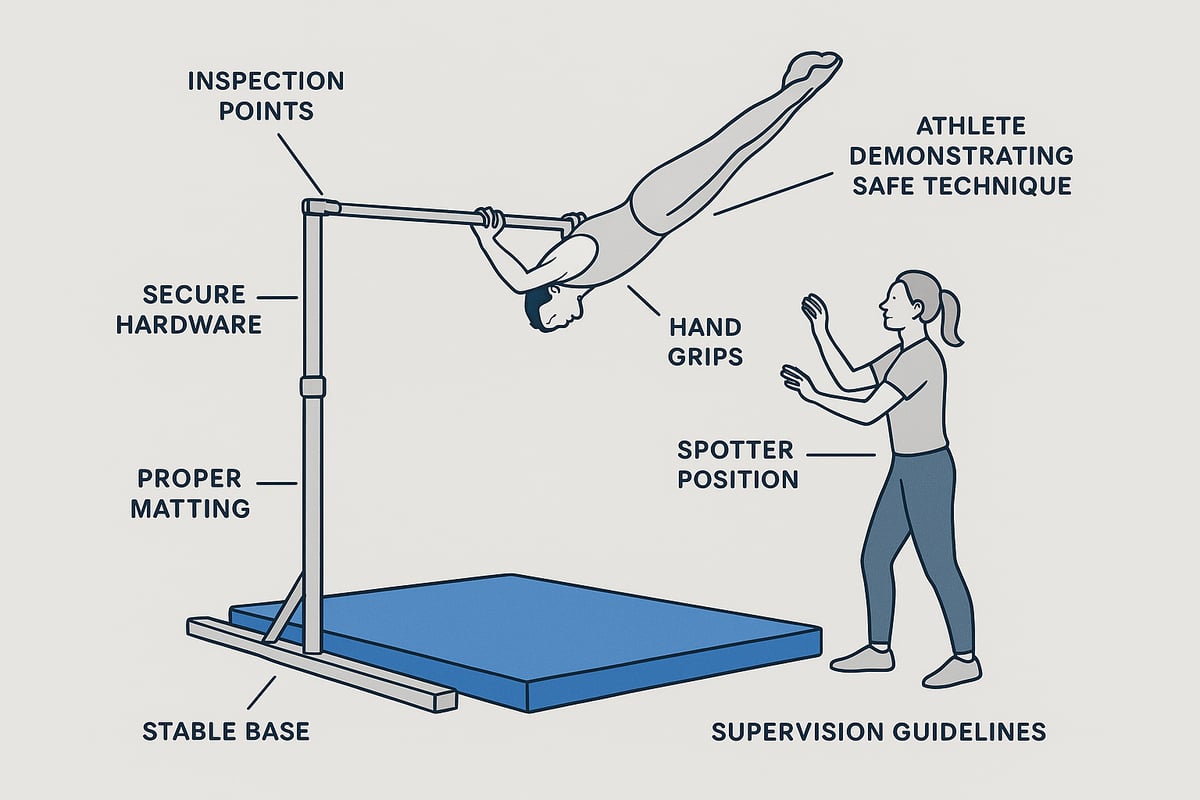
Proper Setup and Equipment Inspection
Begin each gymnastics bar session with a thorough inspection of every component. Check for stability by gently rocking the apparatus, ensuring all hardware is tightly secured. Inspect the bar for cracks, bends, or any surface damage that could compromise safety. Mats must be correctly placed and cover all landing zones.
Create an inspection checklist for daily, weekly, and monthly reviews. Look for signs of rust on steel bars and splinters on wood surfaces. Follow manufacturer guidelines for maintenance and replacement timelines. For comprehensive safety protocols, refer to the USA Gymnastics Safety & Response Policy. Prioritizing these steps reduces the chance of injury and keeps every gymnastics bar session safe.
Spotting and Supervision Guidelines
Effective spotting is vital for both learning new skills and preventing accidents on the gymnastics bar. Assign experienced spotters to assist athletes, especially when attempting unfamiliar or advanced techniques. For youth gymnasts, adult supervision is non-negotiable.
Maintain appropriate coach-to-athlete ratios. For beginners, a ratio of 1:4 is often recommended. Spotters should be attentive, ready to intervene, and familiar with the skills being practiced. Clear communication between spotter and athlete builds trust and promotes a safer training environment. Consistent supervision is proven to lower injury rates on the gymnastics bar.
Matting and Landing Zone Essentials
Proper matting is a cornerstone of safe gymnastics bar training. Use landing mats with sufficient thickness—typically at least 4 inches—for all dismounts and landings. Supplement with skill cushions or throw mats during high-risk drills.
Ensure mats fully cover the landing zone and are secured to prevent slipping. Regularly inspect mats for wear and replace as needed. For more guidance on essential matting, see Gymnastics mats for safe landings. The right mat setup helps absorb impact and significantly reduces the risk of injury on the gymnastics bar.
Hand Care, Grips, and Chalk Use
Hand protection is crucial for safe and effective performance on the gymnastics bar. Regularly check hands for blisters, calluses, or skin tears. Clean and dry hands before each session to improve grip and reduce slipping.
Select the right grips for your skill level—soft grips for beginners, dowel grips for advanced athletes. Maintain grips by cleaning and inspecting them for wear. Use chalk sparingly to absorb moisture and enhance friction. Proper hand care routines lower the incidence of grip-related injuries on the gymnastics bar.
Recognizing and Managing Fatigue
Fatigue is a leading cause of preventable accidents on the gymnastics bar. Watch for signs such as decreased coordination, grip loss, or poor posture. Mental fatigue can also affect focus and reaction time.
Schedule regular breaks and encourage hydration throughout training. Limit session duration based on age and skill level, typically 60–90 minutes for youth athletes. Prioritize recovery days to avoid overuse injuries. Listening to the body and managing fatigue will help athletes stay safe and make consistent gains on the gymnastics bar.
Maintenance and Longevity of Gymnastics Bars
Proper maintenance is crucial to maximize the lifespan and safety of any gymnastics bar. Consistent care ensures peak performance, maintains equipment value, and protects athletes during every training session.
Routine Cleaning and Care
Routine cleaning protects your gymnastics bar from wear and prolongs its usability. Each material requires a unique approach. For wood, use a damp cloth and mild soap, avoiding excess water to prevent warping. Steel bars benefit from non-abrasive cleaners and a dry wipe to ward off rust. Fiberglass surfaces should be cleaned with gentle, approved sprays.
Set a cleaning schedule:
- Daily: Wipe down sweat and chalk.
- Weekly: Inspect for residue or sticky spots.
- Monthly: Deep clean and check for surface wear.
Avoid harsh chemicals, as these can degrade bar finishes. Always dry the gymnastics bar thoroughly after cleaning. Following manufacturer-specific care tips will further extend the equipment’s life.
Checking for Wear and Tear
Regular inspections of your gymnastics bar are essential for safety and performance. Look for visible cracks, bends, loose fittings, or worn hardware. Prioritize professional inspections at least twice a year for high-use bars.
Replace high-stress components, such as bolts or rails, according to the manufacturer’s recommended timelines. Leading brands often provide detailed maintenance guides and robust warranty policies. For example, the AAI and NCAA Partnership Extension demonstrates a commitment to quality, with advanced equipment durability and reliable support.
Keep a maintenance log to track inspection dates and any repairs made. This proactive approach reduces the risk of sudden equipment failure and supports long-term safety.
Storage and Transportation Tips
Storing and transporting your gymnastics bar correctly prevents damage and extends its service life. Always disassemble the bar following the manufacturer’s step-by-step instructions. Store components in a dry, temperature-controlled environment to avoid rust or material fatigue.
Consider these storage solutions:
- Wall-mounted racks for home gyms
- Heavy-duty cases for frequent transport
- Collapsible models for limited space
Portable gymnastics bar options offer flexibility for athletes who train in multiple locations. Users frequently highlight the convenience of lightweight, easy-to-assemble bars for both home and club use. Safe storage and careful handling ensure your equipment is always ready for the next practice.
Upgrading and Accessorizing
As skills progress, upgrading your gymnastics bar or adding accessories becomes essential. Evaluate when to invest in new rails, swing straps, or bar pads, especially if your current setup no longer meets training demands.
Choose accessories that are compatible with your bar’s specifications to guarantee safety. Many brands offer bundle deals and combo packs, which can provide cost savings during phased upgrades. Looking ahead, innovations highlighted in 2026-2028 Trends and Innovations in Gymnastics suggest that future accessories will offer greater customization and enhanced athlete feedback.
Regularly assess your equipment and accessories to ensure they support evolving training needs. Strategic upgrades keep your gymnastics bar performing at its best.
Future Trends in Gymnastics Bar Training for 2026 and Beyond
The world of gymnastics bar training is evolving rapidly as technology, athlete needs, and environmental priorities shift. Looking ahead to 2026, expect a new era where data-driven tools, inclusivity, and sustainability shape every aspect of training, equipment, and athlete development.
Technological Innovations
Technological breakthroughs are redefining what a gymnastics bar can offer. Smart bars now feature integrated sensors that track grip force, swing velocity, and even fatigue indicators. These insights help athletes and coaches fine-tune routines for optimal results.
Virtual coaching platforms and augmented reality overlays are making advanced training accessible from anywhere. New materials such as carbon composites are emerging, offering lighter yet stronger bars that boost performance.
Cross-over technology from related sports, like the advancements discussed in Vaulting pole fundamentals, is inspiring innovation in bar design and athlete feedback systems.
Expect these features to become standard as the gymnastics bar continues to evolve.
Evolving Training Methodologies
Training methodologies are shifting toward holistic athlete development. Coaches are leveraging real-time data from the gymnastics bar to personalize programs, focusing on strength, flexibility, and mental resilience.
Data-driven coaching tools analyze movement patterns and suggest targeted drills. Personalized plans are designed to maximize potential while reducing injury risk. There is a growing emphasis on recovery protocols and mindfulness, ensuring athletes remain healthy and motivated.
These changes are transforming how gymnasts of all ages interact with the gymnastics bar and progress through skill levels.
Inclusivity and Accessibility
The future of gymnastics bar training is becoming more inclusive. Adaptive equipment is now available for athletes with diverse abilities, featuring adjustable heights and supportive attachments.
Training spaces are increasingly gender-neutral and cater to multiple age groups, making gymnastics more welcoming. Home and school environments benefit from compact, easy-to-assemble gymnastics bar options that fit various needs.
Industry initiatives are focused on breaking down barriers so that everyone, regardless of background or ability, can safely enjoy gymnastics bar training.
Sustainability and Eco-Friendly Equipment
Sustainability is a top priority for manufacturers and consumers alike. The latest gymnastics bar models use recycled metals, responsibly sourced wood, and low-impact production methods.
Durability is designed to extend the equipment’s lifecycle, reducing waste and promoting responsible ownership. Leading brands are introducing lines certified for eco-friendly practices, appealing to environmentally conscious athletes and gyms.
Consumer demand for green gymnastics bar solutions is driving innovation and setting new industry standards for years to come.