

Football Training Equipment: Essential Gear for 2026
Modern football training demands more than basic equipment and natural talent. Coaches, athletes, and sports organizations now rely on specialized football training equipment to develop speed, agility, strength, and technical skills that define competitive play. Whether you're equipping a high school team, managing a youth program, or supporting individual athletes, understanding which training tools deliver measurable results helps maximize both practice time and budget. The right equipment transforms ordinary drills into targeted development sessions that build game-ready athletes.
Core Categories of Football Training Equipment
Football training equipment spans multiple categories, each designed to address specific aspects of athletic development. Understanding these categories helps coaches and equipment managers make informed purchasing decisions that align with team needs and training philosophies.
Speed and Agility Development Tools
Speed ladders, agility cones, and hurdles form the foundation of footwork training. These tools help athletes develop quick directional changes, improve foot speed, and enhance overall coordination. Speed ladders typically range from 15 to 30 feet in length, allowing coaches to design progressive drill sequences that challenge athletes at different skill levels.
Agility cones serve multiple purposes beyond simple marker placement. Teams use them for shuttle runs, cutting drills, and pattern work that mimics game situations. The most effective programs incorporate various cone heights and colors to create visual cues that enhance reaction time and decision-making speed.
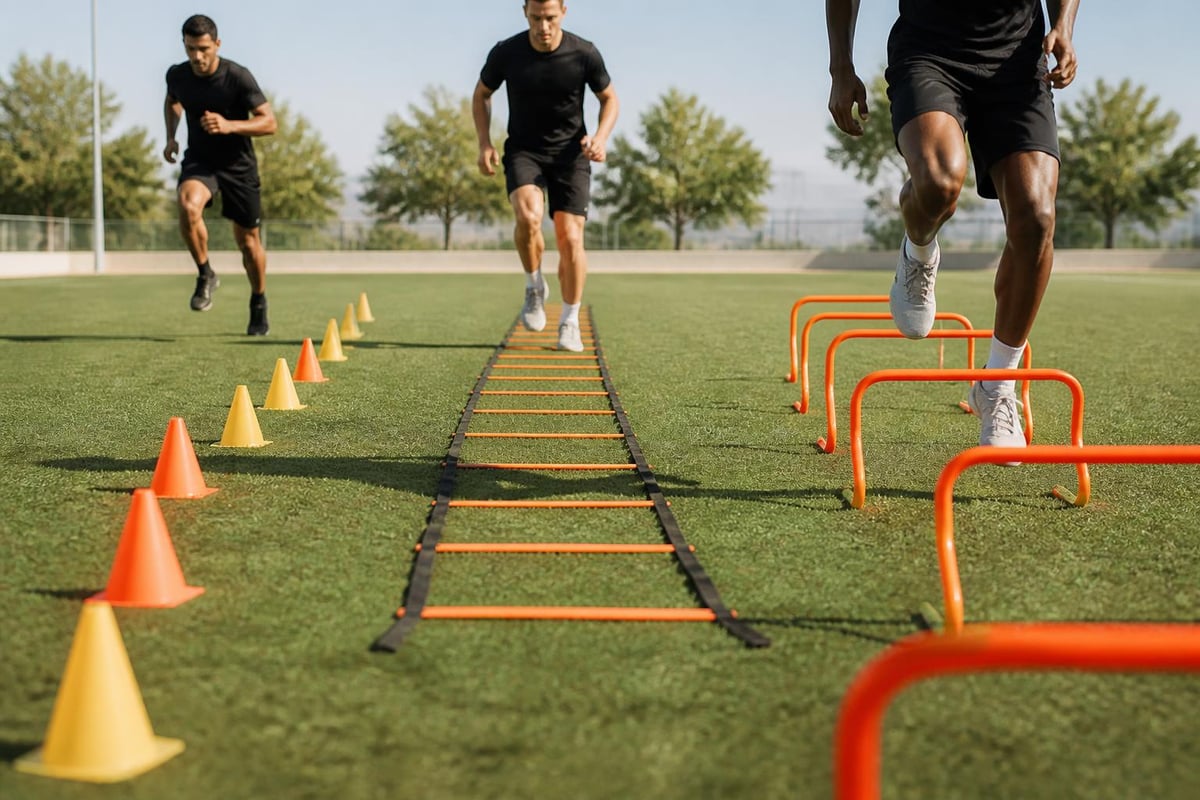
Research shows that acceleration and deceleration demands during training sessions significantly impact player performance development. This understanding drives equipment selection toward tools that replicate game-speed movements.
Strength and Resistance Training Equipment
Blocking sleds, resistance parachutes, and weighted vests build the power and strength essential for football performance. Blocking sleds come in various weights and designs, from lightweight youth models to heavy-duty versions that challenge advanced athletes. Modern sleds often feature adjustable resistance and multiple pad heights to accommodate different player positions and training objectives.
Resistance bands offer versatile strength training options without requiring extensive space or expensive machinery. Athletes use them for explosive starts, lateral movement resistance, and position-specific strength development. Quality bands maintain elasticity through thousands of repetitions, making them cost-effective investments for programs at any level.
| Equipment Type | Primary Benefit | Skill Level | Typical Cost Range |
|---|---|---|---|
| Blocking Sleds | Power development | Intermediate-Advanced | $300-$1,200 |
| Resistance Bands | Explosive strength | All levels | $15-$75 |
| Weighted Vests | Core strength, endurance | Intermediate-Advanced | $40-$150 |
| Parachutes | Speed resistance | Advanced | $25-$100 |
Technical Skills Training Equipment
Technical proficiency separates good players from great ones. Football training equipment designed for skill development addresses passing accuracy, ball control, catching techniques, and position-specific mechanics.
Passing and Receiving Training Tools
Passing nets, target trainers, and catching aids help quarterbacks and receivers refine their coordination. Adjustable passing nets feature multiple target zones marked with scoring systems that gamify accuracy training. These tools allow athletes to practice independently, maximizing repetitions outside formal team sessions.
Receivers benefit from equipment like catching sticks and hand-eye coordination trainers that build muscle memory and improve hand strength. For detailed information about essential football equipment that supports comprehensive training programs, coaches can explore position-specific options that address individual player development needs.
Position-specific equipment helps athletes develop specialized skills efficiently. Quarterbacks use pocket simulators and footwork trainers, while linemen work with hand fighting dummies and leverage bags. This targeted approach accelerates skill acquisition and builds position mastery.
Ball Control and Handling Equipment
Ball handling drills become more effective with specialized training equipment. Undersized and oversized footballs challenge athletes to refine their grip and control. Reaction balls with irregular shapes develop quick hands and improve catching reflexes under unpredictable conditions.
Tackling dummies and shields remain essential for safe contact training. Modern designs incorporate better weight distribution and impact absorption, reducing injury risk while maintaining realistic resistance. These tools allow teams to practice tackling techniques at full speed without player-on-player contact during certain drills.
Conditioning and Endurance Equipment
Football demands sustained high-intensity effort throughout games and seasons. Conditioning equipment builds the cardiovascular endurance and stamina necessary for four-quarter performance.
Sprint training equipment includes resistance sleds, speed chutes, and bungee resistance systems. These tools add controlled resistance that strengthens running mechanics while building explosive power. Athletes develop stronger leg drive and improved acceleration patterns that translate directly to game performance.
Conditioning ladders and cone courses create structured cardio workouts that maintain football-specific movement patterns. Unlike traditional distance running, these drills incorporate directional changes, acceleration phases, and varied intensity levels that mirror actual game demands.
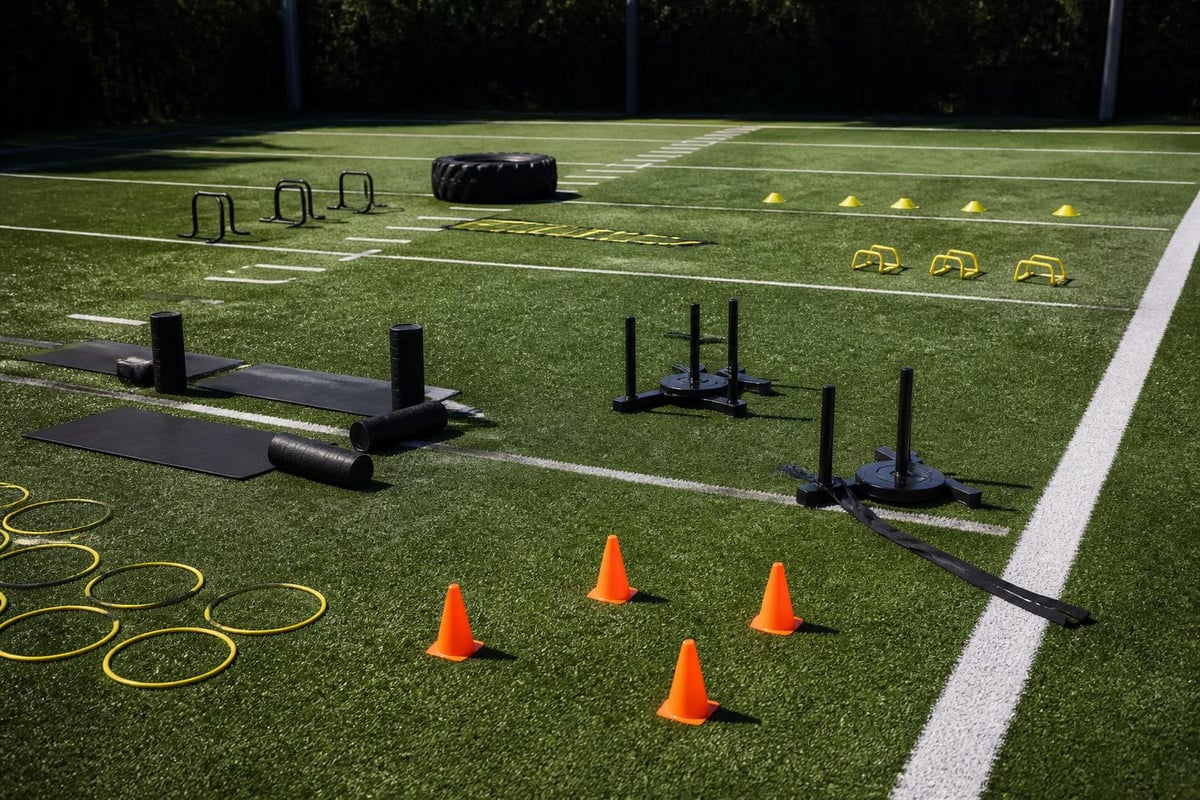
Understanding player technical outcomes in training sessions helps coaches select equipment that maximizes skill development within conditioning work. The best programs integrate technical skill practice into cardiovascular training, creating efficient sessions that develop multiple attributes simultaneously.
Field Marking and Organization Equipment
Well-organized practices require clear field marking and efficient equipment setup. Field markers, boundary cones, and portable goal posts help coaches create distinct training zones that maximize available space.
Portable sideline markers and yard line indicators allow teams to practice situational football with accurate field awareness. Players develop better spatial recognition and improve their understanding of down-and-distance scenarios. These organizational tools transform generic practice fields into realistic game environments.
Equipment storage carts and ball caddies improve practice efficiency by reducing setup and breakdown time. Mobile storage solutions keep training equipment organized, accessible, and protected from weather damage. Teams that invest in proper organization systems spend more time training and less time managing logistics.
Practice Organization Systems
Structured practice equipment includes:
- Portable coaching platforms for elevated viewing angles
- Communication systems for large field coverage
- Hydration stations and cooling equipment
- First aid and safety gear storage
- Equipment checklists and inventory systems
Safety and Protective Training Equipment
Safety equipment extends beyond game-day pads and helmets. Training-specific protective gear allows athletes to practice contact skills while minimizing injury risk.
Soft-shell tackling dummies and shields absorb impact without causing the bruising associated with traditional hard-surface equipment. These tools encourage proper technique development without the hesitation that comes from painful contact. Athletes build confidence and refine mechanics in safer training environments.
Studies examining predictive modeling of football injuries highlight how proper training equipment and methods reduce injury risk. Smart equipment choices create safer practice environments that keep athletes healthy throughout demanding seasons.
Protective gear for quarterbacks includes padded vests and rib protectors that allow throwing mechanics practice without full contact exposure. Similarly, linemen use hand protectors and blocking shields that develop technique while protecting vulnerable joints and fingers.
Selecting Football Training Equipment for Different Programs
Equipment needs vary significantly based on program size, budget, athlete age, and competitive level. Youth programs prioritize safety, fundamental skill development, and age-appropriate equipment sizing. High school and college programs require more specialized tools that address advanced technique refinement and position-specific training.
Youth Program Equipment Priorities
Youth programs should focus on:
- Lightweight agility equipment sized for smaller athletes
- Soft-contact protective training gear
- Fundamental skill development tools
- Durable, multi-purpose equipment
- Safety-first design features
Budget-conscious programs benefit from versatile equipment that serves multiple training purposes. For example, agility cones work for speed drills, field marking, and organizational tasks. Multi-use equipment maximizes value and simplifies inventory management.
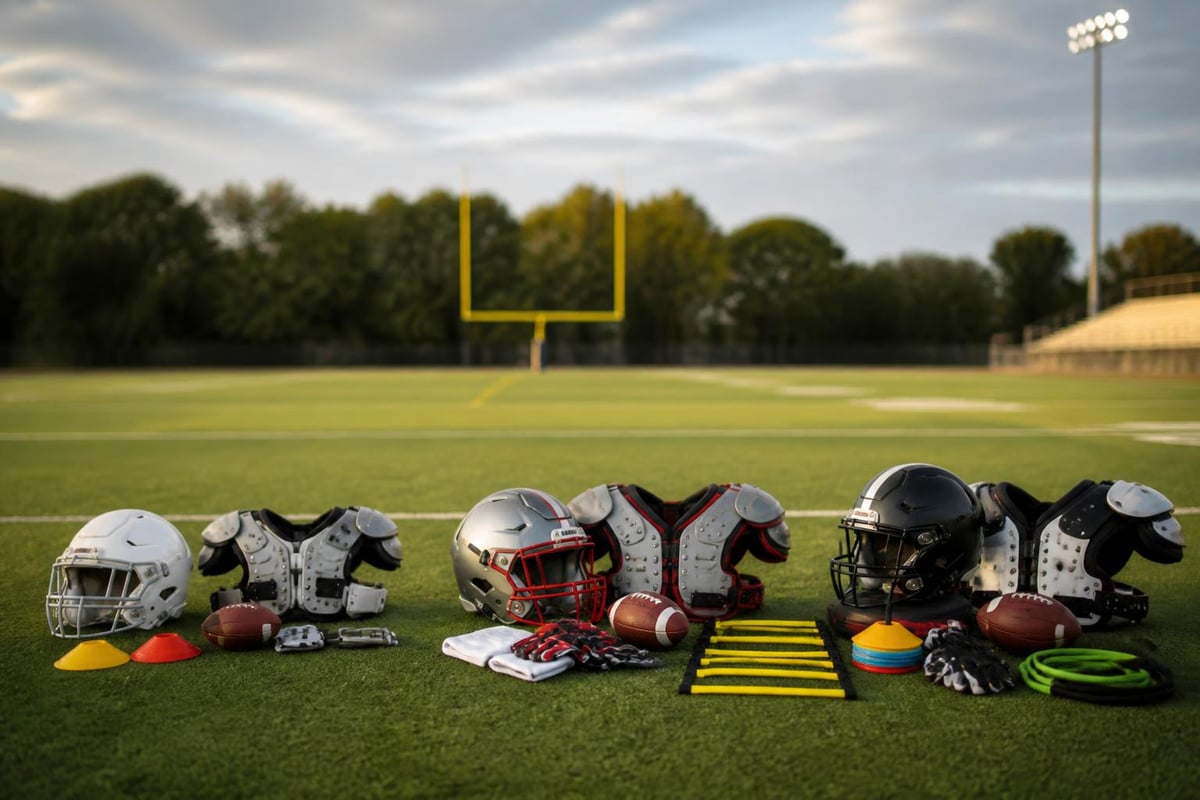
High School and College Program Needs
Competitive programs require more specialized football training equipment that addresses advanced development. These programs typically invest in:
| Program Level | Essential Equipment | Advanced Equipment | Annual Budget Range |
|---|---|---|---|
| Youth | Cones, basic sleds, flags | Passing nets, light resistance | $500-$2,000 |
| High School | Full agility sets, blocking sleds | Position-specific trainers, video analysis | $3,000-$10,000 |
| College | Complete training systems | Biometric monitoring, specialized tech | $15,000-$50,000+ |
Organizations like Sideline Sport Supply understand these varying needs and offer equipment options across all price points and program levels, ensuring teams can access quality gear regardless of budget constraints.
Maintenance and Longevity of Training Equipment
Proper maintenance extends equipment lifespan and protects training investments. Football training equipment exposed to outdoor conditions requires regular inspection and care to maintain safety and functionality.
Storage practices significantly impact equipment durability. Indoor storage protects equipment from UV damage, moisture, and temperature extremes. When indoor storage isn't possible, weatherproof covers and elevated storage racks minimize environmental exposure.
Regular maintenance schedules should include:
- Weekly inspection of high-use items for wear and damage
- Monthly deep cleaning of all equipment surfaces
- Seasonal repairs and part replacements
- Annual inventory assessment and replacement planning
- Proper off-season storage and protection
Equipment Replacement Indicators
Knowing when to replace training equipment prevents safety issues and maintains training quality. Replace equipment when:
- Structural components show cracks, tears, or significant wear
- Padding loses compression resistance or develops hard spots
- Adjustment mechanisms fail or become unreliable
- Equipment no longer meets safety standards
- Repairs become more costly than replacement
Innovative Training Equipment Trends
Technology integration continues reshaping football training equipment. GPS tracking vests monitor player movement patterns, speeds, and workload distribution. This data helps coaches optimize training intensity and prevent overtraining injuries.
Virtual reality training systems allow quarterbacks and defensive players to practice reads and recognition without physical wear. While not replacing traditional equipment, these tools supplement development programs with additional mental repetition opportunities. Research into virtual training tools and AI-based football environments demonstrates emerging possibilities for cognitive skill development.
Wearable resistance systems provide variable resistance throughout movement ranges, creating more sport-specific strength training. These advanced tools build functional strength that transfers directly to on-field performance.
Smart equipment incorporating sensors provides immediate performance feedback. Athletes receive real-time data on sprint speeds, force production, and movement quality. This instant feedback accelerates learning and helps athletes self-correct technique errors.
Budget Planning for Football Training Equipment
Strategic budget planning ensures programs acquire necessary equipment without overspending. Successful equipment managers prioritize purchases based on immediate needs, safety requirements, and long-term development goals.
Essential first-year purchases for new programs include basic agility equipment, fundamental strength training tools, and organizational supplies. These foundational items support comprehensive training without requiring massive initial investment.
Multi-year equipment plans spread major purchases across budget cycles, preventing financial strain while steadily upgrading training capabilities. This approach allows programs to acquire specialized equipment as budgets permit and training needs evolve.
Grant opportunities and community partnerships help programs supplement equipment budgets. Many organizations support youth sports development through equipment donations or funding assistance. Researching local opportunities can significantly expand purchasing power.
Cost-Effective Equipment Strategies
Maximize equipment budgets through:
- Purchasing versatile, multi-use items first
- Comparing quality-to-cost ratios across brands
- Buying durable equipment that withstands heavy use
- Leveraging bulk purchase discounts for team orders
- Establishing equipment sharing agreements with partner programs
Reliable suppliers like JaypPro Sports offer quality equipment at competitive prices, helping programs stretch budgets further while maintaining standards.
Seasonal Equipment Considerations
Training equipment needs shift throughout the football calendar. Pre-season conditioning emphasizes cardiovascular equipment and general strength tools. In-season training focuses on maintenance, recovery, and skill refinement equipment.
Off-season programs require specialized strength and conditioning equipment that builds foundational power and addresses individual weaknesses. This phase allows for equipment-intensive training that might be impractical during competitive seasons.
Weather considerations affect equipment selection and usage. Cold-weather programs need indoor training alternatives, while warm-climate teams prioritize hydration systems and heat management equipment. Regional factors influence which football training equipment delivers the best value and usability.
Equipment Safety Standards and Compliance
Training equipment must meet safety standards established by governing bodies and manufacturers. Equipment certifications verify products undergo rigorous testing and meet minimum safety requirements.
Regular safety audits identify potential hazards before accidents occur. Coaches and equipment managers should inspect training equipment before each use, looking for damage, wear, or malfunction that could endanger athletes.
Documentation systems track equipment condition, maintenance history, and replacement schedules. These records support liability protection and ensure consistent safety protocols. Proper documentation also helps identify patterns that inform future purchasing decisions.
Athletes require training on proper equipment usage. Even the safest equipment becomes hazardous when used incorrectly. Comprehensive orientation sessions teach athletes correct setup, usage techniques, and safety protocols for each equipment type.
Integrating Equipment Into Training Programs
Effective football training equipment enhances structured programs but doesn't replace sound coaching. The best results come from integrating equipment purposefully into comprehensive development plans that address technical, physical, and mental aspects of performance.
Progressive equipment usage matches athlete development stages. Beginning athletes need simpler equipment that builds fundamental movement patterns. Advanced athletes benefit from complex equipment that challenges refined skills and tests elite-level capabilities.
Drill design determines equipment effectiveness. Coaches should structure drills that maximize equipment utility while maintaining focus on specific learning objectives. Random equipment usage without clear purpose wastes practice time and dilutes training focus.
Equipment rotation prevents monotony and maintains athlete engagement. Varying equipment types within similar drill structures keeps training fresh while reinforcing consistent skill patterns. This variety sustains motivation throughout long seasons and training cycles.
Selecting and maintaining the right football training equipment transforms practice sessions into targeted development opportunities that build competitive athletes. From foundational agility tools to specialized position-specific gear, strategic equipment investments support comprehensive training programs across all skill levels. Whether you're launching a new youth program or upgrading an established team's capabilities, Sideline Sport Supply provides the reliable, affordable equipment and training essentials that keep athletes progressing and teams competing at their best.