

Football Training Apparatus: Essential Equipment Guide 2026
Modern football training demands more than raw talent and dedication. Athletes at every level require specialized football training apparatus to develop the speed, agility, strength, and technical skills necessary for competitive success. From youth leagues to collegiate programs, the right equipment transforms practice sessions into purposeful skill-building opportunities. Understanding which tools deliver measurable results helps coaches, athletic directors, and program managers make informed investments that enhance player development while maximizing training budgets.
Essential Speed and Agility Training Equipment
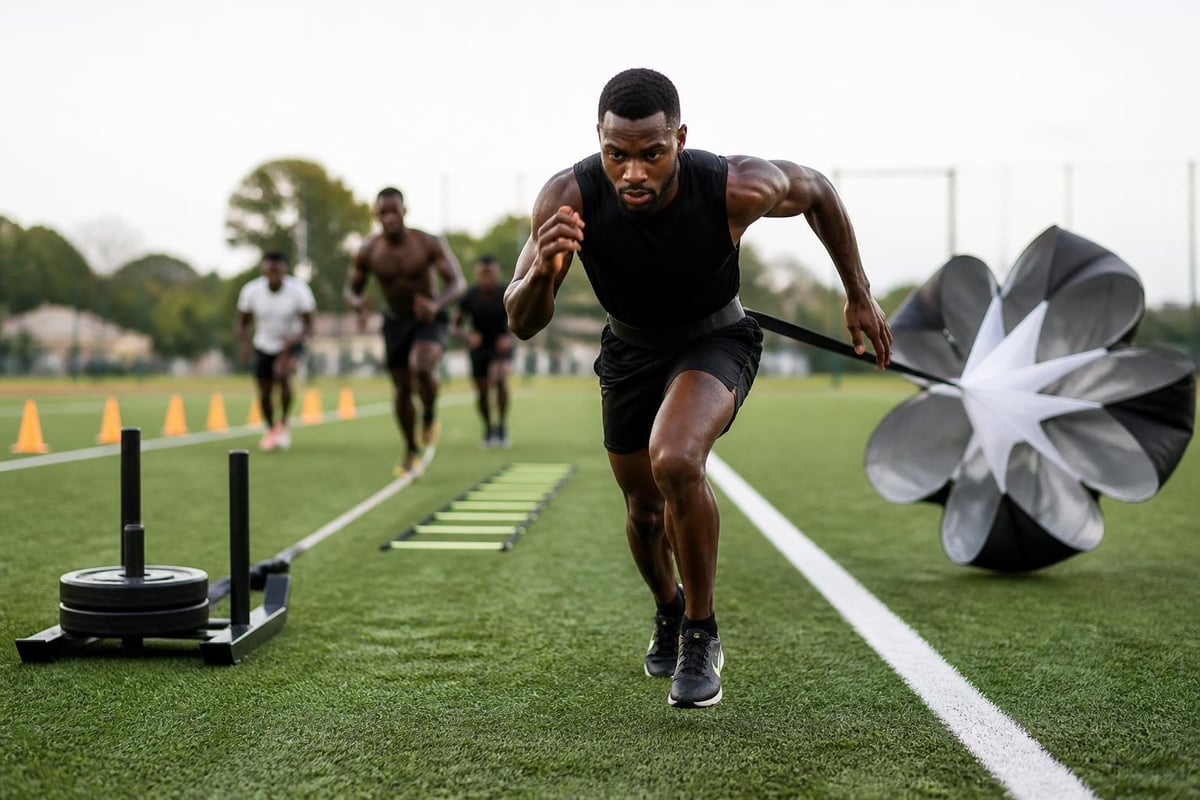
Speed separates good football players from exceptional ones. Football training apparatus designed for velocity enhancement includes agility ladders, speed parachutes, resistance sleds, and cone sets that create structured drill environments. These tools systematically improve footwork, acceleration, and directional change capabilities that translate directly to game performance.
Agility ladders provide versatile training options for developing quick feet and coordination. Athletes perform various footwork patterns that enhance neuromuscular connections while building the muscle memory required for explosive movements. The comprehensive football equipment selection available through specialized suppliers ensures teams access properly designed ladder configurations that withstand repeated use.
Resistance Training Tools for Power Development
Resistance sleds represent fundamental football training apparatus for building explosive power and driving force. Athletes push weighted sleds across various distances, developing the leg drive and forward momentum essential for blocking, tackling, and breaking through defensive lines. The adjustable resistance allows coaches to customize workload based on position requirements and individual athlete capabilities.
Modern resistance equipment extends beyond traditional sleds:
- Weighted vests that add functional resistance during drill work
- Resistance bands for position-specific movement patterns
- Push-up bars and bodyweight training tools for core stability
- Medicine balls for rotational power and explosive throws
- Battle ropes for upper body conditioning and endurance
Research indicates that acceleration and deceleration demands during football training require equipment that addresses both concentric and eccentric muscle actions. This scientific understanding drives equipment selection toward apparatus that develops complete athletic profiles rather than isolated movements.
Position-Specific Training Apparatus
Different positions require distinct physical capabilities and technical skills. Effective football training apparatus addresses these specialized needs through targeted equipment selections that mirror game demands. Linemen benefit from different tools than skill position players, and specialized equipment accelerates position-specific development.
Offensive and Defensive Line Equipment
Linemen require football training apparatus that builds explosive power, hand technique, and sustained blocking ability. Blocking sleds, hand shields, and tackling dummies create realistic resistance scenarios that develop proper technique under controlled conditions.
| Equipment Type | Primary Benefit | Training Focus |
|---|---|---|
| Blocking Sleds | Drive mechanics | Lower body power, pad level |
| Hand Shields | Strike precision | Hand placement, leverage |
| Tackle Wheels | Tackling angles | Proper form, injury prevention |
| Chutes | Pad level control | Body positioning, explosion |
Chutes force athletes to maintain low pad levels during explosive movements, addressing one of the most critical technical elements for line play success. This football training apparatus creates physical constraints that develop proper muscle memory and body positioning.
Skill Position Development Tools
Wide receivers, running backs, and defensive backs require equipment emphasizing agility, ball skills, and spatial awareness. Specialized apparatus includes catching nets, reaction balls, and cone configurations that replicate game scenarios.
Route-running precision improves through systematic cone drill progressions. Athletes develop sharp cuts, controlled deceleration, and explosive re-acceleration using properly spaced cone patterns. The essential training equipment guide outlines how different cone configurations target specific movement patterns required for various positions.
Ball security drills utilize specialized fumble recovery apparatus and ball-handling training aids. These tools create repetitive scenarios that build confidence and technical proficiency under pressure situations.
Conditioning and Endurance Equipment
Football demands sustained performance across four quarters, making cardiovascular conditioning and muscular endurance critical components of comprehensive training programs. Football training apparatus supporting these objectives includes interval training tools, plyometric boxes, and metabolic conditioning equipment.
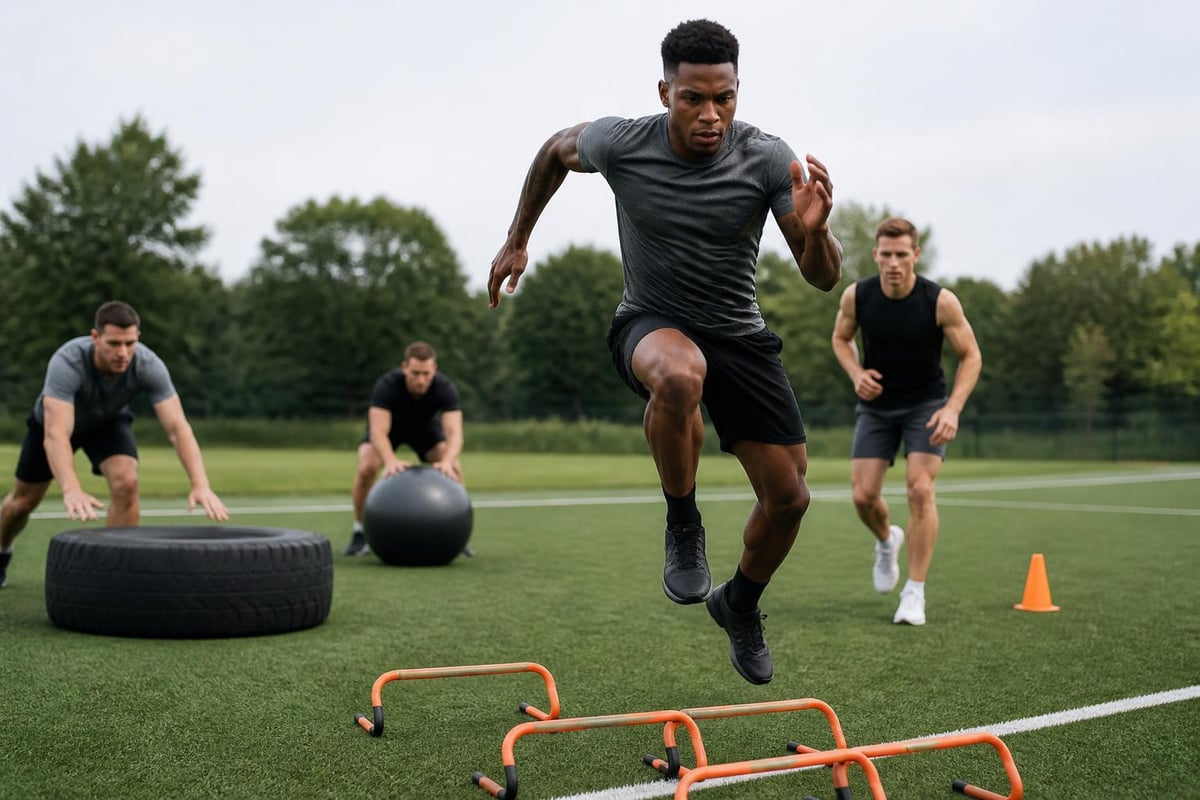
High-intensity interval training (HIIT) protocols utilize timed drill stations with minimal rest periods. Equipment rotations might include:
- Sprint resistance bands for explosive acceleration work
- Agility ladder sequences for footwork under fatigue
- Medicine ball slams for power endurance
- Box jumps for plyometric conditioning
- Battle rope intervals for upper body stamina
This circuit-style approach maximizes equipment utilization while keeping athletes engaged through varied stimulus. The systematic rotation prevents boredom while addressing multiple physical qualities simultaneously.
Recovery and Injury Prevention Tools
Smart training programs incorporate recovery-focused football training apparatus that reduces injury risk and accelerates adaptation. Foam rollers, stretching aids, and mobility tools support tissue quality and joint health between intense training sessions.
Injury prevention extends beyond warm-up routines. Proper equipment selection considers biomechanical stress patterns and implements tools that address common vulnerability points. Studies on predictive modeling of football injuries demonstrate how equipment choices influence injury patterns, making apparatus selection a critical safety consideration.
Balance boards and stability trainers develop proprioceptive awareness that protects joints during unpredictable game situations. These tools strengthen stabilizing muscles and neural pathways that prevent non-contact injuries.
Technical Skill Development Apparatus
Fundamental football skills require dedicated training equipment that isolates specific techniques. Passing accuracy, catching proficiency, and kicking precision all improve through targeted apparatus designed for repetitive technical work.
Quarterback Training Equipment
Quarterbacks benefit from specialized football training apparatus including passing nets with target zones, footwork ladders designed for drop-back mechanics, and resistance bands for arm strength and throwing motion refinement. These tools enable quarterbacks to accumulate high-quality repetitions without requiring full team participation.
Passing nets provide immediate feedback on ball placement and velocity. Target configurations ranging from basic accuracy zones to sophisticated route-timing systems help quarterbacks develop precision under various conditions. The ability to train independently accelerates skill acquisition between team practice sessions.
Kicking and Punting Aids
Special teams success often determines game outcomes, making kicker development a priority investment area. Football training apparatus for kicking includes blocking pads that simulate rush pressure, holder training devices, and specialized tees for various kick scenarios.
Punters utilize hanging targets and distance markers that provide objective performance metrics. Consistent measurement enables systematic improvement tracking and identifies technical adjustments needed for enhanced performance.
Team Training and Tactical Development Tools
Beyond individual skill development, football training apparatus supports team tactical work and coordinated execution. Dummy sets, blocking shields arranged in formation patterns, and specialized drill equipment facilitate team-level skill development.
Formation Work and Scheme Implementation
Coaches utilize movable markers, position indicators, and formation templates to teach spacing, alignment, and assignment execution. These organizational tools accelerate mental processing and help players visualize scheme concepts before executing at full speed.
Defensive scout team equipment includes colored jerseys, formation cards, and offensive tendency indicators that create realistic practice scenarios. This apparatus bridges the gap between film study and physical execution, improving recognition speed and response accuracy.
| Training Focus | Equipment Needed | Development Outcome |
|---|---|---|
| Pass protection schemes | Blocking sleds, rush bags | Coordinated line movement |
| Coverage concepts | Route cones, receiver vests | Assignment execution |
| Run fit discipline | Gap bags, tackle dummies | Proper leverage angles |
| Special teams timing | Punt return markers, coverage indicators | Phase execution speed |
The specialized athletic equipment from quality suppliers ensures teams access apparatus built for repeated use under demanding conditions. Durability directly impacts training consistency and long-term program development.
Budget-Conscious Equipment Selection Strategies
Athletic programs face budget constraints that require strategic equipment investments. Effective football training apparatus selection balances immediate needs with long-term program development objectives. Multi-purpose equipment that serves various training functions provides better return on investment than highly specialized single-use items.
Prioritization frameworks help decision-makers allocate resources effectively:
- Tier 1: Essential safety equipment and foundational skill development tools
- Tier 2: Position-specific apparatus for technical refinement
- Tier 3: Advanced training aids and specialized conditioning equipment
Starting with versatile basics like cones, agility ladders, and resistance bands builds foundational capabilities before expanding into specialized apparatus. This approach ensures all athletes access quality training tools while avoiding unnecessary expenditures on underutilized equipment.
Maximizing Equipment Longevity
Proper storage, maintenance protocols, and usage guidelines extend football training apparatus lifespan significantly. Weather-resistant storage solutions protect equipment from environmental degradation, while systematic inventory management prevents loss and unnecessary replacement costs.
Training staff education ensures correct equipment usage that maintains structural integrity and safety standards. Simple maintenance routines like cleaning, inspection for wear patterns, and timely minor repairs prevent premature equipment failure.
Programs with transparent pricing guarantees provide budget predictability that supports multi-year equipment planning. Knowing actual costs without hidden fees or inflated pricing enables accurate financial forecasting and responsible resource allocation.
Seasonal Training Variations and Equipment Adaptation
Football training apparatus needs change throughout the annual cycle. Off-season programs emphasize strength and conditioning equipment, spring practices focus on technical skill development tools, and in-season training requires maintenance-oriented apparatus that prevents overtraining while maintaining performance levels.
Off-season conditioning utilizes the full range of resistance equipment, plyometric tools, and cardiovascular training apparatus. Athletes build physical foundations during this phase, making equipment availability and variety critical success factors.
Spring technical development shifts focus toward position-specific football training apparatus that refines technique and scheme execution. Drill variety increases, requiring diverse equipment configurations that address multiple skill components.
In-season training minimizes wear while maintaining sharpness. Equipment selection emphasizes low-impact skill maintenance tools, recovery apparatus, and game-specific preparation aids that keep athletes fresh and focused.
Weather-Appropriate Training Solutions
Geographic location influences equipment selection significantly. Programs in harsh winter climates require indoor training apparatus that replicates outdoor movements within facility constraints. Resistance bands, agility ladders, and portable drill equipment enable quality training regardless of weather conditions.
Southern programs face heat management challenges requiring hydration stations, shade structures, and modified conditioning protocols. Football training apparatus selection must account for environmental factors that impact safe training execution.
Facility Integration and Space Optimization
Available training space determines equipment choices and drill design possibilities. Programs with dedicated football training apparatus rooms can maintain permanent drill stations, while shared facilities require portable, easily stored equipment that accommodates multiple sports and activities.
Space-efficient equipment designs maximize training density without compromising safety or movement quality. Stackable cones, collapsible agility equipment, and multi-function training tools enable comprehensive programming within limited square footage.
Permanent installations like blocking sleds and tackling apparatus require careful placement that supports traffic flow and simultaneous drill execution. Thoughtful facility design prevents bottlenecks and creates efficient training environments that maximize contact time and skill repetitions.
Wall-mounted storage systems, equipment carts, and designated inventory areas streamline setup and breakdown processes. The team sales programs available through specialized suppliers often include equipment organization solutions that complement apparatus purchases.
Technology Integration in Modern Training Apparatus
Contemporary football training apparatus increasingly incorporates technology that provides objective performance data and immediate feedback. Electronic timing systems, force measurement platforms, and video integration capabilities transform traditional equipment into comprehensive assessment tools.
Speed and agility gates measure acceleration, top velocity, and drill completion times with precision that manual methods cannot match. This objective data enables coaches to track progress systematically and identify athletes requiring additional development focus.
Force plates embedded in resistance equipment measure power output, ground contact times, and force production asymmetries. These metrics guide training adjustments and identify biomechanical inefficiencies that limit performance or increase injury risk.
Video analysis integration allows coaches to capture drill execution from multiple angles, providing athletes visual feedback that accelerates technical refinement. When combined with proper football training apparatus, video technology creates powerful learning environments that compress skill development timelines.
Youth Program Considerations
Youth football programs require age-appropriate football training apparatus that accommodates developing bodies and skill levels. Equipment scaled to younger athletes prevents frustration and injury while building proper technical foundations that transfer to higher competition levels.
Safety remains the paramount concern when selecting youth training equipment. Softer contact surfaces, lighter resistance loads, and graduated progression systems protect young athletes while maintaining engagement and skill development.
Youth-specific equipment modifications include:
- Lighter resistance sleds with adjustable weight options
- Smaller agility ladder rung spacing for shorter strides
- Lower-profile plyometric boxes preventing excessive landing forces
- Appropriately sized catching aids and ball-handling tools
- Visual learning aids that simplify complex concepts
Programs serving multiple age groups benefit from modular football training apparatus that adjusts across developmental stages. This versatility maximizes equipment investment while ensuring all athletes access appropriate training tools.
Selecting the right football training apparatus transforms practice efficiency and accelerates player development across all skill levels. By investing in versatile, durable equipment that addresses specific positional needs and program objectives, coaches and athletic directors create training environments where athletes reach their full potential. When you're ready to upgrade your program's training capabilities with reliable, affordable equipment, Sideline Sport Supply offers the quality apparatus and straightforward pricing that help teams focus on what matters most-developing skilled, competitive athletes ready for game day.