

Field Hockey Equipment: Essential Gear Guide for 2026
Field hockey demands precision, speed, and the right equipment to perform at any level. Whether you're outfitting a high school team, supporting collegiate athletes, or helping individual players upgrade their gear, understanding field hockey equipment ensures safety, compliance, and optimal performance. From sticks engineered to meet international standards to protective gear that addresses the sport's unique injury patterns, every piece of equipment plays a critical role in player development and game-day success.
Understanding Field Hockey Stick Specifications
The stick represents the most personal piece of field hockey equipment, directly influencing ball control, passing accuracy, and shooting power. Modern sticks blend composite materials-carbon fiber, fiberglass, aramid, and wood-to create specific performance characteristics.
Material Composition and Performance
Carbon fiber content determines stick stiffness and power transfer. Entry-level sticks typically contain 20-30% carbon, offering durability and forgiveness for developing players. Mid-range options incorporate 40-60% carbon, balancing power with touch. Elite sticks exceed 70% carbon, delivering maximum power but requiring advanced technique to control effectively.
The Official FIH Rules of Hockey specify that sticks must pass through a ring with an interior diameter of 51mm, ensuring standardized dimensions across all levels of play.
| Stick Type | Carbon % | Best For | Price Range |
|---|---|---|---|
| Beginner | 20-30% | Youth, new players | $30-$60 |
| Intermediate | 40-60% | High school, club | $80-$150 |
| Advanced | 70-85% | College, competitive | $180-$280 |
| Elite | 90-100% | International, elite | $300-$450 |
Bow Profile and Playing Style
Stick bow-the curve built into the shaft-affects ball control and skill execution. Low bow sticks (20-22mm) position the maximum curve near the head, facilitating drag flicks, aerials, and advanced 3D skills. Mid-bow designs (22-24mm) offer versatility for all-around play. Standard bow sticks (under 20mm) provide traditional feel preferred by defensive players and beginners.
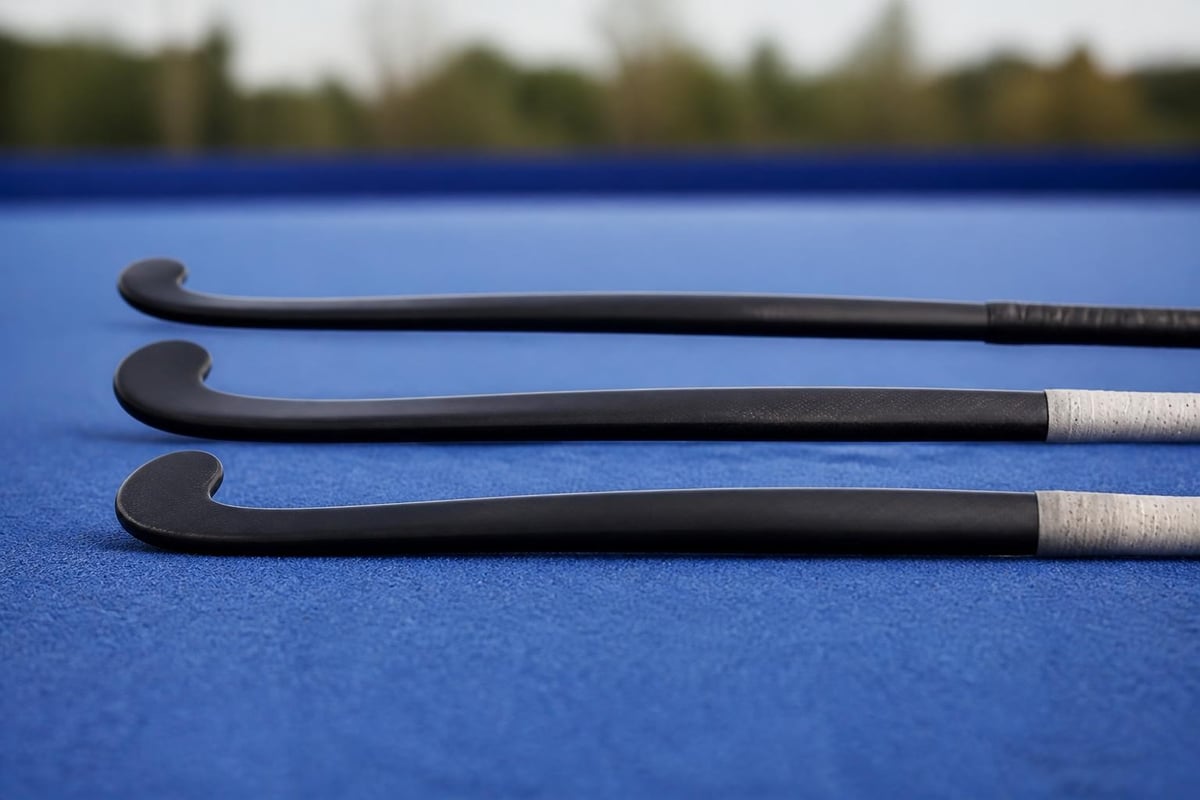
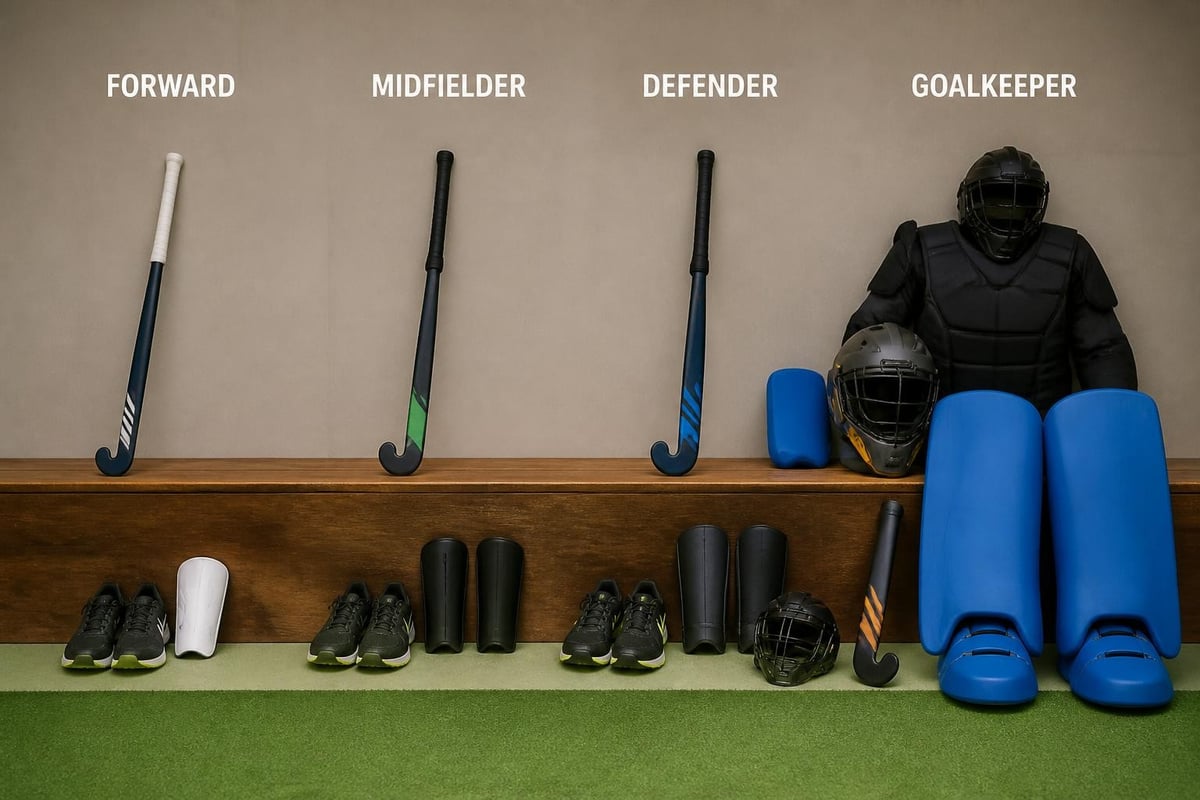
Player position often dictates bow preference. Forwards typically favor low bow for shooting variety, midfielders choose mid-bow for balanced skills, and defenders often select standard bow for reliable stops and clearances.
Protective Equipment Requirements and Standards
Field hockey's combination of hard balls traveling at high velocity and stick contact creates specific injury risks. Research shows that systematic reviews of field hockey injuries identify the lower extremities, hands, and face as the most vulnerable areas across competitive levels.
Mandatory Protective Gear
Mouthguards are universally required at all competitive levels. Custom-fitted mouthguards offer superior protection compared to boil-and-bite options, reducing concussion risk and dental injuries. At Sideline Sport Supply, we emphasize proper fit over price point-an ill-fitting mouthguard that goes unworn provides zero protection.
Shin guards must cover the front of the lower leg from ankle to below the knee. Unlike soccer shin guards, field hockey models feature reinforced ankle cups and extended coverage to protect against stick strikes and ball impacts. High-density foam backing prevents direct-contact injuries while remaining lightweight.
Protective eyewear represents an evolving requirement, particularly for youth players. The NFHS high school eyewear standard mandates ASTM F2713-compliant goggles for high school play, addressing the significant risk of eye injuries from sticks and balls.
Position-Specific Protection
- Goalkeeper equipment: Full-body armor including helmet with throat guard, chest protector, padded shorts, leg guards, kickers, and hand protectors
- Field players: Gloves (left hand for stick protection, optional right hand), face masks for penalty corner defenders
- Optional items: Compression shorts with padding, forearm guards for advanced players
Studies on musculoskeletal injuries in collegiate women's field hockey demonstrate that lower-extremity injuries account for the majority of time-loss events, reinforcing the importance of proper footwear and shin protection even at elite levels.
Field Hockey Balls and Surface Considerations
Ball selection directly correlates with playing surface and environmental conditions. Regulation field hockey balls weigh 156-163 grams and measure 224-235mm in circumference, but construction varies significantly.
Ball Types and Applications
Smooth balls dominate competitive play on water-based and sand-dressed synthetic turf. Their dimple-free surface maximizes speed and true roll on quality surfaces. Dimpled balls create slight air resistance, slowing play marginally-beneficial for training or rougher surfaces.
Indoor balls are lighter (130-150 grams) and often feature softer cores to reduce bounce on gymnasium floors. Practice balls use more durable, less expensive materials suitable for repetitive drill work without the precision requirements of match balls.
The correlation between surface type and equipment extends beyond balls. FIH Hockey Turf Standards outline how surface properties affect ball behavior, player safety, and equipment wear patterns.
| Surface Type | Ball Choice | Footwear | Durability Impact |
|---|---|---|---|
| Water-based | Smooth match | Molded cleats | High stick wear |
| Sand-dressed | Smooth match | Turf shoes | Moderate wear |
| Multi-sport turf | Dimpled practice | Turf/molded | Lower stick wear |
| Indoor | Lightweight indoor | Flat-sole court | Minimal wear |
Footwear Technology for Field Hockey
Field hockey footwear must provide traction on synthetic surfaces, support quick directional changes, and protect the foot from ball and stick impacts. Unlike cleated sports on natural grass, field hockey predominantly uses turf-specific designs.
Outsole Configurations
Molded rubber studs offer excellent grip on sand-dressed surfaces without excessive grabbing that could cause joint stress. Patterns typically feature numerous small studs distributed across the forefoot and heel. Dimpled or nubbed soles work well on water-based turf and indoor surfaces, providing controlled traction without penetration.
Many programs require footwear versatility for multiple training environments. Similar to considerations in field hockey training equipment, footwear selection should match primary playing conditions while accommodating occasional variation.
Construction Features for Performance
- Reinforced toe box: Protects against ball impacts and extends shoe life
- Medial post support: Stabilizes the foot during directional changes
- Low-profile design: Improves ground contact and balance
- Breathable uppers: Manages moisture during intense play
Coaches and athletic directors should consider that surface-specific footwear optimizes performance and reduces injury risk. Multi-sport turf guidance from other field sports confirms that footwear-surface mismatch increases lower-extremity injury incidence.
Goalkeeper Equipment Essentials
Goalkeepers face unique equipment requirements due to the extreme projectile velocities and close-range shot stopping. Complete goalkeeper field hockey equipment represents a significant investment but cannot be compromised for safety reasons.
Core Goalkeeper Components
The helmet must meet safety certifications and include a full face cage plus throat guard. Modern designs incorporate impact-absorbing foam, ventilation systems, and quick-release mechanisms. Leg guards extend from ankle to upper thigh, featuring hard-shell fronts to deflect balls and padded backs to protect against falls on artificial surfaces.
Kickers cover the feet and lower legs, designed with angled surfaces to direct cleared balls away from the goal. Hand protectors differ from ice hockey gloves-the right hand uses a blocking glove with a large surface area, while the left hand employs a thinner glove maintaining stick control.
The chest protector, padded shorts, and pelvic protection complete the goalkeeper's armor. Total weight can exceed 20 pounds, requiring goalkeepers to build specific strength and conditioning.
Quality Considerations for Goalkeeper Gear
Budget constraints tempt programs to economize on goalkeeper equipment, but this category demands prioritizing protection over cost. Entry-level goalkeeper kits ($400-$600) provide basic protection suitable for recreational or middle school play. Competitive high school and club programs should invest in mid-range equipment ($800-$1,200) offering better materials and construction. Elite goalkeeper sets ($1,500-$2,500) incorporate advanced impact protection and lightweight materials.
Training Equipment and Skill Development Tools
Beyond game-day essentials, effective field hockey programs incorporate training-specific field hockey equipment that accelerates skill development and prepares athletes for competition intensity.
Individual Skill Development
Rebound boards create compact training stations for passing, receiving, and first-touch practice. Portable models allow athletes to train independently, building repetitions outside organized practice time. Cones, agility ladders, and markers structure footwork drills and spatial awareness exercises specific to field hockey movement patterns.
Weighted balls (200-250 grams) strengthen stick-handling muscles and improve power transfer. Vision training equipment includes colored balls and reaction light systems that develop hand-eye coordination under time pressure.
Team Training Infrastructure
- Practice goals: Regulation-size frames with durable netting for shooting drills
- Scrimmage vests: Reversible pinnies in multiple colors for small-sided games
- Ball bags: Mesh carriers holding 12-20 balls for efficient drill transitions
- Hydration stations: Essential for safety during intense training sessions
Resources from USA Field Hockey provide age-appropriate training progressions that inform equipment needs at each development stage. Youth programs emphasize fundamental skills requiring basic equipment, while advanced training incorporates specialized tools for tactical development.
Bag and Storage Solutions
Proper equipment storage extends gear life and ensures athletes arrive prepared for every session. Field hockey stick bags protect expensive sticks during transport while organizing smaller items.
Bag Types and Features
Stick bags range from simple sleeves ($15-$25) protecting a single stick to full team bags ($80-$150) holding multiple sticks plus protective gear, balls, and accessories. Key features include padded compartments preventing stick damage, ventilated sections for wet or soiled gear, and external pockets for mouthguards and personal items.
Goalkeeper equipment requires specialized bags with rigid construction supporting heavy protective gear. Some designs incorporate wheels for easier transport of 25-30 pound equipment loads.
Team programs benefit from standardized bag systems that simplify equipment checks and maintain organizational consistency. Similar to approaches discussed in our coverage of sports equipment supply, centralized equipment management reduces losses and ensures accountability.
Compliance with Governing Body Regulations
Different organizations governing field hockey establish specific equipment requirements that programs must navigate. Understanding these regulations prevents game-day disqualifications and ensures player safety.
High School and Youth Requirements
High school field hockey follows NCAA equipment modifications with state-specific additions. Most states mandate mouthguards, shin guards, and increasingly protective eyewear meeting ASTM F2713 standards. Stick inspections verify compliance with dimensional limits and prohibit dangerous modifications.
Youth leagues often adopt simplified rules emphasizing safety over competition. Goalkeeper equipment may allow more flexibility in recreational programs, while competitive club teams align with USA Field Hockey standards.
Collegiate and Elite Standards
NCAA competition requires strict adherence to equipment specifications outlined in annual rules publications. Stick checks occur regularly, examining bow measurements, shaft dimensions, and overall condition. Protective equipment requirements mandate mouthguards and shin guards, with additional position-specific items at referee discretion.
International play follows FIH standards most strictly, with equipment inspections at major tournaments. Athletes competing at multiple levels must ensure their field hockey equipment meets the most restrictive applicable standard.
Equipment Budgeting for Programs and Athletes
Strategic equipment purchasing balances immediate needs with long-term value, particularly for schools and organizations managing multiple teams or sport programs.
Individual Player Investment
A complete field player kit includes:
- Stick: $80-$280 (replace every 1-3 seasons depending on use)
- Shin guards: $25-$60 (replace when padding compresses or fit changes)
- Mouthguard: $3-$80 (annual replacement recommended)
- Footwear: $60-$140 (replace seasonally or when traction degrades)
- Bag: $30-$100 (multi-year investment)
- Balls for home practice: $8-$15 each (2-3 balls recommended)
Total initial investment ranges from $250 for entry-level players to $700+ for competitive athletes using premium equipment. Annual replacement costs typically fall between $120-$300 depending on growth, wear, and skill progression.
Team and Program Budgets
Schools and clubs outfitting full teams face larger immediate costs but achieve economies of scale through bulk purchasing and multi-year planning:
| Program Level | Per-Player | 25-Player Team | Priority Allocations |
|---|---|---|---|
| Youth/MS | $200-$300 | $5,000-$7,500 | Safety gear, practice balls |
| High School | $350-$500 | $8,750-$12,500 | Quality sticks, goalkeeper set |
| Competitive Club | $500-$750 | $12,500-$18,750 | Advanced sticks, training tools |
Programs should allocate 15-20% of budgets to training equipment, 40-50% to player essentials (sticks, protection), 20-25% to goalkeeper equipment (supporting 2-3 goalkeepers), and 10-15% to infrastructure (goals, storage, maintenance).
The American Orthopaedic Society for Sports Medicine emphasizes that under-investing in protective equipment creates liability exposure and genuine injury risk that far exceeds short-term savings.
Seasonal Maintenance and Equipment Lifecycle
Proper maintenance extends equipment life and maintains performance standards throughout competitive seasons. Establishing routine care protocols prevents mid-season failures and costly emergency replacements.
Stick Care and Maintenance
Regular inspection identifies developing cracks, especially in high-stress areas near the head and grip. Small cracks can be stabilized with epoxy, but sticks with structural damage require replacement to prevent game-time failures.
Grip replacement ($5-$12) restores control as factory grips wear smooth. Players should replace grips when tackiness diminishes or visible wear appears. Some athletes prefer overwraps that add cushioning or customize grip diameter.
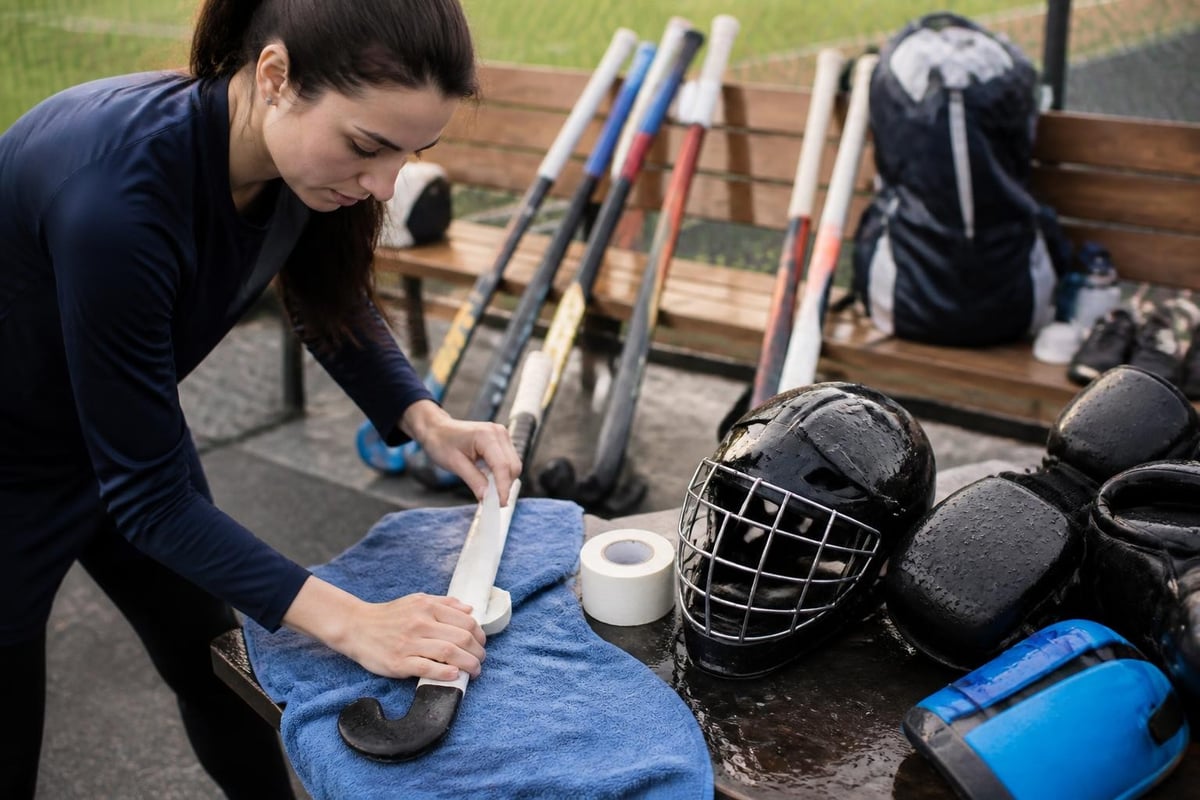
Head tape protects the stick face from abrasion against artificial turf. Replacing tape every 2-3 sessions prevents excessive wear that degrades ball control. Quality tape designed for field hockey provides better durability than generic athletic tape.
Protective Gear Hygiene
Shin guards and goalkeeper equipment require regular cleaning to prevent bacterial growth and odor. Removable padding should be hand-washed weekly during active seasons and thoroughly dried before storage. Hard-shell components can be wiped with disinfectant solutions.
Mouthguards demand daily rinsing and weekly deep cleaning with denture cleaner or specialized sport guard solutions. Storage in ventilated cases prevents bacterial accumulation. Annual replacement addresses material degradation even when visible wear isn't apparent.
Making Informed Purchasing Decisions
Equipment selection involves balancing performance requirements, budget constraints, and individual player needs. Athletes, parents, and coaches benefit from understanding how to evaluate options and prioritize investments.
Assessment Criteria
Skill level matching ensures equipment supports current abilities while accommodating growth. Beginners gain no advantage from elite sticks requiring advanced technique to control. Conversely, competitive athletes handicap themselves with equipment lacking the performance characteristics their skills can exploit.
Quality indicators include manufacturer reputation, materials specifications, warranty coverage, and compliance certifications. Established brands typically deliver more consistent quality than unknown manufacturers, though premium pricing doesn't always correlate with proportional performance gains.
Fit and comfort directly impact performance and safety. Shin guards that shift during play provide inadequate protection. Footwear that causes blisters destroys focus and limits training intensity. Personal evaluation remains essential-online reviews provide guidance, but individual fit determines success.
Shopping Strategies
Purchasing field hockey equipment strategically reduces costs without compromising safety or performance:
- End-of-season sales: Retailers clear inventory in late fall, offering 20-40% discounts on prior-year models
- Bulk team orders: Coordinate purchases across team rosters for volume pricing
- Used equipment: Gently used sticks and bags offer value; avoid used protective gear where hygiene and structural integrity matter
- Multi-season planning: Buy next size up for growing players when clearance pricing appears
For programs managing equipment across multiple teams and sports, working with dedicated sporting goods suppliers streamlines ordering, ensures consistent quality, and often provides program pricing that significantly reduces per-item costs.
Equipping field hockey athletes properly requires understanding sport-specific gear, safety standards, and performance requirements across all positions and skill levels. From selecting sticks matched to playing style to ensuring protective equipment meets current regulations, every decision impacts player development and program success. Sideline Sport Supply provides the reliable, affordable field hockey equipment teams need with straightforward pricing and fast fulfillment, so coaches and athletes spend less time sourcing gear and more time developing skills on the field.