

Athletic Sports Equipment Guide for Teams and Athletes
Athletic sports equipment forms the foundation of successful training programs, competitive performance, and player development across all levels of sport. Whether outfitting an entire school program, stocking a community league, or supporting individual athletes, the right equipment selection directly impacts safety, skill development, and competitive outcomes. Today's athletic sports equipment market has evolved beyond basic balls and nets to include sophisticated training tools, performance-tracking technology, and specialized gear designed for specific developmental stages and competitive requirements.
Understanding the Athletic Sports Equipment Market Landscape
The sports equipment industry has experienced remarkable growth in recent years, with the U.S. sporting goods industry reaching $130 billion in wholesale sales in 2025, reflecting a 3.7% year-over-year increase. This expansion reflects not only increased participation rates but also evolving expectations for equipment quality and performance.
Several key factors drive this market expansion. Youth sports participation continues to grow across multiple disciplines, creating sustained demand for entry-level and intermediate athletic sports equipment. Simultaneously, school and recreational programs are investing in quality gear that supports long-term athlete development rather than purchasing replacement equipment annually.
Market analysis reveals distinct purchasing patterns across different customer segments. Schools and sports organizations typically purchase in bulk cycles, focusing on durability and cost-effectiveness. Individual athletes and families often prioritize specific performance features aligned with competitive goals. Coaches and trainers seek versatile training tools that address multiple skill development needs within budget constraints.
Technology Integration in Modern Equipment
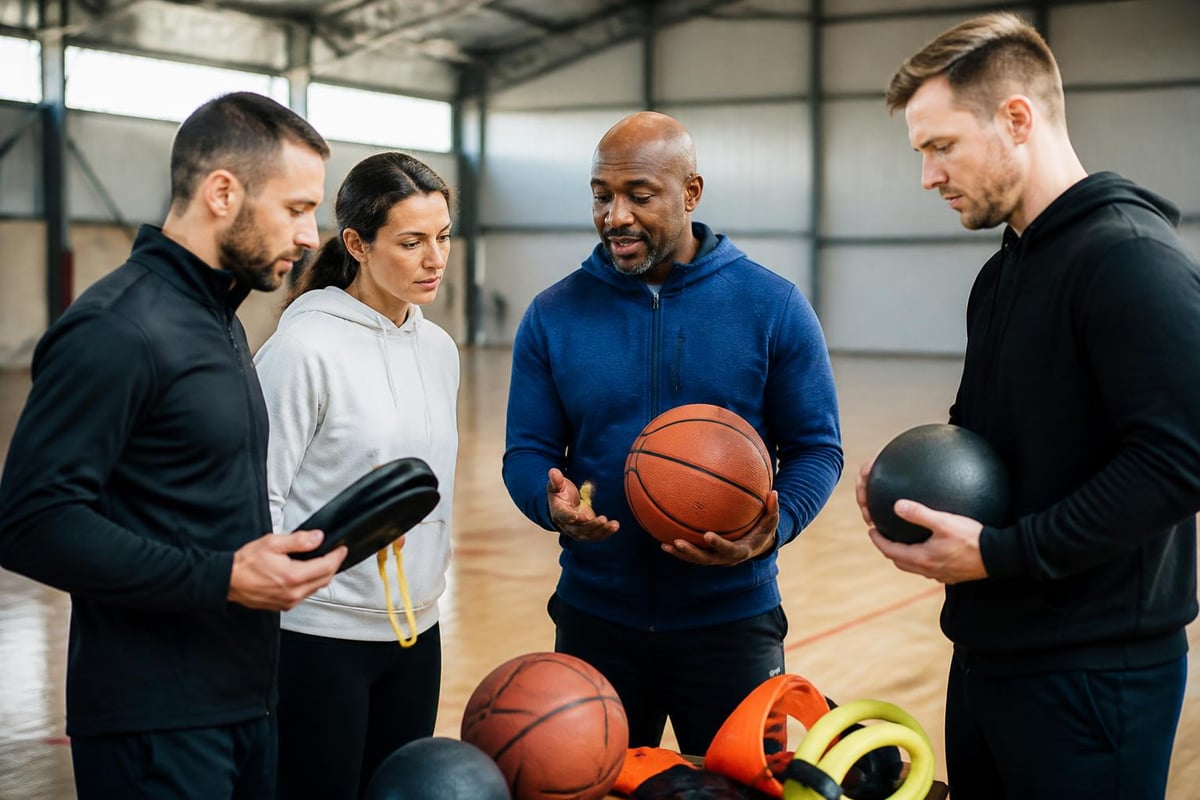
Modern athletic sports equipment increasingly incorporates technological innovations that enhance training effectiveness and performance measurement. Smart equipment with embedded sensors provides real-time feedback on technique, speed, and accuracy. Artificial intelligence is revolutionizing equipment design and performance analysis, creating opportunities for more personalized training approaches.
However, technology integration must balance innovation with practical application. While high-tech solutions offer compelling features, traditional athletic sports equipment remains essential for fundamental skill development. The most effective programs combine basic equipment for foundational training with selective technology integration for advanced development.
Essential Equipment Categories for Team Sports
Team sports require coordinated equipment purchases that serve multiple athletes across various skill levels. Understanding category-specific needs helps organizations allocate budgets effectively and maintain adequate inventory for practices and competitions.
Ball Sports Fundamentals
Ball sports demand consistent equipment replacement cycles due to wear from regular use. Quality matters significantly here, as substandard balls affect skill development through inconsistent bounce, flight patterns, or grip characteristics.
Basketball equipment priorities:
- Official-size balls for different age groups
- Training balls with enhanced grip features
- Durable outdoor options for facility flexibility
- Proper inflation equipment and pressure gauges
Soccer program essentials:
- Size-appropriate balls for youth through adult programs
- Practice quantities sufficient for small-sided games
- Match-quality balls for competitive play
- Ball pumps and maintenance supplies
Organizations can explore specialized options like portable soccer goals that provide training flexibility across different facility types and field configurations.
Baseball and Softball Equipment Systems
Baseball and softball programs require substantial initial investment across multiple equipment categories. The complexity increases when supporting multiple age divisions simultaneously.
| Equipment Type | Quantity Guidelines | Replacement Cycle | Budget Priority |
|---|---|---|---|
| Bats | 8-12 per team | 2-3 years | High |
| Helmets | 15-20 per team | Annual inspection | Critical |
| Gloves | Player-owned plus 5-8 loaners | 3-4 years | Medium |
| Catcher's Gear | 2-3 complete sets | 2-3 years | High |
| Bases | 2-3 sets | 4-5 years | Low |
Advanced training programs increasingly incorporate baseball training machines that provide consistent repetitions for hitting development while reducing pitcher fatigue during extended practice sessions. Similarly, softball machines offer comparable benefits for softball-specific training needs.
Individual Sport Equipment Considerations
Athletes pursuing individual sports require specialized athletic sports equipment that often involves higher per-athlete investment but serves specific performance objectives. These purchases typically follow different decision criteria than team sport equipment.
Strength Training and Fitness Equipment
Strength and conditioning form essential components of athletic development across all sports. Whether supporting team training programs or individual athlete preparation, fitness and training equipment must balance versatility with specific training objectives.
Effective strength training equipment for athletic programs includes:
- Foundational free weights that develop functional strength patterns
- Resistance bands offering portable, versatile training options
- Plyometric boxes for explosive power development
- Agility ladders and cones for footwork and coordination
- Pull-up bars and suspension systems for bodyweight training
Safety equipment deserves particular attention in strength training environments. Proper weight lifting gloves protect hands during heavy lifting while improving grip security, reducing injury risk during maximum effort sets.
Track and Field Equipment Needs
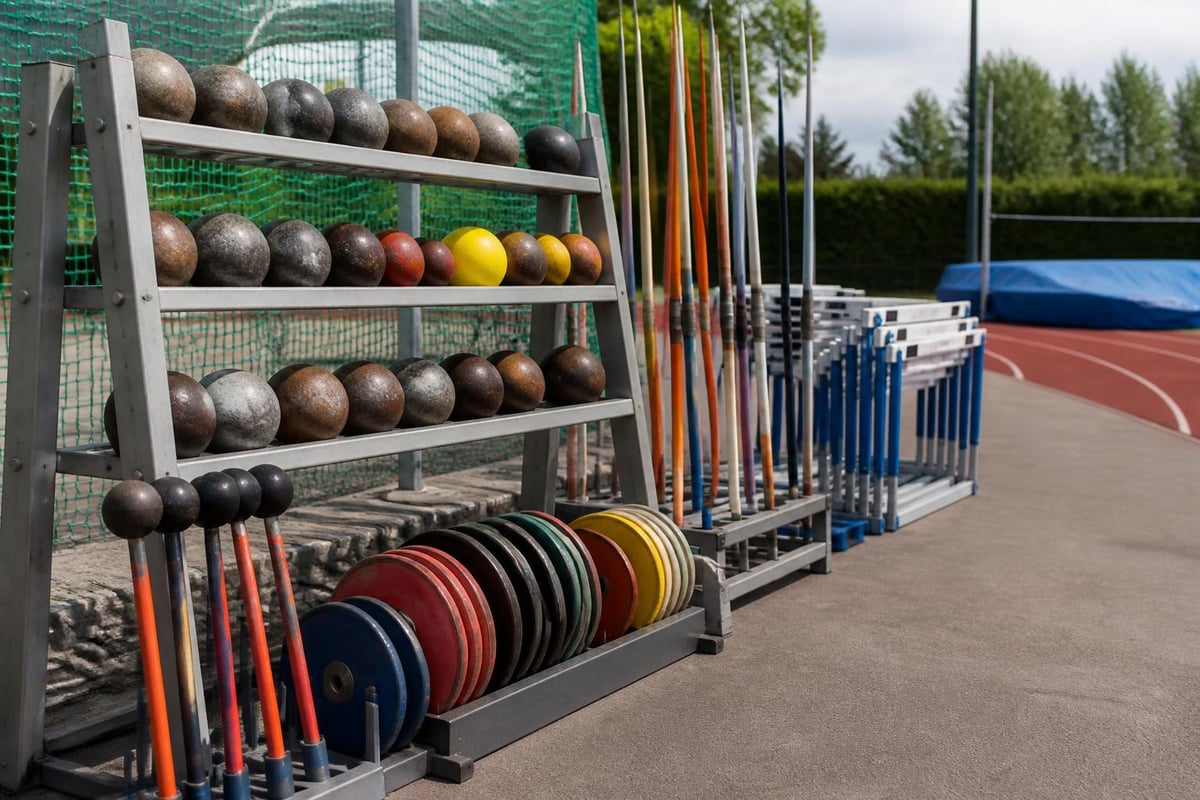
Track and field programs span numerous disciplines, each requiring specific equipment investments. Successful programs prioritize equipment that serves multiple events while maintaining competition-standard specifications.
Throwing events demand:
- NFHS and NCAA certified implements across weight classes
- Practice implements for technique development
- Safety cages and landing areas meeting regulation standards
- Storage and transportation systems protecting equipment investment
Jumping and vaulting require:
- Standards and crossbars with height adjustment capabilities
- Landing pits meeting safety specifications
- Approach markers and measurement tools
- Maintenance equipment for pit and runway surfaces
Timing represents another critical component, with tools like the Seiko S057 100 Lap Memory Dual Timer providing accurate split tracking for interval training and competitive events.
Facility Equipment and Infrastructure
Beyond sport-specific gear, successful athletic programs require facility equipment that supports efficient operations, player safety, and professional presentation. This category often receives insufficient budget attention despite its importance to overall program quality.
Field Maintenance and Setup Equipment
Proper field preparation affects both safety and performance quality. Investment in maintenance equipment reduces long-term facility costs while improving playing conditions.
Essential field equipment includes:
- Line marking systems for multiple sports configurations
- Goal posts and net systems with proper anchoring
- Protective padding for permanent structures
- Field covers and tarps for weather protection
- Storage solutions protecting equipment from elements
Weather protection considerations:
- Hydration stations with cooling capabilities
- Shade structures for sideline areas
- Lightning detection systems for outdoor facilities
- Emergency response equipment accessibility
Organizations can find comprehensive options through specialized outdoor equipment suppliers that understand field sport requirements, as well as indoor equipment for gymnasium-based programs.
Scoreboards and Game Management Systems
Professional presentation through quality scoreboards enhances competitive atmosphere while providing essential game information. Modern scoreboard systems range from basic manual units to sophisticated electronic displays with wireless control.
Selection criteria should include:
- Visibility from spectator areas and opposite sidelines
- Weather resistance for outdoor installations
- Ease of operation during fast-paced game situations
- Compatibility with existing power infrastructure
- Maintenance requirements and replacement part availability
Emerging Trends Shaping Equipment Selection
The athletic sports equipment market continues evolving in response to technological advancement, sustainability concerns, and changing consumer expectations. Understanding these trends helps organizations make forward-looking purchase decisions.
Sustainability and Environmental Considerations
Environmental consciousness increasingly influences equipment purchasing decisions. Sustainability initiatives now extend throughout the sports equipment industry, from manufacturing processes to end-of-life recycling programs.
Sustainable equipment options include:
- Balls manufactured from recycled materials maintaining performance standards
- Apparel and protective gear using eco-friendly fabrics
- Equipment with extended durability reducing replacement frequency
- Packaging reduction and recyclable shipping materials
- Take-back programs for worn equipment recycling
While sustainable options sometimes carry premium pricing, total cost of ownership analysis often reveals long-term savings through enhanced durability and reduced replacement cycles.
Gender-Specific Equipment Development
Recognition that female athletes have distinct equipment needs has driven product innovation across multiple sports. Women-owned companies designing athletic gear for female athletes address previously underserved market segments with equipment engineered for anatomical differences and performance requirements.
This trend manifests across equipment categories:
- Protective gear sized and shaped for female anatomy
- Footwear designed for biomechanical differences
- Apparel accounting for physiological factors
- Training equipment addressing strength and flexibility profiles
Programs supporting both male and female athletes should evaluate whether gender-specific options better serve their participants than traditional unisex equipment.
Economic Factors Affecting Equipment Costs
Economic conditions significantly impact equipment accessibility and program budgets. Recent discussions around tariffs affecting youth sports equipment costs highlight how policy decisions influence pricing structures and availability.
Budget-conscious organizations can employ several strategies:
- Establish relationships with reliable suppliers offering consistent pricing
- Purchase during off-season periods when demand decreases
- Negotiate bulk pricing for multi-year commitments
- Consider refurbished equipment for non-critical applications
- Implement proper maintenance extending equipment lifespan
Understanding market dynamics helps organizations time purchases strategically and allocate resources effectively across competing priorities.
Equipment Selection and Quality Assessment
Selecting appropriate athletic sports equipment requires balancing multiple factors including performance requirements, budget constraints, safety standards, and longevity expectations. Systematic evaluation processes ensure optimal purchasing decisions.
Performance Specification Requirements
Different competitive levels require varying equipment specifications. Youth recreational programs prioritize safety and skill development over advanced performance features. Elite competitive programs demand equipment meeting strict regulatory standards and providing measurable performance advantages.
Key specification considerations:
| Factor | Recreational Priority | Competitive Priority |
|---|---|---|
| Regulatory Compliance | Basic safety standards | Sanctioning body certification |
| Durability | High (frequent use) | Moderate (careful handling) |
| Performance Features | Fundamental functionality | Advanced specifications |
| Cost per Unit | Budget-friendly | Performance-justified investment |
| Replacement Cycle | Extended (2-4 years) | Regular (1-2 years) |
Supplier Relationship Management
Successful programs develop productive relationships with equipment suppliers who understand their specific needs and constraints. Quality suppliers offer more than product transactions-they provide expertise, support, and solutions.
Evaluate potential suppliers based on:
- Product range matching your sport-specific requirements
- Inventory availability ensuring timely order fulfillment
- Technical knowledge supporting informed decisions
- Return and warranty policies protecting your investment
- Volume pricing reflecting your purchasing patterns
Organizations requiring comprehensive equipment support across multiple sports benefit from partnerships with full-service providers like Sideline Sport Supply that maintain diverse inventory and understand varied program needs.
Safety Standards and Regulatory Compliance
Athletic sports equipment safety represents non-negotiable priority requiring constant attention to evolving standards and certification requirements. Equipment failures risk catastrophic injury and legal liability for programs and organizations.
Certification and Testing Requirements
Different sports organizations maintain specific equipment certification standards. Understanding which standards apply to your programs ensures compliance and participant safety.
Common certification bodies include:
- NOCSAE (National Operating Committee on Standards for Athletic Equipment)
- NFHS (National Federation of State High School Associations)
- NCAA (National Collegiate Athletic Association)
- ASTM International
- Consumer Product Safety Commission
Equipment bearing current certification marks from relevant authorities demonstrates compliance with safety testing and performance standards. Expired certifications or equipment predating current standards should be removed from service regardless of apparent condition.
Inspection and Maintenance Protocols
Even certified equipment requires regular inspection and maintenance to ensure continued safe operation. Establishing systematic protocols prevents equipment degradation from compromising safety.
Implement comprehensive inspection schedules:
- Pre-season equipment audits identifying items requiring replacement
- Mid-season spot checks detecting developing problems
- Post-season comprehensive reviews planning future purchases
- Daily pre-practice inspections for critical safety equipment
- Immediate removal protocols for damaged equipment
Documentation of inspection results provides liability protection and informs replacement planning. Many organizations maintain equipment logs tracking purchase dates, inspection results, and maintenance activities.
Budget Optimization Strategies
Athletic programs consistently face budget constraints requiring strategic approaches to equipment acquisition and management. Effective strategies maximize available resources while maintaining safety and performance standards.
Multi-Year Planning and Procurement
Strategic equipment planning extends beyond annual budget cycles, anticipating replacement needs and opportunity purchases. Multi-year planning prevents emergency purchases at premium pricing while ensuring adequate inventory.
Develop comprehensive equipment plans addressing:
- Current inventory condition and remaining service life
- Anticipated program growth affecting quantity needs
- Regulatory changes requiring equipment updates
- Technology advancements warranting consideration
- Budget allocation across competing equipment categories
Shared Equipment and Cooperative Purchasing
Organizations with limited budgets can explore cooperative arrangements maximizing equipment utility and purchasing power. Shared equipment programs and group purchasing reduce per-participant costs while maintaining access to quality gear.
Cooperative approaches include:
- Regional leagues sharing specialized equipment across teams
- School districts coordinating bulk purchases for standard items
- Community programs partnering with schools during off-seasons
- Booster organizations funding equipment benefiting multiple teams
These arrangements require clear agreements addressing maintenance responsibilities, scheduling priority, and replacement contributions.
Selecting and managing athletic sports equipment requires balancing performance needs, safety requirements, and budget realities while staying current with evolving market trends and technological innovations. Whether outfitting youth recreational programs, competitive school teams, or elite training facilities, strategic equipment decisions directly impact athlete development and program success. Sideline Sport Supply provides the reliable, game-ready equipment and straightforward expertise that coaches, schools, and organizations need to focus on what matters most: developing athletes and winning competitions.