

Track and Field Equipment Guide for Schools & Teams
Track and field athletics demands precision equipment to ensure fair competition, athlete safety, and accurate performance measurement. From high school programs to collegiate competitions, selecting the right track and field equipment requires understanding technical specifications, safety standards, and durability requirements. Whether you're outfitting a new facility or replacing aging gear, knowing what to prioritize helps athletic directors, coaches, and facility managers make informed decisions that support athlete development while staying within budget constraints.
Essential Starting Equipment for Track Events
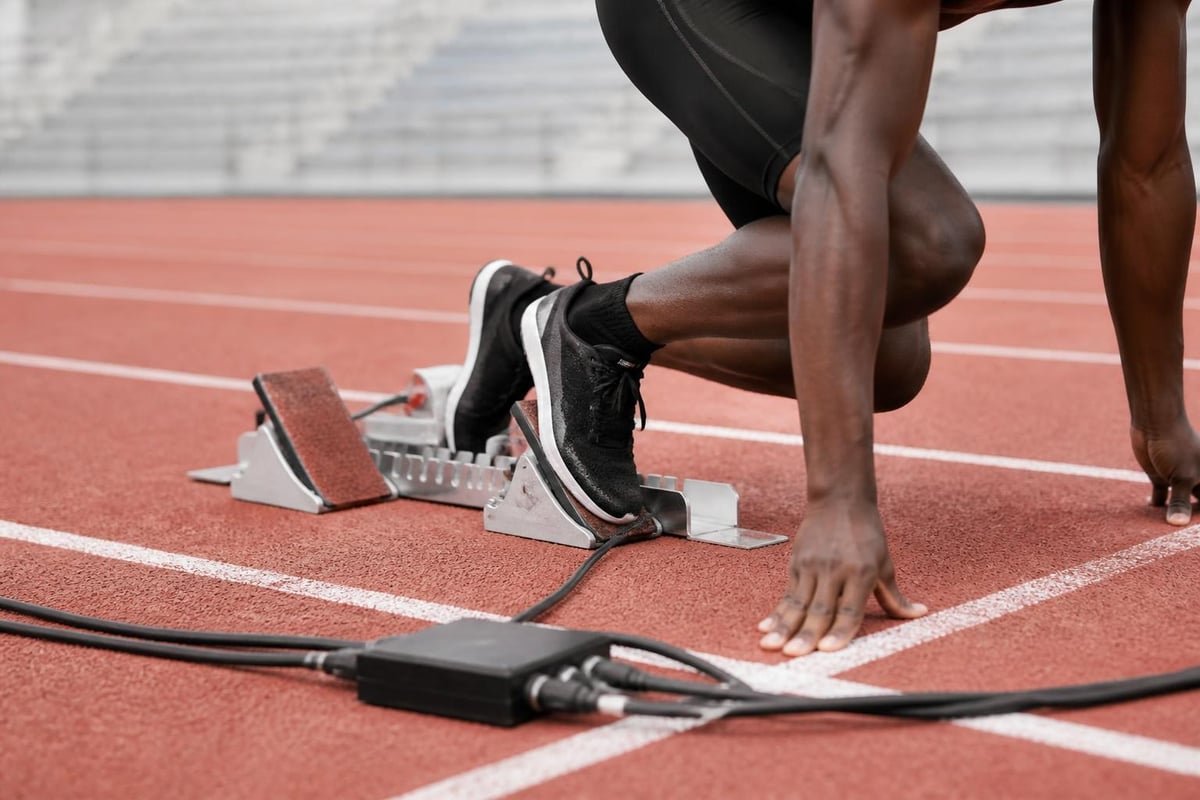
Starting blocks form the foundation of sprint racing, providing athletes with the stable platform needed for explosive starts. Modern starting blocks feature adjustable pedals that accommodate different athlete preferences and foot sizes, with quick-release mechanisms that allow rapid position changes between heats.
Key features to evaluate when selecting starting blocks:
- Weight and portability for easy setup and storage
- Pedal adjustment range and locking mechanisms
- Spike plate durability and track surface compatibility
- Connection points for electronic timing systems
- Frame stability under maximum force application
The integration of starting blocks with timing systems has become standard at competitive levels. Electronic starting systems connect to blocks through sensors that detect false starts, providing officials with precise reaction time data. Schools and organizations planning future upgrades should select blocks with built-in connectivity options, even if electronic timing isn't immediately available.
Hurdles and Barriers: Safety Meets Performance
Track and field equipment for hurdle events must balance athlete safety with realistic competition conditions. Modern hurdles feature counterweighted bases that tip forward when struck with sufficient force, reducing injury risk while maintaining proper resistance during competition.
Hurdle Height Specifications
Different age groups and competition levels require specific hurdle heights. Schools serving multiple age ranges need adjustable hurdles or complete sets spanning different heights.
| Event Category | Men's Height | Women's Height | Youth Height |
|---|---|---|---|
| Sprint Hurdles | 42 inches | 33 inches | 30 inches |
| Intermediate | 36 inches | 30 inches | 27 inches |
| Distance/Steeplechase | 36 inches | 30 inches | N/A |
Purchasing considerations extend beyond height adjustability. The USA Track & Field Rule Books provide detailed specifications for hurdle construction, including counterweight requirements and tip-over force thresholds. Compliance with these standards ensures equipment meets competition requirements while protecting athletes during training.
Storage and transport logistics matter significantly for programs with limited space. Stackable hurdles reduce storage footprint, while wheeled hurdle carts enable single-person transport of complete sets. Many athletic programs now invest in field and facility equipment that prioritizes space efficiency alongside performance features.
Throwing Implements: Precision and Certification
Shot puts, discuses, javelins, and hammers represent the implements category of track and field equipment, where precise weight specifications directly impact competition fairness and athlete safety. Each implement must meet strict certification standards, with weight tolerances measured in grams rather than ounces.
Competition-grade implements carry certification marks from governing bodies, indicating they've passed weight, balance, and construction standards. Schools purchasing throwing implements should verify certification status, as non-certified equipment cannot be used in sanctioned competitions.
Implement storage and safety protocols include:
- Dedicated, locked storage areas separated by implement type
- Regular weight verification using calibrated scales
- Surface inspection for cracks, dents, or deformation
- Replacement schedules based on usage intensity
- Clear labeling indicating gender, age group, and weight class
The financial investment in throwing implements varies significantly based on quality tier. Entry-level training implements serve practice needs adequately, while competition-grade equipment delivers the balance and flight characteristics serious athletes require. Programs serving multiple age groups typically maintain separate implement sets, as middle school, high school, and open divisions each require different weights.
Javelin safety deserves particular attention. Modern javelins incorporate design features that reduce flight distance compared to older models, addressing safety concerns in facilities with limited throwing areas. The World Athletics technical documents detail the evolution of javelin specifications and current certification requirements.
Jumping Pits and Landing Systems
High jump and pole vault equipment represents the most significant safety consideration in track and field programs. Landing pits must provide adequate cushioning depth, surface area, and impact absorption to protect athletes during training and competition.
High Jump Pit Specifications
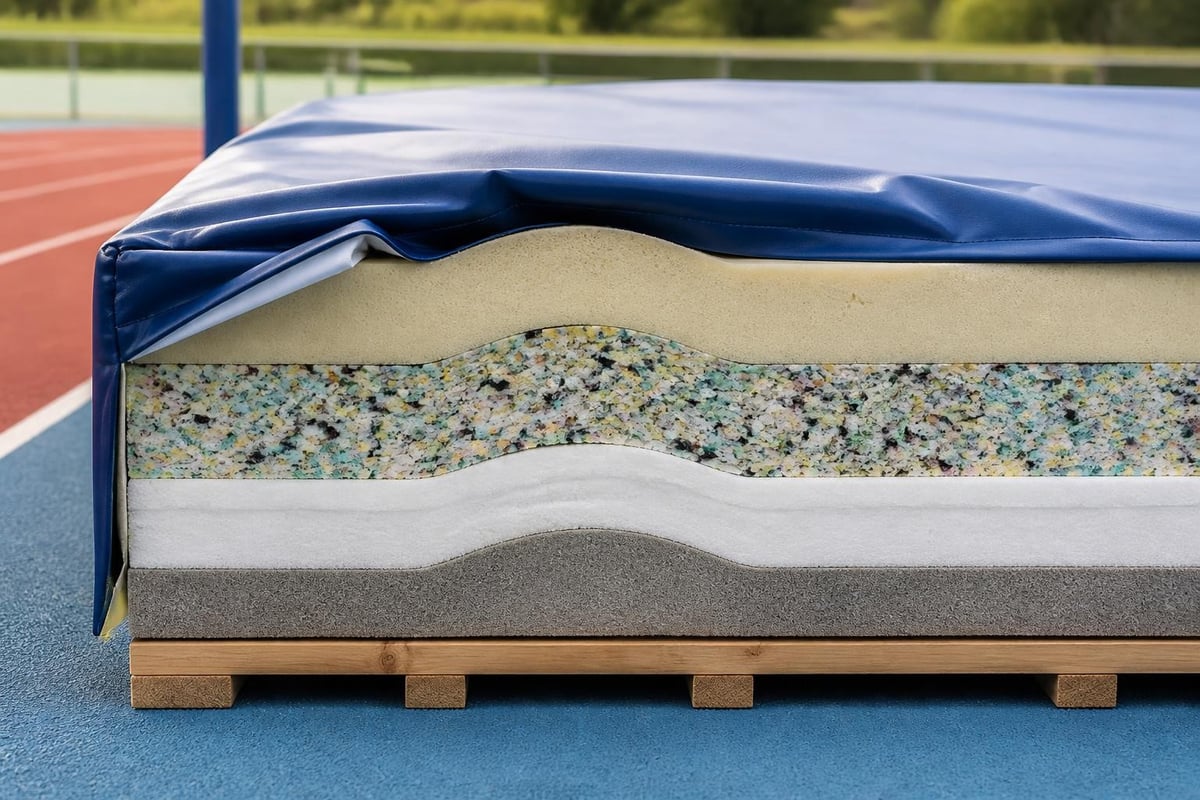
Competition-standard high jump pits measure 16 feet by 8 feet minimum, with landing surface height of 24-28 inches. The pit construction involves multiple foam density layers, with softer foam on top transitioning to firmer foam at the base for proper impact distribution.
Standards and crossbars complete the high jump setup. Standards must feature stable bases, height adjustment mechanisms marked in clear increments, and bar supports that release easily when contacted. The UK Athletics maintenance guidance provides detailed protocols for inspecting and maintaining jumping equipment to ensure ongoing safety compliance.
Pole vault systems require even more extensive safety infrastructure. Modern pole vault pits extend 20 feet by 16 feet minimum, with specialized construction that includes:
- Graduated foam density from landing zone to back of pit
- Properly positioned collar (box) for pole plant
- Standards with extension arms accommodating crossbar heights up to 20 feet
- Weather-resistant covers protecting pit surfaces between uses
The pole vault box requires particular attention, as improper installation creates serious safety hazards. Professional installation ensures correct depth, angle, and reinforcement, with regular inspection protocols identifying wear or damage before problems compromise athlete safety.
Long Jump and Triple Jump Runways
Long jump and triple jump facilities require precisely maintained runways, takeoff boards, and landing pits. The runway surface must match the track surface for consistent approach speeds, while the takeoff board needs exact positioning and secure installation to prevent movement during use.
Plasticine indicator boards sit immediately beyond the takeoff board, allowing officials to identify foul jumps through visible athlete footprints. This track and field equipment requires replacement after each competition, making it a recurring supply need for active programs.
Landing pits for horizontal jumps traditionally used sand, though modern synthetic pit fill materials offer advantages in maintenance and consistency. Sand pits require regular raking, moisture management, and contamination removal, while synthetic fills maintain consistent texture with less frequent maintenance.
Timing and Measurement Technology
Electronic timing systems have transformed track and field competition, replacing hand timing with precision measurement accurate to one-thousandth of a second. Complete timing packages integrate starting systems, finish line detection, and data management software into unified platforms.
Components of comprehensive timing systems:
- Photo-finish cameras capturing finish line crossing
- Starting pistols with integrated sound sensors
- Wind gauge equipment for sprint and jump events
- Display boards showing real-time results
- Database software managing meet entries and results
The European Athletics timing specifications outline technical requirements for timing equipment used in certified competitions. Schools planning facility upgrades should review these standards even if immediate certification isn't needed, as future-proofing infrastructure prevents costly retrofits.
Distance measurement technology for throwing events and horizontal jumps has similarly evolved. Electronic distance measurement (EDM) devices use laser technology to calculate distances instantly, eliminating manual tape measurement and reducing time between attempts. Video distance measurement (VDM) systems employ multiple cameras and software analysis to determine distances from recorded footage.
Investment in fitness and training technology extends beyond competition equipment. GPS tracking systems, timing gates, and velocity measurement tools help coaches monitor training intensity and athlete development between competitions.
Track Surface Equipment and Maintenance
Synthetic track surfaces require specialized track and field equipment for proper maintenance and line marking. Surface cleaning machines remove debris and contamination without damaging the polyurethane layer, while line marking equipment ensures accurate lane boundaries and distance markings.
| Maintenance Equipment | Purpose | Frequency |
|---|---|---|
| Power broom | Debris removal | Weekly |
| Pressure washer | Deep cleaning | Monthly |
| Line marking machine | Lane/event markings | As needed |
| Surface repair kit | Fill gouges/damage | Immediate |
| Spike drag | Surface grooming | Daily during season |
The Sport England athletics design guidance provides comprehensive information about synthetic surface selection, installation, and maintenance protocols. Understanding proper care extends surface lifespan significantly, protecting the substantial investment facilities make in quality running surfaces.
The International Association for Sports Surface Science offers testing and certification programs that help facility managers assess surface quality and identify maintenance needs before performance degradation becomes apparent to athletes.
Pole Vault Poles and Athlete Safety
Pole vault poles represent highly specialized track and field equipment requiring careful selection based on athlete weight, skill level, and performance goals. Each pole is rated for specific weight ranges, with flex characteristics that vary based on construction materials and manufacturing specifications.
Fiberglass and carbon fiber poles dominate modern competition, with carbon fiber offering lighter weight and higher performance characteristics at premium pricing. Athletes typically progress through multiple poles as strength and technique improve, making pole selection an ongoing consideration rather than one-time purchase.
Storage conditions significantly impact pole longevity. Poles must be stored horizontally in temperature-controlled environments, away from direct sunlight and extreme temperature fluctuations. Many programs invest in dedicated pole storage racks that protect equipment while allowing easy access for training sessions.
Shot Put and Discus Circles
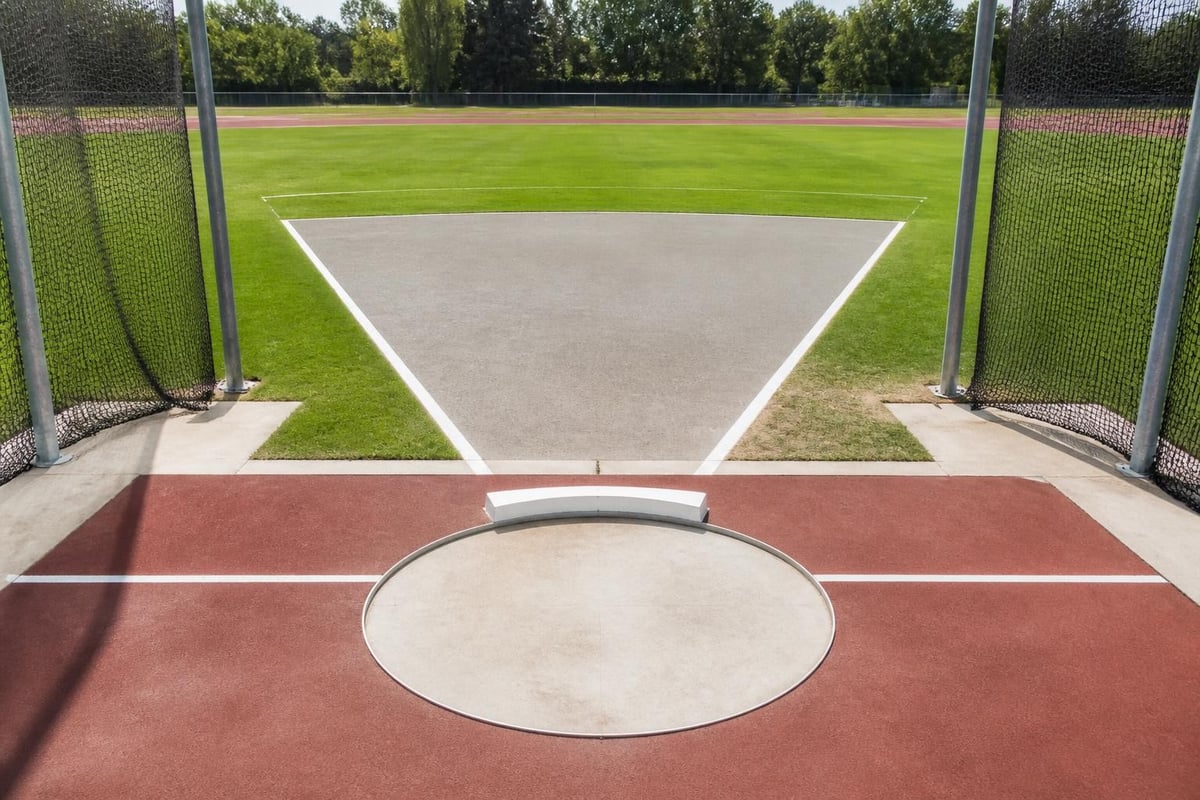
Throwing circles for shot put and discus require precise construction meeting specific diameter requirements. Shot put circles measure 7 feet in diameter, while discus circles span 8 feet 2.5 inches. Surface material must provide adequate traction without excessive grip that could cause athlete injury during the rotational movements.
The toe board in shot put circles serves as the throwing boundary, requiring secure installation that withstands repeated impact from athletes delivering maximum effort throws. Portable toe boards allow facilities to convert multipurpose circles between shot put and discus use, maximizing facility flexibility.
Safety cages surrounding discus and hammer throw areas protect spectators, officials, and nearby athletes from errant throws. Modern cage designs balance safety with visibility, using netting materials that contain implements while allowing clear sight lines for coaching and judging.
Competition Apparel and Athlete Equipment
While facilities provide the infrastructure, athletes require personal track and field equipment for optimal performance. Starting blocks may be facility-owned, but spike shoes, racing uniforms, and throwing shoes represent athlete-level investments with significant performance impact.
Sprint spikes feature aggressive front-mounted spikes with minimal heel cushioning, optimizing power transfer during maximum velocity running. Distance spikes incorporate more cushioning and reduced spike length, balancing traction with comfort over longer races. Recent research published in the British Journal of Sports Medicine examines how advanced footwear technology impacts performance and injury risk, considerations relevant for coaches making equipment recommendations.
Throwing shoes provide the stable, flat platform throwers need during rotational techniques. The reinforced sides resist the lateral forces generated during discus and hammer throws, while durable outsoles withstand repeated pivoting on concrete and synthetic surfaces.
Field Event Standards and Crossbars
High jump and pole vault standards represent long-term infrastructure investments requiring careful selection. Professional-grade standards feature:
- Precision height adjustment with clear measurement markings
- Stable base design preventing tip-over during competition
- Corrosion-resistant construction for outdoor installation
- Crossbar supports that release consistently when contacted
- Compatibility with wind indicators and height displays
Crossbars themselves require replacement more frequently than standards. Fiberglass crossbars offer the flexibility needed to prevent breaks during contacts, while maintaining the rigidity required for accurate height measurement. Competition rules specify maximum crossbar weight and deflection characteristics, parameters that impact which products qualify for sanctioned events.
Training facilities often maintain separate practice standards with less expensive crossbars, reserving competition-grade equipment for meets and final preparation sessions. This approach extends equipment lifespan while providing athletes adequate practice opportunities.
Training Aids and Development Tools
Beyond competition equipment, training-specific track and field equipment helps athletes develop technique and strength. Resistance training tools, agility equipment, and form development aids support year-round athlete improvement.
Effective training equipment for track and field programs:
- Resistance parachutes for sprint overspeed training
- Hurdle lead-up training sets with lower heights
- Medicine balls for throwing technique development
- Agility ladders for footwork pattern training
- Video analysis equipment for technique review
- Plyometric boxes for power development
Many successful programs integrate outdoor equipment from other sports to create comprehensive athletic development environments. The cross-training benefits help reduce overuse injuries while building general athleticism that supports event-specific performance.
Storage and Organization Systems
Proper storage extends track and field equipment lifespan while improving operational efficiency during practices and competitions. Dedicated storage areas should accommodate:
- Throwing implements organized by type and weight class
- Hurdles stored vertically to minimize floor space
- Starting blocks with integrated timing cables
- Pole vault poles on horizontal racks
- Small equipment (batons, measuring tapes, maintenance tools)
Mobile equipment carts enable efficient field setup, particularly valuable for programs sharing facilities with other sports. Pre-loaded carts containing event-specific equipment reduce setup time and ensure nothing gets forgotten during competition preparation.
Climate-controlled storage protects equipment from temperature extremes and moisture that accelerate degradation. While not always feasible for entire equipment inventories, climate control for high-value items like pole vault poles and electronic timing systems provides worthwhile protection.
Facility Planning and Equipment Integration
Schools and organizations planning new track facilities or major renovations should consider equipment needs during the design phase. Permanent installations for shot put and discus circles, runway approaches for jumps, and pole vault boxes all require coordination between facility construction and equipment procurement.
The research published in Sports Medicine - Open examining tracking systems and measurement technologies provides insights into emerging trends that may influence facility planning decisions. Integrating infrastructure for advanced monitoring systems during construction proves more cost-effective than retrofitting existing facilities.
Working with experienced suppliers ensures compatibility between facility features and track and field equipment specifications. Sideline Sport Supply provides consultation services helping schools and organizations navigate the complex relationship between infrastructure and equipment selection.
Budget Considerations and Procurement Strategies
Track and field programs operate within diverse budget constraints, from well-funded university programs to small high schools managing limited resources. Strategic equipment procurement balances immediate needs against long-term program development.
Prioritization frameworks help allocate limited budgets effectively:
| Priority Level | Equipment Category | Rationale |
|---|---|---|
| Critical | Safety equipment (pits, cages) | Athlete protection |
| High | Competition-certified implements | Meet participation |
| Medium | Training-specific tools | Skill development |
| Lower | Technology upgrades | Performance optimization |
Refurbished equipment offers cost savings for certain categories. Landing pits can be re-foamed and re-covered at a fraction of new pit costs, while standards and cages often provide decades of service with proper maintenance. Implements and technical equipment typically require new purchases to ensure certification compliance and reliability.
Multi-year equipment replacement schedules distribute costs across budget cycles while ensuring program continuity. Planning replacements before equipment failure prevents emergency purchases at unfavorable pricing and maintains training consistency.
Compliance and Certification Requirements
Competition-level track and field equipment must meet certification standards established by governing bodies. These requirements ensure fair competition while protecting athlete safety through tested specifications.
Regular equipment inspections verify ongoing compliance, identifying wear or damage that compromises certification status. Many organizations maintain inspection checklists covering:
- Throwing implement weights within tolerance ranges
- Landing pit foam compression and surface integrity
- Starting block stability and adjustment mechanisms
- Hurdle counterweight function and tip resistance
- Standard stability and height measurement accuracy
Documentation of inspection results, maintenance performed, and certification status supports program liability protection while demonstrating commitment to athlete safety. Digital record-keeping systems simplify tracking while providing accessible historical data for equipment lifecycle planning.
Selecting and maintaining the right track and field equipment directly impacts athlete development, competition readiness, and program safety. Whether you're launching a new program, replacing aging gear, or planning facility upgrades, partnering with knowledgeable suppliers ensures you get reliable equipment that meets both current needs and future goals. Sideline Sport Supply offers the game-day-ready track and field equipment schools and sports organizations need, backed by straightforward pricing and fast fulfillment that keeps your program moving forward.