

Indoor Soccer Goals: Complete Guide for 2026
Indoor soccer continues to grow in popularity across North America, driven by year-round training demands, youth development programs, and the fast-paced appeal of futsal. Whether you're equipping a school gymnasium, community recreation center, or dedicated indoor facility, selecting the right indoor soccer goals requires careful consideration of regulations, safety standards, space constraints, and usage patterns. The right equipment ensures safe play, meets competitive requirements, and withstands the intensive use that indoor environments demand. This comprehensive guide walks coaches, facility managers, and sports organizations through everything needed to make informed decisions about indoor soccer goals for 2026 and beyond.
Understanding Indoor Soccer Goal Specifications
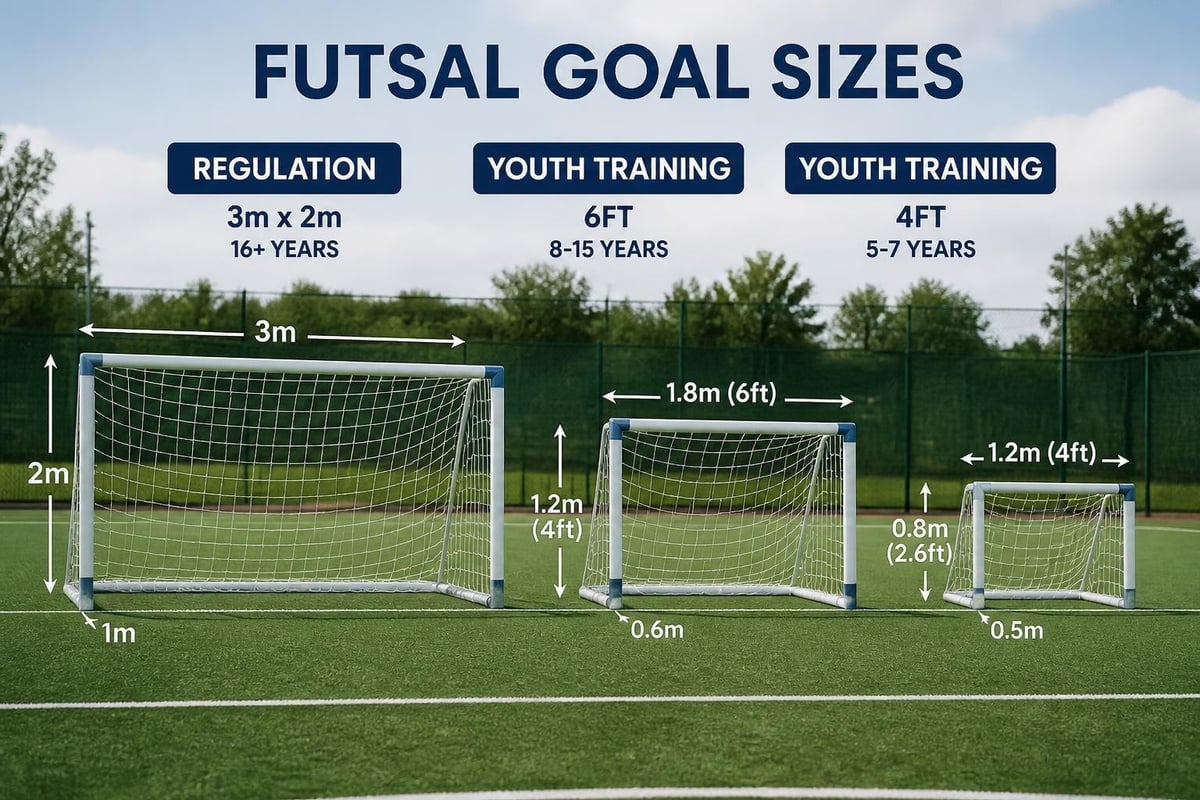
Indoor soccer goals differ significantly from their outdoor counterparts in size, construction, and anchoring methods. The most widely recognized indoor format is futsal, which follows specific dimensional requirements outlined in the official futsal laws of the game. Regulation futsal goals measure 3 meters wide by 2 meters high, smaller than standard outdoor soccer goals to accommodate the reduced playing area and faster pace of indoor play.
Regulation Dimensions and Variants
Competition-level indoor soccer goals must meet strict specifications to ensure fairness and consistency across venues. Futsal goals designed for official matches typically feature:
- Width: 3 meters (9 feet 10 inches)
- Height: 2 meters (6 feet 7 inches)
- Depth: Minimum 80 cm (31.5 inches) at top, 100 cm (39.4 inches) at ground level
- Post diameter: 8 cm (3.15 inches) square or round profile
- Net mesh: 10 cm (4 inches) maximum opening
Training and recreational facilities often utilize smaller goals suited to different age groups and skill levels. Youth programs commonly employ 6-foot or 4-foot goals, while multi-purpose gymnasiums may stock several sizes to accommodate various programs throughout the week.
Material Construction and Durability Factors
The construction quality of indoor soccer goals directly impacts safety, longevity, and total cost of ownership. Unlike outdoor goals that must resist weather exposure, indoor models face different challenges including frequent movement, storage requirements, and intensive daily use during peak training seasons.
Frame Materials and Design
Modern indoor soccer goals utilize several frame materials, each offering distinct advantages:
| Material | Weight | Durability | Portability | Cost Range |
|---|---|---|---|---|
| Aluminum | Light | Moderate | Excellent | $200-$600 |
| Steel | Heavy | Excellent | Poor | $300-$800 |
| UPVC | Very Light | Good | Excellent | $150-$400 |
| Powder-coated Steel | Heavy | Excellent | Moderate | $400-$1,000 |
Aluminum frames provide the best balance for facilities requiring frequent setup and breakdown. These goals move easily between storage and playing surfaces, making them ideal for shared-use gymnasiums. The lightweight construction reduces strain on staff while maintaining adequate structural integrity for recreational and training use.
Steel construction dominates professional and semi-permanent installations where goals remain in fixed positions. Heavy-gauge steel tubing welded at joints creates exceptionally stable frames that resist impact and maintain precise dimensions over years of intensive use. Powder coating protects against scratches and provides consistent appearance throughout the frame's lifespan.
Net Materials and Attachment Systems
Net quality significantly affects both playing experience and maintenance requirements. Indoor soccer goals typically use polyethylene or nylon netting in 2.5mm to 4mm thickness. Thicker nets withstand harder shots and reduce replacement frequency, though they also add weight and cost.
Professional-grade nets feature reinforced top channels and corner pockets that distribute tension evenly across attachment points. Hook-and-loop fasteners, net clips, and tie-down systems each offer different installation speeds and security levels. For facilities running multiple programs daily, quick-release systems save substantial setup time while maintaining net security during play.
Safety Standards and Compliance Requirements
Safety considerations govern every aspect of indoor soccer goal selection and installation. Unsecured goals pose severe risks, making proper anchoring and stability features non-negotiable for any indoor facility. The European standard EN 748:2013 provides comprehensive functional requirements for playing-field equipment including stability testing protocols applicable to indoor installations.
Anchoring and Stability Systems
Indoor surfaces cannot accommodate ground anchors used outdoors, requiring alternative stability solutions:
- Weighted base systems: Sandbags or weight plates attach to goal bases, adding 50-100 pounds per goal
- Counter-balance designs: Extended rear supports shift the center of gravity backward
- Floor anchor brackets: Permanent or semi-permanent floor mounts for dedicated facilities
- Friction pads: Non-slip materials increase resistance to sliding on polished gymnasium floors
U.S. Soccer's guidance on ensuring safe playing environments emphasizes that all goals must be secured before use, regardless of size or construction. Even lightweight training goals require stabilization to prevent tip-over incidents during play or when players contact the frame.
Inspection and Maintenance Protocols
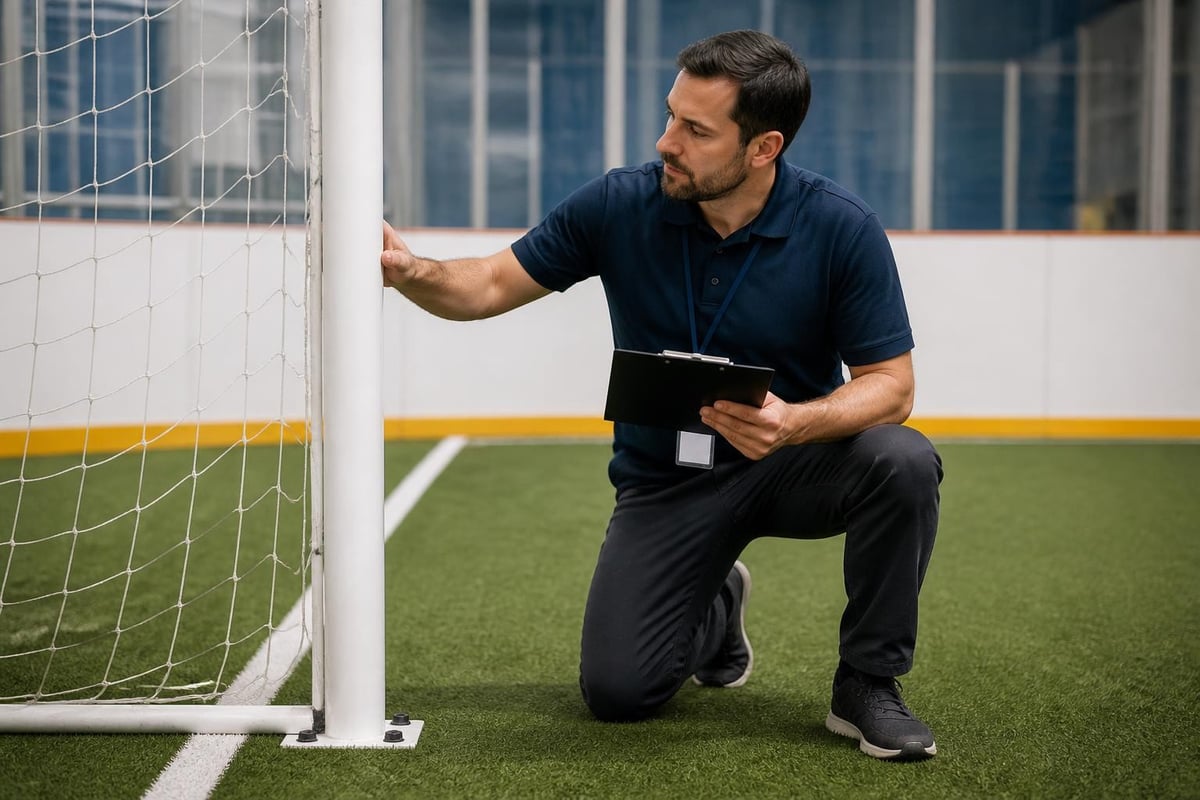
Regular inspection schedules identify wear, damage, and stability issues before they create hazards. Monthly checks should examine:
- Frame integrity for cracks, bends, or weld failures
- Net condition including holes, fraying, or detachment
- Anchoring system function and weight placement
- Hardware tightness on all bolts and connections
- Surface contact points for sharp edges or protrusions
Documentation of inspections creates accountability and helps facility managers track equipment lifespan. Most indoor soccer goals deliver 5-10 years of service when properly maintained, though high-traffic facilities may require more frequent component replacement.
Selecting Goals for Different Indoor Environments
Facility characteristics heavily influence which indoor soccer goals deliver optimal performance and value. A dedicated futsal court has vastly different requirements than a multi-purpose gymnasium hosting basketball, volleyball, and indoor soccer programs throughout the week.
Dedicated Indoor Soccer Facilities
Purpose-built indoor soccer venues benefit from semi-permanent goal installations that prioritize stability and regulation compliance over portability. These facilities typically invest in competition-grade equipment meeting official standards, as outlined in the AFC futsal stadium regulations for international-level play.
Fixed installations use floor-mounted anchor systems that secure goals permanently while allowing removal for maintenance or surface refinishing. This approach eliminates daily setup time and ensures goals maintain precise positioning for competitive matches. Facilities hosting sanctioned tournaments must provide backup goals, as equipment failures cannot delay scheduled matches.
Multi-Purpose Gymnasiums
Schools and recreation centers operating shared-use facilities require maximum flexibility from their indoor soccer goals. Portable soccer goals designed for quick setup and breakdown allow the same space to accommodate different sports throughout the day.
Storage considerations become critical in multi-use environments. Folding designs reduce storage footprint by 40-60% compared to rigid frames. Wheeled bases enable single-person movement, though wheels must lock securely during play to prevent sliding. Weight remains a balancing act-lighter goals move easily but require more aggressive anchoring, while heavier models stay put but strain staff during setup.
Training Centers and Practice Facilities
Facilities focused on player development often maintain multiple goal sizes to serve different age groups and drill configurations. Soccer training equipment inventories typically include:
| Goal Size | Primary Use | Storage Space | Price Point |
|---|---|---|---|
| 3m x 2m (Regulation) | Futsal matches, advanced training | Large | High |
| 6ft x 4ft | Youth development (U10-U14) | Medium | Moderate |
| 4ft x 3ft | Skills training, younger players | Small | Budget |
| Pop-up/portable | Agility drills, small-sided games | Minimal | Budget |
Mixing permanent regulation goals with portable training goals maximizes facility utility while controlling costs. Training sessions can run simultaneously using different goal configurations, increasing player contact time and program capacity.
Installation and Setup Best Practices
Proper installation ensures indoor soccer goals perform safely and maintain their condition over extended use periods. Even the highest-quality equipment fails when incorrectly assembled or inadequately secured.
Initial Assembly Guidelines
Most indoor soccer goals ship partially assembled, requiring on-site completion before use. Follow manufacturer instructions precisely, paying special attention to:
- Joint connections: Tighten all bolts to specified torque settings using appropriate tools
- Frame squaring: Measure diagonal distances to confirm rectangular geometry (diagonals must be equal)
- Net attachment: Distribute tension evenly across all attachment points, working from corners outward
- Stability testing: Apply horizontal force to crossbar from multiple angles to verify anchoring adequacy
- Safety inspection: Remove all packaging materials and verify no sharp edges or protrusions exist
Professional assembly services ensure compliance with manufacturer specifications and may preserve warranty coverage. Facilities without experienced maintenance staff should consider professional installation, especially for competition-grade equipment.
Positioning and Spacing Requirements
Goal placement affects both player safety and game quality. The Sport England facilities guidance provides planning frameworks for indoor sports layouts including clearance zones around playing areas.
Minimum clearances for futsal courts include:
- Behind goals: 2 meters (6.5 feet) from goal line to wall or obstruction
- Sidelines: 1 meter (3.3 feet) from touchline to wall or obstruction
- Ceiling height: 4 meters (13 feet) minimum for competitive play
- Safety zones: Additional space for player run-off and official positioning
Facilities with limited space may need to adjust court dimensions while maintaining proportional goal positioning. Consult governing documents from US Youth Soccer for modified field sizes and goal placement in constrained environments.
Budget Considerations and Cost Management
Indoor soccer goals represent significant capital investments, particularly for facilities equipping multiple courts or maintaining inventory for different programs. Strategic purchasing decisions balance upfront costs against long-term value and operational efficiency.
Price Range Overview
Quality indoor soccer goals span a wide price spectrum based on construction, features, and intended use:
Budget tier ($150-$300): Basic UPVC or aluminum recreational goals suitable for casual play and younger age groups. Limited durability and basic net quality require more frequent replacement.
Mid-range ($300-$600): Aluminum or steel frames with reinforced joints, quality nets, and moderate portability. Appropriate for most training applications and recreational competition.
Professional grade ($600-$1,200+): Heavy-duty steel construction, competition-compliant dimensions, premium nets, and robust anchoring systems. Required for sanctioned matches and high-intensity use.
Facilities should budget for replacement nets every 2-3 years regardless of goal quality, as netting deteriorates faster than frames under normal use. At Sideline Sport Supply, we maintain competitive pricing on replacement components to reduce lifetime ownership costs.
Volume Purchasing and Team Programs
Organizations equipping multiple facilities or purchasing for district-wide programs benefit significantly from volume pricing. Ordering multiple goals simultaneously reduces per-unit costs while ensuring equipment consistency across locations.
Our team sales program provides customized quotes for bulk orders, including delivery coordination and installation support. Schools and sports organizations also appreciate our price match guarantee, ensuring budget-conscious purchasing without sacrificing quality or service.
Maintenance and Longevity Strategies
Extending indoor soccer goal lifespan through preventive maintenance delivers substantial cost savings while maintaining safety standards. Well-maintained goals often exceed manufacturer estimates by 30-50% with modest ongoing care.
Routine Maintenance Schedule
Implementing structured maintenance protocols prevents small issues from escalating into equipment failures or safety hazards:
Weekly tasks:
- Visual inspection for obvious damage or wear
- Net attachment verification
- Debris removal from frame and nets
- Stability check after movement or setup
Monthly tasks:
- Detailed frame inspection for cracks or bends
- Hardware tightness verification
- Net condition assessment with repair or replacement as needed
- Weight system check and adjustment
- Cleaning of frame surfaces and contact points
Quarterly tasks:
- Complete disassembly and inspection of modular goals
- Deep cleaning of all components
- Replacement of worn hardware
- Documentation of condition and remaining service life
Annual tasks:
- Professional inspection by qualified technician
- Major component replacement (nets, heavily worn parts)
- Refinishing of scratched or corroded surfaces
- Update of equipment inventory and replacement planning
Storage and Transportation
Indoor soccer goals stored improperly between uses suffer accelerated deterioration. Protect equipment investments through proper storage practices:
Store goals in climate-controlled environments when possible, avoiding areas with extreme temperature fluctuations or high humidity. Disassemble folding goals completely rather than leaving them in semi-collapsed positions that stress joints. Stack frames horizontally with protective padding between units to prevent scratching and frame contact damage.
Transport goals using equipment carts or dollies rather than dragging across floor surfaces. Friction damage to gym floors creates costly repairs while damaging goal contact points. Wheeled goals should have wheels inspected monthly for wear and proper function, with bearings lubricated according to manufacturer recommendations.
Competition-Level Requirements and Regulations
Facilities hosting sanctioned indoor soccer competitions must ensure equipment meets specific regulatory standards. Tournament organizers verify goal compliance before matches, and non-conforming equipment can result in venue disqualification.
Official Competition Standards
The CONCACAF competition regulations detail organizer responsibilities for providing compliant goals at indoor events, including backup equipment availability. Key compliance points include:
- Exact dimensional conformity (3m x 2m for futsal)
- Secure anchoring preventing movement during play
- White frame color for visibility against court backgrounds
- Net depth preventing balls from rebounding out of goal
- Posts and crossbar meeting diameter specifications
- Surface padding on posts where required by age group
Facilities pursuing tournament hosting should invest in certified competition goals that meet international standards referenced in IFAB Laws of the Game. While more expensive than training equipment, these goals open revenue opportunities through tournament rentals and sanctioned league play.
Documentation and Certification
Maintain purchase documentation, compliance certificates, and inspection records for all competition-grade indoor soccer goals. Tournament officials may request proof of standards compliance, particularly for newly established facilities or first-time event hosts. Manufacturers should provide certification documents confirming equipment meets applicable standards at time of purchase.
Annual recertification inspections by qualified technicians verify goals maintain compliance throughout their service life. Frame modifications, repairs, or component replacements may affect certification status, requiring professional verification before resuming competition use.
Enhancing Player Development Through Equipment Selection
The right indoor soccer goals support skill development across all aspects of the game. Coaches and trainers should consider how equipment choices affect learning outcomes and player progression.
Target Training and Accuracy Work
Smaller training goals and portable targets develop shooting precision more effectively than full-size goals for certain drills. Players focus on placement over power when working with reduced target areas. Consider maintaining inventory of:
- Corner targets that attach to regulation goals
- Adjustable-height goals for varied shooting practice
- Rebounders and return walls for passing accuracy
- Mini goals (2ft-3ft) for close-range finishing drills
Combining regulation indoor soccer goals with specialized training equipment creates comprehensive development environments. Players transition smoothly from drill-specific equipment to match conditions, building confidence and consistency.
Age-Appropriate Progression
Youth development programs benefit from graduated goal sizing that matches physical capabilities and field dimensions to player age. Using oversized goals frustrates young players while undersized equipment fails to challenge advancing skills.
Standard age-group progressions include:
| Age Group | Goal Size | Typical Use |
|---|---|---|
| U6-U8 | 4ft x 3ft | Introduction to shooting |
| U9-U10 | 6ft x 4ft | Skill development |
| U11-U12 | 6.5ft x 5ft | Competitive training |
| U13+ | 3m x 2m (Futsal regulation) | Match preparation |
Programs with budget constraints can bridge age groups by investing in mid-range sizes that serve multiple divisions, though optimal development occurs when goal size precisely matches developmental stage.
Selecting appropriate indoor soccer goals requires balancing regulatory compliance, safety standards, facility constraints, and budget realities to create optimal playing environments for athletes at every level. From understanding dimensional requirements and construction materials to implementing maintenance protocols and meeting competition standards, informed equipment decisions directly impact program quality and player safety. Sideline Sport Supply provides the reliable, game-ready indoor soccer goals that coaches, schools, and facilities need to support player development and competitive play. Our straightforward pricing, quality equipment, and fast fulfillment help your organization spend less time sourcing gear and more time focused on what matters most-developing athletes and running successful programs.