

Rebounder Soccer: Training Equipment Guide for 2026
Soccer training has evolved significantly over recent years, with players and coaches continually seeking effective methods to develop technical skills outside of traditional team practices. One training tool that has gained tremendous popularity is the soccer rebounder, an essential piece of equipment that allows athletes to practice independently while simulating game scenarios. Whether you're a parent supporting a young player's development, a coach building practice programs, or an athlete committed to improving your touch and passing accuracy, understanding how rebounder soccer training works can transform your approach to skill development.
Understanding Rebounder Soccer Training
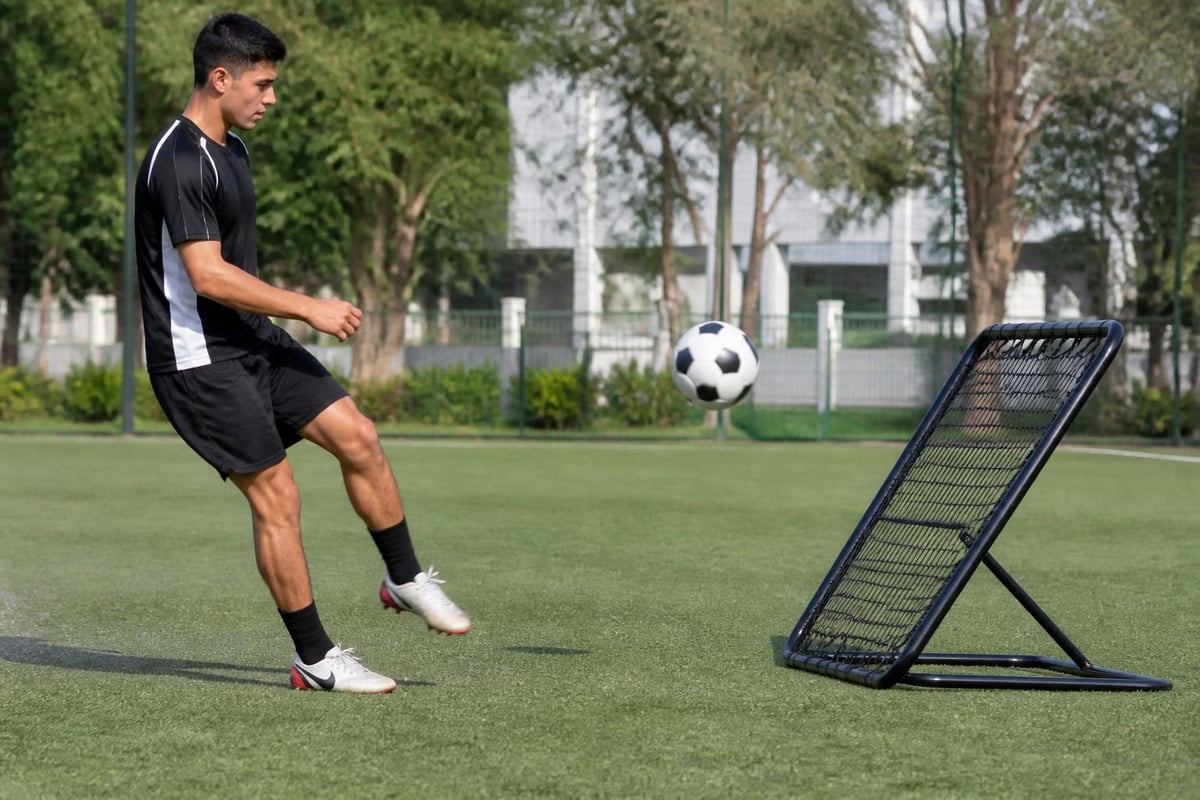
Rebounder soccer refers to training methods that utilize a specialized wall or net designed to return the ball to the player at predictable or variable angles. This equipment serves as a reliable training partner, available 24/7 without requiring another person to pass or receive the ball.
The fundamental principle behind rebounder soccer training is repetition with purpose. Players strike the ball against the angled surface, which returns it at speeds and trajectories that mirror real game situations. This constant feedback loop allows athletes to refine their technique, improve reaction time, and develop muscle memory through hundreds of touches in a single session.
Types of Rebounder Equipment
Flat wall rebounders provide consistent, predictable returns that help beginners develop foundational skills. These models typically feature a single surface at a fixed angle, making them ideal for players who need to master basic passing and trapping techniques.
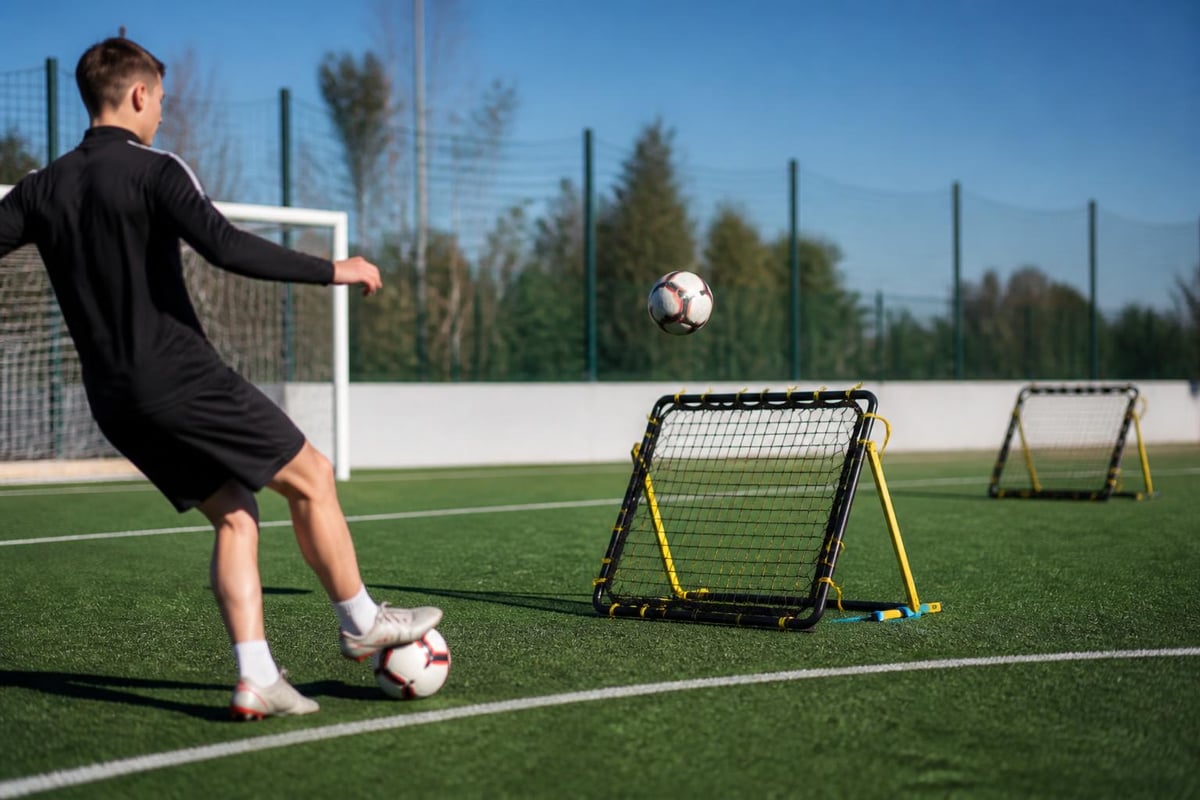
Adjustable angle rebounders offer versatility for intermediate and advanced players. By changing the surface angle, athletes can simulate different types of passes, from ground balls to aerial returns, creating varied training scenarios within a single piece of equipment.
Multi-panel rebounders incorporate multiple surfaces at different angles, allowing players to practice complex sequences that replicate game situations more accurately. These premium options suit serious athletes and training programs focused on soccer development.
Key Benefits for Player Development
Rebounder soccer training delivers measurable improvements across multiple skill categories. Understanding these benefits helps athletes and coaches structure effective practice sessions that maximize training time.
First touch control improves dramatically with consistent rebounder work. The equipment returns balls at game speed, forcing players to control difficult passes cleanly. This repetition builds confidence and competence in receiving under pressure.
Passing accuracy develops through targeted practice. Players learn to strike the ball with proper technique, immediately seeing results as the rebounder returns it. Poor technique results in erratic returns, providing instant feedback that accelerates learning.
Skill Development Timeline
| Training Focus | Beginner (Weeks 1-4) | Intermediate (Weeks 5-12) | Advanced (Weeks 13+) |
|---|---|---|---|
| First Touch | Basic trapping, 50 touches/session | Directional control, 100 touches/session | One-touch combinations, 200+ touches/session |
| Passing Accuracy | 10-foot distance, stationary | 15-foot distance, movement patterns | 20+ feet, dynamic sequences |
| Weak Foot Development | 30% practice time | 40% practice time | 50% practice time |
| Session Duration | 15-20 minutes | 25-35 minutes | 40-60 minutes |
The beauty of rebounder soccer lies in its accessibility. Athletes can train in backyards, driveways, or garages, eliminating scheduling conflicts and weather dependencies. This convenience translates to more frequent practice sessions, which research consistently shows accelerates skill acquisition.
Essential Drills and Training Methods
Structured drills transform rebounder soccer from random ball-striking into purposeful skill development. These exercises progress logically, building complexity as players master foundational techniques.
Beginning Level Drills
Start with stationary passing to establish proper form. Stand 8-10 feet from the rebounder and focus on striking the ball with the inside of your foot, ensuring a clean return. Complete sets of 20 passes with each foot, emphasizing accuracy over power.
The five easy drills recommended for beginners provide an excellent foundation:
- Two-touch control: Receive with one foot, pass with the other
- Alternating feet: Switch feet with each pass to develop ambidexterity
- Distance variation: Move closer and farther to adjust return speed
- Timed challenges: Complete maximum touches in 60 seconds
- Target practice: Aim for specific spots on the rebounder surface
Progress naturally by increasing speed, reducing touches, or adding movement between passes. These modifications maintain engagement while continuously challenging developing skills.
Intermediate Training Sequences
Players with solid fundamentals should incorporate movement and combination play. Set up cones to create passing patterns that require changing direction after each touch. This simulates game situations where players must pass and immediately move to space.
Triangle pattern drill: Position three cones in a triangle formation with the rebounder at one point. Pass to the rebounder, control the return, dribble to the next cone, and repeat. This sequence develops touch, dribbling, and spatial awareness simultaneously.
Weak foot emphasis becomes critical at this level. Dedicate entire sessions to non-dominant foot training, as this creates true game versatility and increases player value exponentially.
Selecting the Right Rebounder Equipment
Choosing appropriate rebounder soccer equipment requires evaluating several technical specifications and practical considerations. The market offers numerous options across varying price points, each designed for specific training objectives and user profiles.
Critical Specifications to Evaluate
Size dimensions directly impact training versatility. Smaller rebounders (4x4 feet) suit individual skill work and tight spaces but limit drill variety. Medium units (6x4 feet) provide excellent balance between portability and functionality. Large rebounders (8x6 feet or greater) enable advanced training but require substantial storage and setup space.
Frame construction determines durability and safety. Steel frames offer maximum stability and longevity, essential for intensive use by multiple players. Aluminum frames reduce weight for better portability while maintaining reasonable durability. Plastic frames suit occasional use by younger players but may not withstand aggressive training.
The comprehensive buying guide for soccer rebounders provides detailed analysis of top-rated models for 2026, comparing features across price ranges.
Net material quality affects ball response consistency. Heavy-duty mesh provides reliable returns even with powerful strikes, while lighter materials may deflect incorrectly under force. Premium rebounders use weather-resistant netting that maintains tension through temperature changes and moisture exposure.
Cost and Value Considerations
| Price Range | Typical Features | Best For | Expected Lifespan |
|---|---|---|---|
| $50-$100 | Basic frame, light netting, fixed angle | Beginners, casual use, children | 1-2 years |
| $100-$200 | Reinforced frame, quality netting, some adjustability | Serious players, frequent training | 3-5 years |
| $200-$400 | Professional-grade construction, multi-angle, weatherproof | Competitive athletes, team training | 5-10+ years |
Organizations purchasing multiple units for team training programs should consider bulk pricing and warranty coverage. Quality equipment represents an investment in player development that delivers returns through improved performance and reduced injury risk from proper technique development.
Setting Up for Success
Proper installation and placement maximize rebounder soccer training effectiveness while ensuring safety and equipment longevity. Understanding setup requirements prevents common mistakes that limit training quality.
Location Selection Criteria
Choose spaces with adequate clearance extending 15-20 feet in front of the rebounder. This distance allows full-speed training while providing reaction time for returns. Avoid areas with obstacles, windows, or traffic patterns that could create hazards.
Surface considerations impact training quality significantly. Flat, level surfaces ensure predictable ball rolls and reduce ankle injury risk. Grass works well for outdoor setups but may slow returns. Concrete or artificial turf provides faster, more game-like conditions.
The detailed setup instructions for home installation walk through assembly, anchoring, and positioning for optimal results.
Anchoring methods vary by model and location:
- Ground stakes for grass or dirt surfaces
- Sandbags or weights for temporary setups
- Concrete anchors for permanent installations
- Weighted bases for portable indoor/outdoor use
Proper anchoring prevents dangerous tipping during aggressive training, especially with larger rebounders that catch wind or receive powerful strikes.
Maintenance and Longevity
Regular inspection identifies wear before it affects performance. Check net tension monthly, tightening as needed to maintain consistent returns. Examine frame connections for looseness that could compromise stability. Clean surfaces to remove dirt and debris that might affect ball contact.
Weather protection extends outdoor equipment life significantly. Cover rebounders during extended non-use periods or store indoors when possible. UV exposure degrades netting over time, while moisture promotes rust on metal components.
Integration with Team Training Programs
Coaches incorporating rebounder soccer into practice plans create opportunities for individualized skill development within group settings. This approach maximizes contact time while addressing different ability levels simultaneously.
Station-Based Practice Design
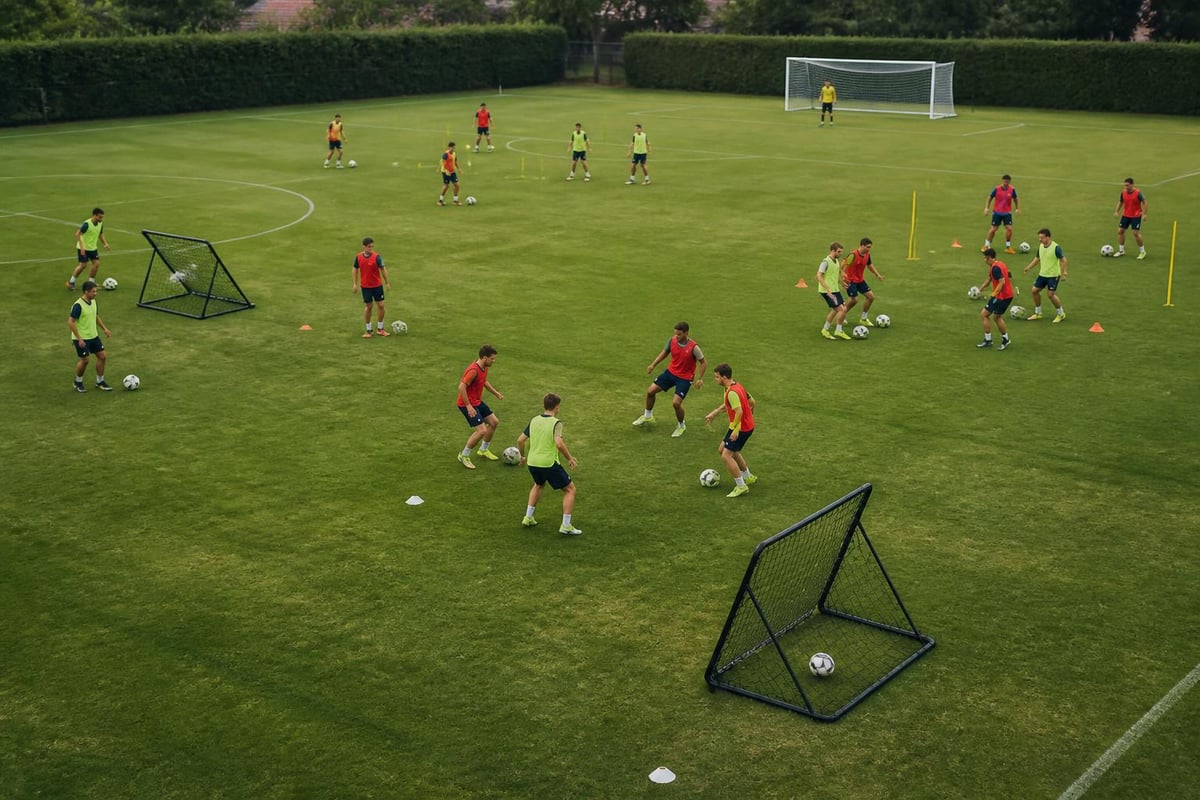
Divide teams into small groups rotating through skill stations, dedicating one or more to rebounder work. This structure keeps players active while allowing coaches to provide targeted instruction at each station.
Sample 60-minute practice rotation:
- Station 1 (15 min): Rebounder passing accuracy drills
- Station 2 (15 min): Small-sided games emphasizing first touch
- Station 3 (15 min): Rebounder combination play sequences
- Station 4 (15 min): Tactical positioning exercises
Players receive focused rebounder training twice during the session, accumulating substantial touches while maintaining engagement through variety.
The comprehensive collection of rebounder wall drills offers coaches structured exercises appropriate for various age groups and skill levels.
Individual Development Plans
Rebounders enable personalized training assignments outside team practices. Coaches can prescribe specific drills targeting individual weaknesses, with players completing work independently and reporting progress.
This approach particularly benefits players needing extra repetitions to match team standards. Rather than occupying coach time during practice, athletes complete supplemental work at home, accelerating development without reducing team training time for others.
Youth Player Development Considerations
Young athletes benefit enormously from rebounder soccer training, but equipment selection and drill design must match developmental stages. Age-appropriate training builds confidence while establishing proper technique that supports long-term advancement.
Age-Specific Recommendations
Players ages 6-9 need smaller rebounders (4x3 feet maximum) that don't overwhelm their physical capabilities. Keep sessions short (10-15 minutes) with simple objectives focusing on basic contact and control. The parent's guide to youth rebounder training provides detailed age-appropriate equipment and drill suggestions.
Players ages 10-13 can handle medium rebounders and longer sessions (20-30 minutes). Introduce weak foot development and basic combination sequences. Emphasize proper technique over speed or power to build foundation for future advancement.
Players ages 14+ train with adult-sized equipment and advanced drills. Focus on game-speed repetitions, decision-making under pressure, and position-specific skills that translate directly to competitive play.
Making Training Engaging for Young Athletes
Children maintain interest when training includes variety and measurable progress. Create challenges with specific goals: complete 50 consecutive passes, hit designated targets, or improve personal speed records.
Gamification transforms repetitive drills into engaging competitions. Track statistics, award points for accuracy, or establish reward systems for consistent practice. These approaches build intrinsic motivation while accumulating the repetitions necessary for skill development.
Parent involvement increases training consistency. When adults understand solo training possibilities, they better support player development between team activities.
Advanced Training Techniques
Elite players push rebounder soccer training beyond basic skill work, incorporating sophisticated exercises that replicate high-level competition demands. These methods develop the split-second decision-making and technical precision required for advanced play.
Reaction and Speed Development
Set up multiple rebounders at different angles or distances, passing to each in rapid sequence. This creates unpredictable return patterns that force quick adjustments and reactions. Complete sets of 10-15 rapid-fire touches, focusing on maintaining control under increasing speed.
Combination play sequences link multiple skills in continuous flow. Pass to the rebounder, control the return with your first touch, perform a specific move (cut, turn, or feint), then pass again. These sequences develop the smooth technical execution seen in high-level matches.
Pressure simulation adds difficulty by incorporating time constraints or reduced space. Mark a small zone and complete drill requirements without leaving boundaries, or perform maximum repetitions in 30-second intervals with minimal rest.
Position-Specific Applications
Forwards use rebounders to practice finishing technique, striking returns with varied surfaces (laces, inside, outside foot) to develop shooting versatility. Set up at angles that create shooting opportunities similar to game situations.
Midfielders focus on distribution accuracy and first-touch direction, controlling returns while immediately turning into space. This replicates receiving under pressure and transitioning to attack.
Defenders emphasize clearance technique and controlled possession, practicing both powerful clearances and composed distribution from the back.
Measuring Progress and Setting Goals
Structured assessment transforms rebounder soccer from casual practice into purposeful skill development. Tracking specific metrics provides motivation while identifying areas requiring additional focus.
Quantifiable Performance Metrics
Touch accuracy percentage measures successful receptions out of total attempts. Track this over time to document improvement. Beginner targets might be 60-70% accuracy, while advanced players should achieve 90%+ in controlled conditions.
Consecutive successful passes indicates consistency and concentration. Record personal bests and work to extend streaks through focused practice.
Weak foot performance gap compares dominant and non-dominant foot metrics. Narrowing this gap demonstrates well-rounded development critical for competitive play.
Create training logs documenting session duration, drills completed, and key statistics. Monthly reviews reveal trends and inform training adjustments. This data-driven approach accelerates improvement by focusing effort on highest-impact activities.
Progressive Challenge Structure
Establish short-term (weekly), medium-term (monthly), and long-term (seasonal) goals. This framework provides regular achievement opportunities while working toward significant skill milestones.
Weekly goals might include completing four training sessions or achieving specific drill performance targets. These frequent wins maintain motivation and establish consistent training habits.
Monthly goals could focus on mastering new drill sequences or significantly improving weak foot competency. These require sustained effort and demonstrate meaningful progress.
Seasonal goals might include preparing for tryouts, earning starting position consideration, or moving up a competitive level. Rebounder training directly supports these outcomes through systematic skill development.
Building a Complete Training Program
Rebounders represent one component of comprehensive soccer development. Integrating this equipment with other training modalities creates balanced programs addressing all performance aspects.
Complementary Training Elements
Combine rebounder soccer sessions with small-sided games that apply developed skills in competitive contexts. The technical work on the rebounder establishes proper mechanics, while games develop tactical understanding and decision-making.
Physical conditioning maintains equal importance. Soccer requires cardiovascular endurance, explosive power, and mobility. Fitness and training equipment supports the physical development necessary to execute technical skills at game speed.
Tactical education teaches when and how to apply techniques learned through rebounder training. Video analysis, coaching sessions, and match experience provide this contextual understanding that transforms isolated skills into effective game performance.
Periodization and Recovery
Structure training in cycles emphasizing different development focuses. During pre-season, increase rebounder session frequency to sharpen technical skills. In-season, reduce volume to maintain sharpness without causing fatigue. Off-season allows time for addressing specific weaknesses through concentrated work.
Adequate recovery prevents overuse injuries and maintains training quality. Young players especially require rest days between intensive sessions, as developing bodies need time to adapt and strengthen.
Listen to your body and adjust training when experiencing persistent soreness or declining performance. Smart training builds skills sustainably, while overtraining creates setbacks that delay development.
Equipment Selection for Different Settings
Organizations and facilities have unique requirements when selecting rebounder soccer equipment. Understanding these specific needs ensures purchases deliver maximum value and utility.
School and Youth Organization Considerations
Educational institutions need durable equipment that withstands heavy use by multiple players with varying skill levels. Commercial-grade rebounders justify higher initial costs through extended lifespans and reduced replacement frequency.
Portability features benefit schools using equipment across multiple locations. Folding designs and wheeled frames enable quick transport and storage, important when sharing limited space with other programs.
Safety certifications and warranty coverage provide additional protection for institutional purchases. Verify equipment meets relevant safety standards and includes comprehensive warranty support.
Organizations can explore portable soccer goals and other training equipment through specialized suppliers focusing on institutional needs. Bulk purchasing often provides significant savings on multi-unit orders.
Home Training Setup Investment
Individual families prioritize different factors when equipping home training spaces. Consider available space, budget constraints, and player commitment level when selecting equipment.
Multi-sport functionality increases value for families with athletes playing different sports. Some rebounders accommodate soccer, baseball, and other ball sports, maximizing utility and justifying higher investment.
Scalability matters when purchasing for young players who will grow and develop. Select equipment suitable for current needs while accommodating future advancement, avoiding premature obsolescence that requires replacement purchases.
Research equipment options and pricing to identify solutions offering best value for specific situations. Quality equipment purchased once beats repeatedly replacing inferior products.
Rebounder soccer training represents an efficient, effective method for developing essential technical skills that translate directly to improved match performance. By selecting appropriate equipment, implementing structured drills, and maintaining consistent practice schedules, players at all levels can achieve significant skill gains that would require far more time through traditional training methods alone. Whether you're outfitting a team program, supporting youth development, or pursuing individual excellence, Sideline Sport Supply provides the reliable, affordable training equipment needed to build skills and achieve soccer goals efficiently.