

Soccer Training Equipment Guide for 2026 | Sideline Sport
Coaches, athletic directors, and team managers understand that effective player development depends on having the right tools available during practice sessions. Soccer training equipment has evolved significantly over the past decade, offering more versatile, durable, and affordable options for teams at every competitive level. Whether you're building a training program from scratch or upgrading existing resources, understanding which equipment delivers the greatest impact on skill development helps maximize your budget and practice time. The right combination of training tools transforms ordinary practice sessions into structured, progressive development opportunities that prepare players for game-day situations.
Essential Training Equipment Categories
Soccer training equipment falls into several distinct categories, each targeting specific aspects of player development. Understanding these categories helps coaches and program directors make strategic purchasing decisions that address their team's most critical needs.
Ball Control and Passing Tools
Rebounders and passing trainers form the foundation of individual skill development. These tools allow players to practice receiving, controlling, and distributing the ball with proper technique even when training partners aren't available. Structured solo practice with appropriate equipment enables players to accumulate thousands of additional touches throughout a season.
Key features to evaluate:
- Adjustable rebound angles for varied return trajectories
- Weather-resistant construction for outdoor storage
- Portability for multi-field training setups
- Frame stability during high-velocity strikes
Most rebounders range from three to six feet in width, with larger models accommodating team passing drills. Smaller portable units work well for individual skill sessions and space-constrained environments.
Goals and Target Training
Practice goals represent one of the most versatile investments in soccer training equipment. From portable soccer goals designed for quick setup to semi-permanent installations for dedicated training facilities, goal selection impacts everything from shooting accuracy development to small-sided game effectiveness.
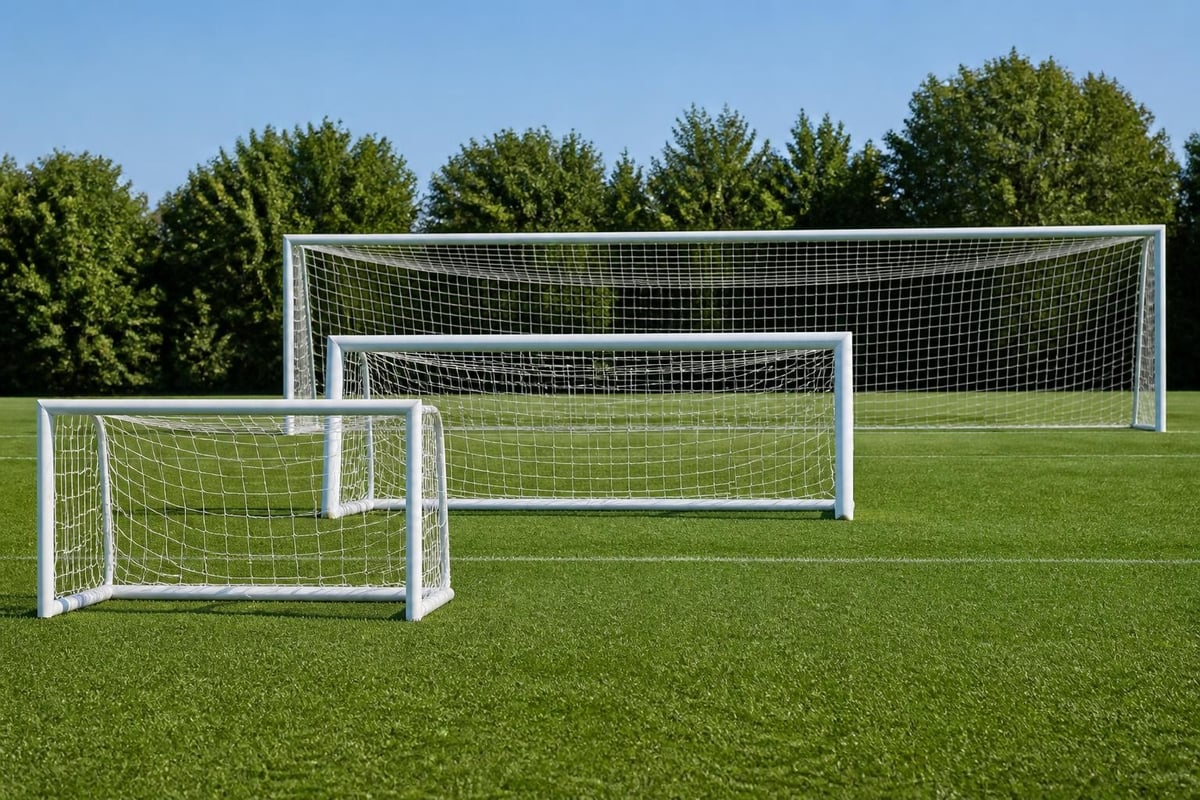
| Goal Size | Primary Use | Age Group | Training Focus |
|---|---|---|---|
| 4' x 6' | Individual shooting, technical work | U8-U10 | Accuracy, technique fundamentals |
| 6' x 12' | Small-sided games, finishing drills | U11-U14 | Shot placement, game situations |
| 8' x 24' | Full-team training, match preparation | U15+ | Game-speed finishing, goalkeeper training |
The PEVO Small Goal Series 6x12 exemplifies the intermediate category, offering sufficient challenge for developing players while remaining manageable for quick field transitions.
Agility and Speed Development Equipment
Speed ladders, hurdles, and cone sets create the framework for footwork drills that translate directly to on-field movement quality. Research on soccer training processes demonstrates that agility work integrated with ball skills produces superior results compared to isolated conditioning sessions.
Modern agility equipment emphasizes durability and visibility. High-visibility cones withstand repeated contact while remaining easy to spot during high-intensity drills. Professional-grade speed ladders feature reinforced rungs that maintain spacing integrity through multiple seasons of use.
Teams should consider purchasing agility equipment in sets that accommodate squad-size training groups. Eight to twelve stations allow simultaneous drill execution, maximizing practice efficiency while maintaining appropriate work-to-rest ratios for developing athletes.
Building Sport-Specific Training Stations
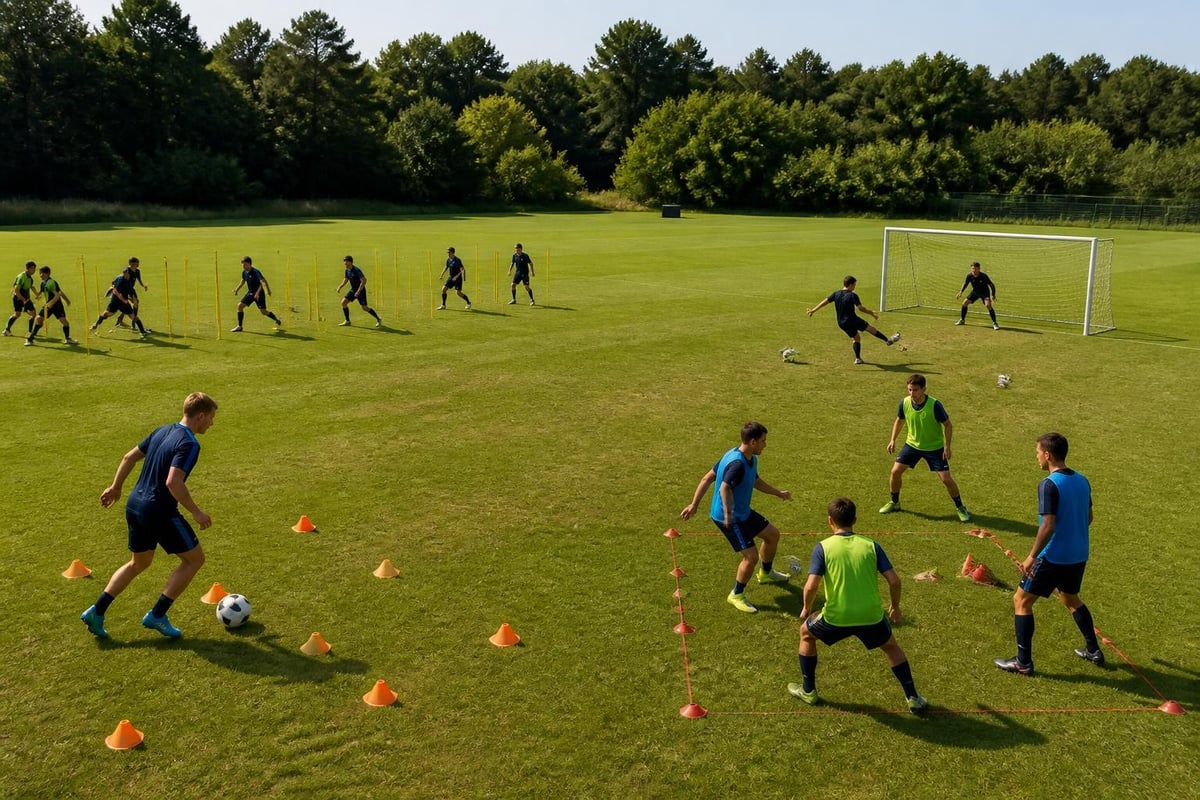
Effective practice sessions incorporate multiple training stations that address different skill components simultaneously. This approach, supported by comprehensive training principles, maximizes player engagement and creates natural rotation patterns that balance intensity throughout sessions.
Station Design Considerations
Each training station should target a specific skill or physical quality. Passing accuracy stations utilize cones and target zones. Finishing stations incorporate goals and shooting markers. Dribbling circuits combine cones with agility equipment to simulate defensive pressure.
Optimal station components:
- Clear visual markers defining work zones
- Equipment appropriate to skill level
- Sufficient space for full-speed execution
- Easy transition points for rotation
The physical demands outlined by sports officials organizations provide insight into game-realistic training intensities. Stations should replicate these demands, requiring players to combine technical execution with appropriate physical exertion.
Multi-Purpose Equipment Applications
Smart equipment selection emphasizes versatility. Disc cones serve as markers, gate boundaries, and target zones. Portable goals function for shooting practice, small-sided games, and positional drills. Adjustable mannequins simulate both defensive pressure and passing options depending on drill design.
This multi-purpose approach reduces storage requirements and equipment costs while providing coaches maximum flexibility in session planning. A well-selected core inventory supports hundreds of drill variations without requiring specialized single-use items.
Goalkeeper-Specific Training Tools
Goalkeepers require specialized soccer training equipment that addresses their unique technical and physical demands. While field players develop primarily through ball circulation and movement patterns, goalkeepers need tools that facilitate reaction training, diving technique, and distribution practice.
Reaction and Agility Equipment
Goalkeeper training emphasizes explosive movements from stationary positions. Equipment supporting this development includes reaction balls with unpredictable bounces, target zones for diving accuracy, and elevated platforms for shot-stopping drills.
Portable rebounders positioned at various angles create game-realistic deflection scenarios. These tools allow goalkeepers to practice recovery positioning and secondary save attempts without requiring constant service from coaches or teammates.
Distribution Training Aids
Modern goalkeeper play demands accurate distribution under pressure. Training equipment supporting this skill includes target zones positioned at realistic distances, pressure mannequins simulating closing defenders, and goal markers for driven passes into specific field areas.
Professional training equipment guides emphasize the importance of goalkeeper-specific tools in comprehensive program development. Teams often overlook these specialized needs, limiting goalkeeper development relative to field player progression.
Conditioning and Strength Development
Physical preparation forms the foundation of soccer performance. While technical skills receive primary attention during practice sessions, physiological training considerations demonstrate that strength and endurance significantly impact game-day execution quality.
Soccer training equipment supporting physical development includes resistance bands, plyometric boxes, and weighted training vests. These tools integrate seamlessly into technical sessions, allowing simultaneous skill and physical development.
Endurance Training Equipment
Interval training protocols utilize simple equipment to create challenging conditioning circuits. Cones mark sprint distances, agility ladders add footwork complexity, and balls incorporate technical elements into cardiovascular work.
The key lies in combining conditioning work with soccer-specific movements. Rather than isolated running, effective programs integrate directional changes, acceleration patterns, and ball manipulation that mirror game demands.
| Equipment Type | Primary Benefit | Integration Method | Session Frequency |
|---|---|---|---|
| Resistance bands | Strength, injury prevention | Warm-up, cool-down | 3-4x weekly |
| Plyometric boxes | Explosive power | Pre-practice activation | 2-3x weekly |
| Weighted vests | Strength endurance | Technical drill modification | 1-2x weekly |
| Speed parachutes | Sprint acceleration | Conditioning blocks | 1-2x weekly |
Strength Development Without Weights
Many youth and amateur programs lack access to traditional weight training facilities. Soccer training equipment alternatives include resistance bands, partner resistance exercises, and bodyweight training stations that build functional strength relevant to soccer movements.
Equipment selection guides for coaches highlight tools that develop explosive power through sport-specific movement patterns. These approaches prove particularly valuable for younger athletes who benefit from movement-based strength development rather than early weight training exposure.
Small-Sided Game Equipment
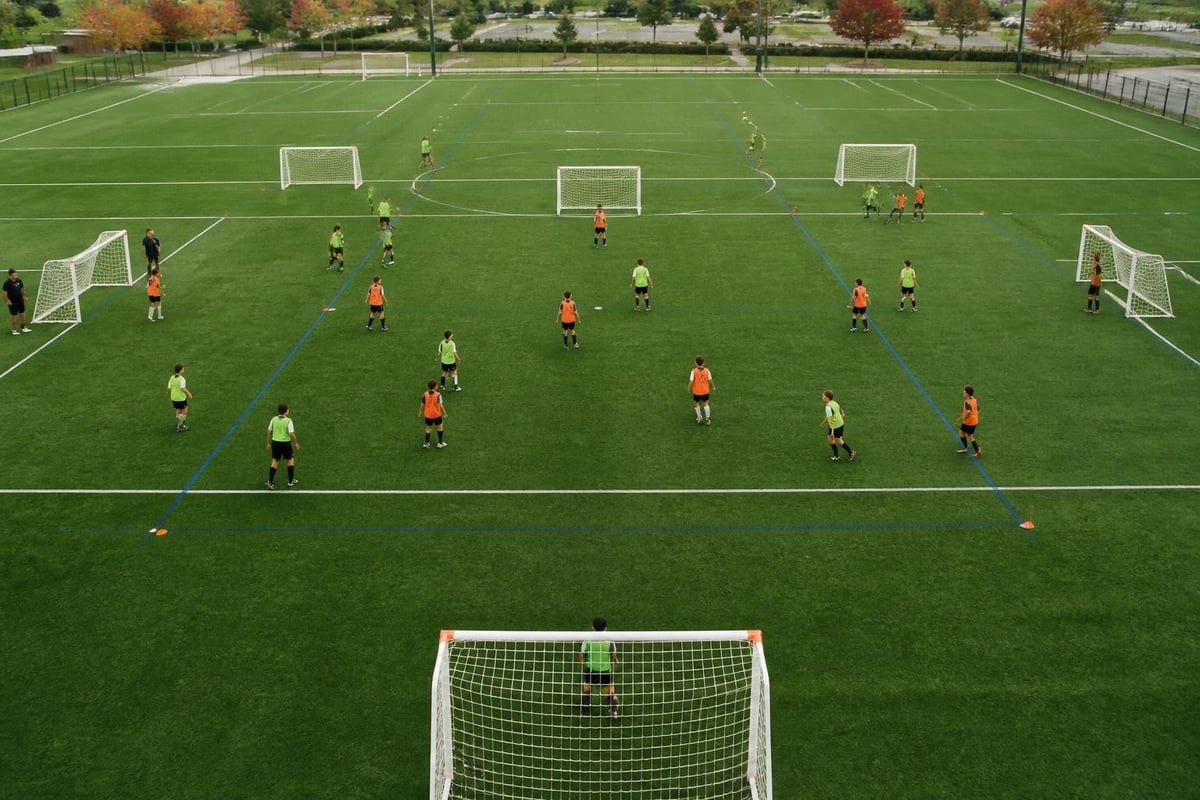
Small-sided games represent the most game-realistic training method available. These modified formats require specialized soccer training equipment that creates appropriate field dimensions and scoring objectives for reduced player counts.
Field Marking and Boundary Tools
Disc cones, corner flags, and temporary fencing systems define playing areas for various small-sided formats. The Gared Soccer Goal Corner Flag Set provides durable boundary markers that withstand repeated contact while maintaining visibility throughout sessions.
Portable goals in 4x6 and 6x12 dimensions create appropriate challenges for small-sided games. Multiple goal pairs allow simultaneous games across training fields, maximizing player engagement and competitive repetitions.
Game Realism Through Equipment Selection
The equipment used during small-sided games should replicate match conditions as closely as possible. Professional-quality balls, regulation goal dimensions (scaled appropriately), and clear boundary markers create psychological preparation that transfers directly to competition.
Teams often underestimate how equipment quality affects training intensity. Players unconsciously adjust their effort and commitment based on environmental cues. Professional-grade equipment signals the importance of training sessions and elevates player engagement accordingly.
Safety and Field Protection Equipment
Player safety extends beyond protective gear to include field equipment that prevents injuries during training. Field protection systems safeguard athletes from contact with goal posts, field perimeter structures, and other potential hazard points.
Goal Anchoring Systems
Portable goals require proper anchoring to prevent tipping during use. The Auger Anchor Set provides reliable securing for temporary goal installations, meeting safety standards while allowing seasonal removal.
Unsecured goals represent serious liability risks. Multiple annual incidents involve goal-related injuries stemming from improper anchoring or structural failure. Investing in appropriate securing systems protects both players and organizations from preventable accidents.
Protective Padding Applications
Goal post padding reduces injury severity during collisions. While field players learn spatial awareness and collision avoidance, game-speed action inevitably produces contact with fixed structures. Padding systems absorb impact energy and distribute forces across larger surface areas.
Consider padding thickness, weather resistance, and attachment methods when selecting protective equipment. Systems should remain securely attached through various weather conditions without requiring constant readjustment or replacement.
Budget-Conscious Equipment Selection
Athletic directors and coaches frequently manage limited budgets while attempting to provide comprehensive training resources. Strategic equipment selection prioritizes items delivering maximum developmental impact per dollar invested.
Priority-Based Purchasing
Start with equipment supporting fundamental skill development: quality balls, basic cone sets, and appropriately sized goals. These items facilitate the broadest range of training activities and serve athletes across all positions and age groups.
Tier 1 priorities (immediate need):
- Match-quality training balls (1 per 2 players minimum)
- Disc cone sets (40-60 cones for full squad)
- Portable training goals (2-4 pairs various sizes)
- Basic agility ladders (4-6 for station training)
Tier 2 additions (first season):
- Rebounders for individual skill work
- Additional goal sizes for varied training
- Mannequins for tactical training
- Goalkeeper-specific equipment
Tier 3 enhancements (ongoing):
- Specialized speed development tools
- Advanced tactical training equipment
- Replacement and backup inventory
- Technology integration tools
Equipment Lifespan Considerations
Quality equipment represents a multi-year investment. While premium items carry higher initial costs, their extended lifespan often produces lower per-season expenses compared to budget alternatives requiring frequent replacement.
Evaluate total cost of ownership rather than purchase price alone. A portable goal lasting seven seasons at $400 costs $57 annually. A budget alternative lasting two seasons at $150 costs $75 annually while requiring additional purchasing logistics and potential training interruptions.
Seasonal Storage and Maintenance
Proper equipment care extends usable life and maintains safety standards. Soccer training equipment exposed to weather elements requires protective measures during off-seasons and regular inspection throughout active use periods.
Weather Protection Strategies
Portable equipment should move to covered storage during extended non-use periods. Goals, rebounders, and agility tools exposed to freeze-thaw cycles experience accelerated deterioration. Even weather-resistant materials benefit from protection against prolonged UV exposure and precipitation.
For permanent installations, develop inspection protocols addressing structural integrity, anchor security, and protective padding condition. Document inspection dates and findings to establish maintenance histories supporting equipment replacement decisions.
Inventory Management Systems
Organized storage systems prevent equipment loss and damage while streamlining practice setup. Designated storage locations, equipment check-out procedures, and regular inventory counts maintain accountability and identify replacement needs before critical shortages impact training quality.
Label equipment clearly with organization identification. This simple step reduces loss during shared facility use and aids recovery of misplaced items. Numbered cone sets and labeled storage bags create efficient organization systems requiring minimal time investment.
Surface-Specific Equipment Considerations
Training surface characteristics influence equipment selection and usage patterns. Research examining pitch surface variations demonstrates that equipment must accommodate different playing environments without compromising training effectiveness.
Natural Grass Adaptations
Grass fields require anchor systems that secure equipment without damaging turf. Auger-style anchors penetrate soil effectively while allowing removal without significant field disruption. Goal weights provide alternatives when soil conditions prevent anchor installation.
Ball behavior varies on natural surfaces depending on moisture content and grass height. Teams training primarily on grass should use balls appropriate to these conditions, avoiding indoor or turf-specific models that respond differently to grass surfaces.
Artificial Turf Considerations
Turf surfaces demand equipment bases that distribute weight broadly, preventing indentation damage. Sandbag weights and wide-base designs protect field investment while providing adequate stability.
Some agility equipment proves more suitable for turf than grass. Flat-base cones resist tipping on firm turf surfaces while providing visibility and durability. Speed ladders lie flatter on turf, reducing trip hazards during high-speed footwork drills.
Multi-Surface Training Programs
Programs utilizing both grass and turf require equipment versatile enough for both environments. Portable goals with adjustable anchoring systems, weather-resistant cones, and all-surface balls maximize equipment utility across training locations.
Budget constraints often necessitate single equipment sets serving multiple venues. Prioritize items designed for outdoor use across various surfaces rather than surface-specific alternatives requiring duplicate purchases.
Technology Integration in Training Equipment
Modern soccer training equipment increasingly incorporates technology supporting performance measurement and skill tracking. While traditional tools remain fundamental, technological additions provide objective feedback enhancing player development processes.
Data-Driven Training Tools
Speed gates measure sprint times and acceleration rates, providing quantifiable benchmarks for physical development. Ball speed radars track shot velocity and passing accuracy. GPS pods monitor movement patterns and distance accumulation during training sessions.
These technological additions complement rather than replace traditional soccer training equipment. The foundation remains quality balls, goals, and agility tools. Technology layers onto this base, adding measurement capabilities that inform training adjustments and track progress over time.
Budget-Friendly Tech Options
Advanced training technology carries premium pricing often exceeding budget constraints. However, smartphone applications and affordable accessories provide entry-level measurement capabilities without significant investment.
Timing apps replace expensive speed gates for sprint measurement. Video analysis using standard tablets supports technical feedback. Simple radar guns track shot speed at fraction of professional system costs. These accessible alternatives democratize technology integration for programs at all budget levels.
Selecting appropriate soccer training equipment requires balancing developmental needs, budget realities, and long-term program objectives. The right combination of goals, agility tools, and skill development equipment transforms practice sessions into systematic player development opportunities. Whether you're equipping a youth program or upgrading facilities for competitive teams, Sideline Sport Supply provides reliable, affordable training essentials with straightforward pricing and fast fulfillment, helping your program spend less time managing logistics and more time developing players.