

Shop Pickleball: Essential Gear for Teams & Organizations
Pickleball has evolved from a backyard pastime into one of the fastest-growing sports in educational and recreational facilities across America. As schools, community centers, and sports organizations rush to meet demand, the need to shop pickleball equipment strategically has become critical. Unlike purchasing gear for individual players, institutional buyers face unique challenges: balancing quality with budget constraints, ensuring durability for high-volume use, and selecting equipment that serves players across multiple skill levels. This comprehensive guide addresses the specific needs of athletic directors, coaches, facility managers, and procurement teams who need to make informed decisions when outfitting programs and venues.
Understanding Pickleball Equipment Categories
When you shop pickleball gear for institutional use, you're investing in four primary categories: paddles, balls, nets and court equipment, and training accessories. Each category requires careful consideration based on your program's specific needs.
Paddles: The Foundation of Player Performance
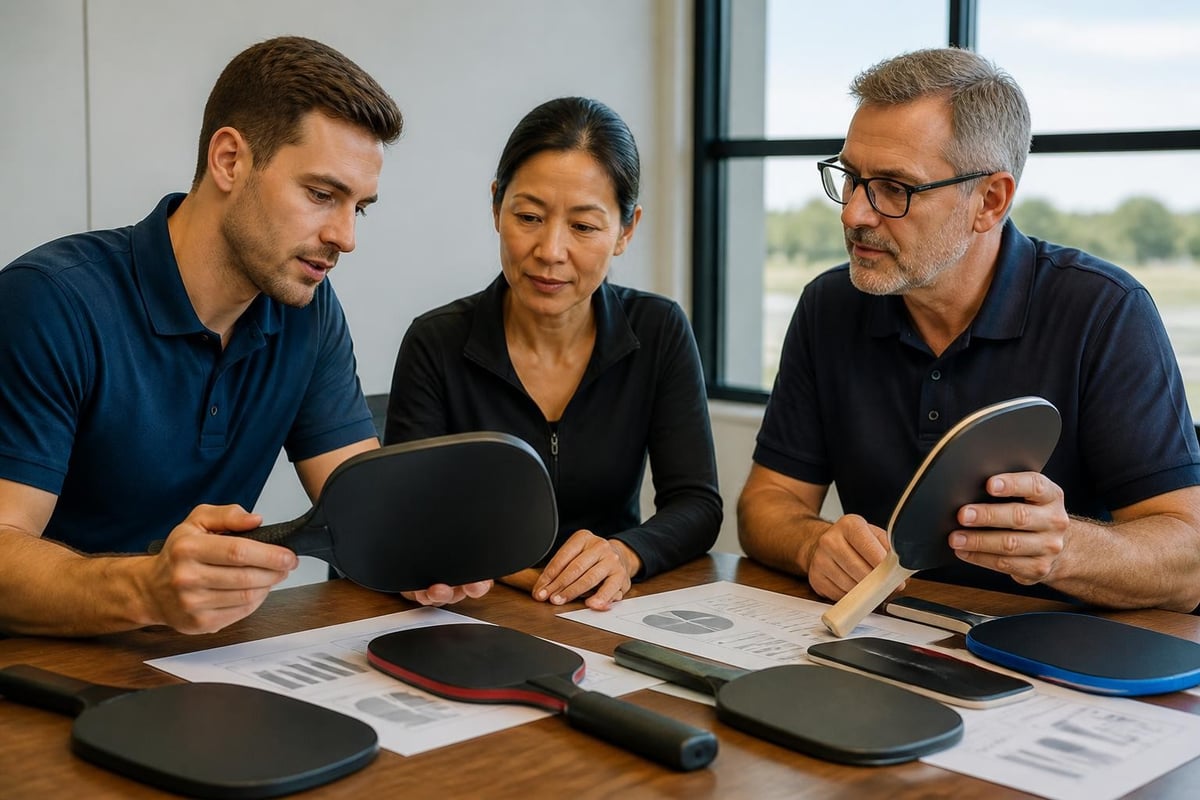
Paddles represent the most significant per-unit investment when outfitting a pickleball program. The comprehensive equipment guide from the Lawn Tennis Association outlines key specifications to consider, including weight, grip size, and core materials.
Weight classifications typically break down as follows:
- Lightweight: 6.0-7.3 ounces (ideal for beginners and younger players)
- Midweight: 7.3-8.3 ounces (versatile for general programs)
- Heavyweight: 8.4+ ounces (advanced players seeking power)
For institutional buyers, midweight paddles offer the best versatility. They accommodate players transitioning from beginner to intermediate levels without requiring equipment changes. When you shop pickleball paddles in bulk, negotiating package deals that include protective edge guards can extend equipment life significantly.
Core materials impact both price and performance. Polymer cores provide excellent durability and consistent performance across temperature ranges-critical for outdoor facilities. Aluminum cores offer affordability but may transmit more vibration. Nomex cores deliver power but generate more noise, which matters in shared facility environments.
Balls: Indoor Versus Outdoor Specifications
Ball selection directly impacts gameplay quality and replacement costs. Indoor and outdoor pickleball balls feature distinct characteristics that align with different facility types.
| Ball Type | Hole Count | Hole Size | Weight | Best Use Case |
|---|---|---|---|---|
| Indoor | 26 holes | Larger | Lighter | Gymnasiums, recreation centers |
| Outdoor | 40 holes | Smaller | Heavier | Courts, parks, tennis conversions |
Indoor balls use softer plastic that reduces noise-essential for shared gymnasium spaces. However, they crack more easily on rough surfaces. Outdoor balls withstand weather and abrasive court surfaces but generate more sound. Programs operating in both environments need separate ball inventories.
When planning quantities, calculate based on usage intensity. A high school program with daily practice sessions may need 50-100 balls per court to maintain rotation while cleaning and inspecting equipment. According to Michigan State University's recreational sports guidelines, maintaining proper ball condition ensures consistent play quality and reduces equipment-related disputes.
Net Systems and Court Infrastructure
Permanent versus portable net systems represent fundamentally different investment strategies when you shop pickleball equipment for facilities.
Permanent Net Installations
Permanent systems suit dedicated pickleball courts or converted tennis facilities where the sport has become a core program offering. These installations typically include:
- Regulation 22-foot net width
- 36-inch center height (34 inches at sidelines)
- Powder-coated steel posts
- Weather-resistant net materials
- Ground sleeves for stability
The upfront cost runs higher, but permanent systems eliminate daily setup time and provide superior stability. Schools with limited staff appreciate this efficiency. Similar to how Sideline Sport Supply's permanent volleyball systems streamline facility operations, permanent pickleball nets reduce labor while improving program consistency.
Portable Net Solutions
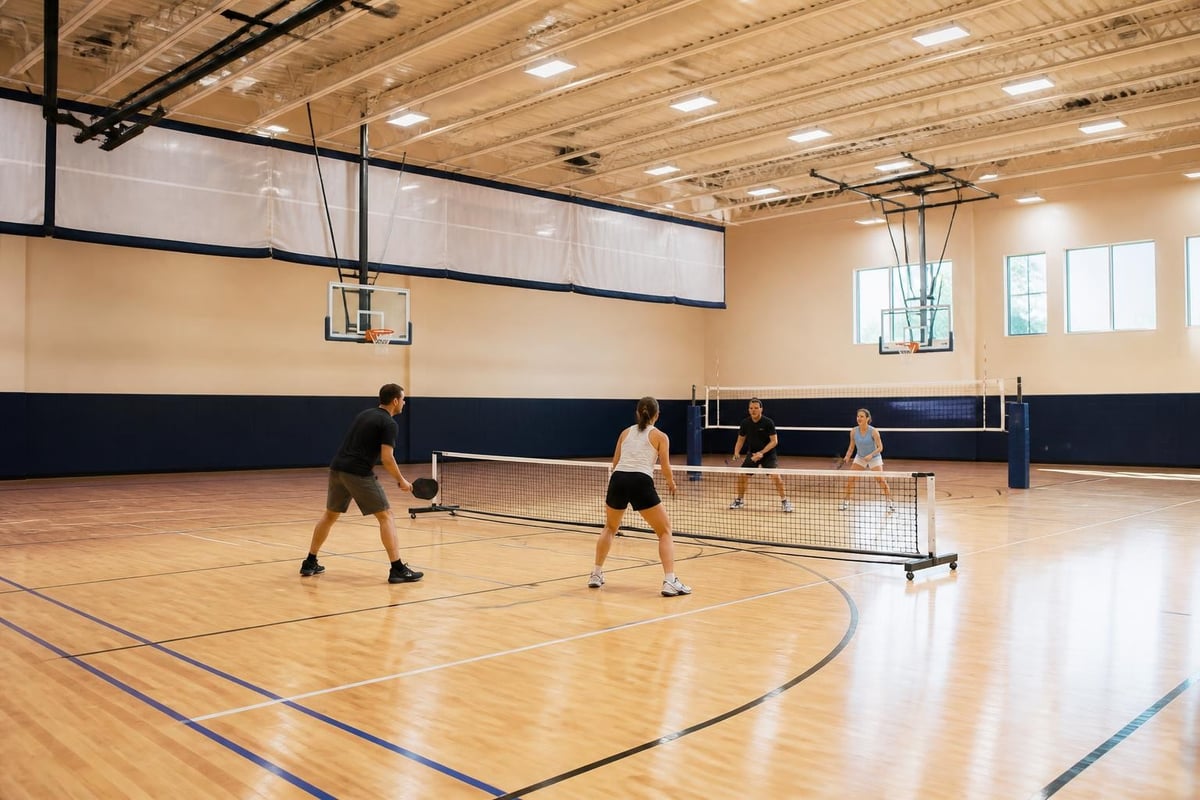
Portable systems excel for multi-purpose facilities where space serves basketball, volleyball, and pickleball on rotating schedules. Quality portable nets feature:
- Powder-coated frames resisting rust
- Easy-adjust height mechanisms
- Stable base systems (wheels or weighted frames)
- Quick assembly/disassembly (under 10 minutes)
- Storage-friendly designs
Budget-conscious programs often start with portable systems, then transition to permanent installations as pickleball participation justifies dedicated space. When you shop pickleball nets, prioritize systems with replacement net compatibility-this extends the frame investment across multiple seasons.
Bulk Purchasing Strategies for Programs
Institutional buyers who shop pickleball equipment face different considerations than individual consumers. Volume purchasing requires strategic planning around budget cycles, storage capacity, and equipment lifecycle management.
Budget Allocation Models
Athletic departments typically approach pickleball equipment budgeting through one of three models:
1. Startup Investment Model Allocate 70% of the first-year budget to durable goods (nets, paddles), 20% to consumables (balls), and 10% to accessories (storage carts, ball hoppers). This front-loads costs but establishes program infrastructure.
2. Replacement Cycle Model After initial setup, shift to 40% paddles/nets, 50% balls, and 10% accessories. This acknowledges that consumables drive ongoing costs in established programs.
3. Growth Model Maintain flexible allocation responding to participation increases. Add courts and equipment in increments rather than comprehensive expansions.
The comprehensive 2025 equipment guide from GearPickle emphasizes that quality equipment reduces long-term costs through extended lifespan-particularly relevant for programs managing tight budgets.
Vendor Relationships and Procurement
Establishing relationships with specialized athletic equipment suppliers streamlines the procurement process. Look for vendors offering:
- Educational/institutional pricing tiers
- Flexible payment terms aligned with budget cycles
- Equipment trial periods before bulk commitment
- Package deals bundling related items
- Responsive customer service for questions
Organizations can learn from proven equipment suppliers like Sideline Sport Supply, which emphasizes straightforward pricing and fast fulfillment-critical factors when programs need equipment before season starts.
Equipment Storage and Organization Systems
Proper storage extends equipment life and improves program efficiency. When you shop pickleball gear, simultaneously plan for storage infrastructure.
Paddle Storage Solutions
| Storage Type | Capacity | Mobility | Best For |
|---|---|---|---|
| Wall Racks | 20-40 paddles | Stationary | Dedicated pickleball facilities |
| Rolling Carts | 12-24 paddles | Mobile | Multi-use gymnasiums |
| Lockable Cabinets | 30-60 paddles | Stationary | High-value equipment security |
| Mesh Bags | 8-12 paddles | Portable | Traveling teams, clinics |
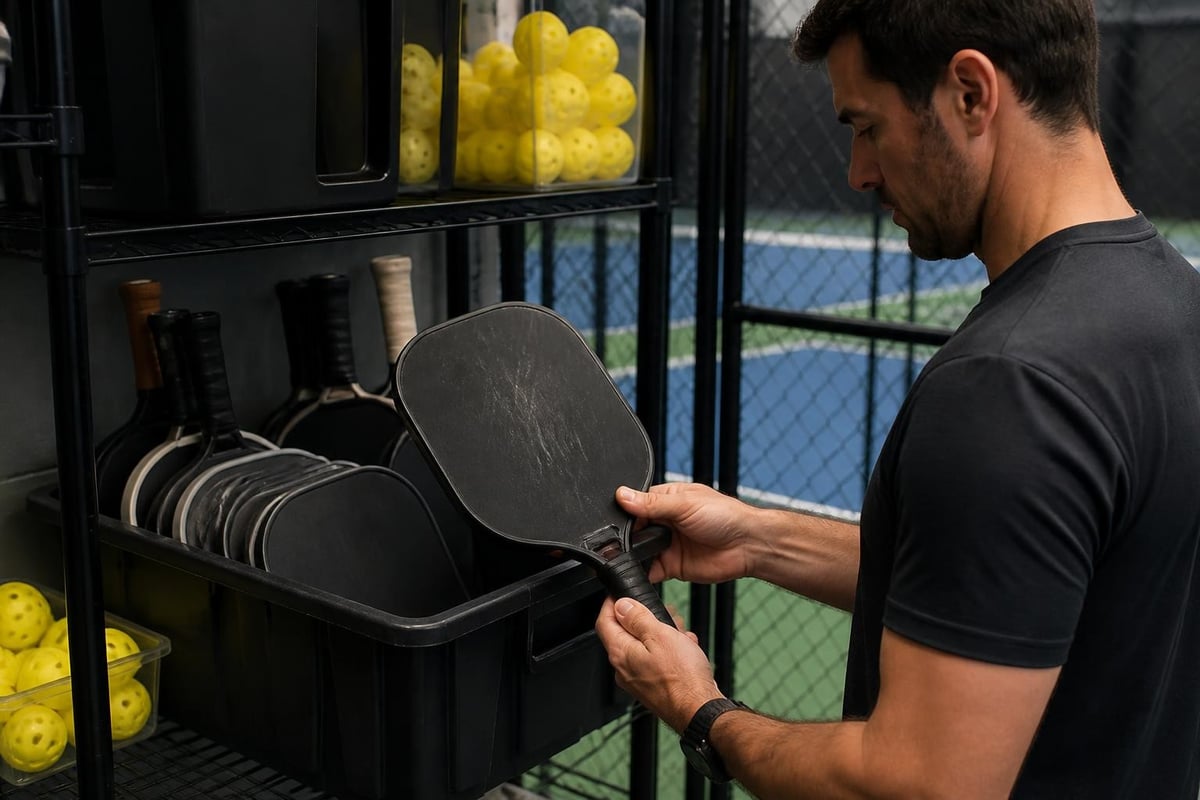
Wall racks maximize space efficiency in equipment rooms but require permanent installation. Rolling carts mirror the functionality of ball carts used in basketball and volleyball programs, allowing quick transport from storage to courts. For programs where equipment security concerns exist, lockable cabinets prevent theft and unauthorized use.
Ball Management Systems
Ball organization directly impacts practice efficiency. Programs running simultaneous courts need systems ensuring each court maintains adequate ball supply. Ball hoppers with dividers separate indoor/outdoor balls and identify balls needing replacement. Color-coding systems (different colored balls for different courts or skill levels) reduce confusion during multi-group sessions.
Regular ball rotation extends overall inventory life. Establish protocols where newer balls enter competition use while slightly worn balls move to practice drills, and heavily worn balls retire to donation or disposal.
Training Equipment and Program Development
Beyond basic play equipment, comprehensive programs integrate specialized training tools when they shop pickleball accessories.
Ball Machines and Feeding Systems
Ball machines transform practice efficiency for serious programs. These devices deliver consistent feeds for skill development in serving, returning, and shot placement. Features to evaluate include:
- Ball capacity (50-150 ball hoppers)
- Speed range (10-60 mph adjustability)
- Oscillation patterns (random, sequential, fixed)
- Power source (battery, AC, both)
- Portability and weight
While representing significant investment ($500-$3000), ball machines allow single coaches to run effective drills with large groups. The technical analysis of pickleball shots published in academic research demonstrates how consistent ball delivery improves skill acquisition-precisely what machines provide.
Court Marking and Boundary Systems
Programs sharing tennis courts or gymnasiums with pickleball need flexible court marking. Options include:
Temporary tape systems: Removable tape creates pickleball boundaries on multi-purpose surfaces. Colors contrasting with permanent lines (avoid white on tennis courts) reduce confusion. Quality athletic tape withstands foot traffic for weeks.
Snap-together court tiles: Modular flooring creates dedicated pickleball surfaces over existing floors. Tiles store efficiently and deploy quickly, ideal for programs alternating sports daily.
Permanent paint striping: Facilities committing to pickleball long-term add permanent court lines. Using distinct colors (often blue for pickleball) differentiates from tennis lines.
When selecting marking systems, consult Bounce's equipment recommendations for compatibility with your existing surfaces and usage patterns.
Maintenance Protocols and Equipment Longevity
Strategic maintenance extends the value of equipment investments. Programs that shop pickleball gear thoughtfully also implement systematic care protocols.
Paddle Maintenance Standards
Paddles endure significant stress during play. Implement these maintenance practices:
Weekly: Wipe paddle faces with damp microfiber cloths removing dirt and oils. Check edge guards for cracks or separation. Inspect grips for wear and moisture damage.
Monthly: Deep clean paddles with mild soap solution. Examine core integrity by gently flexing paddles (excessive give indicates core degradation). Rotate paddles between high-use and moderate-use groups.
Seasonally: Replace worn grips comprehensively. Evaluate paddle performance consistency-paddles showing dead spots or unusual vibration move to practice-only status. Document paddle inventory and condition.
Similar to maintenance practices for other athletic equipment like protective field panels, systematic care prevents premature replacement and identifies problems before they affect play quality.
Net System Care
Net systems require different maintenance approaches based on installation type.
For permanent systems:
- Quarterly tension checks maintaining proper height
- Annual post inspection for rust or structural issues
- Net replacement every 2-3 years depending on weather exposure
- Pulley and adjustment mechanism lubrication
For portable systems:
- Pre-use inspection of frame integrity
- Wheel maintenance (if applicable)
- Storage in dry environments preventing rust
- Net inspection after transport or storage
Matching Equipment to Player Development Levels
Effective programs that shop pickleball equipment consider player progression pathways. Equipment appropriate for beginners differs from gear supporting advanced players.
Beginner Equipment Characteristics
Beginning players benefit from equipment emphasizing control and forgiveness:
- Paddles: Larger face surfaces (standard 8 inches wide), polymer cores reducing vibration, midweight balance (7.5-8 ounces), cushioned grips
- Balls: Slightly softer outdoor balls for reduced speed, high-visibility colors
- Nets: Standard regulation height with clear boundary markings
Programs can create tiered equipment systems where beginners use forgiving gear while advanced players access performance-oriented options. This approach optimizes budget allocation-premium paddles serve students demonstrating commitment while beginners use cost-effective options.
Intermediate to Advanced Equipment
As players progress, equipment needs shift toward performance and specialization. Advanced players benefit from:
- Varied paddle weights matching playing styles
- Paddles with specific core materials (Nomex for power, polymer for control)
- Smaller grip sizes for wrist mobility
- Competition-grade balls meeting USA Pickleball specifications
The comprehensive video guide on paddle selection explains how different paddle characteristics suit various skill levels and playing styles-valuable context when outfitting programs serving diverse participants.
Safety Equipment and Facility Considerations
Comprehensive programs address safety through thoughtful equipment selection and facility preparation.
Protective Eyewear Programs
Though not universally required, protective eyewear prevents injuries from errant balls or paddle contact. When you shop pickleball safety equipment, consider:
- Sports-specific eyewear with polycarbonate lenses
- Adjustable straps preventing movement during play
- Prescription lens compatibility options
- Bulk pricing for team/class sets
Some programs make eyewear mandatory for specific age groups or provide optional equipment for players preferring protection.
Court Surface and Surroundings
Surface quality impacts both performance and safety. Ideal pickleball surfaces offer:
- Consistent traction without excessive grip
- Shock absorption reducing joint stress
- Clear boundary visibility
- Adequate surrounding space (minimum 10 feet beyond court boundaries)
Programs converting existing facilities should assess surface conditions. Cracked or uneven courts create injury risks and inconsistent ball bounce. Budget for surface repairs when adding pickleball to facility offerings, similar to how tennis facilities maintain net systems as part of comprehensive facility management.
Seasonal and Climate Considerations
Geographic location and facility type influence equipment selection when you shop pickleball supplies.
Weather Impact on Equipment Selection
Outdoor programs in varied climates need weather-appropriate equipment:
Hot, sunny environments:
- UV-resistant net materials preventing degradation
- Paddles with heat-resistant cores (polymer preferred)
- Sun-protective storage for balls (heat degrades plastic)
Cold climates:
- Indoor ball inventory for winter programming
- Paddles with cores maintaining performance in cold (polymer cores)
- Weatherproof storage solutions
High humidity regions:
- Moisture-resistant paddle materials
- Anti-microbial grips preventing mildew
- Sealed ball storage preventing moisture absorption
Indoor Facility Acoustics
Gymnasium pickleball programs must address sound levels. Pickleball generates significant noise from ball contact and player movement. Acoustic management strategies include:
- Specifying quieter indoor balls
- Implementing sound-dampening court dividers
- Scheduling pickleball during times minimizing conflict with noise-sensitive activities
- Installing acoustic panels in facilities with excessive reverberation
Programs in shared spaces benefit from communicating with facility managers about acoustic needs before launching pickleball offerings.
Building Equipment Inventory for New Programs
Launch success depends on appropriate initial inventory when you shop pickleball equipment for new programs.
Minimum Viable Equipment for Program Launch
A basic program serving 20-30 students across two courts requires:
| Equipment Type | Quantity | Rationale |
|---|---|---|
| Regulation nets | 2 sets | One per court |
| Midweight paddles | 24-30 | 12-15 per court with spares |
| Indoor balls | 36 | 12 per court with rotation |
| Outdoor balls | 36 | Same as indoor (if applicable) |
| Ball hopper/cart | 2 | One per court for efficiency |
| Storage rack/cart | 1-2 | Organized equipment management |
This foundation supports introductory programming while remaining budget-conscious. As participation grows, expand inventory incrementally rather than overbuying initially.
Scaling Equipment with Program Growth
Successful programs outgrow initial equipment quickly. Plan scaling strategies:
25% growth: Add 6-8 paddles, 12-24 balls, maintain existing net infrastructure
50% growth: Add third court with complete equipment set, expand storage capacity, introduce specialized training equipment
100% growth: Consider dedicated facility space, permanent net installations, tiered equipment systems, and potential equipment replacement acceleration due to increased use intensity
Growth planning prevents equipment shortages that compromise program quality and participant satisfaction.
Procurement Documentation and Accountability
Institutional buyers require documentation supporting purchase decisions and tracking equipment lifecycle.
Specification Development
Detailed specifications ensure vendors provide appropriate equipment. Include in procurement documents:
- Exact dimensional requirements (paddle face size, net height adjustability range)
- Material specifications (core type, net fiber composition)
- Performance standards (ball bounce specifications, paddle weight tolerances)
- Durability expectations (warranty terms, expected lifespan)
- Compliance requirements (USA Pickleball approval, safety certifications)
Comprehensive specifications reduce misunderstandings and provide recourse if delivered equipment doesn't meet expectations.
Inventory Management Systems
Track equipment status through systematic inventory management:
Initial cataloging: Assign unique identifiers (numbers, QR codes) to paddles and nets. Record purchase date, cost, and specifications.
Usage tracking: Document which equipment supports which programs, classes, or teams. This reveals usage patterns informing future purchases.
Condition assessment: Regular inspections with documented results guide maintenance and replacement decisions.
Replacement planning: Use inventory data predicting when equipment reaches end-of-life, enabling proactive budgeting rather than reactive emergency purchases.
Similar to how athletic departments manage other equipment categories through platforms offered by suppliers like Sideline Sport Supply, pickleball inventory deserves comparable systematic management.
Vendor Evaluation and Selection Criteria
Choosing the right vendor when you shop pickleball equipment significantly impacts program success beyond just product quality.
Critical Vendor Characteristics
Evaluate potential suppliers across multiple dimensions:
Product knowledge: Vendors should demonstrate sport-specific expertise, offering guidance on equipment selection for institutional needs versus retail customers.
Inventory depth: Suppliers maintaining adequate stock prevent delays when programs need equipment quickly. Seasonal sports create demand spikes-vendors with inventory management systems handle these fluctuations.
Institutional experience: Suppliers accustomed to educational and organizational buyers understand unique requirements: purchase orders, institutional payment terms, bulk discounts, and compliance documentation.
Post-purchase support: Equipment questions arise during use. Responsive customer service, easy returns for defective items, and replacement part availability differentiate superior vendors.
Value beyond price: While cost matters, total value encompasses reliability, service quality, and partnership approach. The cheapest option often proves expensive when factoring delays, poor support, or premature equipment failure.
Organizations benefit from establishing relationships with specialized athletic equipment providers rather than generic sporting goods retailers. Dedicated suppliers offer expertise and services general retailers cannot match.
Successfully outfitting pickleball programs requires strategic thinking about equipment quality, player needs, facility constraints, and budget realities. By understanding the nuanced requirements across equipment categories and implementing systematic procurement, maintenance, and inventory practices, athletic directors and program managers create sustainable pickleball offerings serving participants effectively. When you're ready to shop pickleball equipment with a supplier that understands institutional needs, Sideline Sport Supply delivers reliable, affordable athletic equipment with straightforward pricing and fast fulfillment designed specifically for teams, schools, and sports organizations focused on getting players on the court rather than managing procurement complexities.