

Pickleball Machines: Training Tools for Every Skill Level
Pickleball continues its rapid growth across athletic programs, community centers, and competitive leagues nationwide. As players seek to refine their skills and organizations invest in quality training infrastructure, pickleball machines have emerged as essential tools for consistent, effective practice. These automated training devices deliver precise ball placement, variable speeds, and customizable drills that allow players to develop muscle memory, improve reaction times, and master techniques without requiring a practice partner. For coaches, schools, and sports facilities managing multiple athletes at different skill levels, pickleball machines offer a practical solution that maximizes court time and accelerates player development.
Understanding Pickleball Machine Technology
Modern pickleball machines incorporate sophisticated mechanisms designed to simulate real-game scenarios with remarkable accuracy. Unlike traditional ball launchers, these specialized devices account for the unique characteristics of pickleball gameplay, including the sport's slower ball speeds, lower net height, and emphasis on placement over power.
Core Components and Functionality
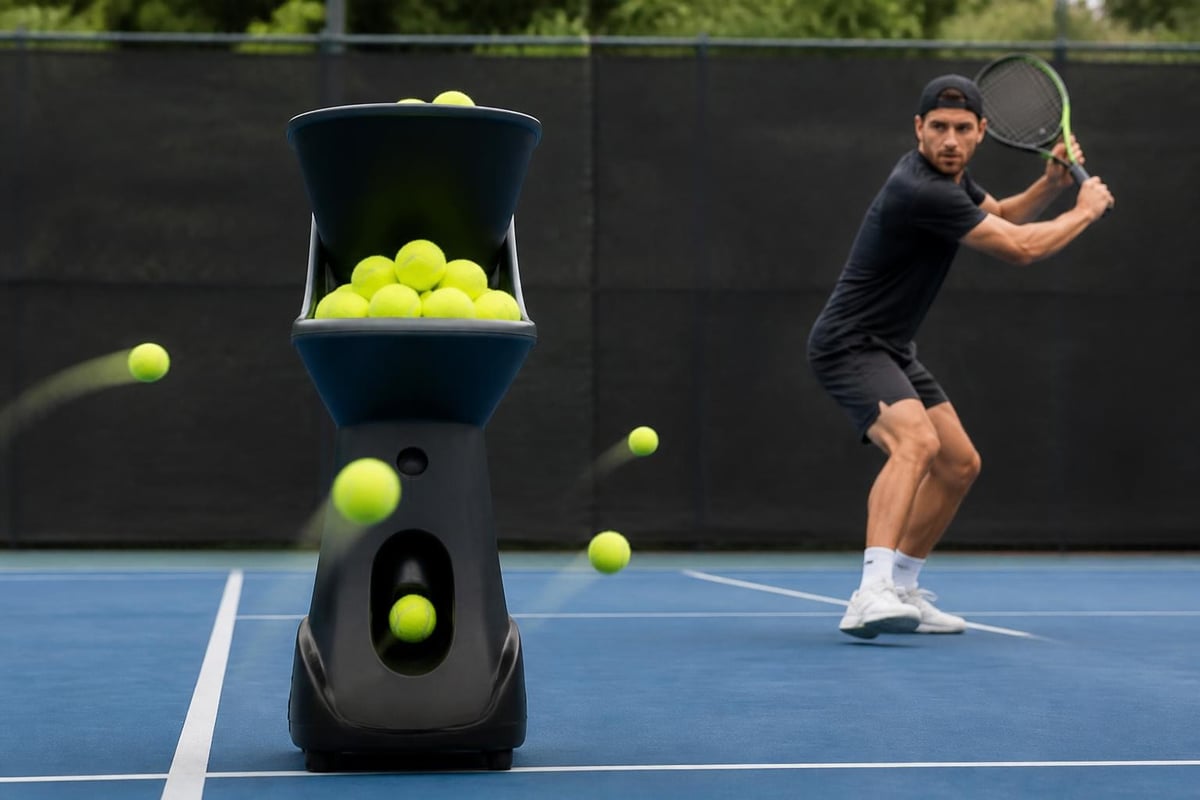
Most pickleball machines feature rotating wheels or pneumatic systems that propel balls at controlled velocities. The wheel-based designs typically use two counter-rotating wheels to generate topspin, backspin, or flat shots, while pneumatic models employ compressed air for ball projection. Both systems offer distinct advantages depending on training objectives and budget considerations.
Ball capacity represents another critical specification. Entry-level machines typically hold 50-100 balls, requiring frequent reloading during extended practice sessions. Professional-grade models accommodate 100-200 balls with integrated hoppers, enabling uninterrupted training blocks that better simulate match conditions. Battery life varies considerably, with portable units providing 2-4 hours of continuous operation while AC-powered machines eliminate runtime concerns for facility installations.
Key features to evaluate include:
- Adjustable ball frequency (shots per minute)
- Speed range customization
- Spin variation capabilities
- Horizontal and vertical oscillation
- Programmable drill sequences
- Remote control functionality
- Portability and weight considerations
Precision and Consistency Benefits
The primary advantage of machine-based training lies in perfect consistency. Human feeding partners inevitably introduce variability in ball placement, timing, and velocity. Machines eliminate these fluctuations, allowing players to groove specific strokes through hundreds of repetitions with identical ball characteristics. This consistency proves invaluable when addressing technical weaknesses or building new shot patterns.
Advanced models like the TITAN Pickleball Training Machines incorporate programmable drill modes that sequence different shots automatically. Players can practice transition drills moving from baseline drives to net volleys without manual adjustments, creating training experiences that mirror competitive match flow. Some units store dozens of custom programs, enabling coaches to design player-specific practice routines.
Selecting the Right Machine for Your Training Environment
Choosing appropriate equipment requires matching machine capabilities to specific training goals, facility constraints, and budget parameters. Schools and organizations face different considerations than individual players purchasing for home practice.
Budget Categories and Value Propositions
Pickleball machines span a wide price spectrum from $500 to $3,000, with features and durability scaling accordingly. Understanding value at each price point helps organizations make informed investments.
| Price Range | Typical Features | Best For | Limitations |
|---|---|---|---|
| $500-$1,000 | Basic speed/spin control, 50-75 ball capacity, manual oscillation | Individual players, occasional practice | Limited programming, shorter battery life |
| $1,000-$1,800 | Variable oscillation, 100+ ball capacity, pre-set drills, remote control | Coaches, small group training, clubs | Mid-range durability, moderate customization |
| $1,800-$3,000 | Full programmability, 150-200 ball capacity, app integration, premium construction | Facilities, competitive programs, multi-user environments | Higher initial investment |
Resources like comprehensive pickleball machine rankings provide detailed comparisons across brands and price points, helping buyers identify optimal value based on specific requirements.
Portability Versus Performance Trade-offs
Portable machines weighing 25-35 pounds offer flexibility for organizations sharing court space or conducting off-site training sessions. These compact units typically sacrifice ball capacity and advanced features but deliver adequate performance for fundamental skill development. Facility-based programs with dedicated court access benefit from heavier machines (40-55 pounds) that provide superior stability, larger hoppers, and more comprehensive programming options.
The MaxPB Training Machine exemplifies portable design philosophy, combining lightweight construction with rapid-fire capabilities ideal for reaction time training. Conversely, the Spinshot Player Pickleball Machine prioritizes customization depth with extensive ball capacity and adjustment granularity suited for stationary installation scenarios.
Battery versus AC power presents another consideration. Battery-powered units enable outdoor court use and flexible positioning but require recharge management. AC-powered machines eliminate downtime concerns while restricting placement near electrical outlets. Some advanced models offer dual power options, maximizing operational flexibility.
Implementing Effective Machine-Based Practice Routines
Equipment acquisition represents just the initial step. Maximizing training value requires structured drill design that targets specific skill development objectives while maintaining player engagement.
Foundational Skill Development Drills
Beginning and intermediate players benefit from repetition-focused drills that build consistent stroke mechanics. Machine-based training excels at providing the volume of touches necessary for motor pattern development.
Essential baseline drills include:
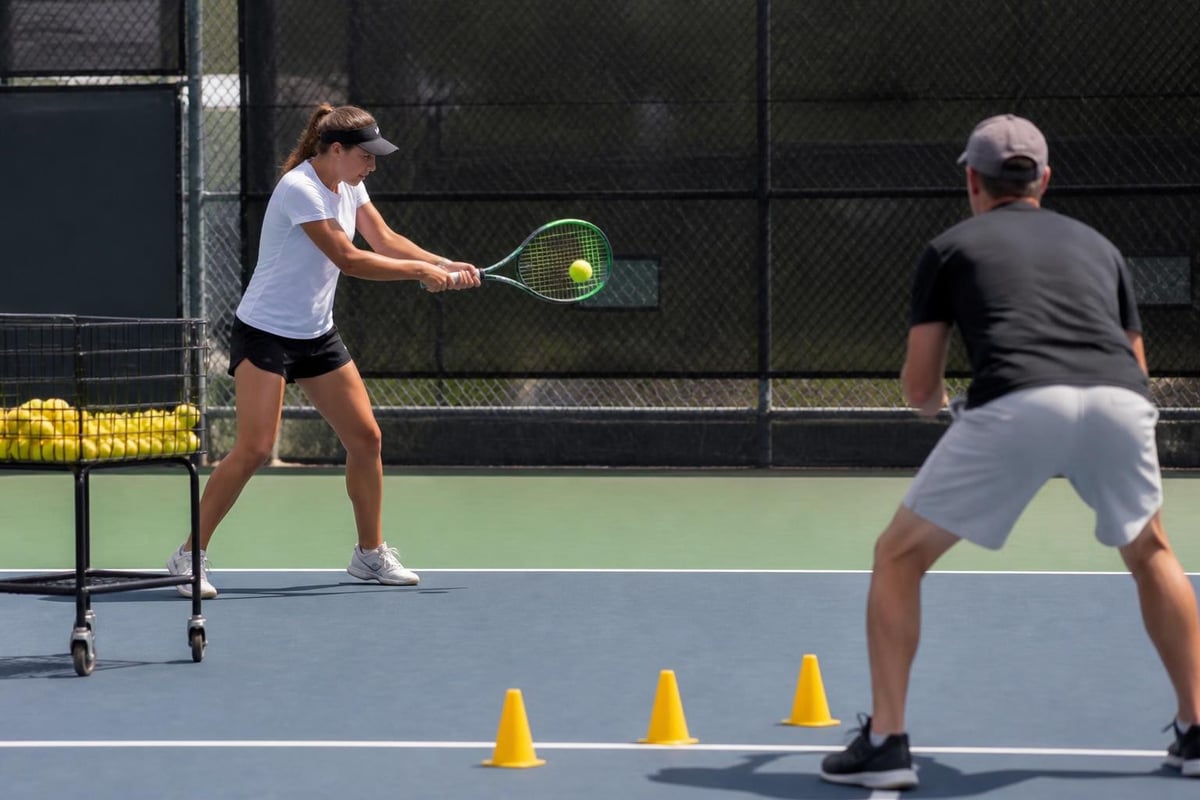
- Cross-court groundstroke repetition - Set the machine for consistent cross-court feeds at moderate pace, focusing on footwork and contact point consistency
- Down-the-line accuracy training - Program straight-line feeds to develop directional control and stroke precision
- Transitional movement patterns - Alternate between baseline and mid-court positions using varied ball placement
- Volley series - Position at the kitchen line with rapid-fire feeds to improve hand-eye coordination and paddle control
The extensive drill database offers over 130 structured exercises organized by skill level and training focus. These resources translate effectively to machine-based practice when adapted for automated feeding.
Advanced Tactical Scenario Training
Competitive players require training that replicates match pressure and complex shot sequences. Modern pickleball machines deliver sophisticated programming that challenges decision-making and shot selection under realistic conditions.
Random oscillation modes simulate opponent unpredictability, forcing players to read ball trajectory and adjust positioning dynamically. Multi-ball sequences combining drives, drops, and lobs within single drills develop the versatility necessary for high-level competition. Ball machine drill demonstrations showcase practical applications for groundstrokes, volleys, and overhead development through structured machine work.
Speed variation training proves particularly valuable. Programming gradual velocity increases within drill sequences builds reaction capacity while maintaining technical form. Players learn to handle pace variation without mechanical breakdown, a critical skill during competitive play where opponents constantly adjust ball speed tactically.
Maintenance and Operational Considerations
Proper equipment care extends machine lifespan and ensures consistent performance across thousands of practice hours. Organizations managing multiple athletes require systematic maintenance protocols.
Routine Care Procedures
Regular cleaning prevents ball residue and court debris from affecting wheel mechanisms or pneumatic systems. After each practice session, operators should inspect ball feeding paths and remove any accumulated dirt or plastic shavings from pickleball surfaces. Monthly deep cleaning of rotating wheels with approved solvents maintains optimal grip and spin generation.
Battery maintenance significantly impacts portable machine longevity. Lithium-ion batteries require complete discharge-recharge cycles periodically to preserve capacity. Storing machines with partial charges during extended off-seasons can reduce battery effectiveness. Facilities should establish charging schedules that optimize battery health while ensuring equipment readiness.
Maintenance checklist for institutional use:
- Weekly visual inspection of wheels and feeding mechanisms
- Monthly battery performance verification
- Quarterly lubrication of moving parts per manufacturer specifications
- Annual professional servicing for electronic components
- Systematic ball inventory rotation to ensure consistent bounce characteristics
Storage and Environmental Factors
Indoor storage protects machines from moisture, temperature extremes, and UV exposure that degrade plastic components and electronic systems. Organizations utilizing outdoor courts should invest in weather-resistant covers and establish indoor storage protocols when machines aren't actively deployed. Temperature fluctuations affect battery performance, making climate-controlled storage optimal for equipment preservation.
Ball quality impacts machine performance and longevity. Worn or damaged balls create inconsistent feeding, increase wheel wear, and compromise training effectiveness. Athletic equipment suppliers like Sideline Sport Supply understand the relationship between quality training aids and sustained program success, offering guidance on equipment selection that balances performance with long-term value.
Integrating Machines Into Comprehensive Training Programs
Pickleball machines function most effectively as components within broader training frameworks rather than standalone solutions. Successful programs blend automated practice with live play, partner drilling, and strategic instruction.
Balancing Machine Work With Live Competition
While machines excel at technical skill development, they cannot replicate opponent strategy, psychological pressure, or the unpredictable nature of competitive matches. Optimal training allocates 30-40% of practice time to machine-based drills, reserving remaining court time for match simulation, partner exercises, and competitive play.
Coaches should structure practice sessions that transition smoothly between machine drills and live application. A typical two-hour team practice might include 30 minutes of machine-based stroke development, followed by 45 minutes of cooperative partner drilling, concluding with 45 minutes of competitive match play. This progression allows players to groove mechanics through repetition before testing skills under game conditions.
| Training Component | Time Allocation | Primary Benefits | Complementary Activities |
|---|---|---|---|
| Machine-based drills | 25-35% | Technical consistency, volume, specific weakness targeting | Video analysis, form correction |
| Partner drilling | 30-40% | Communication, movement patterns, tactical awareness | Strategy discussion, scenario planning |
| Match play | 30-40% | Competition experience, pressure management, decision-making | Performance review, mental skills training |
Skill Assessment and Progress Tracking
Machine consistency enables objective skill measurement. By conducting standardized tests using identical machine settings, coaches can track player improvement across training cycles. Success rate metrics for specific shot types (cross-court drives, drop shot accuracy, volley contact quality) provide quantifiable development indicators.
The TITAN ONE Ball Machine features high-speed capabilities that support advanced assessment protocols. Players can document performance against progressively challenging settings, creating measurable benchmarks that inform training adjustments and validate practice effectiveness.
Technology Evolution and Future Developments
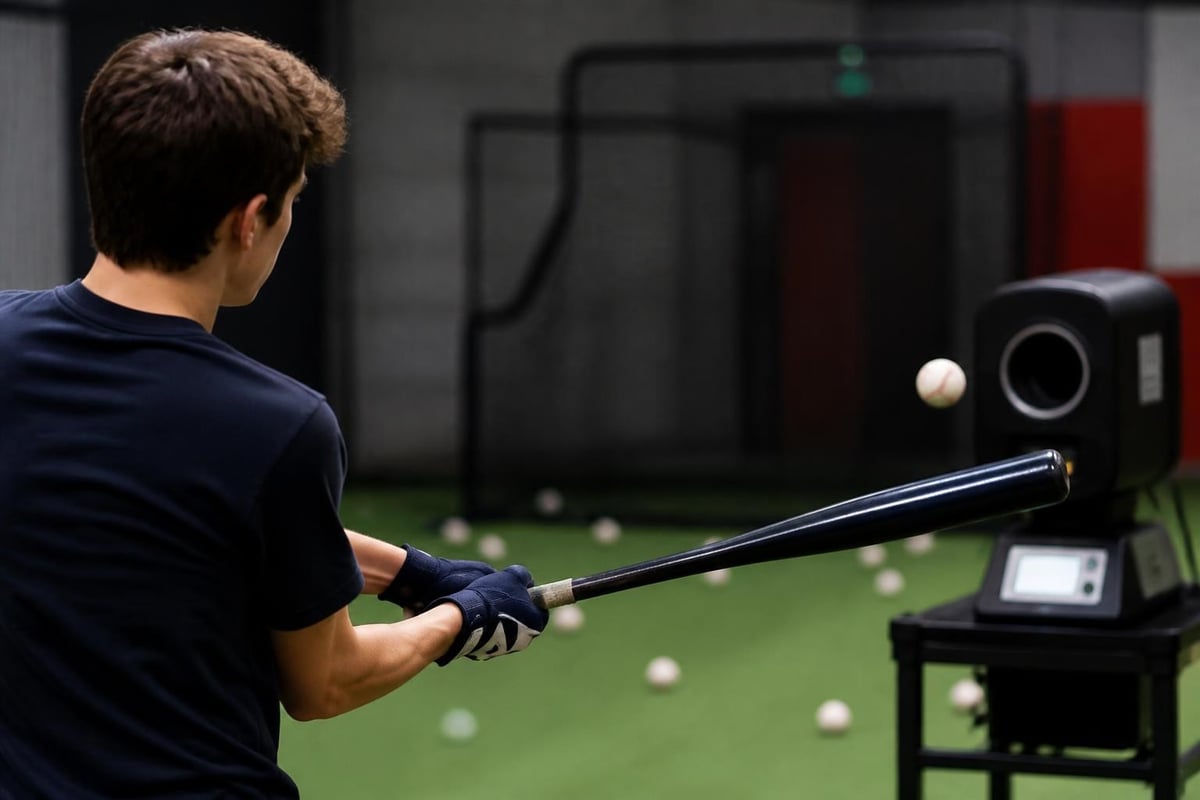
Artificial intelligence and sensor technology are transforming pickleball machines from simple ball launchers into intelligent training partners. These innovations promise increasingly sophisticated practice experiences that adapt dynamically to individual player needs.
AI-Powered Adaptive Training Systems
The AI-powered pickleball machine from Tennibot represents next-generation training technology. These systems analyze player performance in real-time, automatically adjusting ball placement, speed, and frequency based on success rates and technique patterns. When players consistently handle certain shot types, the system increases difficulty. When mechanics break down, it reduces complexity until form stabilizes.
Adaptive technology particularly benefits organizations training athletes with varied skill levels simultaneously. Rather than programming separate drill sequences for different ability groups, intelligent machines customize difficulty automatically, allowing multiple players to train efficiently with single equipment setups. Coaches can supervise broader groups while machines provide individualized challenge levels.
Connected Training Ecosystems
Mobile app integration extends machine functionality beyond court-side controls. Players can design custom drills, share programs with teammates, and access professional training content through smartphone interfaces. Some systems include video recording capabilities synchronized with drill sequences, enabling immediate technique review without additional equipment.
Data analytics dashboards track long-term performance trends, providing coaches with insights into player development patterns, practice consistency, and skill acquisition rates. These metrics inform programming decisions and help identify athletes requiring additional support or advancement opportunities.
Organizations investing in connected training equipment should verify compatibility with existing technology infrastructure and evaluate data privacy protocols, particularly when working with youth athletes. Similar to the considerations organizations face when selecting baseball machines or volleyball machines, understanding total cost of ownership including software subscriptions and upgrade paths ensures sustainable equipment investments.
Organizational Procurement Strategies
Schools, clubs, and sports facilities face unique challenges when acquiring training equipment. Multi-stakeholder environments require procurement approaches that balance performance requirements, budget constraints, and long-term operational sustainability.
Grant Funding and Shared Resource Models
Many educational institutions and non-profit sports organizations qualify for athletic equipment grants through state programs, national governing bodies, and private foundations. Successful grant applications typically demonstrate how equipment serves underserved populations, supports competitive excellence, or fills documented training gaps. Pickleball machines align well with grant criteria given the sport's accessibility, multigenerational appeal, and growth trajectory.
Shared resource agreements between neighboring facilities maximize equipment utilization while distributing acquisition costs. Two schools might jointly purchase premium machines, scheduling usage based on seasonal programs or practice calendars. Community sports organizations can establish equipment lending programs, allowing member clubs to rotate machines based on competitive seasons or skill development priorities.
Vendor Relationships and Service Agreements
Establishing relationships with reliable athletic equipment suppliers streamlines procurement, ensures product support, and facilitates warranty administration. Vendors experienced in institutional sales understand budget cycles, requisition procedures, and the documentation requirements governing organizational purchases.
Service agreements that include annual maintenance, repair support, and equipment replacement clauses protect long-term investments. Clarifying service territory coverage, response timeframes, and parts availability prevents extended equipment downtime that disrupts training schedules. Organizations should request references from similar institutions and verify vendor capacity to support ongoing needs beyond initial sale completion.
Specialized Applications Across Different Populations
Pickleball machines serve diverse user groups with distinct requirements. Understanding application-specific considerations helps organizations select equipment that delivers optimal value for their primary constituencies.
Youth Development Programs
Young players benefit from machines offering extensive speed reduction capabilities and gentle feeding patterns that build confidence while developing fundamental skills. Adjustable height settings accommodate players of different ages and physical development stages. Safety features including emergency shutoff controls and stable base designs prove particularly important in youth environments.
Progressive difficulty frameworks help young athletes experience achievement while maintaining appropriate challenge levels. Starting with slow, predictable feeds builds basic stroke patterns before introducing speed variation and placement randomness. Groundstroke development drills demonstrated by professional coaches translate effectively into youth training when adapted for age-appropriate pace and complexity.
Senior and Recreational Players
Older athletes and recreational players often prioritize accessibility, user-friendly controls, and moderate intensity over maximum performance capabilities. Machines with intuitive interfaces, clear digital displays, and simplified programming serve these populations effectively. Remote controls that enable adjustment without crossing the court improve practice flow and reduce unnecessary movement between drill segments.
Recreational programs frequently emphasize social engagement alongside skill development. Machines that facilitate group activities, accommodate multiple skill levels simultaneously, and support cooperative rather than purely competitive training align well with these program philosophies.
Competitive and Elite Training
High-level athletes require equipment delivering maximum speed, precise spin control, and sophisticated programming depth. Tournament preparation demands machines capable of replicating specific opponent tendencies, championship-level pace, and pressure situation sequences. Premium models with extensive ball capacity, rapid shot frequencies, and detailed customization options justify higher price points for serious competitive programs.
Elite training often incorporates video analysis, biometric monitoring, and performance analytics. Machines with data export capabilities, synchronization features, and third-party system integration support comprehensive athlete development frameworks employed by advanced programs.
Pickleball machines represent strategic investments that deliver measurable training value across skill levels and organizational contexts. By providing consistent, customizable practice opportunities, these tools accelerate player development while maximizing limited court time and coaching resources. Whether supporting youth programs, recreational leagues, or competitive training environments, the right machine selection combined with structured practice design produces significant performance improvements. At Sideline Sport Supply, we understand the training equipment needs of coaches, schools, and sports organizations, offering expert guidance on selecting practical, game-day-ready gear that supports your program goals with straightforward pricing and reliable fulfillment.