

Soccer Rugby Versus: Key Differences and Similarities 2026
Ever wondered why soccer and rugby, two of the world’s most popular sports, are often mixed up? Both ignite global passion, yet they are frequently confused because of their shared origins and field similarities.
This article provides a clear comparison between soccer rugby, highlighting the differences and unexpected connections that set them apart. Whether you are a fan, athlete, or newcomer, understanding these elements will deepen your appreciation.
We will explore the origins, rules, gameplay, equipment, player roles, cultures, and global impact of each sport. Ready to discover which one matches your interests?
Read on for a detailed, side-by-side look at soccer rugby in 2026.
Historical Origins and Evolution
The intertwined story of soccer rugby begins in 19th-century England, where the two sports shared a common foundation before evolving into distinct global phenomena. Understanding their historical paths sheds light on why soccer rugby remain among the world’s most captivating team sports.
Shared Roots and Divergence
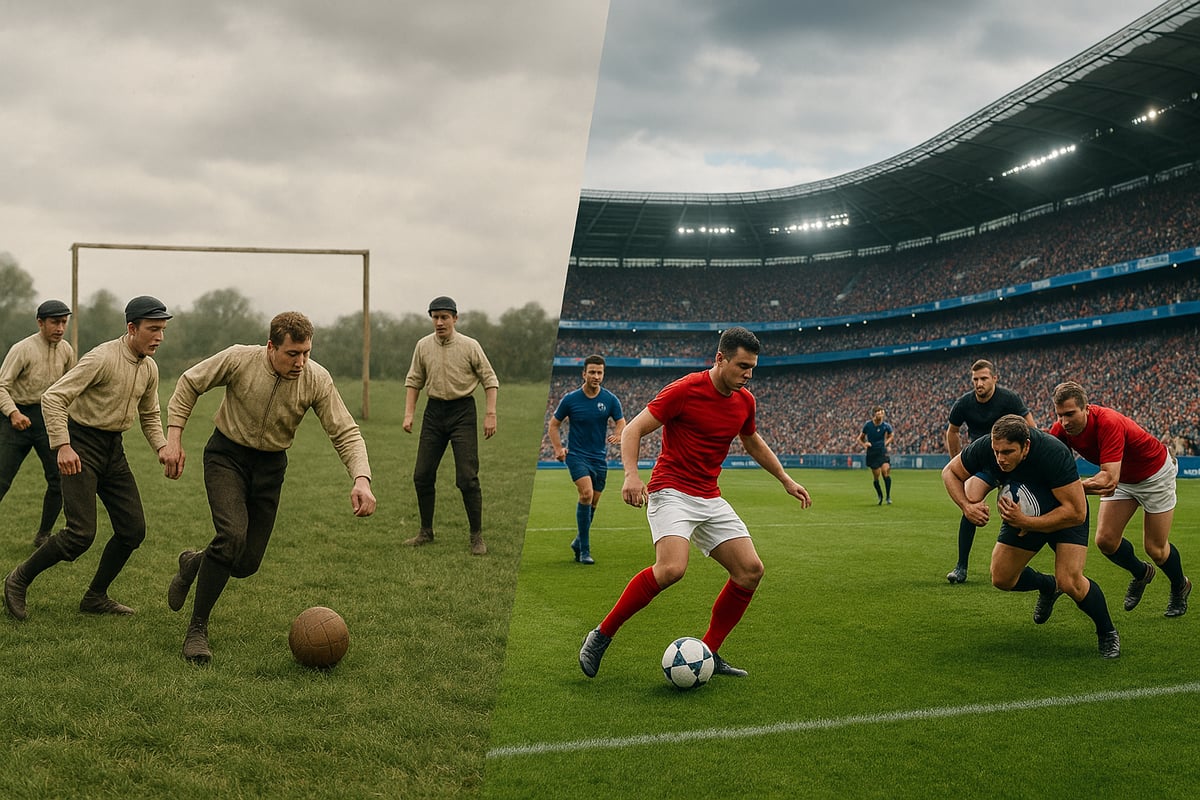
Both soccer rugby trace their roots to the chaotic, often unruly games of football played in English schools during the early 1800s. These games had loose rules, varying from region to region. The pivotal moment in rugby’s mythology is the 1823 incident at Rugby School, where William Webb Ellis allegedly picked up the ball and ran with it, marking a symbolic split from the dribbling style that would become soccer.
The need for standardized rules led to significant milestones. In 1863, the creation of The Football Association (FA) formally codified the rules of soccer, emphasizing the use of feet and prohibiting handling the ball. Just a few years later, in 1871, the Rugby Football Union established rugby’s unique regulations, including carrying and passing the ball by hand.
Early versions of soccer rugby were more similar than different, but the rulebooks gradually diverged. Social class and educational institutions played a major role in this evolution. Soccer became popular among the working class and urban populations, while rugby thrived in public schools and among the elite.
Key historical milestones included the first international soccer match between England and Scotland in 1872, and the inaugural international rugby game between England and Scotland in 1871. Both sports rapidly spread to British colonies, fueling their global reach. For a deeper dive into these intertwined beginnings, see the Shared Origins of Football, Rugby, and Soccer.
The two sports also made early Olympic appearances, further cementing their international appeal. By the late 19th and early 20th centuries, professional leagues and national competitions began to emerge, solidifying soccer rugby as mainstream pastimes.
Modern Developments and Globalization
The globalization of soccer rugby accelerated through the 20th century, driven by colonization, migration, and the rise of mass media. Both sports became symbols of national pride and identity, with their own major tournaments: the FIFA World Cup for soccer and the Rugby World Cup for rugby. These competitions attract billions of viewers and showcase the best talent from every continent.
Women’s participation has grown rapidly, with international tournaments and professional leagues gaining visibility and support. This shift reflects broader societal changes and efforts to make soccer rugby more inclusive.
Recent years have brought significant rule changes and innovations. Soccer has introduced goal-line technology and VAR to enhance fairness, while rugby has implemented the TMO and player welfare protocols. Analytics and data-driven coaching now influence training and strategy across both sports.
Today, soccer rugby continue to evolve, adapting to new audiences and technological advancements. The combination of rich history and modern innovation ensures their enduring appeal among fans, athletes, and newcomers worldwide.
Rules, Field, and Scoring Systems
Understanding the distinctions between soccer rugby starts with the basics: the field, equipment, core rules, and scoring. These elements shape the character and pace of each sport, making them unique yet often compared side by side.
Field Layout and Equipment
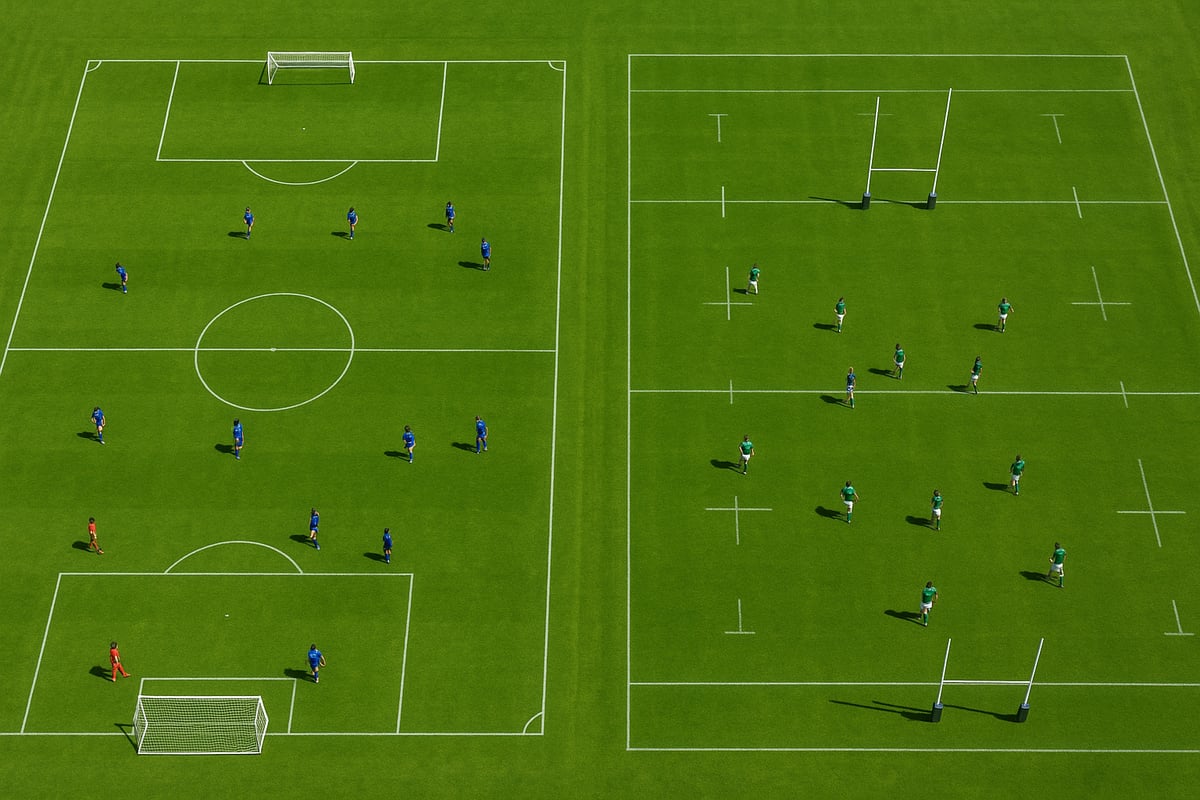
Both soccer rugby fields are rectangular, but their dimensions and features set them apart. Soccer fields typically measure 100 to 130 yards in length and 50 to 100 yards in width, with goalposts at each end. Rugby fields are similar in length but wider, reaching up to 70 meters, and include distinctive try zones behind each goal line.
The equipment used in soccer rugby also differs. Soccer uses a round ball, while rugby employs an oval-shaped ball that is easier to grip and pass. Goalposts in soccer are rectangular with a crossbar, while rugby posts are H-shaped and much taller. For a comprehensive overview of soccer goal setups, see this Soccer goal equipment guide.
Uniforms for soccer rugby reflect the demands of each sport. Soccer players wear lightweight kits, shin guards, and cleats for swift movement. Rugby players use thicker jerseys, shorts, padded gear, and boots designed for traction and durability.
| Feature | Soccer | Rugby |
|---|---|---|
| Field Length | 100–130 yards | 100–130 yards |
| Field Width | 50–100 yards | Up to 70 meters |
| Goalposts | Rectangular with net | H-shaped, no net |
| Ball | Round | Oval |
| Key Equipment | Shin guards, light boots | Padded gear, sturdy boots |
These field and equipment differences shape the style and tempo of soccer rugby matches.
Core Rules and Gameplay Structure
Soccer rugby each has a distinct gameplay structure. Soccer is played with 11 players per side, while rugby union fields 15 and rugby league 13. Soccer matches last 90 minutes, divided into two halves, while rugby matches are 80 minutes, also split into two halves.
Ball movement is another defining aspect of soccer rugby. In soccer, players advance the ball primarily with their feet, with hands only allowed for throw-ins and by the goalkeeper. In rugby, players use both hands and feet, but forward passing is forbidden; the ball must be passed laterally or backward.
Offside rules in soccer rugby are crucial but differ. Soccer enforces offside based on player position relative to the ball and opponents when a pass is made. In rugby, a player is offside if they are ahead of the ball carrier during play.
Substitutions also vary: soccer allows a limited number (usually three to five), while rugby offers more flexibility with tactical substitutions and injury replacements.
Key gameplay features in soccer rugby:
- Soccer: Continuous play, limited contact, set pieces like corners and free kicks.
- Rugby: Frequent stoppages, high physical contact, set pieces like scrums and lineouts.
These rules ensure that soccer rugby each offers a unique match experience.
Scoring Systems and Points
Scoring in soccer rugby is one of their most noticeable differences. Soccer relies on goals, each worth one point, with the aim to outscore the opponent by the end of regulation time. In rugby, a try scores five points, with opportunities for additional points through conversions (2 points), penalty kicks (3 points), and drop goals (3 points).
Tiebreakers in soccer rugby also differ. Soccer may use extra time and penalty shootouts if a match ends in a draw, especially in tournaments. Rugby uses extra time, sudden death, or even replayed matches in some competitions.
Below is a summary table for scoring:
| Action | Soccer Points | Rugby Points |
|---|---|---|
| Goal / Try | 1 | 5 (Try) |
| Conversion | — | 2 |
| Penalty Kick | — | 3 |
| Drop Goal | — | 3 |
Match outcomes in soccer rugby depend on aggregate goals or points. High-scoring rugby games contrast with the typically low-scoring soccer matches, reflecting their tactical and physical demands.
By understanding these fundamental differences in rules, fields, and scoring, fans and newcomers can better appreciate the unique appeal of soccer rugby.
Player Roles, Positions, and Physical Demands
In the world of soccer rugby comparisons, understanding player roles and the physical demands of each sport is crucial. Both games require unique skills, specialized positions, and intense fitness regimens. However, the way players train, move, and contribute on the field reveals fascinating contrasts.

Soccer Positions and Skills
Soccer rugby comparisons often begin with player positions. In soccer, the team is split into four main roles: goalkeeper, defenders, midfielders, and forwards. Each has a distinct set of responsibilities and skills.
- Goalkeeper: The only player allowed to handle the ball within the penalty area. They must have quick reflexes, strong decision-making, and excellent communication.
- Defenders: Positioned closest to their own goal, defenders focus on intercepting passes, tackling opponents, and blocking shots.
- Midfielders: These players control the tempo of the game, linking defense and attack. Their skills include precise passing, vision, and stamina.
- Forwards: Tasked with scoring, forwards rely on agility, speed, and clinical finishing.
Key skills in soccer include dribbling, passing, shooting, and tactical awareness. Physical requirements focus on cardiovascular endurance, rapid acceleration, and lateral agility. Players often cover over 10 kilometers in a match, executing sprints, quick turns, and tackles. Soccer rugby analysis highlights how soccer players must maintain peak fitness throughout two continuous halves, adapting quickly to the evolving flow of play.
Rugby Positions and Skills
When comparing soccer rugby dynamics, rugby’s structure is more segmented. Teams are divided into forwards and backs, each group containing specialized positions.
- Forwards: Responsible for winning possession in scrums, lineouts, and rucks. Positions include prop, hooker, lock, flanker, and number eight. Forwards require exceptional strength and stamina to withstand physical collisions.
- Backs: Focused on exploiting space and scoring tries. Key roles are scrum-half, fly-half, centers, wings, and fullback. Backs need speed, agility, and sharp tactical minds.
Core rugby skills center on tackling, passing (including the unique backward pass), running with the ball, and executing set pieces like scrummaging and lineouts. Physical demands are immense. Rugby players endure repeated high-impact tackles and must possess explosive power, upper body strength, and resilience. In soccer rugby contrasts, rugby’s stop-start nature means bursts of intense activity are interspersed with strategic pauses, requiring both anaerobic and aerobic conditioning.
| Position Type | Soccer Example | Rugby Example | Primary Attribute |
|---|---|---|---|
| Defensive | Center Back | Prop, Lock | Strength |
| Playmaker | Midfielder | Fly-half, Scrum-half | Vision, Passing |
| Attacker | Forward/Striker | Wing, Fullback | Speed, Finishing |
Training and Fitness Demands
Training for soccer rugby athletes is intensive and sport-specific. Soccer players focus on aerobic conditioning, agility drills, technical ball work, and tactical formations. They regularly perform interval runs, sprints, and small-sided games to mimic match intensity.
Rugby training emphasizes resistance work, tackling drills, scrummaging technique, and speed endurance. Strength sessions build muscle mass to handle physical impacts, while skill-based practice hones passing and kicking under pressure.
Both sports carry injury risks, though the types and frequencies differ. Soccer injuries often involve muscle strains and ligament tears due to the constant running and sudden directional changes. Rugby sees more contact-related injuries, such as concussions and joint damage. For those interested in a scientific perspective, the Injuries in Youth Soccer and Rugby Players study provides valuable insight into injury patterns and prevention.
Elite soccer rugby athletes are measured by their ability to maintain high performance under fatigue. On average, soccer players cover more distance per match, while rugby players engage in more tackles and high-impact collisions. Effective recovery, nutrition, and injury prevention strategies are essential for longevity in both sports.
Gameplay Flow, Tactics, and Strategies
Modern soccer rugby matches captivate fans with their intense pace and strategic depth. Both sports embrace unique rhythms and tactical nuances, shaping the way teams approach victory. While the flow of soccer rugby games appears seamless, the underlying strategies are highly sophisticated.
Soccer Match Flow and Tactics
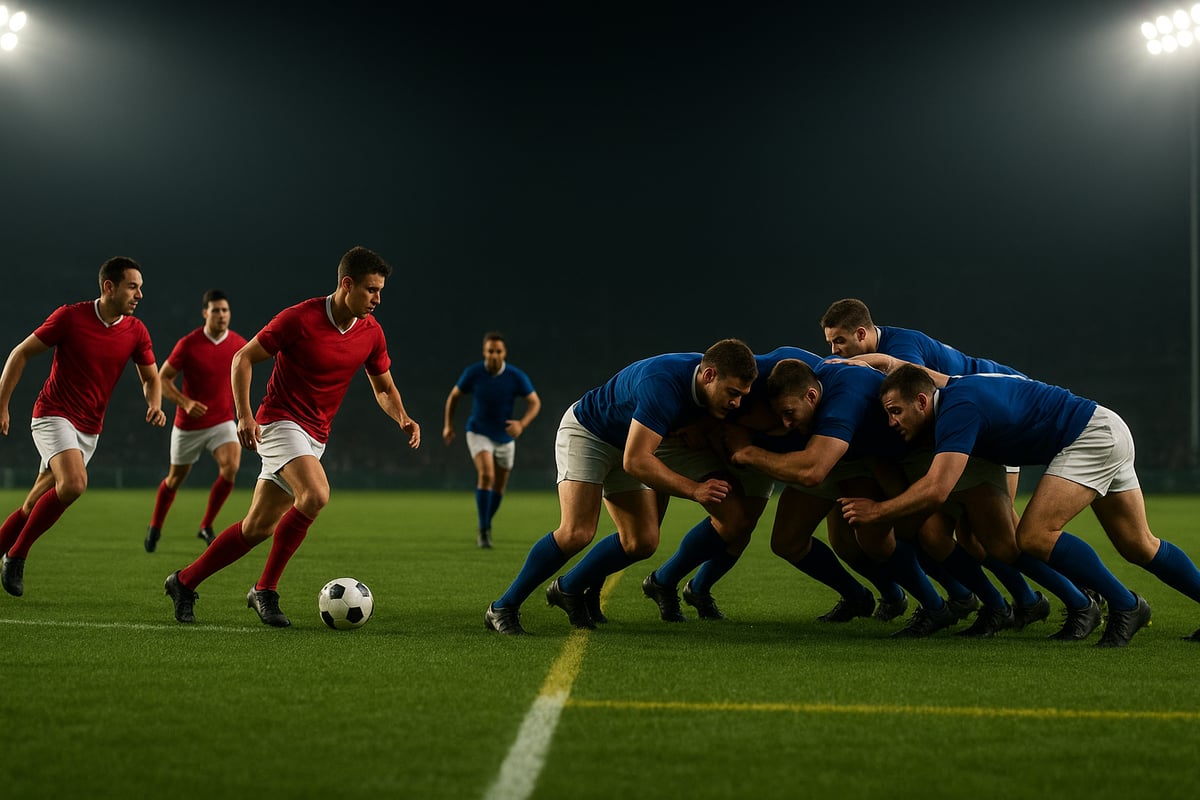
Soccer rugby matches are known for their fluid, continuous play. The clock rarely stops, forcing teams to adapt on the fly. Possession and build-up are crucial, with players constantly moving to find space and create opportunities.
Teams typically use formations like 4 4 2, 4 3 3, or 3 5 2, each supporting different tactical goals. Coaches may choose a pressing approach to win the ball high up the pitch or a counter-attacking style to exploit gaps left by opponents. The tiki taka philosophy, popularized by Spanish teams, emphasizes short passing and movement.
Set pieces such as free kicks, corners, and penalties often decide tight contests. For a deeper dive into how goals influence match outcomes and tactics, explore this resource on understanding goals in soccer.
Soccer rugby tactics require quick decision-making, precise positioning, and seamless teamwork to break down defenses and capitalize on scoring chances.
Rugby Match Flow and Tactics
Rugby match flow is defined by structured phases and frequent stops, contrasting with the constant motion of soccer rugby. Play begins with set pieces like scrums and lineouts, where teams compete for possession through coordinated physical effort.
After set pieces, the game transitions into open play, featuring rucks and mauls. Tactical kicking is a cornerstone of rugby, with teams using kicks for territory or to launch attacks. Set moves, rehearsed in training, can surprise opponents and create try-scoring opportunities.
Defensive and offensive strategies in rugby are highly organized. Teams may employ a rush defense to pressure attackers or a drift defense to cover wide spaces. Substitutions are used tactically, allowing teams to adapt to changing game situations. Rugby’s unique flow demands both strength and strategic planning from every player.
Comparing Pace and Complexity
The contrast in pace and complexity between soccer rugby is striking. Soccer’s continuous, low contact nature rewards endurance and technical skill. Players must anticipate opponents’ moves and adjust tactics in real time.
Rugby, on the other hand, features a stop start rhythm and high contact, requiring explosive power and resilience. The structured phases in rugby create moments for teams to reset and implement set strategies.
Both sports demand rapid decision making under pressure. Legendary matches in soccer rugby history showcase how tactical innovation can turn the tide. Whether it is a masterclass in defensive organization or a bold attacking scheme, the strategic layers of soccer rugby continue to evolve, keeping fans and players engaged worldwide.
Culture, Fanbase, and Global Reach
Soccer rugby captivates millions of fans worldwide, each sport fostering unique traditions, passionate communities, and deep social influence. While their rules and gameplay differ, both have built impressive global footprints and vibrant cultures.
Popularity and Participation Worldwide
Soccer rugby dominates the global sporting landscape, attracting players and supporters from every continent. Soccer is the world’s most played and watched sport, boasting over four billion fans and a presence in nearly every country. Major soccer leagues like the English Premier League, La Liga, and Bundesliga command massive international followings.
Rugby, while not matching soccer’s raw numbers, enjoys strongholds in the UK, France, South Africa, New Zealand, and Australia. Its World Cup is a marquee event, drawing millions of viewers. Youth development programs in both soccer rugby focus on growing talent and expanding participation, helping to ensure the sports’ continued relevance.
Participation rates for soccer rugby remain high, with grassroots clubs in cities and rural areas alike. National teams inspire pride and unity, fueling the global growth of both sports.
Fan Culture and Traditions
Few experiences compare to the electric atmosphere of a soccer rugby matchday. Soccer fans are known for their passionate chants, elaborate tifo displays, and fierce rivalries, especially during local derbies. Supporters’ groups, or ultras, often lead the singing and celebrations, creating unforgettable stadium experiences.
Rugby fans cherish a culture of respect and camaraderie. Traditions include touring, singing, and even socializing with rival fans after matches. Respect for referees is a hallmark of rugby culture, contrasting with the more intense emotions seen in some soccer rugby fixtures.
Matchday rituals in soccer rugby often include wearing team colors, waving flags, and participating in community events. These shared activities strengthen the bond between fans and teams.
Social and Economic Impact
The influence of soccer rugby extends far beyond the field. Economically, both sports generate billions through broadcasting rights, sponsorships, and ticket sales. The FIFA World Cup and Rugby World Cup are among the most lucrative sporting events worldwide, benefiting host nations and inspiring tourism.
Social initiatives are central to soccer rugby organizations. Grassroots programs promote inclusivity and community engagement, while campaigns address issues like discrimination and mental health. Notably, both soccer rugby have been catalysts for social change, uniting diverse populations and providing platforms for important conversations.
In summary, soccer rugby’s culture and global reach showcase the power of sport to connect people, shape societies, and inspire future generations.
Key Similarities Between Soccer and Rugby
The connection between soccer rugby runs deep, beginning with their shared British heritage. Both sports emerged from 19th-century England, evolving from earlier forms of football played in schools and communities. This common origin led to early similarities in rules and gameplay, influencing global sporting culture.
Shared British Heritage and Historical Overlap
At their core, soccer rugby owe much of their identity to the traditions of English schools and clubs. Both sports formalized their rules in the late 1800s, with soccer codified by The Football Association and rugby by the Rugby Football Union. The early split between the two created unique paths, yet the influence of British institutions is unmistakable. This common ancestry continues to shape both games in the modern era.
Teamwork, Strategy, and Fitness
Teamwork lies at the heart of soccer rugby, with each player’s role contributing to collective success. Both sports require a blend of physical fitness, strategic thinking, and technical skill. Players train to build endurance, speed, and power, while coaches emphasize tactics and coordination. Whether it is a well-executed passing sequence or a coordinated defensive stand, success depends on unity and discipline.
Structures, Traditions, and Governing Bodies
Soccer rugby are organized by international federations—FIFA for soccer, World Rugby for rugby. Both sports use referees to enforce structured rules, ensuring fair competition. Traditions like pre-match rituals, club chants, and passionate fan support are central to the experience. Major competitions, such as the FIFA World Cup and Rugby World Cup, draw massive global audiences and foster national pride.
| Similarity | Soccer | Rugby |
|---|---|---|
| British Origins | Yes | Yes |
| Team Sport | Yes | Yes |
| Goals/Scoring Zones | Yes | Yes |
| Governing Body | FIFA | World Rugby |
| Olympic History | Yes | Yes |
| Loyal Fanbase | Yes | Yes |
Modern Evolution: Safety, Technology, and Global Growth
In recent years, soccer rugby have prioritized player safety and embraced new technologies. Both sports have seen increased use of video review and analytics to improve fairness and performance. Safety is a growing concern, especially with youth athletes, and studies like Employing Standardised Methods to Compare Injury Risk Across Seven Youth Team Sports offer valuable insights for coaches and organizations. The global reach of soccer rugby continues to expand, driven by investment, innovation, and a shared passion for the game.
Soccer vs. Rugby in 2026: Trends and Future Outlook
As we look toward 2026, the landscape of soccer rugby is rapidly evolving. Both sports are embracing innovation, facing new challenges, and expanding their global reach. Understanding these trends is crucial for anyone invested in the future of soccer rugby, from fans to athletes and organizations.
Rule Innovations and Technology
In 2026, both soccer rugby codes are pushing the boundaries of technology and rule refinement. Soccer continues to refine the use of VAR, enhancing decision accuracy and transparency on the field. Rugby leverages the TMO system to support referees with instant video feedback.
Recent advancements in player tracking, data analytics, and wearable tech are revolutionizing training and injury prevention. For instance, the proliferation of modern portable soccer goals selection supports more flexible and efficient practice environments, reflecting the sport's technological progress.
Table: Key Technology Differences
| Feature | Soccer | Rugby |
|---|---|---|
| Video Review | VAR | TMO |
| Ball Type | Round | Oval |
| Training Equipment | Portable goals, GPS trackers | Scrum machines, GPS trackers |
These developments are making soccer rugby more dynamic, safer, and accessible to a broader audience.
Growth and Challenges
Soccer rugby is expanding swiftly into Asia, North America, and Africa. This growth is propelled by youth development programs, increasing media presence, and rising female participation in both sports. The women’s game in particular is experiencing unprecedented investment and viewership.
However, challenges remain. Concussion protocols are a major concern, especially in rugby. Research, such as the Biomechanical Comparison of Concussions in American Football and Rugby, is influencing new regulations and equipment standards to protect athletes. Both sports are also grappling with maintaining youth engagement and ensuring financial sustainability amid rapid commercialization.
List of current challenges:
- Implementing effective concussion management
- Sustaining youth and grassroots participation
- Balancing commercial interests with tradition
Soccer rugby’s future depends on navigating these complexities while keeping player welfare and inclusivity at the forefront.
The Future of Competition and Collaboration
Looking ahead, soccer rugby is poised for exciting developments. Hybrid competitions and crossover athletes are generating buzz, with some players transitioning between codes to leverage their skills. The next World Cup cycles for both sports are expected to break attendance and viewership records, reflecting their global appeal.
Media, streaming platforms, and interactive fan experiences will continue to shape how soccer rugby is consumed and celebrated worldwide. As technology bridges the gap between tradition and innovation, both sports are likely to see even greater collaboration and shared best practices in coaching, safety, and fan engagement.
In summary, soccer rugby in 2026 stands at the intersection of tradition and transformation. Stakeholders who embrace these trends will shape the next era of sporting excellence.