

Soccer Goals: Complete Guide for Teams and Coaches
Whether you're equipping a school team, building a training facility, or outfitting a community league, selecting the right soccer goals represents one of the most critical equipment decisions you'll make. These essential structures define the game itself, and understanding the specifications, materials, safety requirements, and purchasing options ensures your team trains and competes with proper, regulation-quality equipment. From portable training models to permanent installations, soccer goals come in numerous configurations designed to meet different needs, budgets, and competitive standards.
Understanding Official Soccer Goal Dimensions
The size of soccer goals varies significantly based on the age group and competition level. Official soccer goal dimensions are strictly regulated to ensure fair play across all levels of the sport.
For professional and adult matches, the standard measurements are exact: 24 feet wide by 8 feet high. These dimensions have remained consistent since the Laws of the Game were standardized in 1863, creating uniformity across international competitions. The crossbar sits exactly 8 feet above the ground, while the posts stand 24 feet apart, measured from the inside edges.
Youth leagues operate with scaled-down dimensions that match player size and developmental needs. Understanding these variations helps coaches and athletic directors make informed purchasing decisions.
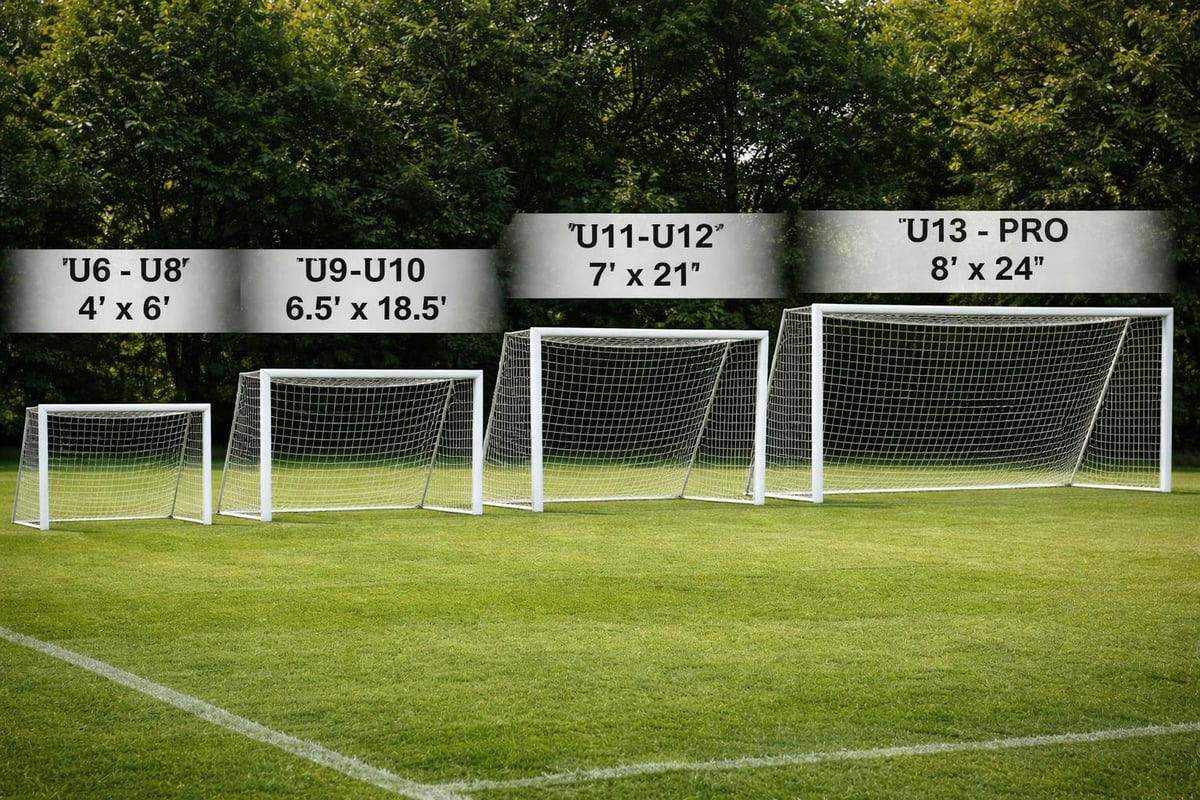
Age-Specific Goal Dimensions
Different age brackets require appropriately sized soccer goals to match physical capabilities and field proportions. Here's the breakdown:
| Age Group | Width | Height | Typical Use |
|---|---|---|---|
| U6-U8 | 12 ft | 6 ft | Introductory leagues |
| U9-U11 | 18 ft | 6.5 ft | Developmental programs |
| U12-U14 | 21 ft | 7 ft | Competitive youth |
| High School | 24 ft | 8 ft | Varsity competition |
| Adult/Professional | 24 ft | 8 ft | Official matches |
Selecting the correct size promotes skill development while maintaining safety. Detailed soccer goal dimensions for every level provide essential guidance for schools and organizations making equipment investments.
Types of Soccer Goals Available
Soccer goals fall into several distinct categories, each designed for specific applications and installation requirements. Understanding these variations helps match equipment to your program's needs.
Permanent Goals are anchored directly into the ground using concrete footings or ground sleeves. These structures offer maximum stability and durability for fields that host regular matches and tournaments. They're the preferred choice for high schools, colleges, and dedicated soccer facilities where goals remain in fixed positions year-round.
Semi-Permanent Goals provide a middle ground between portability and stability. These models feature ground anchors or weighted systems that secure them during use while allowing removal during off-seasons. They work well for multi-purpose fields that host different sports throughout the year.
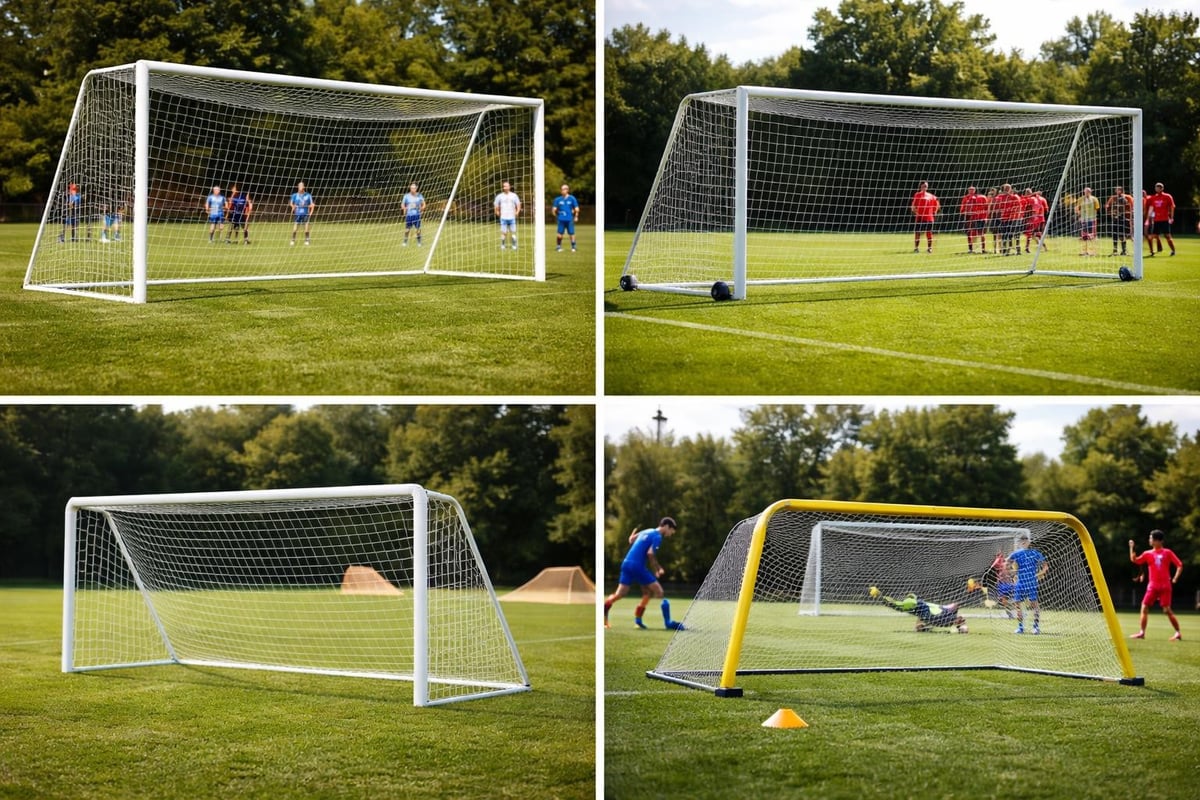
Portable Training Goals offer maximum flexibility for practice sessions and skill development. These lightweight options include:
- Pop-up goals for individual training
- Weighted base models for small-sided games
- Folding goals that store compactly
- Mini goals for technical drills
The choice between permanent and portable options depends on field usage patterns, storage availability, and budget considerations. Many programs invest in both types, using permanent installations for matches and portable options for practice variety.
Material Construction and Durability
The materials used in soccer goal construction directly impact longevity, maintenance requirements, and total cost of ownership. Modern goals utilize several primary materials, each with distinct advantages.
Frame Materials Comparison
Aluminum Goals represent the most popular choice for competitive play. This material provides excellent strength-to-weight ratios, resists corrosion in various weather conditions, and requires minimal maintenance. Premium aluminum goals feature powder-coated finishes that protect against scratching and extend service life.
Steel Goals offer maximum durability and withstand heavy impacts better than other materials. However, they require protective coatings to prevent rust, especially in humid climates or coastal areas. Galvanized steel models provide better weather resistance than painted versions.
Plastic and Composite Goals work well for youth programs and recreational use. These lightweight options cost less initially but may not withstand the same abuse as metal alternatives. They're ideal for portable training applications where weight matters more than maximum durability.
| Material | Durability | Weight | Maintenance | Cost |
|---|---|---|---|---|
| Aluminum | Excellent | Medium | Low | High |
| Steel | Superior | Heavy | Moderate | Medium |
| Composite | Good | Light | Low | Low |
The frame diameter also matters for structural integrity. Professional-grade goals typically feature 4-inch diameter posts and crossbars, while youth models may use 3-inch or smaller tubing to reduce overall weight.
Safety Standards and Anchoring Requirements
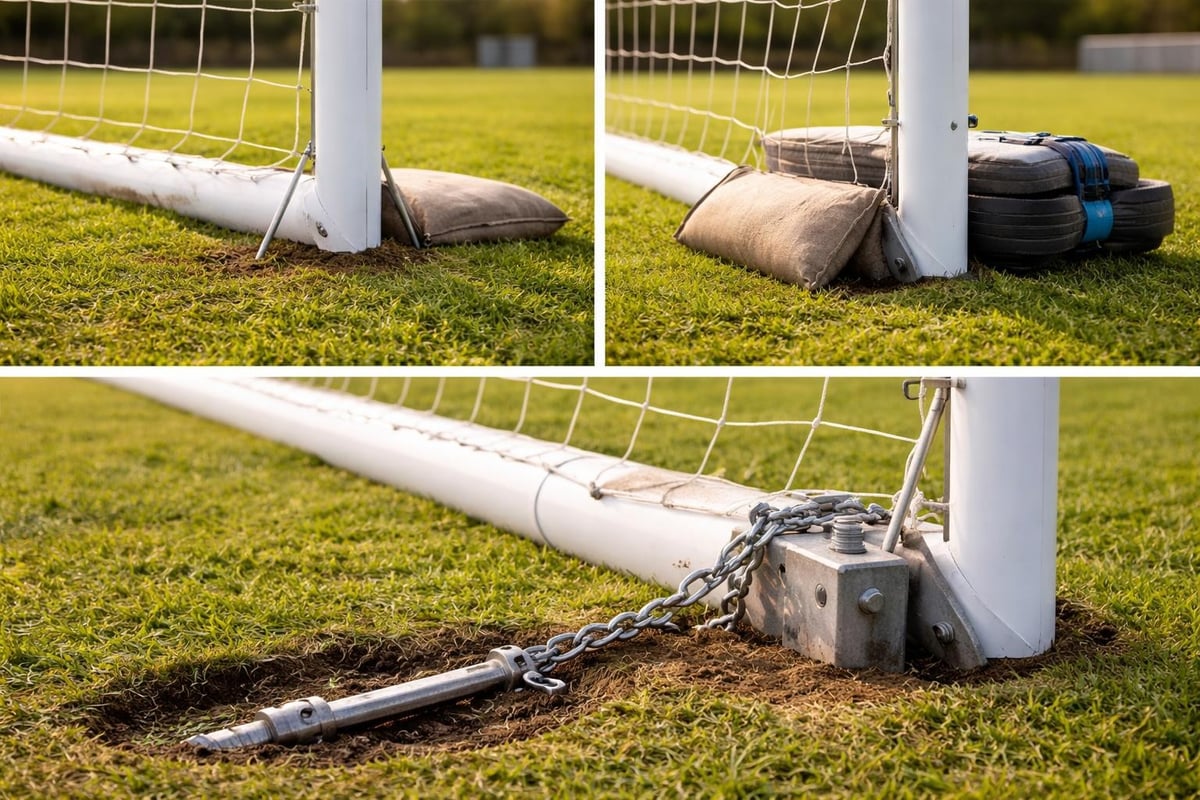
Goal safety represents a non-negotiable consideration for any athletic program. Improperly secured soccer goals pose serious risks, making proper anchoring essential for every installation.
The Consumer Product Safety Commission (CPSC) and organizations like ASTM International establish safety standards that address stability, anchoring, and structural integrity. Understanding soccer goal safety standards helps administrators ensure compliance with current regulations.
Approved Anchoring Methods
Every soccer goal must be secured using approved methods that prevent tipping or movement during normal use:
- J-stakes or auger anchors penetrate deep into soil for permanent installations
- Sandbags or weight plates provide portable stability when properly sized
- Ground sleeves allow quick installation and removal while maintaining security
- Counterweight systems distribute weight across the goal base
Never leave goals unsecured, even during practice sessions. Unanchored goals have caused serious injuries when players hang on crossbars or when wind creates uplift forces. Many athletic directors implement policies requiring goals to be tipped face-down when not in use, adding an extra layer of protection.
Testing anchors regularly ensures continued effectiveness, especially after weather events or field maintenance activities. Coaches should visually inspect anchoring systems before each use and immediately address any looseness or damage.
Net Selection and Attachment
While the frame structure receives primary attention, goal nets play an equally important role in gameplay and longevity. Net quality affects ball retention, visibility, and replacement frequency.
Net Materials include several options:
- Polyethylene (standard for most applications)
- Nylon (higher strength, greater longevity)
- Polyester (weather-resistant, commercial grade)
Net thickness is measured by twine diameter, typically ranging from 2.5mm for youth goals to 4mm for professional installations. Thicker nets resist tearing and last longer but cost more initially.
Mesh size affects ball behavior and visibility. Regulation nets use 4-inch or 5-inch squares, which prevent balls from passing through while maintaining clear sightlines for referees and spectators. Smaller mesh sizes provide better ball retention for training goals.
Attachment Systems
Nets attach to frames using several methods:
- Hook-and-loop straps (easiest installation)
- Net clips (secure, adjustable)
- Bungee cord systems (tight fit, weather-resistant)
- Permanent ties (longest-lasting but least flexible)
Proper net attachment prevents sagging and extends net life by distributing tension evenly across all attachment points. When installing nets, work from the top down and ensure even spacing between attachment points.
Purchasing Considerations for Teams and Schools
Buying soccer goals requires balancing immediate budget constraints against long-term value and performance requirements. Smart purchasing decisions consider multiple factors beyond initial price.
Budget Allocation should account for the total system cost, not just the frame price. Complete installations include:
- Goal frames
- Net sets (with replacements)
- Anchoring hardware
- Transportation costs
- Installation labor
- Ongoing maintenance
Setting aside 15-20% of the initial purchase price for replacement nets and hardware over a five-year period provides realistic financial planning. Similar to how organizations budget for sports equipment across programs, goal purchases benefit from lifecycle cost analysis.
Quantity and Configuration Planning
Determining how many soccer goals your program needs depends on several variables:
- Number of fields in active use
- Practice schedules and training group sizes
- Tournament hosting requirements
- Storage capacity and security
- Small-sided game formats (requiring additional goals)
Many programs invest in one premium set of regulation goals for matches plus several portable training goals for practice sessions. This approach maximizes field utilization while controlling costs.
Installation and Setup Best Practices
Proper installation determines whether soccer goals perform safely and last for years or become ongoing maintenance headaches. Whether you're setting up permanent fixtures or portable training equipment, following proven procedures ensures optimal results.
Permanent Goal Installation Steps
Professional installation of permanent soccer goals involves these sequential steps:
- Site Preparation: Mark exact goal positions according to field measurements, ensuring proper alignment with sidelines and center marks
- Foundation Work: Dig post holes or trenches for ground sleeves to specified depths (typically 2-3 feet)
- Frame Positioning: Set frames in place, verify level and plumb using quality tools
- Anchoring: Pour concrete footings or install ground sleeve systems according to manufacturer specifications
- Curing Time: Allow concrete adequate time to cure before subjecting goals to use
- Final Adjustments: Make precise alignment corrections and tighten all hardware
Ground conditions significantly impact installation approaches. Sandy or loose soil requires deeper footings or larger anchor systems compared to clay-based fields. Consulting with experienced installers or following soccer goal construction guidelines prevents costly mistakes.
Portable Goal Setup
Even temporary installations demand attention to safety and stability:
- Always anchor goals before use, regardless of wind conditions
- Inspect frame connections and joints for tightness
- Ensure nets attach securely at all points
- Position goals on level ground whenever possible
- Store goals face-down when not in use
Creating setup checklists for coaching staff ensures consistent procedures across all practice sessions and reduces oversight risks.
Maintenance and Longevity Strategies
Regular maintenance extends soccer goal life while maintaining safety standards and appearance. Establishing routine inspection and care protocols protects equipment investments.
Weekly Inspections should check for:
- Frame integrity (welds, joints, connections)
- Net condition (tears, worn areas, detachment)
- Anchor security (looseness, corrosion, damage)
- Moving parts function (wheels, hinges on portable models)
Addressing minor issues immediately prevents them from escalating into major problems. A small net tear repaired promptly may cost a few dollars, while a completely shredded net requires full replacement at significantly higher expense.
Seasonal Maintenance Tasks
Different seasons require specific care approaches:
Spring Setup: Clean frames thoroughly, inspect for winter damage, replace worn nets, tighten all hardware, verify anchor integrity
Summer Care: Monitor for UV damage on nets and coatings, ensure anchors remain secure during heavy use periods, check for corrosion on coastal or humid locations
Fall Inspections: Assess wear from competition season, order replacement parts for off-season installation, document any structural concerns
Winter Storage: Remove nets and store indoors, tip portable goals face-down, apply protective coatings to metal surfaces, secure or remove permanent goals if required by field maintenance schedules
Regulatory Compliance for Competition
Teams participating in organized leagues must ensure their soccer goals meet specific regulatory requirements. Competition rules often reference standards established by governing bodies, and non-compliant equipment can result in forfeiture or disqualification.
Official soccer goal regulations specify not only dimensions but also construction standards, net specifications, and safety features. High school athletic associations, club leagues, and tournament organizers may enforce additional requirements beyond basic size parameters.
Documentation and Certification
Maintaining records of goal specifications, installation dates, and safety inspections demonstrates due diligence and facilitates compliance verification. Some competitive levels require:
- Manufacturer certification of dimensions
- Professional installation documentation
- Annual safety inspection reports
- Insurance certificates for facilities
Organizations hosting tournaments or playoff matches should confirm visiting teams' expectations well in advance, ensuring goals meet all applicable standards.
Making the Right Investment
Selecting soccer goals represents a significant investment that affects team performance, player safety, and program budgets for years. The right choice balances regulation compliance, durability requirements, and financial constraints.
Starting with clear requirements helps narrow options effectively. Consider these questions:
- What age groups will use these goals?
- How frequently will they see use?
- Do you need portability or permanent installation?
- What's your total budget including installation and accessories?
- What are your storage capabilities?
Quality indicators that separate premium goals from budget alternatives include:
- Frame material thickness and diameter
- Welding quality and joint construction
- Coating or finish durability
- Hardware quality (bolts, brackets, anchors)
- Manufacturer warranty coverage
- Net inclusion and quality
Many athletic directors find that investing in higher-quality equipment reduces total cost of ownership through extended service life and reduced maintenance needs. A premium aluminum goal might cost 50% more initially but last twice as long as a budget steel alternative while requiring less upkeep.
When evaluating suppliers, look beyond price to consider delivery timelines, technical support availability, replacement parts accessibility, and customer service responsiveness. Establishing relationships with reliable equipment suppliers benefits programs across multiple sports, much like sourcing quality training equipment for various athletic programs.
Common Mistakes to Avoid
Even experienced athletic directors and coaches sometimes make preventable errors when purchasing or maintaining soccer goals. Learning from common mistakes saves money and prevents safety issues.
Undersizing Goals for the intended age group compromises player development and may violate league rules. Always verify exact requirements before purchasing, as soccer goal dimensions vary more than many realize across different levels of play.
Neglecting Anchoring Systems represents the most serious safety oversight. Every goal needs proper anchoring every time it's used, without exception. Budget for quality anchoring hardware from the start rather than treating it as an afterthought.
Ignoring Climate Factors when selecting materials leads to premature deterioration. Coastal programs need corrosion-resistant options, northern climates benefit from cold-weather-rated materials, and sunny locations should prioritize UV-resistant nets and coatings.
Delaying Maintenance allows small problems to become expensive repairs. Establishing and following regular inspection schedules prevents most major issues before they develop.
Buying Based Solely on Price without considering quality, support, and longevity typically costs more in the long run through shortened equipment life and increased replacement frequency.
Optimizing Field Layouts and Storage
The physical placement of soccer goals affects not only gameplay but also field maintenance, multi-sport use, and equipment longevity. Strategic planning maximizes field utility while protecting equipment investments.
Field Configuration Options
Standard field layouts place goals at regulation distances from sidelines and end lines, but programs managing limited space or multi-purpose facilities may need creative solutions:
- Adjustable field sizes using portable goals accommodate different age groups on the same field
- Cross-field orientations increase practice station availability
- Removable goal systems facilitate field maintenance and alternative sport usage
- Small-sided game setups using training goals maximize player touches during practice
Storage solutions protect goals during off-seasons and when fields serve other purposes. Indoor storage protects against weather damage but requires adequate space. Outdoor storage needs weatherproof covers and secure anchoring to prevent wind damage or theft.
When establishing storage protocols, consider accessibility for quick setup and breakdown. Goals stored in difficult-to-reach locations often remain unused even when they'd benefit training sessions, reducing return on investment.
Understanding soccer goal specifications, safety requirements, and purchasing considerations ensures your athletic program invests wisely in equipment that serves players safely for years. Whether you're outfitting a youth development program or a competitive high school team, selecting appropriate goals based on regulation standards, material quality, and long-term value protects both players and budgets. Sideline Sport Supply provides reliable, affordable soccer goals and essential training equipment designed to meet the needs of teams, schools, and sports organizations at every competitive level, helping you focus less on equipment concerns and more on developing skilled, confident players.