

Portable Soccer Goals: Complete Guide for Teams & Coaches
Training sessions, practice drills, and game-day readiness all require the right equipment infrastructure. For soccer programs at every level, portable soccer goals have become essential tools that balance performance, safety, and practical logistics. Whether you're managing a recreational youth league, coaching a competitive high school team, or operating a sports facility that serves multiple organizations, understanding the features, specifications, and safety considerations of portable goals directly impacts your program's effectiveness. This guide provides coaches, athletic directors, and facility managers with the information needed to make informed purchasing decisions and implement best practices for portable goal usage.
Understanding Portable Soccer Goal Construction
Quality construction determines both performance and longevity. Portable soccer goals typically feature aluminum, steel, or composite frames designed to withstand repeated assembly, disassembly, and transport. Aluminum frames offer lightweight portability while maintaining structural integrity, making them ideal for programs that frequently move equipment between practice fields or storage facilities.
Steel construction provides maximum durability for permanent seasonal installations, though the added weight reduces mobility. Most manufacturers use powder-coated finishes to resist corrosion from weather exposure and field conditions. Frame diameter matters significantly, with professional-grade goals typically featuring 3-inch to 4-inch round or square tubing that meets competitive standards.
Net Attachment Systems
The method of net attachment affects setup efficiency and game readiness. Modern portable soccer goals employ several fastening systems:
- Hook-and-loop straps that wrap around frame members for quick installation
- Net clips that snap directly onto tubing for secure positioning
- Bungee cord systems allowing tension adjustment and rapid replacement
- Integrated channels built into frame design for streamlined attachment
Teams that practice daily benefit from systems offering tool-free installation, while tournament organizers prioritize attachment methods that maintain professional appearance throughout extended use. The PEVO Small Goal Series Soccer Goal 6x12 demonstrates how efficient net attachment integrates with overall goal design for youth and training applications.
Size Specifications for Different Competition Levels
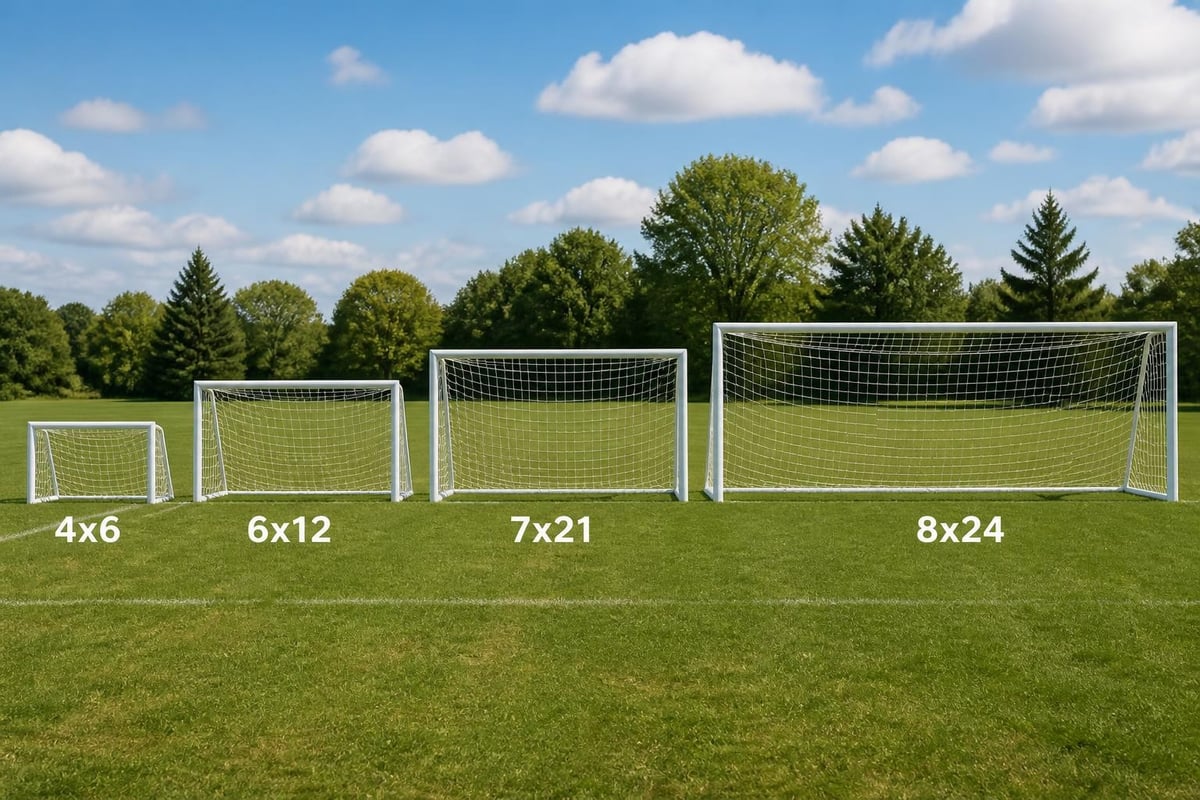
Selecting appropriate dimensions ensures compliance with league regulations and age-appropriate play. Standard portable soccer goals come in multiple size configurations matching official competition requirements.
| Age Group | Goal Size | Primary Use | Portability Level |
|---|---|---|---|
| U6-U8 | 4' x 6' | Recreational practice | High - single person setup |
| U10-U12 | 6.5' x 12' | Youth league games | Moderate - two person setup |
| High School | 8' x 24' | Competitive matches | Lower - team setup required |
| Adult/Professional | 8' x 24' | Regulation competition | Specialized equipment needed |
Youth programs frequently invest in multiple smaller goals to maximize player touches during practice sessions. The Gared White Recreational Soccer Goal 4 x 6 represents the entry-level size appropriate for beginning players developing fundamental skills.
Safety Standards and Anchoring Requirements
Safety considerations must guide every decision regarding portable soccer goals. Unsecured goals present significant hazards, with documented incidents highlighting the dangers of portable soccer goal posts that tip forward when not properly anchored. The industry has responded with comprehensive safety protocols.
The ASTM F2950-14(2021) standard specifies safety and performance requirements for soccer goals to reduce injuries and fatalities. This standard addresses tip-over prevention, structural stability, and proper anchoring methods. Compliance isn't optional for programs prioritizing participant safety.
Anchoring Methods for Portable Goals
Proper anchoring varies based on surface type and goal specifications:
- Auger anchors for grass fields provide deep soil penetration and maximum holding power
- Ground stakes offer moderate security for temporary installations on natural surfaces
- Sandbag systems work effectively on artificial turf where penetrating anchors aren't permitted
- J-hooks or U-stakes provide reliable anchoring on well-maintained natural grass
- Weighted base systems designed specifically for hard surfaces and indoor facilities
The ASTM F1938-98 standard provides guidelines for safer use of movable soccer goals, emphasizing installation, use, and storage practices. Programs should implement written protocols ensuring goals remain anchored whenever present on fields, even during practice breaks or between training sessions.
Transportation and Storage Considerations
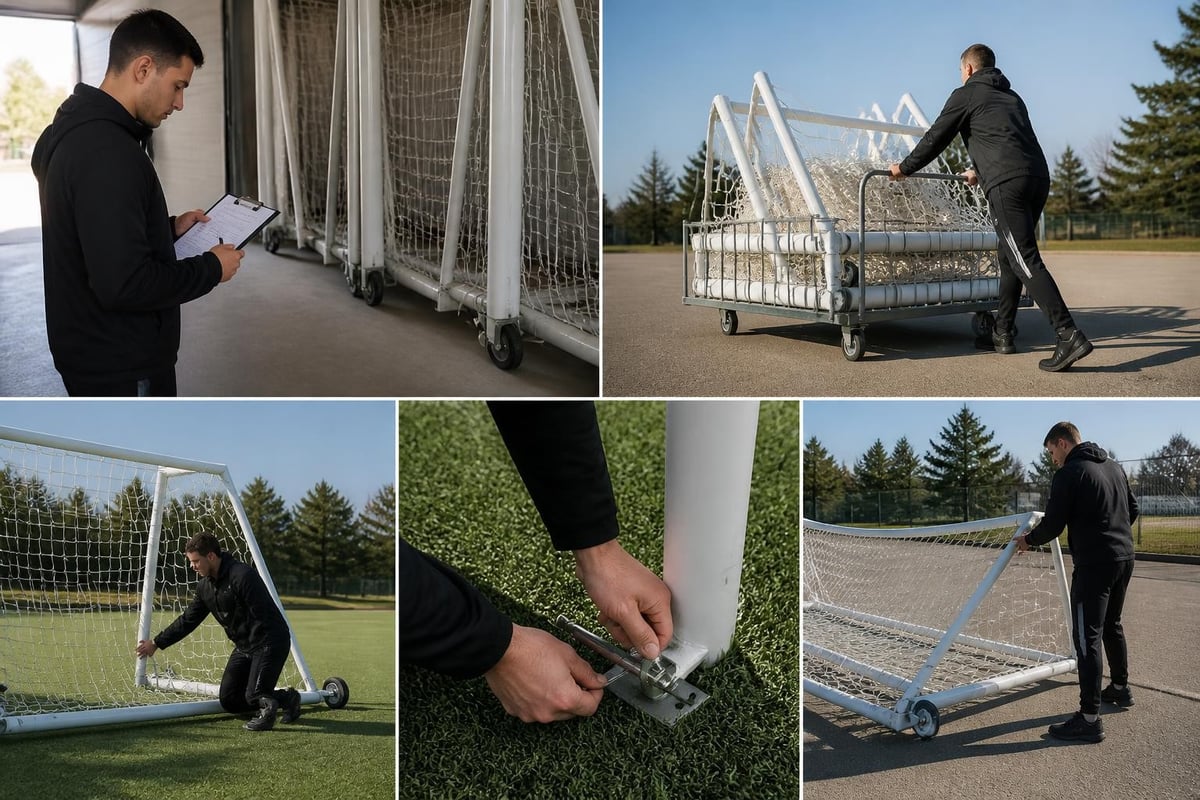
Efficient transportation extends equipment lifespan and reduces setup time. Portable soccer goals designed for frequent movement typically feature folding or detachable components that reduce storage footprint and simplify transport. Goals using pin-and-sleeve assembly systems allow frame sections to disconnect without tools, while one-piece folding frames sacrifice some stability for maximum convenience.
Teams maintaining equipment at centralized facilities need adequate storage protecting goals from weather exposure. Indoor storage prevents rust formation, extends net life, and maintains structural integrity. Organizations without covered storage should invest in weather-resistant covers or position goals in sheltered areas during off-seasons.
Weight Distribution and Handling
Understanding weight characteristics helps assign appropriate personnel for setup and breakdown. Smaller youth goals weighing 25-40 pounds allow single-person handling, while regulation-size portable soccer goals may exceed 100 pounds, requiring team effort and proper lifting techniques.
Programs serving multiple age groups often maintain diverse portable soccer goals calibrated to different size requirements, necessitating organized storage systems that label and separate equipment by specification. Color-coding or clear identification reduces setup errors and ensures age-appropriate goals reach correct fields.
Frame Materials and Weather Resistance
Material selection directly impacts durability and maintenance requirements. Aluminum frames dominate the portable soccer goal market due to favorable strength-to-weight ratios and natural corrosion resistance. Quality aluminum construction withstands years of outdoor exposure with minimal maintenance beyond periodic cleaning.
Steel frames provide superior rigidity and impact resistance, particularly valuable for high-traffic facilities or programs with limited supervision of equipment use. Powder-coating technology has dramatically improved steel goal longevity, though vigilance regarding coating damage and rust formation remains necessary.
Key weather resistance factors:
- UV-resistant net materials that maintain strength despite constant sun exposure
- Powder-coated finishes protecting metal components from moisture and oxidation
- Stainless steel hardware preventing rust at connection points and anchor locations
- Sealed frame ends blocking moisture intrusion into hollow tubing
The Gared Soccer Goal Corner Flag Set demonstrates how manufacturers apply weather-resistant materials across complete soccer equipment systems, ensuring consistent performance across all field components.
Cost Analysis and Budget Planning
Investment in portable soccer goals requires balancing immediate budget constraints against long-term value. Entry-level goals for youth recreational programs start around $150-$300, providing basic functionality for introductory-level play. Mid-range options incorporating improved construction and better net materials typically fall in the $400-$800 range, offering enhanced durability for regular practice schedules.
Competition-grade portable soccer goals meeting regulation dimensions and safety standards represent significant investments of $1,000-$3,000 per goal, but deliver performance and longevity justifying the expense for established programs. Athletic directors should calculate per-season costs rather than focusing solely on initial purchase prices.
| Goal Category | Price Range | Expected Lifespan | Best Application |
|---|---|---|---|
| Basic Youth | $150-$300 | 2-3 seasons | Recreational introduction programs |
| Training Grade | $400-$800 | 4-6 seasons | Regular practice use |
| Competition | $1,000-$2,000 | 7-10 seasons | League-sanctioned games |
| Professional | $2,000-$3,000+ | 10+ seasons | Tournament facilities |
Programs with limited budgets can phase equipment purchases, starting with competition goals for game use while utilizing older goals for practice drills. This approach maximizes field time while building toward complete inventory replacement.
Net Quality and Replacement Cycles
Net quality affects both playability and maintenance workload. Heavy-duty polyethylene nets resist UV degradation and maintain shape through repeated impacts, while economy netting requires more frequent replacement. Commercial-grade nets use 3mm to 4mm twisted or braided construction, balancing cost with durability.
Square mesh configurations in 4-inch or 5-inch patterns represent industry standards, providing adequate ball retention without excessive weight. Hexagonal mesh designs offer slightly better ball containment but may cost more. Teams should stock replacement nets matching their goals' specifications to minimize downtime when deterioration occurs.
Inspection and Replacement Guidelines
Establishing regular net inspection prevents game delays and ensures safety. Visual checks should identify:
- Fraying or broken strands compromising structural integrity
- Detached sections creating gaps where balls escape
- UV damage causing brittleness and reduced strength
- Excessive sagging indicating tension loss or attachment failure
Most programs replace nets every 2-3 seasons under normal use, though high-volume facilities may require annual replacement. Keeping spare nets in equipment inventory allows immediate swaps when damage occurs.
Training Versatility and Drill Design
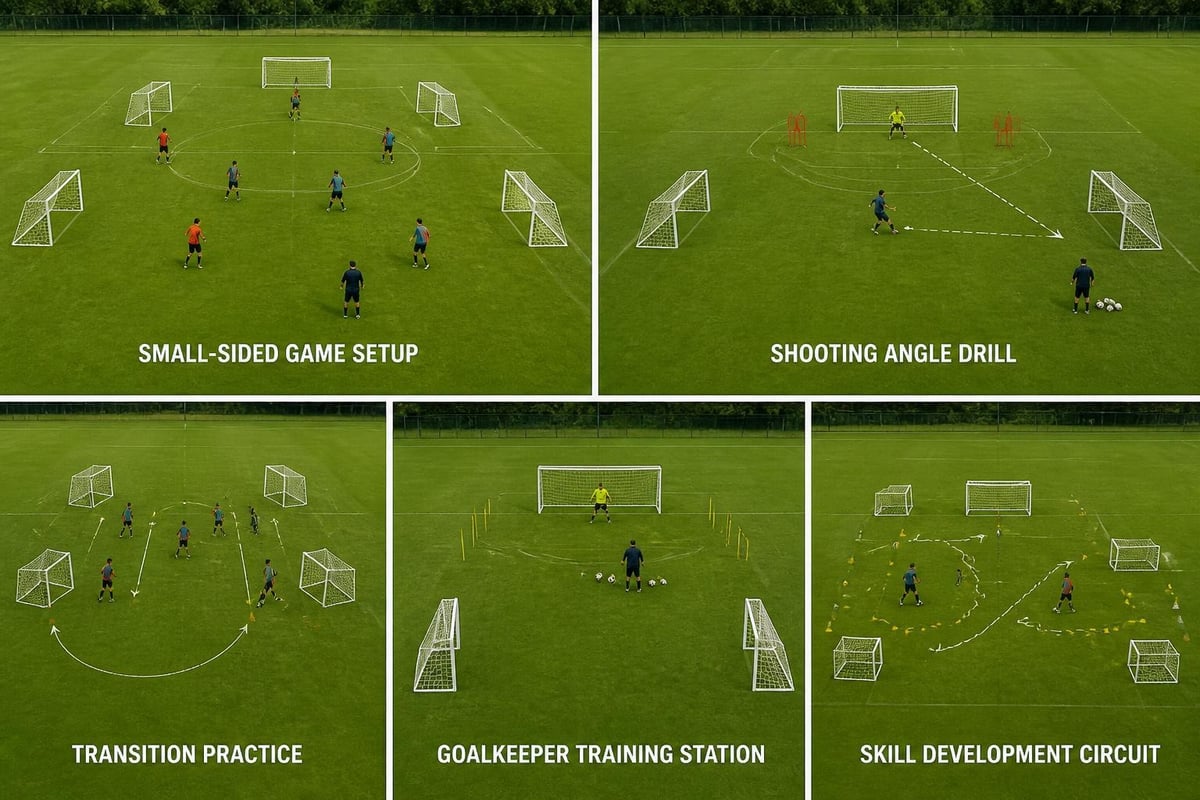
Beyond standard gameplay, portable soccer goals enable creative training configurations impossible with permanent installations. Coaches can position goals at various angles, create small-sided game scenarios, or establish multiple target areas within single practice sessions. This flexibility enhances player development through varied shooting angles and game situations.
Effective training configurations:
- Multiple small goals for 3v3 or 4v4 scenarios
- Offset goal positioning teaching angle shooting
- Portable goals combined with cone arrays for agility work
- Goal pairs creating transition drill sequences
- Single portable goal paired with rebounders for individual skill work
The ability to quickly reconfigure practice spaces makes portable soccer goals valuable for programs sharing facilities with other sports or conducting specialized position training. Organizations offering comprehensive soccer equipment understand how goal flexibility integrates with complete training systems.
Installation Procedures and Time Requirements
Understanding setup logistics helps schedule effective practice sessions and allocate personnel appropriately. Basic portable soccer goals designed for youth programs typically require 5-10 minutes for complete assembly by two people. This includes frame positioning, net attachment, and anchoring installation.
Larger regulation-size goals demand 15-30 minutes for proper setup, depending on ground conditions and anchoring method. Hard or rocky soil may require additional time for anchor installation, while soft or sandy conditions allow faster stake placement but may need supplementary securing methods.
Setup efficiency tips:
- Pre-sort components during storage to streamline retrieval
- Assign specific team members to goal setup responsibilities
- Maintain written instructions with equipment for new personnel
- Test all anchoring before allowing play to begin
- Document setup time to refine procedures
Programs conducting daily practices benefit from semi-permanent installations where portable soccer goals remain assembled throughout seasons, requiring only anchoring checks rather than complete setup. This approach works well for schools with dedicated fields not shared with other activities.
Multi-Sport Facility Considerations
Facilities serving multiple sports face unique challenges accommodating portable soccer goals alongside other programs. Efficient storage systems, clear scheduling protocols, and equipment designed for rapid deployment become essential. Portable goals must move easily without disrupting other field markings or installations.
Shared-use facilities should consider goals with wheels or integrate equipment carts simplifying transport between storage areas and playing surfaces. The ability to quickly clear fields allows basketball courts, football fields, or baseball facilities to temporarily accommodate soccer programming without permanent modifications.
Organizations managing diverse athletic programs often partner with suppliers like Sideline Sport Supply who understand cross-sport equipment needs and can recommend solutions maximizing facility versatility while maintaining sport-specific quality standards.
Seasonal Maintenance Requirements
Proactive maintenance extends portable soccer goal lifespan significantly. Seasonal routines should address both structural components and attachment systems. Pre-season inspections identify wear requiring attention before intensive use begins, while post-season maintenance prepares equipment for storage.
Pre-Season Checklist
- Inspect frame joints for looseness or damage
- Test all anchoring hardware for wear or deterioration
- Examine nets for holes, tears, or UV degradation
- Clean accumulated dirt, grass, and debris from all components
- Apply lubricant to moving parts on folding mechanisms
- Touch up powder coating chips preventing rust formation
- Verify all attachment clips, straps, or fasteners remain functional
Mid-season checks during extended campaigns catch developing issues before they cause failures. Quick weekly inspections take minimal time but prevent equipment problems disrupting practices or competitions.
Regulatory Compliance for School Programs
Educational institutions face specific requirements regarding athletic equipment safety. Many states have adopted regulations based on ASTM standards, making compliance mandatory rather than recommended. Athletic directors must verify portable soccer goals meet applicable standards and implement policies ensuring proper use.
Documentation requirements may include:
- Maintenance logs recording inspections and repairs
- Anchoring protocols signed by coaching staff
- Incident reporting procedures for tip-overs or equipment failures
- Staff training records covering safe setup and breakdown
- Manufacturer certifications confirming standards compliance
Schools should establish written policies addressing portable soccer goal use, storage, and supervision. These policies protect both students and institutions while demonstrating commitment to safety best practices.
Youth Development and Goal Sizing
Matching goal dimensions to player development stages significantly impacts skill acquisition. Oversized goals discourage young goalkeepers and reduce shooting confidence for field players. Appropriately scaled portable soccer goals create success opportunities that build fundamental skills and maintain engagement.
Progressive sizing allows programs to adjust equipment as players advance. A well-designed equipment plan might include:
| Season | Age Range | Goal Size | Developmental Focus |
|---|---|---|---|
| Spring | 5-6 years | 4' x 6' | Introduction to soccer |
| Fall | 7-8 years | 4.5' x 9' | Basic positioning |
| Spring | 9-10 years | 6.5' x 12' | Tactical awareness |
| Fall | 11-12 years | 6.5' x 18' | Competitive fundamentals |
| High School | 13+ years | 8' x 24' | Regulation play |
This progression ensures players consistently face appropriate challenges while building toward regulation-size competition. Organizations can view JayPro Sports products representing professional-grade equipment designed for this developmental approach.
Tournament and Event Applications
Event organizers face distinct requirements when sourcing portable soccer goals. Tournaments need standardized equipment across multiple fields, quick setup capabilities for tight schedules, and professional appearance meeting participant expectations. Durability becomes critical when goals operate continuously throughout weekend events.
Tournament-specific considerations include:
- Uniform appearance across all playing surfaces
- Rapid deployment systems minimizing field preparation time
- Professional-grade nets maintaining taut appearance
- Reliable anchoring performing on varied field conditions
- Backup equipment ready for immediate deployment
Many tournament directors maintain dedicated equipment inventories separate from regular practice goals, ensuring consistent quality for competitive play. This investment protects event reputation and reduces setup complications.
Comparing Portable Versus Permanent Installation Options
Programs must evaluate whether portable soccer goals best serve their needs versus permanent installations. Portable options provide flexibility, lower initial costs, and adaptability to changing program requirements. Permanent goals offer superior stability, reduced maintenance, and elimination of setup time.
Portable advantages:
- Flexibility repositioning for different activities
- Lower upfront investment
- Easy replacement or upgrades
- Multi-location use across facilities
- Storage during off-seasons protecting equipment
Permanent installation benefits:
- Maximum stability and safety
- No setup or breakdown requirements
- Professional appearance for home fields
- Lower long-term labor costs
- Meeting strict league regulations
Many successful programs implement hybrid approaches, using permanent installations for primary competition fields while maintaining portable soccer goals for practice areas and auxiliary locations. This combination maximizes both convenience and performance across different use scenarios. Programs can explore permanent and semi-permanent soccer goals when evaluating long-term facility development plans.
Selecting and maintaining portable soccer goals requires balancing safety, performance, budget, and practical logistics specific to your program's needs. Proper anchoring, regular maintenance, appropriate sizing, and quality construction create the foundation for effective training environments and safe competition. Sideline Sport Supply provides the reliable, affordable sports equipment that coaches, schools, and organizations need to build successful programs, offering straightforward pricing and quality products that let you focus on developing athletes rather than managing equipment challenges.