

Equipment in Fencing: Complete Guide for Teams & Schools
Fencing stands as one of the most elegant yet technical sports, requiring precision, strategy, and specific safety equipment to practice and compete effectively. Whether you're outfitting a school fencing program, establishing a new club, or supporting individual athletes, understanding the full range of equipment in fencing ensures participants stay safe while developing their skills. This comprehensive guide covers everything from essential weapons and protective gear to training accessories that support proper technique development and competitive readiness.
Understanding the Three Fencing Weapons
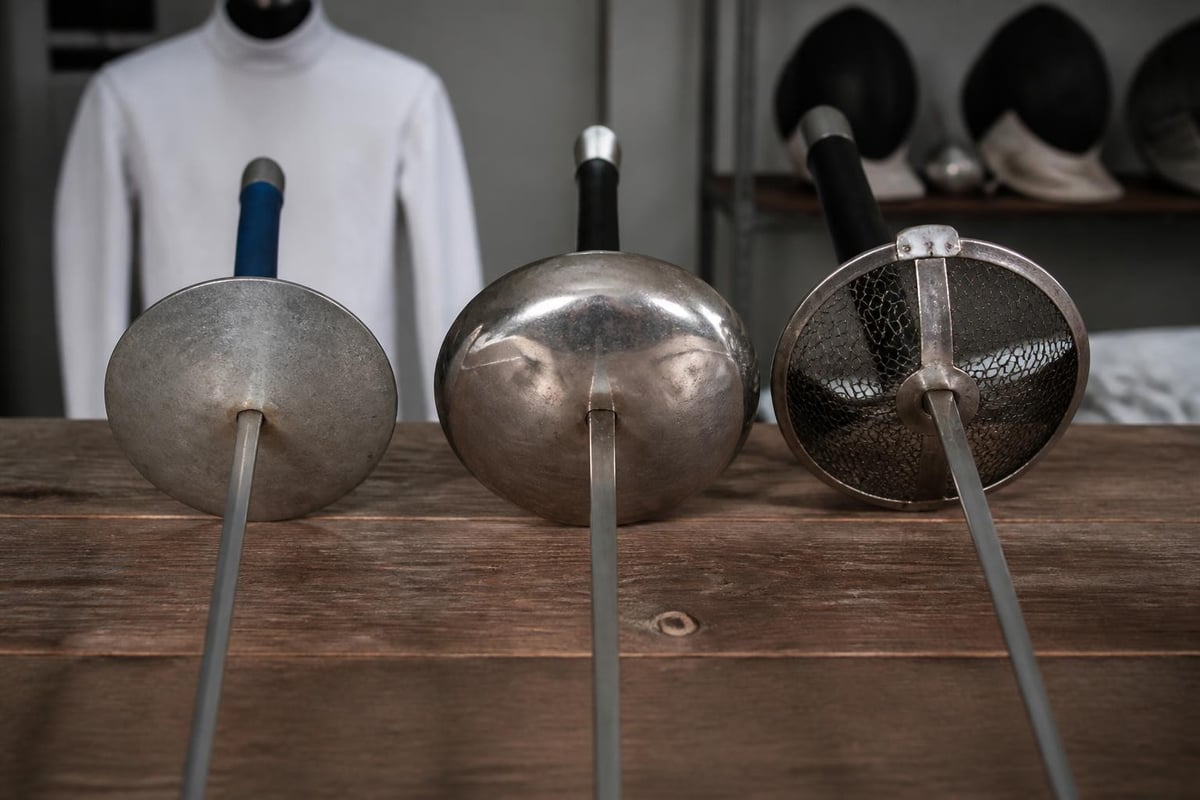
Each fencing discipline requires its own specialized weapon, and understanding these differences helps schools and organizations budget appropriately for their programs. The three main weapons-foil, épée, and sabre-each have distinct characteristics that affect both competition rules and equipment needs.
The foil represents the lightest and most flexible weapon, typically used as the introductory weapon for beginners. Foil fencers target the torso exclusively, which influences the type of protective equipment required. The weapon features a small, circular guard and a flexible rectangular blade that bends easily during touches. Most school programs start with foil because it teaches fundamental footwork and blade work before moving to other weapons.
Épée Specifications and Requirements
The épée features the stiffest blade among the three weapons and uses the entire body as a valid target area. This weapon most closely resembles the dueling swords of historical combat, making it popular among fencers who appreciate traditional technique. The guard is larger than the foil's, providing better hand protection, and the blade's triangular cross-section gives it distinctive handling characteristics.
Épée fencers need specific equipment considerations since valid touches can occur anywhere on the body, including hands and feet. This targeting rule affects protective gear requirements and training focus. Brooklyn Bridge Fencing Club provides a guide to fencing equipment that explains how weapon choice influences other gear selections.
Sabre Characteristics for Cutting and Thrusting
The sabre allows both cutting and thrusting actions, targeting everything above the waist including arms and head. This weapon features a curved guard that protects the knuckles and a flexible blade with a flat cross-section. Sabre represents the fastest-paced fencing discipline, requiring quick reflexes and explosive movements.
Because sabre permits cutting attacks, the protective equipment standards differ from foil and épée. Masks require additional padding, and jackets must withstand slashing motions rather than just thrusting actions. Schools offering all three weapons need to budget for discipline-specific protective gear that meets current safety standards.
Essential Protective Gear for Fencer Safety
Safety equipment represents the most critical investment when establishing or supporting a fencing program. The equipment in fencing has evolved significantly over decades, with modern materials providing superior protection while maintaining mobility and comfort. Every fencer needs a complete set of protective gear before stepping onto the strip.
Fencing Masks and Head Protection
The mask protects the entire head and neck with a sturdy mesh front and padded interior. Modern masks feature stainless steel mesh rated to withstand significant impact force, typically 1600 Newtons for standard practice and 350 kilograms for international competition. The bib extends below the chin, protecting the throat and connecting securely to the jacket collar.
Key mask features include:
- Removable and washable padding for hygiene
- Adjustable back straps for proper fit
- Tongue for electrical scoring systems
- Certification stamps indicating safety ratings
Schools purchasing masks should invest in various sizes to accommodate different head shapes and ages. Manhattan Fencing Center details the essential equipment needed for fencers with specific guidance on proper mask selection and maintenance protocols that extend equipment lifespan.
Jackets, Plastrons, and Torso Protection
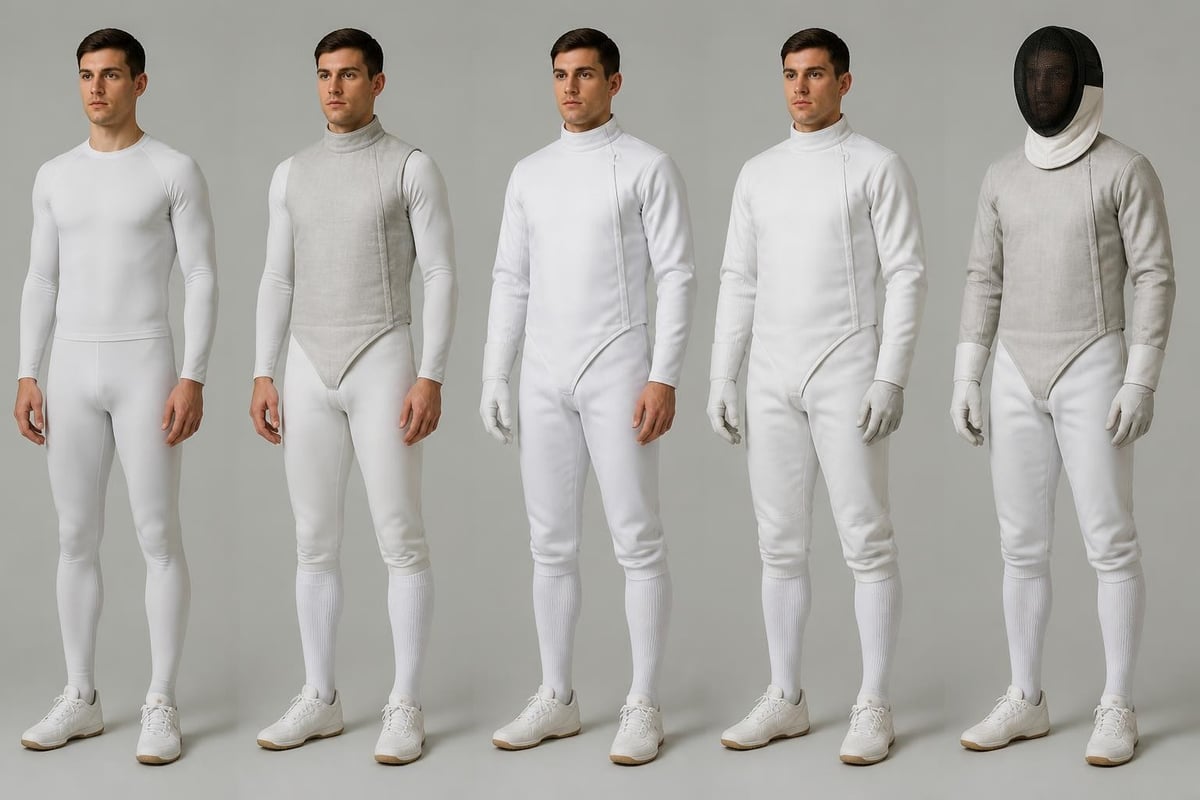
The fencing jacket provides the primary torso protection, constructed from heavy-duty fabric designed to resist blade penetration. Most jackets use either 350-newton or 800-newton rated material, with higher ratings required for competitive environments. The jacket extends past the waist, overlapping with knickers to prevent gaps in protection.
Underneath the jacket, fencers wear a plastron (underarm protector) that provides double-layer protection for the weapon arm and chest. This additional piece proved its importance after tragic accidents in professional fencing, and modern safety standards mandate plastrons for all levels of competition and practice.
| Protection Level | Newton Rating | Typical Use |
|---|---|---|
| Standard Practice | 350N | Beginner programs, recreational fencing |
| Advanced Training | 800N | Competitive fencers, club-level tournaments |
| Elite Competition | 1600N | National and international championships |
Gloves and Hand Protection
Fencing gloves protect the weapon hand while maintaining the sensitivity needed for precise blade control. The glove extends past the wrist, overlapping with the jacket sleeve to prevent exposed skin. Quality gloves feature reinforced fingertips and padded knuckles without sacrificing flexibility.
The non-weapon hand remains ungloved in foil and épée, though sabre fencers sometimes wear light gloves on both hands for additional protection. Schools should budget for regular glove replacement, as these items wear out faster than other protective gear due to constant gripping and moisture exposure.
Clothing and Uniform Requirements
Beyond protective gear, equipment in fencing includes specific clothing items that combine safety with mobility. The traditional white uniform serves both aesthetic and practical purposes, with modern materials improving comfort and durability compared to historical options.
Knickers and Knee-High Socks
Fencing knickers (or breeches) extend just below the knee, where they fasten with velcro or elastic. These specialized pants allow full range of motion during lunges and footwork while maintaining the protective overlap with knee-high socks. The fabric typically matches the jacket's protective rating, ensuring consistent safety coverage.
Knee-high socks complete the leg coverage, connecting the knickers to fencing shoes without gaps. Many programs choose socks with reinforced heels and toes to improve longevity, especially important for school teams practicing multiple times per week.
Chest Protectors for Additional Safety
Male and female fencers both benefit from chest protectors, though requirements vary by gender and organization. Female fencers typically require hard-shell chest protectors that distribute impact force across a wider area. Male fencers may wear lighter chest protection depending on program requirements and personal preference.
These protectors wear underneath the plastron and jacket, providing an additional safety layer without significantly restricting movement. Just as protective equipment matters in other sports, proper layering in fencing prevents injuries while maintaining athletic performance.
Electrical Scoring Equipment and Accessories
Modern competitive fencing relies on electronic scoring systems that register valid touches automatically. Understanding this equipment helps schools and clubs prepare for tournament participation while ensuring practice sessions develop proper technique.
Body Cords and Connections
Body cords connect the weapon to the scoring machine through the fencer's jacket. These specialized wires must withstand repeated flexing during intense action while maintaining reliable electrical contact. Different weapons require different cord configurations-foil and sabre use two-prong connections, while épée uses three-prong connections.
Body cord maintenance tips:
- Test connections before each practice or bout
- Replace damaged cords immediately to avoid scoring malfunctions
- Store cords loosely coiled to prevent wire breakage
- Keep backup cords available during competitions
Schools operating competitive programs should maintain spare cords for each weapon type, as failures during competition can lead to forfeits or delays.
Metallic Lamé Vests for Foil and Sabre
Foil and sabre require conductive lamé vests worn over the jacket to register valid touches in the target area. These metallic garments complete the electrical circuit when struck by the opponent's weapon. Lamé vests must fit properly without excessive looseness that might cause off-target hits to register incorrectly.
The material consists of woven metallic threads that conduct electricity while remaining flexible. Regular inspection prevents torn lamé from causing scoring errors, and proper storage away from moisture extends the vest's functional lifespan. La Jolla Fencing Academy outlines the necessary equipment for fencers with detailed checklists covering electrical equipment alongside protective gear.
Weapon Tips and Electrical Components
Electric weapons contain internal wiring and specialized tips that register touches when depressed with sufficient force. Foil tips use spring-loaded mechanisms requiring 500 grams of pressure, while épée tips need 750 grams. Sabre weapons use edge contacts rather than point contacts, requiring different maintenance approaches.
Regular weapon maintenance includes testing tip sensitivity, checking internal wiring continuity, and replacing worn components. Schools should establish maintenance schedules and train coaches or equipment managers in basic weapon repair to minimize downtime and replacement costs.
Training Equipment and Practice Accessories
Beyond competition gear, equipment in fencing includes various training tools that help develop technique, footwork, and tactical awareness. These accessories support skill progression from beginner fundamentals through advanced competitive strategies.
Fencing Bags and Equipment Transport
Specialized fencing bags accommodate weapons, protective gear, and accessories while protecting equipment during transport. Quality bags feature rigid weapon compartments that prevent blade bending, separate mesh sections for ventilated storage of sweaty gear, and padded shoulder straps for comfortable carrying.
| Bag Type | Capacity | Best For |
|---|---|---|
| Single Weapon Bag | 1-2 weapons, basic gear | Individual beginners, recreational fencers |
| Tournament Bag | 3+ weapons, full equipment set | Competitive fencers, traveling athletes |
| Team Bag | Multiple sets, shared accessories | Schools, clubs, coaches |
Schools managing team equipment benefit from larger organizational systems that track individual pieces and simplify distribution before practice sessions. Similar to how sports organizations manage other athletic gear, efficient equipment systems save time and reduce losses.
Target Dummies and Training Aids
Training dummies provide stationary targets for practicing accuracy and blade control without requiring a partner. These tools help beginners develop proper distance judgment and targeting precision before engaging in live fencing. More advanced training aids include adjustable targets that simulate different body positions and heights.
Footwork ladders, agility cones, and resistance bands complement fencing-specific training by developing the explosive leg strength and quick directional changes the sport demands. Many successful programs integrate cross-training equipment that builds overall athleticism alongside technical fencing skills.
Scoring Machines and Practice Equipment
Full scoring systems include electronic boxes, reels, floor cords, and signal lights that replicate tournament conditions during practice. While representing a significant investment, these systems provide invaluable training for competitive fencers who need experience with electronic scoring timing and equipment management.
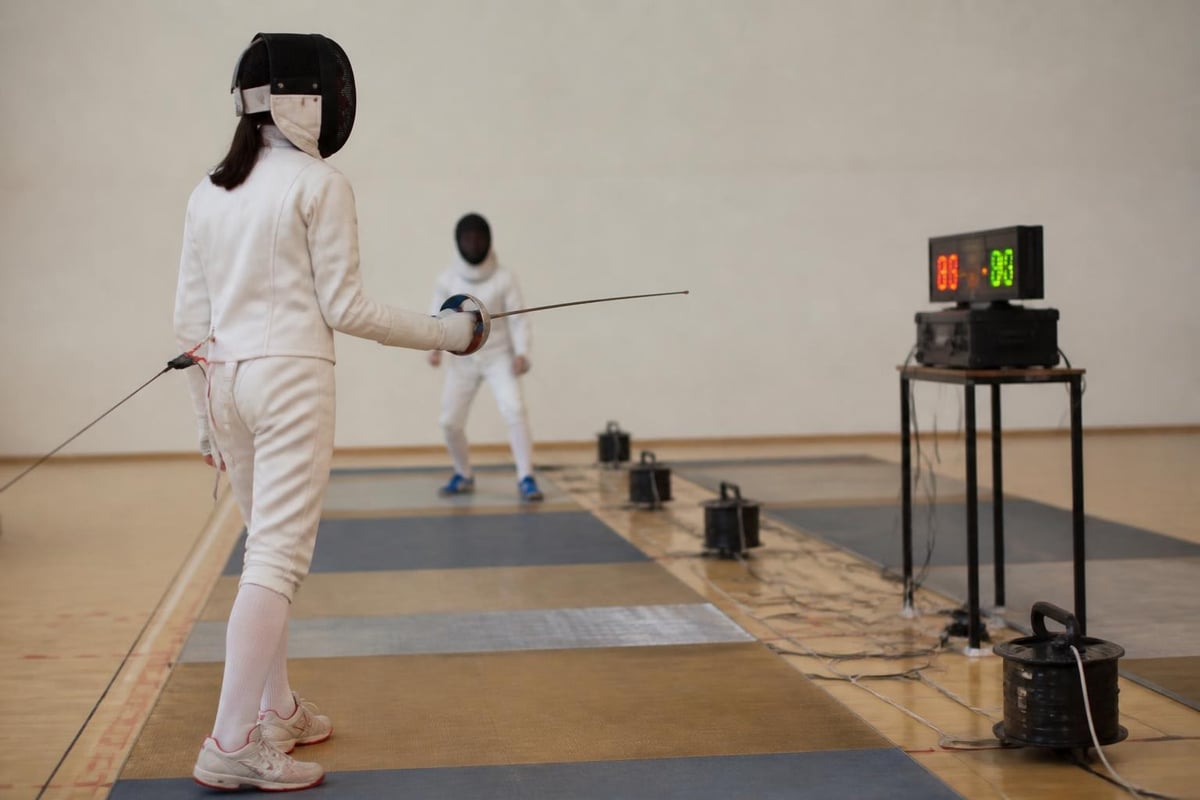
Budget-conscious programs can start with manual scoring using dry (non-electric) weapons, gradually adding electrical components as funding allows. HowStuffworks explains the functionality of various fencing equipment, including how scoring systems evolved from purely judge-based to modern electronic detection.
Equipment Standards and Certification Requirements
Safety organizations regulate equipment in fencing through strict certification standards that vary by competition level and governing body. Understanding these requirements helps programs make informed purchasing decisions that meet current safety standards while anticipating future regulation changes.
FIE and USA Fencing Standards
The Fédération Internationale d'Escrime (FIE) establishes international equipment standards, while USA Fencing governs domestic competition requirements. Both organizations mandate specific protection levels, testing procedures, and equipment markings that indicate compliance.
Common certification markings include:
- FIE stamps indicating international competition approval
- CE markings for European safety standards
- Newton ratings showing penetration resistance
- Manufacturing date codes for tracking equipment age
Equipment certifications expire after specific time periods, requiring regular replacement even when gear appears physically sound. Schools should track purchase dates and certification expiration to maintain compliance with competition rules.
Age-Appropriate Equipment Selection
Youth fencers require properly sized equipment that matches their physical development and strength levels. Oversized weapons prove difficult to control, while undersized protective gear leaves dangerous gaps in coverage. This comprehensive equipment overview covers the range of sizes needed for different age groups and experience levels.
Many suppliers offer youth-specific sizing charts that correlate age, height, and weight with appropriate equipment dimensions. Schools serving multiple age groups should maintain diverse inventory or establish relationships with suppliers offering quick sizing exchanges as students grow.
Budget Planning for Fencing Programs
Establishing or expanding a fencing program requires careful budget planning that accounts for initial equipment purchases, ongoing replacement costs, and maintenance expenses. Understanding the full cost structure helps schools and organizations develop sustainable programs.
Initial Investment Considerations
A complete individual fencing kit including weapon, protective gear, uniform, and electrical equipment typically ranges from $300 to $800 depending on quality level and weapon choice. Schools outfitting entire teams can negotiate bulk pricing or consider starter packages that sacrifice some durability for affordability.
Budget allocation recommendations:
- 40% protective gear (masks, jackets, plastrons, gloves)
- 30% weapons and electrical components
- 20% uniforms and shoes
- 10% training accessories and replacement parts
Programs can reduce initial costs by starting with a single weapon type and basic protective gear before expanding into multiple disciplines and competition-grade equipment. Similar to planning for other sports equipment needs, phased purchasing spreads costs across multiple budget cycles.
Maintenance and Replacement Schedules
Fencing equipment requires regular maintenance and eventual replacement as materials wear out or certifications expire. Protective gear typically lasts 3-5 years with proper care, while weapons and electrical components may need replacement or repair annually depending on usage intensity.
Schools should budget 20-30% of initial equipment costs annually for maintenance, repairs, and replacements. Establishing equipment checkout systems, regular inspection protocols, and basic repair capabilities reduces long-term costs while ensuring safety standards remain met.
Specialized Equipment for Different Fencing Environments
Equipment in fencing varies somewhat depending on whether programs operate primarily indoors, outdoors, or in multi-purpose facilities. Understanding these environmental considerations helps optimize equipment selection and storage practices.
Indoor Facility Requirements
Indoor fencing programs benefit from controlled environments that protect equipment from weather exposure and temperature extremes. These facilities typically feature permanent or semi-permanent metallic strips (the fencing surface), wall-mounted reel systems, and dedicated storage areas.
Indoor programs can invest in higher-quality equipment with longer expected lifespans since exposure to damaging elements remains minimal. Proper climate control prevents moisture accumulation that can damage electronic components and metallic lamé vests.
Outdoor and Portable Setup Considerations
Schools using outdoor spaces or shared facilities need portable equipment systems that set up and break down efficiently. Portable metallic strips, free-standing reel posts, and weather-resistant storage containers accommodate these needs while maintaining competitive standards.
| Equipment Type | Indoor Solution | Portable/Outdoor Solution |
|---|---|---|
| Fencing Strip | Permanent copper strips | Rolled metallic strips with ground stakes |
| Scoring Reels | Wall-mounted systems | Free-standing posts with weighted bases |
| Storage | Dedicated equipment rooms | Weather-resistant containers, mobile carts |
Outdoor programs should emphasize equipment maintenance even more rigorously, as environmental exposure accelerates wear on electrical components and fabric materials. Regular cleaning and thorough drying prevent moisture damage that shortens equipment lifespan.
Equipment Care and Longevity Practices
Proper equipment maintenance extends the functional life of fencing gear while ensuring consistent safety standards. Schools and clubs that implement systematic care protocols reduce replacement costs and equipment-related interruptions during practice or competition.
Cleaning and Storage Protocols
Regular cleaning prevents bacteria growth, removes corrosive sweat salts, and maintains equipment appearance. Masks and jackets should air dry completely after each use, with periodic deeper cleaning using approved methods that don't damage protective materials.
Essential maintenance practices:
- Wipe down weapons and guards after each session
- Hand wash masks and jackets monthly (or more frequently for heavy use)
- Test electrical components weekly during active seasons
- Store equipment in ventilated areas away from direct sunlight
Proper storage prevents unnecessary damage-weapons should hang or store flat to maintain blade straightness, while protective gear needs air circulation to prevent mildew development.
Repair Capabilities and When to Replace
Basic repair skills help programs address minor equipment issues without expensive replacements or professional service. Coaches or equipment managers can learn to replace weapon tips, repair body cord connections, and patch minor uniform tears.
However, safety-critical items require professional assessment or replacement when damage exceeds simple repairs. Masks with cracked mesh, jackets with penetration damage, and weapons with blade breaks must be replaced immediately regardless of repair feasibility. Detailed equipment care guidance helps programs establish appropriate maintenance standards that balance cost management with safety priorities.
Sourcing Equipment for Schools and Organizations
Finding reliable equipment suppliers that understand institutional needs makes program management significantly easier. Schools benefit from working with suppliers offering educational pricing, bulk discounts, and knowledgeable customer service that helps match equipment to specific program requirements.
Vendor Selection Criteria
Quality suppliers provide detailed product specifications, certification documentation, and guidance on appropriate equipment selection for different skill levels. They maintain adequate inventory to fulfill team orders promptly and offer reasonable return policies for sizing issues.
Programs should evaluate suppliers based on product range, pricing transparency, delivery reliability, and post-purchase support. Long-term relationships with trusted vendors simplify reordering, ensure consistent quality, and often provide access to new products or discontinued item replacements.
Balancing Quality and Budget Constraints
While equipment in fencing requires certain minimum safety standards, programs can make strategic choices that optimize budget allocation. Beginner equipment emphasizes durability and proper fit over advanced features, while competitive fencers benefit from investing in higher-performance options.
Many schools operate tiered equipment systems-basic gear for physical education classes and beginners, intermediate equipment for developing club members, and competition-grade gear for tournament participants. This approach maximizes accessibility while ensuring serious competitors have appropriate tools for advancement.
Equipping a fencing program properly requires understanding the complex interplay between safety requirements, competitive standards, training needs, and budget realities. From selecting appropriate weapons and protective gear to implementing effective maintenance systems, every decision affects both participant safety and program sustainability. Sideline Sport Supply supports schools, clubs, and sports organizations with reliable, affordable equipment solutions designed for game-day readiness. Whether you're launching a new fencing program or upgrading existing gear, our straightforward pricing and quality products help you focus on developing athletes rather than managing equipment challenges.