

Portable Basketball System Buyer's Guide for 2026
A portable basketball system delivers court flexibility that fixed installations simply cannot match. For coaches managing multiple practice spaces, athletic directors coordinating shared facilities, and schools without permanent courts, these mobile units solve real logistical challenges every day. Unlike in-ground hoops, a quality portable basketball system moves where you need it, adjusts to different age groups, and adapts to your program's evolving needs without requiring construction or permanent modifications to your facility.
Understanding Portable Basketball System Construction
The foundation of any portable basketball system starts with its base. Most units use a hollow plastic reservoir designed to hold water or sand for stability. Water-filled bases typically hold 30 to 50 gallons and weigh 250 to 350 pounds when full, while sand increases that weight by roughly 40 percent for improved wind resistance and tipping prevention.
Base design directly impacts safety and performance. Wide footprints (48 to 60 inches) distribute weight more effectively and reduce tipping risk during aggressive play. The CPSC investigatory report on portable basketball systems documents incidents where inadequate ballast or base design contributed to tip-overs, underscoring why proper filling and maintenance matter for every installation.
Pole construction varies significantly across price points and intended use cases. Entry-level systems often feature three-piece telescoping poles with 2.75 to 3-inch diameters, while competitive-grade units use one-piece or two-piece 4-inch round or square steel poles. Thicker poles reduce vibration during play, improve backboard stability, and withstand weather exposure better over time.
Backboard Materials and Performance Characteristics
| Material | Thickness | Ball Response | Durability | Best Use Case |
|---|---|---|---|---|
| Polycarbonate | 0.5" | Fair | Good | Recreational, youth |
| Acrylic | 0.5" | Good | Very Good | Competitive practice |
| Tempered Glass | 0.5" | Excellent | Excellent | Tournament, elite training |
| Steel-framed acrylic | 0.5" | Very Good | Excellent | High-use institutional |
Backboard size matters for skill development and game transfer. Regulation 72-inch backboards provide authentic shooting angles and rebounding experiences. Mid-size 60-inch boards work well for younger players and space-constrained areas. The NBA and USA Basketball youth guidelines recommend matching equipment size to player age and skill level rather than using undersized equipment that doesn't prepare athletes for regulation play.
Height Adjustment Mechanisms Explained
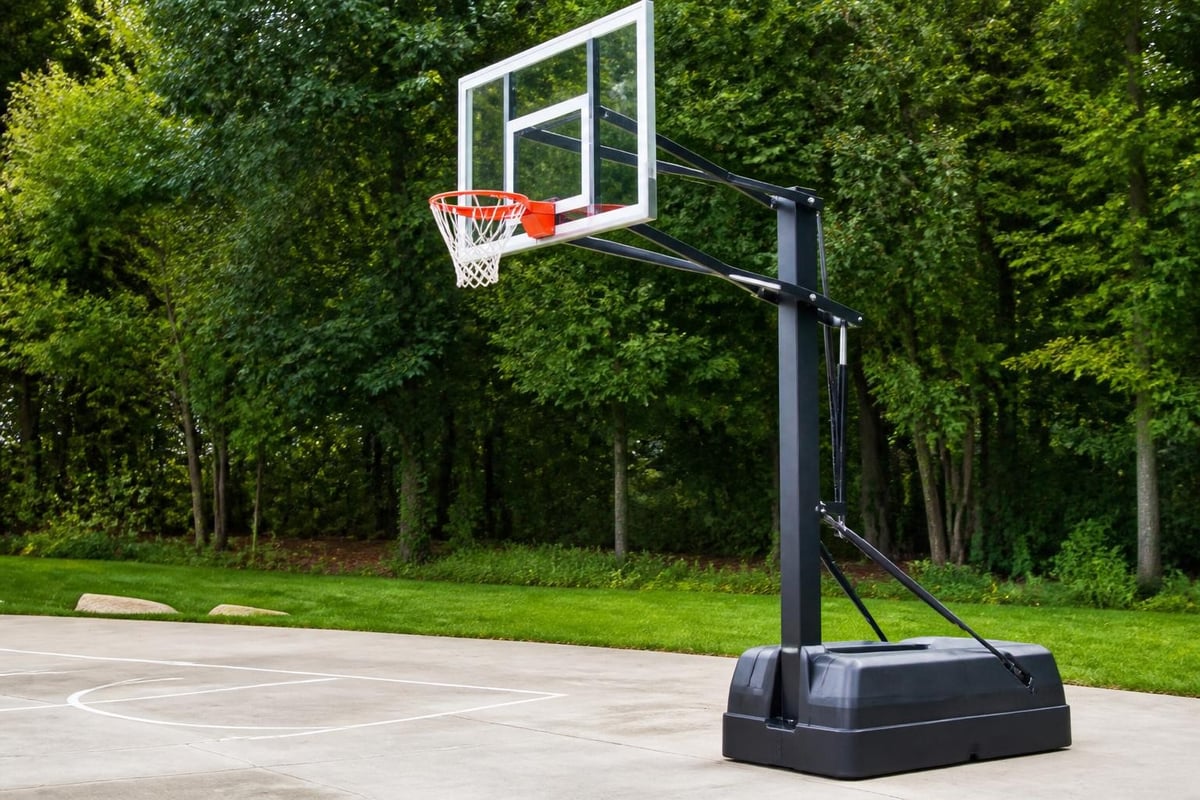
Modern portable basketball systems incorporate various adjustment mechanisms to accommodate players from elementary through adult levels. Understanding these systems helps you select equipment that matches your operational needs and user capabilities.
Telescoping pole adjustments use a pin-and-hole system. Users lift or lower the pole section and insert a pin through aligned holes at preset height intervals, typically in 6-inch increments from 7.5 to 10 feet. This approach is simple, requires no tools, and works reliably in outdoor conditions. However, it demands physical strength to lift the backboard assembly while aligning holes.
Screw-jack mechanisms thread a large adjustment screw through the pole support structure. Turning a handle raises or lowers the backboard smoothly to any height within the range. This precision allows exact height settings beyond preset intervals and requires less strength than pin systems, making it accessible for a single operator.
Spring-assisted hydraulic systems reduce the effort needed for adjustment by counterbalancing the backboard weight. A hydraulic or pneumatic cylinder assists the lifting motion, allowing one person to adjust even heavy professional-grade systems. These mechanisms cost more but pay dividends in high-traffic facilities where frequent height changes occur.
Selection Criteria by Facility Type
-
Elementary schools: Prioritize easy height adjustment (spring-assisted preferred), durable polycarbonate backboards, and wide bases for tipping resistance during enthusiastic play.
-
Middle and high schools: Specify acrylic or tempered glass backboards, 4-inch poles for reduced vibration, and mechanisms robust enough for daily multi-sport use.
-
Recreation centers: Choose commercial-grade systems with theft-resistant hardware, weather-resistant finishes, and tool-free adjustment for staff efficiency.
-
Training facilities: Invest in regulation-size glass backboards, breakaway rims, and professional-grade poles that replicate game conditions.
Coaches and athletic directors should consider how often the system will move and adjust. A portable basketball system deployed in a single gymnasium and adjusted weekly has different needs than one wheeled between outdoor courts daily. The Home Depot installation guide provides practical setup considerations that apply equally to institutional purchases.
Safety Standards and Installation Requirements
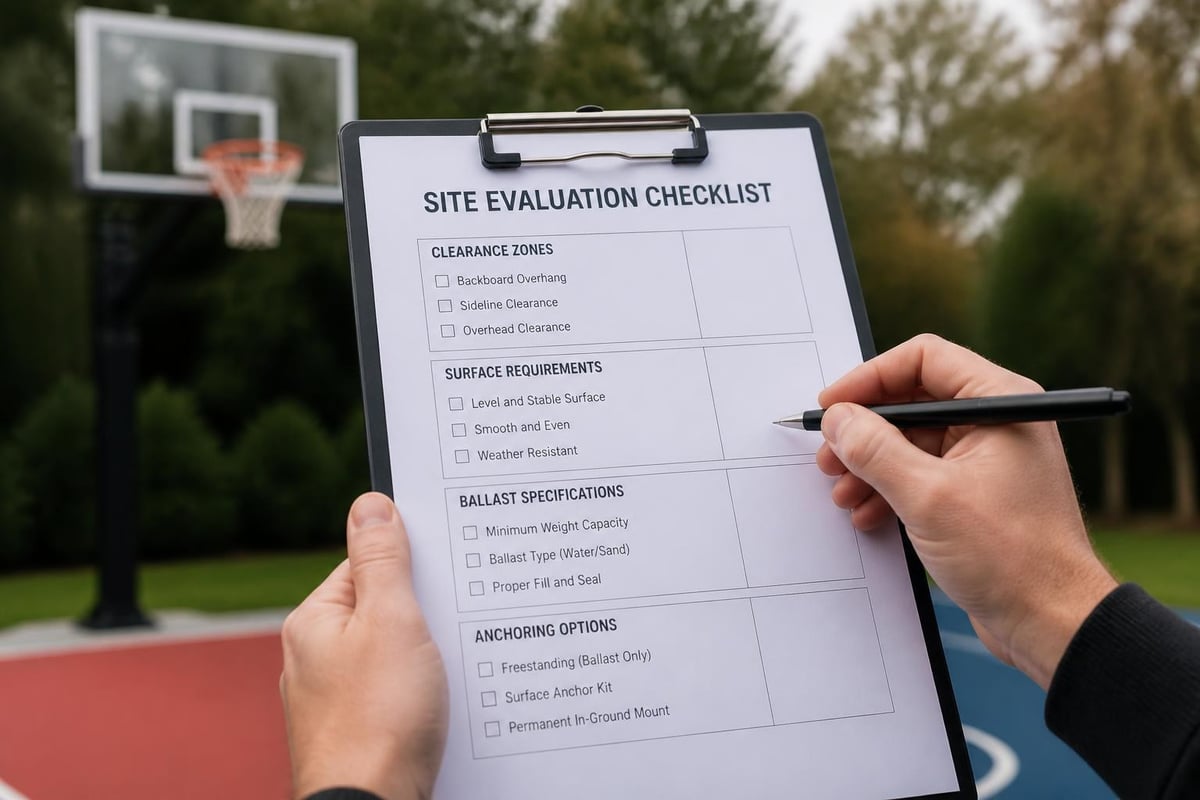
Safety begins before equipment arrives. The Rutgers Youth Sports Research Council facility checklist emphasizes site evaluation as a critical first step. Assess surface levelness, overhead clearance, proximity to walls or obstacles, and sight lines for supervision. A portable basketball system requires at least 10 feet of clearance behind the baseline and 6 feet on each side for safe play.
Proper ballasting cannot be compromised. Every portable system specifies minimum ballast requirements in the manufacturer documentation. Using less than the specified amount creates a tip-over hazard that no amount of careful play can fully mitigate. For outdoor installations exposed to wind, many facilities exceed minimum ballast by 20 to 30 percent.
Anchoring provides additional security beyond ballast alone. The technical overview from SNA Sports Group details how competition facilities use supplemental ground anchors, wheel locks, and tethering systems. While true portability means moving the system, temporary anchoring during play sessions adds a crucial safety layer for aggressive use.
Inspection and Maintenance Protocol
- Weekly checks: Verify base fill level, inspect rim attachment bolts, examine pole connections, test height adjustment mechanism
- Monthly maintenance: Tighten all hardware, check for rust or corrosion, clean adjustment mechanisms, inspect wheels and casters
- Seasonal service: Drain and refill water bases (if applicable), apply rust inhibitor to metal components, replace worn bushings, test stability under load
- Annual professional inspection: Structural integrity assessment, replacement of wear components, compliance verification with current safety standards
The Philadelphia Parks & Recreation design standards demonstrate how municipal agencies approach basketball equipment specifications. These technical requirements inform purchasing decisions by establishing baseline safety and performance expectations that apply across settings.
Performance Factors That Affect Play Quality
Ball response begins at the rim. Breakaway rims absorb downward force during dunking, protecting both players and equipment. Standard fixed rims suffice for youth play and recreational use, but competitive programs should specify breakaway mechanisms that meet ASTM F2023 standards for deflection and return.
Backboard mounting stiffness influences shooting consistency. Research published in Springer's nonlinear dynamics journal analyzes how basketball-rim interactions depend on mounting rigidity and material properties. Loosely mounted backboards vibrate excessively, creating unpredictable bounces that frustrate skill development. Quality portable basketball systems use reinforced attachment brackets and vibration-dampening hardware to minimize this movement.
Pole overhang measures the distance from the base front edge to the backboard's front face. Greater overhang (36 to 48 inches) creates more under-basket playing space and reduces collisions with the base during drives to the hoop. However, increased overhang also amplifies leverage forces on the base, requiring heavier ballast for equivalent stability.
Comparing Regulation vs. Recreational Specifications
| Feature | Regulation/Competitive | Recreational |
|---|---|---|
| Backboard size | 72" x 42" | 44" to 60" |
| Pole diameter | 4" to 5" square | 2.75" to 3.5" round |
| Overhang | 36" to 48" | 24" to 36" |
| Rim type | Breakaway | Fixed or basic breakaway |
| Base ballast | 500+ lbs when filled | 300 to 400 lbs |
| Height adjustment | Infinite or 6" increments | 6" to 12" increments |
Understanding these distinctions helps match equipment to program goals. A portable basketball system serving multiple youth age groups needs different capabilities than one supporting varsity practice or adult recreational leagues.
Practical Deployment Considerations
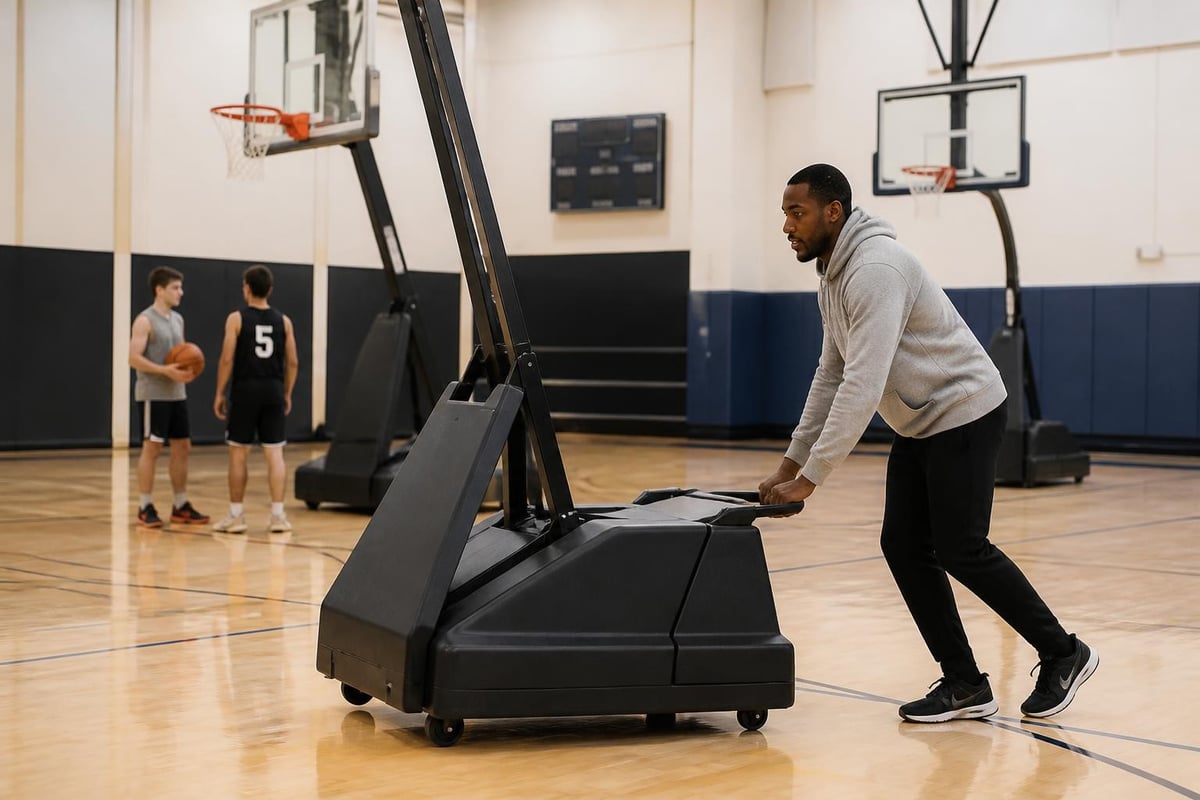
Moving a portable basketball system safely requires planning and appropriate equipment. Most filled units weigh 300 to 600 pounds, demanding wheeled bases or transport dollies rated for the load. Two-person teams should handle movement to maintain control and prevent tipping during transit.
Storage between seasons protects your investment. Indoor storage eliminates weather exposure that accelerates deterioration. If outdoor storage is necessary, cover the backboard and pole, partially drain water bases to prevent freeze damage, and position the unit away from high-traffic areas where accidental contact might occur.
For organizations managing equipment across multiple locations, Sideline Sport Supply's team sales program offers volume pricing and coordinated delivery that simplifies large-scale deployments. Standardizing equipment across facilities streamlines maintenance, parts inventory, and staff training.
Climate and Environmental Factors
Weather resistance varies significantly between residential-grade and commercial systems. Powder-coated steel poles resist rust better than painted alternatives. Stainless steel hardware prevents corrosion in coastal or high-humidity environments. UV-resistant backboard materials maintain clarity and impact strength through years of sun exposure.
Wind loading presents the primary environmental challenge for outdoor portable basketball systems. A 72-inch backboard catches considerable wind force. Calculate expected wind speeds in your area and select systems with base capacities that provide adequate safety margins. Many facilities add supplemental ballast blocks during high-wind seasons.
Temperature extremes affect materials differently. Polycarbonate backboards become brittle in extreme cold, increasing crack risk. Hydraulic adjustment mechanisms may stiffen in freezing temperatures. Water-filled bases must be drained before freezing weather or switched to sand in regions with harsh winters.
Budgeting and Total Cost of Ownership
Initial purchase price represents only part of the total investment. A comprehensive budget accounts for delivery, assembly, accessories, and ongoing maintenance throughout the equipment's service life.
Assembly requirements vary by model complexity. Basic systems with three-piece poles and smaller backboards may require two to three hours for initial setup. Professional-grade units with one-piece poles, large glass backboards, and sophisticated adjustment mechanisms often demand four to six hours plus specialized tools. Factor labor costs or staff time accordingly.
Replacement parts extend equipment life and reduce long-term costs. Common wear items include:
- Rim nets (replaced seasonally in high-use settings)
- Adjustment mechanism components (pins, springs, hydraulic seals)
- Wheel assemblies and casters
- Backboard padding (for competitive play)
- Base plugs and fill caps
The price match guarantee from Sideline Sport Supply ensures competitive pricing without sacrificing quality or service, an important consideration when managing tight athletic budgets.
Return on Investment Analysis
| Cost Category | Budget System | Mid-Range System | Professional System |
|---|---|---|---|
| Initial purchase | $300-$600 | $800-$1,500 | $2,000-$4,000 |
| Annual maintenance | $50-$100 | $75-$150 | $150-$300 |
| Expected lifespan | 3-5 years | 7-10 years | 12-15 years |
| Cost per year | $110-$220 | $145-$235 | $230-$360 |
Quality portable basketball systems from reputable manufacturers deliver better cost-per-year value despite higher upfront investment. Institutional buyers should evaluate total ownership costs rather than focusing solely on purchase price.
Matching Systems to Program Requirements
Youth basketball programs emphasize skill development through age-appropriate equipment. Adjustable systems that accommodate heights from 6 feet (for young elementary players) through 10 feet (regulation) support long-term player development without requiring multiple hoop purchases.
Competitive programs demand equipment that mirrors game conditions. Glass backboards provide authentic ball response. Breakaway rims protect players and withstand aggressive play. Heavy-duty construction endures thousands of practice hours without performance degradation. For schools and clubs committed to competitive excellence, these features are essential rather than optional.
Multi-sport facilities benefit from portability's flexibility. A gymnasium hosting basketball, volleyball, and indoor soccer can deploy and store basketball equipment as schedules demand. Quick-adjust mechanisms reduce setup time, maximizing facility utilization.
Training academies and specialized instruction settings may prioritize unique features. Some portable basketball systems offer adjustable overhang to simulate different shooting angles. Others incorporate padding systems for safety during contact drills. Specialized programs should identify their specific technical requirements before selecting equipment.
Procurement and Vendor Evaluation
Reliable vendors provide detailed specifications, installation support, and responsive post-purchase service. When evaluating suppliers, request complete documentation including:
- Full specifications with dimensions, weights, and material grades
- Assembly instructions and estimated setup time
- Warranty terms covering frame, backboard, rim, and adjustment mechanisms
- Parts availability and replacement ordering process
- Safety certifications and compliance documentation
Organizations purchasing multiple units should clarify delivery logistics. Coordinated delivery to multiple sites, inside-facility placement, and assembly services add value that justifies modest price differences. The Sideline Sport Supply contact team works with schools and organizations to coordinate complex equipment deployments efficiently.
Payment terms and budget flexibility matter for institutional purchases operating on fiscal year schedules or requiring purchase order processing. Vendors experienced in serving schools and sports organizations understand these requirements and accommodate them appropriately.
Sustainability and End-of-Life Planning
Durable portable basketball systems reduce waste by serving programs for a decade or more when properly maintained. When equipment eventually reaches end-of-life, responsible disposal or recycling should be planned.
Metal components (poles, frames, rims) have scrap value and should be separated for metal recycling. Plastic bases, particularly polyethylene, may be recyclable depending on local facility capabilities. Glass backboards require special handling but can be processed through construction glass recycling streams.
Some manufacturers offer trade-in or upgrade programs that recover old equipment for refurbishment or responsible disposal. These programs reduce landfill waste while potentially offsetting new equipment costs.
Organizations committed to sustainability should prioritize durable systems with long service lives, replaceable components rather than disposable assemblies, and manufacturers with documented environmental responsibility programs. Quality equipment from reputable suppliers typically aligns with these sustainability goals better than budget alternatives designed for shorter service lives.
Selecting the right portable basketball system requires balancing performance needs, safety requirements, budget constraints, and operational realities specific to your program. By understanding construction quality, adjustment mechanisms, safety standards, and total ownership costs, athletic directors and coaches can invest in equipment that serves athletes effectively for years. Whether you're outfitting an elementary school, managing a competitive program, or coordinating multi-sport facilities, Sideline Sport Supply provides the quality equipment, straightforward pricing, and reliable service that keeps your focus where it belongs-on developing athletes and building successful programs.