

Best Pickleball Machines: Complete Buying Guide 2026
Pickleball continues to experience explosive growth across the United States, with participation increasing dramatically year after year. As more athletes, coaches, and facilities invest in this dynamic sport, the demand for effective training tools has surged. Ball machines have become essential equipment for serious players looking to refine their skills, coaches developing training programs, and clubs offering enhanced member experiences. Finding the best pickleball machines requires understanding your specific needs, budget constraints, and the features that deliver the most value for consistent practice sessions.
Why Pickleball Machines Matter for Training
The sport's rapid expansion means players at every level need efficient ways to improve their game. According to participation data from the Sports & Fitness Industry Association, pickleball has become one of America's fastest-growing sports, creating unprecedented demand for quality training equipment. Ball machines address a fundamental challenge: consistent, repeatable practice without requiring a hitting partner.
Key training advantages include:
- Unlimited repetitions at your own pace
- Precise control over ball speed, spin, and trajectory
- Solo practice sessions that fit any schedule
- Targeted skill development for specific shots
- Cost-effective alternative to private coaching for skill refinement
For coaches and facilities, machines enable efficient group training, allow instructors to observe form while players receive feeds, and maximize court utilization during off-peak hours.
Understanding Your Training Objectives
Before investing in equipment, clearly define what you want to achieve. Beginner players typically need consistent, straightforward feeds to develop basic strokes and court positioning. Intermediate players benefit from variable speed and spin to practice different shot scenarios. Advanced players require sophisticated programming capabilities for complex drill sequences and match simulation.
Consider whether the machine will serve individual training, team practice, or facility-wide use. The best pickleball machines for home use prioritize portability and simple operation, while club installations may justify higher-capacity models with advanced features.
Essential Features in Top-Performing Machines
Modern pickleball machines vary significantly in capabilities, construction quality, and price points. Understanding core features helps you distinguish between basic models and professional-grade equipment.
Ball Capacity and Feed Rate
Hopper capacity determines how long you can practice before reloading. Entry-level machines typically hold 50-75 balls, while premium models accommodate 120-150 balls or more. Feed rate (balls per minute) ranges from 10-12 for beginners to 60-70 for advanced drills.
| Feature | Basic Models | Mid-Range | Premium |
|---|---|---|---|
| Ball Capacity | 50-75 balls | 80-100 balls | 120-150+ balls |
| Feed Rate | 10-20 bpm | 20-40 bpm | 40-70 bpm |
| Speed Range | 10-30 mph | 10-45 mph | 10-60+ mph |
Higher capacity means fewer interruptions during practice sessions. For team training or coaching scenarios, larger hoppers significantly improve efficiency. Similar to how baseball machines and softball machines serve batting practice needs, pickleball machines must deliver reliable, continuous feeds.
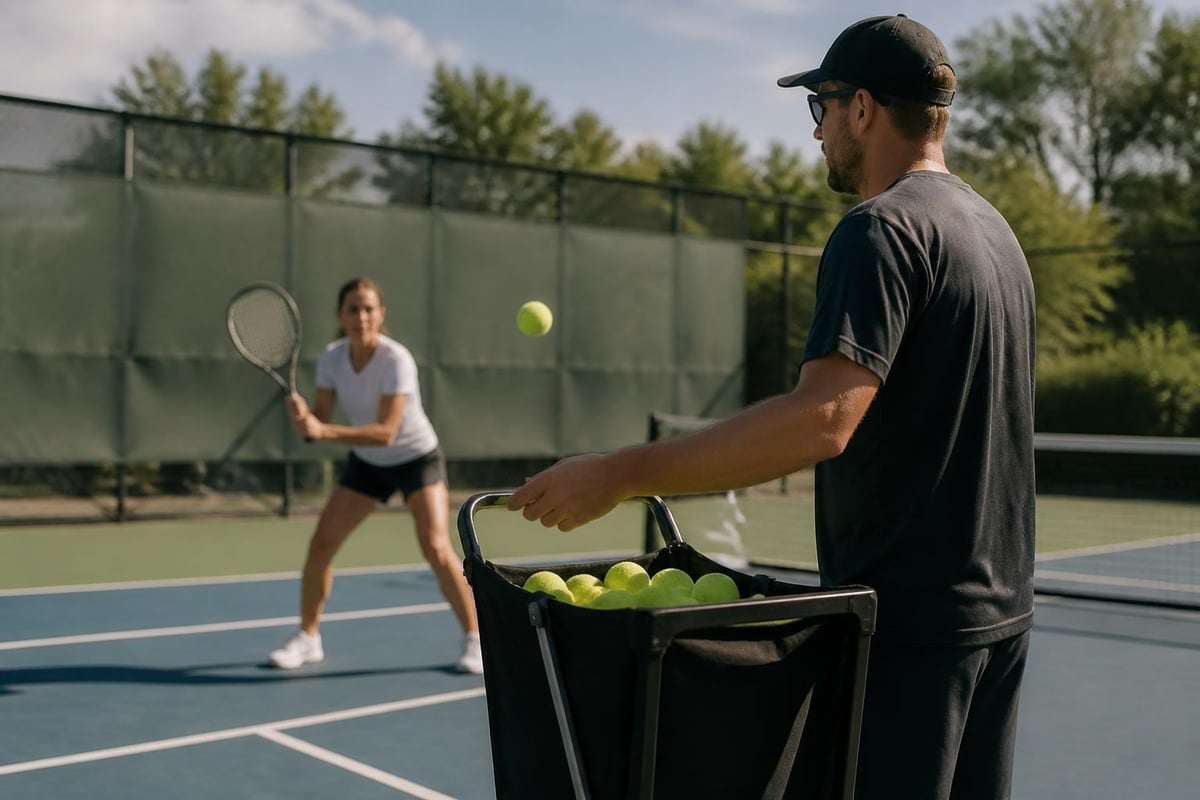
Speed, Spin, and Trajectory Control
The best pickleball machines offer comprehensive control over ball delivery. Speed adjustment should cover the full range from gentle dinks to aggressive drives. Quality machines provide:
Speed capabilities: Variable settings from 10 mph (soft drops) to 60+ mph (power drives) allow progressive skill development and shot diversity.
Spin options: Topspin, backspin, and sidespin settings replicate real game conditions. Advanced models offer independently adjustable spin rates for each shot type.
Oscillation and trajectory: Horizontal oscillation simulates cross-court shots and improves footwork. Vertical adjustment enables practice of lobs, drops, and drives at various net heights.
When evaluating machines, verify that controls are intuitive and adjustments hold their settings during extended use. Poor-quality machines may drift from programmed settings, reducing practice effectiveness.
Power Options and Portability
Power source significantly impacts where and how you can use the machine. Battery-powered units provide maximum flexibility for outdoor courts without electrical access. AC-powered machines eliminate battery management but require proximity to outlets.
Battery considerations:
- Runtime typically ranges from 2-6 hours per charge
- Lithium-ion batteries offer lighter weight and longer lifespan
- Charging time varies from 2-8 hours depending on capacity
- Replacement battery availability and cost matter for long-term ownership
Portability factors:
- Weight ranges from 20 pounds (ultra-portable) to 50+ pounds (heavy-duty)
- Wheel design affects transport ease across different court surfaces
- Folding or modular construction enables compact storage and vehicle transport
- Handle ergonomics matter when moving equipment regularly
Facilities investing in permanent installations may prioritize capacity and features over portability, while individual players often need machines they can transport in standard vehicles.
Top Machine Categories and Use Cases
The market offers distinct machine categories serving different training needs and budgets. Understanding these segments helps narrow your selection to models appropriate for your situation.
Entry-Level Machines for Individual Practice
Budget-friendly options typically range from $500-$1,200 and provide essential functionality for dedicated individual practice. These machines deliver consistent feeds without advanced programming capabilities.
Ideal for:
- Players new to ball machine training
- Recreational players seeking skill improvement
- Home use with limited storage space
- Budget-conscious buyers prioritizing basic reliability
Entry models usually feature manual controls, simpler oscillation patterns, and smaller hoppers. While lacking sophisticated programming, they effectively support fundamental stroke development and conditioning. For players exploring whether machine training suits their development approach, this practical guide discusses whether pickleball machines are worth the investment.
Mid-Range Machines for Serious Players
The $1,200-$2,500 range delivers significantly enhanced capabilities suitable for competitive players and coaching applications. These machines balance advanced features with reasonable pricing.
Key improvements include:
- Programmable drill sequences storing multiple shot combinations
- Enhanced spin control with precise adjustment
- Larger ball capacity supporting longer practice sessions
- Improved build quality ensuring years of regular use
- Remote controls enabling adjustment without interrupting drills
Mid-range machines serve individual players training for tournaments, coaches running small group sessions, and clubs offering member access to quality training equipment. The performance gap between entry and mid-range models justifies the price increase for committed players.
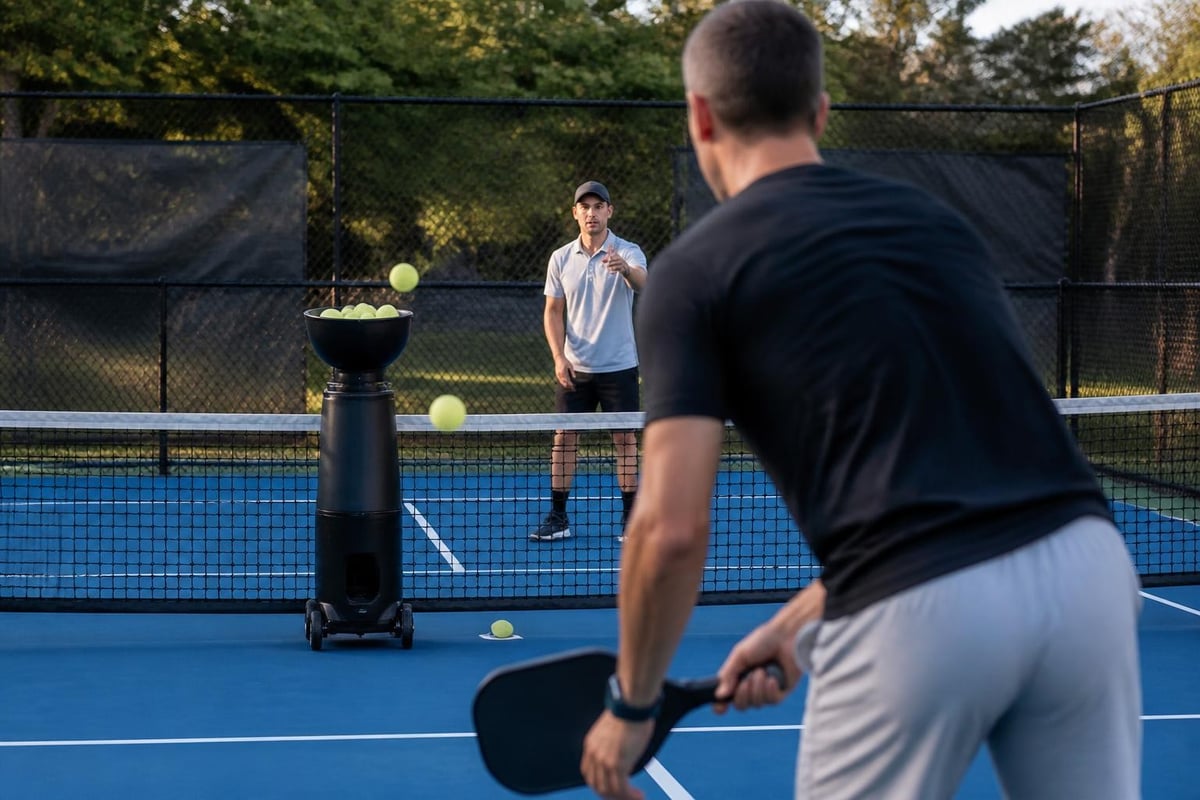
Premium Professional Machines
High-end machines ($2,500-$5,000+) represent the best pickleball machines for facilities, coaches, and elite players demanding maximum capabilities. These systems incorporate cutting-edge technology and robust construction.
Professional features:
- Advanced digital controls with touchscreen interfaces
- Memory for dozens of custom drill programs
- Precise ball placement within inches of target zones
- Two-line capability delivering alternating shot patterns
- Extended warranties and professional service support
- Compatible with proprietary training apps and software
Premium machines justify their cost through superior reliability during intensive daily use, enhanced training effectiveness from precise shot replication, and long-term durability reducing replacement frequency. Many manufacturers provide detailed specifications in resources like the Spinfire Pickleball Ball Machine manual covering technical capabilities and maintenance requirements.
Comparing Leading Brands and Models
Several manufacturers dominate the pickleball machine market, each offering distinct advantages. Understanding brand strengths helps align your selection with your priorities.
Spinfire Models
Spinfire produces widely respected machines known for reliability and performance across price ranges. Their models feature intuitive controls, solid construction, and responsive customer service. The Spinfire Pro series offers advanced programming while maintaining user-friendly operation.
Lobster Sports Systems
Lobster brings decades of ball machine expertise from tennis into pickleball. Their machines emphasize durability, with metal construction and weather-resistant components. The Elite series provides tournament-level training capabilities with comprehensive spin and placement control.
Simon Pickleball Machines
Simon specializes exclusively in pickleball, designing machines specifically for the sport's unique ball characteristics and shot requirements. Their products typically offer excellent value in the mid-range category, balancing features and affordability. For detailed comparisons of current models, PickleballPaddleLab's hands-on reviews provide practical testing insights.
Sports Attack and Tutor Models
These brands represent the premium segment, with machines commonly found at training facilities and used by professional coaches. Sports Attack machines deliver exceptional shot precision and programming flexibility. At Sideline Sport Supply, we recognize how professional-grade equipment transforms training effectiveness across multiple sports.
| Brand | Price Range | Best For | Key Strength |
|---|---|---|---|
| Spinfire | $900-$3,500 | All levels | Reliability and support |
| Lobster | $1,200-$4,000 | Serious players | Durable construction |
| Simon | $700-$2,000 | Budget-conscious | Value and simplicity |
| Sports Attack | $2,500-$5,000+ | Facilities/pros | Precision and features |
Installation and Setup Considerations
Acquiring the machine represents just the first step. Proper setup, safe operation, and regular maintenance ensure optimal performance and longevity.
Court Space and Safety Requirements
Position machines to provide adequate space for player movement and ball collection. Maintain at least 3-4 feet of clearance around the machine to prevent tripping hazards during active drills. Many clubs establish formal policies; for example, the Sun City Center Pickleball Club ball machine usage policy outlines safety protocols and court etiquette.
Safety guidelines:
- Never stand directly in front of the machine during operation
- Secure the machine on level surfaces to prevent tipping
- Keep the feeding mechanism clear of debris and foreign objects
- Store machines in dry locations when not in use
- Follow manufacturer guidelines for proper ball types and quality
Using appropriate balls matters significantly. Machines designed for outdoor pickleballs may not perform optimally with indoor balls due to weight and hole pattern differences. Consult the USA Pickleball Equipment Standards Manual for official ball specifications.
Maintenance and Troubleshooting
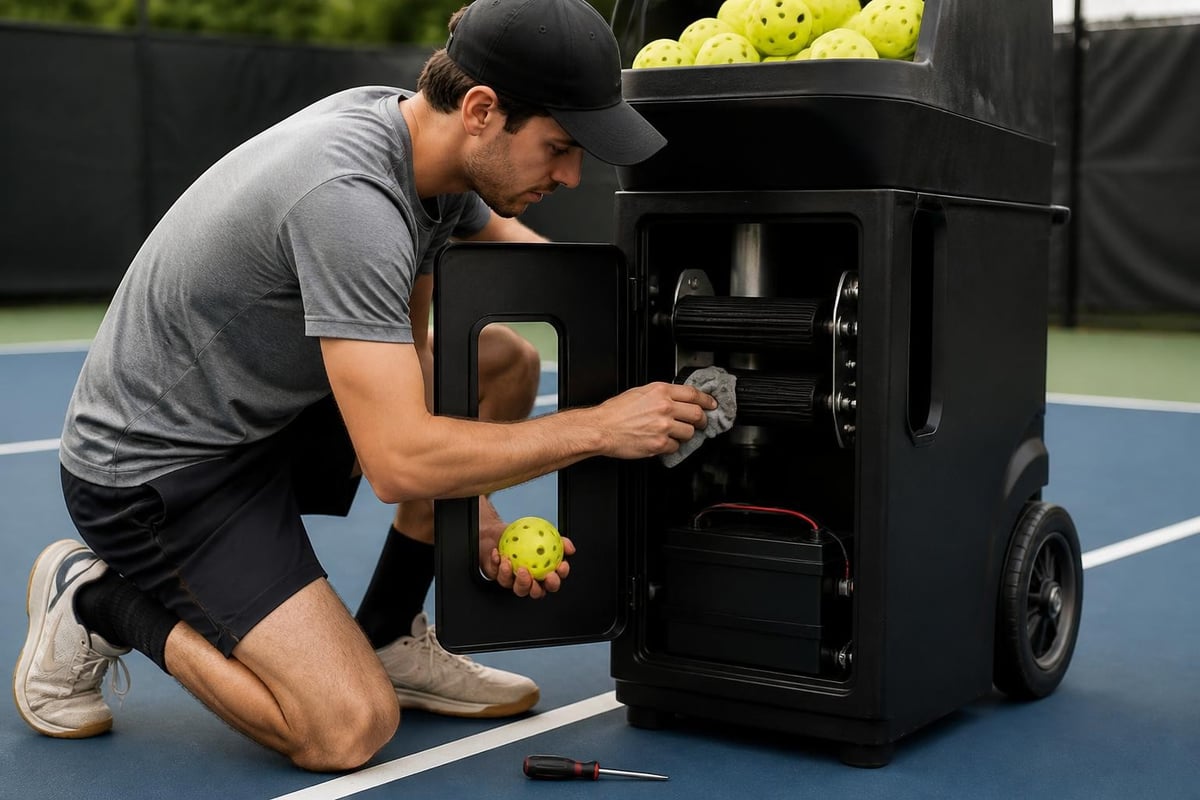
Regular maintenance extends machine life and ensures consistent performance. Clean the ball feed mechanism weekly during heavy use, removing dust, dirt, and ball residue that can affect feeding reliability. Check wheel bearings and mobility components monthly, lubricating as specified in manufacturer documentation.
Common issues and solutions:
- Inconsistent feed rate: Check battery charge level or clean feed wheels
- Balls jamming: Inspect hopper for damaged balls or debris
- Erratic ball trajectory: Verify wheel alignment and spin settings
- Reduced ball speed: Replace worn throwing wheels per service schedule
- Control failures: Update firmware if applicable or contact manufacturer support
Most quality machines include comprehensive manuals with troubleshooting sections. Establishing a maintenance log helps track service intervals and identify emerging issues before they cause training disruptions.
Maximizing Training Effectiveness
Owning a machine provides the tool, but structured practice plans deliver results. Design training sessions around specific skill development goals rather than random hitting.
Drill Programming Strategies
Create progressive drill sequences that gradually increase difficulty. Begin each session with warm-up feeds at moderate pace, then advance to targeted skill work. Advanced machines allow programming multi-shot patterns that simulate game scenarios.
Effective drill progression:
- Warm-up phase: Consistent mid-pace balls to grooved target zones (5-10 minutes)
- Technical focus: Slow-speed feeds emphasizing form and contact point (10-15 minutes)
- Speed development: Gradually increase pace while maintaining technique (10-15 minutes)
- Placement practice: Oscillating feeds requiring movement and adjustment (10-15 minutes)
- Scenario simulation: Complex patterns mimicking match situations (10-20 minutes)
Track your practice sessions, noting machine settings that produce desired results. This documentation enables consistent training and helps identify settings requiring adjustment as skills improve. Similar to how volleyball machines support setter and hitter development through repetition, pickleball machines build muscle memory and shot confidence.
Combining Machine Work with Partner Practice
The best pickleball machines complement rather than replace partner practice. Use machines for individual skill refinement, then apply those skills in live play. Machine training excels at building consistent stroke mechanics, while partner practice develops timing, strategy, and competitive mindset.
Coaches can use machines for efficient group training by positioning multiple players in rotation, allowing observation and correction while the machine provides feeds. This approach maximizes court time and enables individualized feedback during team practices. Resources like PickleballCentral's training gear guide offer perspectives on integrating machines into comprehensive training programs.
Budget Planning and Value Assessment
Determining the right investment level requires balancing immediate budget constraints against long-term training needs and equipment longevity.
Total Cost of Ownership
Purchase price represents just one component of ownership costs. Factor in:
- Balls: Quality pickleballs range from $20-$40 per dozen; heavy machine use requires regular replacement
- Accessories: Protective covers, spare batteries, remote controls add $50-$300
- Maintenance: Replacement wheels, parts, and service average $100-$300 annually for active use
- Storage: Climate-controlled storage may be necessary in extreme weather regions
- Transport: Cases or bags for portable machines range from $50-$150
Calculate cost per training hour over the machine's expected lifespan (typically 5-10 years with proper maintenance). A $2,000 machine used twice weekly for five years costs approximately $8 per session-less than most coaching alternatives.
Comparing Alternatives
Before purchasing, consider whether a machine suits your development approach better than alternatives:
Private coaching: Ranges from $40-$100+ per hour, providing personalized instruction but limited repetition opportunities.
Clinic participation: Group instruction costs $20-$40 per session, offering social interaction but less individual attention.
Partner practice: Free but requires scheduling coordination and may lack structured progression.
Rental or club access: Some facilities offer hourly machine rental ($10-$25) or member access, allowing evaluation before purchase.
For guidance on matching features to specific training goals, this comprehensive machine selection guide examines critical decision factors. Understanding official pickleball rules also helps ensure your training translates effectively to competitive play.
Where to Purchase and What to Expect
Buying from reputable dealers ensures authentic products, valid warranties, and access to customer support. Online retailers often offer competitive pricing, while local specialty stores provide hands-on evaluation and immediate assistance.
Dealer Selection Criteria
Important factors include:
- Authorized dealer status ensuring manufacturer warranty validity
- Return policies allowing trial periods or performance guarantees
- Technical support availability for setup and troubleshooting questions
- Shipping protection and insurance for expensive equipment
- Inventory depth enabling comparison of multiple models
At Sideline Sport Supply, we understand that coaches and facilities need reliable partners for equipment procurement. Just as our fitness machines serve training facilities nationwide, quality pickleball machines require dependable sourcing and support.
Warranty and Support Expectations
Quality manufacturers provide 1-2 year warranties covering defects and component failures. Premium models may offer extended coverage or service plans. Review warranty terms carefully, noting:
- Coverage period for different components (electronics, mechanical parts, batteries)
- Exclusions for normal wear items like throwing wheels
- Repair procedures and turnaround expectations
- Parts availability and estimated delivery times
- Whether warranty requires professional service or allows self-maintenance
Extended warranties or service contracts may be worthwhile for intensive institutional use but represent questionable value for occasional individual practice. Independent reviews, such as those at Pickleheads' comparative analysis, often discuss real-world warranty experiences and manufacturer responsiveness.
Advanced Training Applications
Beyond basic repetition, sophisticated machine use enables specialized training techniques previously available only through professional coaching.
Video Analysis Integration
Combine machine training with video recording to analyze stroke mechanics. Set the machine for consistent feeds while filming from multiple angles. This approach isolates technique from shot variation, enabling focused correction of form flaws.
Competitive Scenario Simulation
Program machines to replicate specific opponents' tendencies. Create drill sequences matching the pace, spin, and placement patterns you'll face in upcoming matches. This targeted preparation builds confidence and develops tactical responses.
Fitness and Conditioning
Use machines for high-intensity interval training by programming rapid-fire sequences requiring explosive movement and quick recovery. Adjust feed rate and oscillation to create cardiovascular and agility workouts that simultaneously improve ball skills.
Facilities can justify premium machine investments by offering specialized training programs that generate additional revenue while providing members with professional-grade development opportunities. This approach parallels how comprehensive training equipment supports diverse athletic development across sports.
Selecting the best pickleball machines requires careful evaluation of your training objectives, budget parameters, and long-term equipment needs. Whether you're an individual player pursuing competitive excellence, a coach developing team skills, or a facility enhancing member amenities, the right machine becomes an invaluable training partner that delivers consistent improvement through focused repetition. At Sideline Sport Supply, we're committed to helping athletes, coaches, and organizations find the right training equipment to support skill development and maximize practice effectiveness-so you can spend less time managing equipment logistics and more time developing winning performance.