

Lacrosse Goals: Complete Guide for Teams and Programs
Selecting the right lacrosse goals for your program involves much more than picking the first option you find online. Whether you're outfitting a high school team, managing a youth league, or building a training facility, understanding goal specifications, construction quality, and long-term durability ensures your investment serves players effectively for years. The difference between a properly selected goal and a poorly chosen one affects everything from player safety to practice efficiency and equipment maintenance costs.
Understanding Official Lacrosse Goal Dimensions
The standardized measurements for lacrosse goals remain consistent across most competitive levels, though variations exist for youth programs and specialized training scenarios. Official lacrosse goal dimensions specify a goal measuring 6 feet wide by 6 feet tall, with a depth of 7 feet from the goal line to the back of the frame.
These standard measurements ensure consistency across different facilities and competitions, allowing players to develop muscle memory and shooting accuracy that translates directly to game situations. The opening size creates enough space for scoring opportunities while maintaining defensive challenges that make the sport competitive at every level.
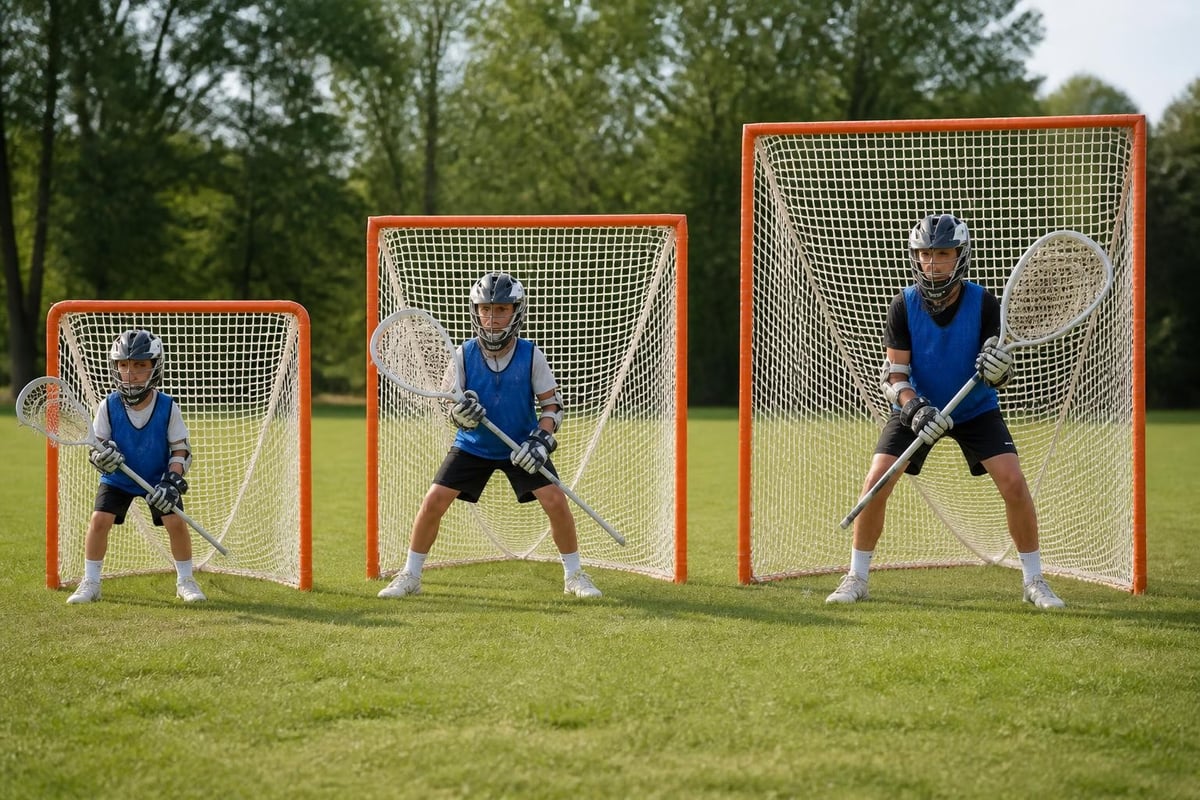
Youth and Modified Goal Sizes
Not every program requires full-size regulation goals. Youth leagues often benefit from modified dimensions that better suit developing players and skill-building exercises.
Common youth lacrosse goal sizes include:
- 4 x 4 feet for introductory programs (ages 6-8)
- 4.5 x 4.5 feet for intermediate youth (ages 9-10)
- 6 x 6 feet with reduced depth for transitional players (ages 11-12)
- Full regulation size for players aged 13 and older
Understanding different lacrosse goal sizes helps coaches select equipment appropriate for their athletes' developmental stage. Smaller goals allow younger players to build confidence and accuracy before progressing to regulation dimensions.
Frame Construction and Material Considerations
The frame material directly impacts goal durability, portability, and cost. Three primary materials dominate the market, each offering distinct advantages depending on your program's needs.
| Material | Durability | Weight | Portability | Cost Range | Best For |
|---|---|---|---|---|---|
| Steel | Excellent | Heavy | Low | $$$ | Permanent installations |
| Aluminum | Very Good | Medium | Moderate | $$ | Semi-permanent setups |
| PVC/Composite | Good | Light | High | $ | Practice and portable use |
Steel frames provide maximum durability and withstand constant impact from high-velocity shots without bending or warping. These goals work best for facilities with dedicated lacrosse fields where goals remain in place throughout the season. The additional weight prevents tipping during aggressive play but makes relocation challenging.
Aluminum offers an excellent middle ground. These goals maintain structural integrity under regular use while reducing overall weight compared to steel options. Teams that need to move goals between fields or store them during off-seasons find aluminum frames manageable without sacrificing substantial quality.
Net Construction and Durability
Net quality separates professional-grade lacrosse goals from recreational models. Serious programs need nets that withstand thousands of shots without tearing, sagging, or requiring constant replacement.
Key net specifications to evaluate:
- Twine thickness: 4mm minimum for practice, 6mm for competitive use
- Mesh pattern: 1.75-inch squares provide optimal ball retention
- Material: UV-resistant nylon or polyethylene for outdoor durability
- Corner construction: Reinforced stress points prevent premature failure
If you're looking for heavy-duty replacement nets, prioritize 6mm twine thickness with square corners that distribute tension evenly across attachment points. This construction style extends net life significantly compared to standard recreational options.
Portable Versus Permanent Goal Systems
Your facility's requirements and usage patterns determine whether portable or permanent lacrosse goals make the most sense for your program. Each system type serves specific scenarios effectively.
Portable goals excel in multi-use facilities where fields accommodate multiple sports throughout the year. These systems typically feature wheels or lightweight construction allowing coaches or maintenance staff to relocate goals quickly between practices, games, and storage.
Advantages of portable lacrosse goals:
- Flexibility for shared facilities
- Easier seasonal storage
- Lower installation costs
- Adjustable positioning for varied drills
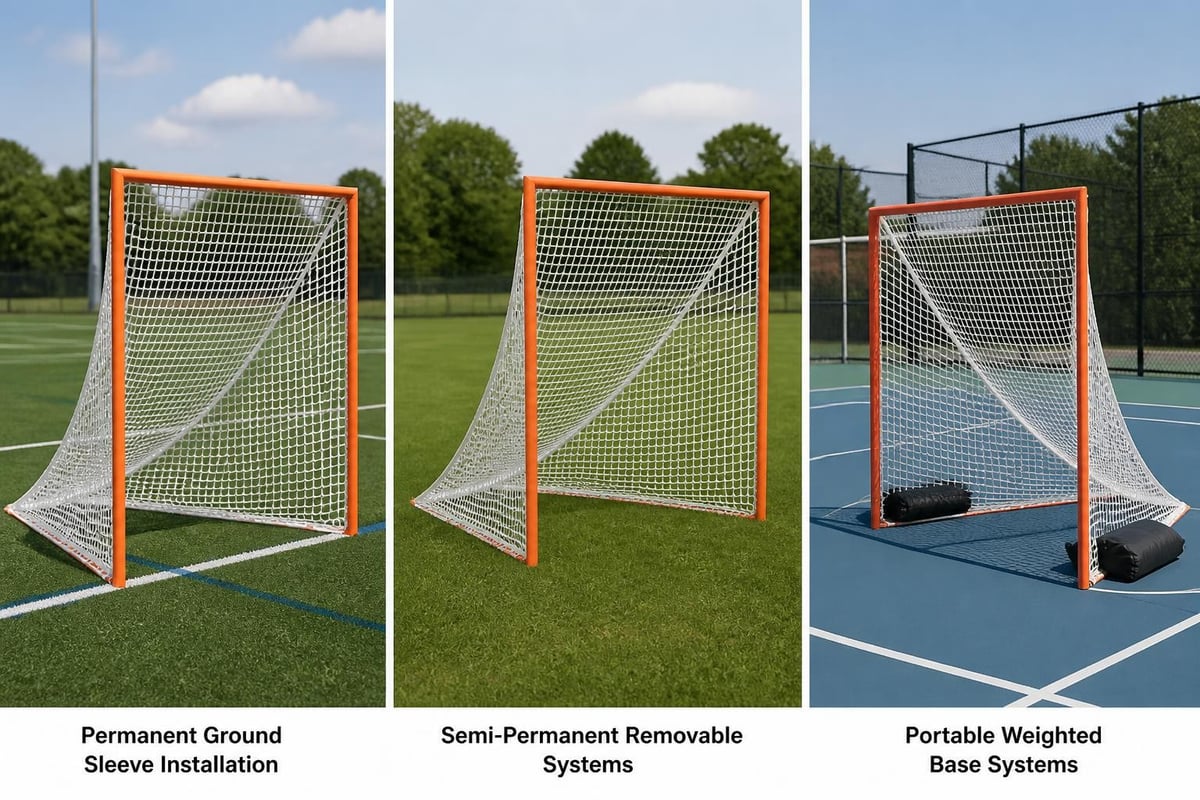
Permanent installations work best for dedicated lacrosse facilities with consistent field layouts. These systems use ground sleeves or anchor systems that secure goals firmly in place, eliminating movement during play and reducing setup time before practices.
Installation Requirements for Different Systems
Permanent goal installation requires careful planning to ensure proper positioning and stability. Ground sleeves should extend at least 18-24 inches below the surface, set in concrete for maximum stability. This depth prevents frost heave in northern climates and withstands lateral forces during aggressive play around the crease.
Semi-permanent options using removable ground sleeves offer compromise solutions. Teams install sleeves permanently but remove goal frames during off-seasons or when fields serve other sports. Protective caps keep debris from sleeves when goals aren't in use, maintaining clean insertion points for quick reinstallation.
Goal Maintenance and Longevity
Proper maintenance extends lacrosse goal lifespan substantially while ensuring player safety throughout the equipment's service life. Regular inspection and preventive care prevent mid-season failures that disrupt practices and competitions.
Lacrosse goal maintenance practices should follow a consistent schedule throughout the season. Weekly inspections catch developing issues before they become serious problems.
Weekly Maintenance Checklist
Equipment managers and coaches should complete these checks before each week's practices begin:
- Inspect net attachment points for fraying or loosening
- Check frame joints for cracks, rust, or separation
- Verify anchor stability on permanent installations
- Examine net condition for tears or excessive wear
- Test wheel function on portable models
Frame components require different care depending on material. Steel frames need periodic inspection for rust, particularly at weld joints and ground contact points. Apply rust-inhibiting paint to any areas where protective coating has worn away. Aluminum frames resist corrosion better but still benefit from cleaning to remove salt, dirt, and debris that can accelerate wear.
Seasonal Deep Maintenance
Beyond weekly checks, comprehensive seasonal maintenance preserves long-term goal condition and identifies replacement needs before critical failures occur.
Pre-season preparation tasks:
- Completely remove and inspect nets for any damage
- Clean frame thoroughly, removing accumulated dirt and debris
- Lubricate moving parts on portable goals
- Tighten all bolts and connection points
- Replace worn components before season starts
Post-season storage procedures:
- Remove nets and store in dry, protected location
- Clean and dry frames completely before storage
- Apply protective coating to steel components
- Store portable goals on blocks to prevent wheel flat-spotting
- Document any needed repairs for off-season completion
Net replacement represents the most frequent maintenance expense for lacrosse programs. Rather than waiting for complete failure, replace nets when they show significant wear in high-impact zones. This proactive approach prevents game delays and maintains consistent practice quality.
Selecting Goals for Different Program Levels
The appropriate lacrosse goals for your program depend on competitive level, budget constraints, and facility characteristics. Matching equipment specifications to actual requirements prevents both overspending and underbuying.
Youth and Recreational Programs
Beginning programs prioritize affordability and portability over maximum durability. These teams typically practice 2-3 times weekly during limited seasons, generating less equipment stress than year-round competitive programs.
Recommended specifications for youth programs:
- Aluminum or composite frame construction
- 4mm-5mm net twine thickness
- Portable base design for multi-sport facilities
- Modified size options for youngest age groups
Consider starting with practice-quality goals that meet safety standards without premium features unnecessary for developmental play. As programs grow and player skill increases, upgrade to competition-grade equipment that better serves advancing teams.
High School and Competitive Programs
High school lacrosse teams need equipment that withstands daily practices and regular competition throughout extended seasons. Quality becomes more important than initial cost when equipment serves 15-20 players practicing five days weekly.
Investment in competition-grade goals provides better long-term value for established programs. Steel or heavy-duty aluminum frames combined with 6mm nets create the durability serious programs require.
| Program Level | Frame Material | Net Thickness | Goal Type | Expected Lifespan |
|---|---|---|---|---|
| Youth Rec | PVC/Composite | 4mm | Portable | 2-3 seasons |
| Youth Competitive | Aluminum | 5mm | Portable | 3-5 seasons |
| High School | Aluminum/Steel | 6mm | Semi-permanent | 5-7 seasons |
| College/Elite | Steel | 6mm | Permanent | 8-10+ seasons |
Training and Practice Considerations
Dedicated practice goals serve different purposes than game equipment, often requiring different specifications to maximize training efficiency and budget effectiveness.
Some programs benefit from additional practice-specific goals beyond their primary game equipment. Smaller target goals help players develop shooting accuracy by reducing the scoring area and forcing precision. These specialized training tools complement full-size goals without replacing them.
Practice goal applications:
- Shooting accuracy drills with reduced opening sizes
- Goalie-specific training with regulation dimensions
- Small-sided games using portable positioning
- Individual skill development without full team setup
The number of goals your program needs depends on roster size and practice structure. Teams running multiple small-sided drills simultaneously require additional goals beyond the standard two used for full-field scrimmages. Calculate your maximum simultaneous drill requirements and ensure equipment inventory supports your practice plan.
Budget Planning and Total Cost Considerations
Understanding the complete cost picture for lacrosse goals extends beyond initial purchase price. Transportation, installation, maintenance, and replacement parts all contribute to lifetime ownership expenses.
When comparing options, calculate total cost over expected lifespan rather than focusing solely on upfront price. A premium goal lasting eight seasons with minimal maintenance often costs less per year than budget options requiring frequent net replacement and premature frame replacement.
Lifetime cost factors:
- Initial purchase price: Base equipment investment
- Installation costs: Professional setup or DIY labor
- Replacement nets: Frequency depends on quality and use
- Frame repairs: Welding, replacement parts, refinishing
- Storage requirements: Indoor space for off-season protection
- Transportation: Moving equipment between locations
For comprehensive guidance on selecting appropriate equipment for your budget and requirements, review this lacrosse buying guide that covers critical decision factors across different program types.
Safety Standards and Compliance
All lacrosse goals used in organized programs should meet current safety standards established by governing bodies. These requirements protect players from equipment-related injuries and ensure fair, consistent play across different facilities.
Essential safety features include:
- Smooth frame surfaces without sharp edges or protrusions
- Secure net attachment preventing gaps or loose areas
- Stable base or anchoring preventing tip-over
- Padding on frame elements in high-traffic areas
- Proper depth preventing ball ricochet into players
Goals used for competition must comply with NCAA, NFHS, or other relevant governing body specifications. Verify that any equipment you purchase meets the standards for your specific league or organization. Non-compliant goals may be rejected for tournament use, wasting your investment.
Frame padding becomes particularly important around the crease where players engage in close contact. Wraparound padding on posts and crossbars reduces injury risk during aggressive play around the goal mouth. Some leagues mandate this padding for all competitive play.
Weather Resistance and Outdoor Durability
Outdoor lacrosse goals face constant exposure to sun, rain, temperature fluctuations, and seasonal weather extremes. Material selection and protective treatments determine how well goals withstand these conditions over multiple seasons.
UV exposure degrades both frame finishes and net materials progressively. Quality nets use UV-resistant polyethylene or specially treated nylon that maintains strength despite constant sun exposure. Standard recreational nets often deteriorate within one season under intense sunlight, while UV-protected options last three to five times longer.
Weather protection strategies:
- Choose powder-coated steel frames for superior rust resistance
- Select UV-stabilized nets rated for outdoor use
- Apply additional protective coating to frames annually
- Remove and store nets during extended off-seasons
- Use goal covers for permanent installations during harsh weather
Temperature extremes affect different materials in distinct ways. Steel contracts and expands with temperature changes, potentially loosening bolts and connections. Periodic checks and tightening maintain structural integrity. Aluminum handles temperature variation better but requires different care for surface protection.
Many programs serving both indoor and outdoor facilities benefit from maintaining separate goal sets for each environment. Indoor goals can use lighter construction and thinner nets since they avoid weather exposure. This specialization extends equipment life while reducing unnecessary costs for features one environment doesn't require. Similar to how teams might use different equipment for varied purposes, programs can check available options at Sideline Sport Supply for equipment suited to specific conditions.
Assembly and Setup Requirements
Understanding assembly complexity before purchase prevents frustrating delays when goals arrive and your team needs them ready for practice. Some models arrive fully assembled, while others require significant setup time and tools.
Typical assembly requirements:
- Pre-assembled: Ready for immediate use, higher shipping costs
- Minimal assembly: Attach nets and secure 3-5 connection points
- Moderate assembly: Connect frame sections, install nets, adjust tension
- Full assembly: Complete frame construction from individual components
Budget adequate time for first-time assembly. Even "simple" setups often take 30-45 minutes per goal when completed by someone unfamiliar with the specific model. Having two people makes assembly significantly easier and faster, particularly for full-size regulation goals.
Keep assembly instructions and hardware in labeled containers attached to goals or stored with seasonal equipment. This prevents lost parts and confusion during setup next season. Take photos during initial assembly to reference later when reassembling after storage.
Enhancing Goal Performance
Some teams seek specific performance characteristics from their lacrosse goals beyond basic functionality. The distinctive "ping" sound when shots strike the frame or the way nets respond to ball impact can be adjusted through equipment modifications and selections.
For programs interested in maximizing goal sound during shooting practice, frame material and net tension significantly influence acoustics. Tighter nets produce sharper sounds when balls strike, while looser configurations dampen impact noise. Some coaches prefer audible feedback to help goalies and shooters gauge shot power without watching every attempt.
Net depth affects ball retention and rebound characteristics. Deeper nets capture shots more completely, preventing balls from bouncing back out after scoring. Shallower configurations allow faster ball retrieval during rapid-fire shooting drills but may occasionally fail to retain hard shots that hit specific angles.
Choosing the right lacrosse goals requires balancing immediate budget constraints against long-term program needs, understanding how different specifications affect practice quality and equipment longevity. By considering frame materials, net construction, portability requirements, and maintenance demands, coaches and athletic directors can select equipment that serves their programs effectively for years. When you're ready to outfit your team with reliable, game-ready lacrosse equipment, Sideline Sport Supply offers the quality gear and straightforward pricing that helps programs focus on development instead of equipment headaches.