

Essential Football Products Guide for Teams & Coaches
Equipping a football program requires more than just grabbing items off a shelf. Whether you're outfitting a high school team, managing a youth league, or running a competitive program, the right football products make the difference between a prepared squad and one that struggles through the season. From protective equipment that meets evolving safety standards to training tools that build skills and conditioning, understanding what your team needs-and when they need it-helps you maximize budgets while keeping players safe and competitive. The football equipment market continues to expand, driven by technological innovation and increasing participation at all levels.
Core Protective Equipment for Player Safety
Player safety starts with properly fitted protective gear. Football products in this category have evolved significantly, incorporating advanced materials and design principles that distribute impact forces more effectively.
Helmet Technology and Standards
Modern helmets represent the pinnacle of protective football products. Every helmet must meet National Operating Committee on Standards for Athletic Equipment (NOCE) certification, but beyond baseline compliance, helmets now feature multi-layer padding systems, improved faceguard designs, and ventilation systems that enhance comfort without compromising protection.
Key helmet considerations include:
- Proper sizing and fit testing for each player
- Regular reconditioning schedules (typically annual)
- Documentation of certification dates and recertification
- Replacement protocols for helmets showing wear or after significant impacts
Teams should establish helmet replacement cycles based on manufacturer recommendations and usage intensity. High-impact positions may require more frequent equipment updates compared to players experiencing fewer collisions.
Shoulder Pads and Body Protection
Shoulder pads vary significantly by position, and selecting appropriate football products for each player's role maximizes both protection and performance. Linemen require pads with broader coverage and reinforced protection zones, while skill position players benefit from lighter designs that preserve mobility.
| Position Group | Pad Style | Key Features |
|---|---|---|
| Linemen | Cantilevered | Maximum coverage, reinforced impact zones |
| Linebackers | Hybrid | Balance of protection and mobility |
| Skill Players | Lightweight | Minimal restriction, enhanced range of motion |
| Quarterbacks | Specialized | Shoulder mobility for throwing motion |
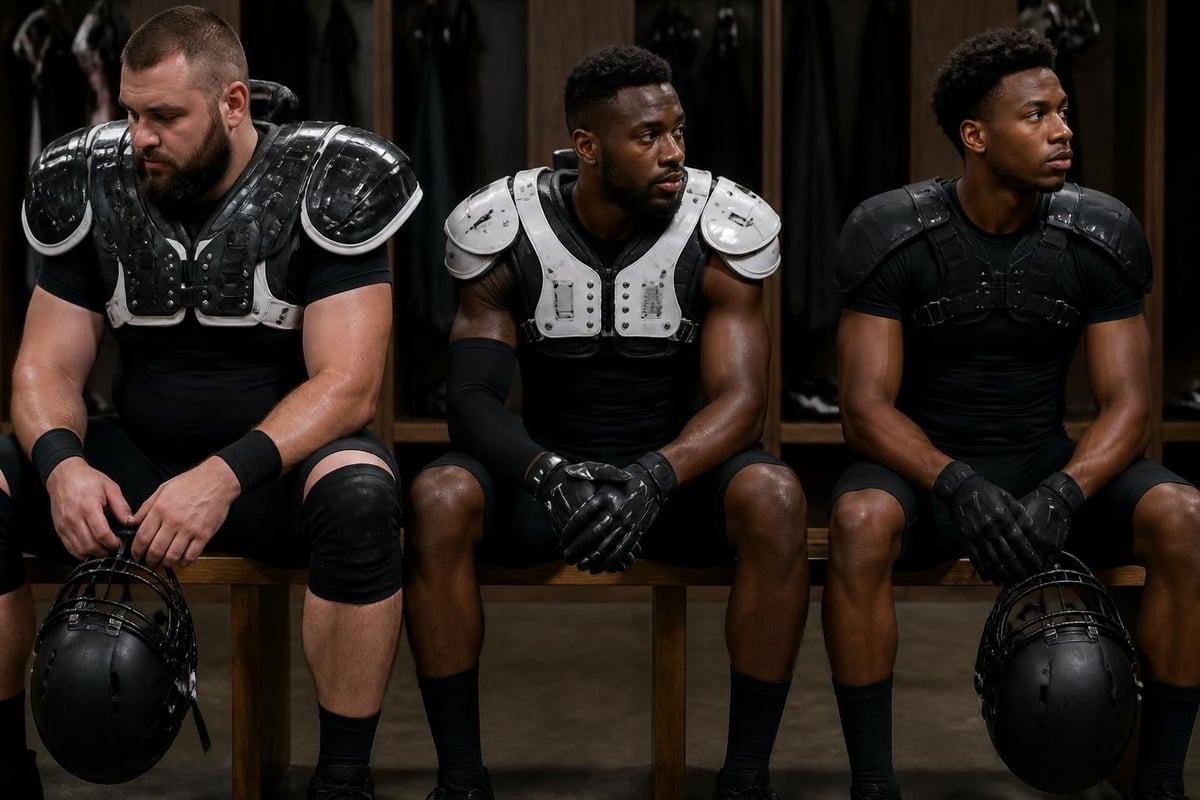
The Football Association emphasizes equipment standards that ensure player protection across all competitive levels. Programs must verify that all protective football products meet current safety specifications before allowing use in practices or games.
Additional Protective Gear
Beyond helmets and shoulder pads, comprehensive protection includes properly fitted girdles with integrated hip, thigh, and tailbone padding. Mouthguards-mandatory at most competitive levels-should be custom-fitted when possible for maximum protection and comfort.
Rib protectors, forearm pads, and specialized position equipment like neck rolls provide additional protection layers. While some items remain optional, coaches should evaluate individual player needs and injury histories when recommending supplementary protective football products.
Training Equipment That Develops Skills
Practice preparation determines game-day performance. Football products designed for training help athletes build strength, refine techniques, and develop the conditioning necessary for competitive play.
Agility and Speed Development Tools
Speed training requires specific equipment that challenges acceleration, change of direction, and footwork precision. Agility ladders, cone sets, and hurdles create drill variations that prevent training monotony while building essential movement patterns.
Essential agility training football products:
- Multi-length agility ladders (15-20 feet standard)
- Weighted training cones with wind resistance
- Adjustable speed hurdles (6-12 inch heights)
- Resistance parachutes for overspeed training
- Boundary markers for drill setup
Combining these tools in circuit-style training sessions maximizes field space while keeping multiple position groups engaged simultaneously.
Blocking and Tackling Dummies
Contact skill development depends on dummies and sleds that simulate game situations without risking player-on-player injuries during technique work. Modern blocking dummies feature reinforced handles, weighted bases for stability, and impact-absorbing materials that protect both the equipment and athletes using it.
Tackle wheels and pop-up dummies add dynamic movement to contact drills, forcing defenders to track targets and adjust angles-skills that translate directly to game situations.
Strength and Conditioning Equipment
Off-field training builds the foundation for on-field success. While weight rooms require significant investment, portable football products like resistance bands, medicine balls, and agility poles create effective training stations without permanent facility modifications.
Sled training-both pushing and pulling variations-develops the explosive power and leg drive essential for line play. Weighted vests add resistance to conditioning drills, building work capacity that carries through four quarters of competition.
Field Equipment and Game Day Essentials
Properly maintained field equipment ensures safe playing conditions and professional presentation. These football products range from permanent installations to portable items that support practice efficiency and game operations.
Goal Posts and Field Markers
Goal post specifications vary by competition level, with high school and college using different dimensions. Permanent installations require professional setup and regular inspection, while portable systems offer flexibility for multi-use facilities.
Sideline markers, yard line chains, and down boxes represent essential game administration equipment. First-down measurement chains should include proper storage cases to prevent tangling and extend equipment lifespan.
Similar to how futsal goals serve specific field configurations, football goal posts must match facility dimensions and competitive level requirements.
Practice Field Setup
Efficient practice organization requires portable markers that define drill spaces, position group areas, and special teams zones. Weighted cones that resist wind and movable boundary markers help coaches maximize limited practice time by enabling quick transitions between drills.
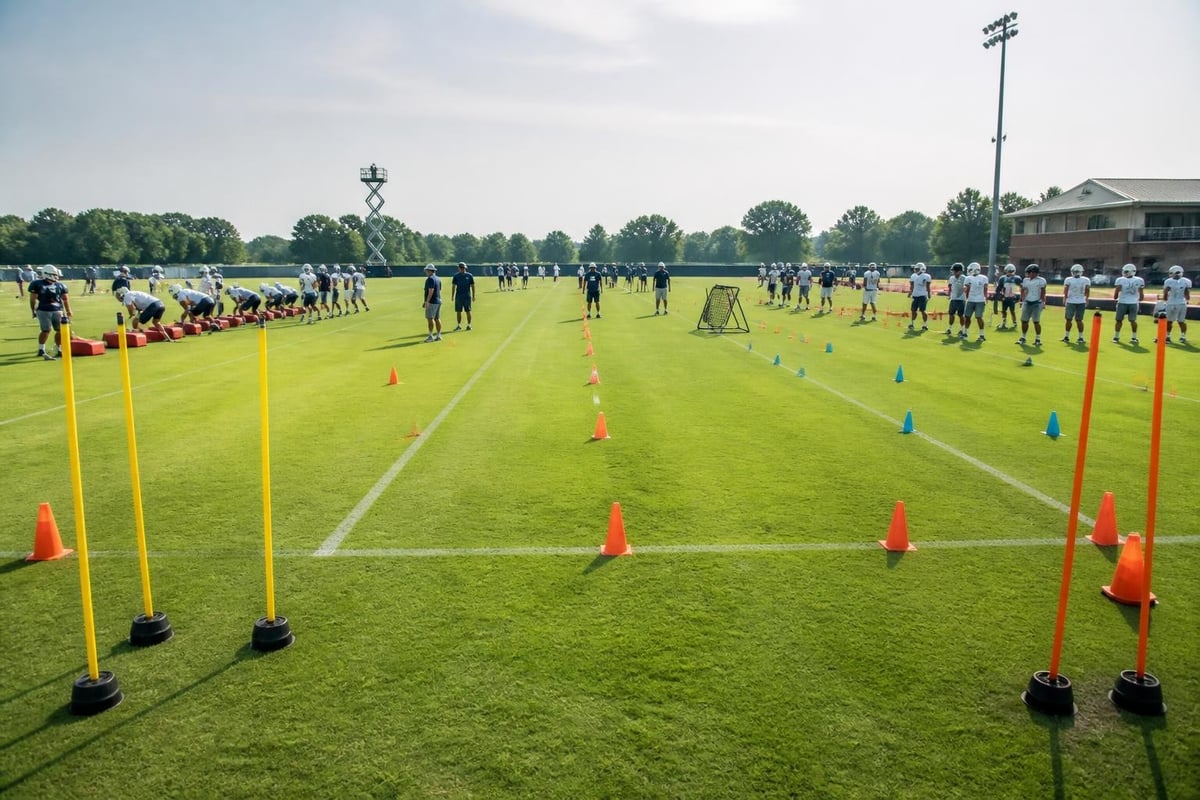
| Equipment Type | Primary Use | Storage Consideration |
|---|---|---|
| Weighted Cones | Drill boundaries, spacing | Stacking cart or bag |
| Agility Poles | Position markers, obstacles | Vertical rack system |
| Portable Goals | Kicking practice | Wheeled storage |
| Blocking Sleds | Line drills | Covered outdoor storage |
Organizations should inventory all field equipment biannually, addressing maintenance needs before issues compromise safety or functionality. The sports equipment landscape continues evolving with innovations that improve durability and performance.
Sideline Management Tools
Game day sideline organization prevents chaos and supports quick decision-making. Portable benches, equipment carts, and hydration stations keep players prepared and comfortable during non-playing time.
Communication systems, including coach-to-player headsets in helmets and sideline-to-press box connections, have become standard football products at competitive levels. These systems require pre-game testing and backup plans for technical failures.
Medical equipment positioning-including AED access, stretcher availability, and ice stations-must follow emergency action plans developed with athletic trainers and medical staff. The NFHS emphasizes proper equipment compliance to maintain safety standards across scholastic competition.
Balls, Apparel, and Team Essentials
Quality footballs appropriate for age and competition level represent non-negotiable investments. Leather balls serve game situations, while composite or rubber options work well for practice to extend the lifespan of premium balls.
Football Selection Criteria
Different balls suit various purposes within a program. Game balls require leather construction meeting specific size and weight standards, while practice balls emphasize durability over premium materials.
Ball inventory recommendations:
- One game ball per starting offensive position player
- Practice balls at 2:1 ratio (two balls per player)
- Kicking balls specifically designated (different inflation, wear patterns)
- Weather-appropriate options (better grip in wet conditions)
- Backup inventory replacing worn balls mid-season
Proper inflation monitoring extends ball life and maintains consistent performance. Digital pressure gauges provide precision, ensuring every ball meets regulation specifications.
Practice and Game Apparel
Practice jerseys, shorts, and base layers must withstand repeated washing while maintaining visibility for coaches tracking players during drills. Moisture-wicking fabrics improve comfort during conditioning sessions, particularly in warm weather conditions.
Game uniforms balance appearance with performance. Modern football products incorporate lightweight, breathable materials that reduce heat stress while maintaining professional presentation. Numbering systems should include practice sets that mirror game jersey numbers, simplifying play installation and review.
Hydration and Recovery Equipment
Hydration management directly impacts performance and safety. Large-capacity coolers, individual water bottles, and electrolyte supplement systems keep players properly hydrated throughout practices and competitions.
Recovery tools-including foam rollers, resistance bands for stretching, and ice bath systems-help athletes manage soreness and reduce injury risk. These football products support multi-day tournaments and playoff runs where recovery time between competitions shrinks.
Budgeting and Procurement Strategies
Strategic purchasing maximizes equipment budgets while ensuring teams have necessary football products throughout the season. The global football equipment market projects steady growth, reflecting increased participation and investment in quality gear.
Multi-Year Equipment Planning
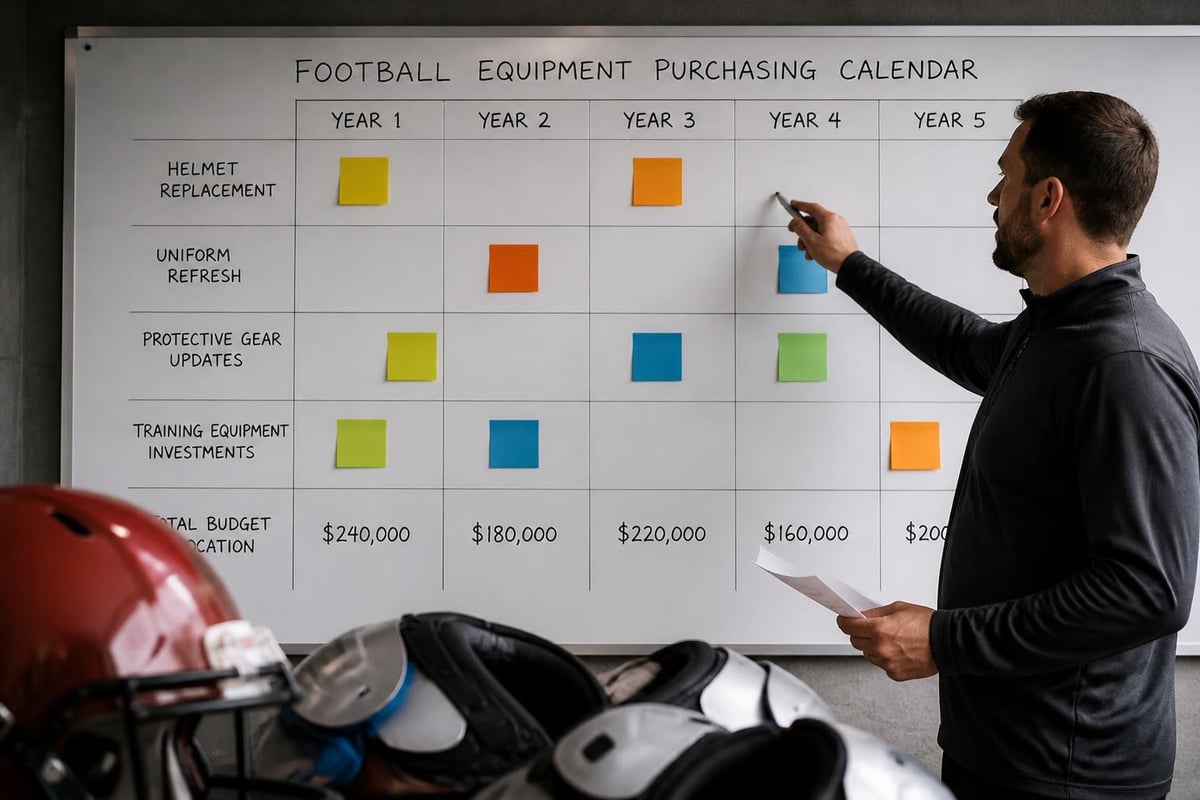
Successful programs develop replacement schedules that distribute major expenses across budget cycles. Helmets, shoulder pads, and other protective equipment have defined lifespans, allowing predictable replacement planning.
Sample five-year equipment rotation:
- Year 1: Replace helmets for varsity program
- Year 2: Update shoulder pads, refresh practice apparel
- Year 3: Invest in training equipment, blocking sleds
- Year 4: Replace junior varsity helmets, add specialized position equipment
- Year 5: Comprehensive uniform refresh, field equipment updates
This approach prevents budget shocks while maintaining equipment standards across all program levels.
Bulk Purchasing and Partnership Opportunities
Volume purchases significantly reduce per-unit costs for football products. Coordinating with other programs in your league or district creates purchasing power that individual schools cannot match alone.
Equipment suppliers often provide package pricing for complete team outfitting. These deals bundle helmets, pads, practice gear, and accessories at reduced total costs compared to piecemeal purchasing.
Reconditioning Versus Replacement Decisions
Many football products-particularly helmets and shoulder pads-qualify for professional reconditioning rather than immediate replacement. Certified reconditioning services inspect, repair, and recertify equipment at roughly 40-60% of new purchase costs.
| Equipment Category | Reconditioning Lifespan | Replacement Trigger |
|---|---|---|
| Helmets | 10 years from manufacture | Structural damage, outdated certification |
| Shoulder Pads | 5-7 years typical use | Broken hardware, pad deterioration |
| Practice Jerseys | 3-4 seasons | Excessive wear, number illegibility |
| Game Uniforms | 5-6 seasons | Fabric failure, appearance standards |
Understanding when reconditioning makes financial sense versus when replacement becomes necessary helps programs allocate resources effectively. The participation growth driving equipment demand means suppliers increasingly offer flexible purchasing options supporting various budget structures.
Maintenance and Storage Best Practices
Equipment longevity depends on proper care between uses. Football products exposed to sweat, weather, and repeated impacts require systematic maintenance preventing premature failure.
Cleaning and Sanitization Protocols
Regular cleaning prevents odor buildup and material degradation. Hard shell equipment tolerates disinfectant wipes, while fabric components need machine washing following manufacturer guidelines.
Helmet reconditioning should occur annually even when equipment appears serviceable. Professional services inspect padding integrity, hardware function, and structural soundness that visual inspection might miss.
Climate-Controlled Storage Solutions
Off-season storage in climate-controlled environments extends equipment lifespan significantly. Extreme temperatures and humidity fluctuate materials, particularly padding and elastic components found in many football products.
Storage checklist for off-season:
- Clean all equipment before storage
- Inspect for damage requiring repair or replacement
- Store in ventilated areas preventing mold growth
- Organize by size for efficient distribution at season start
- Document inventory and condition assessment
Proper storage prevents the frustrating discovery of unusable equipment when preseason preparation begins. Programs investing thousands in football products should protect that investment through appropriate off-season care.
Inventory Management Systems
Tracking equipment assignment, size distribution, and replacement schedules becomes increasingly complex as programs grow. Digital inventory systems-from simple spreadsheets to specialized athletic equipment software-create accountability and inform purchasing decisions.
Checkout systems where players sign for assigned equipment and return it at season end reduce loss and establish responsibility. Equipment managers should photograph particularly expensive items, creating records useful for insurance claims if theft occurs.
Even organizations operating multi-sport facilities, similar to venues requiring specialized equipment like scoreboards, benefit from centralized inventory tracking across all programs.
Safety Compliance and Regulatory Updates
Equipment regulations evolve as research reveals better protection methods and safety standards advance. Staying current with rule changes ensures your football products meet competitive requirements while maximizing player protection.
Understanding Certification Requirements
Multiple organizations establish equipment standards, and requirements vary by competition level. High school football follows NFHS guidelines, while youth leagues may adopt modified standards based on age groups and contact levels.
Helmet certification requires particular attention. NOCE standards represent baseline requirements, but advanced ratings like Virginia Tech's STAR system provide additional safety performance data. Programs should prioritize helmets demonstrating superior impact management even when basic certification would technically suffice.
Responding to Equipment Rule Changes
When governing bodies mandate new requirements, implementation timelines typically allow gradual adoption rather than immediate complete replacement. Understanding phase-in schedules helps programs budget appropriately without emergency expenditures.
The NFL's recent mandate for improved playing surfaces by 2028 demonstrates how safety initiatives evolve across competitive levels. While this specific requirement targets professional stadiums, similar principles influence equipment standards filtering down to scholastic and youth competitions.
Documentation and Liability Protection
Maintaining detailed records of equipment purchases, reconditioning services, and replacement schedules provides important liability protection. Documentation demonstrates organizational commitment to player safety and compliance with current standards.
Pre-season equipment fitting sessions should include photo documentation showing proper fit and signed acknowledgment forms where players confirm receiving safety instruction. These records prove invaluable if questions arise regarding equipment provision or safety protocols.
Outfitting a football program with the right equipment balances safety requirements, performance needs, and budget realities. From protective gear meeting current safety standards to training tools developing essential skills, thoughtful equipment selection supports athlete development at every level. When you're ready to upgrade your program's football products with quality gear at straightforward pricing, Sideline Sport Supply provides the reliable equipment and fast fulfillment that keeps your team focused on what matters most-playing the game.