

Football Practice Equipment Guide for Coaches in 2026
Equipping a football team for effective practice sessions requires careful planning, budget management, and knowledge of what gear truly makes a difference. Whether you're coaching a youth league, high school program, or community team, the right football practice equipment transforms raw talent into game-ready performance. Modern practice gear serves dual purposes: developing fundamental skills while keeping athletes safe during repetitive drills and contact situations. Understanding which tools deliver the best return on investment helps coaches build comprehensive training programs without overspending on unnecessary items.
Core Protective Gear for Every Practice Session
Helmets remain the single most critical piece of football practice equipment. Every player must wear a properly fitted helmet during contact drills, regardless of position or experience level. The National Operating Committee on Standards for Athletic Equipment (NOCSAE) sets performance standards that helmets must meet before reaching the field. Coaches should verify certification labels and understand that helmets have a limited service life, typically five to ten years depending on manufacturer specifications and reconditioning schedules.
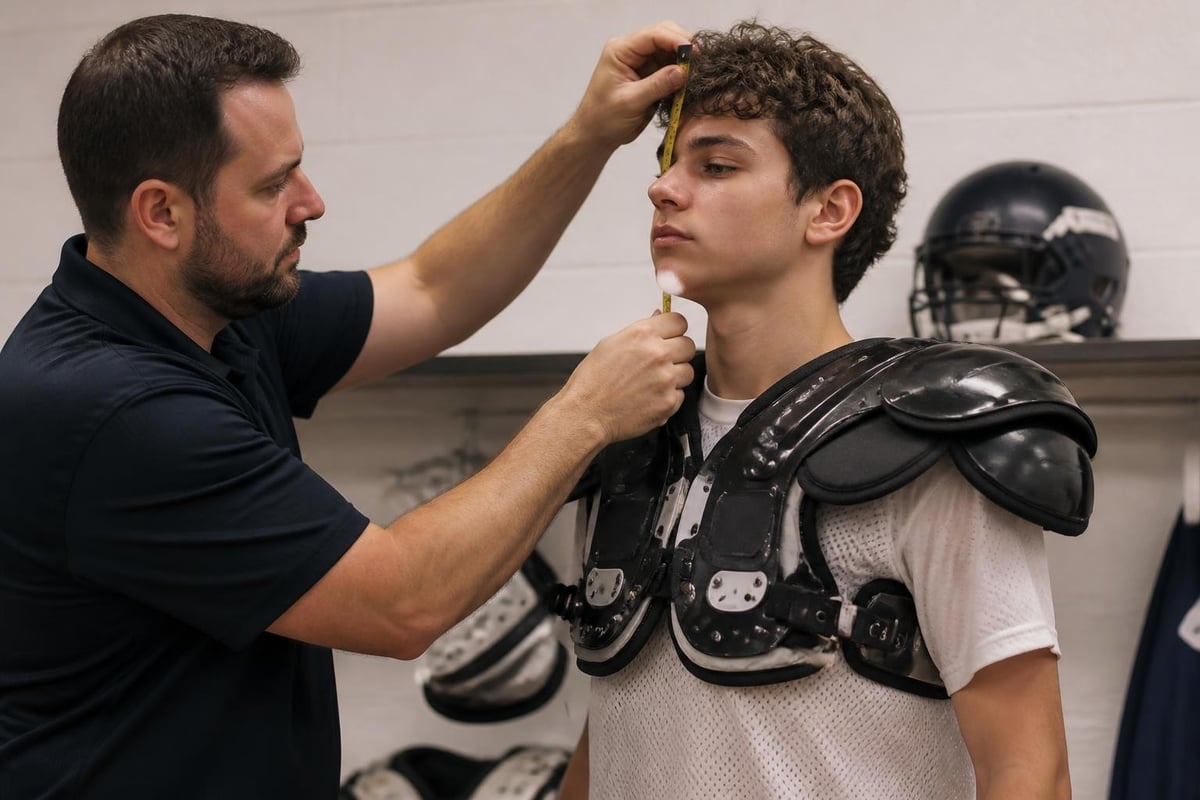
Proper fitting makes all the difference in helmet effectiveness. USA Football provides detailed equipment fitting resources that walk coaches through measurement, adjustment, and ongoing fit checks. A helmet that shifts during contact offers little protection, making regular fit verification essential throughout the season as players grow and equipment settles.
Shoulder Pads and Contact Protection
Shoulder pads protect the upper body during blocking, tackling, and collision drills. Position-specific designs offer varying levels of mobility and coverage:
- Linemen pads: Maximum protection with extended rib coverage
- Linebacker pads: Balance of protection and range of motion
- Skill position pads: Lightweight design emphasizing speed and agility
- All-purpose pads: Versatile option for multi-position players
Beyond traditional protection, recent innovations include Guardian Caps and similar soft-shell helmet covers. Research published in the Journal of Athletic Training examined head impact kinematics with these supplemental padding systems, showing measurable reduction in force transmission during practice collisions. Many programs now integrate these covers during high-contact practice periods.
Training Tools for Skill Development
Effective football practice equipment extends beyond protective gear into tools that develop specific techniques and conditioning. These training aids help coaches run efficient drills while maximizing repetitions and player engagement.
Blocking and Tackling Equipment
Blocking sleds form the foundation of line play development. Available in configurations from single-man units to seven-man sleds, these tools teach proper hand placement, foot drive, and sustained contact. Modern sleds feature:
- Adjustable pad height for different age groups
- Weighted designs or attachment points for added resistance
- Durable construction that withstands daily use
- Transport wheels for easy field repositioning
Tackling dummies come in multiple styles, each serving specific training purposes. Stand-up dummies help players practice proper form tackling at various angles. Hanging dummies develop timing and accuracy when pursued by moving targets. Pop-up dummies create reactive tackling scenarios that simulate game conditions.
| Dummy Type | Primary Use | Best For | Typical Price Range |
|---|---|---|---|
| Stand-up | Form tackling, angle drills | Youth to varsity | $80-$200 |
| Hanging | Timing, moving targets | All levels | $60-$150 |
| Pop-up | Reactive drills, open-field | Advanced programs | $100-$250 |
| Half-round | Footwork, low tackling | Youth emphasis | $50-$120 |
Agility and Speed Development
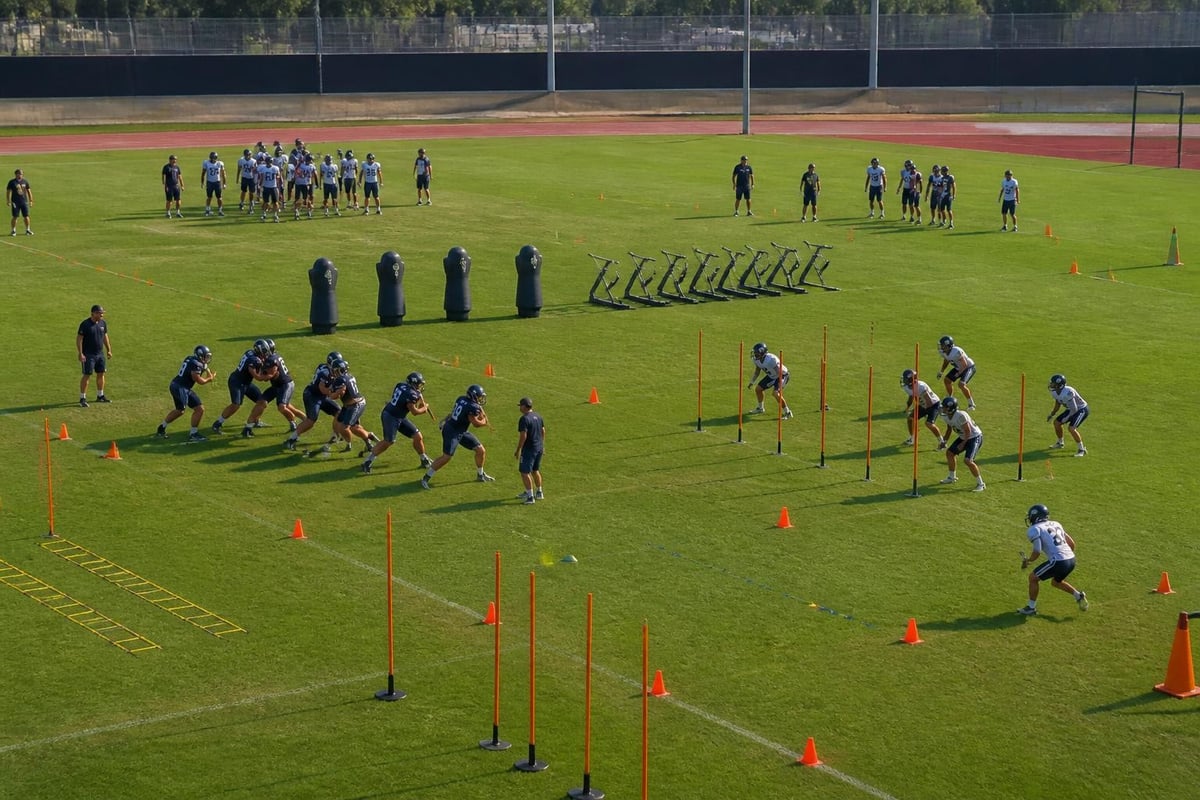
Agility ladders, cone sets, and hurdles develop the footwork and coordination that separate good players from great ones. These affordable tools create countless drill variations:
- Set up multiple stations for position-specific work
- Design progressive difficulty levels as skills improve
- Incorporate competition elements to maintain engagement
- Use minimal space efficiently during crowded practice schedules
Speed parachutes and resistance sleds build explosive power and acceleration. While not essential for every program, these tools provide advanced training options for teams focused on measurable performance gains. Just as gymnastics equipment emphasizes progressive skill development, football training gear should match your team's competitive level and development goals.
Field Setup and Organization Equipment
Proper field organization keeps practice moving efficiently while clearly defining drill spaces and boundaries. Football practice equipment in this category might seem basic, but it dramatically impacts practice quality.
Marking and Boundary Tools
Quality cones in multiple colors allow coaches to create visual drill patterns players can follow independently. Invest in durable, weighted cones that won't blow away during outdoor sessions. Field marking systems, whether chalk-based or temporary spray paint, help establish drill zones and teach spacing concepts.
Practice jerseys or pinnies in contrasting colors enable scrimmage situations and team divisions. Purchase enough for your full roster plus extras to account for loss and damage. Numbered sets help coaches provide specific feedback during drills.
Training goals provide targets for kicking drills and create visual landmarks during conditioning work. Portable goal posts specifically designed for practice withstand repeated use while remaining light enough for quick repositioning. The same principles that guide soccer goal selection apply here: durability, stability, and appropriate sizing for your age group.
Quarterback and Receiver Development Tools
Specialized football practice equipment for skill positions helps quarterbacks and receivers refine techniques that translate directly to game performance. These targeted tools address position-specific needs without requiring full-team participation.
Passing Accuracy and Mechanics
Passing nets with target zones provide immediate feedback on throw placement. Quarterbacks can accumulate repetitions without requiring receivers, maximizing individual practice time. Look for nets with:
- Multiple target windows simulating different route depths
- Durable netting that handles repeated impact
- Portable frames for easy storage and transport
- Return pockets that deliver balls back to throwing position
Hand shields and passing sticks help quarterbacks develop touch on short routes while receivers practice catching in traffic. These simple tools create realistic game scenarios during position drills.
Route Running and Catching
Receiver gloves designed for practice use cost less than game gloves while providing the grip needed for catching drills. Purchase bulk quantities in team colors to ensure every receiver has proper equipment during practice sessions.
Ball machines that fire passes at adjustable speeds and trajectories offer advanced training options. While representing a significant investment, these machines allow receivers to work independently on reaction time and hand-eye coordination. Similar to baseball training machines, football passing machines provide consistent repetitions that build muscle memory.
Safety Equipment and Medical Preparedness
Beyond protective gear worn during play, comprehensive football practice equipment includes items that support immediate injury response and ongoing player safety. These often-overlooked essentials demonstrate program professionalism and preparedness.
Hydration and Heat Management
Water coolers, individual bottles, and hydration stations prevent heat-related illness during demanding practice sessions. The NFHS provides sports medicine position statements including heat acclimatization protocols that specify hydration requirements for high school programs.
Cooling towels, misting fans, and shade structures create recovery zones where players can regulate body temperature between drills. Sports cooling equipment has evolved beyond simple ice-down methods to include specialized cooling vests and systems designed for athletic use.
Emergency Response Gear
First aid kits stocked specifically for football injuries should include:
- Instant cold packs for immediate injury treatment
- Sterile wound care supplies
- Medical tape and pre-wrap
- Emergency contact information for all players
- Trauma shears for equipment removal if necessary
Communication devices ensure coaching staff can summon medical help quickly when needed. Whether dedicated radios, cell phones, or emergency alert systems, having reliable communication represents essential football practice equipment for any program.
Maintenance and Storage Solutions
Protecting your investment in football practice equipment requires proper storage, regular maintenance, and organized inventory systems. Equipment that lives outdoors year-round deteriorates rapidly, while gear stored carelessly becomes damaged or lost.
Storage Systems
Ball carts keep footballs organized and accessible during practice while providing secure storage between sessions. Look for carts with:
- Weather-resistant construction
- Locking mechanisms to prevent theft
- Wheels rated for field terrain
- Capacity matching your inventory
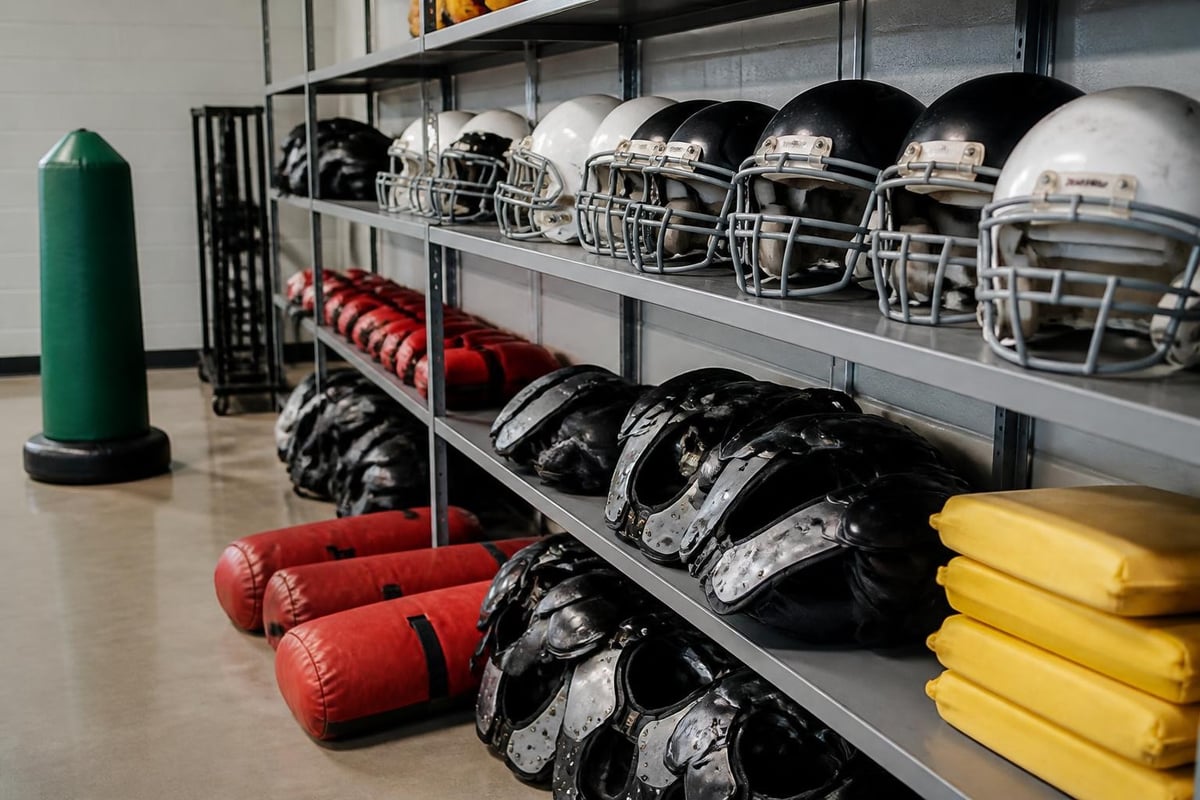
Equipment bags designed for coaches carry practice plans, first aid supplies, and frequently used items. Designated storage areas in locker rooms or equipment buildings should accommodate all football practice equipment with room for growth as programs expand.
| Storage Solution | Capacity | Weather Resistance | Mobility | Investment Level |
|---|---|---|---|---|
| Ball cart | 20-40 balls | High | Excellent | Medium |
| Equipment shed | Full inventory | Excellent | None | High |
| Rolling bins | Position-specific gear | Medium | Good | Low |
| Wall-mounted racks | Pads, dummies | Indoor only | None | Low |
Preventive Maintenance
Regular inspection and maintenance extend equipment lifespan significantly. Establish weekly routines that include:
- Checking helmet padding and securing systems
- Inspecting dummy seams for tears or separation
- Tightening sled bolts and checking pad attachment
- Cleaning and sanitizing all shared equipment
- Replacing worn or damaged items before they fail
Documentation systems tracking equipment purchase dates, reconditioning schedules, and replacement cycles help programs stay ahead of safety requirements. The American Academy of Pediatrics provides guidance on equipment maintenance as part of comprehensive youth safety protocols.
Budget Planning and Smart Purchasing
Acquiring complete football practice equipment for a new program or upgrading aging inventory requires strategic financial planning. Understanding which items deserve premium investment versus acceptable budget alternatives helps programs maximize limited resources.
Investment Priorities
Protective equipment always deserves first-tier investment. Helmets, shoulder pads, and safety gear should meet current standards regardless of budget constraints. Skimping on protection creates liability exposure and puts players at unnecessary risk.
Training tools offer more flexibility. Quality tackling dummies last seasons longer than discount versions, but basic sleds perform comparably to premium models for most programs. Consider these factors when comparing options:
- Usage frequency: Daily-use items justify premium pricing
- Player count: Large rosters accelerate wear, requiring durable construction
- Competitive level: Elite programs benefit from advanced training tools
- Storage conditions: Outdoor storage demands weather-resistant materials
Purchasing Strategies
Buying off-season often yields significant savings as suppliers clear inventory for new model years. Establishing relationships with reliable suppliers like Sideline Sport Supply provides access to volume pricing, flexible payment terms, and expert guidance on product selection.
Shared purchasing cooperatives between multiple programs leverage combined buying power for better pricing. Youth leagues, middle schools, and high schools in the same district can coordinate orders to qualify for bulk discounts while sharing shipping costs.
Program-Specific Equipment Needs
Different program types require tailored approaches to football practice equipment selection. Youth leagues, high school teams, and community programs each face unique constraints and priorities that influence purchasing decisions.
Youth Programs
Youth football emphasizes proper technique development and safety over advanced training methods. Equipment selection should prioritize:
- Size-appropriate protective gear with room for growth
- Lightweight training tools that young athletes can position independently
- Visual learning aids that demonstrate proper form
- Durable construction that survives enthusiastic but sometimes careless handling
USA Football's practice guidelines provide age-appropriate contact recommendations that influence equipment needs for youth programs. Many youth leagues now limit contact in practice, reducing the quantity of tackling equipment needed while increasing emphasis on agility tools and skill development aids.
High School and Competitive Programs
Varsity programs require more comprehensive football practice equipment inventories to support advanced schemes and specialized position development. These programs benefit from:
- Position-specific training tools for detailed technique work
- Video analysis equipment integrated with practice sessions
- Performance measurement tools tracking speed, strength, and agility metrics
- Larger quantities to accommodate expanded rosters and multiple practice groups
Budget allocation for high school programs should account for equipment replacement cycles, with protective gear reconditioned or replaced according to manufacturer specifications and NOCSAE standards.
Seasonal Considerations and Weather Adaptation
Football practice equipment needs evolve throughout the season as training focus shifts and weather conditions change. Planning for these variations prevents last-minute scrambling and ensures consistent practice quality.
Preseason Training Camp
Early season practices emphasize conditioning and fundamental skill development, requiring:
- Maximum quantities of hydration equipment
- Portable shade structures for heat management
- Full complement of agility and footwork tools
- Non-contact training alternatives during heat acclimatization periods
The CDC provides guidance on safe equipment use and heat illness prevention during youth sports activities, particularly relevant during August practice sessions.
In-Season Maintenance
As the season progresses, equipment maintenance becomes critical. Protective gear experiences heavy use, training tools require repairs, and field conditions deteriorate. Backup equipment prevents practice disruptions when primary items need servicing.
Weather-appropriate field maintenance equipment helps preserve practice surfaces. Just as FIFA publishes standards for turf design, American football programs should follow sports field management practices that extend field life and reduce injury risk from poor surface conditions.
Specialized Position Training Equipment
Advanced programs investing in position-specific football practice equipment create competitive advantages through targeted skill development. While not essential for every team, these specialized tools help serious programs develop elite talent.
Offensive and Defensive Line Development
Chutes and low platforms teach linemen to maintain proper pad level during engagement. Hand placement trainers develop the specific techniques offensive linemen need for pass protection and run blocking. Resistance bands create strength-specific movements that translate directly to game situations.
Defensive line get-off devices improve first-step quickness and reaction time. Shed trainers teach defensive linemen to disengage from blocks and pursue ball carriers. These specialized items represent investments that pay dividends for programs emphasizing line play fundamentals, similar to how youth football pads must fit properly to function effectively.
Secondary and Coverage Training
Backpedal sleds help defensive backs develop the specific footwork required for coverage techniques. Ball strips and turnover training tools create realistic scenarios where defenders practice creating turnovers. Mirror drills using agility equipment develop the change-of-direction speed essential for coverage players.
Interception training aids including tipped ball machines and reaction devices sharpen the ball skills that separate good defensive backs from playmakers. While representing discretionary investments, these tools provide measurable improvement in position-specific technique.
Selecting the right football practice equipment balances safety requirements, skill development objectives, and budget realities while supporting your program's competitive goals and player development philosophy. Whether building a complete inventory from scratch or upgrading specific categories, focusing on quality protective gear, versatile training tools, and proper maintenance creates practice environments where athletes can develop safely and effectively. Sideline Sport Supply offers the reliable, affordable equipment and straightforward guidance coaches need to outfit their programs efficiently, with fast fulfillment and expert support that keeps teams focused on development rather than equipment concerns.