

Best Football Equipment Guide for Teams and Athletes
Finding the best football equipment involves balancing safety standards, performance demands, and budget constraints across an entire roster. Whether you're outfitting a youth program, managing high school athletics, or coordinating equipment for competitive leagues, the right gear protects players while supporting skill development and confidence on the field. From helmets engineered to meet evolving safety certifications to position-specific cleats and training tools, quality football equipment directly impacts player safety and game-day readiness. This comprehensive guide examines the essential categories every program should prioritize when building or refreshing their equipment inventory.
Helmets: The Foundation of Player Safety
Modern football helmets represent the most critical investment in any equipment budget. Contemporary designs incorporate advanced impact-absorption technologies that exceed basic certification requirements, offering measurably better protection against both linear and rotational forces.
The NOCSAE standards library establishes baseline performance requirements that all football helmets must meet before reaching the field. These specifications guide manufacturers in developing shells, padding systems, and faceguard attachments that withstand repeated impacts across multiple seasons.
Helmet Technology and Testing
Recent advances in helmet engineering have produced models with significantly improved safety profiles. The NFL's latest helmet performance testing demonstrates how professional-grade research trickles down to equipment available for high school and youth programs, raising the baseline for what constitutes the best football equipment at every competitive level.
Key helmet features to evaluate include:
- Multi-density foam padding that manages different impact velocities
- Energy-absorbing shell materials beyond traditional polycarbonate
- Position-specific designs optimized for linemen versus skill players
- Tool-free adjustment systems for quick, accurate fitting
- Ventilation architecture that reduces heat buildup during extended practice sessions
Fitting and Maintenance Protocols
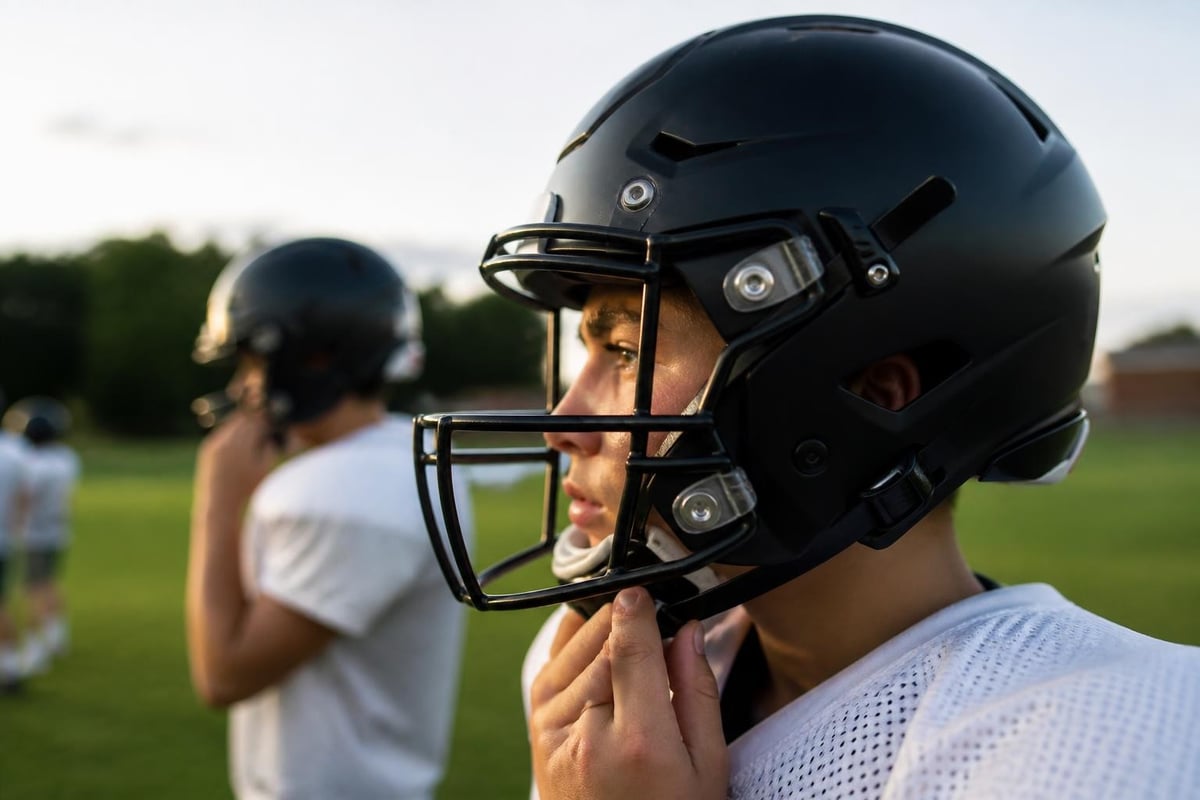
Even the best-designed helmet fails without proper fitting. USA Football's equipment-fitting guidance provides position-by-position recommendations that coaches and equipment managers should reference before each season.
Proper fit requires the helmet to sit level, approximately one inch above the eyebrows, with minimal front-to-back or side-to-side movement when the player moves their head aggressively. The chinstrap should form a 45-degree angle from the jaw, and padding should contact the skull uniformly without pressure points.
| Helmet Component | Inspection Frequency | Replacement Indicator |
|---|---|---|
| Padding foam | Before each season | Compression, cracks, or hardening |
| Shell exterior | Weekly during season | Deep scratches, deformation, or cracks |
| Faceguard | Before each game | Rust, loose welds, or bent bars |
| Chinstrap | Monthly | Fraying, snap failure, or elasticity loss |
Reconditioning services extend helmet lifespan, but manufacturers typically recommend replacing helmets every 10 years regardless of visual condition, as materials degrade even without visible damage.
Shoulder Pads and Protective Padding
Shoulder pads rank second only to helmets in protective priority, yet they receive considerably less attention in equipment discussions. The best football equipment packages include shoulder pads matched to both position demands and player body type.
Linemen require maximum coverage with extended rib protection and reinforced clavicle areas. Skill position players benefit from lightweight, mobility-focused designs that minimize restriction during cuts, catches, and tackles. Quarterbacks often prefer cantilevered designs that enhance throwing motion while maintaining chest and shoulder protection.
Pad Fitting and Adjustment
Properly fitted shoulder pads cover the shoulder joint completely, with the arch sitting comfortably on top of the shoulder without gaps. The bottom edge should extend slightly below the bottom of the shoulder blade but not restrict arm movement or breathing.
Modern adjustment systems include:
- Arch width customization for broad or narrow shoulder frames
- Quick-release chest and back plates for position-specific modification
- Integrated rib protection with removable sections
- Moisture-wicking liner systems that reduce heat retention
Additional protective padding includes rib protectors, hip pads, thigh pads, knee pads, and tailbone protection. While some items are optional depending on league rules, comprehensive protection reduces injury risk during both practice and competition.
Cleats: Traction and Stability
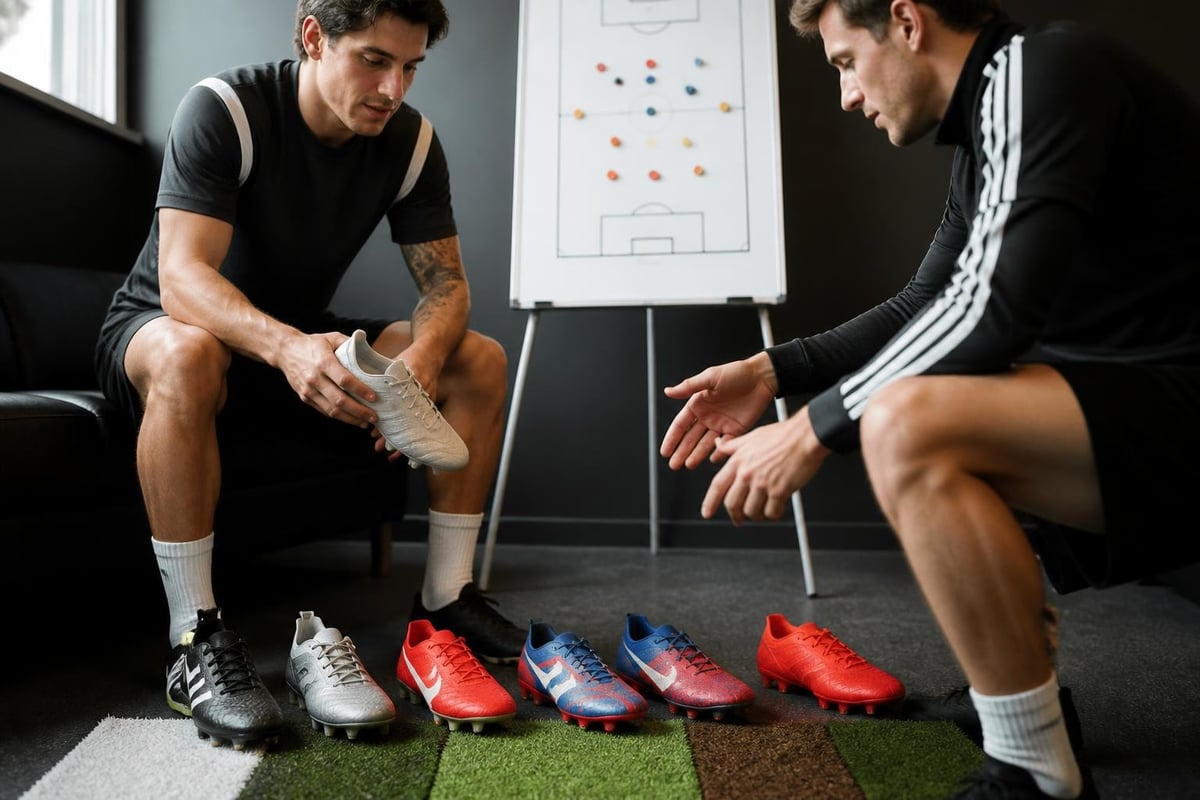
Footwear choice significantly impacts both performance and injury prevention. The best football equipment list must include position-appropriate cleats that provide traction without excessive grip that increases knee strain.
Cleat Configuration Options
Three primary cleat configurations serve different field conditions and playing styles:
Molded cleats feature permanently attached studs in various patterns. These provide consistent traction, require minimal maintenance, and typically cost less than detachable systems. Most youth and high school programs standardize on molded designs for simplicity.
Detachable cleats allow players to customize stud length and pattern based on field conditions. Longer studs work better in wet, muddy conditions, while shorter configurations suit artificial turf and dry natural grass.
Turf shoes incorporate numerous small rubber nubs rather than traditional cleats. These work exclusively on artificial surfaces and are prohibited on natural grass in most leagues.
| Cleat Type | Best Conditions | Position Fit | Typical Lifespan |
|---|---|---|---|
| Molded (rubber) | All-purpose | All positions | 1-2 seasons |
| Detachable (metal) | Natural grass, wet conditions | Skill positions | 2-3 seasons (cleats replaceable) |
| Turf shoes | Artificial surfaces only | All positions | 1 season |
Position-specific considerations include high-top designs for linemen (ankle support) versus low-cut options for defensive backs and receivers (maximum mobility).
Mouthguards and Oral Protection
Despite being mandatory in virtually all organized football, mouthguards frequently receive inadequate attention in equipment budgets. The American Dental Association's guidance on athletic mouthguards emphasizes that properly fitted mouthguards reduce dental injury risk by nearly 80% compared to unprotected athletes.
Mouthguard Categories
Boil-and-bite mouthguards represent the minimum acceptable standard. Players heat these thermoplastic devices in water, then bite down to create a semi-custom impression. Quality varies significantly across brands, with better models featuring thicker protection zones and breathing channels.
Custom-fitted mouthguards created from dental impressions offer superior comfort, retention, and protection. While more expensive initially, custom guards encourage consistent wear and typically last multiple seasons with proper care.
Research on mouthguard materials and performance standards continues to evolve, with newer designs incorporating impact-absorbing layers that may provide modest concussion risk reduction in addition to dental protection.
Teams should budget for mouthguard replacement at least annually, as materials break down from repeated compression and exposure to mouth bacteria.
Gloves: Grip and Hand Protection
Modern receiver and lineman gloves have transitioned from optional accessories to standard equipment across competitive levels. Tacky palm materials dramatically improve catching ability in all weather conditions, while reinforced padding protects hands during blocking.
Receiver gloves prioritize grip through silicone or rubber palm coatings engineered to maintain tackiness when wet. Most leagues permit gloves meeting specific thickness and surface requirements outlined in their equipment regulations.
Lineman gloves emphasize knuckle and back-of-hand padding while maintaining enough palm dexterity for hand-fighting techniques. Some designs incorporate wrist support extensions that reduce hyperextension risk.
Position-specific glove considerations include:
- Receivers: Maximum grip, minimal bulk, finger mobility
- Linemen: Knuckle protection, reinforced palms, wrist support
- Running backs: Balanced grip and padding
- Defensive backs: Grip matching receiver gloves, lightweight construction
Training Equipment and Practice Gear
The best football equipment extends beyond protective gear to include training tools that develop skills safely and efficiently. Sideline Sport Supply's football training equipment encompasses the drills and development tools that translate practice time into game-ready performance.
Essential Practice Equipment
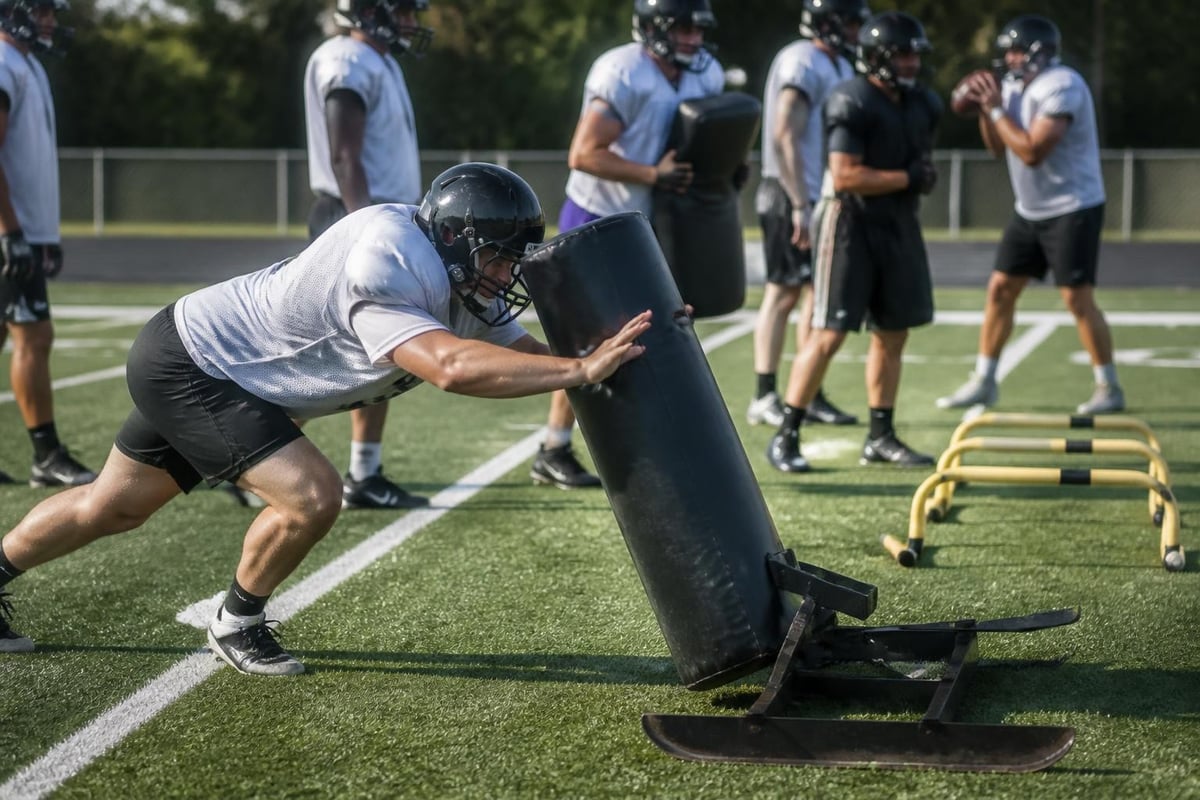
Blocking sleds and dummies remain fundamental for teaching proper technique without live contact. Seven-man sleds allow offensive line units to practice combination blocks, while individual pop-up dummies help defenders work on shedding techniques.
Agility and speed development tools include:
- Agility ladders for footwork precision
- Resistance sleds for acceleration power
- Cone sets for change-of-direction drills
- Hurdles for stride length and flexibility
Ball security and catching aids such as catching nets, ball return systems, and quarterback target trainers allow skill position players to accumulate high-repetition practice without requiring a full roster of throwers and catchers.
Teams operating dedicated training facilities benefit from permanent installations including blocking chutes, rope climbing stations, and plyometric platforms that support position-specific strength development.
Hydration and Heat Management
Proper hydration equipment prevents heat-related illness during summer practices and games. Adequate water access represents non-negotiable baseline equipment regardless of program budget or competitive level.
Teams require:
- Sufficient coolers or hydration stations (minimum 5 gallons per 10 players for 2-hour practice)
- Individual water bottles labeled by player
- Electrolyte replacement drinks for extended sessions
- Ice and cooling towels for heat index above 90°F
- Shade structures for sideline and practice field
Programs in warm climates should invest in cooling vests, neck wraps, and misting fans that reduce core temperature between practice periods.
Compliance with Equipment Regulations
Equipment standards vary across governing bodies, making compliance verification essential before each season. The NFHS football equipment rules establish baseline requirements for high school competition, while youth leagues and private associations may impose additional restrictions.
Common regulation areas include:
Helmet certification requirements specifying acceptable NOCSAE standards and recertification dates
Padding and protection mandates defining required hip, thigh, knee, and tailbone protection
Uniform specifications limiting hard or dangerous accessories, jewelry, and non-conforming equipment modifications
Cleat restrictions prohibiting metal cleats in certain divisions or dangerous stud configurations
Equipment managers should maintain documentation proving helmet recertification, padding inspection, and compliance verification for all issued gear.
Budget Planning and Equipment Lifecycle
Strategic equipment planning prevents surprise expenses while ensuring consistent player protection. Programs should develop multi-year replacement schedules based on manufacturer recommendations and actual wear patterns.
| Equipment Category | Expected Lifespan | Annual Replacement % | Budget Priority |
|---|---|---|---|
| Helmets (with reconditioning) | 10 years | 10-15% | Highest |
| Shoulder pads | 5-7 years | 15-20% | High |
| Cleats | 1-2 seasons | 50-100% | Medium |
| Practice jerseys | 2-3 years | 35-40% | Medium |
| Game pants | 3-4 years | 25-30% | Medium |
| Training equipment | 5-10 years | 10-15% | Variable |
Bulk purchasing through comprehensive athletic equipment suppliers often yields 15-25% savings compared to piecemeal orders while simplifying logistics across multiple sports seasons.
Teams should budget approximately $350-$600 per player for complete protective equipment at the high school level, with reconditioning, replacement, and training equipment adding $100-$150 per player annually.
Balancing Quality and Cost
The best football equipment balances certified protection with realistic budget constraints. Premium doesn't always mean better for every application-a mid-range helmet meeting current NOCSAE standards often provides adequate protection for youth programs where proper fitting and replacement schedules matter more than top-tier technology.
Strategic spending priorities should emphasize:
- Helmets and mouthguards (never compromise on head and dental protection)
- Properly fitted shoulder pads (matched to position and body type)
- Adequate training equipment (safe skill development reduces injury risk)
- Sufficient practice gear (quality practice clothing and balls for every player)
- Premium game-day items (appearance and durability for competition uniforms)
Programs can economize on practice jerseys, training apparel, and non-protective accessories without compromising safety or significantly impacting performance.
Position-Specific Equipment Considerations
Different positions demand specialized equipment beyond baseline protective gear. Tailoring equipment to position requirements improves both performance and player satisfaction with issued gear.
Quarterbacks benefit from impact gloves with enhanced grip, lightweight shoulder pads that don't restrict throwing motion, and specialized rib protectors that absorb hits from blindside rushers.
Linemen require maximum-coverage shoulder pads, reinforced blocking gloves, high-top cleats for ankle support, and neck rolls that protect against whiplash during engagement.
Skill position players prioritize lightweight equipment that doesn't sacrifice protection, sticky receiver gloves, low-cut cleats for agility, and streamlined pads that enable full range of motion.
Kickers and punters need specialized kicking shoes (flat toe for placekickers, soccer-style for punters), minimal shoulder protection, and strong-side hip padding to protect the plant leg.
Equipment Storage and Maintenance
Proper storage extends equipment lifespan by 30-50% compared to inadequate care. Equipment rooms should provide:
- Helmet racks with adequate spacing for air circulation
- Shoulder pad hangers preventing padding compression
- Climate control maintaining 60-75°F with humidity below 60%
- Drying racks for practice jerseys and padding
- Separate contaminated equipment quarantine area
- Regular disinfection protocols for shared protective gear
Teams should establish end-of-season reconditioning protocols including helmet recertification through NOCSAE-approved facilities, shoulder pad inspection and repair, and disposal of damaged equipment that cannot be safely refurbished.
Emerging Technologies and Future Equipment
Football equipment continues evolving through materials science advances and improved understanding of injury biomechanics. Sensor-integrated helmets now provide impact data helping coaches and medical staff monitor cumulative hits and identify players experiencing concerning impact patterns.
Smart mouthguards with embedded accelerometers offer similar monitoring in a smaller package, though adoption remains limited outside elite programs due to cost.
Advanced padding materials including rate-sensitive foams and shear-thickening gels promise improved energy absorption across varying impact speeds. These technologies typically debut in professional equipment before becoming affordable for high school and youth markets.
Selecting the best football equipment requires balancing player safety, performance demands, budget realities, and regulatory compliance across your entire roster. From NOCSAE-certified helmets and position-matched shoulder pads to proper footwear and essential training tools, quality gear protects athletes while supporting skill development that translates to game-day success. When you're ready to outfit your team with reliable, game-ready equipment at straightforward prices, Sideline Sport Supply offers the complete range of protective gear and training essentials your program needs to focus on what matters most-developing athletes and winning games.