

Best Equipment for Soccer Training: Essential Gear Guide
Modern soccer training demands more than just a ball and a field. Whether you coach a youth academy, manage a high school program, or lead a competitive club, investing in the best equipment for soccer training directly impacts player development, session quality, and team performance. The right training tools transform ordinary practice sessions into focused, efficient workouts that build technical skills, enhance fitness, and reduce injury risk. This guide explores essential equipment categories, helping coaches and organizations make informed purchasing decisions that maximize training outcomes while respecting budget constraints.
Core Training Equipment Every Soccer Program Needs
Building a complete training inventory starts with foundational items that support daily practice sessions. These versatile tools serve multiple drills and accommodate players at various skill levels.
Training Cones and Markers
Training cones remain the workhorse of soccer practice. Quality cones withstand weather extremes, repeated contact, and years of use while maintaining visibility across large fields. Standard 9-inch disc cones work well for marking boundaries and creating grids, while taller 12-inch cones improve visibility during complex passing sequences.
Dome markers offer a low-profile alternative that prevents tripping hazards during high-speed agility work. Coaches running multiple sessions per week should maintain at least 50 cones in contrasting colors to quickly set up different drill stations.
Key considerations when selecting cones:
- Bright, fade-resistant colors (orange, yellow, lime green)
- Flexible material that rebounds rather than cracks
- Stackable design for efficient storage and transport
- Weight options for windy conditions
Soccer Rebounders and Rebound Boards
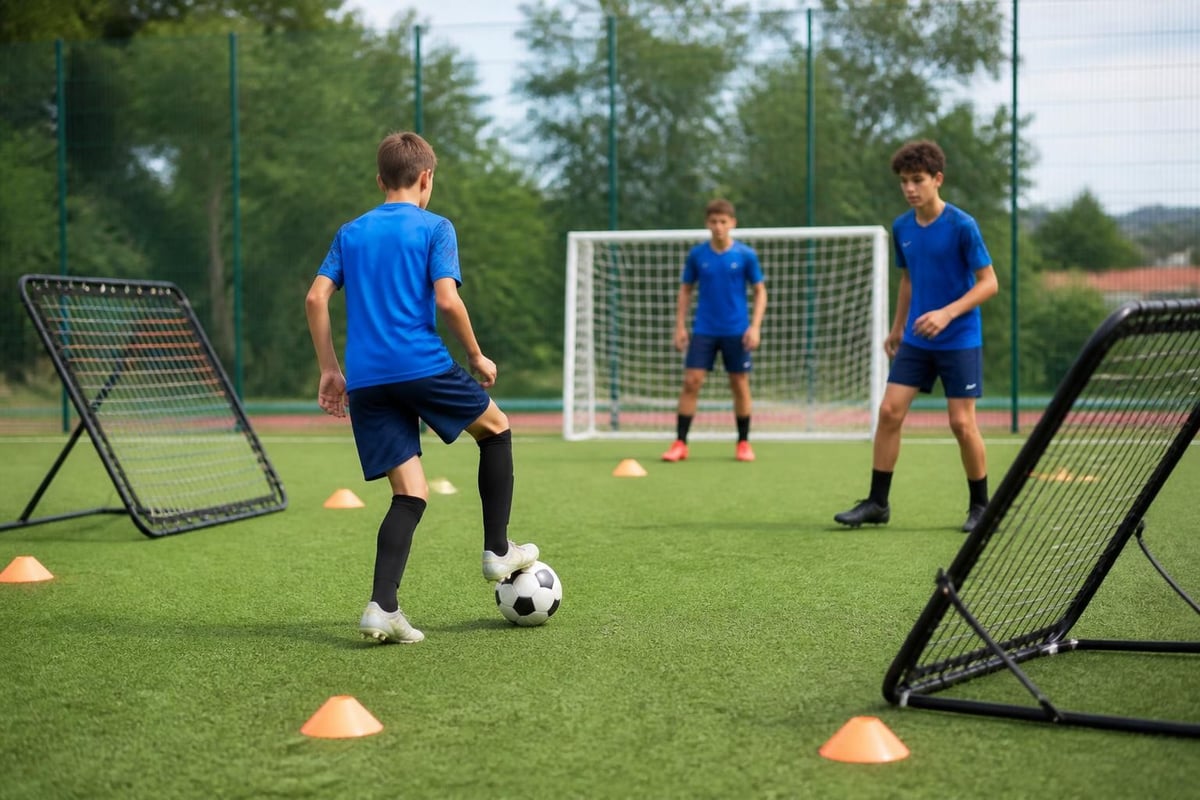
Rebounders accelerate skill development by providing consistent passing and control opportunities. Single-player sessions become productive when athletes can work on first touch, volleys, and quick combinations without a partner.
Professional-grade rebounders feature adjustable angles that simulate different passing heights and speeds. Spring-loaded models return balls with variable pace, challenging players to adjust their receiving technique. Portable soccer goals paired with quality rebounders create versatile training stations that keep entire teams engaged.
| Rebounder Type | Best For | Typical Size | Portability |
|---|---|---|---|
| Spring-loaded single panel | Individual technical work | 4' × 4' | High |
| Dual-sided adjustable | Partner passing drills | 5' × 3' | Medium |
| Large fixed-angle | Team shooting practice | 8' × 6' | Low |
| Mini pop-up rebounder | Youth programs, tight spaces | 3' × 3' | Very high |
Agility and Speed Development Tools
Speed separates good players from great ones. The best equipment for soccer training includes specialized tools that develop acceleration, change of direction, and explosive power.
Agility Ladders and Hurdles
Agility ladders improve foot speed, coordination, and neuromuscular control. Quality ladders feature flat, wide rungs that lie flush against turf or gym floors, reducing trip hazards during maximum-effort drills. Adjustable-rung ladders accommodate different age groups and skill progressions.
Speed hurdles complement ladder work by developing proper running mechanics and stride length. Six-inch hurdles suit technical footwork patterns, while 12-inch models challenge jumping ability and hip mobility. Research on plyometric training effects demonstrates measurable improvements in kicking performance when jump-based exercises form part of regular training protocols.
Training programs should incorporate both linear speed work and multidirectional agility patterns. Combining ladders, hurdles, and cone courses creates comprehensive speed sessions that transfer directly to match situations.
Resistance Training Equipment
Resistance parachutes, sleds, and resistance bands build acceleration strength and power output. Parachutes attach via harness systems and create drag during sprint work, forcing athletes to generate greater force with each stride.
Weighted sleds develop lower-body strength while maintaining sport-specific movement patterns. Unlike traditional weight room exercises, sled pushes and pulls replicate the forward body lean and leg drive required during competitive play. The optimal dose research on strength and conditioning for football players provides evidence-based guidance on training frequency and load progression.
Resistance equipment selection criteria:
- Adjustable resistance levels to match athlete progression
- Durable attachment points and harness systems
- Smooth-gliding bases that work on grass and turf
- Compact storage footprint for schools with limited space
Ball Control and Technical Skill Stations
Technical mastery requires thousands of purposeful touches. Strategic equipment placement allows coaches to run high-repetition drills that engrain proper technique.
Training Balls and Ball Collections
Maintaining adequate ball inventory prevents standing time and maximizes active training minutes. Programs should stock one ball per player plus 25% extra for small-sided games and station work. Size-appropriate balls matter: size 3 for under-8 players, size 4 for ages 8-12, and regulation size 5 for teenagers and adults.
Premium training balls feature reinforced bladders and hand-stitched panels that maintain shape and air pressure through extended use. Budget-conscious programs can mix premium match balls with durable practice balls, reserving top-quality equipment for competitive play while using sturdy training models for daily sessions.
Ball Mastery Equipment
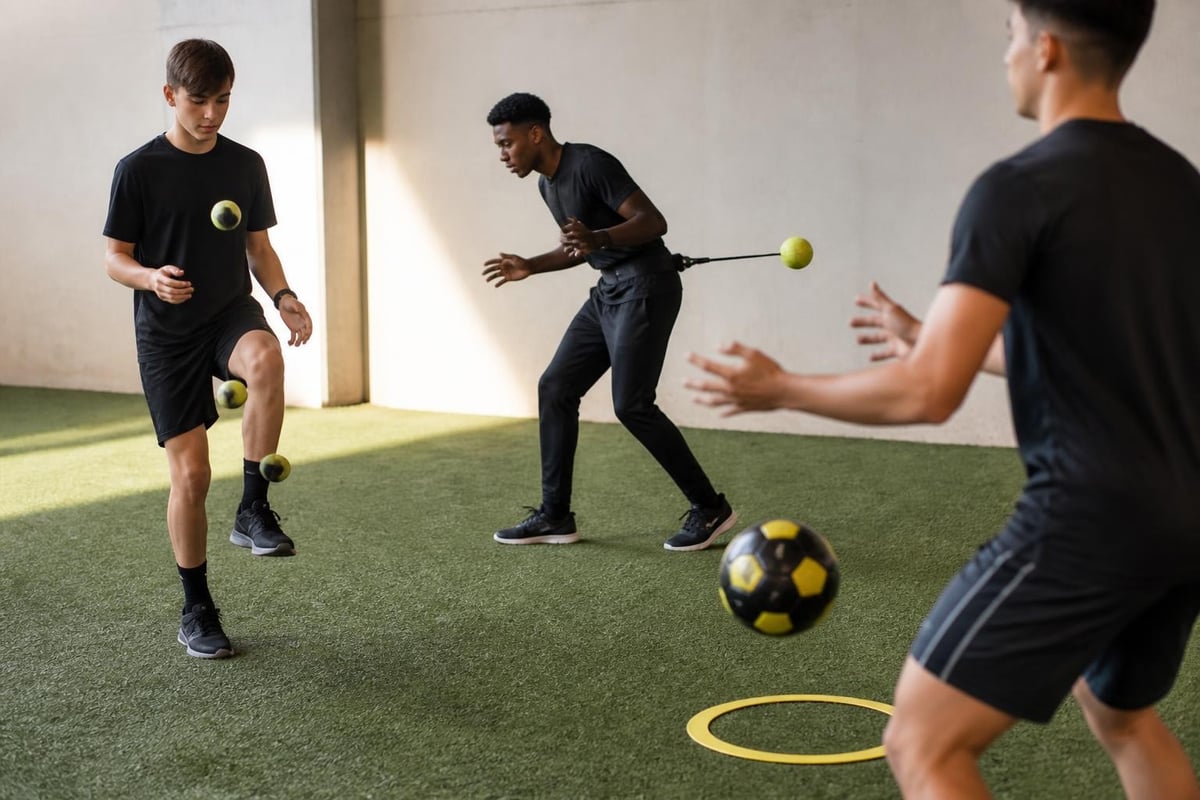
Specialized tools isolate specific technical elements. Juggling balls with reduced bounce force players to control touches precisely. Reaction balls develop first-touch awareness through unpredictable bounces. Tethered solo trainers allow unlimited practice without chasing errant passes.
The FA's coaching resources offer extensive drill libraries that incorporate basic equipment into progressive skill-building sequences suitable for grassroots through academy-level players.
Goalkeeper-Specific Training Equipment
Goalkeeper development requires specialized equipment that addresses unique positional demands. Investing in proper goalkeeper training tools demonstrates program commitment to every position.
Goalkeeper Gloves and Protection
Professional-grade goalkeeper gloves feature latex palms optimized for grip in wet and dry conditions. Training gloves balance durability with grip quality, extending useful life without sacrificing catching performance. Finger-save models provide additional protection for younger keepers still developing proper catching technique.
Additional protective equipment includes padded shorts, knee guards, and elbow pads. These items reduce injury anxiety, allowing keepers to commit fully to diving saves and ground work during training sessions.
Reaction and Reflex Training Tools
Reflex balls, reaction lights, and diving pads create goalkeeper-specific training circuits. Weighted medicine balls develop explosive diving power and core stability. Portable diving barriers allow coaches to simulate game-realistic shooting angles during small-group sessions.
UEFA's goalkeeper coaching manual provides comprehensive session designs that utilize standard training equipment for position-specific development, offering valuable planning resources for programs at all competitive levels.
| Equipment Category | Primary Benefit | Recommended Quantity (per keeper) |
|---|---|---|
| Training gloves | Daily practice durability | 2 pairs |
| Match gloves | Maximum grip performance | 1-2 pairs |
| Reaction balls | Hand-eye coordination | 2-3 balls |
| Diving pads | Safe repetition volume | 2-4 pads |
| Agility poles | Footwork patterns | 6-8 poles |
Goals and Target Training Systems
Goal equipment ranges from portable practice models to permanent installations. Selecting appropriate goal systems depends on facility type, storage availability, and training objectives.
Portable vs. Permanent Goal Systems
Portable soccer goals offer unmatched flexibility for programs sharing field space or conducting off-site training sessions. Modern pop-up goals deploy in seconds and fold flat for vehicle transport. Weighted portable goals with anchoring systems provide stability for shooting practice while remaining movable between sessions.
Permanent and semi-permanent installations suit dedicated training facilities. Fixed goal systems meet competition standards and withstand intensive daily use. Facilities planning new installations should review Sport England's guidance on pitch types and equipment specifications to ensure proper goal dimensions and safety compliance.
Target Trainers and Shooting Aids
Target nets attach to goal frames and challenge players to place shots into specific zones. Visual targets improve shooting accuracy by giving players clear aiming points during repetition work. Adjustable target systems allow coaches to modify difficulty by changing target size and placement.
Mannequin walls simulate defensive pressure during free-kick and shooting drills. Inflatable and foam mannequins position easily and eliminate injury risk during high-repetition training blocks.
Conditioning and Fitness Equipment
Physical preparation prevents injuries and extends playing careers. The best equipment for soccer training includes conditioning tools that build soccer-specific fitness.
Interval Training Timers and Monitors
Programmable interval timers structure high-intensity training sessions with precise work-to-rest ratios. Visual and audible signals keep large groups synchronized during circuit training. GPS-enabled heart rate monitors provide objective load data, helping coaches balance training intensity across weekly microcycles.
Wearable technology continues advancing, but basic heart rate monitoring and interval timing remain accessible tools that significantly improve conditioning session quality.
Plyometric Training Equipment
Plyometric boxes, hurdles, and landing mats develop explosive power essential for jumping, sprinting, and change of direction. Research on programming plyometric-jump training emphasizes proper progression and adequate recovery between high-intensity sessions.
Adjustable plyo boxes accommodate different training phases and athlete abilities. Non-slip surfaces and stable construction prevent training accidents that sideline valuable players.
Plyometric equipment progression:
- Low boxes (12-18 inches) for technique development
- Medium boxes (24-30 inches) for intermediate athletes
- Adjustable sets for varied training stimuli
- Soft landing surfaces to reduce impact stress
Warm-Up and Injury Prevention Tools
Proper warm-up preparation significantly reduces injury rates. Equipping teams with effective warm-up tools protects player health and availability.
Dynamic Warm-Up Equipment
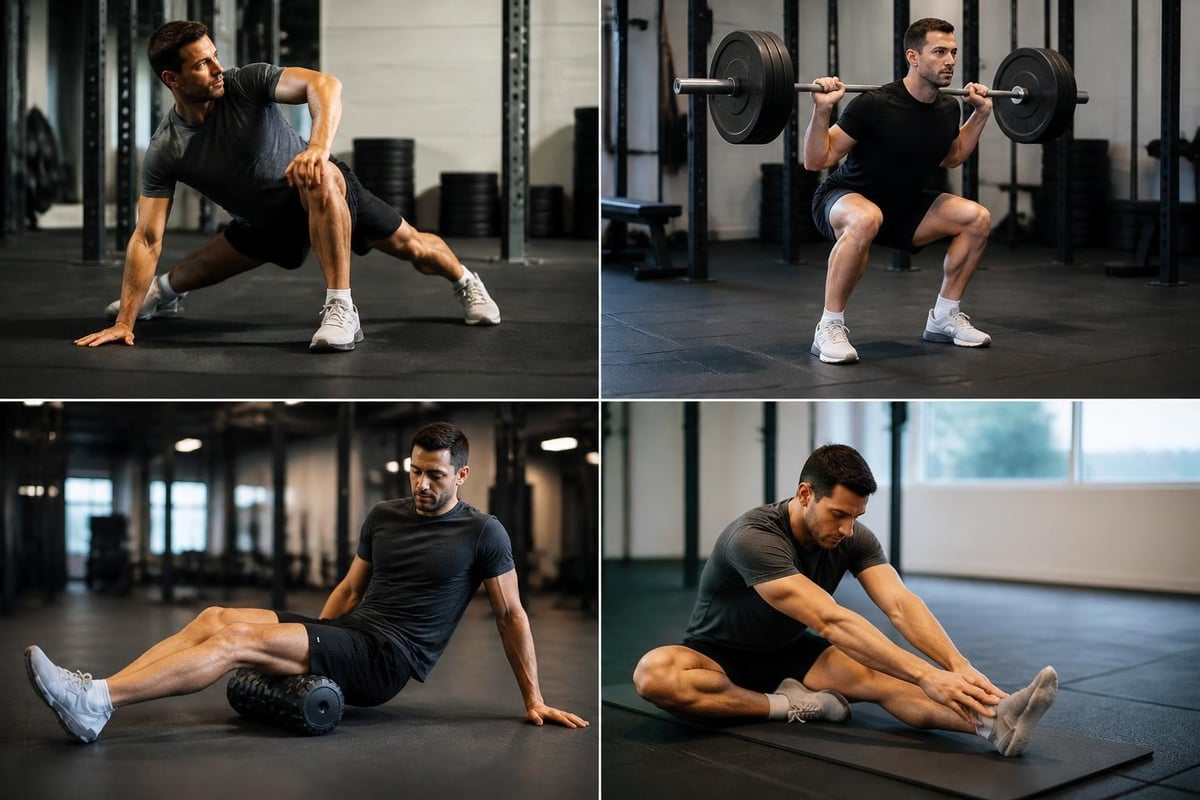
Resistance bands, mini hurdles, and foam rollers facilitate comprehensive pre-training preparation. Studies of the FIFA 11+ warm-up program demonstrate measurable reductions in injury incidence when structured warm-up protocols become routine practice.
Dynamic warm-up stations using basic equipment keep players engaged while systematically preparing muscles, joints, and nervous systems for training demands. Coaches can reference ACSM position statements on injury prevention and physiological preparation when designing evidence-based warm-up protocols.
Recovery and Mobility Tools
Post-training recovery accelerates adaptation and maintains training availability. Foam rollers, massage balls, and stretching straps support self-myofascial release and flexibility work. Ice packs, compression wraps, and basic first-aid supplies belong in every team's training kit.
Programs investing in recovery tools demonstrate commitment to player welfare while potentially reducing medical treatment costs through proactive injury prevention.
Storage and Organization Solutions
Even the best equipment for soccer training becomes ineffective when disorganized or inaccessible. Proper storage extends equipment life and streamlines practice setup.
Equipment Carts and Bags
Mobile equipment carts transport balls, cones, and training aids between storage areas and practice fields. Multi-compartment ball carts keep equipment organized while providing stable transport over uneven terrain. Mesh ball bags offer budget-friendly storage that allows wet equipment to air-dry properly.
Dedicated equipment managers or volunteer parents can use clearly labeled storage systems to maintain inventory and identify needed replacements before stockouts disrupt training plans.
Field Lining and Maintenance Equipment
Well-marked fields improve drill clarity and training professionalism. Field lining machines, measuring wheels, and marking paint maintain crisp boundaries for small-sided games and tactical exercises. Battery-powered line markers offer convenience for programs without dedicated grounds staff.
Regular field maintenance protects equipment investment by preventing unnecessary wear caused by uneven surfaces or debris accumulation. Sideline Sport Supply's soccer collection includes field maintenance tools alongside training equipment, providing one-stop sourcing for complete program needs.
Budget Planning and Equipment Prioritization
Limited budgets require strategic equipment investments. Prioritizing versatile, durable items maximizes training quality while controlling costs.
Essential vs. Enhanced Equipment Tiers
Tier 1 (Essential foundation):
- Quality training balls (1 per player minimum)
- Training cones and markers (50+ pieces)
- Portable goals (2-4 units)
- Basic agility equipment (ladders, hurdles)
- First-aid and safety supplies
Tier 2 (Enhanced training):
- Rebounders and passing aids
- Resistance training tools
- Goalkeeper-specific equipment
- Target trainers and shooting aids
- Interval timers and monitors
Tier 3 (Advanced development):
- GPS tracking systems
- Video analysis equipment
- Specialized plyometric stations
- Recovery and regeneration tools
- Premium match-day equipment
New programs should establish tier 1 inventory before expanding into enhanced categories. Established programs can systematically upgrade equipment quality while adding tier 2 and tier 3 capabilities as budgets allow.
Sourcing and Vendor Selection
Reliable suppliers provide consistent product availability, competitive pricing, and responsive customer service. Establishing relationships with knowledgeable vendors helps coaches identify equipment updates and replacement cycles that align with training objectives.
Bulk purchasing, end-of-season sales, and multi-year budgeting strategies extend equipment dollars further. Programs sharing facilities can coordinate purchases to access volume discounts while reducing individual organization costs.
Seasonal Equipment Considerations
Training equipment needs fluctuate throughout the annual calendar. Smart programs adjust equipment deployment based on seasonal priorities and environmental conditions.
Pre-Season Training Focus
Pre-season emphasizes fitness development and tactical preparation. Conditioning equipment sees peak usage during this phase. Agility tools, resistance training aids, and interval timing systems support intensive physical preparation blocks.
Technical equipment remains important but shifts toward game-realistic drills using rebounders, target trainers, and small-sided game setups that replicate competitive demands.
In-Season Maintenance and Competition Preparation
In-season training balances load management with performance maintenance. Equipment usage shifts toward recovery tools, tactical training aids, and position-specific development stations. Programs reduce high-intensity conditioning work while maintaining technical sharpness through targeted skill stations.
Match-day equipment becomes priority focus during competitive seasons. Teams should maintain dedicated match balls, backup goals meeting competition standards, and complete first-aid kits that travel to all fixtures.
Off-Season Development Opportunities
Off-season provides opportunity for individual player development and equipment maintenance. Small-group training sessions using individual skill development tools keep players engaged without full-team logistics. This period also allows equipment inventory, repair, and replacement planning for upcoming seasons.
Youth programs can organize skill clinics using basic equipment like balls, cones, and rebounders to maintain player engagement while introducing new participants to the sport in low-pressure environments.
Selecting the best equipment for soccer training requires balancing immediate needs against long-term program development while respecting budget realities. Strategic equipment investments create training environments where players develop technical skills, build physical capacity, and prepare for competitive success. Whether you're equipping a new program or upgrading existing inventory, Sideline Sport Supply provides reliable, affordable sports equipment designed for daily training demands. Browse our complete soccer equipment collection to find practical, game-ready gear that helps your team spend less time managing equipment and more time developing players.