

Badminton Sports Shop: Essential Buying Guide 2026
Whether you're outfitting a high school badminton team, upgrading your club's equipment, or stocking a community recreation center, finding the right badminton sports shop makes all the difference in quality, value, and player satisfaction. Badminton has experienced significant growth across North America, with participation increasing by over 35% since 2022, driving demand for reliable equipment suppliers who understand the sport's technical requirements. From competitive rackets and tournament-grade shuttlecocks to nets, court equipment, and training aids, the right supplier should offer a comprehensive selection backed by knowledgeable service and straightforward pricing.
Understanding Badminton Equipment Categories
A comprehensive badminton sports shop organizes inventory into distinct categories that address every aspect of the game. This structure helps coaches, athletic directors, and facility managers quickly locate the specific equipment their programs require without sifting through unrelated products.
Racket Selection and Specifications
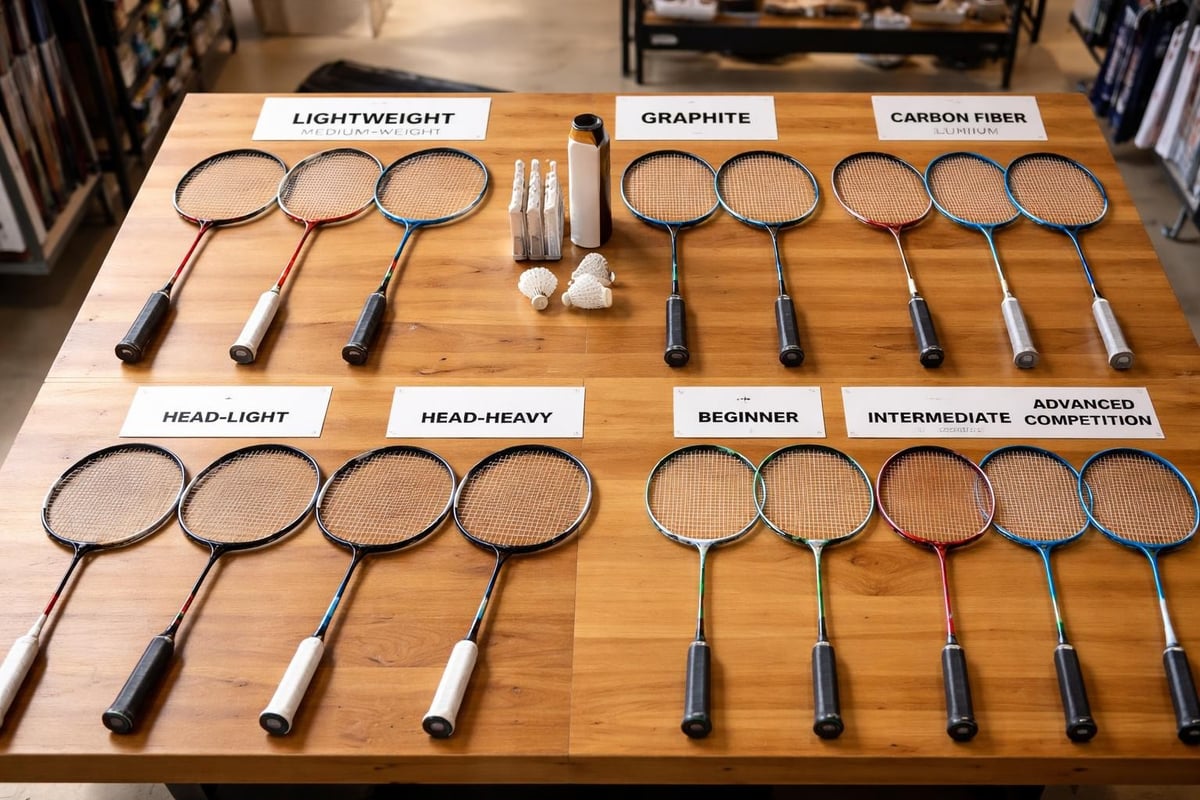
Racket technology has evolved considerably, with modern frames offering precision-engineered balance points, flex ratings, and weight distributions that match specific playing styles. Quality suppliers stock rackets across multiple price points and performance levels.
- Entry-level rackets for beginners and recreational programs (typically aluminum or basic graphite construction)
- Intermediate rackets with improved balance and control for developing players
- Advanced competition rackets featuring carbon fiber, nano-materials, and aerodynamic frame designs
- Coaching rackets designed for durability during intensive training sessions
Weight classifications range from ultra-lightweight options (75-80 grams) for speed-focused players to heavier models (90-95 grams) that deliver powerful smashes. Grip size matters tremendously for comfort and injury prevention, with most manufacturers offering G4, G5, and G6 sizing options.
| Racket Category | Weight Range | Typical Materials | Best For |
|---|---|---|---|
| Beginner | 90-100g | Aluminum, Steel | School programs, recreation |
| Intermediate | 85-90g | Graphite composite | Club players, high school varsity |
| Advanced | 75-85g | Carbon fiber, Nano-carbon | Competitive athletes, tournaments |
| Training | 95-105g | Reinforced graphite | Coaches, durability-focused programs |
Shuttlecocks: Feather vs Synthetic
The choice between feather and synthetic shuttlecocks represents one of the most significant decisions when purchasing from a badminton sports shop. Each type serves distinct purposes within training and competition environments.
Feather shuttlecocks remain the gold standard for competitive play, constructed from 16 goose or duck feathers attached to a cork base. They provide superior flight characteristics, precise speed control, and the authentic feel required for tournament preparation. However, they're considerably more fragile and expensive, with an average lifespan of just 2-3 games under intensive play.
Synthetic shuttlecocks offer exceptional durability and consistent performance for practice sessions, lasting 10-15 times longer than feather alternatives. Modern nylon shuttlecocks have improved dramatically in flight quality, making them ideal for recreational programs, training drills, and budget-conscious organizations.
Speed ratings follow standardized numbering (75, 76, 77, 78, 79) that corresponds to different temperature ranges and altitude conditions. A knowledgeable badminton sports shop helps buyers select appropriate speeds for their specific geographic location and facility conditions.
Essential Court Equipment and Accessories
Beyond individual playing gear, complete badminton programs require various court equipment and facility accessories that support both practice and competition environments.
Net Systems and Post Configurations
Professional-grade badminton nets must meet precise specifications: 5 feet high at the edges and 5 feet 1 inch at the center, constructed from durable mesh that withstands repeated shuttlecock impact. Post systems come in three primary configurations.
Portable freestanding systems offer maximum flexibility for multi-purpose facilities, allowing quick setup and removal without permanent installation. These units typically feature weighted bases and telescoping posts that adjust to regulation height.
Floor sleeve systems provide tournament-quality stability while maintaining portability, with posts that insert into permanently installed floor sleeves and lift out when courts convert to other uses.
Wall-mounted tensioning systems deliver the most secure installation for dedicated badminton facilities, utilizing wall brackets and precision tensioning mechanisms that maintain consistent net height across the full width.
Replacement nets should be purchased from a badminton sports shop that stocks proper mesh density (typically 19-20mm squares) and reinforced top tape that prevents stretching and sagging over time.
Training Equipment for Skill Development
Serious badminton programs invest in specialized training equipment that accelerates player development and builds specific skills more efficiently than game play alone.
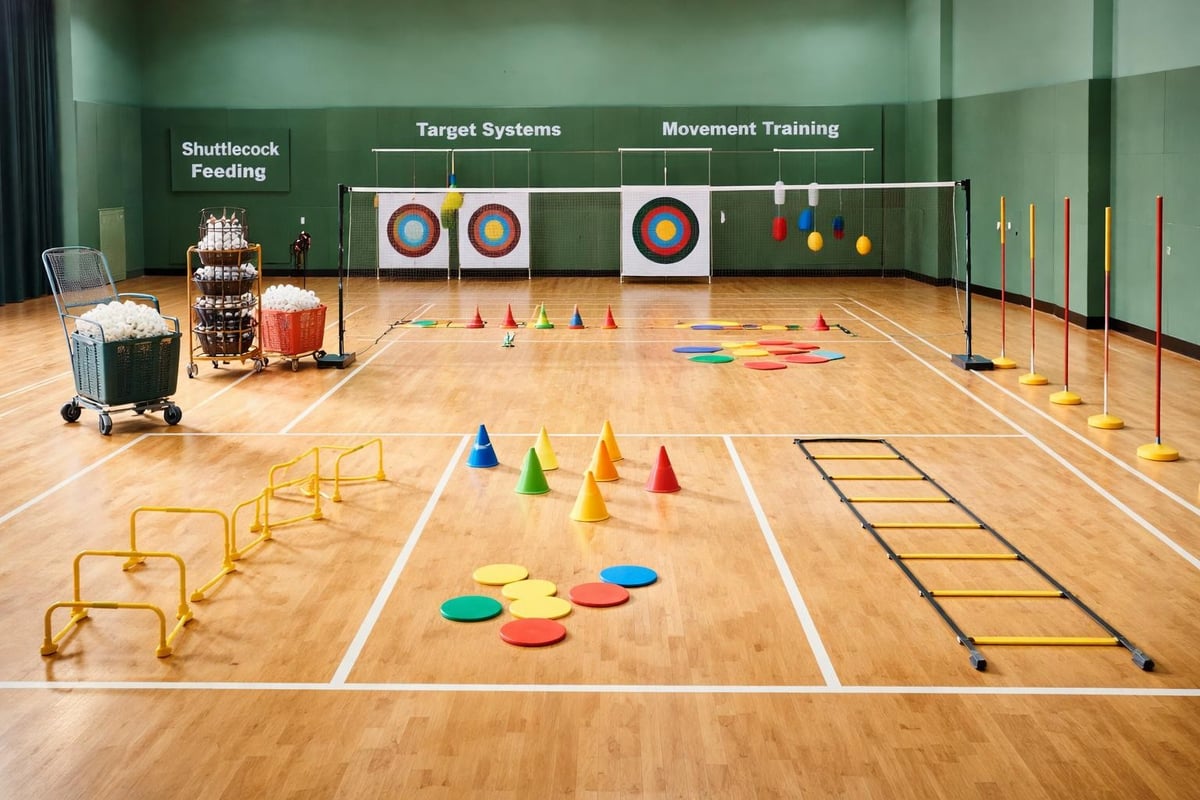
- Shuttlecock feeders that launch birds at adjustable speeds and trajectories for footwork and reaction drills
- Agility ladders and cone sets designed for badminton-specific movement patterns
- Resistance bands calibrated for racket swing strengthening and shoulder stability
- Target training aids that attach to nets for accuracy development
- Ball machines adapted for badminton training with programmable shot sequences
A well-equipped badminton sports shop recognizes that training equipment represents a significant investment in program quality, offering durable commercial-grade products rather than consumer-oriented alternatives that fail under intensive use.
Court Marking and Boundary Systems
Accurate court dimensions matter enormously in badminton, where boundaries determine scoring and strategic positioning. Permanent court marking utilizes specialized paint or tape designed for indoor surfaces, while temporary systems employ boundary lines that lay flat and resist shifting during play.
Quality marking systems include:
- Pre-measured line sets with corners and center marks clearly indicated
- High-visibility colors (typically white or yellow) that contrast with court surfaces
- Adhesive or weighted options depending on floor type and usage frequency
- Replacement sections for high-wear areas like service lines
Multi-court facilities often require flexible marking solutions that accommodate badminton alongside basketball, volleyball, or other sports sharing the same floor space. A experienced badminton sports shop provides guidance on marking systems that maintain visibility without interfering with other court configurations.
Footwear and Apparel Considerations
While often overlooked by programs focused primarily on rackets and shuttlecocks, proper footwear and apparel directly impact player performance, comfort, and injury prevention.
Badminton-Specific Footwear Requirements
Badminton demands lateral movement, quick directional changes, and substantial toe-box reinforcement that generic athletic shoes cannot provide. Specialized badminton shoes feature:
Non-marking gum rubber soles that protect indoor court surfaces while delivering superior grip for explosive movements. The tread pattern emphasizes lateral stability rather than forward propulsion.
Reinforced toe caps that withstand the dragging motion characteristic of badminton lunges and recovery steps, preventing premature wear in high-stress areas.
Lightweight construction (typically 250-300 grams per shoe) that reduces fatigue during extended matches or training sessions while maintaining structural support.
Shock absorption systems strategically placed in the heel and forefoot to manage the impact forces generated by badminton's constant jumping and landing cycles.
Programs sourcing footwear through a badminton sports shop benefit from proper sizing guidance and bulk purchasing options that reduce per-unit costs for team orders.
| Footwear Feature | Purpose | Impact on Performance |
|---|---|---|
| Gum rubber sole | Court grip, non-marking | Enhanced agility, facility protection |
| Toe reinforcement | Durability, drag resistance | Extended shoe life, cost savings |
| Lateral support | Ankle stability | Injury prevention, confidence |
| Breathable mesh | Temperature regulation | Comfort, blister prevention |
Selecting the Right Supplier
The characteristics that distinguish an exceptional badminton sports shop from merely adequate options center on expertise, inventory depth, and customer support quality.
Inventory Breadth and Stock Reliability
Comprehensive suppliers maintain consistent stock across equipment categories, preventing the delays and substitutions that disrupt program planning and team preparation. Depth matters as much as breadth-having multiple models within each category allows buyers to select equipment that precisely matches their budget and performance requirements.
Seasonal planning becomes simpler when working with suppliers who understand badminton program cycles and maintain adequate inventory during peak ordering periods (typically late summer for fall programs and early spring for recreational leagues). Similar to how facilities might browse portable soccer goals for their field sports programs, having access to complete badminton equipment lines streamlines the procurement process.
Technical Knowledge and Product Guidance
The best badminton sports shop employs staff who understand the sport beyond basic product specifications. They should provide informed recommendations about racket tensions, shuttlecock speed selection for specific climates, and equipment compatibility issues that affect performance.
This expertise proves particularly valuable when equipping programs with diverse skill levels-from elementary physical education classes to competitive high school teams-requiring equipment selections that balance quality, durability, and appropriate performance characteristics for each group.
Budget Planning and Cost Management
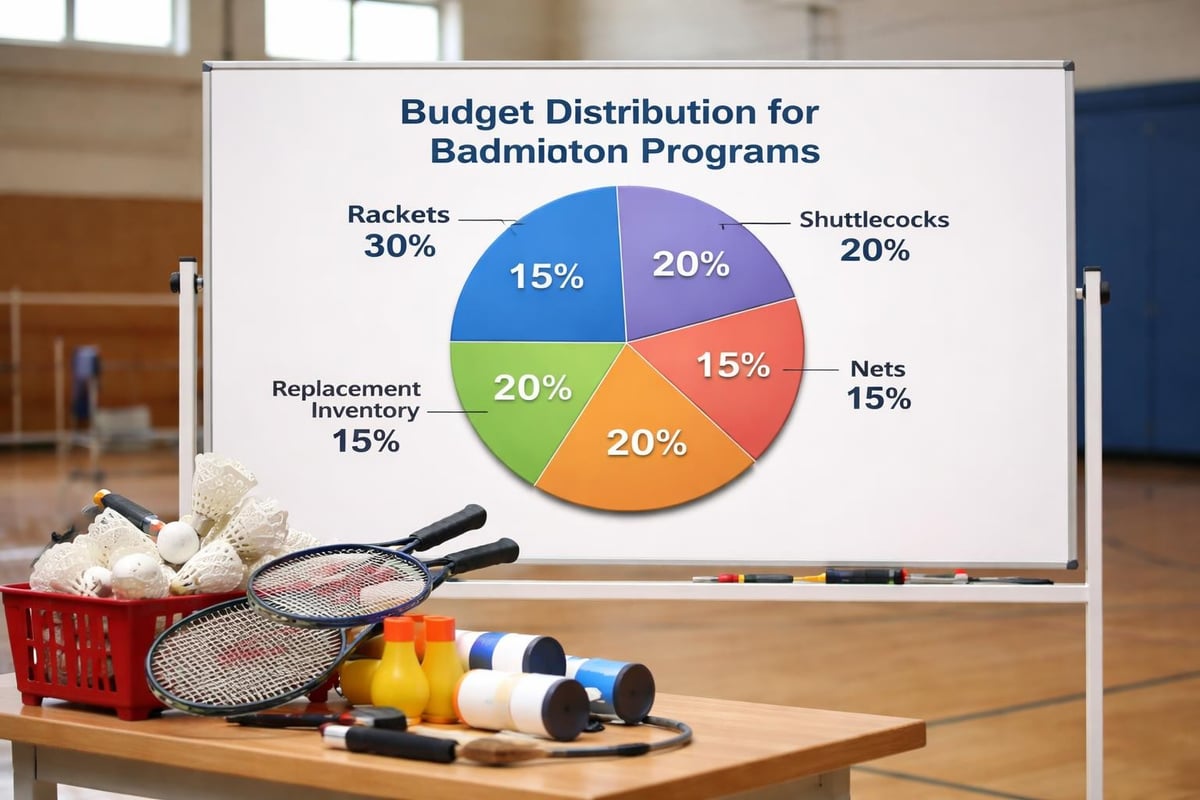
Strategic equipment purchasing requires understanding not just initial acquisition costs but total cost of ownership including replacement cycles, maintenance requirements, and performance longevity.
Racket Investment Strategies
Rather than purchasing identical rackets across all players, smart programs implement a tiered approach:
- Premium rackets for varsity athletes and competitive team members where performance advantages justify higher costs
- Mid-range options for junior varsity and developing players who need quality equipment without top-tier pricing
- Durable entry-level rackets for physical education classes and beginner programs where quantity and resilience outweigh advanced features
This strategy, when executed through a knowledgeable badminton sports shop, optimizes budget allocation while ensuring every player has appropriate equipment for their skill level and program commitment.
Shuttlecock Consumption Planning
Shuttlecock costs represent ongoing expenses that quickly exceed initial equipment investments. Accurate consumption forecasting prevents mid-season shortages and emergency purchases at premium prices.
Calculate requirements based on:
- Practice hours per week (approximately 6-8 shuttlecocks per hour for intensive drills)
- Player count and skill level (advanced players break shuttlecocks more frequently)
- Feather vs synthetic ratio (typically 70% synthetic for practice, 30% feather for competition preparation)
- Climate and facility conditions (temperature and humidity affect shuttlecock durability)
Establishing a relationship with a reliable badminton sports shop often unlocks volume discounts, scheduled delivery programs, and flexible ordering systems that smooth out cash flow impacts while ensuring adequate supply.
Quality Standards and Product Authentication
The badminton equipment market includes substantial variations in quality and authenticity, making supplier selection critical for programs seeking genuine value rather than superficial savings.
Recognizing Manufacturer Standards
Legitimate badminton equipment manufacturers adhere to specifications established by the Badminton World Federation (BWF) and national governing bodies. Tournament-approved equipment carries specific certifications visible on product packaging and marketing materials.
Key quality indicators include:
- BWF approval stamps on shuttlecocks and nets intended for competitive use
- Manufacturer warranty coverage indicating confidence in product durability
- Detailed specification sheets providing measurable performance data
- Country of origin disclosure and manufacturing facility information
A reputable badminton sports shop transparently communicates these details and sources inventory directly from authorized distributors rather than gray-market channels that may offer counterfeit or substandard products.
String Tension and Maintenance Services
Racket string tension significantly influences control, power, and playability, with most players performing best between 20-30 pounds depending on string type and playing style. Professional stringing services represent a valuable offering from full-service suppliers.
Quality stringing includes:
- Pre-tension assessment and player consultation
- Precision tensioning equipment calibrated to ±1 pound accuracy
- Proper string installation techniques that maximize durability
- Post-installation inspection and playability verification
Programs lacking in-house stringing capabilities benefit tremendously from establishing relationships with a badminton sports shop offering these services, ensuring consistent racket performance throughout the season.
Facility-Wide Equipment Solutions
Organizations managing multiple badminton courts or comprehensive athletic programs require coordination across equipment categories and streamlined procurement processes that individual retail purchasing cannot efficiently provide.
Bulk Ordering and Program Packages
Forward-thinking suppliers develop complete program packages tailored to specific facility types:
High school programs typically need 30-40 rackets across skill levels, 600-800 shuttlecocks per season, 2-4 net systems, and supporting training equipment that fits standard physical education budgets.
Community recreation centers prioritize durability and broad appeal, requiring larger quantities of entry and intermediate equipment with simplified maintenance requirements and replacement part availability.
Competitive clubs demand tournament-grade equipment with emphasis on performance characteristics, requiring smaller quantities but higher specifications and regular upgrading cycles to maintain competitive advantages.
Working with a comprehensive athletic equipment supplier like those offering indoor equipment alongside badminton-specific products allows programs to consolidate purchasing, streamline vendor management, and often access better pricing through increased order volumes.
Seasonal Considerations and Storage
Badminton equipment performance and longevity depend significantly on proper storage conditions and seasonal planning that accounts for climate variations and usage patterns.
Climate Impact on Shuttlecock Performance
Temperature and humidity dramatically affect shuttlecock flight characteristics, with specifications designed for specific environmental ranges. Speed ratings must match facility conditions:
- 75-76 speed: Hot, humid conditions (above 80°F)
- 77 speed: Moderate conditions (70-80°F) - most common
- 78-79 speed: Cool conditions (below 70°F)
A specialized badminton sports shop helps buyers select appropriate inventory mixes based on geographic location and seasonal facility temperature ranges, preventing performance issues caused by mismatched shuttlecock speeds.
Equipment Storage Best Practices
Proper storage extends equipment life and maintains performance characteristics between uses:
Rackets should be stored horizontally in climate-controlled environments, avoiding extreme temperatures that affect frame integrity and string tension. Wall-mounted racks or dedicated storage cabinets prevent accidental damage and keep inventory organized.
Shuttlecocks require particular attention, with feather varieties demanding controlled humidity (ideally 60-70%) to prevent brittleness or excessive moisture absorption. Sealed containers protect unused inventory from environmental degradation.
Nets and posts need adequate space that prevents creasing, tangling, or mechanical component damage, with regular inspection schedules identifying wear before equipment fails during use.
Expanding Beyond Basic Equipment
As badminton programs mature and player skills advance, equipment needs expand beyond fundamental rackets, shuttlecocks, and nets into specialized categories that support comprehensive athletic development.
Video Analysis and Performance Technology
Modern coaching increasingly incorporates technology that captures player movements, analyzes technique deficiencies, and tracks performance metrics over time. Equipment suppliers serving serious programs should connect buyers with:
- High-speed cameras designed for indoor sports analysis
- Court-side tablet mounting systems for real-time review
- Software platforms that organize footage and enable comparative analysis
- Measurement tools for serve speed, reaction time, and movement efficiency
While not traditionally considered core badminton sports shop inventory, forward-thinking suppliers recognize these technologies as natural extensions of equipment offerings that enhance program value.
Strength and Conditioning Equipment
Badminton-specific strength development requires targeted equipment that builds explosive power, shoulder stability, and core strength without compromising the flexibility and speed the sport demands. Just as programs might explore fitness and training equipment for general athletic development, badminton-focused conditioning requires specialized tools including resistance bands calibrated for racket swing patterns, medicine balls sized for rotational power development, and balance equipment that improves court stability.
Making Informed Purchasing Decisions
The investment required to properly equip badminton programs demands careful evaluation of supplier capabilities, product quality, and long-term support beyond initial transactions.
Evaluating Supplier Credentials
Before committing to significant equipment purchases, assess potential suppliers across multiple dimensions:
- Years serving badminton programs specifically (general sporting goods experience doesn't equal badminton expertise)
- References from similar organizations (contact athletic directors or coaches using the supplier)
- Return and warranty policies (understand protections if equipment proves unsuitable)
- Emergency ordering capabilities (can they expedite replacements for broken equipment mid-season)
- Price transparency (beware suppliers requiring extensive negotiation or hiding costs in shipping and handling)
The most reliable badminton sports shop views customer relationships as long-term partnerships rather than one-time transactions, investing in service quality that earns repeat business through performance rather than contractual obligations.
Total Cost Analysis
Purchase price represents just one component of equipment value. Comprehensive evaluation considers:
| Cost Factor | Evaluation Questions | Impact on True Value |
|---|---|---|
| Initial price | How does cost compare across equivalent products? | Immediate budget impact |
| Durability | What is expected lifespan under program usage? | Replacement frequency, long-term costs |
| Performance | Does quality justify price premium? | Player development, competitive success |
| Availability | Can items be reordered quickly when needed? | Program continuity, emergency costs |
| Support | What guidance comes with purchase? | Setup time, optimization, problem resolution |
Organizations managing comprehensive athletic programs across multiple sports, such as those purchasing volleyball or basketball equipment alongside badminton gear, benefit from suppliers offering consistent service quality and pricing structures across categories.
Safety Equipment and Risk Management
While badminton carries lower injury risk than contact sports, proper equipment selection and facility management significantly reduce the incidents that do occur.
Court Safety Considerations
Boundary areas require adequate clearance preventing collisions with walls, equipment storage, or adjacent courts. Safety-focused programs ensure:
- Minimum 6-foot clearance on sidelines and 8-foot clearance on end lines
- Padded wall protection in facilities with limited space
- Non-slip court surfaces maintained at appropriate friction levels
- Clear sight lines free from glare or visual obstructions
A conscientious badminton sports shop recognizes these requirements and steers buyers toward equipment configurations that maintain safety margins while maximizing available facility space.
Eye Protection Options
Though not universally required, protective eyewear prevents the eye injuries that occasionally occur from high-speed shuttlecock impacts. Junior programs and beginners particularly benefit from impact-resistant eyewear designed for racket sports, featuring:
- Polycarbonate lenses that meet ASTM F803 impact standards
- Ventilation systems preventing fog accumulation during play
- Secure retention systems that stay positioned during rapid movements
- Prescription compatibility for players requiring vision correction
Progressive programs incorporate eye protection as standard equipment, normalizing usage and eliminating the stigma sometimes associated with protective gear.
Selecting the right badminton equipment supplier involves evaluating product quality, technical expertise, and long-term support capabilities that extend far beyond initial purchase transactions. Whether you're launching a new badminton program, upgrading aging equipment, or expanding offerings to meet growing participation, Sideline Sport Supply provides the comprehensive selection, straightforward pricing, and reliable service that keeps your athletes focused on skill development and competitive success rather than equipment concerns.