

Buy Basketball Hoop Guide: Expert Tips for 2026 Buyers
Are you ready to transform your driveway or backyard into a hub of excitement? If you want to buy basketball hoop equipment that perfectly fits your lifestyle, this guide is here to help.
Whether you are a parent fostering young talent, an athlete seeking performance, or simply love recreational play, making the right choice matters. This expert resource will walk you through everything you need to know, from the latest hoop types and essential features to installation, safety, and brand recommendations.
Uncover insider tips and practical steps to confidently buy basketball hoop setups in 2026, ensuring your investment brings years of fun and skill-building to your home.
Understanding Basketball Hoop Types
Are you ready to buy basketball hoop equipment but unsure which type fits your needs? Understanding the main styles is the first step toward an informed purchase. Explore the pros, cons, and latest trends so you can confidently buy basketball hoop setups that match your game and space.
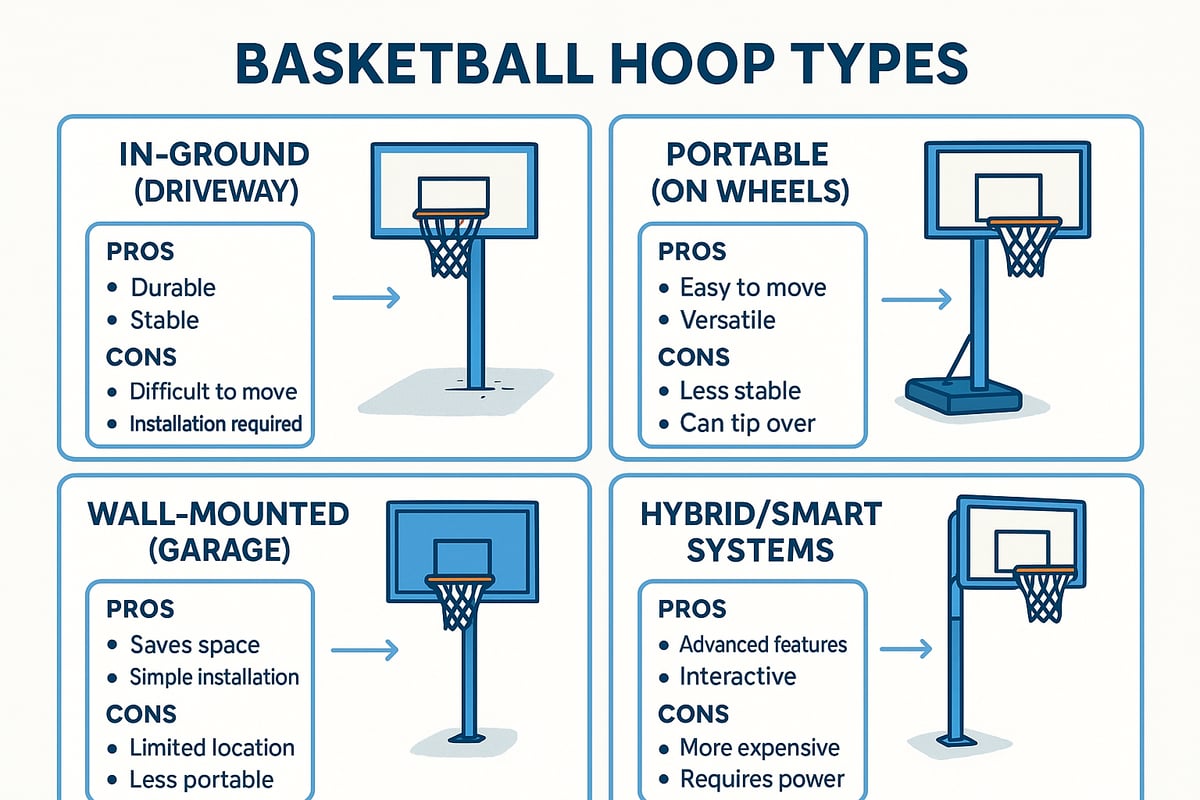
In-Ground Hoops: Pros, Cons & Ideal Use Cases
In-ground systems are the gold standard when you want to buy basketball hoop setups for serious, long-term play. These hoops offer unmatched stability and durability, making them ideal for competitive athletes and families who play often.
They are built to withstand harsh weather and deliver consistent performance year after year. Installation requires digging a hole and pouring concrete, so they are best for permanent locations like driveways or dedicated backyard courts. This style is the choice for most professional and school courts, ensuring a pro-level experience at home.
Portable Basketball Hoops: Advantages & Limitations
If you want flexibility when you buy basketball hoop options, consider a portable system. These hoops are easy to set up and move, making them perfect for renters or families with limited space.
Most portable hoops feature adjustable height settings, so kids can grow with the system. The base is filled with water or sand for stability, but they may not match the sturdiness of in-ground models. Portable hoops are also easier to store and can be relocated as needed, although they may vibrate more during play.
Wall-Mounted Hoops: Space-Saving Solutions
For those who want to buy basketball hoop solutions that save space, wall-mounted hoops are an excellent choice. These systems attach directly to a garage, gym, or sturdy wall, freeing up valuable floor space.
Buyers can choose between permanent or foldable options, depending on their needs. Installation is more complex, often requiring strong anchors and a solid wall. Wall-mounted hoops are especially popular in urban homes or indoor gyms where space is at a premium but players still demand quality performance.
Hybrid and Specialty Hoops: What’s New in 2026
When you buy basketball hoop setups in 2026, you will notice innovative hybrid and specialty models. Hybrid hoops combine the mobility of portable designs with the stability of in-ground systems, offering the best of both worlds.
Some new hoops feature integrated sensors or smart tracking to help players analyze their shots. Eco-friendly materials are increasingly popular, and youth or mini hoops provide fun indoor play for younger children. Staying updated on these trends ensures your investment meets modern expectations.
Choosing the Right Hoop Type for Your Needs
To buy basketball hoop equipment that truly fits, match the system to your players’ ages, skill levels, and available space. Consider your budget and prioritize features that align with your family’s goals.
Ready to compare options? Explore the Basketball Hoops Collection for a wide variety of types, sizes, and styles to help you make the ideal choice as you buy basketball hoop systems for your home.
Key Features to Consider Before Buying
Selecting the right features is crucial when you want to buy basketball hoop models that truly fit your needs. Each component impacts play quality, safety, and long-term satisfaction. Understanding these features will help you make a confident, informed choice.
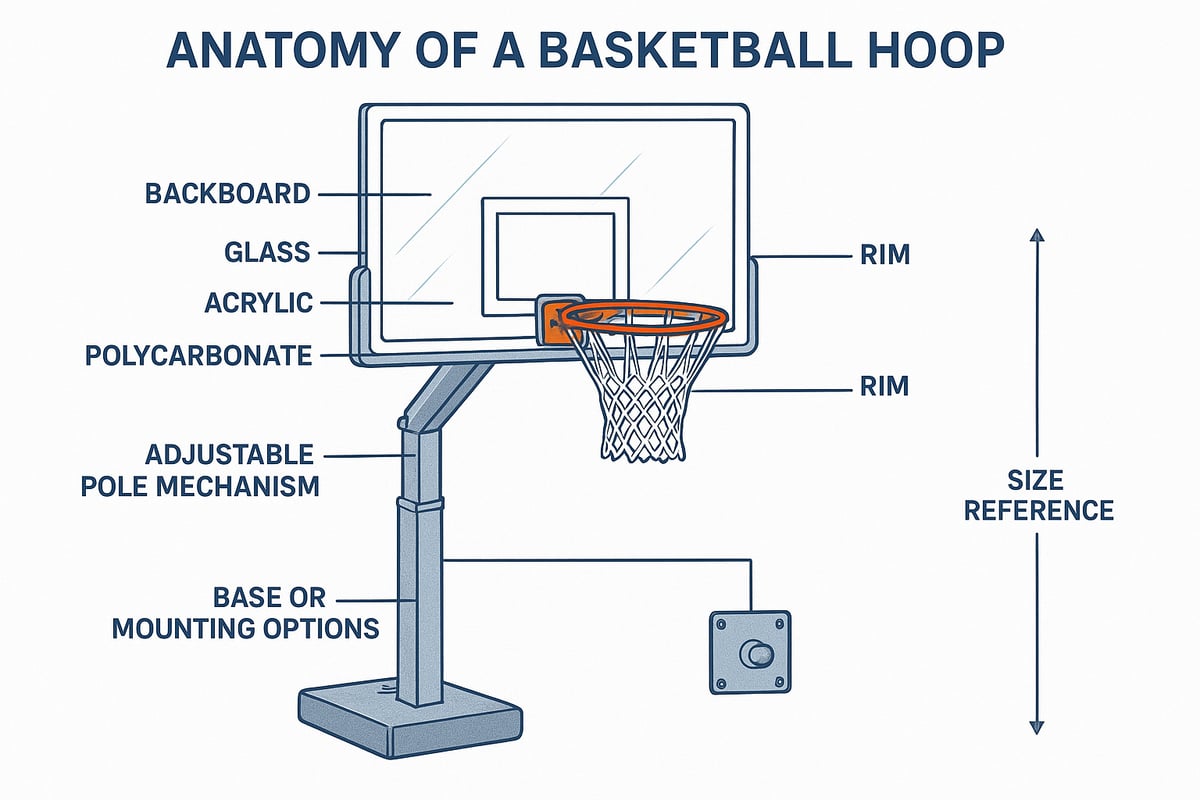
Backboard Material: Glass, Acrylic, Polycarbonate
The backboard material directly affects how the ball rebounds and the overall durability of your hoop. When you buy basketball hoop options, you will notice three main materials: tempered glass, acrylic, and polycarbonate.
| Material | Performance | Durability | Price Range | Best For |
|---|---|---|---|---|
| Tempered Glass | Best rebound, pro feel | High, weatherproof | $$$ | Serious players, home gyms |
| Acrylic | Good, slightly softer | Moderate, scratch-prone | $$ | Families, recreational play |
| Polycarbonate | Basic, softer bounce | Very high, impact-proof | $ | Kids, outdoor, rough use |
Tempered glass is the gold standard for those seeking a professional experience. Acrylic is lighter, often more affordable, but may scratch over time. Polycarbonate excels in impact resistance and is ideal for younger players or high-traffic areas. Consider your priorities before you buy basketball hoop systems with a specific backboard.
Backboard Size and Shape: Regulation vs. Compact
Backboard dimensions influence both gameplay and how the hoop fits in your space. Standard regulation size is 72 inches wide, but home hoops often range from 44 to 60 inches.
A larger backboard offers a wider target for bank shots and rebounding, which is important as players develop skills. Compact sizes work well in smaller driveways or tight backyards. When you buy basketball hoop setups, match the size to your available area and typical player age.
Rectangular boards are the norm for authentic play, while fan-shaped boards can save space. Always measure your space before purchasing to ensure you get the best experience from your buy basketball hoop decision.
Rim Quality: Breakaway vs. Standard Rims
The rim is where action meets durability. Breakaway rims have a spring mechanism that flexes under pressure, reducing stress and risk of injury during dunks. Standard rims are rigid and better suited for light recreational play.
A quality rim includes rust-resistant coatings for outdoor longevity. If you plan to buy basketball hoop models for active families or aspiring athletes, breakaway rims are strongly recommended. For safety and compliance, consider models that meet ASTM F1882-15 Residential Basketball Systems Standard guidelines, ensuring your investment is both fun and secure.
Height Adjustment Mechanisms
Height adjustability is essential when you buy basketball hoop systems for households with kids or mixed-age players. Mechanisms range from basic manual cranks to advanced gas-assisted systems, each offering different ease of use.
Most modern hoops adjust from 7.5 to 10 feet, catering to young beginners and adults alike. Smooth, easy-to-operate mechanisms make adjusting the height simple for everyone. If you expect your players to grow or want to host a variety of games, prioritize this feature when you buy basketball hoop products.
Pole and Base Stability
A stable support system is the backbone of any high-quality hoop. Pole thickness, material, and base capacity all factor into vibration reduction and safety. Steel poles are the industry standard for strength, while aluminum offers lighter weight.
Bases on portable hoops should hold enough water or sand for stability. In-ground poles require proper anchoring and concrete for security. When you buy basketball hoop equipment, ensure the stability matches your play intensity and local weather. A well-anchored system will stand the test of time and keep play safe.
Installation & Maintenance: What Buyers Need to Know
Proper installation and maintenance are crucial when you buy basketball hoop systems for your home. Whether you are setting up a permanent court or a portable option, understanding the process ensures safety, longevity, and optimal play performance. Let us break down each step for a seamless experience.
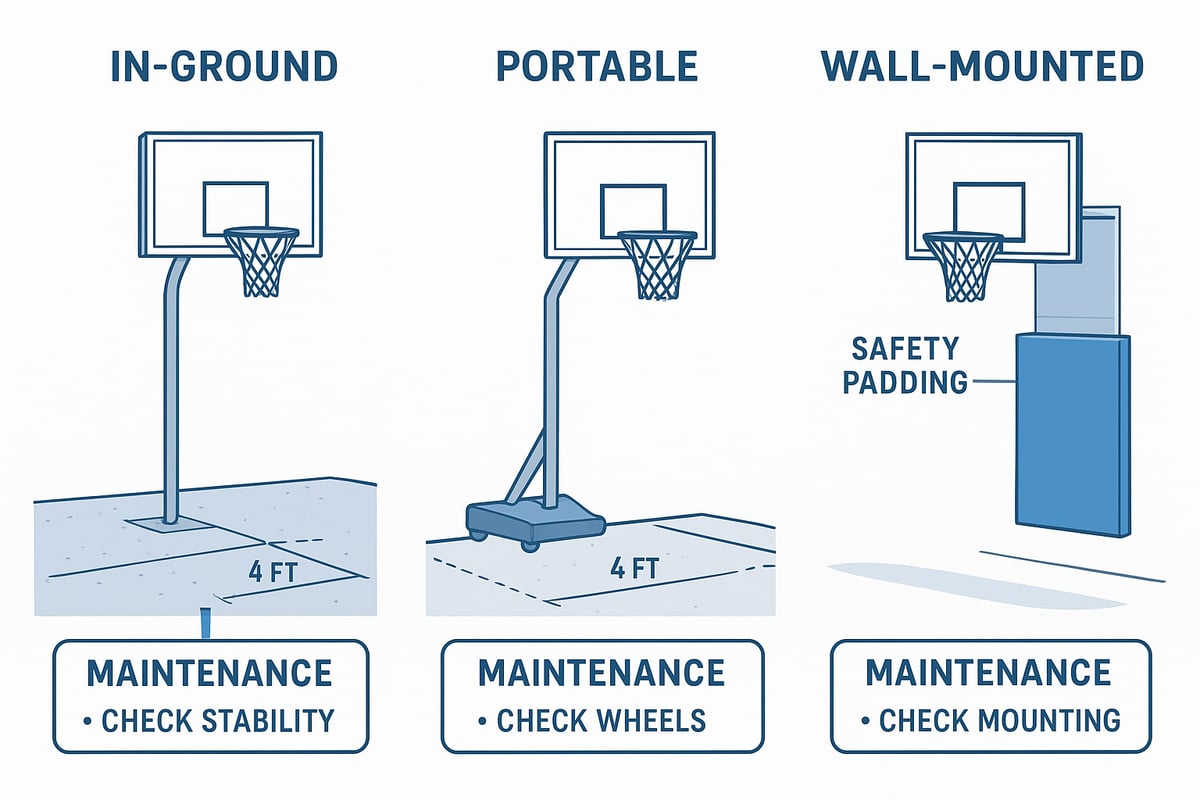
Site Preparation and Space Requirements
Before you buy basketball hoop equipment, assess your available space carefully. Measure the area for your court, keeping in mind recommended dimensions. A standard home court needs at least 20 feet by 30 feet, but compact hoops can fit in smaller driveways or backyards.
Ensure there is enough clearance around the hoop for safe play. Leave at least three feet behind the pole or wall and plenty of space on each side. Check local zoning laws or HOA rules, as some communities have restrictions on permanent installations. A well-prepared site makes installation easier and safer for everyone.
Step-by-Step Installation Guide for Each Hoop Type
When you buy basketball hoop systems, installation varies by type. For in-ground hoops, dig a hole deep enough for stability and pour concrete, allowing it to cure fully before assembling the pole and backboard. Portable hoops are simpler; fill the base with water or sand and ensure even weight distribution.
Wall-mounted hoops require anchoring into a strong wall, such as a garage, with attention to wall integrity and height. Always follow the manufacturer's instructions closely. Double-check all hardware and ensure everything is level to prevent future issues. Taking time with these steps guarantees a solid, safe setup.
Maintenance Tips for Longevity
Regular maintenance is key to protecting your investment when you buy basketball hoop products. Inspect the hoop each season, checking for rust, loose bolts, or worn nets. Clean the backboard with mild soap and water to prevent buildup that can affect play.
Apply rust-resistant spray to exposed metal parts, especially in humid climates. Replace nets and padding as needed, and tighten all hardware regularly. For portable hoops, check the base for leaks or low fill levels. Consistent care extends the life of your hoop and keeps play safe and enjoyable.
Safety Considerations and Best Practices
Safety should be top of mind every time you buy basketball hoop equipment. Anchor in-ground and wall-mounted systems securely. For portable hoops, ensure the base is filled to capacity and positioned on a flat surface. Add pole and backboard padding to reduce injury risk.
Look for features like breakaway rims and child-safe height adjustments. Regularly inspect all parts for wear or damage. For detailed safety guidelines and mandatory requirements, consult the Consumer Goods Safety Standard for Basketball Rings and Backboards. Following best practices helps prevent accidents and creates a safer play environment.
When to Hire a Professional Installer
Sometimes, hiring an expert is the smartest choice when you buy basketball hoop systems. In-ground and wall-mounted hoops can be complex, requiring specialized tools and knowledge. If you lack the time or experience, a professional ensures the job is done right.
Professionals handle site prep, concrete pouring, and precise assembly, reducing the risk of costly mistakes. They also understand local regulations and can address unique site challenges. Investing in expert installation brings peace of mind and maximizes the safety and performance of your hoop.
Budgeting & Value: How Much Should You Spend?
Smart budgeting is essential when you decide to buy basketball hoop equipment for your home. Understanding the full financial picture helps you avoid surprises and ensures lasting value, no matter your skill level or space.
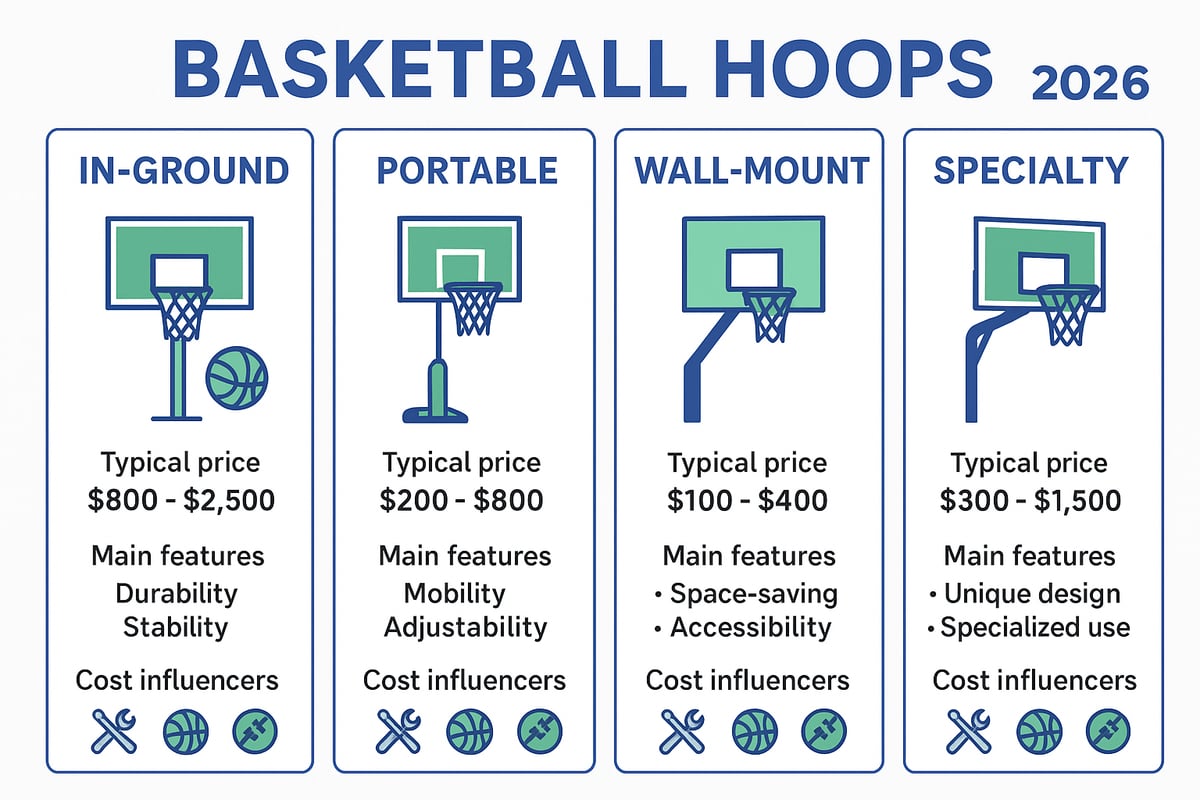
Price Ranges for Basketball Hoops in 2026
When you set out to buy basketball hoop options in 2026, expect a wide range of prices. Entry-level hoops start around $150 to $400, ideal for children or casual play. Mid-range models, which are suitable for families or intermediate players, usually cost $400 to $1,000. Premium hoops, designed for serious athletes or those seeking professional features, can exceed $1,000 and go up to $2,500 or more.
Here’s a quick comparison:
| Hoop Type | Entry-Level | Mid-Range | Premium |
|---|---|---|---|
| In-Ground | $300–$700 | $700–$1,500 | $1,500–$2,500+ |
| Portable | $150–$400 | $400–$800 | $800–$1,200 |
| Wall-Mounted | $200–$600 | $600–$1,200 | $1,200–$2,000 |
Choosing the right budget depends on your space, goals, and how often you plan to use the hoop.
Cost vs. Quality: Where to Invest
Not all hoops are created equal. When you buy basketball hoop equipment, the backboard material is one of the biggest price drivers. Tempered glass is the gold standard for performance and longevity, but it costs more. Acrylic and polycarbonate backboards are more budget-friendly, though they may not offer the same rebound quality or durability.
Investing in a sturdy pole and rust-resistant hardware also pays off over time, especially for outdoor use. While it’s tempting to save with the cheapest option, ultra-low-cost hoops can wobble or wear out quickly. Spending a bit more up front often means fewer headaches and better play in the long run.
Hidden Costs: Installation, Accessories, and Upkeep
Beyond the sticker price, remember the extra expenses that come with any buy basketball hoop decision. Installation for in-ground hoops may require concrete, tools, or even professional help, which can add $200–$500. Accessories like replacement nets, pole padding, and weather covers can increase your investment over time.
Portable systems, while easier to set up, often need base fillers and may require more frequent maintenance. To explore a range of portable options and understand accessory choices, you can browse Portable Basketball Systems for a detailed look at what’s available. Regular upkeep, such as tightening bolts and checking for rust, helps extend your hoop’s lifespan.
Money-Saving Tips and Seasonal Deals
Timing your purchase is key when you plan to buy basketball hoop products. Shopping during holiday sales, back-to-school promotions, or off-season months can yield significant discounts. Many retailers offer bundled packages with accessories, which can save money compared to buying items separately.
Look for price matching policies and extended warranties when comparing brands. Buying from reputable sources helps ensure support if issues arise. Always consider long-term value rather than just the lowest initial price, and take advantage of seasonal deals to get the most for your budget.
Top Basketball Hoop Brands & Models for 2026
Finding the right brand is crucial when you want to buy basketball hoop equipment that stands the test of time. The market in 2026 offers a wide range of brands, each with unique strengths. Some focus on rugged durability, while others stand out for innovation or family-friendly designs.
Understanding what sets each brand apart will help you make an informed decision. Let’s explore the top names and models that set the standard this year.
Leading Brands: Performance, Durability & Reputation
When you decide to buy basketball hoop systems, brand reputation matters. Spalding remains a leader, known for professional-grade backboards and reliable performance. Lifetime is celebrated for family-friendly options and robust warranty coverage. Goalrilla stands out for its heavy-duty construction and industry-leading stability.
Silverback offers mid-range hoops with excellent value, while First Team is praised for customization and advanced safety features. Most brands provide multi-year warranties and responsive customer support. Always check customer reviews and satisfaction ratings before choosing.
Best In-Ground Hoops: 2026 Recommendations
For those seeking to buy basketball hoop setups that mimic a professional court, in-ground models are the top choice. The Goalrilla FT Series is a standout, delivering unmatched stability with its thick steel pole and pro-style tempered glass backboard.
Spalding’s U-Turn In-Ground system is popular for adjustable height and all-weather durability. Lifetime’s Mammoth series balances price and performance, making it ideal for families and dedicated players. These models are designed for long-term use and withstand tough outdoor conditions.
Best Portable Hoops: 2026 Picks
If you want to buy basketball hoop equipment that is flexible and easy to move, portable models are ideal. The Lifetime 90040 Portable is a top pick for its adjustable height, sturdy base, and simple assembly. Silverback NXT Portable impresses with its Stabili-Frame design, reducing vibration during play.
Spalding’s Ultimate Hybrid offers a blend of sand and water base options for enhanced stability. These hoops are great for renters, families with growing kids, or anyone needing a space-saving basketball solution.
Best Wall-Mounted Hoops: 2026 Choices
For buyers aiming to buy basketball hoop systems that save space, wall-mounted models deliver pro features in compact designs. The Spalding NBA Slam Jam is a favorite for garages and indoor gyms, offering a breakaway rim and acrylic backboard.
Silverback’s NXT Wall Mount is praised for its easy installation and height adjustability. If you want a comprehensive overview of current wall-mount options, explore the Wall-Mount Basketball Systems collection for inspiration.
Emerging Brands and Innovations to Watch
Innovation shapes how you buy basketball hoop products in 2026. New brands are introducing eco-friendly materials, such as recycled steel poles and sustainable backboards. Smart hoops with integrated sensors track shot accuracy and playing time, adding a digital edge to training.
Community feedback highlights brands offering modular systems, allowing upgrades as your needs evolve. Keep an eye out for start-ups that prioritize both safety and environmental responsibility, as these trends are gaining momentum.
Expert Tips for Choosing the Perfect Basketball Hoop
Selecting the right basketball hoop can be a rewarding investment in your home and family life. To help you confidently buy basketball hoop equipment that meets your goals, follow these expert-approved tips. Consider your unique needs, available space, and long-term plans to create a safe and enjoyable setup.
Assessing Your Players’ Needs and Skill Levels
Start your journey to buy basketball hoop equipment by considering who will use it. Are you shopping for young children, teens, or adults? Match the hoop height and type to their age and skill level. Beginners benefit from adjustable systems that grow with them, while advanced players may need regulation-size hoops. Think about solo practice versus group play, and whether you want a hoop that supports dunking or advanced drills. Planning for growth ensures your investment lasts, providing years of active fun and skill development for everyone in your household.
Matching Hoop Features to Your Space
Before you buy basketball hoop systems, evaluate your space carefully. Measure your driveway, backyard, or indoor area to ensure the hoop fits comfortably. Consider court layout, clearance zones, and overhead obstacles. Wall-mounted hoops excel in tight urban spaces, while portable hoops are ideal for multi-use areas. For families seeking flexibility, Adjustable Basketball Systems offer versatile height options to adapt to changing needs. Quiet operation and thoughtful placement can help you maintain good relations with neighbors, especially in shared or densely populated environments.
Prioritizing Safety and Durability
When you buy basketball hoop products, safety and durability should be top priorities. Look for rust-resistant materials, sturdy poles, and reliable anchoring systems. Features like breakaway rims and thick padding reduce injury risks during energetic play. Regular inspections and maintenance are crucial, as recommended by organizations such as the Standards Institution of Israel on Sports Facilities, to ensure your hoop remains safe and functional. Weatherproofing and UV-resistant coatings extend the lifespan of your equipment, making your investment more valuable over time.
Installation Planning and Common Mistakes to Avoid
Proper installation is essential when you buy basketball hoop setups. In-ground hoops require careful site preparation, concrete curing, and precise leveling. Portable models must be filled and weighted according to manufacturer guidelines. Wall-mounted hoops demand secure anchoring to studs or masonry. Common mistakes include underestimating installation time, skipping safety checks, or ignoring local building codes. If the project feels overwhelming, consider hiring a professional to guarantee both safety and performance. Proper planning upfront saves time, money, and frustration in the long run.
Maximizing Fun and Skill Development
A well-chosen basketball hoop does more than provide exercise; it becomes a centerpiece for family fun and growth. When you buy basketball hoop accessories like LED lights, durable nets, or rebounders, you enhance the experience for all ages. Set up practice routines or organize friendly games to encourage regular use. Use adjustable height features to challenge developing skills and keep everyone engaged. By fostering a positive environment, you turn your hoop into a hub for health, bonding, and lifelong memories.
Frequently Asked Questions About Buying Basketball Hoops
Buying a basketball hoop is a significant investment for any home, so it is natural to have questions before making your decision. Below, you will find answers to the most common concerns to help you confidently buy basketball hoop that fits your needs.
What Size Basketball Hoop Is Right for My Family?
Choosing the correct size is crucial when you buy basketball hoop for your family. Regulation hoops measure 10 feet high with a 72-inch backboard, but smaller sizes are ideal for younger children or limited spaces.
For families with kids under 10, consider adjustable hoops that lower to 7.5 feet or youth models with smaller backboards. Measure your available space to ensure you have enough clearance for safe play. Adjustable systems grow with your child, making them a flexible choice.
How Do I Maintain My Basketball Hoop Year-Round?
Consistent care extends the life of your investment when you buy basketball hoop. Regularly clean the backboard, rim, and net to prevent dirt buildup. Inspect for rust, especially on outdoor models, and apply anti-rust coatings as needed.
Replace nets and check hardware for tightness every season. For portable hoops, drain water from the base before winter to avoid freezing damage. Store or cover your hoop during harsh weather to protect its components and ensure longevity.
Can I Move My Basketball Hoop After Installation?
Whether you can move your system depends on the type you buy basketball hoop. Portable hoops are designed for relocation—simply empty the base and wheel them to a new spot. Wall-mounted and in-ground hoops are more permanent.
Relocating an in-ground hoop requires digging up the foundation, which is labor-intensive. Always consult the manufacturer's instructions before attempting to move any model. Disassembly and reinstallation may void warranties, so plan your location carefully at the start.
What Safety Features Should I Look For?
Prioritize safety when you buy basketball hoop, especially for families with children. Look for breakaway rims, sturdy padding around the pole and backboard, and stable bases that prevent tipping. Adjustable height systems should have secure locking mechanisms.
To ensure your hoop meets recognized standards, review resources like the Philadelphia Parks and Recreation Design and Construction Standards, which outline best practices for materials and installation. Proper safety features minimize injury risks and create a safer play environment.
Are There Any Warranties or Guarantees to Consider?
Before you buy basketball hoop, examine the warranty coverage. Leading brands often provide multi-year warranties on parts and limited coverage on labor. These typically include protection against defects in the backboard, rim, and pole.
However, normal wear, net replacement, and weather damage might not be covered. Always read the fine print and register your product upon purchase. Strong warranty support reflects brand confidence and adds peace of mind to your investment.