

Best Soccer Shops for Gear, Cleats and Jerseys
The best soccer shop is the one that stocks genuine products in your size, prices them fairly, and backs the sale with support and easy returns. For team buyers that means dependable fulfillment on bulk and field equipment; for individual players it means accurate sizing on cleats and authentic jerseys. The sections below show what to look for, which types of shops fit which buyers, and how to avoid costly mistakes.
What Makes the Best Soccer Shop?
A strong soccer retailer earns its reputation on five measurable points: authenticity, selection, pricing, service, and return policy.
- Authenticity. Look for an authorized dealer. Counterfeit cleats and jerseys are common online, and they fit poorly and wear out quickly.
- Selection. A good shop covers footwear, apparel, balls, goals, training aids, and field equipment, so one order can cover a whole season.
- Pricing. Transparent pricing and a price match policy protect your budget, especially on team orders.
- Support. Knowledgeable staff can match equipment to a budget and a level of play.
- Returns. Footwear in particular needs a fair return window, because fit is hard to judge from a screen.
Apply these five filters to any retailer, and the field narrows quickly.
Types of Soccer Shops and Who They Suit
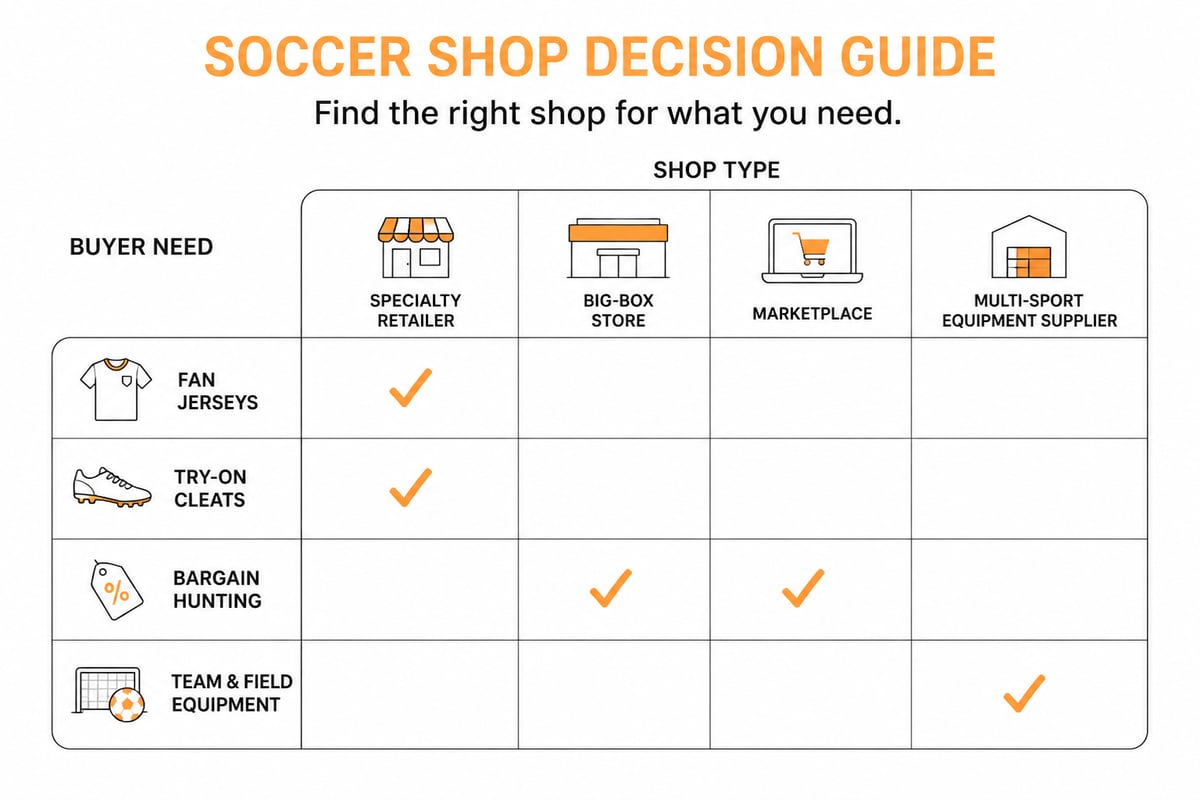
Soccer retailers fall into four broad groups, and each serves a different buyer.
| Shop type | Strengths | Limitations |
|---|---|---|
| Specialty soccer retailers | Deep range of cleats, kits, and club jerseys | Often focused on fan and player apparel, with fewer field and facility items |
| Big-box sporting goods stores | Convenient, easy to try on footwear | Narrower soccer range, limited expert advice |
| Marketplace and resale sites | Wide variety, occasional bargains | Authenticity risk, inconsistent return terms |
| Multi-sport equipment suppliers | Team-scale orders, goals, field gear, training tools | Less emphasis on fashion and fan merchandise |
A fan hunting for a specific club kit will usually do well at a specialty retailer. A coach or athletic director who needs goals, benches, and training equipment alongside balls and bibs will get more value from a multi-sport supplier that treats equipment as its core business.
The Core Gear Every Soccer Shop Should Cover
Every credible soccer shop should stock the compulsory player equipment defined by the laws of the game. According to IFAB Law 4, compulsory equipment includes a shirt with sleeves, shorts, socks, shin guards, and footwear, and shin guards must be covered by socks.
Beyond the required items, a complete shop supports training and match-day operations:
- Match and training balls in several sizes
- Goalkeeper gloves and protective apparel
- Cones, markers, agility ladders, and rebounders
- Bibs and team uniforms
- Goals, nets, and field-marking supplies
- Ball bags, water coolers, and bench seating
If a retailer covers only the visible items such as jerseys and cleats, you will end up splitting your order across vendors. That adds shipping costs, extra checkouts, and inconsistent delivery times.
How to Choose Soccer Cleats That Actually Fit
Cleat fit depends on measuring correctly, matching the shoe to your playing surface, and leaving the right amount of toe room. Poorly fitted footwear causes blisters and slows development, so it is worth getting right before you order.
Start with measurement. A cleat sizing guide from Soccer.com recommends measuring both feet at the end of the day while wearing soccer socks, then using the longer foot to choose a size. The same guide suggests leaving about ¼ inch between the toes and the end of the cleat, and about ½ inch of extra room for growing children.
Then match the outsole to the surface:
- Firm ground (FG): Standard natural grass fields in typical conditions.
- Artificial grass (AG): Synthetic turf, with shorter studs designed to reduce stress on the foot.
- Soft ground (SG): Wet, muddy natural pitches that need longer studs.
- Turf or indoor: Flat or low-profile outsoles for hard, short-pile, or gym surfaces.
Parents buying for youth players should also plan for growth without overbuying. A cleat that is too large causes slipping and instability, so stay within the recommended room allowance rather than sizing up by a full number.
Where to Find Authentic Jerseys and Team Kits
The safest source for jerseys is an authorized dealer or the club's official store, because authenticity is easier to verify. Authentic match jerseys use performance fabrics and construction that differ from replica fan versions, and prices reflect that difference.
Before buying, confirm these details:
- Authorization: Does the shop state that it is an authorized dealer?
- Product listing: Are fabric type, fit style, and sizing chart clearly shown?
- Return terms: Can you return the item if the fit is off?
- Season labeling: Is the kit clearly identified as the current or previous season?
Team buyers ordering uniforms for schools and clubs have extra considerations. Order early, confirm number and name requirements with your league, and request a size run so players can try before the full order is finalized. Your league's rules on color conflicts and numbering should be settled before placing the order, not after.
Shopping for Teams, Schools, and Clubs
Team purchasing succeeds when you consolidate vendors, plan around your season calendar, and verify product standards before checkout. Coaches and athletic directors rarely need a single item; they need a coordinated order that arrives before the first practice.
A practical team buying checklist:
- Audit existing inventory: balls, bibs, cones, goals, nets, and first-aid supplies.
- Set a per-player and per-program budget.
- Group purchases by vendor to reduce shipping and administrative work.
- Confirm lead times for any item that matters to your first match.
- Check return terms on footwear and apparel before bulk ordering.
Consolidation matters because every additional vendor adds a purchase order, an invoice, and a delivery to track. A multi-sport supplier that carries field and facility equipment alongside training gear lets one staff member handle an entire order. You can browse the full range of field and facility equipment to see how much a single supplier can cover.
Goals and Field Equipment: Buying for Safety
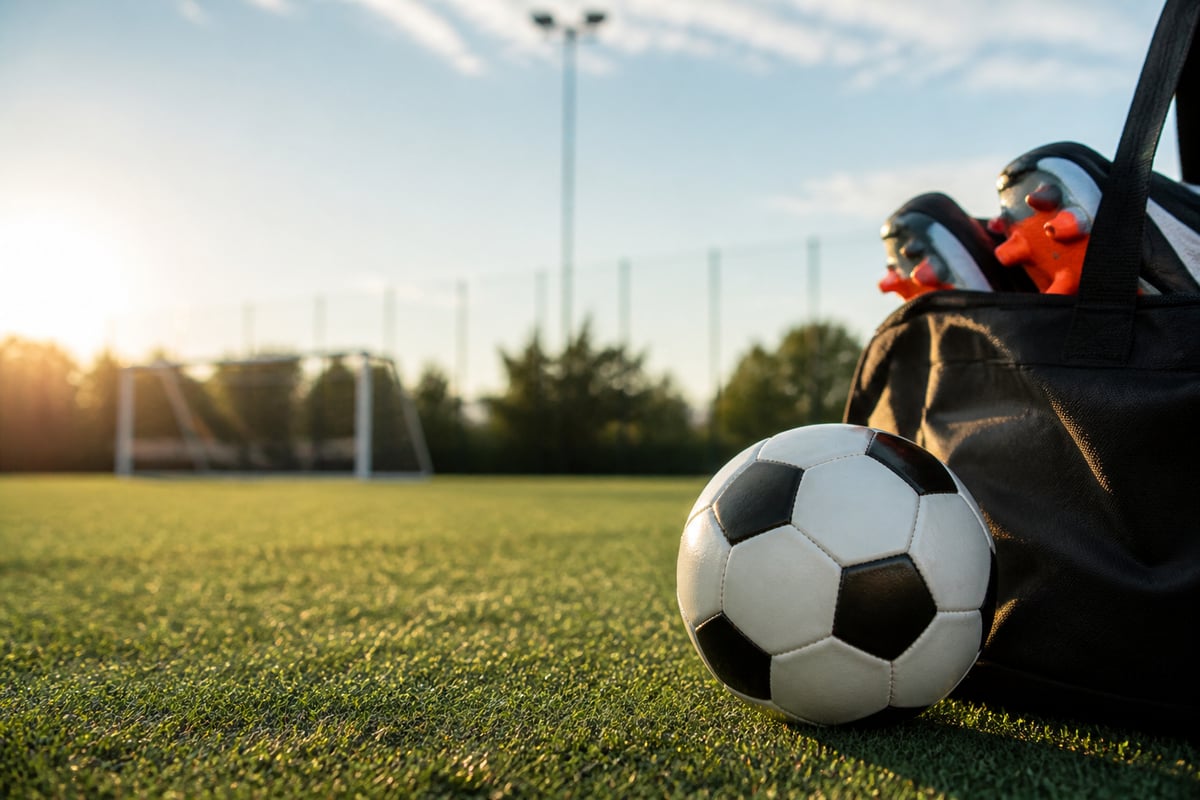
Goals are among the largest purchases a soccer program makes, and they carry real safety obligations. Unanchored or poorly stored goals can tip, which is why buyers should treat safety features as a selection criterion rather than an afterthought.
The U.S. Consumer Product Safety Commission outlines precautions for movable soccer goals, including anchoring and safe storage. Build those precautions into your buying criteria:
- Choose goals with a sturdy frame and stable base design.
- Budget for anchoring hardware at the time of purchase.
- Assign a staff member to inspect goals regularly.
- Store goals according to your facility's safety plan when not in use.
For programs that practice indoors or need flexibility during bad weather, the Athletic Connection Portable Foldable Indoor Soccer Goal is one option to consider. It measures 6.5 feet high by 12 feet wide, has a steel frame, and is designed for quick setup and easy transport.
Buying Training Gear for Home Players
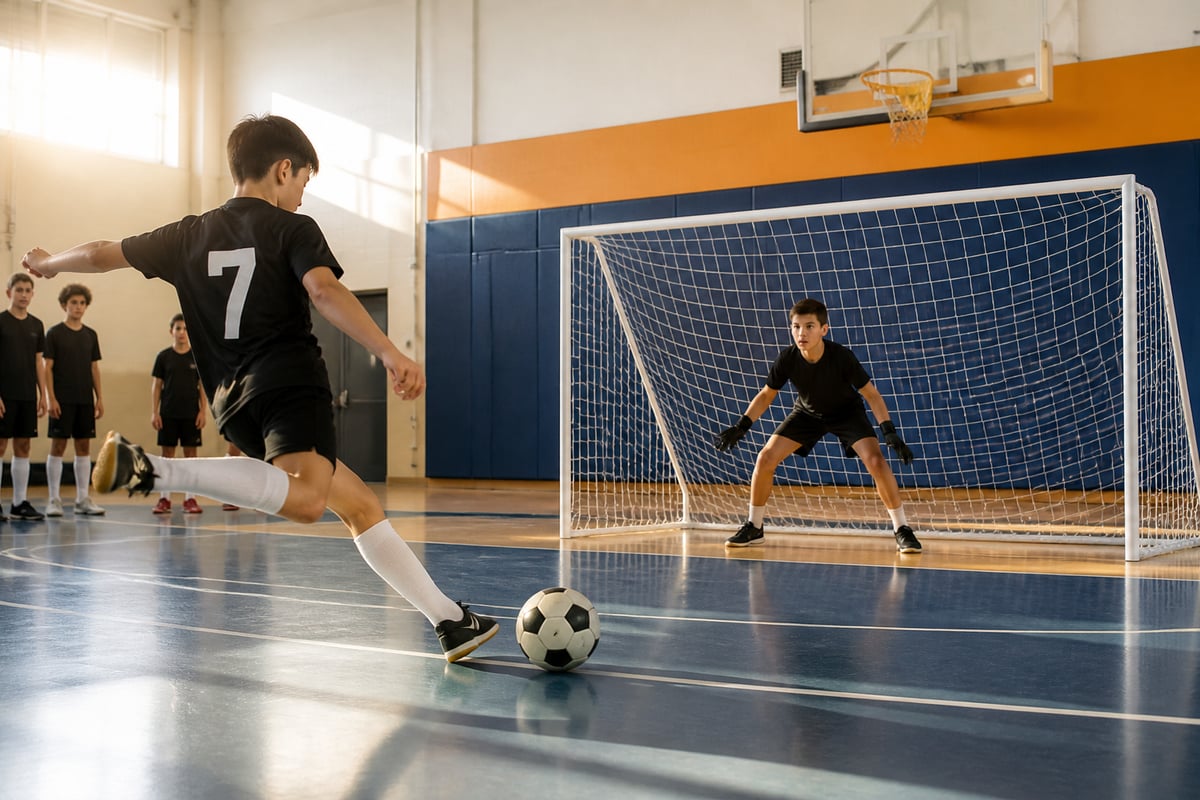
Individual athletes and parents get the most from a shop that offers practical training tools at fair prices. Home practice does not require a large investment, but it does reward a few well-chosen items.
A sensible starter kit includes:
- A properly sized ball for the player's age group
- Cones or markers for dribbling patterns
- A rebounder or wall space for passing and first-touch work
- A small goal or target for finishing practice
- Shin guards and cleats matched to the surface
Prioritize durability over novelty. A basic set of cones and a quality ball will see more use than a specialty gadget used twice. If your player trains on a driveway or park field, confirm that the cleat outsole matches that surface to avoid unnecessary wear.
Players also benefit from attention to eye and visual health, since tracking a ball at speed depends on good vision. Families interested in a holistic approach may want to look at providers such as Netra Eye Institute, which focuses on integrative eye care.
Safety, Rules, and Gear Compliance
Gear compliance protects players and prevents match-day problems. Under IFAB Law 4, players must not wear or use dangerous equipment, and all jewelry must be removed. The law also makes players responsible for the suitability and size of their equipment, which is a good reason to verify fit before the season starts.
Coaches can reduce match-day disputes with a short pre-season routine:
- Check that every player has legal footwear, socks, and shin guards.
- Remind players that jewelry must come off before play.
- Confirm that shin guards fit and are fully covered by socks.
- Keep a small stock of spare shin guards and socks for emergencies.
Preventive health practices matter too. U.S. Soccer's preventative health resource hub offers guidance relevant to players, coaches, and families, and it pairs well with a pre-season equipment check.
For officiating, programs that host their own matches should also equip referees properly. A reliable timing device such as the Ultrak 510 soccer referee's watch is a small purchase that supports consistent match management.
Checklist: Evaluating the Best Soccer Shop Before You Buy
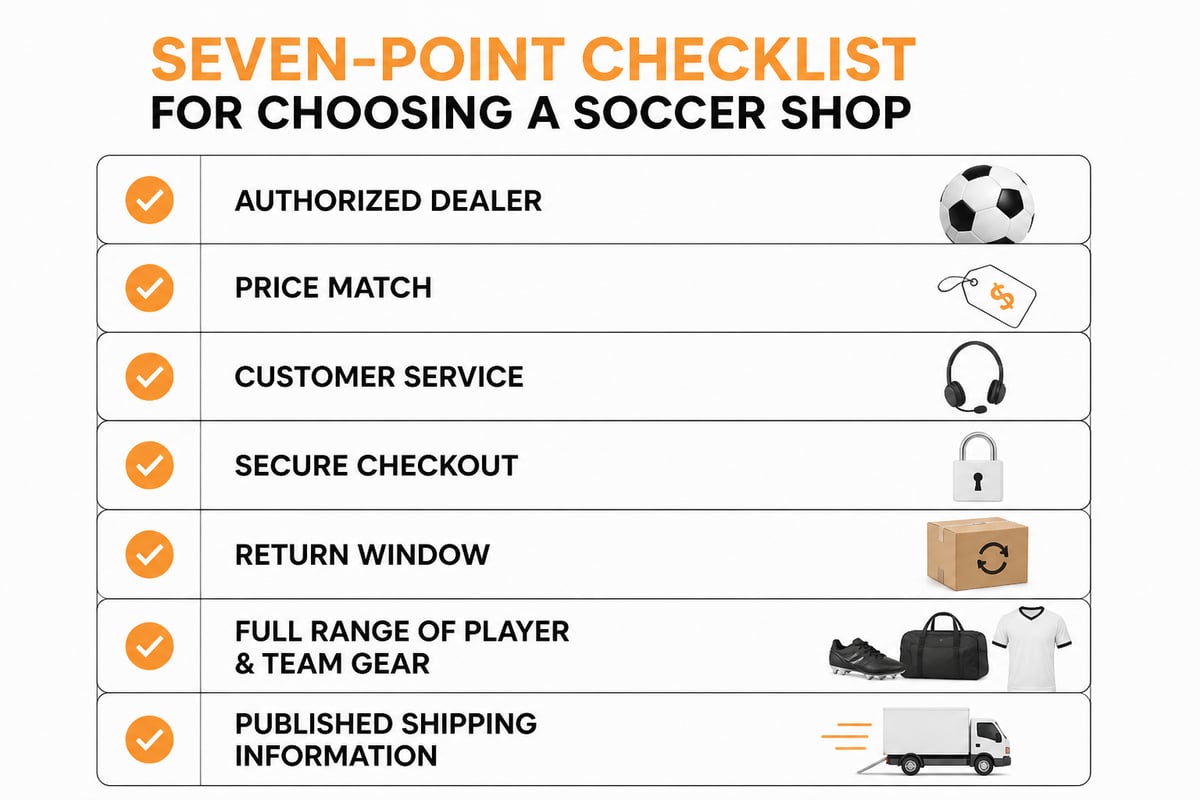
Run any retailer through this checklist and you will quickly identify the best soccer shop for your situation.
- Authorized dealer status is stated clearly on the site.
- Price match policy is available and easy to understand.
- Customer service can answer product-fit and budget questions.
- Checkout security includes SSL encryption and PCI DSS compliance.
- Return window covers footwear and apparel.
- Range includes both player gear and team or field equipment.
- Shipping information is published before you reach checkout.
Sideline Sport Supply, for example, aims to provide reliable, affordable equipment with straightforward pricing and fast fulfillment. For specifics on any product, check the individual product page or the contact page.
Common Mistakes When Choosing a Soccer Shop
Most buying errors come from prioritizing price over fit, authenticity, or support. Avoid these patterns:
- Buying cleats without measuring. Measure both feet at day's end in soccer socks, as the sizing guidance above recommends.
- Ignoring surface type. A firm-ground outsole on artificial turf can wear faster and feel wrong underfoot.
- Skipping the return policy. A low price loses its value if a wrong size cannot be exchanged.
- Splitting a team order across many vendors. Each extra vendor adds cost and coordination work.
- Treating goals as commodities. Safety features and anchoring deserve as much attention as price.
- Ordering late. Seasons start on fixed dates, and delays in equipment cost practice time.
Time your orders around your calendar. Preseason is the busiest buying window for every retailer, so earlier orders give you more room to fix a sizing problem or exchange an item before the first match.
Frequently Asked Questions
What is the best soccer shop for team orders?
Teams are usually best served by a multi-sport equipment supplier that carries balls, goals, field gear, and training tools together. Consolidating vendors reduces paperwork and makes it easier to hit your season start date.
How do I know a jersey is authentic?
Buy from an authorized dealer or an official club store, and check the product listing for fabric details, fit style, and season labeling. Unusually low prices on current-season kits deserve extra scrutiny.
How much room should cleats have?
Guidance from Soccer.com suggests about ¼ inch between toes and the end of the cleat, and about ½ inch for growing children. Measure both feet and use the longer one.
Do I need shin guards for every match?
Yes. Shin guards are compulsory equipment under IFAB Law 4, and they must be covered by socks.
Can I return cleats if they do not fit?
Return terms vary by retailer. Confirm the policy before checkout, since footwear fit is difficult to judge online.
Before your next purchase, measure both feet or audit your team's equipment inventory so you know exactly what you need and in which sizes. If you are buying for a program, Sideline Sport Supply can help you cover balls, training tools, and field equipment from one authorized dealer, including options like the Athletic Connection Portable Foldable Indoor Soccer Goal. You can browse by sport to find the right gear for your season.