

Second Hand Skis Guide: Smart Buying Tips for 2026
As winter sports attract more enthusiasts each year, finding ways to save on gear has never been more important. Enter second hand skis, a smart choice for those seeking affordability and sustainability without sacrificing performance.
Buying second hand skis can help you cut costs significantly, making skiing accessible to more people. However, purchasing used gear comes with risks if you do not know what to look for. This guide is here to help you make informed decisions, avoid common pitfalls, and maximize your investment.
You will discover what to check when evaluating skis, where to find the best deals, and how to negotiate confidently. Our expert tips will empower you to secure high-quality second hand skis at a fraction of the price.
Ready to get started? Follow this comprehensive guide to ensure your next purchase is both savvy and safe.
Why Buy Second Hand Skis?
Choosing second hand skis offers a compelling mix of financial, environmental, and practical benefits for buyers in 2026. As more people seek affordable ways to enjoy winter sports, understanding these advantages can help you make a smarter, more sustainable purchase.
Cost Savings
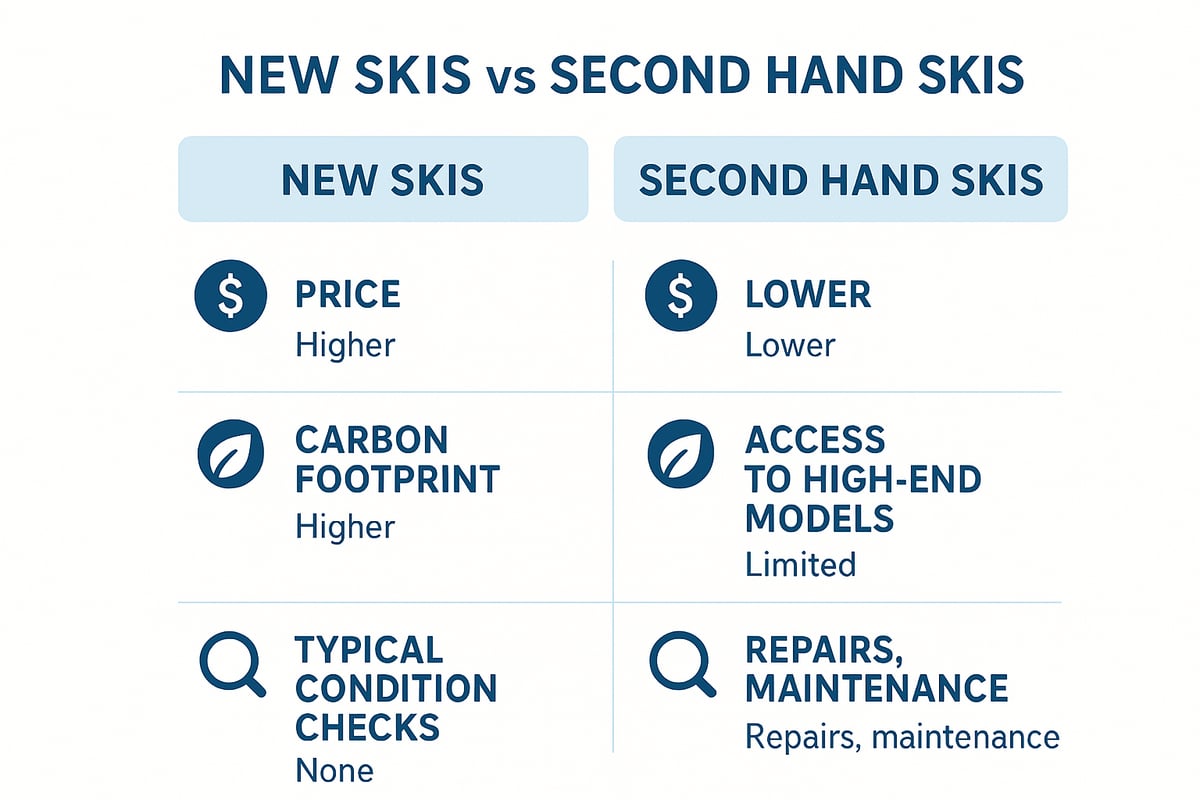
One of the strongest reasons to consider second hand skis is the significant cost savings. On average, used skis are 40% to 70% less expensive than their brand new counterparts. For instance, a new pair of all-mountain skis might retail for $600, while a gently-used set can often be found for $200 to $350.
| Ski Type | New Price | Second Hand Skis Price |
|---|---|---|
| All-Mountain | $600 | $200–$350 |
| Carving | $500 | $180–$300 |
| Powder | $700 | $250–$400 |
| Junior/Kids | $300 | $80–$150 |
These savings make second hand skis an attractive entry point for both casual skiers and those looking to upgrade their gear without overspending.
Environmental Benefits
Buying second hand skis also supports environmental sustainability. Each pair of skis reused means less manufacturing waste, fewer raw materials consumed, and a smaller carbon footprint.
By extending the life of ski equipment, you help reduce landfill waste and support the circular economy. Choosing second hand skis is a practical step for eco-conscious skiers who want to minimize their impact on the planet.
- Less new plastic and metal production
- Reduced energy consumption
- Lower transportation emissions
Access to Higher-End Models
Second hand skis open the door to premium models that may be out of reach at retail price. Many skiers upgrade frequently, so last season’s high-end skis often appear on the used market in excellent condition.
This gives buyers the opportunity to experience advanced technology, lighter materials, and enhanced performance at a fraction of the original cost. For those seeking quality without the hefty price tag, second hand skis are a smart solution.
Ideal for Beginners and Growing Children
For beginners and families with children, second hand skis are ideal. Newcomers can try different ski types without a major financial commitment, and parents can replace outgrown equipment affordably.
Given how quickly kids can outgrow their gear, buying second hand skis ensures you are not overinvesting in equipment that may only last a single season. It is also easier to experiment with different lengths or styles as skills progress.
Ski Technology Longevity
Ski technology has matured considerably in recent years. While new features and materials still debut, the pace of groundbreaking changes has slowed. This means that second hand skis from the past few years often offer performance and safety nearly on par with new models.
If you buy skis from recent seasons, you are likely benefiting from modern designs, reliable construction, and up-to-date safety standards.
Market Trends
The popularity of second hand skis is on the rise. According to record-breaking sales in used ski gear, the 2024–2025 season saw unprecedented growth in pre-owned equipment sales. This increased demand reflects a shift toward cost-effective and sustainable gear choices among skiers of all levels.
With more sellers and buyers participating, it is easier than ever to find quality second hand skis that fit your needs and budget.
Risks to Be Aware Of
While the benefits are strong, buying second hand skis does come with risks. Hidden damage, such as core shots or delamination, can affect performance and safety. Outdated or non-indemnified bindings may not meet current safety standards.
Always inspect second hand skis carefully, check binding compatibility, and ask detailed questions about use and storage history.
Real-World Savings Example
Consider a buyer who found a nearly-new pair of all-mountain second hand skis for $240, saving 60% compared to the original retail price. After a quick tune-up, the skis performed like new all winter, demonstrating the real value available in today’s used market.
Where to Buy Second Hand Skis in 2026
Choosing the right place to buy second hand skis is crucial for a smooth and secure shopping experience. With more people seeking value and sustainability, the market has expanded across both digital and local platforms. Below, we break down the best avenues to find quality second hand skis in 2026.
Online Marketplaces
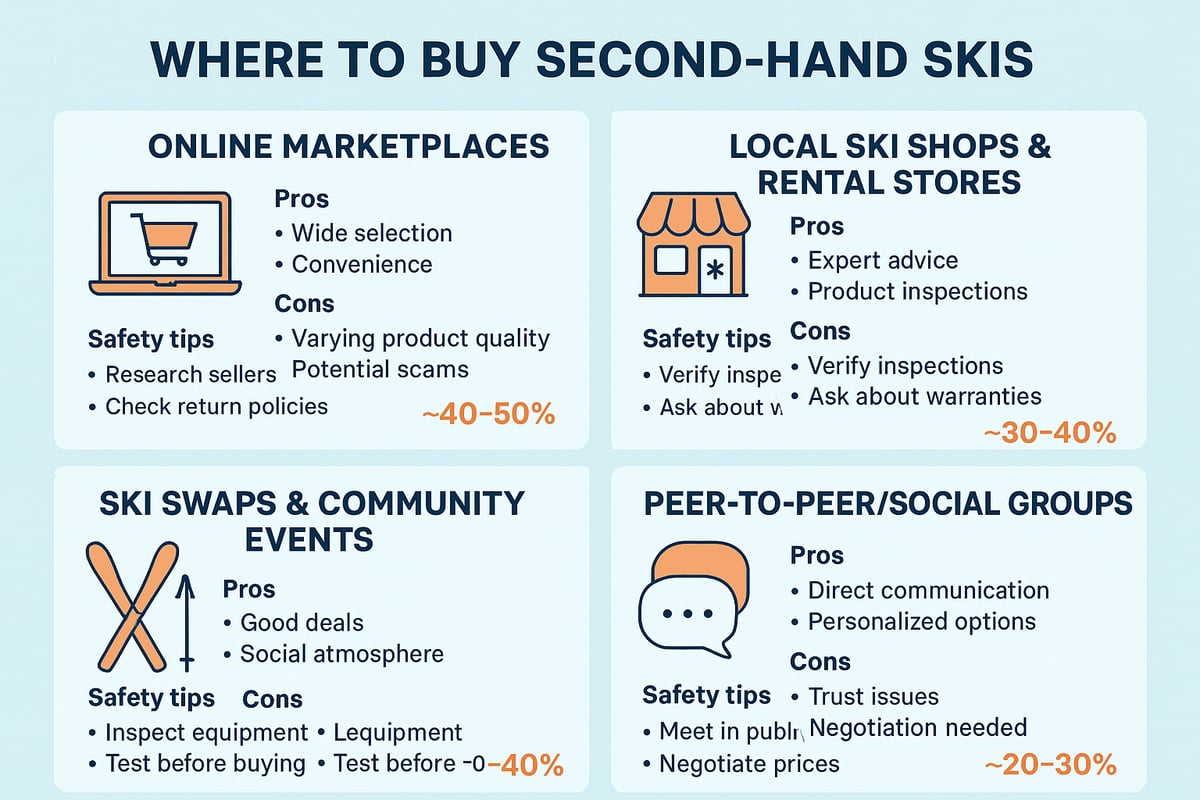
Online marketplaces offer the widest selection of second hand skis, making it easy to compare prices and models from the comfort of your home. Major platforms like eBay, Facebook Marketplace, and Craigslist provide a broad range, but buyer protections can vary. Specialized gear sites such as GearTrade and SidelineSwap stand out for their focus on outdoor equipment and added safety features.
Comparison Table:
| Platform | Buyer Protection | Return Policy | Specialization |
|---|---|---|---|
| eBay | Moderate | Varies | General |
| Facebook Marketplace | Low | None | General |
| GearTrade | High | Yes | Outdoor Gear |
| SidelineSwap | High | Yes | Ski/Snowboard |
To safely purchase second hand skis online, always check seller ratings, request detailed photos, and confirm the return policy. Read user reviews and focus on platforms with clear buyer protection. For example, SidelineSwap offers escrow services, safeguarding your payment until you confirm receipt of the skis.
Local Ski Shops & Rental Stores
Local ski shops and rental stores provide a hands-on way to buy second hand skis. The biggest advantage is the ability to inspect the gear in person and get advice from knowledgeable staff. Many shops host seasonal sales or clear out rental fleets at significant discounts, presenting opportunities for quality finds.
Look for stores that offer certified pre-owned skis, as these have often undergone professional inspection and maintenance. Some reputable retailers, like About Sideline Sport Supply, detail their standards and history, giving buyers extra confidence. Inquire about available warranties or satisfaction guarantees, which can add peace of mind.
Shops with strong reputations often have return policies and may provide binding adjustments or tuning as part of the purchase. Visiting in person lets you check the ski’s edges, base, and bindings directly, reducing the risk of hidden issues.
Ski Swaps, Expos, and Community Events
Ski swaps, expos, and community events are annual highlights for many buyers searching for second hand skis. These gatherings, often hosted by schools, ski clubs, or resorts, bring together a large inventory of used gear at attractive prices.
Arrive early for the best selection—popular models and sizes tend to go quickly. Networking with fellow skiers can also lead to insider tips or bundle deals. Many events feature knowledgeable volunteers who can answer questions about ski condition or fit.
Regional ski swaps report high attendance, with average discounts ranging from 40% to 60% off new retail prices. These events are especially beneficial for families or beginners, as you can often compare multiple pairs of second hand skis side by side before deciding.
Peer-to-Peer and Social Groups
Peer-to-peer transactions and social groups have become increasingly popular for buying second hand skis. Platforms like Reddit, ski club forums, and university groups offer flexibility and direct negotiation with sellers.
Trust is a key factor, so prioritize deals within established communities. Ask thorough questions about the ski’s history and request recent photos. Negotiation is often more flexible, and you may hear success stories from others who found high-quality second hand skis at unbeatable prices.
Participating in these groups also connects you with experienced skiers who can offer unbiased advice. Always arrange safe meeting locations and consider bringing a friend when completing transactions in person.
What to Look for When Buying Used Skis
Navigating the market for second hand skis requires a discerning eye and a clear understanding of what separates a good deal from a potential pitfall. To ensure your purchase is both safe and satisfying, focus on the key factors below. Each step will help you make a confident and informed decision, maximizing both value and performance.
Determining the Right Ski Type and Size
Selecting the correct ski type is the foundation of a great experience with second hand skis. Your choice should reflect your preferred terrain, skill level, and physical attributes.
There are four common types:
- All-Mountain: Versatile for most conditions.
- Powder: Wider for deep snow.
- Carving: Narrower, best for groomed runs.
- Park: Flexible and durable for tricks.
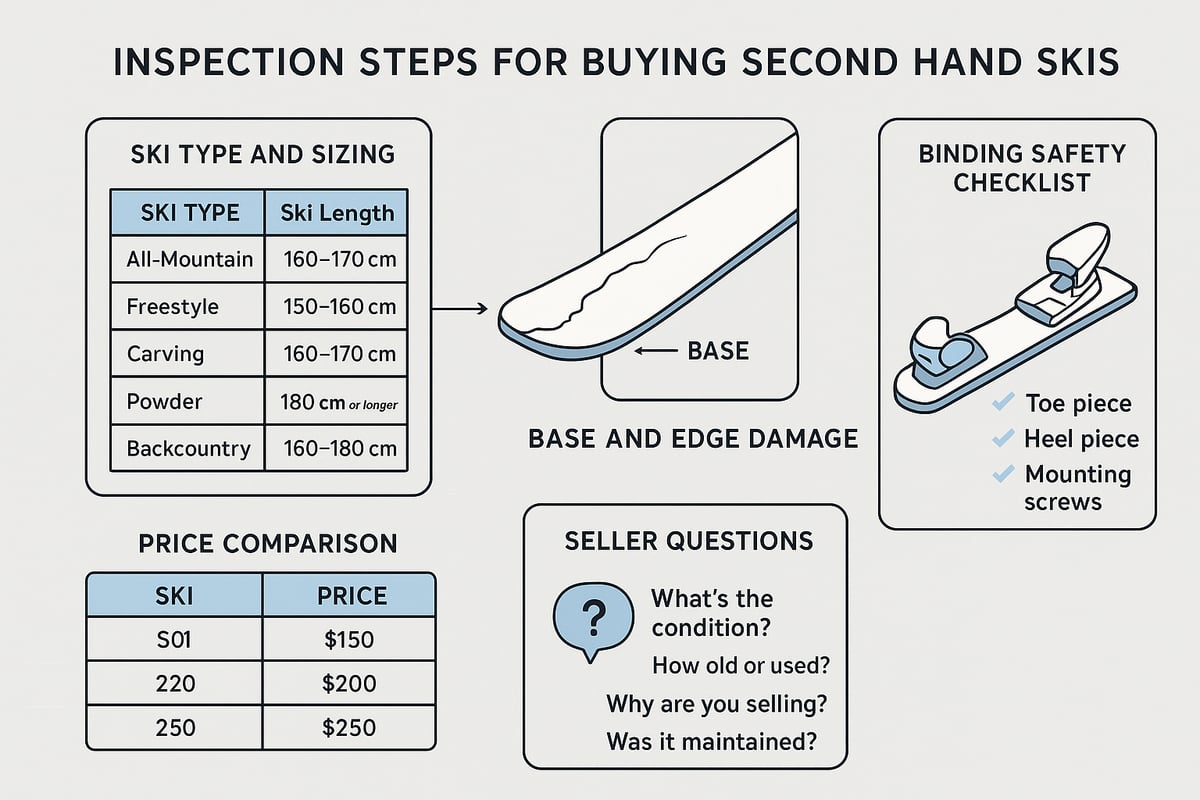
Sizing is equally important. As a general guideline, ski length should reach between your chin and the top of your head. Weight and skill level can further influence this choice. For example, heavier or advanced skiers may prefer longer skis for stability.
| Ski Type | Best For | Typical Length |
|---|---|---|
| All-Mountain | Mixed terrain | Chin to forehead |
| Powder | Deep snow | Forehead or higher |
| Carving | Groomed runs | Chin to nose |
| Park | Terrain parks | Chin to nose |
Choosing the right size and style ensures your second hand skis will match your needs, making every trip to the slopes enjoyable and safe.
Inspecting Ski Condition: Step-by-Step
A thorough inspection is essential before committing to second hand skis. Start by checking the bases for core shots—deep gouges that reach the core material. Minor scratches are normal, but deep damage can compromise performance.
Next, examine the edges for rust, burrs, or separation from the ski. Use a straight edge to check for flatness, ensuring there are no significant warps or bends. Delamination, where the ski layers separate, is a major red flag.
The top sheet should be free of major chips or cracks. Light scuffing is expected with used gear, but structural issues are not. Inspect bindings for cracks, missing screws, or signs of excessive wear.
A flashlight can help you spot hidden flaws in the camber or rocker profile. If possible, flex the skis to confirm they retain their designed shape and snap.
Careful inspection can reveal whether second hand skis have been well maintained or if they hide costly problems. Use photo guides or bring an expert if in doubt.
Understanding Ski Bindings and Safety
Bindings play a critical role in both performance and safety when buying second hand skis. Compatibility with your ski boots is the first requirement. Check the model and make sure they fit your boot sole length.
Safety is paramount. Review manufacturer indemnification lists to confirm the bindings are still supported. Outdated or recalled bindings might not be accepted by shops for adjustment or repair.
Look for signs of damage—cracks, missing parts, or excessive looseness. Test the release mechanism if possible. Many ski forums and manufacturer websites provide lists of major binding recalls from recent years.
Choosing second hand skis with safe, compatible bindings protects you from accidents and ensures you can get your equipment serviced professionally.
Assessing Value vs. Price
To get the best deal on second hand skis, compare the asking price to the age, condition, and brand of the equipment. Use price comparison websites and depreciation charts to benchmark fair value.
Premium brands tend to retain value longer, but condition and maintenance history are equally important. A five-year-old ski in excellent shape may offer better value than a newer, poorly maintained pair.
Buyers can also benefit from policies like a price match guarantee policy when comparing prices across different sellers or platforms.
By evaluating all factors—not just price—you ensure your investment in second hand skis is justified.
Questions to Ask the Seller
Open communication with the seller is crucial when considering second hand skis. Start by asking how many days the skis have been used and whether any repairs have been performed.
Inquire about storage conditions, as poor storage can lead to hidden damage. Ask for the reason behind the sale and any details about the original purchase.
Request receipts or proof of purchase when possible. This helps confirm authenticity and can support future warranty claims.
These questions help you uncover the history of the second hand skis and build trust in your transaction.
The Buying Process: Step-by-Step Guide
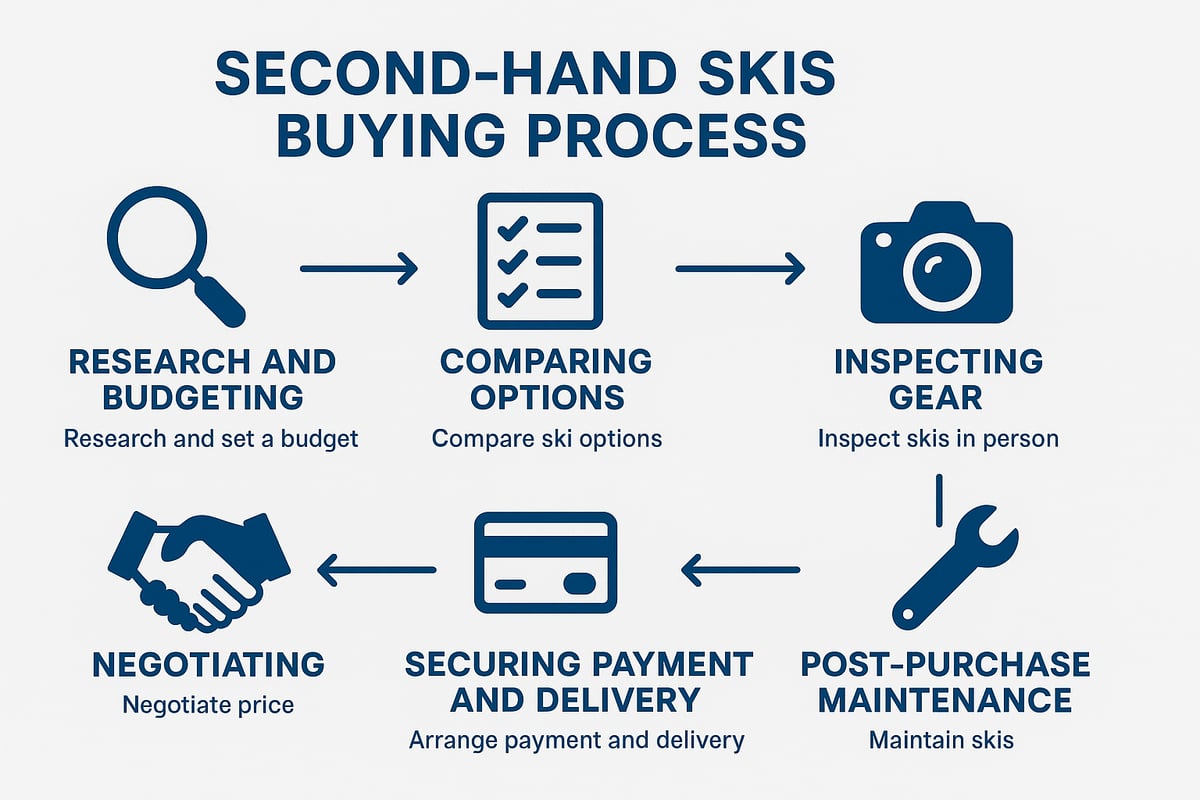
Embarking on the journey to buy second hand skis can be straightforward and rewarding if you follow a structured process. Each step below is designed to minimize risk and maximize value. By staying organized and informed, you will confidently secure the right gear for your needs.
Step 1: Research and Set Budget
Start by understanding the current market for second hand skis. Research new and used prices for your preferred brands and models, taking note of features that matter most to you, such as ski type, length, and flex.
Define your budget range using a simple worksheet. Consider additional expenses, like bindings or tuning. Setting a clear budget helps you avoid overspending and narrows your search to realistic options.
- List desired ski features (e.g., all-mountain, carving).
- Check recent sale prices on multiple platforms.
- Decide on a maximum spend, factoring in potential repairs.
By planning carefully, you will make your second hand skis shopping efficient and purposeful.
Step 2: Shortlist and Compare Options
Once you have a budget, create a shortlist of potential second hand skis. Gather details for each option, such as brand, model, year, length, and condition. Use online tools and forums to review feedback and ratings.
A comparison table can help clarify your choices:
| Model | Year | Condition | Price | Location |
|---|---|---|---|---|
| Volkl M5 | 2024 | Good | $320 | Local |
| Rossignol Exp | 2023 | Excellent | $275 | Online |
| Salomon QST | 2025 | Fair | $210 | Local |
Evaluate pros and cons for each. Prioritize options that align with your skiing style and needs. This approach ensures your second hand skis selection is based on objective comparison, not impulse.
Step 3: Arrange Inspection or Request Photos
Before committing, arrange to see the second hand skis in person or request detailed photos. Prepare a checklist: inspect for edge wear, base damage, binding integrity, and overall flatness.
Ask sellers for close-ups of potential problem areas. If you are unsure about what to look for, Contact our ski experts for personalized advice on evaluating used skis.
- Look for cracks, rust, and delamination.
- Request photos with good lighting and close detail.
- Confirm the ski camber and rocker profile matches your needs.
A thorough inspection helps you avoid costly surprises with your second hand skis.
Step 4: Negotiate the Price
Negotiation is a standard part of buying second hand skis. Most sellers expect some back-and-forth, so do not hesitate to offer a lower price, especially if you find flaws or comparable listings at better rates.
Typical negotiation margins range from 10 to 30 percent off the asking price. Use this sample script:
"I noticed some base scratches and minor edge wear. Considering the current market value and these issues, would you accept $X for these skis?"
Be polite and respectful. Use your research to justify your offer. This step ensures you get the best value for your second hand skis.
Step 5: Secure Payment and Delivery
Once a price is agreed upon, choose a secure payment method. For local transactions, cash or mobile payments are common. For online deals, use platforms offering buyer protection, like PayPal or escrow services.
Decide whether to pick up the second hand skis in person or have them shipped. If shipping, request tracking and insurance. Always confirm the return policy before finalizing the purchase.
- Meet in safe, public locations for local pickups.
- Retain proof of payment and correspondence.
- Double-check seller ratings and reviews.
Ensuring a safe transaction protects your investment in second hand skis.
Step 6: Post-Purchase Checklist
After receiving your second hand skis, complete a quick maintenance and safety check. Inspect the edges and bases, sharpen and wax as needed, and ensure bindings are professionally adjusted to your boots.
If possible, register the skis or bindings with the manufacturer for warranty or recall updates. Schedule a tune-up with a qualified technician for peace of mind.
- Clean and dry skis before storage.
- Record purchase details for future resale.
- Book a professional binding check for safety.
This last step helps you enjoy your second hand skis with confidence and longevity.
Common Mistakes to Avoid When Buying Used Skis
Buying second hand skis can be a smart way to save money and reduce environmental impact. However, it's easy to make costly mistakes if you are not careful. Below are the most common pitfalls to watch out for, along with tips to help you make a confident purchase.
Overlooking Hidden Damage
One of the biggest mistakes is failing to inspect for hidden damage. Superficial scratches might seem harmless, but deep core shots, edge separation, or delamination can significantly shorten the lifespan of second hand skis. Always check the base, edges, and top sheet closely. Use a flashlight to spot cracks or water damage. If possible, run a straight edge along the ski to ensure it is flat. Repairs to major issues can cost as much as a new pair of skis, undermining your savings.
Ignoring Binding Safety and Indemnification
Bindings are critical for safety, yet many buyers overlook their condition. Outdated or non-indemnified bindings may not release properly, increasing the risk of injury. Always verify if the bindings on second hand skis are still supported by manufacturers. Check for recalls and ensure compatibility with your boots. If in doubt, budget for a replacement or professional safety check.
Choosing the Wrong Size or Type
Selecting the incorrect ski type or size is a frequent error, especially for newer skiers. All-mountain, powder, and park skis each serve different purposes. Make sure second hand skis match your skill level, height, weight, and preferred terrain. Using a sizing chart or consulting a ski shop can prevent buyer’s remorse. Remember, skis that are too long or short can hamper your progress on the slopes.
Failing to Compare Prices and Overlooking Extra Costs
The growing popularity of used gear means prices can vary widely. Not comparing prices across platforms may result in overpaying for second hand skis. Use price comparison tools and review recent sales data for similar models. For comprehensive insights, consult ski industry statistics and market data to understand current trends. Also, factor in the cost of mounting bindings, tuning, or shipping—these can add up quickly and impact the total value.
Skipping Professional Inspection
For high-value or unfamiliar brands, skipping a professional inspection can be a costly oversight. An expert can spot issues you might miss and confirm binding safety. This small investment can protect you from expensive repairs or unsafe equipment, especially when buying second hand skis online.
Falling for Too-Good-to-Be-True Deals
If a deal seems suspiciously cheap, proceed with caution. Scammers often target buyers looking for second hand skis by offering unrealistically low prices or requesting unusual payment methods. Always use secure payment platforms and, when possible, meet in person or choose sellers with strong reputations.
Example: Real Buyer Story
A skier on a popular forum shared how they purchased second hand skis for their child at a steep discount, only to discover hidden edge damage after a few uses. The repairs cost nearly as much as the skis themselves. This highlights the importance of thorough inspection and asking detailed questions before finalizing any purchase.
By avoiding these mistakes and staying informed, you can enjoy the benefits of second hand skis without unnecessary risks.
Maintaining and Upgrading Your Second Hand Skis
Keeping second hand skis in top shape is essential for performance, safety, and value. Whether you ski a few weekends or clock in dozens of days each winter, a solid maintenance routine ensures your gear delivers season after season. Let us break down the key steps you need to follow.
Essential Maintenance Tips
Proper maintenance is the backbone of keeping second hand skis reliable and responsive on the slopes. Start with regular waxing to keep the bases slick and prevent drying out. Edge sharpening is crucial for grip, especially on icy days. Check for base damage like scratches or core shots and repair with P-Tex as needed.
Do not forget off-season storage. Clean your skis, dry them thoroughly, and store them in a cool, dry place away from direct sunlight. Loosen the binding DIN settings to ease spring tension. If you manage a club or family fleet of second hand skis, consider reviewing team sales and bulk ski gear resources for group maintenance tips and supply discounts.
A simple maintenance checklist for second hand skis:
- Wax bases every 3–5 outings
- Sharpen edges when dull or burred
- Fill base gouges with P-Tex
- Inspect bindings for cracks or rust
- Store in a dry, temperature-stable area
Following these steps will maximize the performance and longevity of your second hand skis.
When to Replace Bindings or Parts
Bindings are a crucial safety component. Inspect them for visible cracks, worn parts, or excessive rust. If the bindings feel loose or fail to release during a function test, replacement is necessary. Check your model against current indemnification lists, as outdated bindings may not be serviceable by shops.
Sourcing compatible parts for older second hand skis requires attention to mounting patterns and brake widths. Consult manufacturer documentation or a reputable ski technician before purchasing replacements. Prioritizing binding safety ensures your second hand skis remain a trustworthy choice on the mountain.
Upgrading for Performance
Upgrading components can breathe new life into your second hand skis. Swapping in new bindings not only improves safety but can also enhance performance through better adjustability. Consider adding updated grips, fresh ski brakes, or modern accessories to tailor your skis to your style.
Retrofitting is especially popular for skiers who want to match the latest trends without investing in brand-new equipment. With thoughtful upgrades, second hand skis can rival the feel and function of newer models, keeping you confident on any terrain.
Professional Tuning vs. DIY
When it comes to tuning second hand skis, both professional and DIY options have their merits. A professional tune-up typically includes a full base grind, edge sharpening, and hot waxing, ensuring optimal performance. DIY kits are cost-effective and allow for routine touch-ups at home.
| Tuning Method | Pros | Cons | Average Cost |
|---|---|---|---|
| Professional | Expert finish, saves time | More expensive, travel | $40–$80 |
| DIY | Cheaper, flexible timing | Learning curve, equipment | $10–$30 |
Seek expert help for major repairs or if you notice structural issues. Otherwise, routine maintenance can be handled at home, helping you get the most out of your second hand skis.
Prolonging Ski Lifespan
The way you use and care for second hand skis directly impacts their lifespan. Avoid skiing over rocks, dry them after every trip, and keep up with basic maintenance. Data shows that with proper care, used skis can last 5–7 years or longer, making them a smart investment for both budget and sustainability.
By following these guidelines, you will enjoy reliable performance and lasting value from your second hand skis.